No Picture
News Briefs

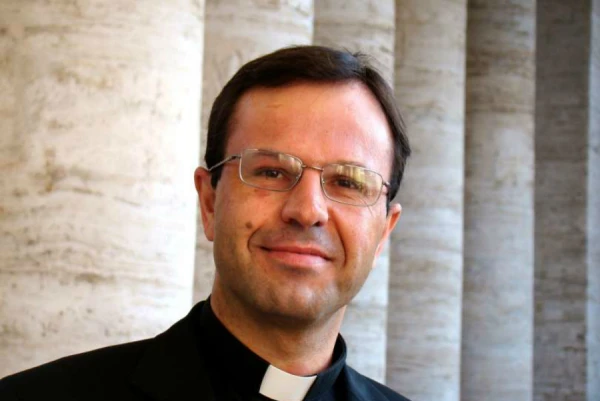
Cardinal Gracias emphasizes collegiality to address sex abuse

February 22, 2019 CNA Daily News 0

Vatican City, Feb 22, 2019 / 02:45 pm (CNA).- Cardinal Oswald Gracias of Bombay called Friday for the “entire Church” to “act decisively to prevent abuse from occurring in the future and to do whatever possible to foster healing for victims.”

Calling the abuse suffered at the hands of those in the Church “a profound betrayal of trust,” he offered practical solutions mainly focused on fostering better communication on all levels of the Church’s hierarchy during a Feb. 22 speech at the Vatican.

“As serious as the direct abuse of children and vulnerable adults is, the indirect damage inflicted by those with directive responsibility within the Church can be worse by re-victimising those who have already suffered abuse,” the cardinal noted.

Gracias is one of the principal organizers of a Vatican summit taking place this week to address the sexual abuse of minors, which features the presidents of national bishops’ conferences worldwide.

Gracias himself admitted to the BBC Feb. 21 that he could have better handled sexual abuse allegations that were brought to him in the past, after several Indian victims of sexual abuse told the BBC that Gracias failed to respond quickly or offer support to victims.

Gracias said the way to address the crisis must involve the “regional, national, local-diocesan, and even parochial levels,” which all must work together to create binding measures and decisions. He noted a recent meeting of the bishops of the Democratic Republic of Congo as an example of the bishops of a nation coming together in a collegial manner to address national challenges.

“No bishop should say to himself, ‘I face these problems and challenges alone,’” Gracias underscored, speaking of the concepts of collegiality and synodality.

“Because we belong to the college of bishops in union with the Holy Father, we all share accountability and responsibility. Collegiality is an essential context for addressing wounds of abuse inflicted on victims and on the Church at large.”

Gracias cited a passage from Lumen gentium, the Second Vatican Council’s dogmatic constitution on the Church, which teaches that individual bishops are “obliged by Christ’s institution and command to be solicitous for the whole Church.” He also noted that further development of “intercultural competences” and intercultural communication will help with effective decision making.

“The point is clear,” Gracias said.

“No bishop may say to himself, ‘This problem of abuse in the Church does not concern me, because things are different in my part of the world.’ We are each responsible for the whole Church. We hold accountability and responsibility together. We extend our concern beyond our local Church to embrace all the Churches with which we are in communion.”

Gracias pointed out that a culture of silence among bishops, unwilling to admit to mistakes and to engage other bishops in open conversation and point out “problematic behavior,” has contributed to the abuse crisis. He encouraged the cultivation of a culture of fraternal correction, where bishops are able to correct each other without offending the other, while also recognizing “criticism from a brother as an opportunity to better fulfil our tasks.”

He also called for better communication between bishops’ conferences and Rome.

“We can always only take responsibility for something insofar as we are allowed to do so, and the more responsibility we are granted, the better we can serve our own flock,” he said.

Gracias highlighted three main themes for his brother bishops to reflect on: justice, healing, and pilgrimage.

“The sexual abuse of minors and other vulnerable people not only breaks divine and ecclesiastical law, it is also public criminal behaviour,” he said.

“The Church does not only live in an isolated world of its own making…Those who are guilty of criminal behaviour are justly accountable to civil authority for that behaviour.”

Although the Church is not an agent of the state, he said, the Church recognises the legitimate authority of civil law and the state and cooperates with civil authorities to bring justice to survivors. This is only possible if bishops and local Churches can work together to build an appropriate relationship with the state.

Healing for victims requires “clear, transparent, and consistent communication” from the Church as well, Gracias said, beginning with “a respectful outreach and an honest acknowledgement of their pain and hurt.”

“Although this would seem to be obvious, it has not always been communicated,” he said.

“Ignoring or minimising what victims have experienced only exacerbates their pain and delays their healing. Within a collegial Church, we can summon each other to attentiveness and
compassion that enable us to make this outreach and acknowledgement.”

Once the hurt has been acknowledged, the Church can offer to help victims heal with the help of “professional counselling to support groups of peers” or other means, and can then implement measures to prevent abuse in the future.

“Our Holy Father has wisely and correctly said that abuse is a human problem. It is not, of course, limited to the Church. In fact, it is a pervasive and sad reality across all sectors of life. Out of this particularly challenging moment in the life of the Church, we – again in a collegial context – can draw on and develop resources which can be of great service to a larger world.”

Finally, the cardinal reflected on the pilgrim nature of the Church, noting that “we know that we have not yet arrived at our destination,” and “we are a community that is called to continuous repentance and continuous discernment.”

“We must repent – and do so together, collegially – because along the way we have failed. We need to seek pardon. We must also be in a process of continuous discernment. In other words, together or collegially, we need to watch, wait, observe, and discover the direction that God is giving us in the circumstances of our lives,” Gracias said.

The cardinal concluded by reminding his brother bishops that undertaking these tasks is not their mission alone, but that these actions “are the work of the Holy Spirit.”

“So, let the last word be Veni, Sancte Spiritus, veni,” he concluded.

[…]

No Picture
News Briefs

Women of Catholic Worker Movement on prayerful pilgrimage for abuse summit

February 22, 2019 CNA Daily News 1

Rome, Italy, Feb 22, 2019 / 05:02 am (CNA).- American women from the Catholic Worker Movement are in Rome this week to pray for the Vatican’s sexual abuse summit in emulation of Dorothy Day’s Roman pilgrimage to fast and pray for peace.

“We’ve all been very deeply grieved by the sex abuse crisis, and the crisis it has created for the entire Church,” Catholic Worker Movement leader Johanna Berrigan told CNA Feb. 21.

“It just dawned on us that this would be an important time to be in Rome, to bear witness to the suffering Church that we care deeply about and … we wanted to address ways for reform,” she said.

Through her involvement in the Catholic Worker Movement, a group dedicated to aiding and advocating for the poor, Berrigan co-founded the Catholic Worker Free Clinic for homeless and uninsured adults in Philadelphia in 1991 and opened another medical clinic in Haiti in 2005.

Berrigan, along with six other women, decided in November that they wanted to be in Rome as the summit was happening to pray and to give a voice to women, mothers, and lay people in the Vatican’s discussion of the issue.

“When we first heard about it, it was strictly bishops that were invited, we have since learned that there has been some lay involvement,” Berrigan explained.

Three of the nine official speakers at the Vatican sex abuse summit Feb. 21 – 24 are women, one of whom is a religious sister from Nigeria, Sister Veronica Openibo.

On the first day of the summit, the women were invited for a surprise visit to the US Embassy to the Holy See, where they met with Ambassador Callista Gingrich to discuss their perspective on the sex abuse crisis.

The seven Catholic Worker Movement women on pilgrimage meet each day to decide which historic churches they should visit to pray for the summit.

“We have an example in Dorothy Day, our foundress, who came to Rome in another significant point in the Church’s history and she and a delegation of women came on pilgrimage to fast and pray for the Church to recognize ‘conscientious objection,’ and really calling for an end to nuclear weapons. So we have that in our history,” Berrigan said.

Dorothy Day, whose cause for canonization has been opened, founded the Catholic Worker Movement with Peter Maurin in 1933, starting soup kitchens, farm communities, and a Catholic newspaper. She dedicated her life to aiding and advocating for the poor and leading a life characterized by voluntary poverty and works of mercy.

During their time in Rome, the Catholic Worker Movement women attended a sex abuse survivors’ vigil sponsored by Ending Clergy Abuse Feb. 21 in solidarity with victims.

At the vigil, the women called for justice for survivors and an end to clericalism, as well as truth, reconciliation and healing for the entire Church.

“We care deeply about this Church, we are very, very grateful that Pope Francis has called this summit. It seems to be a step forward,” Berrigan said.

“The world is watching … people of all faiths are watching to see what the outcome of [this summit] is going to be,” she said.

[…]

No Picture
News Briefs

Polish sex abuse victims meet Pope Francis, release abuse report

February 21, 2019 CNA Daily News 0

Vatican City, Feb 21, 2019 / 02:16 pm (CNA).- A Polish delegation of sex abuse victims and advocates met Pope Francis Wednesday, and presented the pope with a report documenting alleged clergy sexual abuse cases and cover-up throughout their country.

“It was a very powerful moment for … [the] victims in Poland to see this gesture,” Anna Frankowska, a board member of the Have No Fear foundation, told CNA Feb. 21.

The pope met a delegation from Have No Fear, a Polish organization that hosts support groups for sex abuse victims, after his General Audience Feb. 20, and Francis silently kissed the founder’s hand.

“We recognize that is a very symbolic gesture, but it is not enough. We are demanding specific action,” Frankowska said.

The Polish group presented the pope with a Spanish copy of a report published this week documenting alleged “violations of civil and canon law by Polish bishops in the context of priests who engaged in sexual abuse of minors,” and said that Pope Francis “confirmed that he would read it.”

The report documents more than 20 cases of clergy sexual abuse and the responses by their respective Polish bishops. Unlike recent reports of clergy abuse in the United States, the documented cases are not from the 1960s-80s, but only come from the last three decades.

In the report, Have No Fear accuses 24 former and current Polish bishops of having protected or transferred child-abusing priests.

“Since 2005, the Catholic Church has been particularly involved in efforts to protect children and young people against sexual abuse by clerics,” a Polish bishops’ conference document states.

At least 11 of the cases listed in the report occurred after 2005, and four are alleged to have taken place as recently as 2011-2012.

In one case, a priest who had been convicted and sentenced to prison in the United States for sexually assaulting a 17-year-old girl in 2005, was deported to Poland, where he served as a parish priest working with young people beginning in 2009, and worked as a religious educator in a middle school.

The priest, Father Roman Kramek, testified to U.S. police that “he had intercourse as a therapeutic tool in order to help the girl forget an earlier rape,” according to the report.

The Congregation for the Doctrine of Faith was notified of the case nearly ten years later, in October 2018, and Kramek continues to serve as a parish priest in Poland, according to Have No Fear.

The Polish bishops’ conference responded to the report by “strongly and decisively condemn[ing] all sexual abuse of minors in the Church and in society as a whole.”

“In the Catholic Church, every believer can present his case to the Holy Father as the Supreme Pastor. The Holy See, on the other hand, has the opportunity to evaluate and verify reported cases,” Polish bishops’ spokesman Father Pawel Rytel-Andianik told CNA.

“According to the Church and civil law, there is the principle of presumed innocence of a person until the contrary is proven,” he said, adding that various dioceses in Poland were already claiming misinformation in the report.

Recently, the Polish bishops’ conference took additional steps to further develop prevention programs and meet with victims.

In August 2018, diocesan bishops in Poland decided to develop a prevention program for every Polish diocese against crimes of sexual abuse of children.

A Child Protection Center was established in 2014 to provide “training and educational activities in the psychological, pedagogical and spiritual fields related to the sexual abuse of minors and the preparation and development of prevention programs and examples of good practice for various pastoral, formative and educational environments in order to help them create safe environments for children and adolescents.”

Have No Fear was founded in 2013 and became affiliated with the international network Ending Clergy Abuse in 2016. The group updates a “Map of Clerical Abuse in Poland” online, which maps out 384 victims, 85 convicted perpetrators, and 95 instances of abuse reported by victims.

In the past year, the organization delivered a letter to Archbishop Wojciech Polak of Gniezo requesting the establishment of an independent committee to analyze the scale of clerical sex abuse in Poland, abolish the statute of limitations for such offenses, hold accountable perpetrators and their superiors who conceal abuse, and provide victims of abuse with full access to the files of their canon law proceedings.

“We look in particular to the situation in Chile, where the pope dismissed bishops. We think that the situation in Poland is quite similar to the situation in Chile, and the time to act is now,” Frankowska told CNA.

Last May all of the bishops of Chile presented Pope Francis with written resignations following a CDF investigation into episcopal cover-up of the sexual abuse of Father Fernando Karadima.

“We believe that we are still years behind other jurisdictions,” she continued. “For a long time victims were ostracized or were afraid to speak out. Things are slowly changing.”

[…]

No Picture
News Briefs

Pope proposes 21 ‘reflection points’ for discussion at abuse summit

February 21, 2019 CNA Daily News 1

Vatican City, Feb 21, 2019 / 11:56 am (CNA).- Pope Francis on Thursday gave participants in a Vatican summit on protection of minors in the Church a list of nearly two dozen discussion points for actions Catholic Church leaders could potentially take in the follow-up to the meeting.

The pope said during opening remarks Feb. 21 that the criteria were formulated by various bishops’ conferences and organized by him into the list, stating they are “guidelines to assist in our reflection” and “a simple point of departure.”

The 21 points include suggestions to have periodic reviews of protocols on safeguarding, handbooks of steps authorities should take in abuse cases, provisions for facilitating the participation of lay experts in investigations, and the direction to inform civil authorities and higher Church authorities in compliance with civil and canonical norms.

Archbishop Charles Scicluna of Malta, responding to questions from journalists in the afternoon on Thursday said the points are complete, and a “roadmap” for the bishops’ discussions this week.

He also said that were they to be made into concrete proposals, they would need “substantial revision.”

In regard to one point, that broaches the idea of amending the Code of Canon Law to raise the minimum age of marriage for women from 14 to 16, Scicluna clarified that bishops’ conferences already have the power to create their own legislation in regard to the minimum marriageable age, and that many had already raised the age to 16 for both men and women.

“The pope is suggesting making that universal law,” Scicluna said.
 
Other points the pope raised in the list were to “accompany, protect and treat victims, offering them all the necessary support for a complete recovery” and to establish easily-accessible groups made up of experts, including both clerics and laypeople, to which victims can report crimes.

Several of the suggestions are on the theme of seminary formation of priests and the proper penalties for priests or religious who commit abuse.

One suggests initial and ongoing formation for seminarians and candidates for religious life, to help them “develop their human, spiritual and psychosexual maturity, as well as their interpersonal relationships and behavior.”

Another recommends observing “the traditional principle of proportionality of punishment with respect to the crime committed” and another recalls the right to defense and the importance of the presumption of innocence.

“Therefore, it is necessary to prevent the lists of the accused being published, even by the dioceses, before the preliminary investigation and the definitive condemnation,” it states.

Scicluna, a canon lawyer and adjunct secretary of the Congregation for the Doctrine of Faith, agreed. In reference to a question about releasing names of accused clergy, Scicluna said, “for simple allegations, it is my opinion it is premature.”

“You need a credible allegation as the lowest threshold,” he said, in order to not cause undue harm to someone’s good name. “We’re for disclosure, but in the right way. It’s legitimate to declare there are credible allegations.”

Peter Isley, victim of clergy sexual abuse and a spokesperson for “End Clergy Abuse” responded to the 21 reflection points, calling them “not very concrete points.”

“I’ll tell you what the roadmap in here is, it’s a circle,” he told journalists Feb. 21.

Isley was vocal in his opinion that the ideas presented in the list of reflection points do not go far enough in implementing “zero tolerance” against priests who have abused minors or bishops who have covered it up. “There is nothing there that wasn’t there yesterday,” he stated.

Referencing a point in the list, he said, “They put together a handbook [when] this is about the rape and sexual abuse of children!”

Isley added that he believes a priest who has abused a minor “has betrayed the priesthood,” and should not only be removed from ministry, but should have the “honor” of priesthood taken away through laicization.

If you are a bishop, “you make very, very sure, that if your priest has assaulted a child, and you know he has, that he’s not going to harm a child in the Catholic Church ever, ever, ever again,” he said.

“You take that man out of ministry, that’s the first thing, because he could harm a child. What kind of pastor wouldn’t do that?”

Scicluna said in the press conference that “punishment needs to take care of the common good, so they [clerics found guilty of sexual abuse of minors] cannot be in active ministry,” echoing a reflection point that says: “Decide that priests and bishops guilty of sexual abuse of minors leave public ministry.”

He added that in his opinion, however, the decision to dismiss a priest from the clerical state, also called laicization, should be determined on a case-by-case basis.

At the presser, Scicluna also noted that while there is currently no compiled statistics on abuse cases being handled in the CDF, the material exists. He said that he recently spoke with Cardinal Luis Ladaria, CDF prefect, and he said the possibility exists for those statistics to be compiled, contextualized, and published “in the near future.”

[…]

No Picture
News Briefs

Victims from Africa, Asia at Vatican to call for ‘zero tolerance’ of abuse cover-up

February 20, 2019 CNA Daily News 0

Vatican City, Feb 20, 2019 / 04:40 pm (CNA).- While studying at an African minor seminary at the age of 14, Benjamin Kitobo says he was abused by a Belgian priest, who had been sent to Africa after previously abusing children in Europe.

Now as an adult, Kitobo is one of the many sex abuse victims who traveled to Rome to share his story on the sidelines of the Vatican’s Feb. 21 – 24 sex abuse summit where bishops will meet in the presence of Pope Francis to discuss the protection of minors.

Kitobo told CNA at a gathering of victims and advocates from across Africa, Asia, and Latin America outside St. Peter’s Square Wednesday that he is calling for “zero tolerance” for bishops who cover-up sexual abuse, as well as the abusers themselves.

“Zero tolerance … for the people playing into the mechanism of covering up and the people abusing children,” he said, emphasizing that this needs to be “enforceable.”

“I’m addressing Pope Francis to not let the bishop go back home in Africa without any universal law against abusers and bishops who cover up for abuse,” he said.

After Kitobo complained about his abuser at his minor seminary in the Democratic Republic of the Congo, he found out that this priest continued to work with children in Rwanda.

“They didn’t act on this abuser. That is why I am here to complain. Many were treated the same way,” he told CNA Feb. 20.

“Abuse thrives under that kind of taboo when you can’t speak about it,” Kitobo reflected.

Kitobo was joined by sex abuse victims from Jamaica, New Zealand, Great Britain, Mexico, Chile, the United States, and elsewhere, who called for zero-tolerance for both perpetrators and bishops.

Sex abuse victims also spoke to how different countries’ cultures can exacerbate the stigma of speaking about sex abuse and cultivate a culture of silence.

“The culture that exists in society and within the Church in India makes it very difficult for survivors of abuse to come out and tell their stories,” Virginia Saldanha, an advocate for female sexual abuse victims in India explained.

Victims who do speak out “have been effectively silenced,” she continued.

“That is why I … questioned my own cardinal’s place on the organizing team of this summit because in his own diocese, he has not addressed a single case successfully,” she said, referring to Cardinal Oswald Gracias of Bombay, one of four members of the Vatican sex abuse summit’s organizing committee.

“I know that the victims that our group has brought to Cardinal Gracias have been silenced,” Saldanha told CNA.

Saldanha began working for the Archdiocese of Bombay in 1991 and later went on to serve as the diocesan secretary for the commission for women, where she particularly tried to get the Church to speak out about societal violence against women.

“I tried to raise awareness but I kept coming up against a wall. I felt that the Church was not serious about this,” she said.

In the years since, the diocese has created a gender policy. “And what do they do with their gender policy? I teach it every year to our seminarians, but that is about it. How effective is it? Not at all,” Saldanha said.

“In India, we’ve had so many cases of all these great religious teachers abusing women, Hindus also, they have been abusing women,” she said.

“It is not just India, it is all of Asia, the culture is that way … people will not speak out because Confucian culture also says, ‘you have to save face’ you know? Protect the name of the Church, so when a victim has to speak out, they have to think first how they are going to be affected,” she explained.

“It is a global problem. We know this from survivors around the world,” Peter Isle, director of Ending Clergy Abuse told press before meeting with the Vatican organizing committee for the summit.

“The same obstacles, the same non-transparency, the same irresponsibility that we’ve seen over and over again by Church officials, that is happening all over the world,” he continued.

“If you had to pick one form of zero tolerance it is this one: zero tolerance for any bishop or cardinal who has covered up for child sex crimes,” Isle said.

[…]