No Picture
News Briefs

First Chinese bishop consecrated after Vatican-China deal
August 27, 2019 CNA Daily News 0

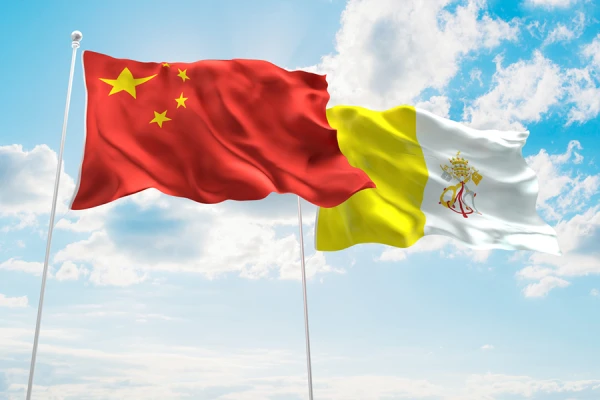
Vatican City, Aug 27, 2019 / 10:44 am (CNA).- A new bishop was consecrated Monday in Inner Mongolia, China, according to Asia News. Bishop Antonio Yao Shun is the first bishop to be consecrated in the country after a deal on bishop appointments was made with the Vatican last year.

Beijing and Vatican officials signed a provisional agreement on bishop appointments Sept. 22, 2018. The Vatican-China deal was intended to unify the underground Church and the Chinese Catholic Patriotic Association.

While the terms of the agreement have been kept confidential, it reportedly allows the Chinese Catholic Patriotic Association to choose a slate of nominees for bishop. The deal has drawn significant criticism.

Bishop Antonio Yao Shun, 54, will head the Diocese of Jining in Ulanqab, Inner Mongolia, Asia News reports. The diocese has been without a bishop since the June 2017 death of Bishop John Liu Shigong.

Yao was consecrated in the Jining Cathedral on the morning of Aug. 26, with more than 120 priests concelebrating, a consecrator-bishop, and three co-consecrators, Asia News reports.

Contrary to usual Vatican practice, Yao’s nomination to the episcopacy was not published in the daily bulletin of the Holy See press office, and it is unknown whether Pope Francis appointed Yao prior to or after the signing of the Vatican-China deal.

Yao studied at the national seminary in Beijing. From 1994 to 1998 he was in the United States completing a specialization in liturgy. He also spent a period doing biblical studies in Jerusalem.

The bishop previously taught at the national seminary. From 1998 to 2004 he served as secretary of the liturgical commission of the Council of Chinese Bishops and the Patriotic Association. He has been vice director of the same commission since 2004.

Yao’s chosen episcopal motto is “Misericordes sicut pater,” which means “Be merciful as the Father is.”

Since 1957, the Church in China had been split between the “underground” Church, in full communion with Rome, and the state-run Chinese Patriotic Catholic Association (CPCA) for which the Chinese government appointed bishops.

The agreement between the Holy See and the People’s Republic is meant to end the split between the two.

The U.S. Commission on International Religion wrote in its 2018 report that last year China “advanced its so-called ‘sinicization’ of religion, a far-reaching strategy to control, govern, and manipulate all aspects of faith into a socialist mold infused with ‘Chinese characteristics.’” Christians, Muslims, Tibetan Buddhists, and Falun Gong practitioners have all been affected.

Restrictions put in place in February 2018 made it illegal for anyone under age 18 to enter a church building.

Reports of the destruction or desecration of Catholic churches and shrines have come from across China, including the provinces of Hebei, Henan, Guizhou, Shaanxi, and Shandong.

Muslims, too, have come under pressure from the Chinese government. It is believed that as many as 1 million Uyghurs, a Muslim ethnoreligious group in China’s far west, are being detained in re-education camps where they are reportedly subjected to forced labor, torture, and political indoctrination.
[…]

No Picture
News Briefs

Exorcists to Jesuit head: Satan is real

August 23, 2019 CNA Daily News 10

Vatican City, Aug 23, 2019 / 11:49 am (CNA).- An international organization of Catholic exorcists said Thursday that the existence of Satan as a real and personal being is a truth of Christin doctrine.

“The real existence of the devil, as a pers… […]

No Picture
News Briefs

Agreement reached on permanent Holy See representative to Vietnam

August 23, 2019 CNA Daily News 0

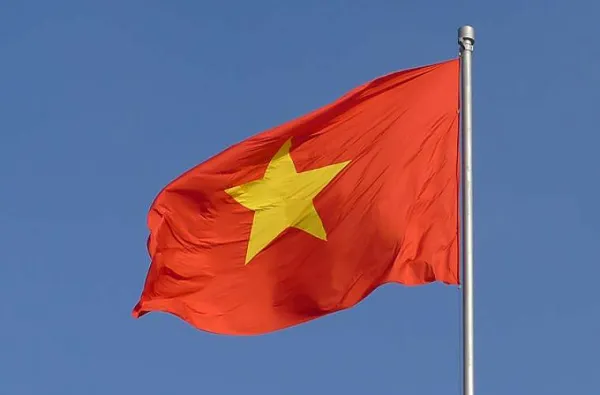
Vatican City, Aug 23, 2019 / 10:08 am (CNA).- A Holy See-Vietnam diplomacy working group, which met inside the Vatican this week, reached an agreement on establishing a permanent resident papal representative to the southeast Asian country.

A resident papal representative is considered an intermediary step in diplomatic relations, below an apostolic nuncio.

The Holy See and Vietnam have never had full diplomatic relations, but have been engaged in formal bilateral discussions since 2009. The Aug. 21-22 summit was the eighth meeting of the working group, which had previously met in Hanoi in December 2018.

Since 2011, the Holy See has had a non-resident pontifical representative to Vietnam. At the 2018 meeting in Hanoi, the delegations had agreed to upgrade this representative from a non-permanent, non-resident to a permanent, resident status.

According to a joint statement Aug. 23, the Holy See-Vietnam working group discussed the regulations to underly such an agreement “in view of the setting up of the Office at the earliest possible date.”

In the meeting, the Holy See also expressed appreciation for the State’s assistance to the Catholic community in Vietnam. The State gave its assurance of its continued commitment to improve consistent policy for respect of freedom of belief and religion.

“The two sides also expressed their commitment to continuing dialogue based on trust and respect for the mutually agreed principles governing the bilateral relations. They underscored the importance of further promoting contacts, including at high levels, between the two sides,” according to the statement.

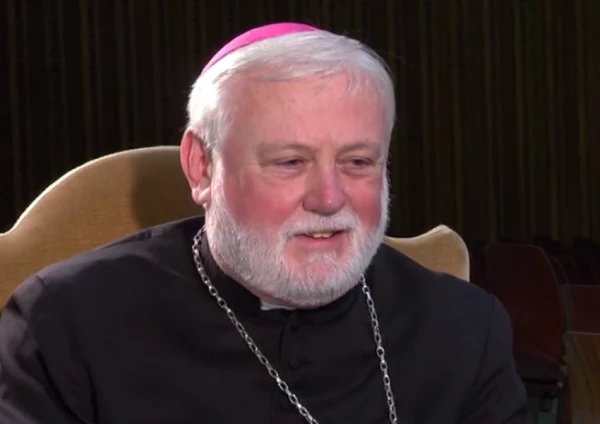
The Vietnamese delegation also met with Pope Francis, Secretary of State Cardinal Pietro Parolin, and Secretary for Relations with States Archbishop Paul Gallagher.

The delegations are headed by Mons. Antoine Camilleri, Vatican under-secretary for relations with states, and To anh Dung, Vietnam’s deputy minister of foreign affairs.

The position of non-resident papal representative to Vietnam is held by the nuncio to Singapore, who is currently Archbishop Marek Zalewski.

Catholics are estimated to make up about 7% of Vietnam’s population of 97 million. Predominant religious practice is of folk religions, followed by Buddhism.

Vietnam’s religious freedom law has been under discussion since 2013, when the Vietnamese constitution was revised. The law guaranteed freedom of belief to people, and formally guarantees religious freedom.

However, Catholic communities have experienced several limitations under the communist regime that took power in 1976.

According to the 2019 annual report of the United States Commission on International Religious Freedom, religious freedom conditions in the country regressed from 2018 to 2019, and despite small improvements, the government of Vietnam continues to persecute religious individuals and organizations.

[…]

No Picture
News Briefs

Vatican diplomat: Solidarity must be at the heart of the European project

August 22, 2019 CNA Daily News 1

Rimini, Italy, Aug 22, 2019 / 01:30 pm (CNA).- The Vatican Secretary for Relations with States said Wednesday that politics surrounding migration in Europe fuel ideological conflicts that do not fully take into account the complexity of the problem.

“I believe it is clear to everyone that such a delicate issue cannot be dealt with effectively without a clear political vision at all levels. But how can we have such a vision, without a cultural perspective that allows us to face the wide spectrum of related problems?” Archbishop Paul Gallagher said Aug. 21 in a speech in Rimini, Italy.

Gallagher pointed to the Catholic social principles of solidarity and inalienable human dignity. He also spoke of the necessity to balance the rhetoric of “rights” in Europe with that of their corresponding duties.

“The concept of law no longer seems to be associated with the equally essential and complementary concept of duty, so that we end up affirming the rights of the individual without taking into account that every human being is linked to a social context, in which his rights and duties are connected to those of others and to the common good of society itself,” Gallagher said, quoting Pope Francis’ speech to the European Parliament in 2014.

The bishop said that the duty of solidarity is an indispensable underlying principle to achieve the pillars of the European unification project: the defense of freedom, the promotion of justice and the building of peace.

Solidarity, he said, is “not based on the compassion or repulsion that another arouses, but on the objectivity of a common human nature.”

The crises Europe has faced in the last decade from the financial crisis to Brexit have been compounded by the growing “emotionality and reactiveness of political choices,” he said.

“It is precisely this characteristic of objectivity and reasonableness that links duties and rights between them. Since the objective duty of solidarity with others corresponds to that set of rights that are as objective as any human person,” Gallagher said.

“Where objectivity is lacking, the same system of rights loses its meaningfulness. This is what has been happening in the last fifty years when the interpretation of some rights has progressively changed, so as to include a multiplicity of new rights,” he continued.

The process of “relativization of rights,” Gallagher said, is intricately connected to the progessive exclusion of religion from European social life, which has resulted in an unhealthy secularization.

Gallagher said that the result of this process is a “fragmentation of existence,” which he said was presciently described by St. John Paul II in his Post-Synodal Apostolic Exhortation on the Church in Europe:

“We find ourselves before a widespread existential fragmentation. A feeling of loneliness is prevalent; divisions and conflicts are on the rise. Among other symptoms of this state of affairs, Europe is presently witnessing the grave phenomenon of family crises and the weakening of the very concept of the family, the continuation or resurfacing of ethnic conflicts, the re-emergence of racism, interreligious tensions, a selfishness that closes individuals and groups in upon themselves, a growing overall lack of concern for ethics and an obsessive concern for personal interests and privileges,” John Paul II wrote in 2003.

“The weakening of the sense of duty and the progressive subjectivation of rights has therefore weakened the very heart of the European project,” Gallagher said.

“The European project arises with the idea of ​​giving life to a community of peoples who agree to be bound by mutual duties,” he said at the Rimini “Meeting for Friendship Among Peoples.”

Gallagher outlined examples duties of states that relate to the migration issue in Europe.

“Above all, there is the most obvious duty: that of human solidarity with the person who is in need, suffering and often in danger,” he said.

He said that the duty of solidarity between states  is “a key principle of the very existence of the European Union.”

States also have a duty to offer opportunities for integration to migrants and security to their citizens, Gallagher said, explaining that cultural integration can free migrants from “the dynamics from which they had fled home and which often reappear in the lands of landing remaining within their national communities.”
 
In an interview with Vatican News Aug. 22, Gallagher responded to the current debate in Europe on national sovereignty surrounding both the migration and European Union issues.

“No one questions the sovereignty of a country, of a nation. The problem emerges … when there is again an exaggerated view of sovereignty, when there is an insistence on sovereignty,” he said.

“It is very difficult for a government to guarantee all rights to their peoples, as well as peace, defense, security. We are all interconnected… The idea that ‘sovereignty’ means a total closure to others perhaps has a certain theoretical, pragmatic attraction, but I do not think it’s the path to follow,” he added.

Gallagher underlined in his speech in Rimini that when approaching the issue of migration, in particular, “ we need to rediscover the duties, rather than the rights,that are at stake.”

“The first and perhaps greatest contribution that Christians can bring to today’s Europe – the Pope affirms – is to remind them that it is not a collection of numbers or institutions, but is made up of people, endowed with of transcendent dignity,” he said.


[…]

No Picture
News Briefs

Pope Francis: Self-interest and hypocrisy destroy the Church

August 21, 2019 CNA Daily News 0

Vatican City, Aug 21, 2019 / 06:00 am (CNA).- Pope Francis decried hypocrisy and self-interest Wednesday, saying that Christian community should always be characterized by generosity and solidarity.

“A life set only on profiting and taking advantage of situations at the expense of others inevitably causes interior death,” Pope Francis said Aug. 21 in Paul VI Hall.

“And how many people say they are close to the Church, friends of priests, bishops, while they are only looking for their own interest. These are the hypocrisies that destroy the Church,” he added in a departure from his prepared remarks.

Pope Francis said he asks the Lord to “pour over us His Spirit of tenderness, which overcomes all hypocrisy and puts into circulation that truth which nourishes Christian solidarity.”

The pope said that solidarity is “the inalienable expression of the nature of the Church,” which he called the “tender mother of all, especially the poorest.”

“Being members of the body of Christ makes believers co-responsible for each other. Being believers in Jesus makes us all co-responsible for each other,” he said.

“Among Christians we cannot say: ‘Poor person, he has a problem at home, he is going through this family difficulty’. But, I must pray. I carry it with me. I am not be indifferent. This is being a Christian,” Francis explained.

Throughout Pope Francis’ general audience, a young girl who appeared to have a mental disability, danced across the stage clapping her hands in front of the pope in Paul VI Hall.

“We have all seen this beautiful girl – she is beautiful … victim of an illness and does not know what she is doing,” he said.

Pope Francis asked the audience if they had prayed for this young girl and her family. “Whenever we see someone suffering we must pray,” he said.

The pope stressed the importance of concrete acts of generosity in the life of a Christian, particularly with one’s time and money.

“The sign that your heart has converted is when conversion reaches your pockets,” he said. “There  is where we see if one is generous with others, if one helps the weakest, the poorest.”

In the life of the Church, there have always been Christians who stripped themselves of unnecessary things to give them to those who needed them, Pope Francis said.

He pointed to the example of the early Christians described in the Acts of the Apostles.

“A concrete example of sharing and communion of goods comes to us from the testimony of Barnabas: he owns a field and sells it to deliver the proceeds to the Apostles,” Francis said.

“The Christian community is born from the overabundant outpouring of the Holy Spirit and grows thanks to the leaven of sharing between brothers and sisters in Christ. There is a dynamism of solidarity that builds the Church as the family of God,” he said.

Pope Francis also pointed out that there were negative examples of hypocrisy and selfishness among this same community. He described the story of Ananias and his wife Sapphira described in chapter 5 of the Acts of the Apostles.

Ananias and Sapphira sold a piece of property to give the proceeds to the apostles, but retained for themselves a portion of the purchase price.

To which St. Peter responded, “Ananias, why has Satan filled your heart so that you lied to the Holy Spirit and retained part of the price of the land? … Why did you contrive this deed? You have lied not to human beings, but to God.”

Upon hearing these words from Peter, Ananias fell down and died. “This cheating interrupts the chain of free sharing… and the consequences are tragic, are fatal,” Pope Francis said.

“We could say that Ananias lied to God because of an isolated conscience,” he said. “Hypocrisy is the worst enemy of this Christian community, of this Christian love: that of pretending to love each other, but only looking for one’s own interest.”

“To fail in the sincerity of sharing … in the sincerity of love, means to cultivate hypocrisy, move away from the truth, to become selfish, to extinguish the fire of communion and turn to the frost of interior death,” the pope said.

[…]