No Picture
News Briefs

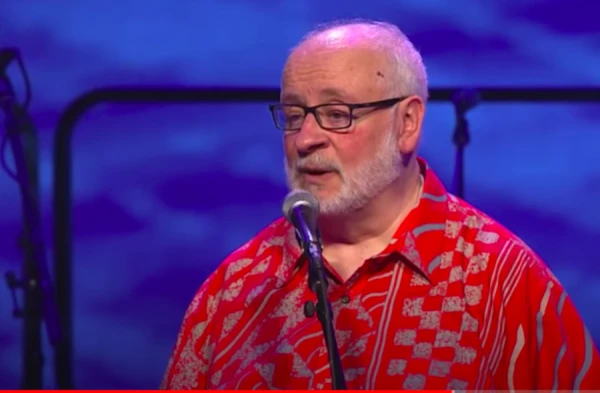
Archdiocese drops music, prohibits concerts, after new allegations against David Haas

July 10, 2020 CNA Daily News 6

CNA Staff, Jul 10, 2020 / 05:22 pm (CNA).-  

The Archdiocese of St. Paul and Minneapolis said Thursday it has received new allegations of misconduct on the part of composer David Haas, and that Haas will be prohibited from giving concerts and workshops in the archdiocese, and that his music will be prohibited at archdiocesan liturgies.

The archdiocese said it had in recent weeks “received additional reports from women in different parts of the country alleging that David Haas engaged in inappropriate conduct with them in the 1980s, when the women were young adults. The conduct described in these new, independent reports is similar in nature to the conduct described in previous allegations. Haas has denied any wrongdoing,” in a July 8 statement from safe environment director Tim O’Malley.

“We are sharing this information in the interest of accountability and transparency and believe that it may assist others, as it has assisted us, in making informed decisions. Survivors of sexual harassment and abuse deserve support and understanding.”

“Indeed, our community as a whole has suffered much from those who have used positions of power or privilege to harm others. We have a responsibility to be mindful of this and do what we can to prevent further injury to those who have already suffered harm.”

“Archbishop Hebda has decided that David Haas may not give presentations at workshops, concerts, or similar events hosted by the Archdiocese, parishes, Catholic schools, or other Catholic institutions in the Archdiocese. Likewise, the Archdiocese will not use Haas’ compositions at Archdiocesan Masses and other Archdiocesan events.”

“Also, the Archbishop has encouraged pastors, principals, and leaders of other Catholic institutions to consider the sensitivities involved with using Haas’ music in liturgies or other parish or school events, and to take appropriate steps to fully support those who have been harmed by sexual assault or abuse.”

Allegations of sexual misconduct against Haas surfaced in early June, when a group called Into Account sent a letter to some Catholic organizations and media outlets, addressing allegations against Haas.

The letter, obtained by CNA June 14, said the group had “received reports from multiple individuals reporting sexually predatory actions from the composer David Haas.”

Haas told CNA he denies those charges.

On June 16, the Archdiocese of St. Paul and Minneapolis released a statement saying that it had “received two reports from another diocese that David Haas acted inappropriately with two adult women at an event in another state. Both women complained that Haas’ conduct made them feel uncomfortable. The Archdiocese had received an earlier complaint, in 1987, that Haas had made unwanted sexual advances toward a young adult woman. In each instance, Haas denied that he engaged in inappropriate conduct.”

The archdiocese said that in 2018, it informed Haas it would no longer provide letters of recommendation for his ministry in other dioceses, and that he would not be allowed to perform the St. Paul archdiocese “without disclosure of these complaints.”

The composer, a layman, is a central figure in the “contemporary liturgical music” movement that began in the 1970s. Among Haas’ songs are some contemporary standards: “Glory to God,” “You are Mine,” “We are Called,” and “Blest are They,” among others.

Several of Haas’ publishers have suspended or dropped their relationships with the musician since the allegations were made public.

CNA has spoken with an alleged victim of sexual assault by Haas, and with a woman who offered a picture of her experience with Haas in the 1980s.

Maria* told CNA that Haas invited her to dinner in the fall of 1980, ostensibly to discuss music ministry. She had recently attended a music workshop that he had put on in St. Paul, and he had reached out to her directly by phone, she says.

She says during the evening Haas professed love for her, and that while he was driving after dinner, he refused to bring her back to her dormitory when she asked him to repeatedly, taking her instead to a second restaurant for dessert, despite her continued requests to be taken home.

Maria alleges that Haas tried to hold her back when she eventually did get out of his car, insisting on a kiss goodnight.

In later weeks, she says Haas pursued her with love notes and tried to meet with her one-on-one, even while he knew she was dating a man she eventually married. She says she rebuked his advances, “but it could have gone bad fast if I hadn’t seen the writing on the wall,” Maria told CNA.

When the Into Account allegations came to light in May, Maria says she began to reassess what had happened to her. He had taken her out under false pretenses— using his position as a music minister to get her to agree to meet him— and would not allow her to leave the situation, she said.

Maria also remembers hearing rumors that other members of the choir in which she participated in college— which Haas helped to lead— had experienced similar “dates” with Haas.

She said she hopes her story might inspire other women from that choir to come forward with their own allegations.

*Maria asked for anonymity to avoid potential retaliation from Haas, professionally, and from the public.


[…]

No Picture
News Briefs

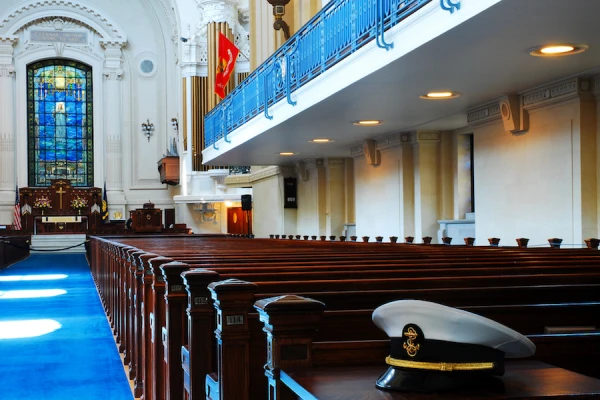
US Navy changes course, allows attendance at religious services with coronavirus precautions

July 10, 2020 CNA Daily News 0

Denver Newsroom, Jul 10, 2020 / 02:30 pm (CNA).-  

After reports that sailors and their families could be barred from attending church services, the U.S Navy has clarified that its personnel may attend indoor religious services, provided that religious services take approved measures to limit the spread of the coronavirus. Archbishop Timothy Broglio of the Archdiocese for Military Services has welcomed the change.

“The revision of the U.S. Navy’s orders to allow for the participation by Navy personnel in indoor religious services, provided that the appropriate guidelines are met, is most welcome,” Broglio told CNA July 10. “The change recognizes that worship is a part of the exercise of religious liberty and helps to ensure the readiness of the forces who defend us.”

“It is clear that the Catholic Church has taken to heart the CDC measures and organized the celebration of the sacraments in ways that ensure the safety of participants, good order, and the dignity of the rites. I am sure that other religious groups will do the same,” the archbishop said.

“I am grateful to the Department of the Navy and everyone else who contributed to this timely revision.”

In late March, the Navy imposed restrictions on attending off-base religious services.

Gregory Slavonic, acting assistant secretary of defense for Manpower and Reserve Affairs, said on Wednesday that Navy orders should not “restrict attendance at places of worship where attendees are able to appropriately apply COVID-19 transmission mitigation measures, specifically social distancing and use of face covering.“

The new guidance came late Wednesday in a memo from Slavonic to Chief of Naval Operations Admiral Mike Gilday, the news website Military.com reports.

Capt. Sarah Self-Kyler, public affairs officer for U.S. Fleet Forces Command, said all service members assigned to Navy units “must continue to follow force health protection protocols, such as maintaining social distance and use of face coverings, should they choose to participate in religious services or visit places of worship.”

U.S. Air Force Major Daniel Schultz, who is currently assigned to a Navy command, on June 29 sought a religious accommodation. Schultz, who leads worship at his church, said a new order allowed house parties and protests but banned attendance at indoor church services.

Mike Berry, general counsel for the First Liberty Institute, had sent a letter on behalf of Schultz. He told Fox News the change was a “major victory” for the Constitution and religious freedom.

“This memo means tens of thousands of our brave service members will be able to safely and freely exercise their religious beliefs,” he said.

U.S. Reps. Doug Collins, R-Ga., and Doug Lamborn, R-Colo. Had written to U.S. Secretary of Defense Mark Esper objecting to the Navy’s policy.

Collins welcomed the new clarification but called for further changes.

“For too long, the Pentagon has turned a blind eye as our military leaders have completely disregarded their obligation to protect the religious freedom of its service members,” Collins said Thursday. “I look forward to sitting down with Secretary Esper and leaders at the Department of Defense to further discuss how we can protect religious freedom across all branches of our military.”

On July 5, Broglio criticized the orders and lamented that they also discouraged “civilian personnel, including families” from attending indoor church services.

Broglio called the Navy’s original order “particularly odious to Catholics,” because, he said, frequently there is no longer a Catholic program on naval installations due to budgetary constraints, or many installation chapels simply are still closed.

“Participation in the Sunday Eucharist is life blood for Catholics. It is the source and summit of our lives and allows us to receive the Body and Blood of the Lord,” he said.

Given the great efforts of Catholic churches to adjust seating, the reception of Holy Communion, and the liturgy to avoid contagion, Broglio had said, “I wonder why the Navy has decided to prohibit the faithful from something which even the Commander in Chief has called an essential service.”

Broglio’s archdiocese serves some 1.8 million Catholics worldwide, including service members, civilian federal employees, and their families. About 25% of the military is Catholic, though only 6% of military chaplains are. There are under 500 ordained priests doing ministry work for the archdiocese, about 184 of whom are active-duty chaplains who are also commissioned officers.

While some news reports have highlighted dangers of contagion at religious services, other experts have emphasized that religious services are no more dangerous than similar events that take precautions recommended by health authorities.

A recent New York Times report linked religious facilities to more than 650 cases of Covid-19 infections contracted at nearly 40 churches and religious events since the epidemic arrived in the U.S. However, these make up a minuscule percentage of the more than 3.1 million confirmed cases in the country.


[…]

No Picture
News Briefs

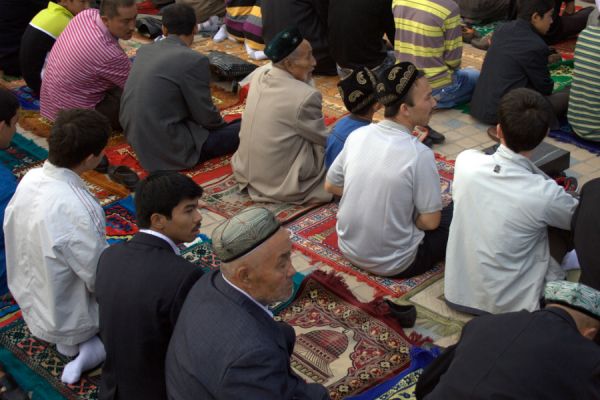
US sanctions Chinese officials over abuses of Uyghurs in Xinjiang

July 10, 2020 CNA Daily News 0

CNA Staff, Jul 10, 2020 / 12:10 pm (CNA).- The Trump administration announced Thursday that it is putting travel and asset sanctions on several senior officials of the Chinese Communist Party for their role in the mass internment of Uyghurs.

An estimated 1 million Uyghurs, members of a Muslim ethnoreligious group, have been detained in re-education camps in China’s Xinjiang Uyghur Autonomous Region. Inside the camps they are reportedly subjected to forced labor, torture, and political indoctrination. Outside the camps, Uyghurs are monitored by pervasive police forces and facial recognition technology.

“The United States will not stand idly by as the CCP carries out human rights abuses targeting Uyghurs, ethnic Kazakhs, and members of other minority groups in Xinjiang, to include forced labor, arbitrary mass detention, and forced population control, snd attempts to erase their culture and Muslim faith,” US Secretary of State Mike Pompeo announced July 9.

“The United States is taking action today against the horrific and systematic abuses in Xinjiang and calls on all nations who share our concerns about the CCP’s attacks on human rights and fundamental freedoms to join us in condemning this behavior,” he added.

Chen Quanguo, Communist Party Secretary of Xinjiang, and two other party officials of the region, Zhu Hailun and Wang Mingshan, as well as their immediate family members, will be unable to attain visas to enter the US.

Other CCP officals “believed to be responsible for, or complicit in, the unjust detention or abuse of Uyghurs, ethnic Kazakhs, and members of other minority groups in Xinjiang” are also being sanctioned with visa restrictions.

Chen, Zhu, Wang, and Huo Liujun, a former police official in Xinjiang, are being sanctioned by the US Treasury Department, as is the Xinjiang Public Security Bureau.

Their assets and entities in the US are blocked, and US persons may not do business with them.

“The United States is committed to using the full breadth of its financial powers to hold human rights abusers accountable in Xinjiang and across the world,” commented Treasury Secretary Steven T. Mnuchin.

Chen is also a member of the Politburo, a group of 25 who oversee the CCP, and he was Communist Party Secretary of Tibet from 2011-16. He is the highest-ranking Chinese official to have been sanctioned by the US.

Nury Turkel, a Uyghur human rights advocates who is a commissioner at the US Commission on International Religious Freedom, had told CNA June 24 that the commission “is disappointed that the U.S. government has not yet enacted targeted sanctions against Chinese officials responsible for the mass detention of Uyghur and other Muslims.”

President Donald Trump had on June 17 signed legislation that would impose financial and visa sanctions on individuals complicit in abuses in Xinjiang. The Uyghur Human Rights Policy Act directs the president to impose sanctions under the Global Magnitsky Act, one of several laws authorizing the president to sanction human rights abusers.

The statements explaining the new sanctions from both the State and Treasury Departments referred to the Magnitsky Act.

The Chinese government has defended its policy of mass detention and re-education as an appropriate measure against terrorism.

The government at one time denied the camps even existed, but has since shifted to defending its actions as a reasonable response to a national security threat.

Government officials from the region said in July 2019 that the area’s re-education camps for Muslims have been successful, with most of those held having been reintegrated into Chinese society.

Uyghurs can be arrested and detained under vague anti-terrorism laws. Violence in the region escalated in the 1990s and again in 2008.

The US Commerce Department in October 2019 added 28 Chinese organizations to a blacklist barring them from buying products from US companies, saying they cooperate in the detention and repression of the Uyghurs.

A 2019 document from a Xinjiang county leaked to western media earlier this year gave violation of birth control policies as the most common reason for the “re-education” of some 3,000 Uyghurs, often alongside other reasons.

Last week an AP investigation found a systematic campaign by the CCP of pregnancy checks and forced abortions, sterilizations, and implantations of IUDs on Uyghurs and other minorities in Xinjiang.

The birth rate in the region plunged by 24% in 2019, the AP said, and in certain parts of the province birth rates had fallen by more than 60% from 2015 to 2018. 

[…]

No Picture
News Briefs

NY Catholic archdiocese to close 20 schools, merge 3

July 9, 2020 CNA Daily News 0

CNA Staff, Jul 9, 2020 / 06:15 pm (CNA).- The Archdiocese of New York announced Thursday that 20 of its schools will not reopen, following the coronavirus crisis, and three of its schools will merge.

Michael Deegan, the archdiocese’s Superintendent of Schools, said July 9 that “the reality of these schools being lost is painful, and it was only accepted reluctantly after a detailed study was conducted of their respective fiscal standing in the wake of the coronavirus public health crisis. I have been a Catholic school educator for more than 40 years, and could never have imagined the grave impact this pandemic has had on our schools.”

Cardinal Timothy Dolan of New York commented that “I’ve kept a hopeful eye on our schools throughout this saga and my prayers are with all of the children and their families who will be affected by this sad news. Given the devastation of this pandemic, I’m grateful more schools didn’t meet this fate, and that Catholic schools nearby are ready to welcome all the kids.”

Eleven of the schools that will be closed are located in New York City: six in the Bronx, three in Staten Island, and two in Manhattan. Six schools will not reopen in Westchester County, and one each in Orange, Rockland, and Dutchess counties. Another three schools in Orange County will be merged into one.

Some 2,500 students and 350 staff will be impacted by the changes, according to the archdiocese.

No schools are closing or merging in Putnam, Sullivan, or Ulster counties.

The superintendent’s office has said it will help affected families find nearby Catholic schools for the autumn, and that it “is dedicated to working in coordination with the teachers’ union to do everything it can to help faculty of the affected schools to find employment within the Archdiocesan school system.”

The archdiocese said the coronavirus crisis “has had a devastating financial impact on Catholic school families.”

It noted that unemployment and health concerns “have resulted in families’ inability to pay their current tuition, and a significantly low rate of re-registration for the fall,” and that “months of cancelled public masses and fundraising for scholarships have seen a loss of parish contributions which traditionally help support the schools.”

The local Church expects the closures and merge to ensure “the overall fiscal stability and strengthen the vitality of New York Catholic schools for decades to come.”

Deegan commented that “if more assistance is not forthcoming in the longed for HEROES Act now before Congress, I am afraid even more might close.”

The Heroes Act would provide funding for state and local governments, assistance to hospitals, and direct payments to American families along with funding unemployment insurance. The Senate and White House have indicated their opposition to the bill.

In June the US Department of Education said that federal coronavirus aid to private schools is now enforceable by law, following concerns that Catholic and other non-public schools were being excluded from sufficient epidemic relief funds to support protective equipment for students and teachers, cleaning, training in remote education, and distance education tools.

Education Secretary Besty DeVos said on a June 25 phone call with reporters that “While a number of traditional public schools aren’t sure whether they will open their doors in the fall, too many other kinds of schools are sure they won’t open at all. More than 100 private schools, including many Catholic schools, have already announced they will never reopen, and hundreds more face a similar fate.”

The Education Department’s decision is being challenged by a July 7 suit filed by Michigan, California, Maine, New Mexico, Wisconsin, and the District of Columbia

The National Catholic Education Association said in June that at least 100 Catholic primary and secondary schools across the US would not be reopening, citing low enrollment and decreased donations amid the coronavirus.

Sister Dale McDonald, public policy director for the NCEA, told CNA that for most Catholic schools about 80% of their operating budget comes from tuition. In addition, many Catholic schools hold major fundraisers in the spring, which had to be cancelled or postponed after the pandemic hit.

[…]