No Picture
News Briefs

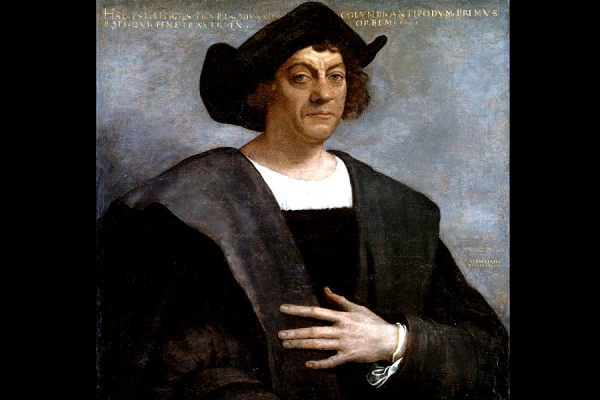
Worcester city council rejects move to take down Christopher Columbus statue

July 23, 2020 CNA Daily News 1

CNA Staff, Jul 23, 2020 / 02:16 pm (CNA).- The statue of Christopher Columbus outside of Worcester’s Union Station will remain, the city council decided Tuesday, citing the need to respect the local Italian community despite a spate of vandal attacks on statutes of historic figures and a wave of critical commentary on American monuments.

The Worcester City Council voted 8-2 on July 21 to shelve a proposal that would have ordered the removal of the Christopher Columbus statue and its replacement with a different statue or memorial to honor the Italian community.

Councilor Candy Mero-Carlson, who claims Italian ancestry, moved to shelve the proposal. She cited the recent razing of Our Lady of Mount Carmel Church and the closing of the cultural center there, the Worcester Telegram & Gazette reports.

“As someone who is Italian, that statue does represent our heritage,” said Mero-Carlson. “The Italian community has been through hell and back the last couple of years having lost their church and cultural center.”

“We don’t get the right to tell the Italian community what they should think about a statue,” she said. “Italians are proud people. We don’t get the right to tell them what to do with their statue; it should be up to the Italian community to decide. We get to make those decisions on who we are.”

The statue was donated to the city by Italian-American attorney Nunziato Fursaro in memory of his wife and erected in 1978.

Columbus has long been an American Catholic and Italian-American folk hero. They have seen his pioneering voyage from Europe as a way of validating their presence in a sometimes hostile majority-Protestant country and as the means by which Christianity reached the New World.

Columbus was long depicted as a symbol of exploration and discovery, critical for launching the encounter between Europe and the Americas. He was also a symbol of immigrants, and honors for Columbus drew opposition from nativist and anti-Catholic groups such as the Ku Klux Klan.

While Columbus never set foot in North America, the District of Columbia bears his name and he is the namesake of the Knights of Columbus, now the largest Catholic men’s fraternal organization in the world.

In recent decades, Columbus has drawn critical coverage. Some blame him for the launch of the transatlantic slave trade, and fault him for the enslavement and other mistreatment of some Native Americans under his command. Some critics blame him for the subsequent sufferings of Native Americans under Spanish rule, or under the rule of European colonists generally.

Councilor Sarai Rivera had introduced the failed proposal. She said the statue should be removed because of atrocities and devastation caused for indigenous people in the Caribbean, Central America, and North America.

Rivera identifies as Afro Taina and claims descent from the Taino indigenous people of Puerto Rico. She said she never participated in Worcester’s annual Columbus Day Parade.

“I could never go to celebrate someone who committed genocide on my ancestors,” she said, according to the Worcester Gazette & Telegram.

“Columbus is not about heritage. Columbus is about hate,” Rivera said to the council meeting, according to the Boston Globe. “And when you think about the amazing contributions the Italian community has done, even within our own community … that’s who we should be honoring. That’s who we should be talking about.”

The explorer had good relations with a Native American leader on Hispaniola. There, a Taino chief named Guacanagari aided Columbus after the wreck of his main ship the Santa Maria. Columbus adopted one of his sons. That son took the name of Columbus’ natural son, Diego, and accompanied Columbus on his final three voyages

In June the Worcester Columbus statue was vandalized with red paint, with the word “genocide” written on it. A Columbus statue in Boston’s historically Italian North End was beheaded.

This followed protests originally launched in response to the death of Minnesotan George Floyd, a black man, while he was being detained by Minneapolis police. Violence and vandalism, rejected by protest organizers, have caused massive damage to American cities.

Vandals particularly targeted statues of Confederate leaders, but also moved against statues of U.S. President Ulysses S. Grant, and Spanish missionary St. Junipero Serra, a major figure of early Californian history. Catholic churches and statues have also come under attack.

In Worcester the Columbus statue’s location at Union Station is owned and operated by the Worcester Redevelopment Authority, but the statue itself belongs to the city.

Councilor Kathleen M. Toomey also spoke against removing the statue.

“I feel very strongly that we need to respect each other and not tear each other down,” she said. “And when you start taking away other peoples’ symbols without having conversation, without trying to understand what things mean, I think that’s a problem.”

The proposal cannot be brought again for 90 days unless the city council agrees to to reconsider it.

The Italian American Alliance welcomed the shelving of the proposal, and voiced hope the city would “take special care to protect the statue against vandals.”

Worcester Mayor Joseph M. Petty recused himself from voting.

[…]

No Picture
News Briefs

Michigan prolife group ends petition effort to ban D&E abortions

July 22, 2020 CNA Daily News 1

CNA Staff, Jul 22, 2020 / 02:19 pm (CNA).- A Michigan pro-life group has said it will not contest the state’s conclusion that the group did not submit enough valid signatures on a petition to ban dilation and evacuation abortions, and will instead focus its advocacy efforts on the 2020 election.

“We know we submitted signatures from more than 340,047 registered voters. It is tragic that children will continue to be dismembered because we lost just enough signatures due to errors and petition damage like small tears and stains,” Barbara Listing, Right to Life of Michigan President, said in a July 21 statement.

“The effort behind this petition drive was worth it and will carry forward…This was our first attempt to end the dismemberment of babies in Michigan, and we will continue working until we end this form of violence and protect the lives of every unborn child.”

Genevieve Marnon, Right to Life of Michigan’s legislative director, told The Detroit News that this marks the first time that one of RTLM’s initiatives has failed.

Although Right to Life of Michigan submitted 380,000 signatures, the state elections bureau estimated that only about 333,000 were valid. The petition needed 340,047 signatures in order to proceed.

The proposed ban would have made it a felony for a physician to perform a dilation and evacuation abortion. D&E abortions are typically done in the second trimester of pregnancy and result in the dismemberment of an unborn child.

The method is used in Michigan for more than half of all second-trimester abortions, including 84% of those performed after the 16th week of pregnancy, the AP reported.

Michigan Gov. Gretchen Whitmer (D) has said she would veto any pro-life legislation. Governor Whitmer last October line-item vetoed from the state’s budget $700,000 in funding for the Michigan Pregnancy and Parenting Support Services Program, to the consternation of the Michigan Catholic Conference and a pro-life group active in the state.

The ballot initiative push was a way for the D&E ban to become law without the need for Whitmer’s signature, as Right to Life of Michigan had hoped to submit the ban to the state’s Republican-led legislature for enactment rather than put it on the November ballot, The Detroit News reported.

Listing attributed the petition’s failure to several overlapping factors, including some signers not knowing their voter registration status or forgetting they already signed the petition.

In addition, based on the high turnout from the 2018 election in Michigan, the threshold the state set for a petition to succeed was higher than normal, Listing said. She said the group this time submitted about 65,000 more signatures than they had in 2013 in their successful petition drive to stop taxes from paying for abortion insurance coverage.

“It wasn’t enough this time,” she lamented.

Listing also said a “competing” pro-life petition, circulating at the same time as theirs, confused people. That petition sought to ban abortion after the detection of a fetal heartbeat and was sponsored by a group called Michigan Heartbeat Coalition.

The Michigan Catholic Conference had last year thrown its support behind the D&E petition, opposing the heartbeat bill due to the existence of an even stronger piece of anti-abortion legislation.

“It goes without saying that after countless hours and with myriad people volunteering at hundreds of Catholic parishes across the state to collect signatures that this outcome is disappointing,” said Rebecca Mastee, MCC’s policy advocate.

“Each and every person who assisted in this petition drive is cherished and thanked. We have incredible gratitude for their pro-life dedication and the tremendous effort to raise awareness while gathering signatures. Saint Teresa of Calcutta taught us that God does not require us always to be successful, but rather to be faithful; indeed, the effort to protect human life through this petition drive was immense.”

Pro-lifers in several states, such as Tennessee, have opposed heartbeat legislation due to the potential of expensive legal and constitutional challenges.

In addition, the MCC pointed out out that Michigan law presently prohibits all abortion, but this law is not enforced due to the 1973 Roe v. Wade Supreme Court decision.

Should Roe be overturned, that law banning abortion would go back into effect. But if the proposed heartbeat bill were to become law and Roe were to be overturned, MCC argued, it would actually liberalize existing Michigan abortion law and permit the abortion of infants prior to the detection of a fetal heartbeat.

The coalition of Michigan volunteers was not the only group gathering signatures for pro-life petitions during the pandemic. In May, pro-life advocates in Colorado successfully gathered enough signatures to put a late-term abortion ban on the November ballot.

If the late-term abortion ban passes in November, it would mark the first time since 1967 that Colorado would impose voter-approved restrictions on abortion.

[…]