No Picture
News Briefs

Biden picks Kamala Harris as VP candidate

August 11, 2020 CNA Daily News 0

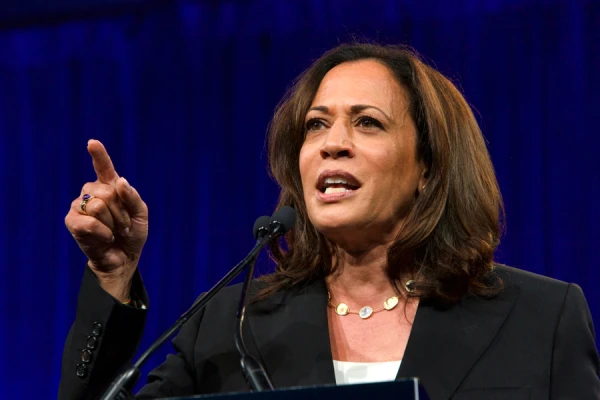
CNA Staff, Aug 11, 2020 / 03:10 pm (CNA).- Former vice president Joe Biden, the presumptive Democratic Party nominee for president, has selected Sen. Kamala Harris (D-CA) to be his running mate.  

Harris is the first Black woman, and the first person of Indian descent, to be selected as a running mate for a major party’s ticket. Harris’ mother was born in India, and her father was born in Jamaica. Harris is a staunch supporter of legal protection for abortion and has pushed Biden on that issue in recent months.

The choice was announced just shortly after 4:15 p.m. EDT on Tuesday, August 11. 

“I have the great honor to announce that I’ve picked Kamala Harris — a fearless fighter for the little guy, and one of the country’s finest public servants — as my running mate,” tweeted Biden on Tuesday.

Biden said that while serving as California’s attorney general, Harris worked with his late son, Beau. 

“I watched as they took on the big banks, lifted up working people, and protected women and kids from abuse. I was proud then, and I’m proud now to have her as my partner in this campaign,” he said. 

Before being selected to run with Biden, Harris made headlines for her numerous attacks on the former vice president during the primary debates. Harris was especially critical of Biden’s long-time support for the Hyde Amendment, which prevents the use of federal funds for abortions. 

Biden supported the Hyde Amendment, both with his votes and publicly in writing and speeches, for over four decades. He reversed his position in June 2019, just one day after reaffirming his support for the policy. Harris was quick to point this out during the debate. 

“Only since you’ve been running for president this time, [have you] said that you in some way would take that back or you didn’t agree with that decision you made over many, many years and this directly impacted so many women in our country,” said Harris. 

Harris noted Biden’s previous reservations about unlimited legal protection to abortion, reservations which he abandoned during the Democratic primary process. Harris asked him during the primary “Do you now say that you have evolved and you regret that?”

As California attorney general, she drew criticism from the state Catholic conference by sponsoring a bill compelling pro-life pregnancy centers to advertise “free or low-cost” abortion services to their clients. That law was overturned by the Supreme Court in 2018. 

The senator has also previously raised concerns about Biden’s character.

In April 2019, Harris stated that she believed women who have accused Biden of sexual misconduct during his time in the Senate and as vice president. 

“I believe them and I respect them being able to tell their story and having the courage to do it,” she said at an event in Nevada. Biden himself denied ever acting “inappropriately” with women.

While in the Senate, Harris has served as a member of the Judiciary Committee, responsible for vetting candidates for federal judgeships. In 2018, Harris raised questions about the suitability of a candidate based on his membership of the Knights of Columbus.

In December 2018, Harris joined Sen. Mazie Hirono (D-HI) in scrutinizing the candidacy of Brian C. Buescher, an Omaha-based lawyer nominated by President Trump to sit on the United States District Court for the District of Nebraska.

The senators asked if belonging to the Catholic charitable organization could prevent judges from hearing cases “fairly and impartially.”

In her questions to Buescher, Harris described the Knights as “an all-male society” and asked if Buescher was aware that the Knights of Columbus “opposed a woman’s right to choose” and were against “marriage equality” when he joined.

Prior to her election to the Senate in 2016, Harris served as the California attorney general from 2011-2016, and was the San Francisco attorney general from 2004-2011. 

While she has cast herself as a “progressive” prosecutor, her tenure as AG has been a source of controversy during her political career on the national level. 

Harris had a mixed record on the death penalty in California, and faced criticism for her polices which saw Californians imprisoned for non-violent drug offenses. 

Harris came out in support for the legalization of marijuana in 2018. But during a debate in July, Rep. Tulsi Gabbard (D-HI) noted Harris had put “over 1,500 people in jail for marijuana violations” as attorney general, but laughed while confirming her own use of the drug in an interview

Gabbard also pointed out that Harris “blocked evidence that would have freed an innocent man from death row,” referring to inmate Kevin Cooper. Cooper was convicted of a quadruple homicide and sentenced to death in 1983, despite considerable evidence of his innocence. Cooper requested additional DNA testing, which Harris blocked as attorney general. 

In 2018, after she was elected to the Senate, she admitted she “felt awful” about her decision. Cooper is still on death row. 

While Harris declined to pursue the death penalty on several occasions, in 2014 she explicitly defended the practice after a California district court found it unconstitutional. 

“I am appealing the court’s decision because it is not supported by the law, and it undermines important protections that our courts provide to defendants,” said Harris, calling the decision a “flawed ruling.” 

Harris has also pushed for laws that would criminalize the parents of truant children, who are disproportionately poor. 

During her inaugural address in 2011, Harris stated that she was “putting parents on notice” that truancy would be dealt with as a crime by parents.  

“If you fail in your responsibility to your kids, we are going to work to make sure you face the full force and consequences of the law,” she said. 

Eight years later, during an interview on a podcast, Harris admitted that several parents were jailed thanks to the statewide anti-truancy law she sponsored, though she said she “regretted” it.

Since entering the Senate, Harris’ thinking has shifted, and she now says she supports ending mandatory minimum sentences along with championing other progressive criminal justice reforms.

[…]

No Picture
News Briefs

Excommunicated priest rejects Pope Francis, misconduct allegations

August 11, 2020 CNA Daily News 1

Denver Newsroom, Aug 11, 2020 / 01:47 pm (CNA).-  

A Sacramento priest excommunicated last week says he stands by his claim that Pope emeritus Benedict XVI is the true pope. In addition to charges of schism, the priest is suspected of misconduct and improper relationships with at least two adult women; he confessed his love to one of them in a video message circulating online.

“I continue to regard Benedict as retaining the Office of Peter, as mysterious as that might be. Therefore, I do not regard Bergoglio as the Supreme Pontiff of the Roman Catholic Church,” Fr. Jeremy Leatherby wrote this week in an open letter to the Sacramento diocese.

Leatherby added that although he was already prohibited from public ministry, he had been celebrating Masses in recent months in private homes, offered “in union with Pope Benedict, not with Pope Francis. Many who have joined me hold, like I do, that Benedict remains the one true Pope.”

On Aug. 7, Sacramento’s Bishop Jaime Soto announced that “by his words and actions” Leatherby was “in a state of schism with the Roman Catholic Church.”

Sote declared that the priest had incurred a latae sententiae excommunication. “This means that by his own volition he has separated himself from communion with the Roman Pontiff, Pope Francis, and other members of the Catholic Church,” the bishop said. He called on Leatherby to “repent of the harm he has inflicted on the Church.”

In a private Aug. 3 letter to Leatherby obtained by CNA, Soto urged the priest to change his ways.

“I have received a number of testimonies reporting that you have offered Mass publicly in violation of my withdrawal of your faculties…In the exercise of these illicit rites…you have preached against the Holy Father and omitted the inclusion of his name and mine from the Eucharistic prayer.”

Soto added that he had heard recordings of the priest’s sermons, and both spoken telephonically and corresponded with the priest about those matters.

“Do not heed the voices or sentiments that have driven you to do this. These are not the fruit of the Holy Spirit. You are wounding the Church you have previously promised to serve. Your actions have placed you and others in grave moral danger. Listen to the voice of the Good Shepherd, in whose name I speak with fraternal solicitude.”

After the excommunication was announced, Leatherby, 41, said that he accepts the bishop’s judgment.

“Bishop Soto’s sentence of excommunication against me is consistent with my relationship with Jorge Bergoglio (Pope Francis), with whom I cannot morally, spiritually or intellectually, in good conscience, align myself,” he wrote.

“I deservedly incur excommunication if Bergoglio is indeed the valid Successor of Peter, and I am guilty of causing great division within the Mystical Body of Christ. However, I could not in good conscience do otherwise….When all is revealed, if I am mistaken, I will humbly repent of my sin and error, for I love the Holy Roman Catholic Church.”

Leatherby has been without an assignment in the diocese since March 2016. At that time, he was removed from ministry at a Sacramento parish, amid allegations that he had engaged in an inappropriate sexual relationship with a woman at the parish. He was prohibited from public ministry and his sacramental faculties were withdrawn.

Leatherby’s supporters claim those allegations were trumped up, as retaliation against his family, because the priest’s father, a deacon in the diocese, reported to Church authorities that some priests in the diocese were involved in a homosexual affair.

The Diocese of Sacramento told CNA that claim is “not true.”

“The original matter regarding Fr. Leatherby was triggered by an allegation of a ministerial boundary violation with an adult woman. We have no comment on rumors, theories, or complex, alternate explanations of this matter,” a diocesan spokesman told CNA Aug. 11.

The diocese did not say why the canonical case against Leatherby has taken years to adjudicate.

In August 2018, Sacramento’s vicar general sent a memo to diocesan priests, to address ”speculation” and “the length of time it has taken to resolve this case.”

According to the memo, Bishop Soto formally initiated a formal canonical process — presumably a canonical trial or an administrative penal process — against Leatherby, shortly after he was removed from parish ministry.

That canonical process stalled, the memo said, because “it took longer than we would have liked to assemble a panel of canonical experts independent of the diocese to address this case.”

But the process began moving forward in January 2018, according to the memo. The case “is still continuing, and is in the hands of other ecclesiastical authorities,” Soto said this week.

The diocese has declined requests from CNA for details regarding the status of the case, or the exact canonical crimes of which the priest is accused.

While the diocese has not commented on the allegations against Leatherby, parishioners say the charges have divided the Sacramento parish community, Presentation of the Blessed Virgin Mary, that Leatherby led as pastor until he was removed in 2016.

Leatherby had garnered a large following at the parish, especially attracting devoutly Catholic families as he worked to renew the parish school. But some parishioners say the priest’s leadership was marked with problems from the beginning.

Becky Jennings was a volunteer and parent at Presentation’s school during Leatherby’s tenure there. She said her family, like a lot of families, was attracted to the school because of the priest’s orthodoxy, dynamism, and pastoral attention to parish and school.

The Jennings trusted Fr. Leatherby, at first. They thought he was a faithful priest, and they were impressed by his courage and his kindness.

“In retrospect, there were a lot of things that should have been red flags. There were cult-like elements with Fr. Leatherby and his family,” Jennings told CNA.

She said that because Jennings was pastorally available and engaged in parish and family lives, a “huge cult of personality formed around him.”

“We would have followed him off the end of the earth and trusted him.”

The priest “used to promote himself as an expert in women’s spirituality and women’s spiritual direction,” Jennings said, and the women he directed were fiercely loyal to him.

In her judgment, Leatherby “formed a ‘harem’ of spiritual directees around him, and used the idea that someone has to be loyal to their spiritual director to abuse and manipulate them,” Jennings said.

The diocese has not identified the woman who alleged misconduct in 2016. But parishioners, talking to one another on social media, have said she was a part of the parish community, a daily communicant, and a former employee of the parish.

When allegations regarding Leatherby emerged in 2016, Jennings said, many people had a hard time believing them, including her family.

It was “devastating,” she said. “We felt like he was the heart and soul of the community.”

But eventually Jennings started hearing stories from parishioners about inappropriate behavior from Leatherby, and those gave her pause. She said she began to believe that “Fr. Leatherby had us all taken in.”

Jennings added that even in his parish leadership, the priest had tried to sow suspicion of outsiders. In early 2016, she said, “there seemed to be growing paranoia that the diocese was out to get our school.” Leatherby, she said, was especially paranoid about losing control of decisions at the school.

Division in the parish is now stark, Jennings said, with some describing Leatherby as “narcissistic” and controlling, while others maintain the priest was persecuted by the Sacramento diocese. 

She said she doesn’t believe that Leatherby was removed as an act of retribution. “I think that was invented out of whole cloth,” Jennings told CNA, “or exaggerated.”

She emphasized that in her view, Leatherby’s family members, many of whom have been connected to the parish, are a “pr machine,” trying to promote the idea that the priest is the victim of persecution, “like a mafia,” Jennings added. Leatherby’s defenders, Jennings said, have smeared the reputation of the priest’s alleged victim within the parish community.

Jennings and her family eventually moved away from the parish, she told CNA.

Soto’s letter this week said the excommunication of Leatherby was not related to the 2016 canonical case. That case is not the only instance of suspected misconduct.

Earlier this year, a video circulated online in which Leatherby, who appeared to be driving a car at night, recorded a video message for an unidentified woman, who, according to Leatherby, is not the subject of the 2016 allegation.

“Hey, Baby Doll,” Leatherby says, as he begins the video.

“I love that without mascara that you are still strikingly beautiful. I love that. I love it, like, a lot. A lot a lot. I loved it earlier when I saw you, and you didn’t have it on, and I loved it all night long. ‘Til the present time, and you still don’t have it on, and you’re still gorgeous.”

After discussing an event he had attended that evening, Leatherby says in the video, “I love you, I love you, I love you, you’re my girl. I imagine I’ll still say a ‘good night’ before I really, really, really go to bed, but I love you, even now, before then. Ok, goodnight, I love you.”

Leatherby said this week that he accidentally sent that message to an unintended recipient, and acknowledged the video “appears to some as a confirmation that I must be guilty of every sensational detail that has been alleged about me,” the priest said.

The priest said his behavior in the video was inappropriate, but denied it is evidence of a sexual relationship with the woman.

According to Leatherby’s open letter, the video was intended for “a woman who is a friend and who has assisted me significantly to, literally, survive and persevere these last few years and to fight for my priesthood,” and was recorded “after too much to drink.”

“I spoke in inappropriate ways, unbecoming of my priestly state, even if on leave. Thus, it can be taken totally out of context. I do not have a sexual relationship with that woman,” he said, claiming that those circulating the video “are spreading one side of a story that you don’t know the truth about.”

His letter said that a “handful of detractors who are out to destroy me,” and are using the video irresponsibly. He also claimed that if he were inclined towards sexual immorality, “those pathologies would have been detected at the Saint John Vianney Treatment Center in Downingtown, PA, which I was required to attend for five months after being placed on leave. They dissected every aspect of my life and person.”

In 2018, Leatherby wrote to his former parishioners, whom he reportedly had been instructed by the diocese not to contact.

“At this time I feel called to exercise my spiritual fatherhood to a number of individuals like yourselves, for whom I have been a Pastor, spiritual father, or priest friend/acquaintance at one time or another. I believe that the times that our Lord, through our Blessed Mother, has been preparing the Church and the world for over the course of many years are hastening upon us.  She has said that it would be a time of great confusion and darkness, which we have all experienced in ways,” the priest wrote.

“My sense is that the times are going to get progressively darker.  There will be a cacophany (sic) of voices pulling us in one way or another.  We will be seeking to hear the voice of Christ in the midst of the clamor.  Stay close to sources that will offer authentic Catholic teaching,” he added.

This week, Leatherby said he plans to petition for laicization, because he is no longer “in union with the church over which Bergoglio reigns.” The priest said that he will “live out
my priestly promises independently.”

If the priest is laicized, the canonical cases against him would likely conclude without formal resolution. The Sacramento diocese told CNA it will support Leatherby’s petition for laicization.

Through his canon lawyer, Leatherby declined CNA’s interview requests.


[…]

No Picture
News Briefs

Coronavirus, vaccines, and Catholic ethics

August 8, 2020 CNA Daily News 2

Washington, D.C. Newsroom, Aug 8, 2020 / 07:00 am (CNA).- Production for a new coronavirus vaccine is speeding along, but if one is developed to fight the pandemic, ethical questions remain about its development, and who should receive it first.

There… […]

No Picture
News Briefs

Questions of abuse cover-up directed at incoming St. Louis archbishop, but details unclear

August 7, 2020 CNA Daily News 0

Denver Newsroom, Aug 7, 2020 / 05:21 pm (CNA).- Archbishop-designate Mitchell Rozanski is set to take over the Archdiocese of St. Louis, after heading the Diocese of Springfield, Mass. since 2014. Though Rozanski himself backed major changes in the Springfield diocese’s handling of abuse, one unnamed abuse victim has asked for a Church investigation into whether the archbishop-designate was involved in covering up abuse.

Olan Horne, an advocate for victims of sex abuse by clergy, said the request to investigate Archbishop-designate Rozanski was made by a Berkshire County resident who had taken part in the Boston archdiocese’s multi-million dollar settlement, the Springfield newspaper The Republican reports. Horne said the request had support from “other concerned Catholics here in the diocese.”

The complaint was made through the Catholic Bishops Abuse Reporting Service website, and Horne said he received confirmation that the allegation had been filed.

Mark Dupont, secretary of communications for the Diocese of Springfield, told CNA August 6 that Rozanski had worked to make improvements in responding to sexual abuse allegations since before June 2019, when he commissioned an independent investigation into the mishandling of an allegation about a previous bishop.

“Even prior to commissioning the Judge Velis Report, then-Bishop Rozanski had directed a total revamping of our Safe Environment office, bringing in a new director, hiring new investigators, negotiating an agreement with all local district attorneys’ offices, and naming a task force to review all procedures for handling complaints,” Dupont told CNA.

Dupont said the complaint about Rozanski would have been directed to Springfield’s metropolitan, the Archdiocese of Boston, but added “to the best of our knowledge no such complaint has been filed.”

CNA sought comment from the Boston archdiocese, the St. Louis archdiocese, and Archbishop-designate Rozanski, but received no response by deadline.

Pope Francis named Rozanski Archbishop of St. Louis in early June. He will be installed Aug. 25.

In June, the Springfield diocese released the final report of an independent investigation led by retired Superior Court Judge Peter A. Velis, an adjunct professor of criminal evidence at Westfield State University who handled Catholic clergy sex abuse cases as a judge.

The report examined the case of an alleged victim, known under the pseudonym John Doe, who said he told the diocesan review board that Springfield Bishop Christopher J. Weldon, who died in 1982, had abused him, as did two priests, when he was an altar boy in the 1960s.

However, Bishop Weldon was not listed on the Springfield diocese’s list of clergy credibly accused of abuse. Although at least three witnesses and a letter to Doe from the review board supported Doe’s claim that he told the review board about Weldon in 2018, the review board only acknowledged the claim that the two priests had abused him.

On June 24, the diocese released Velis’ 373-page report finding that Doe’s claim he was molested by Bishop Weldon were “unequivocally credible.”

The Velis report indicated that there were two accounts of the diocesan investigator’s findings, one of which was more clear in accusing Weldon of abusing Doe. That version, however, was not shared with the review board. Some diocesan responses, which indicated Doe had never testified about Weldon’s abuse, relied on the version which had been shared with the review board.

The Velis report said that “from the inception of the complaint through the follow-up process, the procedure was greatly flawed.”

In June, Rozanski apologized for the “chronic mishandling of the case, time and time again, since 2014.”

“At almost every instance, we have failed this courageous man who nonetheless persevered thanks in part to a reliable support network as well to a deep desire for a just response for the terrible abuse which he endured,” the archbishop-designate said at a June press conference, one year after he commissioned Velis to conduct the investigation.

Both a diocesan investigator and a victim’s advocate involved in Doe’s case are no longer employed by the diocese, and Weldon is now named on the Springfield diocese website as a “deceased bishop who was found to have credible allegations of abuse.”

Horne was still critical of the diocese.

“It should not have taken this herculean effort to get justice for the Weldon survivor,” he said. “Look at the names and the games — they are the same and finally we have had a few investigations to get to the bottom of the claims we all have been making here for years without any results.”

This is not the first time abuse concerns regarding a bishop have surfaced in the Diocese of Springfield. In 2004, Bishop Thomas Dupre became the first Catholic bishop in the U.S. to be indicted on criminal charges for sexual abuse. The case did not go to trial due to the statute of limitations on some charges and because the grand jury decided not to indict on other charges, The Republican reported.

Horne accused the diocese of handling abuse through “an archaic system” that should have been updated after Dupre left, but never was.

The sex abuse victims’ advocate also objected to the diocese’s delay in naming diocesan priest Father Paul Archambault to its list of credibly accused priests. The priest’s name was added in 2016, the year the diocese disclosed its 2011 settlement with an alleged victim. Archambault committed suicide in 2011, after being confronted about his alleged abuse of a teenage boy.

Dupont, the spokesman for the diocese, told CNA the Velis report “had no finding of any cover-up.”

However, Velis said his findings raise questions about whether there was an attempt to conceal the report’s contents about Bishop Weldon from the review board or Bishop Rozanski. It was not the scope of his investigation to determine responsibility for the apparent deceptive practice or “if and when the reports were switched.”

Rozanski told Velis he was not aware of the specifics of Doe’s allegation of abuse by Weldon and did not know about the different reports about Doe’s allegation produced by the diocesan investigator.

Velis reported that Rozanski “immediately felt a call to action” when he was made aware there were possible discrepancies in how the complaint was handled.

However, Rozanski said he knew that Weldon was accused of being “present during incidents of abuse that occurred” and acknowledged to Velis that he considered this to be a form of abuse.

Dupont, the Springfield diocesan spokesman, maintained that the diocese did not cover up allegations against Weldon. He told CNA that “our earliest public responses acknowledged Bishop Weldon was allegedly present where the abuse occurred.”

The Velis report is not unchallenged. The diocese’s most recent vicar general, Monsignor Christopher Connelly, has said he was “unfairly and unfavorably portrayed” in the report, according to The Republican.

Connelly has denied the alleged victim’s claim to have told him that Weldon abused him.

“I regret that my recollection of that meeting and his are so very different. I am also puzzled that throughout this process there is a lot of discrepancy and confusion. I am puzzled by that as well,” Connelly said.

“The name of Weldon was not divulged to me. Our meeting was not about Bishop Weldon, it was about another deceased priest,” said the monsignor. Connelly said that if Weldon’s name had been mentioned, it would have been in a follow-up letter, which only mentions the accusation against Father Clarence Forand.


[…]