
No Picture
News Briefs

8 Catholic universities get ready to compete in NCAA men’s basketball tournament

March 18, 2025 Catholic News Agency 2
Ryan Kalkbrenner and the Creighton Bluejays are back in the 2025 NCAA men’s basketball tournament, one of eight Catholic universities competing in this year’s March Madness. / Credit: Nicholas Muller/SOPA Images/LightRocket via Getty Images

CNA Staff, Mar 18, 2025 / 15:10 pm (CNA).

The NCAA Men’s Basketball Tournament kicks off March 18 and this year’s tournament includes eight Catholic universities competing for the championship title. They are: Creighton University, Gonzaga University, Marquette University, Xavier University, St. John’s University, Saint Mary’s College, Saint Francis University, and Mount St. Mary’s University.

Several of these Catholic institutions are making history with their participation in the tournament this year. 

The Red Flash from Saint Francis University in Loretto, Pennsylvania, clinched their spot in the big dance when they beat the top team in their conference, Central Connecticut State University (CCSU), 46-43 on March 11. This victory earned them their first NCAA Tournament in 34 years.

During a crucial moment in the final seconds of the conference title game, Red Flash coach Rob Krimmel turned to his faith. 

According to CBS Sports, Krimmel had written on his play card three phrases: “audience of one,” “surrender,” and “thy will be done.” So, when CCSU tied the game with 17 seconds left, instead of calling for a timeout, Krimmel reminded himself of the phrases on his play card, encouraging his team to go make the plays they needed to make.

The Saint Francis Red Flash will be playing their first game of the tournament against the Alabama State Red Hornets on March 18.

Another team making history with their participation in March Madness is St. John’s University from New York. St. John’s Red Storm won the Big East Tournament title on March 15 for the first time in 25 years when the team beat Creighton University 82-66. 

Their first game in the tournament will be against the University of Nebraska-Omaha on March 20.

The Marquette Golden Eagles received their fourth consecutive invite to the big dance during the NCAA’s Selection Sunday on March 16. Senior guard Stevie Mitchell, who is preparing to play in his fourth March Madness, sees basketball as a tool to inspire the next generation and leave a lasting impact. Last summer, Mitchell hosted a free youth basketball camp at his high school in Pennsylvania. 

“To see how grateful they are for us, it really puts life into perspective. They don’t care how the game went,” he told the NCAA. “The kids who look up to us, they obviously want us to win, but they don’t really care how the game goes, they just see inspiration in us. And as long as we can live up to that night in and night out, we’ll be proud of whatever we do, whatever outcome may be, because it’s so much bigger than basketball.”

He continued: “The more time we spend in the community, the more we realize that and the more we’re just able to help give back and just make the place around us a better place. I think that’s the greatest thing you can do as a basketball player, or anybody really, is just make the world around you a better place,” he added. 

Marquette will face the University of New Mexico in their first-round game on March 21. 

The games for the other Catholic universities competing are: Creighton University will face the University of Louisville on March 20; Gongzaga will play the University of Georgia Bulldogs on March 20; the Xavier Musketeers will face off against the University of Texas Longhorns on March 19; Mount St. Mary’s will face American University on March 19; and the Saint Mary’s Gaels will compete against Vanderbilt on March 21.  
[…]

No Picture
News Briefs

‘From Inclusion to Belonging’ conference welcomes Catholics with disabilities

March 17, 2025 Catholic News Agency 1
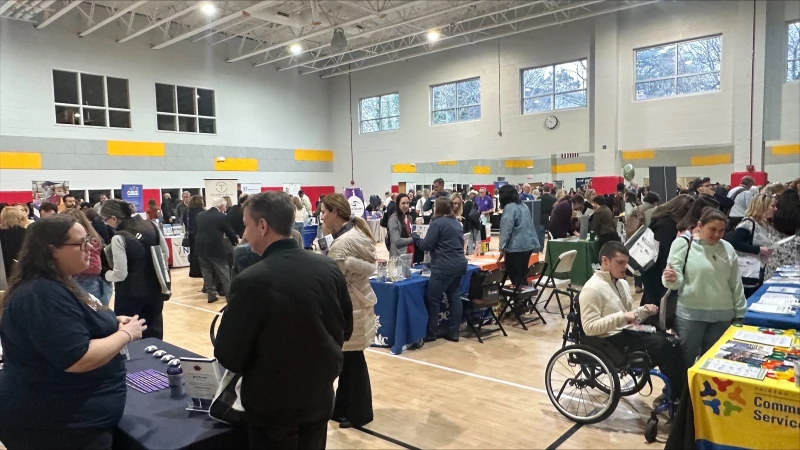
Attendees visit vendors at the Diocese of Arlington’s 2025 “From Inclusion to Belonging Conference.” / Credit: Porto Charities

Washington, D.C. Newsroom, Mar 17, 2025 / 07:00 am (CNA).

Families whose children have disabilities and Catholics with disabilities were welcomed by the Diocese of Arlington March 15 to the fourth annual “From Inclusion to Belonging Conference” which focused on plans for the future as those with disabilities prepare for adult life out of high school.

“The Lord, for us, is one who will always be there to strengthen us, to heal us, and to help us,” Bishop Michael Burbidge said in his opening remarks at the conference, held at Bishop Ireton High School in Alexandria, Virginia.

With more than 200 people in attendance, the diocesan conference featured an array of talks, in English and Spanish, about resources for children with intellectual, emotional, and physical disabilities. These included tips for life skills, faith formation, education, and employment, which were presented to parents, teachers, priests, and others.

The conference also provided talks for teenagers with disabilities, designed to help guide them on how to advocate for themselves. Those participants were brought to vendors who offered resources to connect them with opportunities.

“We are called to live the Gospel of life,” Burbidge told CNA after giving his remarks. “In fact, it is a mandate to protect, to revere, to celebrate, to cherish, and to welcome all human life. …There are no exceptions.”

Nearly 20 diocesan schools educate students with disabilities, including all four high schools. A few of the schools also have specialized programs for children who have disabilities.

Diane Elliott, an assistant superintendent for Arlington Diocese Catholic Schools, told CNA that it is important for Catholic schools to have the mindset that “we’re going to serve all God’s children.”

She said it’s “not only about the kids with disabilities,” but it’s also important for other children to learn “how to accept individual differences” and avoid stigmatizing people.

Elliott added, “the majority of what we do, it doesn’t cost any money for inclusion,” and spoke about the sensory Masses offered by the diocese. Those Masses are designed for people with sensory processing issues, and usually include dimmed lights, no organ music, and homilies that are very concise. Some people who benefit from those Masses include people with autism, downs syndrome, and Alzheimer’s disease.

For efforts that do require financial resources, Burbidge told CNA that the inclusion of those with disabilities should still always be a priority, and that when resources are limited, priorities “must be reflected in how you use those resources.”

Guadalupe Williamson, whose 14-year-old son Patrick has an intellectual disability caused by a malformation in the brain, told CNA she sends him to Saint Anthony of Padua School in Falls Church because she wanted all of her children to attend the same Catholic school.

Williamson said the inclusion efforts ensure Patrick has a “learning environment that also matches our values as a family — our Catholic values.” She said he is also an altar server, and “just absolutely loves everything that the Church has to offer.”

Roxanne Miller, a mother of 10 who lives in Huntley, sends her 18-year-old daughter Megan to St. Paul VI Catholic High School in Chantilly. She said her daughter, who has down syndrome, is “part of the fabric of the school” and referred to the inclusion efforts as “second to none.” 

Miller told CNA she attended the conference while she is helping her daughter plan for her future with employment opportunities and possibly advocacy. She said Megan is in the high school’s post-graduate transitional program for those with intellectual disabilities, which is helping them connect her with future opportunities.

Faith formation for those with special needs

The Diocese of Arlington also operates a Special Religious Development (SPRED) Program, which helps those with disabilities develop a faith community and have “access to prepare for and receive the sacraments,” Burbidge told CNA.

“That’s been a great work in our diocese,” the bishop said.

Charleen Katra, who serves on the board of the National Catholic Partnership on Disability, gives talk on ensuring those with disabilities have access to the sacraments at the Diocese of Arlington's "From Inclusion to Belonging Conference.". Credit: Tyler Arnold/Catholic News Agency
Charleen Katra, who serves on the board of the National Catholic Partnership on Disability, gives talk on ensuring those with disabilities have access to the sacraments at the Diocese of Arlington’s “From Inclusion to Belonging Conference.”. Credit: Tyler Arnold/Catholic News Agency

Nancy Emanuel, the coordinator for Special Needs Ministries in the diocese, told CNA that the program provides special religious development designed for those “who don’t fit into the typical religious education programs.”

Emmanuel said about 150 adults and children participate in the program, which divides those who are enrolled by age. The program is inclusive of those with physical and mental disabilities, which includes people with autism and down syndrome.

For some Catholics with disabilities, Emmanuel said that accessing the sacraments can at times be “overwhelming” for them. She said the program uses a lot of visual and tactile learning. For a person’s First Communion or for Confirmation, she said the instructors will practice those rituals with those children or adults to “make it so that it’s a friendly experience.” 

Charleen Katra, who serves on the board of the National Catholic Partnership on Disability, gave a talk on the importance of ensuring Catholics with disabilities have access to the sacraments and the ways in which dioceses can accommodate their needs.

She said that dioceses must “meet the real needs” of each person. She noted that catechesis for a person affected by serious intellectual disabilities can sometimes be as simple as ensuring the person knows that the Eucharist is the literal Body and Blood of Christ before communion and ensuring the person knows he or she is receiving the Holy Spirit prior to confirmation.

“If there’s anybody missing in the Body of Christ, we know it’s not complete,” Katra said.

[…]