No Picture
News Briefs

After controversy, Calif. bishop to put planned retirement home up for sale

August 28, 2018 CNA Daily News 3

San Jose, Calif., Aug 28, 2018 / 07:01 pm (CNA/EWTN News).- A 73-year-old bishop in California has changed his retirement plans after media reports sparked criticism of his decision to purchase a five-bedroom home for $2.3 million in California’s overheated housing market.

While Bishop Patrick McGrath of San Jose said the purchase made economic sense as a good investment, he said he “erred in judgment” to purchase the house.

“I failed to consider adequately the housing crisis in this valley and the struggles of so many families and communities in light of that crisis,” he said Aug. 27. “I have heard from many on this topic and I have decided that I will not move into this house.”

The diocese will put the house up for sale “as soon as possible” and any profits will go to Charities Housing, under Catholic Charities of Santa Clara County.

“I assume full responsibility for this decision and I believe that the sale of the house is the appropriate action. I thank those who have advised me,” he said.

The 3,300 square-foot home sits on one-third of an acre in San Jose’s Willow Glen neighborhood.
The bishop first considered living in a diocese-owned house on cemetery property, but the retrofitting would have been too expensive.

Liz Sullivan, communications director for the Diocese of San Jose, told CNA the renovation’s exact costs are not certain but the return on investment would not be good, “since few people would choose to live in a cemetery.” The house’s future would have been uncertain after the bishop left.

“The bishop is in good health for a man of 73, but a single-level house was desirable because of the stairs,” Sullivan added.

McGrath said the Diocesan Finance Council and the College of Consultors approved the home purchase which later became a matter of controversy.

“I agreed with them that in economic terms the purchase of the home made sense in terms of financial return on investment,” said the bishop.

The median sale price of a home in the city is now over $1 million, compared to a California-wide home price of $600,000, a record high as of May 2018, Business Insider reports. In the last year, the median sale price of San Jose homes increased by 24 percent ($210,000), the real estate site Trulia reports.

The bishop, who became head of the Diocese of San Jose in 1999, said when his retirement planning began he wanted to stay in the diocese.

“This has been my home for nearly 20 years,” he said.

Under policy set by the U.S. bishops’ conference, the Diocese of San Jose is responsible for paying the bishop’s housing and upkeep when he retires.

McGrath said the home was purchased using a fund dedicated to housing retired bishops and using proceeds from the sale of a Menlo Park condominium where his predecessor, Bishop Pierre DuMaine, had lived before he moved into assisted living.

“The fund is a fund that can be used for nothing else,” the bishop said. “When I’m not around anymore, the house can be sold. It’s a good investment in that sense. It probably makes more money this way than if it were in the bank.”

One McGrath critic said that the house purchase “seems very inappropriate.”

“Our diocese is greatly underfunded as it is,” said the parishioner, who asked the Mercury News not to be identified to avoid harming relationships with other Catholics.

The Mercury News’ report cited Bishop McGrath’s own advocacy for affordable housing, such as a 2016 commentary piece backing a $950 million bond measure for affordable housing.

In his initial remarks, McGrath said he had looked at places “way out in the East Bay,” but he liked the valley.

“I thought it would be nice to be here, to be of assistance if I can,” he said.

The bishop has not announced a retirement date, though he has asked the Holy See permission to retire before the required retirement date of 75 years to allow a younger man to become bishop.

Bishop Oscar Cantú, 51, was named Coadjutor Bishop of San Jose in July; as such, he will succeed as Bishop of San Jose upon Bishop McGrath’s retirement.

The retiring bishop had looked forward to a house with a yard.

“I like to putter around in the garden,” McGrath said. “So I think it would be good for me.”

McGrath acknowledged to the Mercury News that many retired clerics live in retirement communities, in rectories, or in other accommodations.

“But I’d like to live in a house so I would have the freedom to help the diocese but not disturb the priests in the rectories,” he said.

[…]

No Picture
News Briefs

Where did retired McCarrick live after alleged Vatican sanctions?

August 27, 2018 CNA Daily News 0

Washington D.C., Aug 27, 2018 / 05:09 pm (CNA).- The Archdiocese of Washington has declined to confirm new details about the post-retirement living arrangements of Archbishop Theodore McCarrick, and maintained that Cardinal Donald Wuerl, Washington’s archbishop, was unaware of alleged Vatican sanctions against McCarrick.

Archbishop Carlo Vigano, former Vatican ambassador to the U.S., claimed in an Aug. 25 statement that McCarrick was directed by the Vatican in 2009 or 2010 to discontinue living in a seminary, among other restrictions.

Vigano wrote that in 2009 or 2010 “Pope Benedict had imposed on Cardinal McCarrick sanctions similar to those now imposed on him by Pope Francis: the cardinal was to leave the seminary where he was living, he was forbidden to celebrate [Mass] in public, to participate in public meetings, to give lectures, to travel, with the obligation of dedicating himself to a life of prayer and penance.”

The archbishop said that McCarrick, the retired Archbishop of Washington, was at that time known by the Vatican to have committed acts of sexual immorality involving seminarians and priests.
 
On Aug. 25, the same day as the release of Viganò’s statement, a spokesman for Wuerl told CNA that “Cardinal Wuerl did not receive documentation or information from the Holy See specific to Cardinal McCarrick’s behavior or any of the prohibitions on his life and ministry suggested by Archbishop Vigano.”
 
Viganò wrote that Pope Benedict’s sanctions explicitly included an order to “leave the seminary where he was living.” At the time, McCarrick was a resident at the Redemptoris Mater Archdiocesan Seminary in the Archdiocese of Washington, where he had a self-contained apartment.
 
Two sources present at a 2008 meeting between McCarrick and Sambi told CNA that the nuncio instructed McCarrick to leave the seminary at that time. According to those sources, Sambi told McCarrick his departure was the direct instruction of Pope Benedict XVI. They stressed to CNA that they were unaware of any knowledge Cardinal Wuerl may have had of Sambi’s instructions.
 
McCarrick did make plans to leave the seminary at the end of 2008. His next home was the parish of St. Thomas the Apostle in Woodley Park, an upscale neighborhood in central Washington D.C.
 
One of the four priests resident in the rectory of St. Thomas’ parish in 2008-2009 recalls being told in December of 2008 that he would have to move out of his rooms in the parish to accommodate a “mystery VIP.”
 
“It was all very sudden,” he told CNA. “I was moved around but given another room in the rectory.” The priest told CNA he was informed by the pastor of the parish that it was McCarrick moving in, and that his arrival caused considerable upheaval.
 
“There was significant construction to create his suite, which took over two prior suites and two full baths, as well as the single guest room next to me which was converted into a private chapel for McCarrick’s exclusive use.”
 
The construction apparently continued during the first two months of 2009, with McCarrick moving in either late February or early March.

Despite the preparations and expenditures being made for McCarrick’s arrival, Ed McFadden, spokesman for the Archdiocese of Washington, told CNA on Aug. 27 that “Archbishop McCarrick typically made his own housing arrangements and did not directly involve the Archdiocese of Washington.”

Archdiocesan policy requires that any expenditure by a parish of more than $25,000 have the explicit approval of either the archbishop or the Moderator of the Curia. When asked directly about the construction at St. Thomas, the Archdiocese of Washington refused to comment on who had approved or funded the renovations.  

The priest-resident of St. Thomas told CNA that he been told that McCarrick was “no longer allowed” to live in the seminary, and that Cardinal Wuerl had “ordered” the move, but he stressed that he did not have direct knowledge of those circumstances.

Fr. Rory McKee, pastor of St. Thomas in 2009, declined to comment, and directed enquiries to the archdiocesan communications office.

Despite repeated requests, the Archdiocese of Washington declined to confirm when McCarrick moved into St. Thomas, or when he left.

CNA previously reported that McCarrick next lived alongside a house of priestly formation belonging to the Institute of the Incarnate Word (IVE) on the property of St. John Baptist de la Salle is located in Chillum, Md.

Sources told CNA that the cardinal likely moved to the property in the summer of 2010, though the Archdiocese of Washington declined to comment.

McCarrick is reported to have had, for a time, an IVE brother in formation living in his residence, which was on the parish property but separate from the house of formation. At least two members of the IVE served as assistants to McCarrick between 2014 and 2018.

In July, the Archdiocese of Washington told CNA that McCarrick “made his own living arrangements for his retirement,” and declined to comment on his residence at the John Baptist de la Salle property.

On June 20, the Archdiocese of New York reported that it had found credible an allegation that McCarrick committed acts of child sexual abuse. Wuerl wrote at the time that he was “saddened and shocked” by the allegation.

On the same day, Cardinal Joseph Tobin confirmed that the McCarrick’s former dioceses of Newark and Metuchen had reached settlements with adults who said McCarrick had engaged in sexual misconduct. In response, Wuerl specifically denied that he had been told of several out-of-court settlements made on McCarrick’s behalf by his former dioceses of Metuchen and Newark.

On Aug. 14, a report by a Pennsylvania grand jury investigating clerical sexual abuse mentioned Wuerl, previously the Bishop of Pittsburgh, more than 200 times. Defending himself against charges of mishandling priests who had been accused of child sexual abuse, Wuerl reported in at least one case being uninformed about the scope of allegations against a priest whom he permitted to minister in the Diocese of Reno-Las Vegas.

Wuerl has faced mounting pressure and calls for his resignation. Those close to Cardinal Wuerl insist that he has not asked the pope to accept his letter of resignation. Wuerl is said to be planning to attend the November plenary meeting of the U.S. bishops’ conference, which is expected to focus on the fallout of the McCarrick and Pennsylvania scandals.


[…]

No Picture
News Briefs

Bishops in Illinois plan to work with attorney general on sex abuse inquiry

August 27, 2018 CNA Daily News 0

Springfield, Ill., Aug 27, 2018 / 11:55 am (CNA/EWTN News).- Several Illinois bishops have indicated their desire to discuss with the state attorney general their dioceses’ sexual abuse policies, noting the steps they have taken against clergy misconduct.

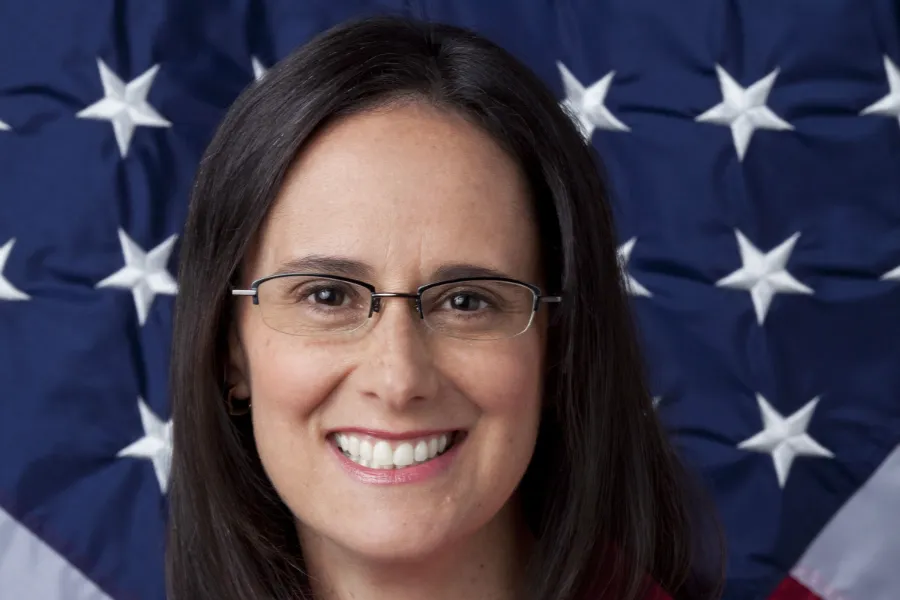
Illinois attorney general Lisa Madigan said Aug. 23 that the Church “has a moral obligation to provide its parishioners and the public a complete and accurate accounting of all sexually inappropriate behavior involving priests in Illinois.”

She indicated that the Pennsylvania grand jury report on clerical sex abuse of minors identified “at least seven priests with connections to Illinois,” and that the Archdiocese of Chicago had already agreed to meet with her.

“I plan to reach out to the other dioceses in Illinois to have the same conversation and expect the bishops will agree and cooperate fully. If not, I will work with states’ attorneys and law enforcement throughout Illinois to investigate,” Madigan wrote.

The following day, the Diocese of Rockford stated: “We look forward to discussing with the Attorney General’s office the Diocese’s sexual abuse policies and procedures.”

The diocese added that it has had policies for the proper handling of reports of sexual abuse since 1987, and that these are compliant “with the requirements of the Charter for the Protection of Children and Young People, including notifying law enforcement and screening and training of our clergy, employees and volunteers, and the training of minors in the dignity of their bodies and how to resist and report inappropriate conduct. We have worked cooperatively with our law enforcement officials and the State’s Attorneys’ offices.”

The Rockford diocese also encouraged victims of sexual abuse by clerics, religious, or laity affiliated with the local Church to contact police and its own victims abuse hotline.

Also on Aug. 24, the Diocese of Joliet said, “we look forward to assisting the Attorney General’s office in answering questions about our policies and procedures regarding clergy misconduct with minors.”

The Joliet diocese noted its adoption of the policies of the Charter for the Protection of Children and Young People, and that since the charter’s implementation in 2002, it “has been audited annually by a third party for our compliance with the Charter and has passed each year.”

It said it reports “all allegations of sexual abuse by clergy or other employees to the appropriate law enforcement agencies and State’s Attorney’s Offices,” and provided a link to its office for youth protection.

“The Diocese of Joliet is pleased to be a partner with state law enforcement officials to make every available effort to protect young people,” the local Church stated.

And Bishop Thomas Paprocki of Springfield in Illinois said Aug. 25 that “I certainly agree to speak with [Madigan] and pledge our diocese’s full cooperation with law enforcement officials to make every available effort to protect our people.”

“We welcome this opportunity to review the firm commitments we have made and the concrete steps we have taken to protect against clergy misconduct in our diocese.”

He said, “We are also willing to consider any additional actions that would be helpful in making our safe environment program more effective.”

Bishop Paprocki also provided information about the diocese’s safe environment program and how to report abuse.

The Pennsylvania grand jury report which occasioned Madigan’s statement was drafted by the office of the Pennsylvania attorney general. The report followed an 18-month investigation into thousands of alleged instances of abuse spanning several decades in six of the state’s dioceses. It identified more than 300 priests accused of abusing more than 1,000 victims.

The report’s release has led to calls for similar investigations in other states.

The Missouri attorney general does not have the authority to convene a like grand jury, but the Archbishop of St. Louis nevertheless invited the state’s attorney general Aug. 23 to conduct an inspection of its files related to allegations of sexual abuse and to produce an independent report.

A lawyer who has represented clerical sex abuse victims in Minnesota has called for a grand jury to investigate that state’s dioceses.

[…]

No Picture
News Briefs

Former nunciature official: ‘Vigano said the truth’

August 26, 2018 CNA Daily News 4

Washington D.C., Aug 26, 2018 / 10:17 pm (CNA).- Monsignor Jean-François Lantheaume, the former first counsellor at the apostolic nunciature in Washington D.C., has said that the former nuncio, Archbishop Carlo Maria Viganò, told “the truth” in his explosive statement released to the press on Aug. 25.

The 11-page document contains specific allegations that senior bishops and cardinals have been aware of the allegations of sexual abuse against Archbishop Theodore McCarrick for more than a decade. Archbishop Viganò also states states that, in either 2009 or 2010, Pope Benedict XVI imposed sanctions on McCarrick “similar to those now imposed upon him by Pope Francis” and that McCarrick was forbidden from travelling and speaking in public.

In his statement, Viganò says that these were communicated to McCarrick in a stormy meeting at the nunciature in Washington D.C. by then-nuncio Pietro Sambi. Viganò directly cites Msgr. Lantheaume as having told him about the encounter, following his arrival in D.C to replace Sambi as nuncio in 2011.

“Monsignor Jean-François Lantheaume, then first Counsellor of the Nunciature in Washington and Chargé d’Affaires ad interim after the unexpected death of Nuncio Sambi in Baltimore, told me when I arrived in Washington —  and he is ready to testify to it —  about a stormy conversation, lasting over an hour, that Nuncio Sambi had with Cardinal McCarrick whom he had summoned to the  Nunciature. Monsignor Lantheaume told me that ‘the Nuncio’s voice could be heard all the way out in the corridor.’”
 
CNA contacted Msgr. Lantheaume and requested an interview with him to discuss the account attributed to him by Archbishop Viganò. Lantheaume, who has now left the Vatican diplomatic corps and sevres in priestly ministry in France, declined to give an interview, and said he had no intentions of speaking further on the matter.

“Viganò said the truth. That’s all,” he wrote to CNA.

The full text of Viganò’s statement lists numerous senior curial cardinals, during the last three pontificates, as being aware of McCarrick’s alleged predatory behavior but either failing to act, or in some cases deliberately acting to cover-up McCarrick’s alleged crimes.

The former nuncio names three different Vatican Secretaries of State – Cardinals Angelo Sodano, Tarcissio Bertone, and Pietro Parolin – as having failed to curtail McCarrick’s behavior, or positively acting to support him.

“Cardinal Pietro Parolin, the current Secretary of State, was also complicit in covering up the misdeeds of McCarrick who had, after the election of Pope Francis, boasted openly of his travels and missions to various continents,” Viganò wrote.

Most controversially, Archbishop Viganò alleges that Pope Francis acted to lift the restrictions on McCarrick shortly after his election as pope, in 2013.

Viganò says that he met McCarrick in June 2013 and was told by the then-cardinal, “The pope received me yesterday, tomorrow I am going to China.” In a subsequent meeting with Francis, Viganò says he warned the pope about the long list of allegations against McCarrick but that the Holy Father did not respond.

Archbishop McCarrick is believed to still be residing within the Archdiocese of Washington, D.C., under conditions of “prayer, penance, and seclusion” imposed by Pope Francis.


[…]