No Picture
News Briefs

Egypt mosque attack kills more than 230

November 24, 2017 CNA Daily News 0

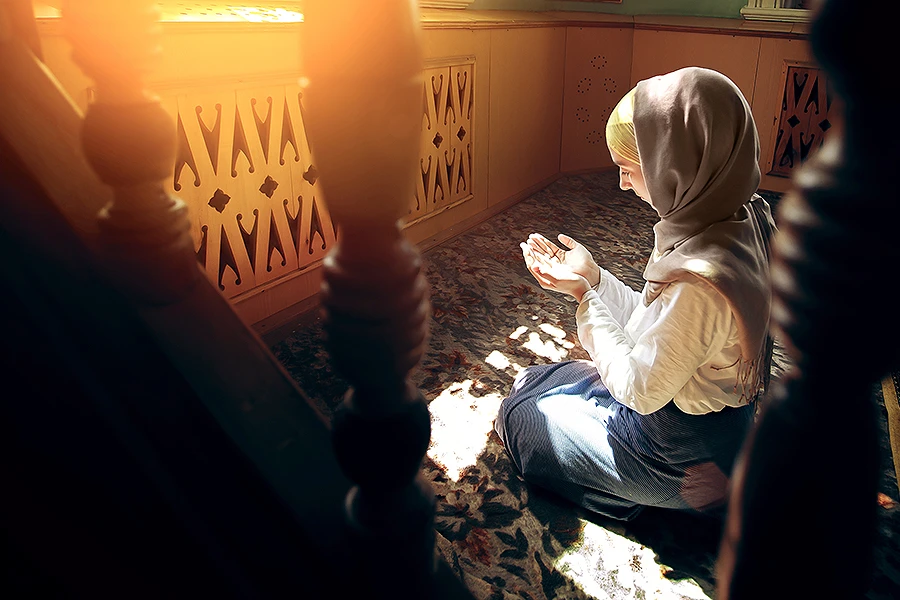
Ismailia, Egypt, Nov 24, 2017 / 11:25 am (CNA/EWTN News).- Terrorists attacked a mosque on Egypt’s Sinai peninsula during Friday prayers, killing 235 people. The incident was condemned by Cardinal Daniel DiNardo of Galveston-Houston, president of the US bishops’ conference.

No one has yet claimed responsibility for the Nov. 24 attack on al-Rawda mosque in Bir al-Abed, located about 75 miles northeast of Ismailia.

Cardinal DiNardo stated that “I join with my brother bishops in unequivocally condemning the monstrous terrorist attack on innocent people at prayer in Egypt. Terrorist acts can never be justified in the name of God or any political ideology, and the fact this attack took place at a Mosque, a place of worship, is especially offensive to God.”

The Church in the US “mourns with the people of Egypt at this time of tragedy, and assures them of our prayerful solidarity,” he added.

“We join with all those of good will in prayer that these acts of terror and mass killings – these acts of grave evil – will end and will be replaced with genuine and mutual respect for the dignity of each and every person.”

The mosque, associated with Sufis – followers of a form of Islamic mysticism – was bombed and hit with gunfire. Hundreds more were wounded in the attack.

The Sinai peninsula has been the site of an Islamist insurgency since 2013, when the Egyptian military ousted President Mohamed Morsi, who was backed by the Muslim Brotherhood.

[…]

No Picture
News Briefs

Pakistani bishops declare Year of the Eucharist

November 14, 2017 CNA Daily News 0

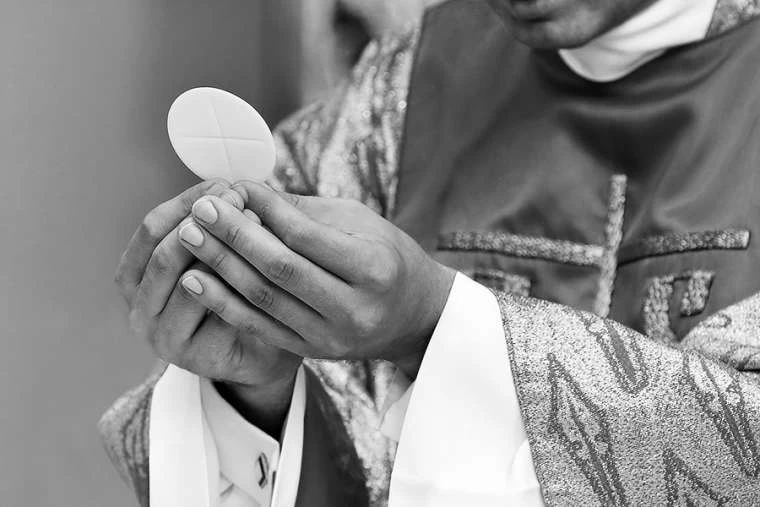
Lahore, Pakistan, Nov 14, 2017 / 12:11 pm (CNA/EWTN News).- Amid national challenges, the Pakistani Catholic Bishops’ Conference has announced a “Year of the Eucharist,” to focus on renewal and service.

The year will begin on the Solemnity of Christ the King, Nov. 26, 2017. It will end on the same feast day next year, Nov. 25, 2018.

“The ‘Year of the Eucharist’ is meant to be a time of spiritual growth and inner renewal and to share the love of Christ with all humanity by our dedicated service to our country,” the bishops said in a statement published by the Pakistan Christian Post.

“As our country is going through difficult times we urge all people in Pakistan to pray more fervently for peace, harmony, progress and prosperity of our beloved country.”

The statement was issued during the bishops’ second annual plenary meeting, which took place in Lahore, Pakistan on Nov. 9-10.
In the statement, the bishops lamented the social problems that have arisen from corrupt politics. They expressed hope that the next election would be free and fair, and would “strengthen the democratic process.”

“We have to be honest in our dealings and be free from all stains of corruption,” the bishops said. “There must be an honest interim government that will bring in fair practices and not interfere with the election campaigns and the voting process.”

The bishops called on the Election Commission of Pakistan to be completely impartial, and encouraged the political parties to be attentive to the struggles of the country’s minorities.

“We feel that the current electoral system for minority candidates being appointed by political parties on reserved seats does not represent the community and so we urge the government to create a just and fair system,” they said.

The bishops also warned that “the educational system in Pakistan is suffering.” The weaknesses in the system must be addressed, they said, noting that the local Church has worked hard to offer high-quality, affordable education.

“Education is the basic right of every human being. It has power to drag a human from darkness of illiteracy into the light of knowingness. A country can never progress without appropriate educational system,” they stressed, calling on the government to work for a system that promotes peace and religious harmony.

Looking at the situation of the Church in the country, the Pakistani bishops thanked the government for showing respect for Sister Ruth Pfau, a beloved sister who spent more than 50 years working to eradicate leprosy in Pakistan.

Pfau died Aug. 10 at age 87 and was given a state funeral, the first Christian woman in the country to receive one, according to CNN.

The bishops thanked government leaders “for making the funeral of Dr Ruth Pfau a national event,” but said that Pfau’s legacy must continue.

“This must further inspire the clergy, religious, lay faithful and all people to a renewed commitment of serving our neighbor, especially in the poor and the marginalized,” they said.

[…]

No Picture
News Briefs

Christianity can survive in Iraq but not without your help

November 2, 2017 CNA Daily News 0

Santiago, Chile, Nov 2, 2017 / 04:00 pm (ACI Prensa).- “Iraq needs aid now, or it will be without Christians,” said Fr. Luis Montes, a missionary priest has been serving in the Middle East and the Holy Land for more than 20 years. His current mission is a refugee camp in Erbil, Iraqi Kurdistan, that houses 120,000 people.

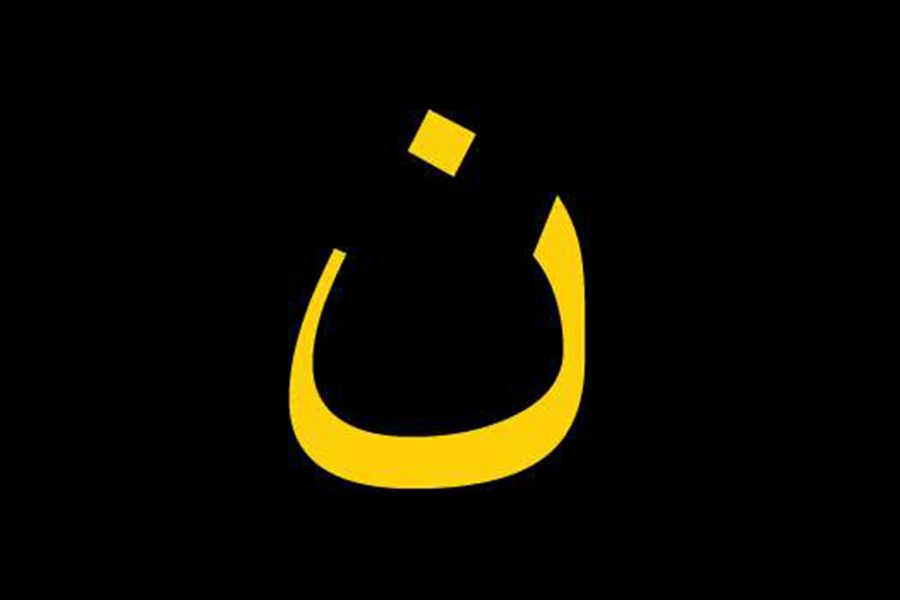
Fr. Montes has also visited Christians who have decided to return to their cities liberated from ISIS, where only the foundations of their houses are left standing, marked with the Arabic letter “nun,” which stands for  “Nazarene,” or Christian.

A native of Argentina and member of the  Institute of the Incarnate Word religious order, Fr. Montes was invited by Aid to the Church in Need (ACN) in Chile to raise awareness about the current situation of Christians in formerly-ISIS occupied areas of Iraq.  

In an interview with ACI Prensa, Fr. Montes explained that Christians displaced by the war are returning to their destroyed hometowns because they have “the grace of God that allows them to endure martyrdom.”

“God gives courage to those who are the weakest. This is something purely from God, not from themselves. In face of persecution, God gives them grace. He never gives us a mission he doesn’t give us the strength for. God gives them the grace to endure the worst pain and torture and to be able to follow him,” he said.

“There are things that help them, for example, their very beautiful devotion to the Blessed Virgin Mary. She is the queen of martyrs, she teaches them to be martyrs.”

“Everything was taken away from the refugees,” so lacking material goods, they just “simplify their lives,” the missionary priest explained.

“Life is simple. They love God because he is the giver of their material needs. They love the Blessed Virgin because she is the Mother that God has given us.”

“That is the wisdom that comes from the Cross. They know their crosses and whoever joins himself to the Cross has that wisdom and draws on it and God grants him peace, which is the closest thing to happiness here on earth,” he added.

“When you visit them” the priest continued, “ you see suffering people but they have an inner peace. Despite everything they have suffered, they never deny their God. The people thank God every day. They tell him about their hardships, they weep and then they finish saying, ‘Allah karim’ which means ‘God is generous,’” he said.

“This people has suffered so much but, they are people tested by suffering. They hold fast to their  faith because their situation is simpler than what you can see from the outside. They are well formed in their faith, so for them, reconstructing their lives is the easier thing to do.”

“Starting their lives over brings them a great deal of joy and consolation, knowing that they can go back to their cities, to their former lives. They have been living as refugees. Compared to that, this is now a paradise!” Fr. Montes emphasized.

While basic services are slowly returning to the cities destroyed by ISIS, the families that come camp over the foundations of the homes that were burned or destroyed by the Islamic extremists.

Fr. Montes said that help coming to the refugees from Christians, through organizations like Aid to the Church in Need, is essential to their repatriation.

Since 2014, ACN has been providing food and housing for displaced Christian families.

“With outside aid coming in, Christians have the courage to begin again and return to their lives. But the aid has to come now or Iraq will be without Christians, ” he stressed

“The Church in Iraq is going through a crucial moment and helping them is everyone’s duty. Imagine how shameful it would be for future generations if it were to be said that Christians had to abandon the Middle East because no one came to their aid,” Fr. Montes concluded.

This article was originally published by our sister agency, ACI Prensa. It has been translated and adapted by CNA.

[…]

No Picture
News Briefs

How can Saudi Arabia counter violent extremism? Religious freedom, expert says

October 26, 2017 CNA Daily News 2

Ryiadh, Saudi Arabia, Oct 26, 2017 / 05:00 pm (CNA/EWTN News).- Saudi Arabia’s crown prince Mohammed bin Salman has suggested a turn towards moderate Islam, especially among younger Saudis who want to “destroy” extremist thoughts, but one expert suggests religious freedom is the best path for Saudi Arabia.

“As a general matter, no government can ‘destroy extremist thoughts,’ including the government of Saudi Arabia,” Georgetown University professor Thomas F. Farr told CNA. “Even when U.S. forces ‘destroy’ ISIS militarily, the problem of extremist interpretations of Islam will remain.”

Farr, who directs the Religious Freedom Research Project at Georgetown’s Berkley Center for Religion, Peace & World Affairs, advocated religious freedom as the best approach in Saudi Arabia.

His remarks follow comments from Prince Mohammed, the new heir apparent to the Kingdom of Saudi Arabia, who recently spoke to the U.K. newspaper The Guardian.

“We are simply reverting to what we [once] followed – a moderate Islam open to the world and all religions. Seventy percent of the Saudis are younger than 30, honestly we won’t waste 30 years of our life combating extremist thoughts, we will destroy them now and immediately.”

“After the Iranian revolution in 1979, people wanted to copy this model in different countries, one of them is Saudi Arabia,” Prince Mohammed continued. “We didn’t know how to deal with it. And the problem spread all over the world. Now is the time to get rid of it.”

Farr welcomed the encouragement of more moderate interpretations of Islam, but cautioned: “their success in that endeavor will have less to do with the use of force than it will the government’s willingness to move toward true religious freedom, defined in this context as the freedom of all religions in the kingdom openly to challenge Saudi Wahhabism, the ideological source of much violent Islamist extremism.”

“In short, what governments can do to undermine violent extremism is to protect religious freedom,” he said.

Saudi Arabia’s religious freedom record has come under criticism.

In its 2017 report, the U.S. Commission on International Religious Freedom recommended that Saudi Arabia be designated a tier one “Country of Particular Concern.”

“Saudi courts continue to prosecute and imprison individuals for dissent, apostasy, and blasphemy, and a law classifying blasphemy and the promotion of atheism as terrorism has been used to target human rights defenders, among others,” the report said. The government also privileges its interpretation of Sunni Islam over other interpretations and bans non-Muslim public places of worship.

The commission’s report also cited the Saudi government’s Vision 2030 program, focused on economic and cultural transformation, as a reason for improved religious freedom conditions. There was a “significant decrease” in the power of the country’s Commission for the Promotion of Virtue and Prevention of Vice, a continued government commitment to reform textbooks and curricula, and increased efforts to counter domestic and international extremism.

Prince Mohammed’s remarks expanded on comments he had made at an investment conference announcing a $500 billion planned independent economic zone across Saudi Arabia, Jordan and Egypt, The Guardian reports.

“Changing Saudi Arabia for the better means helping the region and changing the world,” the prince said. “So this is what we are trying to do here. And we hope we get support from everyone.”

[…]

No Picture
News Briefs

What it’s like to be a missionary in Central African Republic

October 25, 2017 CNA Daily News 1

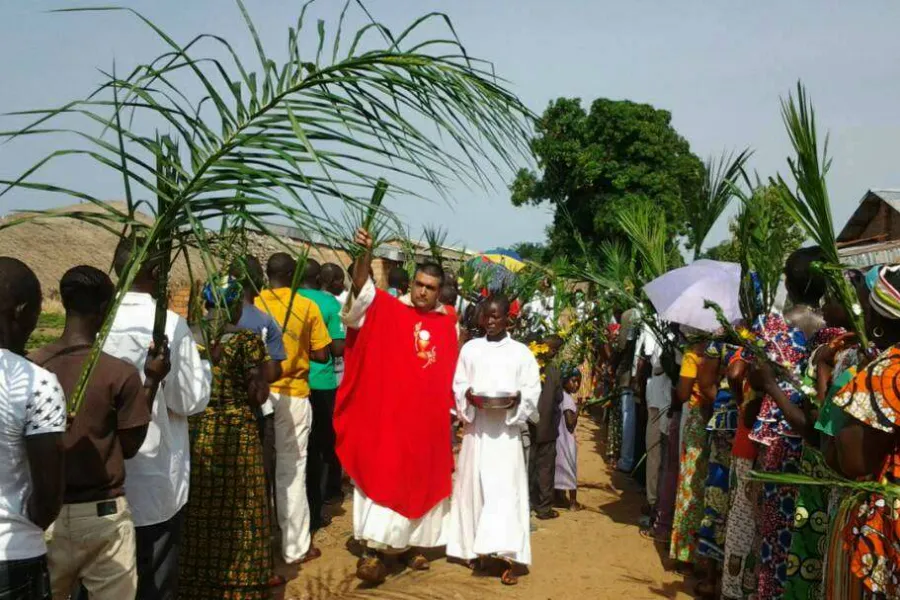
Bangassou, Central African Republic, Oct 25, 2017 / 03:04 am (ACI Prensa).- Especially in war-torn Central African Republic, Christians are called to the virtues of forgiveness and mercy, reflected a priest from Chile who has spent 12 years as a missionary in the central African country.

“Being a Christian in the Central African Republic means witnessing to the forgiveness and mercy of God,” Fr. Yovane Cox told ACI Prensa.

The Central African Republic has suffered violence since December 2012, when several bands of mainly Muslim rebel groups formed an alliance, taking the name Seleka. They left their strongholds in the north of the country and made their way south, seizing power from then-president Francois Bozize. Their president was in turn ousted in a negotiated transition in January 2014.

In reaction to the Seleka’s attacks, some Central Africans formed self-defense groups called anti-balaka. Some of these groups, mainly composed of Christians, began attacking Muslims out of revenge, and the conflict took on a sectarian character.

The civil war has officially ended and the Seleka have been disbanded, but ex-Seleka and anti-balaka groups have continued to terrorize local populations. Thousands of people have been killed in the violence, and hundreds of thousands displaced from their homes.

Fr. Cox is a pastor in Bema, near Bangassou in the country’s southeast.

In the context of the Central African Republic’s extreme poverty, the Chilean missionary of the Gran Rio Mission Association has managed to build a school for 300 children and hopes to build another with the capacity for 400 students.

Fr. Cox said the sectarian violence urgently calls for  “showing mercy” and to “being ready to forgive, to help people to overcome terrible things such as death of a loved one or the destruction of their village.”

The priest related his own experience of persecution and violence when in June this year he had to flee, along with his faithful, to the Democratic Republic of the Congo to seek refuge.

“I was lying on the floor of the church for hours waiting for the fighting to end. Then I left and came across some extremely angry people, so I asked myself, “How can I be a witness to Christ in the midst of this terrible situation?”

“Like every pastor I was the last to leave the village, using a dugout canoe,” Fr. Cox recalled, “and when I got to the other side, to the Congo, I was welcomed  by all the people, even by those who were indifferent to me in the village.”

“Everyone gave me a hug and told me ‘Father, we were waiting for you.’ When people say ‘father’ to you so many times, the meaning of the word is lost sometimes, but there I experienced it. I said to myself ‘these are my children, they were waiting for me just like for a father,” the missionary said.

The persecution of Christians in the Central African Republic are undergoing is coming from a mostly Muslim group “which is being politically manipulated,” Fr. Cox said.

“There is a hidden political agenda, no one wants to say it, but it’s the reality. It does a lot of harm and is dividing the country. Only in the capital, Bangui, thanks to the presence of Pope Francis in 2015, was the Muslim population able to be reconciled with the rest of the citizens.”

The priest also said that the the country’s terrain “is extremely rich” thanks to oil and diamonds. Though it has immense natural resources, the country “is mired down in extreme poverty and curiously no international concern or nation is interested in the resources.”

“The United Nations is present but they’re not doing a good job and they haven’t succeeded in defusing this conflict or making progress toward reconciliation. The Church is the only only institution doing something for the people. Africa is suffering from terrible indifference,” from the outside world, he lamented.

Faced with this, Fr. Cox encouraged Catholics to show their solidarity with persecuted Christians in Africa in three ways, beginning with overcoming indifference.

“If we don’t resolve Africa’s problems, how are we going to stop emigration? In face of this indifference the only solution is to open up your heart and recognize that we’re all humans beings and we have the same dignity before God and each other,” he stated.

Secondly, concrete actions. “Many people help out by donating to Aid to the Church in Need and they carry out various projects here. But also it can be done on a personal level; for example, I have 60 Chileans who are paying for the tuition for one child for a whole year.”

Finally, but no less important, is prayer: “If we didn’t have the prayers of the Church, I think the Church in the Central African Republic would have failed in its missionary work.”

“We would have become discouraged and abandoned the people, but there is something that fortifies the soul of all missionaries and that is that we know that we have the support of a lot of people behind us,” Fr. Cox emphasized.

[…]