No Picture
News Briefs

In Aleppo, a heroine of endurance

February 21, 2018 CNA Daily News 1

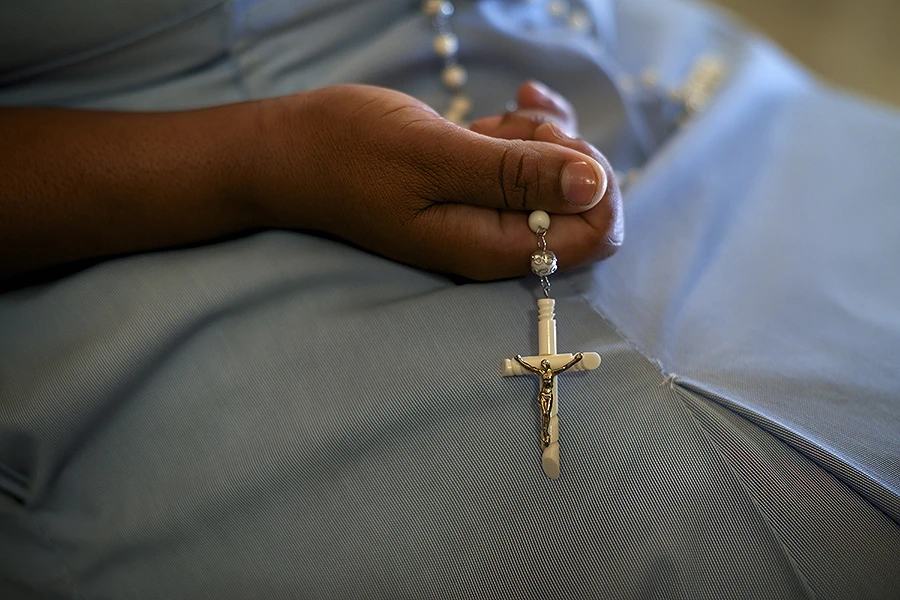
Aleppo, Syria, Feb 21, 2018 / 03:23 pm (Aid to the Church in Need).- Annie Artin, 15, is a lonely girl who lives with her mother, Silva Owadis, 37, her grandmother, and aunt in a modest but new apartment in Aleppo, Syria.

The family has lived there si… […]

No Picture
News Briefs

South Africa’s new president praised for commitment to fight corruption

February 20, 2018 CNA Daily News 1

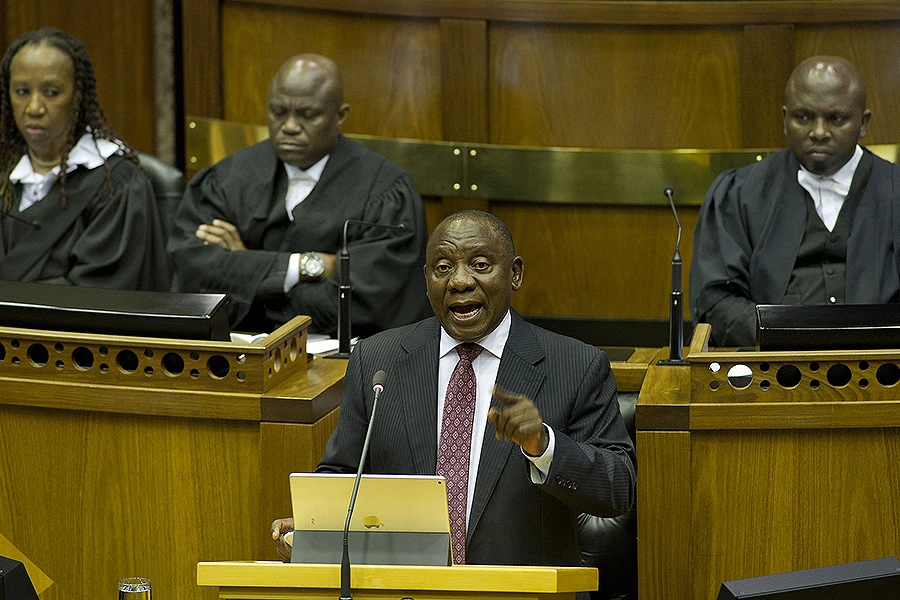
Johannesburg, South Africa, Feb 20, 2018 / 01:50 pm (CNA/EWTN News).- The first State of the Nation address by South Africa’s new president, Cyril Ramaphosa, has been welcomed by one of the country’s Jesuit priests for its call to create communities of trust and to dialogue about problems facing South Africa.

Ramaphosa assumed office Feb. 15, following the resignation of Jacob Zuma, whose tenure was marked by numerous allegations of corruption allegations and fostered a decline in morality in public life. South Africa’s bishops were quick to welcome Zuma’s choice to resign.

In his State of the Nation address Feb. 16, Ramaphosa pledged to “turn the tide of corruption in our public institutions. We are determined to build a society defined by decency and integrity, that does not tolerate the plunder of public resources, nor the theft by corporate criminals of the hard-earned savings of ordinary people.”

Ramaphosa also discussed land redistribution and job creation.

Fr. Peter-John Pearson wrote at Spotlight Africa Feb. 19 that Ramaphosa’s speech echoed “poignant issues outlined in Catholic Social Teaching.”

Writing at the ministry of the Jesuit Institute South Africa, the priest cited Ven. Pius XII and Cardinal Basil Hume, Archbishop of Westminster from 1976 to 1999, in stressing “importance of restoring and building civic relationships thus strengthening civil society.”

“Ramaphosa called for the reestablishment of communities of trust in the face of diminishing trust in public institutions and weakened confidence in leaders. He underlined that it is everyone’s task to create a common destiny,” Fr. Pearson noted.

He cited St. John Paul II’s teaching on solidarity, and said Ramaphosa’s “commitment to undoing past injustices and present inequalities is key to establishing the common good.”

“His further commitment to the free basic services which supports 3.5 million indigent households and continuing the payment of 17 million grants to the poorest of the poor, resonates with the fundamental option for the poor as does his promise to deal effectively with those who have plundered the resources of the nation and those who have established a culture of cronyism and corruption.”

The priest also considered it important how often Ramaphosa “promised to hold summits on a variety of important and often contested issues ranging from investment to jobs.”

“While some decried this emphasis as an entrenchment of a culture of talking at the risk of it diminishing action: from a CST perspective it undergirds the importance of dialogue as a powerful way of ensuring the inclusion of usually excluded voices in the process of developing public policy,” Fr. Pearson stated.

“In a country plagued with a history of identity politics and a growing exclusion of the poor from any meaningful decision making about their own futures, creating spaces for dialogue and thus building incrementally those communities of trust, is critical for any sustainable  life  together,” he added.

The priest concluded suggesting that this is the first time that “there seems to be a spirit of hope in South Africa” in several years.

“A solid indication of pursuing the quest for justice, enhancing a dialogical culture together with appropriate processes that implement such dialogues, and the generation of hope, are indeed the benchmarks of CST and a sign of the times in South Africa.”

[…]

No Picture
News Briefs

Bishops in Nigeria release books on marriage, family life

February 19, 2018 CNA Daily News 0

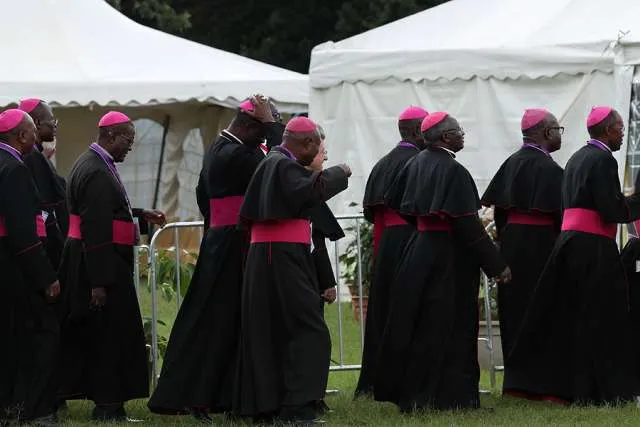
Ibadan, Nigeria, Feb 19, 2018 / 12:29 pm (CNA/EWTN News).- The bishops of Nigeria’s Ibadan ecclesial province recently launched two books addressing marriage and family life within the country, drawing particular attention to the respect for human life from conception to natural death.

According to CEO Africa, the book launch took place at the John Paul II Centre at the University of Ibadan. The occasion featured various speakers, and included a prayer for the family, a choir, and a “eulogy of God” presentation.

The two books presented at the event were titled Marriage and Family: the Teachings of the Catholic Church, and A Catechism on Human Life: from Conception to Natural Death. The books were penned by the bishops of the Ibadan province in an effort to support and strengthen marriage and family life within the country.

The event was chaired by Dr. Juliana Iyabo Olusanmi, who said the books served as an “eye-opener” to the various issues surrounding married and family life. She also noted that the books are aimed at correcting “moral values in the society which will further preserve the sanctity and dignity of human life.”

Among those in attendance at the book launch were Archbishop Gabriel ‘Leke Abegunrin of Ibadan, his five suffragan bishops, and Adedotun Aremu Gbadebo III, who is Alake, or king, of the Egba, a Yoruba clan.

Archbishop Abegunrin addressed those gathered, emphasizing unity within the nation. He also pointed to the books as resources to boost the quality of family life and strong marriages – not only within Nigeria, but also around the globe.

Others commenting on the books, including Fr. Michael Banjo, saw them as ways to fight against the practice of abortion and contraception within the country, which he said threatens the sanctity of human life. He also applauded the books’ sections on same-sex marriage and their defense of human dignity.

[…]

No Picture
News Briefs

Pope accepts resignation of disputed Nigerian bishop

February 19, 2018 CNA Daily News 0

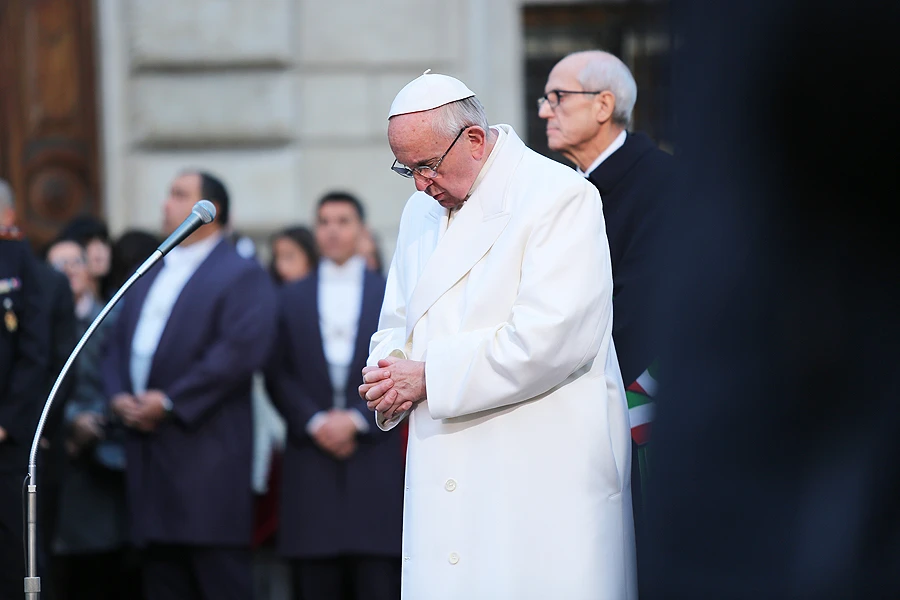
Ahiara, Nigeria, Feb 19, 2018 / 11:13 am (CNA/EWTN News).- Pope Francis accepted the resignation Monday of a Nigerian bishop who had been rejected by many of the priests of his diocese since his appointment more than five years ago.

In June 2017 Pope Francis met with clerics of the Diocese of Ahiara and demanded that they accept the bishop appointment that had been made, or face suspension and loss of office.

In accepting Bishop Peter Okpaleke’s resignation Feb. 19, Pope Francis chose not to take action against the clergy of Ahiara, saying they have since expressed repentance.

At the same time, Pope Francis appointed as apostolic administrator sede vacante et ad nutum Sanctae Sedis of Ahiara Bishop Lucius Ugorji of Umuahia.

Bishop Okpaleke’s resignation letter was sent to the Vatican Feb. 14.

Okpaleke was appointed Bishop of Ahiara in December 2012 by Benedict XVI. However, the Ahiara diocese is dominated by the Mbaise ethnic group, and as an outsider from the nearby Diocese of Awka, Okpaleke was rejected by much of Ahiara’s clergy and laity, who wanted one of their own to be appointed bishop over them.

The Mbaise are among the most Catholic of Nigerian peoples, with 77 percent of the diocese’s population of 670,000 being Catholic. Nearby dioceses range between 19 and 70 percent Catholic.

However, Awka, Bishop Okpaleke’s home city, is located in the state of Anambra. Ahiara, on the other hand, is located to the south in Imo state. The Mbaise have often asserted that the Nigerian hierarchy favors Anambra.

Many members of the tribe resent what they call the “Anambranization” of the Church in southeast Nigeria, believing there to be corruption within the Church in Nigeria and a “recolonization” of the Mbaise.

The Mbaise also have a high number of priestly and religious vocations, many of whom end up serving as missionaries in Western nations. The diocese has seen at least 167 priestly ordinations since its establishment in 1987. Because of this, many had hoped that one of their own would fill the two-year episcopal vacancy in the Ahiara diocese.

After Bishop Okpaleke’s appointment, his Mbaise opponents blocked access to Ahiara’s cathedral for his episcopal ordination, forcing the prelate to instead be consecrated and installed outside his new diocese, at Seat of Wisdom Seminary in the Archdiocese of Owerri, May 21, 2013.

In July 2013, shortly after his election, Pope Francis named Cardinal John Onaiyekan of Abuja as apostolic administrator of Ahiara in a bid to resolve the problem; however, the effort proved to be unsuccessful.

In his letter of resignation, Bishop Okpaleke remarked that the situation in the Ahiara diocese “unfortunately … to the best of my knowledge has not improved.” He has remained in Awka since his espiscopal consecration.

Most importantly, this has been threatening my spiritual life,” he wrote. He said that he thus believes that remaining Bishop of Ahiara “is no longer beneficial to the Church,” as his apostolate would not be effective “where a group of priests and lay faithful are very ill disposed to have me in their midst.”

Exercising the ministry in a diocese where priests who are supposed to be my immediate and closest collaborators, brothers, friends and sons are at war with one another, with the laity and with me as their chief shepherd would be disastrous and a threat to the salvation of souls – including my own soul.

The Congregation for the Evangelization of Peoples said in a Feb. 19 letter to Archbishop Ignatius Kaigama of Jos, president of the Nigerian bishops’ conference, that Pope Francis had received 200 letters of apology from clerics of the Ahiara diocese. The congregation responded to each priest who wrote.

The congregation added that with the appointment of a new apostolic administrator, Pope Francis “wants to point out that He continues to have a special and particular concern for the Diocese of Ahiara.”

“For the time being, the Pope does not intend to provide normal Governance to Ahiara and reserves the right to evaluate its spiritual and ecclesial progress before He makes another decision.”

In a Feb. 14 pastoral letter, Bishop Okpaleke characterized opposition to his appointment as a “Refusal to give the Holy Spirit a chance” and announced his decision to offer his resignation.

He included a call to repentance, saying he wanted “to invite those who have remained in permanent opposition to have an authentic ‘sensus Ecclesiae‘ (i.e. staying with the Church in love), to renew the spiritual bond and to refrain from being guided by ideologies, motivations and ideas that neither belong to Christ nor to the Church.”

Obedience is central to discernment, the bishop wrote, and “it involves trust that God is leading the Church.”

“I invite any dissenting priests to re-examine their initial motivations for becoming priests in the Catholic Church. Repentance and reconciliation are very urgent!”

In a Feb. 19 statement, the Congregation for the Evangelization of Peoples confirmed that in their letters expressing “obedience and fidelity”, some of the Ahiaran priests who wrote to Pope Francis also said they would have “psychological difficulty” in collaborating with Bishop Okpaleke after years of conflict.

The congregation urged each priest involved to “reflect on the grave damage inflicted on the Church of Christ” and voiced hope that in the future, they would never repeat such “unreasonable actions opposing a Bishop legitimately appointed by the Supreme Pontiff.”

“The Holy Father, who accompanies with prayer this new phase in the life of the Church in Ahiara, hopes that, with the new Apostolic Administrator, the local Church will recover its vitality and never again suffer such actions that so wound the Body of Christ.”

[…]

No Picture
News Briefs

Women religious in Nigeria hold National Day of Prayer and Fasting

February 17, 2018 CNA Daily News 1

Abuja, Nigeria, Feb 17, 2018 / 06:01 am (CNA/EWTN News).- Women religious in Nigeria held a National Day of Prayer and Fasting for the respect of human life on Ash Wednesday, in light of the ongoing violence within the country.

The Feb. 14 day of prayer and fasting was facilitated by the Nigeria Conference of Women Religious and the African Faith & Justice Network’s women empowerment project, with the theme “Nigeria Catholic nuns uphold the sacredness of life through prayer.”

The event included women from multiple religious congregations throughout the country, according to CANAA.

The sisters gathered reflected on the increasing “communal clashings” within Nigeria, including the alarming conflicts between farmers and herdsmen. They also pointed to the various killings, kidnappings, and particular violence against women that has been ongoing within the country.

The sisters additionally noted personal experiences of violations against human dignity, including multiple kidnappings within their own religious communities. One community recalled having their major superiors and councilors kidnapped and held for ransom in a dungeon for weeks, while another group of sisters expressed a similar occurrence.

Other instances of kidnapped or killed religious have surfaced over the past few years in Nigeria, causing further concern over the ongoing violence produced mainly by ethnic or religious conflicts, as well as the insurgency of the radical Islamist group Boko Haram.

As violations against human dignity continue to plague Nigeria, the sisters encouraged the government and officials to enact measures of security for the defenseless and to create a safe environment for the people of Nigeria that would safeguard the lives of all people.

Prompted by the AFJN to use their influence for the good of human life, the sisters have taken up the mission to defend life within the country by bringing these issues to the public square – particularly through their most recent day of prayer and fasting.

While overwhelmed by the gravity of the challenge, the sisters said that after prayer, they have risen to the call to give public witness to the sacredness of life. AFJN also asked for prayers for the sisters’ challenge ahead in promoting human dignity in Nigeria.

“May the sisters’ boldness and courage to act on behalf of justice in the public forum bring change of hearts, move the government and elected officials to act for the common good, and bring consolation to many who have lost their loved ones to violence in Nigeria.”

[…]

No Picture
News Briefs

Respect freedom of speech, Kenyan bishops say after media restrictions

February 14, 2018 CNA Daily News 0

Nairobi, Kenya, Feb 14, 2018 / 05:09 pm (CNA/EWTN News).- Kenya’s government has shut down several TV stations after the leader of an opposition political party declared himself the “people’s president” in January. The country’s bishops condemned the actions of both parties and insisted on the importance of free speech and respect for law and order.  

“As a Church whose mandate is to promote justice and peace, we are categorically concerned with acts of both the government and the opposition that are unconstitutional and a bridge to law and order,” the bishops wrote in a Feb. 2 statement.

The situation follows a disputed August 2017 election. President Uhuru Kenyatta was re-elected Aug. 11, but it was nullified and a new election was ordered by the Supreme Court, which said the vote wasn’t transparent.

Raila Odinga, Kenyatta’s challenger, boycotted the October re-run, claiming it would also be neither free nor fair, and Kenyatta won overwhelmingly, with only 39 percent turnout.

Odinga then held an unofficial swearing-in ceremony in Nairobi Jan. 30 where he called himself the “people’s president.”

Kenyatta’s government then shut down several TV channels so as to prevent coverage of the swearing-in. The stations were still able to live-stream online, however. Only two stations have now been allowed to resume broadcasting to subscribers.

The Kenyan bishops responded saying that the restrictions on the TV stations did “not augur well for the freedom of expression and press in the country.”

“This is in itself is retrogressive and deliberate effort toward eroding the positive steps the Country and her people have laid down in the Constitution as a social contract.”

The bishops encouraged the government to resume the proper media functions, as Kenya’s constitution allows. The statement also emphasized the responsibility of journalists “to inform and educate the public.”

Additionally, the bishops insisted that “both opposition and the government should desist from any acts that can incite the public and cause deeper divisions among the people of Kenya and the Country at large.”

Citing the fact that “no state agency or individual is above the law,” they called on all state agencies and all duty bearers to respect and adhere to the tenets and spirit of the Constitution, respect human rights and the fundamental freedoms.”

As an organization committed to peaceful solutions, the bishops offered their support to help facilitate dialogue and encouraged Kenyans to join a 2018 Lenten campaign for peace.

About 50 people have reportedly been killed in violence related to protests following the August 2017 election.

Kenya’s 2007 elections resulted in nationwide ethnic violence that killed 1,300 people and displaced as many as 700,000.

[…]

No Picture
News Briefs

Coptic Orthodox to dedicate church to New Martyrs of Libya

February 13, 2018 CNA Daily News 1

Minya, Egypt, Feb 13, 2018 / 04:01 pm (CNA/EWTN News).- The Coptic Orthodox Church will dedicate on Thursday a new church to the 21 Martyrs of Libya, who were beheaded by the Islamic State, three years after their deaths.

 
The church will be opened Feb. 15, according to Fides News Agency. It is located in the village of al-Our in Egypt’s Minya Governorate. The village was home to 13 of the martyred men.

“Any way that the Church of today can honor her martyrs is a blessing. The story of these 21 brave men is worth telling. In way too many places Christians are under siege from the dark forces of extreme hatred, and their freedom is conditioned by this hatred,” Bishop Gregory Mansour of the Maronite Eparchy of Saint Maron of Brooklyn told CNA.

The church may someday house the 21 martyrs’ remains, which were identified in a mass grave on the Libyan coast in September.

The Coptic Orthodox Church recognized the 21 Coptic Christians as martyrs to be commemorated every Feb. 15 within only a week of their murder in 2015 along the Libyan coast, which was filmed by the Islamic State and released in an internet video.

The Coptic Orthodox Church is an Oriental Orthodox Church, meaning it rejected the 451 Council of Chalcedon, and its followers had historically been considered monophysites – those who believe Christ has only one nature – by Catholics and the Eastern Orthodox, though they are not considered so any longer.

Although Egyptian President Abdel Fattah el-Sisi authorized the building of the new church, its construction in a village that is 70 percent Muslim has faced resistance.

“Some of the villagers protested and threw stones when construction started on the church. Churches are a sensitive subject throughout Egypt, even though about 10 percent of the population is Christian. It’s hard to get permits to build them,” Jane Arraf of NPR reported from al-Our.

Christians in Egypt face a constant threat of violence. Earlier this week, a man was found guilty of stabbing Coptic Orthodox priest, Samaan Shehata, to death last October.

On Palm Sunday last year, two Islamic State suicide bombings at Coptic churches in Egypt claimed the lives of 47 people.

“We pray for our Coptic brethren as they continue to witness to their beautiful faith and way of life in Christ Jesus. They live in the most terrifying of circumstances, never knowing the hour or the place of the next attack. May the prayers of the Mother of God be their comfort and strength,” said Bishop Mansour, who continued: “Egypt was the first place of refuge for the holy family and continues to be a place of refuge for God’s holy family, mystically present in his Coptic Christians.”

[…]