No Picture
News Briefs

Local bishop: ‘The Madonna has not appeared in Medjugorje’

February 28, 2017 CNA Daily News 0

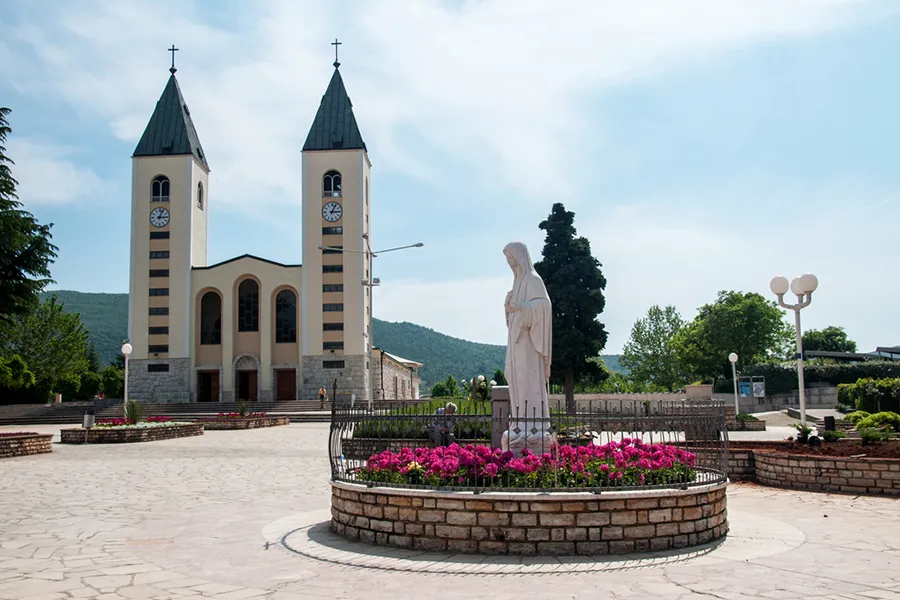
Mostar, Bosnia and Herzegovina, Feb 28, 2017 / 04:12 pm (CNA/EWTN News).- The bishop of the local Church where Medjugorje is located reiterated on Sunday his long-held belief that the alleged Marian apparitions at the site are false.

“The position of this Curia throughout this period has been clear and resolute: these are not true apparitions of the Blessed Virgin Mary,” Bishop Ratko Peric of Mostar-Duvno wrote in a Feb. 26 statement on his diocesan website.

He referred to investigations into the authenticity of the supposed apparitions that began with the diocese in 1982, and which have continued to the present time at the Congregation for the Doctrine of the Faith.

The alleged apparitions originally began June 24, 1981, when six children in Medjugorje, a town in what is now Bosnia and Herzegovina, began to experience phenomena which they have claimed to be apparitions of the Blessed Virgin Mary.

According to these six “seers,” the apparitions contained a message of peace for the world, a call to conversion, prayer and fasting, as well as certain secrets surrounding events to be fulfilled in the future.

These apparitions are said to have continued almost daily since their first occurrence, with three of the original six children – who are now young adults – continuing to receive apparitions every afternoon because not all of the “secrets” intended for them have been revealed.

Since their beginning, the alleged apparitions have been a source of both controversy and conversion, with many flocking to the city for pilgrimage and prayer, and some claiming to have experienced miracles at the site, while many others claim the visions are non-credible.

The bishop holds the supposed apparitions to be nothing but a manipulation of the visionaries and the priests who work with them.

Bishop Peric, who was ordained a priest of the diocese which he now heads in 1969, emphasized his devotion to Mary, and his incredulity regarding the alleged apparitions in Medjugorje.

“During the course of my episcopal ministry, first as coadjutor (1992/93) and later as ordinary, with preaching and the publication of books, as well as with more than fifty Marian and Mariological articles, I have tried to present the role of the Blessed Virgin Mary in the incarnation and the work of the Son of God and Her Son, and her intercession for the whole Church, of which she is mother according to grace. At the same time I have highlighted, as was done by my predecessor of happy memory, Bishop Pavao Zanic, the non-authenticity of the apparitions, which by this time have reached the number of  47,000.”

The statement delves extensively in what Bishop Radic considers the ambiguousness of the apparition.

“The female figure who supposedly appeared in Medjugorje behaves in a manner completely different from the real Virgin Mother of God in the apparitions currently recognized as authentic by the Church: usually she does not speak first, she laughs in a strange way, before some questions she disappears and appears again, she obeys the ‘visionaries’ and the local pastor who make her come down from the hill into the church even against her will. She doesn’t know with certainty how many more times she will appear, she allows some of those present to step on her veil extended on the ground, and to touch her dress and her body. This is not the Virgin of the Gospels.”

The bishop also takes issue with the visionaries’ request for a “visible sign” from the Virgin and the promise from one the visionaries that there will be a sign at the top of the hill in the form of water.

“After almost four decades there is no sign whatsoever, nor water, just fantasies,” the bishop wrote.

The statement also makes detailed reference to the inconsistencies among the various visionaries regarding the purpose of the apparitions, as well as their duration.

“All the ‘visionaries’ but one agreed that the Virgin would appear for three more days … but she appeared to have changed her mind and still ‘appears’ for 37 years,” Bishop Radic said.

The statement mentions other irregularities, such as a strange trembling in the apparition, a false anniversary of the beginning of the apparition, inconsistencies in whether the apparition has a child, inexplicable silences, strange messages, discrepancies in dress, nervousness rather than peace among the seers, scandalous touching of the apparition, and intentional manipulation of the apparition.

“Considering everything that has been examined and studied by this diocesan Curia, including the investigation of the first seven days of the alleged apparitions, we can affirm in peace: the Madonna has not appeared in Medjugorje! This is the truth that we sustain, and we believe in the word of Jesus, according to which the truth will set us free.”

In April 1991, the bishops of the former Yugoslavia determined that “on the basis of the research that has been done, it is not possible to state that there were apparitions or supernatural revelations.”

On the basis of those findings the Congregation for the Doctrine of the Faith directed in October 2013 that clerics and the faithful “are not permitted to participate in meetings, conferences or public celebrations during which the credibility of such ‘apparitions’ would be taken for granted.”

In January 2014, a Vatican commission completed an investigation into the supposed apparitions’ doctrinal and disciplinary aspects, and was to have submitted its findings to the Congregation for the Doctrine of the Faith.

Pope Francis visited Bosnia and Herzegovina in June 2015, but declined to stop at Medjugorje during his trip.

Earlier this month, Francis appointed Archbishop Henryk Hoser of Warszawa-Praga as a delegate of the Holy See to look into the pastoral situation at Medjugorje. The Polish archbishop is to “suggest possible pastoral initiatives for the future” after acquiring a deeper knowledge of the local pastoral situation.

[…]

No Picture
News Briefs

Loving your neighbor means voting wisely, Northern Ireland bishops say

February 27, 2017 CNA Daily News 0

Armagh, Northern Ireland, Feb 27, 2017 / 06:02 am (CNA/EWTN News).- Ahead of Northern Ireland’s assembly elections, the region’s Catholic bishops have reflected on situation facing voters and the importance of voting with well-formed consciences.

“Far from separating us from concern about society and its development, the Gospel commandment to love one’s neighbor as oneself commits us ‘to work for the good of all people and of each person, because we are all really responsible for all’,” said the bishops, citing the Compendium on the Social Doctrine of the Church.

The Feb. 22 message was signed by Archbishop Eamon Martin of Armagh, Primate of All Ireland, and other leading Catholic bishops.

Northern Ireland’s Assembly elections will take place March 2. The vote for the region’s legislative body follows political controversies regarding overspending on a renewable energy heating program, which called into question the power sharing agreement between the Democratic Unionist Party and Sinn Fein.

Deputy First Minister, Sinn Fein’s Martin McGuinness, resigned in protest Jan. 10 over allegations that First Minister Arlene Foster of the Democratic Unionist Party mishandled the project. The resignation triggered the elections.

In this climate, the bishops said, “the premature collapse of our political institutions is a serious matter for all of us.” Despite progress towards peace and prosperity in the 20 years since the pivotal Good Friday Agreement, they saw a return of “bitter language and tone of conflict” to political discourse.

They noted the sacrifices political leaders make, but also reflected on politicians’ duties “to help shape a healthy, positive and peaceful society in which there are ample, quality jobs, decent housing, comprehensive healthcare, and first-class education for all.”

Northern Ireland’s bishops encouraged voters to reflect on Catholic social teaching in their decisions.

They stressed the need to build a culture that loves and cares for others, especially the most vulnerable. They cited Pope Francis’ call for a “revolution of tenderness” that replaces hardened hearts with “a sensitivity and active concern to protect all and care for all.”

Noting pressures to introduce legal abortion in Northern Ireland, the bishops rejected a “throwaway culture” that treats human beings as disposable. They said the region’s laws should equally value the life of both mother and unborn child, and not “diminish our humanity by destroying another human life.” They warned against efforts to portray legal abortion as “limited,” as the procedure always intentionally takes the life of an innocent.

“Central to the good news that the Church proclaims is that the life of every person is sacred and inviolable, irrespective of the stage or state of that life,” they said. This is a fundamental principle that every other human right presumes.

The bishops lamented “disturbing levels” of child poverty, with almost 110,000 children in Northern Ireland living below the poverty line. The region has some of the highest levels of the numbers of working poor and the disabled, in addition to other features of income inequality.

The bishops said voters should prioritize “the systemic and comprehensive eradication” of childhood poverty and the provision of other social needs.

They advocated for a constructive political culture based on “a shared commitment to the common good” instead of the constitutional issues that have traditionally played a key role in Northern Irish politics.

Many Catholics have found it increasingly difficult to find a political party for which they can vote in good conscience. The bishops said that in the absence of clear alternatives, Catholics should “maximize the good” and limit any potential harm through their election choices.

Northern Ireland’s bishops stressed the importance of recognizing marriage as the union of one man and one woman. To recognize other relationships equally undercuts the importance of the biological bond and natural ties between parents and children.

They cited Pope Francis’ apostolic exhortation Amoris laetitia, which said same-sex unions are in no way similar to marriage and are not analogous to God’s plan for marriage and the family.

The bishops encouraged a welcoming attitude towards refugees who flee dangers including persecution, war, and natural disaster. They advocated an increase in the number of refugees resettled from Syria to Northern Ireland.

Similarly, the bishops voiced concern for the persecution of Christians abroad, as well as “subtle forms of exclusion and discrimination” against Christians in western democracies. They reported that local Christians have described a chilling effect in the region’s law and public policy that excludes church and faith groups from public funding or caricatures them in public debate because of their beliefs regarding marriage or their pro-life stand.

They noted the failure of the Northern Ireland Assembly to protect the right of a Catholic adoption agency to act in accord with its religion and voiced hope that this could change in the future.

They also rejected some views of “integrated” education that suggest Catholic schools do not contribute to reconciliation, tolerance, and understanding. In fact, the bishops contended, these schools have a Christian ethos that is “inclusive, welcoming and tolerant.” Some approaches to education reject parents’ rights to ensure a faith-based education for their children, and even cloak “a deep-seated hostility to the Catholic faith itself.”

Recommendations for voters also drew on Pope Francis’ encyclical on care for creation, Laudato si’, points out the challenges of environmental degradation and climate change. Northern Ireland’s bishops said caring for creation is good in itself and something owed to future generations.

They praised Northern Ireland’s leading role in the development of renewable energy technologies, and suggested the next Assembly should focus on further improving this aspect of the economy, while also encouraging protection for natural landscapes, fisheries, and other resources.

Further, the bishops noted the dangers of human trafficking and the “disturbing levels” of homelessness.

They noted the publication of an important report on historical institutional abuse in Northern Ireland and acknowledged that both Church and society failed to protect the vulnerable.

“We apologize unreservedly to all those who suffered from their experience in Church-run institutions, and to their loved ones,” the bishops said, acknowledging the inadequacy of apology while urging the report’s recommendations against abuse be rapidly established.

The bishops concluded their statement with ten questions drawn from Catholic social teaching that voters should ask candidates.

[…]

No Picture
News Briefs

Rome’s Anglican pastor: Papal visit an exciting, but normal, step

February 25, 2017 CNA Daily News 0

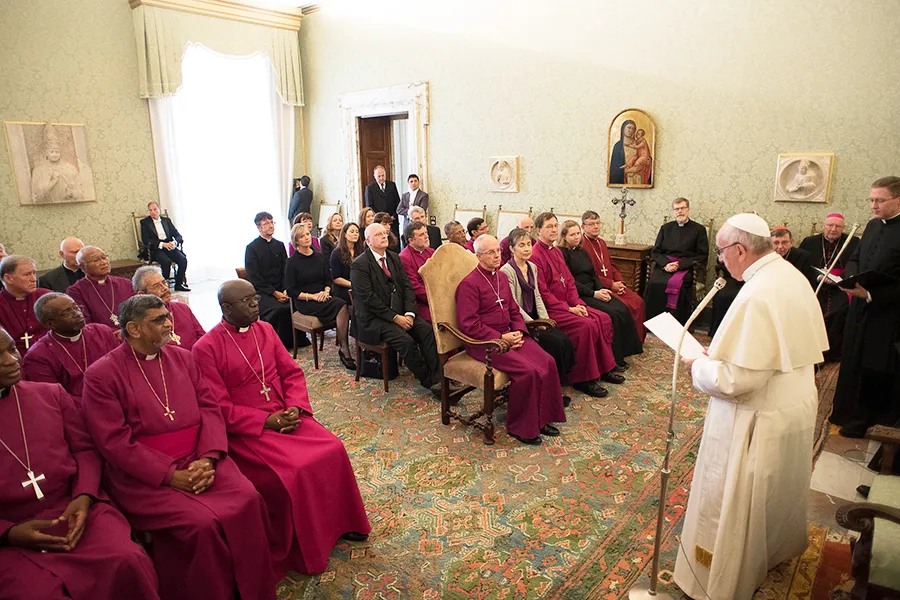
Rome, Italy, Feb 25, 2017 / 03:08 pm (CNA/EWTN News).- Pope Francis will tomorrow become the first Roman Pontiff to set foot in an Anglican parish in Rome, marking a symbolic act the church’s pastor said is hugely significant, yet surprisingly normal for two communities that are close to one another.

“Personally, as a parish priest of 17 years in this place, I can’t imagine a more fulfilling moment in my ministry,” Jonathan Boardman, pastor of All Saints Anglican Church in Rome, told CNA.

“It’s the most exciting thing that’s ever happened, except it isn’t,” he said, explaining that it’s a very “natural and normal thing” for a group of Christians to welcome the leader of their brethren to their house.

For Pope Francis to become the first Roman Pontiff to step inside an Anglican parish in Rome, then, is “the most exciting thing, and it’s the most normal thing,” he said, saying it’s a gesture “that explains a truth about our Christian living.”

Both the Catholic Church and the Anglican Communion, he said, have to find “the excitement of the Gospel and the fulfillment of it” in everything they do, “from the most rare thing to the most ordinary thing,” such as giving to the poor and offering prayers together.

Pope Francis’ visit coincides with the 200th anniversary of the foundation of the Anglican parish community in the heart of the Eternal City, and will consist of a short choral Evensong service, during which the Pope will bless and dedicate an icon of “St. Saviour” commissioned for the occasion.

The symbolic “twinning” of All Saints Anglican Church with the Catholic parish of “Ognissanti” – the only Catholic parish in Rome dedicated to All Saints – will also take place during the liturgy, forming strong ecumenical ties between the two.

Ognissanti is the parish where Bl. Paul VI, on March 7, 1965, celebrated the first Mass in Italian following the liturgical reforms of the Second Vatican Council.

After the singing of Evensong during his visit to All Saints, Pope Francis is expected to deliver a brief homily before taking questions from the congregation.

Established in 1816, All Saints contains the largest Anglican congregation in Italy, and is headed by Boardman and his assistant chaplain, Dana English. Both pastors will be present to welcome the Pope for his visit Sunday, as well as Robert Innes, the Anglican Bishop in Europe, and his suffragan, David Hamid.

In his comments to CNA, Boardman said that in his opinion, the reason a papal visit to an Anglican parish is possible now rather than in the past is likely due to “the fact that we’ve got Pope Francis.”

Francis “really determinately seeks to exhibit, to show the way in which he’s the Bishop of Rome and how that can be celebrated by other Christians who are present in Rome,” he said, noting that the visit builds on 50 years of dialogue between Catholics and Anglicans.

This positive dialogue the Catholic Church and the Anglican Communion have enjoyed shows that Anglicans “are serious in giving honor to the Pope, in recognizing him as the leader of Christendom in some way, although obviously not in the juridical way,” Boardman said, explaining that this point “still keeps us separated.”

But from both the Catholic and Anglican sides, “I think both the Pope’s ability to recognize and accept and celebrate that (dialogue) with us, and our willingness to receive him and celebrate that (dialogue), are the two factors that have led us to where we are today.”

Pointing to Benedict XVI’s establishment of the Anglican Ordinariate in 2009 as a means of helping Anglicans who wish to become Catholic while maintaining certain elements of their liturgy and customs, Boardman called the move “a real generosity and attempt to meet some of the deficiencies, as they were conceived, of what kept us apart.”

While some on the Anglican side initially viewed the act as “hostile and invasive,” the pastor said for him that wasn’t the case, and that in his own personal view, the time has come “to settle down” and appreciate the gesture as “an act of generosity”.

“The degree to which Anglican patrimony truly has been inserted into the Roman Catholic world is something that’s ongoing,” he said, and noted that after the Pope’s visit to his parish this weekend, a Choral Evensong of the Anglican rite will be sung inside St. Peter’s Basilica March 13.

When it comes to progress Catholics and Anglicans have made toward unity, Boardman said he thinks the communities have grown closer, and that in his view “we’re closer to unity than we ever were before simply because time has passed and we’re nearer to God’s gathering us all in.”

“In that sense we’re nearer,” he said, but added that if they want to continue growing closer to one another, it can’t happen without taking on a more prayerful attitude.

There has to be greater openness “to God’s surprising demands on us, and our alignment with his will where all of us, all Christians” make the sacrifices and take the steps needed in order “to truly align ourselves with God’s will.”

Dialogue “has flourished” in the past 100 years, particularly after the Second Vatican Council, he said, acknowledging that unity is closer, but there is still a long way to go.

“We’re only just beginning truly to be real friends and being able to talk about our differences and our problems as friends,” he said, adding that “we’ve got a ways to go to resolve them.”

Some of the biggest hurdles that still need to be overcome exist on both a spiritual and practical level, he said, noting that the first challenge is always “to be faithful to God and to grow in spiritual depth.”

Apart from this, major issues from the Catholic standpoint include the ordination of women and homosexual individuals, whereas for Anglicans, how to accept papal primacy without “changing the nature” of Anglicanism is still a looming concern.

But putting the hurdles aside, Boardman said he hopes the twinning of his parish with the Catholic parish of Ognissanti will help to foster “greater friendship between our two communities.”

The gesture will offer both communities a way to experience the spiritual life of the other while staying “true to our … disciplines” and growing together through various activities, such as service to the poor.

“We’ve already started in sharing some of the feeding programs to the homeless in Rome,” he said, explaining that Ognissanti has already launched various projects, “but now we are participating in them.”

[…]

No Picture
News Briefs

Elderly Spanish priest beaten during rectory robbery

February 24, 2017 CNA Daily News 0

Madrid, Spain, Feb 24, 2017 / 02:31 pm (CNA/EWTN News).- Fr. Arturo López, 77, was brutally beaten by three masked men during an assault on Wednesday at the rectory of Saint Peter and Saint Paul Church in Coslada, a city in Spain’s Community of Madrid.

The three unidentified men tied up and assaulted Fr. Lopez when they entered his rectory Feb. 22 to steal valuables and money around 8:50 pm. The criminals used a rope to bind the priest in one of the rooms.

One of the assailants threatened and beat the priest to give them money while the other two searched the house. As the priest later reported, the assailants spoke perfect Spanish and did not seem to be foreigners.

According to El Mundo, officers of the National Police from Coslada who are investigating the assault described the attack on the parish priest as “brutal.” He had to be taken to the hospital because of injuries from the beating to his face and head.

Fr. Arturo was given stitches and underwent medical tests to see if he had suffered any brain damage. He was kept in the hospital overnight and was discharged Thursday since no complications were noted.

The assailants took more than 800 euros ($845), various keys, and the priest’s cell phone. It is currently being investigated if they went into the church to take valuables.

The assailants left the rectory after about 25 minutes, leaving the priest tied up. However, Fr. Arturo was able to free himself from the ropes and notify the police, who found him stunned and bloodied.

Fr. López belongs to the Priestly Society of the Holy Cross, and has served in Coslada since 1993.

[…]

No Picture
News Briefs

This doctor is 92 years-old – and she’s delivered over 7,000 babies

February 24, 2017 CNA Daily News 0

Rome, Italy, Feb 24, 2017 / 03:03 am (CNA/EWTN News).- Obstetrician Maria Pollacci holds a very special record.

She’s delivered 7,642 babies and after a 72-year career – despite now being 92 years-old – is still receiving newborns coming into the world in Padavena, a small town in northern Italy.

Dr. Pollacci considers her work to be “the most beautiful in the world,” and calls it a true “mission.”

“It’s an occupation that you have to do with love, kindness and skill. When I’m in front of a little one, I’m not working. I’m loving,” she said. “To be an obstetrician you need love, passion and professionalism.”

Maria Pollacci still remembers her first day at work on Sept. 3, 1945, and the name of the child she delivered. He was named Francesco and today he is 72 years-old.

“I met him when he was 25. I was in Lama Mocogno, a town in the province of Modena, Italy, where I was born. There was a party and people were dancing,” she recalled.

“A handsome young man came up to me and said, ‘May I have the honor of dancing with the person who delivered me?’ Since then we see each other every year.”

“Also at my house, every once in awhile, boys and girls that were born into my hands come to see me. I am very moved when they tell me that I’m their second mother,” she said.

The Spanish daily ABC interviewed Dr. Pollacci when she was honored for her career at the famous San Remo Music Festival.

The last birth she assisted at was at the end of January in the town of Pedavena, in the province of Belluno, in northern Italy where she lives and works.

[…]

No Picture
News Briefs

This 110-year-old nun got birthday greetings from Pope Francis

February 23, 2017 CNA Daily News 0

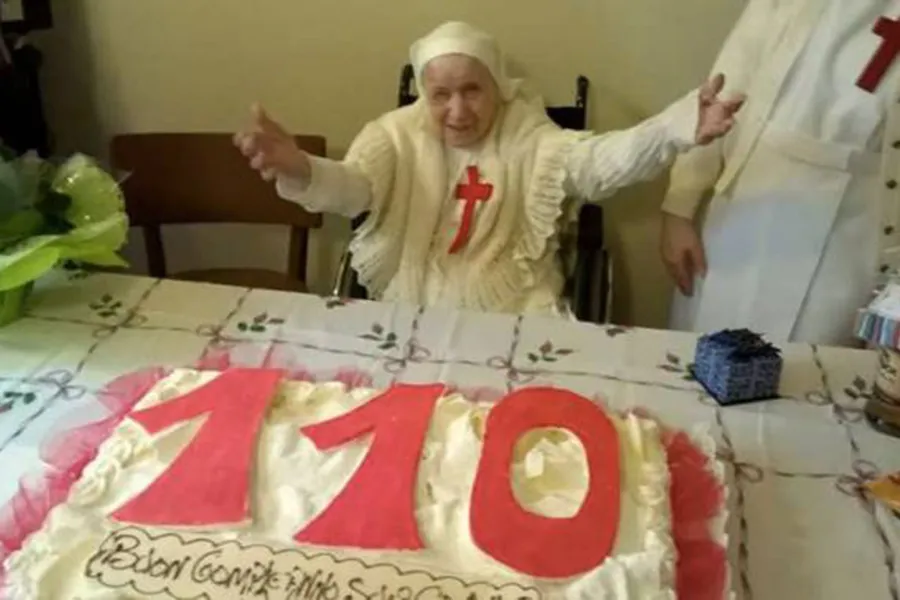
Florence, Italy, Feb 23, 2017 / 06:04 am (CNA/EWTN News).- She is one of the oldest religious sisters in the world, but this week, she turned 110 years young. 

Despite her advanced age, Sister Candida Bellotti retains the enthusiasm of a young woman. On Monday, Feb. 20, she celebrated her 110th birthday and received a special message from Pope Francis.

“To the Reverend Sister Candida Bellotti, Sister Minister of the Sick, who with gratitude to God is celebrating her 110th birthday, the Holy Father Francis spiritually participates in the joy we all share for this happy occasion and sends warm congratulations and heartfelt wishes,” said the pontiff in his message.

At age 80, Pope Francis is 30 years her junior.

Sister Bellotti celebrated her birthday with the Bishop of the Italian Diocese of Lucca, Benvenuto Italo Castellani. She resides in the diocese along with the convent’s sisters and the provincial superior, Sister Giuliana Fracasso.

In a recent interview, she said that her vocation was “sown” in a Christian family. 

“Love, love and love still more, with joy,” is the advice she gives everyone, especially the new generations. She has a special invitation for young people: “Have confidence in the future, and strive to the utmost to accomplish your desires.”

Sister Bellotti belongs to the Congregation of San Camillus de Lellis, which this year observes the 150th anniversary of the death of its founder, Blessed Maria Domenica Brun Barbantini.

The 110-year-old sister was born in Quinzano, in the Italian province of Verona, on February 20, 1907. Since the 1930s, she has dedicated herself to serving those in need as a professional nurse in various Italian cities. Since the year 2000 she has been living Lucca, at her congregation’s mother house.

[…]

No Picture
News Briefs

Catholic doctors protest French law banning ‘misleading’ pro-life websites

February 22, 2017 CNA Daily News 0

Paris, France, Feb 22, 2017 / 06:02 am (CNA/EWTN News).- An international group of Catholic physicians is protesting a law passed by France’s parliament last week sanctioning pro-life websites that aim to dissuade women from abortion by using “misleading claims.”

The law constitutes “a clear violation of the freedom of expression and cannot be approved, especially when it comes from a country which prides herself on being tolerant, broad-minded, and always fighting in the defense of human rights,” the World Federation of the Catholic Medical Associations (FIAMC) stated.

“In this instance, it would appear that the French government interprets ‘human rights’ as a kind of a privilege to be enjoyed only by women seeking a medical procedure that, from a health standpoint, is not in their or their unborn child’s best interest.”

It continued: “FIAMC protests this immoral law and its future consequences, and denounces the abuse it constitutes. Such a law contradicts the universal moral law and cannot be obeyed in conscience. It is hoped that a future French government will abolish it quickly in order to restore the now tarnished image of this great democratic nation.”

The lower house of the French parliament, which is dominated by the Socialist Party, passed the bill Feb. 16. It was also supported by most Union of Democrats and Independents members of parliament.

The Republicans, who dominate the French Senate, opposed the law. The party has said it will challenge the law in the courts.

The law provides for a penalty of up to two years in prison and a fine of 30,000 euro ($31,800) against the directors of publication of websites which run afoul of the law.


#delitdentraveivg @laurossignol CELA PEUT SERVIR DE SYNTHESE A TOUT CE CIRQUE DELIRANT ; Prochaine étape : le conseil constitutionnel ! pic.twitter.com/g8N28Uw3y2

— IVG (@ivg_infos) February 16, 2017


Laurence Rossingol, the French minister for women’s rights, said the law targets pro-life organizations which operate “websites imitating the state websites”; infos ivg is reportedly the site targeted by the law.

Rossingol said pro-life activists can freely express themselves “under the condition they sincerely say who they are, what they do, and what they want.”

The French minister of health and social affairs, Marisol Touraine, said the law is aimed at “preventing these websites from disseminating disinformation.” She also denounced the “cultural climate that tends to make women feel guilty when they consider” abortion.

The bill was introduced in October 2016, and the Catholic Church in France quickly opposed it. Archbishop Georges Pontier of Marseille, president of the French bishops’ conference, wrote Nov. 22 to President Francois Hollande registering the Church’s concerns, saying the proposal “call into question the foundations of our liberties and most particularly the freedom of expression … Can the slightest encouragement to keep one’s child be described as ‘psychological and moral pressure’?”

Alliance Vita, a pro-life group, has denounced the law as an infringement on freedom of speech.

More than 50,000 pro-life supporters marched in Paris Jan. 22 to protest the bill.

“Obstruction to abortion” had been criminalized in 1993. That law prevented pro-life activists from physically blocking access to abortion clinics, and had an identical penalty for offenders, of up to two years in prison and a 30,000 euro fine. The new law had been proposed as an update the 1993 law for cyberspace.

In January 2016 France also abolished a one-week reflection period before a requested abortion could be carried out.

The AFP reports that 220,000 unborn children are aborted annually in France, where abortion was legalized in 1975. It added that approximately one-third of Frenchwomen undergo abortion.

[…]

No Picture
News Briefs

World’s oldest Dominican Sister dies at age 110

February 21, 2017 CNA Daily News 0

Paris, France, Feb 21, 2017 / 02:36 pm (CNA/EWTN News).- A French diocese announced that Dominican Sister Marie Bernardette, the oldest sister in her order, passed away last week at 110 years of age.

The religious sister died Feb. 13, according to the Diocese of Aire-et-Dax, France.

Funeral rites for the beloved sister were held in the monastery chapel in the town of Dax where she lived. Sister Marie Bernardette had turned 110 on January 5. She would have been a religious sister for 90 years on April 18.

<iframe src=”https://www.facebook.com/plugins/post.php?href=https%3A%2F%2Fwww.facebook.com%2Fdominicainsbordeaux%2Fposts%2F1839373612985885&width=500″ width=”500″ height=”789″ style=”border:none;overflow:hidden” scrolling=”no” frameborder=”0″ allowTransparency=”true”></iframe>

The religious sister had spent 44 years at the Dax convent, near Bayonne. She lived through two world wars and was able to see 10 popes.

Sister Marie Bernardette was born Jan. 5, 1907 in Orsanco, a small village in French Basque Country. Her parents named her “Gracious,” and she was one of 12 children. Three of her sisters would also go on to become religious sisters.

Last year, the French Catholic newspaper La Croix featured the sister in an article. In that piece, Prioress Sister Véronique explained that age has changed Sister Marie-Bernadette’s tasks: “When she could no longer do house work, she made rosaries. And since she can’t make them anymore, she prays (the rosary) all day” in French, Latin and Basque.

“She prays a lot for the pope, for vocations and for our order,” the prioress said.

At the Dax monastery, the Dominican sisters lead a life of prayer, contemplation and also do sewing and baking to support themselves.

In 2016, the Dominicans – whose formal name is the Order of Preachers – marked the 800th anniversary of their founding by Saint Dominic.

This order has produced many blesseds and saints, including Saint Rose of Lima, Saint Martin de Porres, Saint John Macias, Saint Vincent Ferrer, Pope Saint Pius V, and Saint Thomas Aquinas, a Doctor of the Church.


[…]

No Picture
News Briefs

London choir aims to bring sacred music from the Masses…to the masses

February 21, 2017 CNA Daily News 0

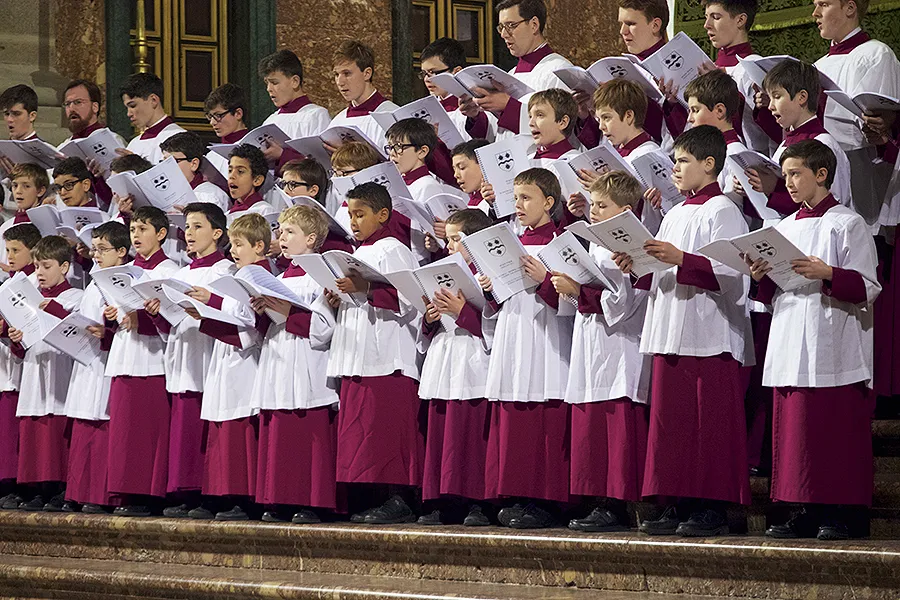
London, England, Feb 21, 2017 / 12:02 am (CNA/EWTN News).- You may recognize the sound of the London Oratory Schola Cantorum Boys Choir from epic motion picture soundtracks like The Lord of the Rings, Harry Potter, or The Phantom of the Opera.


But the heart of the world-renowned Schola, which includes voices of boys ages 7-18, has always been liturgical music.


Now, the boys choir hopes to bring the sacred tradition of Renaissance liturgical music to a wider audience with their debut album, “Sacred Treasures of England”, produced in a partnership with AimHigher Recordings/Sony Classical, a sister label of De Monfort Music.


AimHigher Recordings CEO Kevin Fitzgibbons said he was impressed with the choir “from the first note.”


“Mirroring the majestic beauty of The Oratory itself, the repertoire from this debut recording is gorgeous and timeless,” he said.


The album features English Tudor-era motets by composers such as William Byrd and Thomas Tallis, as well as the magnificent Missa Euge bone by Christopher Tye, and is the first part of a series of albums of sacred music the choir will be producing.


Charles Cole, Director of The London Oratory Schola Cantorum Boys Choir, told CNA that the idea for the album series came from a desire to share the Schola’s large repertoire of liturgical music, comprised largely of music from Renaissance composers, with the world.


“The Schola’s primary role is the singing of this Liturgy at the Oratory and we will always be focused above all on that,” Cole said.


“However, the opportunity to work on new recordings gives us a wonderful opportunity to work with great intensity on particular areas of the repertoire and hopefully bring these wonderful works to be heard by a far larger audience.”


The album series is grouped by region or country, he said, allowing listeners “to delve into a particular sound world, and the English music on this first recording has some very beautiful characteristics.”


Fr. George Bowen, Chaplain of the London Oratory School and a priest of the London Oratory, said the album series offers the Schola a unique chance to evangelize.


“St. Philip Neri (founder of the Oratory brotherhood of priests) always wanted the Oratory to be outward looking; to evangelise. Sacred Music has always played a vital part in the work of evangelisation, and we hope that this CD will continue the tradition,” he told CNA.


The London Oratory Schola Cantorum Boys Choir, founded in 1996, is one of three choirs associated with the London Oratory. It provides school age boys with an education immersed in the experience of learning and performing sacred liturgical music.


The choir is in high demand, and sings frequently on tours throughout the world and for projects such as the CD, movie soundtracks or philanthropic concerts for organizations such as Aid to the Church in Need. They also sing for every Vigil Mass at the London Oratory during the school year.


It all takes an incredible amount of hard work and discipline, Cole said. The boys choir rehearse every morning before school for an hour, as well as several other times throughout their school day at the Oratory.


This discipline transfers into other areas of the boys’ lives – academics, athletics – but most importantly, their immersion in the liturgy “gives them a heaven-sent opportunity to develop a love of their Faith.”


“It is a very immersive experience for them, both musically and liturgically, allowing them to experience the beautiful repertory which adorns the major feasts of the Church year,” Cole said.


“We hope that this album will bring more and more people into contact with the beautiful musical treasures of the Church.”


The Schola will be going on tour to promote their new album, which will include a leg in the United States in October. For more information about the album, including the track list, visit: http://aimhigherrecordings.com/loscbc.php/. The album is available on Amazon and iTunes.

[…]