No Picture
News Briefs

Clericalism at root of abuse scandals in Church, pope told Jesuits in Ireland

September 14, 2018 CNA Daily News 2

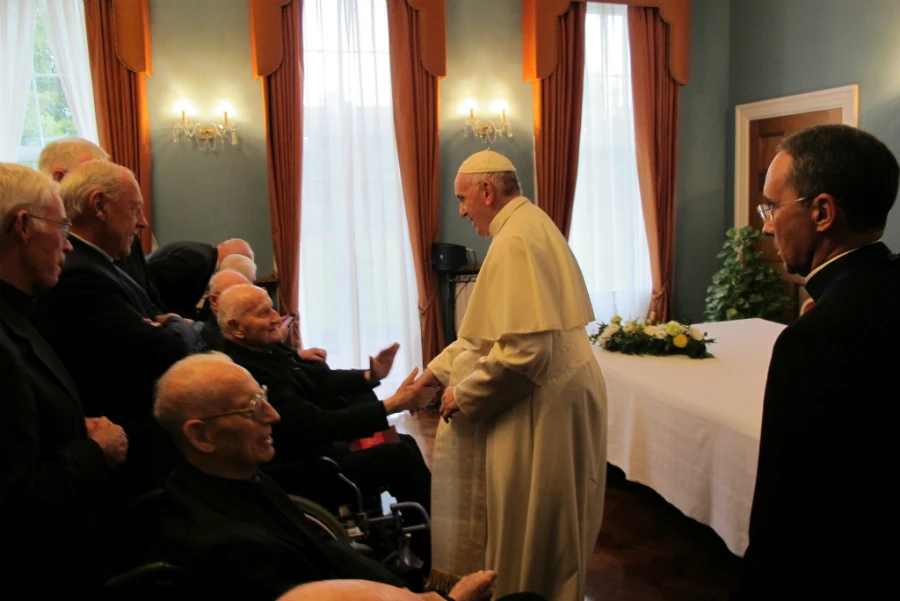
Dublin, Ireland, Sep 14, 2018 / 10:05 am (CNA/EWTN News).- Pope Francis told a group of Jesuits during his visit to Dublin last month that elitism and clericalism in the Church are a cause of the abuse scandals in places such as the United States and Ireland.

“There is something I have understood with great clarity,” he said. “This drama of abuse, especially when it is widespread and gives great scandal – think of Chile, here in Ireland or in the United States – has behind it a Church that is elitist and clericalist, an inability to be near to the people of God.”

During his visit to Ireland last month, Pope Francis continued his tradition of stopping to meet with local Jesuits during a papal trip. The Aug. 25 meeting was closed to media, but the pope’s remarks were published by the Jesuit-run journal La Civilta Cattolica Sept. 13.

Speaking to a group of 63 Jesuits, mostly from Ireland, the pope said, “Elitism, clericalism fosters every form of abuse.” He asked for their help in putting an end to abuse, explaining that he meant more than to “simply turn the page.”

“Seek out a cure, reparation, all that is necessary to heal the wounds and give life back to so many people,” he said.

Francis went on to say that he believes “sexual abuse is not the first [abuse],” but that “the first abuse is of power and conscience. I ask you to help with this. Courage! Be courageous!”

Asked about concrete actions they could take against abuse, he said, “we have to denounce the cases we know about” and reiterated that “sexual abuse is the consequence of abuse of power and of conscience.”

Equating authoritarianism and clericalism, he asked, “who among us does not know an authoritarian bishop? Forever in the Church there have been authoritarian bishops and religious superiors.”

He emphasized that to be sent on mission “decisively and with authority” can be confused with authoritarianism, but they are two different things and need to be separated.

During the brief meeting, the pope also referenced an encounter he had immediately beforehand with eight survivors of sexual abuse, at which he also heard about the cases of Irish mother and baby homes. He said these cases particularly touched his heart.

“I really was unable to believe the stories that I have seen well documented,” he said. “I heard them now in the other room and was deeply upset. This is a special mission for you: clean this up, change consciences, do not be afraid to call things by their name.”

He also told the members of the Society of Jesus that “we need to work so that the freshness of the Gospel and its joy are understood.”

“Jesus came to bring joy, not moral casuistry. To bring openness, mercy. Jesus loved sinners. But now I am preaching … I didn’t intend to! Jesus loved sinners … he loved them! He had a strong dislike of the corrupt! The Gospel of Matthew in chapter 23 is an example of what Jesus says to the corrupt.”

He commended a confessor who, he says, makes confession “an encounter with Jesus Christ, not a torture room or a psychiatrist’s couch.”

“We need to be the reflection of merciful Jesus,” the pope stated.

“And what did Jesus ask of the adulteress? ‘How many times and who with?’ No! He simply said, ‘Go and sin no more.’ The joy of the Gospel is the mercy of Jesus, indeed, the tenderness of Jesus. And Jesus liked the crowd, the simple, ordinary people. The poor are at the heart of the Gospel. The poor follow Jesus to be healed, to be fed.”

[…]

No Picture
News Briefs

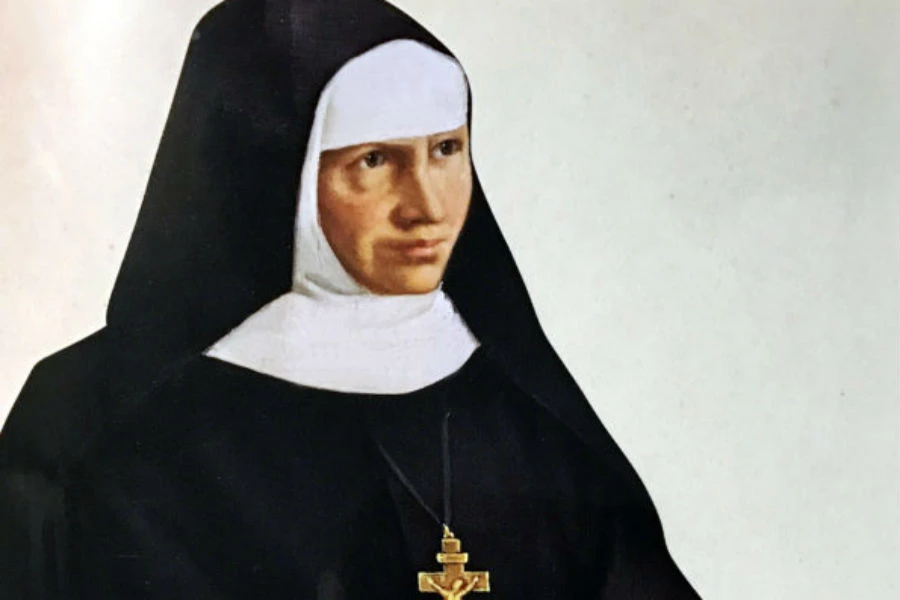
Mystic and religious founder Mother Alphonse Marie beatified in Strasbourg, France

September 14, 2018 CNA Daily News 0

Strasbourg, France, Sep 14, 2018 / 08:45 am (CNA).- A personal encounter with Mother Alphonse Marie Eppinger inspired “conversions which were far more miraculous than the raising of the dead,” recounted her spiritual director, Father Jean-David Reichard. The nineteenth century French mystic and religious founder was beatified this week in her native Strasbourg after a miraculous physical healing through her intercession was confirmed.

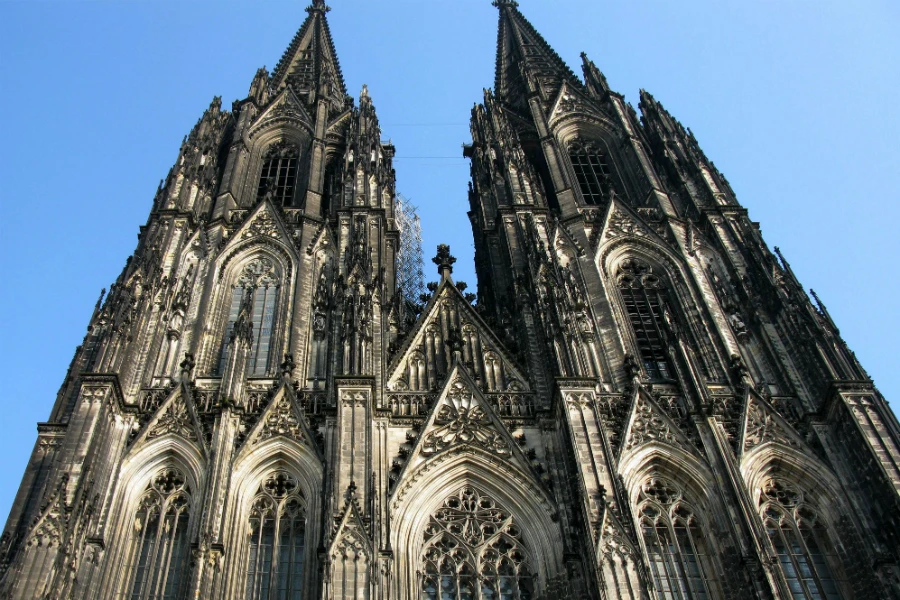
Cardinal Giovanni Angelo Becciu, prefect of the Congregation for Causes of the Saints, celebrated the beatification Mass in the Cathedral of Notre Dame on Sept. 9 in Strasbourg, France.

Mother Alphonse Marie had “the gift of seeing people, what is in their souls,” wrote Abbe Glöckler, who knew Eppinger personally and later wrote her biography.

“She had a right word and advice for everyone. God gifted her with a good mind and right judgment. Many left her with the decision to change their lives and to walk the right path.”

Eppinger was able to “scrutinize human hearts” and “reveal things that were hidden,” using these spiritual gifts to advise the priests who would “visit her in abundant numbers” seeking counsel.

“God gave her a specific commission for priests,” Glöckler continued, “She told them about dignity and the grandeur of the priesthood.  She prayed a lot for priests, the Holy Father, and the Diocesan Bishop.” Eppinger also composed many several prayers for confessors.

Speaking at the Mass of beatification, Cardinal Becciu called the occasion a “providential opportunity to rediscover, 150 years after her death,  … the testimony of an authentic Christian life and a deep spirituality.”

The eldest of eleven children, Elizabeth Eppinger, was born into a peasant family on Sept. 9, 1814, in Niederbronn, France.

Her devotion to Christ’s passion stemmed from an episode in her childhood, which Cardinal Becciu recounted in his homily:

“As a child – when she was still called Elizabeth – one day on the way to a station of the Stations of the Cross, she asked her mother, ‘Why did they crucify Jesus?’”

“‘My little one, he was killed because of our sins,” he replied her mother.”

“‘But what is a sin?” insisted Elizabeth. ‘It’s an offense to God …’”

“‘Well, I do not want to offend him anymore!’” she replied.”

Eppinger’s devotion deepened through her experience of suffering through a serious illness with which she struggled intermittently throughout her life. It kept her bedridden for years at a time, prayerfully “immersed in the mystery of the cross.”

It was during her illness that Eppinger received her first vision of Christ and that her mystical gifts became well known.

At the request of her bishop, Eppinger founded the Congregation of the Sisters of the Most Holy Saviour in 1848, taking the religious name Sister Alphonse Marie, in honor of her great devotion to Saint Alphonsus de Liguori, whom she made patron of the new congregation.

She asked her sisters to meditate daily on the passion of Christ, and she encouraged devotion to Eucharistic adoration. In addition to their devotions, the sisters also aided the sick during epidemics, including a cholera outbreak in 1854.

Mother Alphonse Marie died in 1867. Ten years after her death, the congregation she founded had grown to include 550 sisters in 88 religious houses throughout Europe. Today the sisters are present  in 68 dioceses accross 16 countries, and they continue to serve others through the ministries of health care, social services and education

In his Sunday Angelus address, Pope Francis expressed gratitude for  Mother Alphonsus Marie’s beatification:

“Let us thank God for this courageous and wise woman who, in suffering, in silence, and in prayer, witnessed the love of God especially to those who were sick in body and in spirit.”

[…]

No Picture
News Briefs

UK government rejects calls for nationwide abortion clinic buffer zones

September 13, 2018 CNA Daily News 0

London, England, Sep 13, 2018 / 04:15 pm (CNA/EWTN News).- The British Home Secretary has rejected proposals for buffer zones around abortion clinics throughout England and Wales as disproportionate, after finding that most abortion protests are peaceful and passive.

Home Secretary Sajid Javid said in his Sept. 13 decision that after reviewing the evidence, which included “upsetting examples of harassment … what is clear from the evidence we gathered is that these activities are not the norm, and predominantly, anti-abortion activities are more passive in nature.”

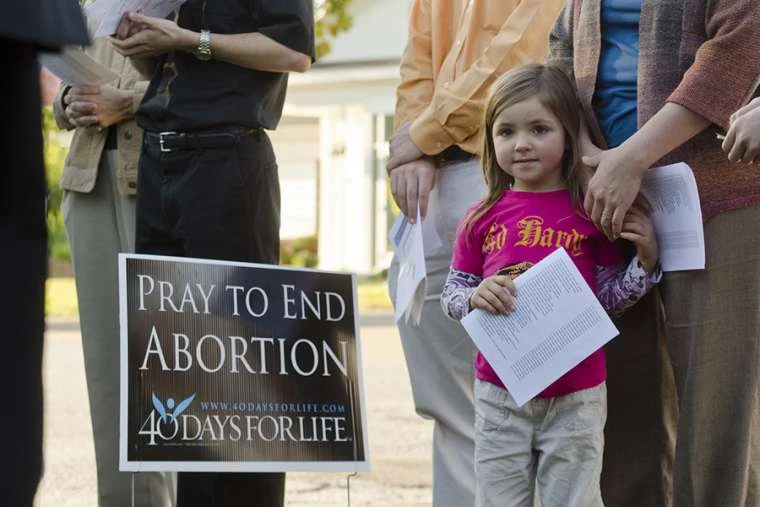
The typical activities of those protesting outside of abortion clinics “include praying, displaying banners and handing out leaflets,” Javid noted.

He added that there were “relatively few” reports of more “aggressive activities”, such as “handing out model foetuses, displaying graphic images, following people, blocking their paths and even assaulting them.”

Furthermore, he noted that in 2017, only 36 of the 363 hospitals and clinics in England and Wales that offer abortions have experienced pro-life demonstrations near their facilities.

Because the majority of protests are peaceful, enforcing buffer zones throughout the country “would not be a proportionate response,” he said.

Be Here for Me, a group of mothers who have received pro-life help outside of abortion clinics and oppose buffer zones, applauded Javid’s decision in a statement on their website.

“This carefully considered decision represents the common sense we have been calling for all along. It demonstrates Sajid Javid’s commitment to fundamental civil liberties as well as ensuring that women will continue to be offered much needed help and support. It will mean that people offering this vital support will not be criminalised,” said Elizabeth Howard, spokeswoman for the Be Here For Me campaign.

Shadow Home Secretary Diane Abbott, of the Labour Party, denounced the decision as having “given the green light for women to be harassed and abused for exercising their right to choose,” according to the BBC.

“This is a disgusting failure to uphold women’s rights over their own bodies. Sajid Javid must urgently reconsider,” she said.

The decision to reject nationwide buffer zones comes after the High Court of England and Wales upheld a buffer zone imposed by Ealing Council, in west London, around a Marie Stopes abortion clinic. The zone prevents any pro-life gathering or speech, including prayer, within about 330 feet of the clinic.

Two pro-life London women are working to have the decision appealed, including Alina Dulgheriu, who chose to forgo an abortion at the Ealing clinic in question after being offered pro-life support.

Dulgheriu told CNA in July that clinics like the ones in Ealing do not offer women any alternatives to abortion. She said out that her efforts to see the buffer zones overturned are as much for the protection of mothers as for children.

“If the vigils are removed – who will look out for the mothers who desperately do not want to go ahead with an abortion? These mothers can be in very vulnerable circumstances, sometimes in abusive relationships, and vigils can offer them housing and refuge that abortion clinics could never provide,” she said.

The other woman in the court challenge has filed for anonymity in the court proceedings. The women, who have crowdfunded more than £40,000 ($52,000) so far for court expenses, have said they are willing to take their appeal to the UK’s Supreme Court if necessary. The appeal is expected to be heard sometime later this year.

In his decision, Javid said that there are already laws in place to protect people against intimidation and harassment in public spaces, including the Public Order Act 1986 and the Protection from Harassment Act 1997.

He also noted that the Ealing case is an example of a local government using civil legislation “to restrict harmful protest activities.”

Javid noted that England and Wales should support both the right to free speech and individual’s rights to be safe from harassment and intimidation, and noted that the police are free to act in cases where the law has been violated.

“In this country, it is a long-standing tradition that people are free to gather together and to demonstrate their views. This is something to be rightly proud of,” he said.

However, he added, “I am adamant that where a crime is committed, the police have the powers to act so that people feel protected.”

[…]

No Picture
News Briefs

As England allows abortion pills at home, what does this mean for NI women?

September 13, 2018 CNA Daily News 0

Belfast, Northern Ireland, Sep 13, 2018 / 01:03 pm (CNA/EWTN News).- Coming into effect at the end of 2018, English women will be allowed to take abortion pills at home; but it remains unclear whether Northern Irish women who travel to England will be allowed to do so.

Currently, women who plan to end a pregnancy at 10 weeks or less are required to take two abortive pills at the clinic. The second pill is taken between 24-48 hours after the first one.

With the new plan, the women will be allowed to take the second abortion pill at home, after the first one has been taken at the clinic.

The women may have to prove English residency; a similar program in Scotland requires a residence test.

If the residency test is adopted in England, it “would deny women coming from Northern Ireland this choice of procedure,” Labour MP Stella Creasy has said.

Victoria Atkins, British Minister for Women and Equalities, explained that the Department for Health is only able to approve English homes as a place that the abortion bill can be taken.

Atkins said officials “are working with the Royal College of Obstetricians and Gynaecologists to determine protocol which will set out criteria for which places should be covered by the term ‘home’.”

“We will look at how the (early abortion pill) schemes are working in Scotland and Wales and learn from the experience there.”

Abortion is allowed in Northern Ireland only if the mother’s life is at risk, or if there is risk of permanent, serious damage to her mental or physical health. Abortion pills are illegal in Northern Ireland.

Bills to legalize abortion for fatal fetal abnormality or rape or incest failed in the Northern Ireland Assembly in 2016.

In June 2017, Teresa May’s government announced that Northern Irish women would be able to procure free National Health Service abortions in England.

The UK Supreme Court threw out a case challenging Northern Ireland’s abortion law in June 2018, saying the commission which brought the case does not have standing to do so. However, the judges also said the current law violates the European Convention on Human Rights.

Lord Mance, delivering the judgement June 7, said that had the commission the competence to bring the challenge, “I would have concluded, without real hesitation at the end of the day, that the current Northern Ireland law is incompatible with article 8 of the [European human rights] convention insofar as it prohibits abortion in cases of fatal foetal abnormality, rape and incest but not insofar as it prohibits abortion in cases of serious foetal abnormality.”

[…]

No Picture
News Briefs

Leaked German study documents thousands of sexual abuse cases

September 12, 2018 CNA Daily News 0

Berlin, Germany, Sep 12, 2018 / 08:55 am (CNA).- A study commissioned by the German bishops’ conference reports the sexual abuse of thousands of children in that country over a period of 70 years. The report was scheduled to be released later this month, but was leaked Wednesday to German media.

The report was commissioned by the German bishops’ conference and scheduled to be presented on Sept. 25 at the autumn plenary session of the German bishops, as CNA Deutsch reported.

Its methodology is substantially different from that of the Pennsylvania Grand Jury report.  

The study documents sexual offenses against “3677 predominantly male minors” between 1946 and 2014, Der Spiegel reported  

“1670 clerics are accused of the deeds,” the German magazine reported, saying researchers had “examined and evaluated more than 38,000 personnel and other files from 27 German dioceses.”

Der Spiegel reported that in many cases evidence was found by researchers to have have been “destroyed or manipulated.”

“We are aware of the extent of sexual abuse that is proven by the results of the study. It is oppressive and shameful for us,” Bishop Stephan Ackermann of Trier said in a statement Wednesday. The bishop is Commissioner for Questions of Sexual Abuse in the Church and for Questions of the Protection of Children and Minors of the German bishops’ conference.

“Four years ago we commissioned the study and we bishops in particular are facing up to the results. The first step will be the Assembly in Fulda.”

Ackermann also criticized the leak of  the study documenting the abuse of minors by priests and religious in Germany in the years 1946 to 2014.

In a statement from the German bishops’ conference, Ackermann said: “I regret that the study, which has remained confidential so far, and is the result of four years of research on the subject of ‘Sexual abuse of minors by Catholic priests, deacons and male religious in the area of the German Bishops’ Conference’ was published today.”

“Especially with regard to those affected by sexual abuse, the irresponsible advance publication of the study is a severe blow,” said Ackermann.

“This is all the more exasperating since not even the members of the German Bishops’ Conference so far know the entire study,” he added.

According to the German bishops’ conference, the aim of the study, in which all 27 dioceses of Germany took part, was “to obtain more clarity and transparency about this dark side in our church, not only for the sake of those affected, but also in order to be able to see the misdemeanours for ourselves and do everything possible to ensure that they do not repeat themselves.”

“We are concerned about a responsible and professional approach to the problem. I am convinced that the study is a comprehensive and careful survey that offers figures and analyses from which we will continue to learn. This also applies to the findings that provide a deeper insight into the actions of perpetrators and the behaviour of church leaders over the past decades. Once again, I stress that the study is a measure that we owe not only to the Church, but first and foremost to those affected,” Ackermann said.


[…]

No Picture
News Briefs

Eucharistic procession in Liverpool draws 10,000

September 11, 2018 CNA Daily News 0

Liverpool, England, Sep 11, 2018 / 01:35 pm (CNA/EWTN News).- An estimated 10,000 Catholics processed through the streets of Liverpool in a Eucharistic Procession on Sunday, in a spirit of prayer and penance for the clerical abuse scandals.

The proces… […]

No Picture
News Briefs

Third ‘restoration’ of Catholic artwork in Spain sparks outrage, hilarity

September 10, 2018 CNA Daily News 0

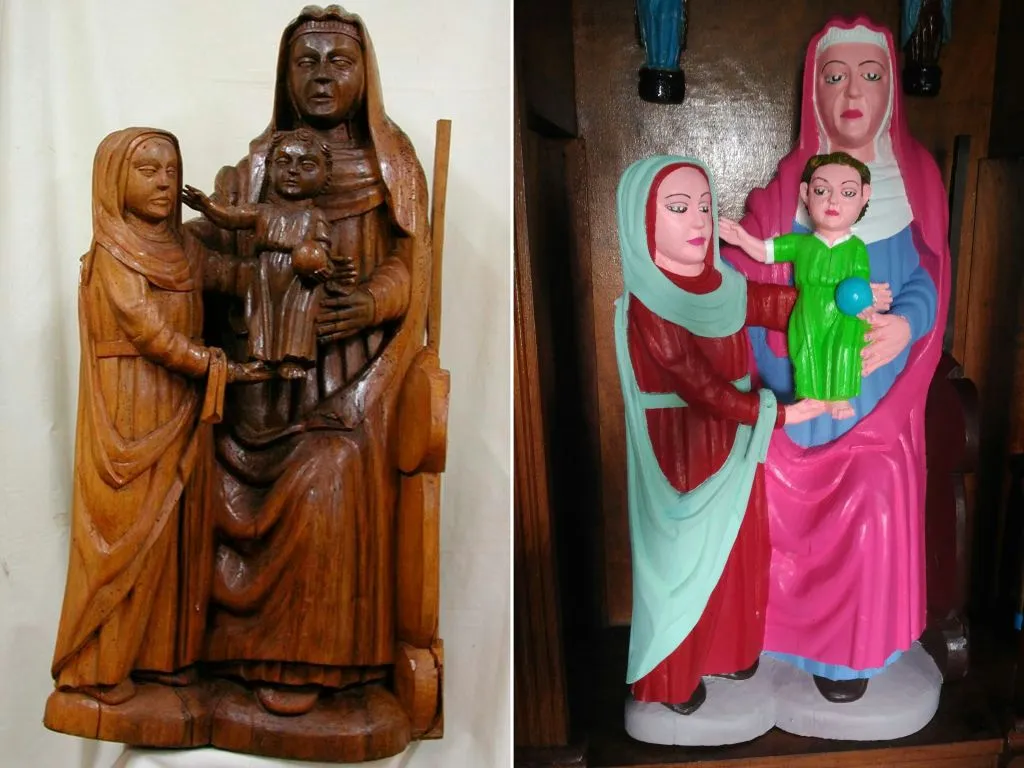
Oviedo, Spain, Sep 10, 2018 / 04:01 pm (CNA/EWTN News).- In the third known act of egregious artistic restoration of Spanish Catholic art in recent history, a 15th century statue of Christ and Mary has been given a fresh – and loud – coat of paint, simultaneously sparking hilarity and outrage online.

The wooden statue, from a chapel in the village of El Ranadoiro, about 35 miles west of Oviedo, depicts Christ on the lap of who appears to be his grandmother, St. Anne, with his mother the Blessed Virgin Mary standing to the side.

The figures, once plain wood, now sport bright colors, with St. Anne in a hot pink veil and sky blue robes, Christ in lime green, and Mary in a light turquoise veil and deep red robes. Each face dons lined eyes and bold red lips; St. Anne’s fingernails are painted a muted pink.

Amatuer artist and local resident Maria Luisa Menendez said she offered her talents to the parish priest, who gave her permission to paint the statues. She also painted two smaller figurines in the parish collection, one of Mary holding Christ, and one of St. Peter, each with similarly bold strokes.

“I’m not a professional, but I always liked to do it, and the figures really needed to be painted. So I painted them as I could, with the colours that looked good to me, and the neighbors liked it,” Menendez told local newspaper El Comercio, as quoted by AFP.

The saintly snafu has some comparing Menendez’ work to that of Cecilia Gimenez, who ‘restored’ the now-infamous Ecce Homo painting in Spain in 2012. Her fuzzy, monkey-like depiction of Christ spawned its own SNL skit and a comedic tributary opera, and continues to draw thousands of visitors a year from all over the world.

Luis Suarez Saro, who had restored the El Ranadoiro sculptures in 2002-2003 with local government approval, has called Menendez’ paint job “crazy.”

Suarez Saro told AFP that Menendez “likes to draw and paint, she did some courses… and she felt the sculptures looked better this way.”

Genaro Alonso, Councilor of Education and Culture of the Principality of Asturias, the region in which the statues are located, reacted strongly, telling local sources that Menendez’ work was “not a restoration, it was a revenge.”

Reactions to the restoration on Twitter ranged from the amused to the outraged.

Spanish art conservation group ACRE bemoaned the botching of yet another piece of historic Spanish art.

“Does no one care about this continued plundering in our country? What kind of society stands by as its ancestor’s legacy is destroyed before its eyes,” the group tweeted.

The incident also called to mind the uproar over a similarly botched statue earlier this summer, when a 16th century St. George statue was ‘restored’ by a local arts and crafts teacher in Estella, another town in northern Spain.

The bright colors and odd expression on the refinished statue’s face left some comparing it to the Belgian comic character Tintin.

“It shows a frightening lack of training of the kind required for this sort of job,” ACRE said at the time of the St. George restoration.

[…]