No Picture
News Briefs

Legal challenge to abortion law in Northern Ireland delayed
September 21, 2018 CNA Daily News 0

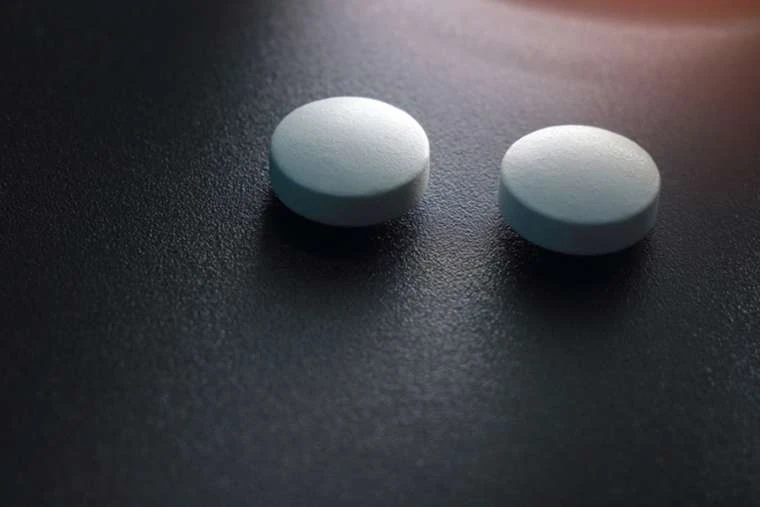
Belfast, Northern Ireland, Sep 21, 2018 / 01:01 pm (CNA/EWTN News).- A legal challenge to the prosecution of a Northern Irish woman who allegedly procured abortifacient medication for her underage daughter which was to have begun Thursday has been adjourned.

Declan Morgan, Lord Chief Justice of Northern Ireland, said Sept. 20 that “dealing with the case in the absence of understanding the Public Prosecution Service response to the Supreme Court would be entirely inappropriate.”

Abortion is legally permitted in Northern Ireland only if the mother’s life is at risk or if there is risk of permanent, serious damage to her mental or physical health. Abortion pills are illegal in Northern Ireland.

In June, the UK Supreme Court threw out a case challenging Northern Ireland’s abortion law, saying the commission which brought the case does not have standing to do so. However, the judges also said the current law violates the European Convention on Human Rights by banning abortion in cases of fatal fetal abnormality, rape, and incest.

Morgan has delayed the hearing challenging the law, directing prosecutors to respond to the Supreme Court’s indications within two weeks.

The woman faces two charges of unlawfully procuring and supplying the pills with intent to cause a miscarriage under the Offences Against the Person Act 1861.

She had purchased the pills online in July 2013 for her 15-year-old daughter.

Bernie Smyth, a spokesperson for the pro-life group Precious Life, said outside the Belfast court that “the importance of this case is to send a very clear message out to the people in Northern Ireland, to women in Northern Ireland who would feel maybe their only option is to purchase very dangerous illegal abortion pills and we are saying there is another way.”

“It is vitally important that we uphold the law here in Northern Ireland,” iNews reported Smyth as saying.

Elective abortion is legal in the rest of the United Kingdom up to 24 weeks, and Northern Irish women have been able to procure free National Health Service abortions in England, Scotland, and Wales since November 2017.

Bills to legalize abortion in cases of fatal fetal abnormality, rape, or incest failed in the Northern Ireland Assembly in 2016.

In its June 2018 judgement, the Supreme Court unanimously agreed that banning the abortion of unborn children with serious, but not fatal, abnormalities is compatible with the ECHR.

Northern Ireland’s abortion law could be taken up by either the Northern Ireland Assembly or the Parliament of the United Kingdom.

The Northern Ireland Assembly is currently suspended. The Democratic Unionist Party, the largest party, is opposed to changing the law. Sinn Féin, another prominent party in Northern Ireland, backs a liberalization of the abortion law.

British prime minister Theresa May has said abortion should be a devolved issue for Northern Ireland. But Labour MP Diana Johnson is expected to introduce next month into the British Parliament a bill to decriminalize abortion in Northern Ireland.
[…]

No Picture
News Briefs

Irish doctors question readiness to introduce legal abortion

September 20, 2018 CNA Daily News 0

Dublin, Ireland, Sep 20, 2018 / 04:06 pm (CNA/EWTN News).- Most physicians in the Republic of Ireland are unwilling to perform abortions despite the repeal of an amendment which legally protected the unborn, and many are also concerned about whether there are adequate preparations for the procedure.

“There are concerns about capacity and resourcing issues such as staffing, facilities, training,” Dr. Mary Favier, vice president of the Irish College of General Practitioners, told the Oireachtas Health Committee Sept. 18, the same day the Irish president signed a bill formally repealing the Eighth Amendment.

“They are concerned about the potential lack of appropriate specialist support, the possibility of medical complications for their patients, what will be the public reaction to those who don’t provide and those who do,” the Irish News reported Favier stating.

“They have a fear of litigation, they wish to see an acknowledgement of conscientious objection and how to accommodate this in the clinical pathway but also an acknowledgement of conscientious commitment and how to support this.”

Taoiseach Leo Varadker has said that Catholic hospitals will not be permitted to opt out of performing abortions, though individual medical professionals may.

The removal of the Eighth Amendment follows the decisive result of the national referendum held in May. Only one county, Donegal, voted to keep the amendment.

While it has not yet been determined under what circumstances abortion will become legal, the government is proposing that it be allowed throughout the first 12 weeks of pregnancy. Legislation to this effect will be introduced by the government next month.

It is unknown when Ireland’s first abortion facility will open, but Varadkar said this will likely be by 2019.

Favier noted to the health committee that “there are actually very few clinicians who are trained to deliver this care pathway unless they have received training outside of the jurisdiction,” and Dr Peter Boylan, chair of the Institute of Obstetricians and Gynaecologists, said that introducing abortion by 2019 would be “challenging”.

Boylan noted there is not enough access to ultrasound, and that permitting abortion “without adequate scanning facilities is fraught with risk.”

[…]

No Picture
News Briefs

N Ireland court hears challenge to prosecution of woman over abortion pills

September 20, 2018 CNA Daily News 0

Belfast, Northern Ireland, Sep 20, 2018 / 01:01 pm (CNA/EWTN News).- The High Court in Belfast began hearing a challenge Thursday to the decision to prosecute a woman who allegedly procured abortifacient medication five years ago for her daughter, who was 15-years-old at the time.

The hearing is taking place Sept. 20-21, and a ruling is expected in the coming months.

Abortion is legally permitted in Northern Ireland only if the mother’s life is at risk or if there is risk of permanent, serious damage to her mental or physical health. Abortion pills are illegal in Northern Ireland.

Seanin Graham wrote in the Irish News that the woman “faces two charges of unlawfully procuring and supplying the pills with intent to cause a miscarriage” under the Offences Against the Person Act 1861.

The pills were purchased online in July 2013.

Elective abortion is legal in the rest of the United Kingdom up to 24 weeks, and Northern Irish women have been able to procure free National Health Service abortions in England, Scotland, and Wales since November 2017.

If she is is successfully prosecuted, the woman could face imprisonment. But another Belfast woman who was prosecuted for buying abortion pills online and procuring an abortion thereby was given a three-month suspended sentence in April 2016.

She is being supported in her challenge by Amnesty International, the Northern Ireland Human Rights Commission, the Family Planning Association, the British Pregnancy Advisory Service, and the Abortion Support Network.

Grainne Teggart, an Amnesty International spokesperson, said the case “is a direct challenge to the criminalisation of women and abortion in Northern Ireland.”

A pro-life spokesperson, Bernie Smyth of Precious Life, countered that Northern Irish women are already provided “all genuine medical treatment”, and pointed out that the Northern Ireland Assembly has voted against “any change to our pro-life laws”.

Bills to legalize abortion in cases of fatal fetal abnormality, rape, or incest failed in the assembly in 2016.

The woman’s legal challenge is one of several efforts to relax Northern Ireland’s abortion laws.

The UK Supreme Court threw out a case challenging Northern Ireland’s abortion law in June 2018, saying the commission which brought the case does not have standing to do so. However, the judges also said the current law violates the European Convention on Human Rights.

Lord Mance, delivering the judgement June 7, said that had the commission the competence to bring the challenge, “I would have concluded … that the current Northern Ireland law is incompatible with article 8 of the [European human rights] convention insofar as it prohibits abortion in cases of fatal foetal abnormality, rape and incest but not insofar as it prohibits abortion in cases of serious foetal abnormality.”

Four of the seven judges agreed that Northern Ireland abortion law is incompatible with the European Convention on Human Rights in cases of fatal fetal abnormality, rape, and incest. A fifth agreed it is incompatible only in cases of fatal fetal abnormality.

But the court unanimously agreed that banning the abortion of unborn children with serious, but not fatal, abnormalities is compatible with the ECHR.

Yet Les Allamby, chief commissioner of the Northern Ireland Human Rights Commission, who is supporting the woman’s legal challenge to her prosecution, called the case an “extremely important case; it is the first time that local courts will be able to consider how our laws criminalise termination of pregnancy since the Commission’s Supreme Court judgement in June.”

He said the Supreme Court had “outlined that Northern Ireland’s laws on termination of pregnancy are contrary to human rights standards,” and argued that “the court in Belfast should follow the judgement of the Supreme Court when coming to its decision in this case.”

“Women and girls continue to face being criminalised in what should be solely a healthcare matter,” Allamby claimed. “We are supportive of the growing public and parliamentary momentum calling for change on this issue.”

Northern Ireland’s abortion law could be taken up by either the Northern Ireland Assembly or the Parliament of the United Kingdom.

The Northern Ireland Assembly is currently suspended. The Democratic Unionist Party, the largest party, is opposed to changing the law. Sinn Féin, another prominent party in Northern Ireland, backs a liberalization of the abortion law.

British prime minister Theresa May has said abortion should be a devolved issue for Northern Ireland. But Labour MP Diana Johnson is expected to introduce next month into the British Parliament a bill to decriminalize abortion in Northern Ireland.
[…]

No Picture
News Briefs

Cardinal ‘blanches’ while celebrating recurring miracle of saint’s liquefied blood

September 19, 2018 CNA Daily News 0

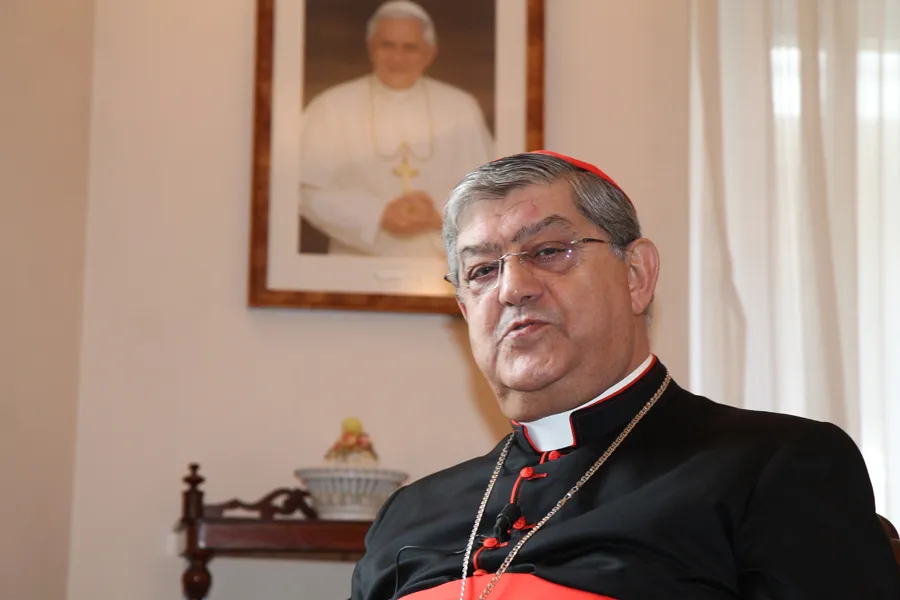
Naples, Italy, Sep 19, 2018 / 12:01 pm (CNA/EWTN News).- Cardinal Crescenzio Sepe of Naples usually does not faint at the sight of blood.

He has celebrated the miracle of the liquefaction of the blood of St. Januarius, an early martyr, many times over the years.

But this year, something caused Sepe to “blanch” and sit down during the Sept. 19 celebration of the miracle, Italian news agency ANSA reported.

While he refused to leave the altar, Sepe felt too faint to carry the phials of blood outside to show the crowds who had gathered in anticipation of the miracle, which typically occurs three times a year.

It is unknown what caused Sepe to feel ill during the celebration, though ANSA reported that it was “perhaps because of the heat.”

The blood did liquefy during the celebration, according to ANSA.

St. Januarius, or San Gennaro in Italian, is patron of Naples was a bishop of the city in the third century, whose bones and blood are preserved in the cathedral as relics. He is believed to have been martyred during Diocletian persecution.

The reputed miracle is locally known and accepted, though has not been the subject of official Church recognition. The liquefaction reportedly happens at least three times a year: Sept. 19, the saint’s feast day, the Saturday before the first Sunday of May, and Dec. 16, the anniversary of the 1631 eruption of Mount Vesuvius.

During the miracle, the dried, red-colored mass confined to one side of the reliquary becomes blood that covers the entire glass. In local lore, the failure of the blood to liquefy signals war, famine, disease or other disaster.

The blood did not liquefy in December 2016, but Monsignor Vincenzo De Gregorio, abbot of the Chapel of the Treasure of San Gennaro, said it was a sign that Catholics should pray rather than worry about what the lack of miracle could mean.

“We must not think of disasters and calamities. We are men of faith and we must pray,” he said at the time.

The vial has sometimes changed upon the visit of a pope.

On March 21, 2015, Pope Francis met with priests, religious and seminarians at the cathedral and gave a blessing with the relic.

Sepe then received the vial back from the pope and noted that the blood had partially liquefied.

The last time blood liquefied in the presence of a pope was in 1848 when Bl. Pius IX visited. The phenomenon didn’t happen when St. John Paul II visited the city in October 1979, or when Benedict XVI visited in October 2007.

[…]

No Picture
News Briefs

UK politicians call for action against sex-selective abortion

September 18, 2018 CNA Daily News 0

London, England, Sep 18, 2018 / 02:30 pm (CNA).- British politicians have called for a review of the availability of early sex detection tests for pregnant women. The proposal was made by Labour Members of Parliament and prompted by concerns that the tests are leading to sex-selective abortions.

The MP’s expressed particular concern that women, especially those in the UK’s Asian communities, are being pressured or coerced into having an abortion if they are pregnant with a girl.

Labour MP Naz Shah said it was “morally wrong” that women are using the Non-Invasive Prenatal Test (NIPT) to determine whether or not they are pregnant with a girl, and then scheduling an abortion based on the result. Shah, the Shadow Secretary of State for Women and Equalities, called for a government investigation into the practice.

The call for government intervention against the practice comes almost 18 months after the Nuffield Council on Bioethics, a government-funded think tank, found that NIPT promoted sex-selective abortions.

The NIPT consists of a blood test given to the mother at the ninth week of pregnancy, at which time the baby’s DNA is detectable in their mother’s bloodstream.

The test is currently administered by the UK’s National Health Service to screen for genetic conditions, such as Down syndrome. Pro-life advocates have already warned that the test is used to “screen out” children with Down’s syndrome and other conditions. Currently in the UK, 90% of children with a prenatal diagnosis of Down’s syndrome are aborted.

While the gender can be detected by the NIPT, the NHS does not share this information with parents unless there is a specific need to do so. While the test is not made available by the NHS expressly for gender screening, it is privately available to parents and can be purchased at a clinic for about £150-£200.

In the London suburb of Slough, which has a substantial South Asian population, the tests are roadside advertisements explicitly market the test as being able to determine the sex of the child. This, said Shah, is where the government should consider stepping in.

“NIPT screenings should be used for their intended purpose, to screen for serious conditions and Down’s syndrome,” said Shah.

“The government needs to look into this exploitative practice and enforce appropriate restrictions.”

Slough’s Labour MP Tan Dhesi agreed with Shah, and pointed out that some Asian countries have “made huge strides in tackling this social evil,” particularly when the government has banned prenatal gender tests.
“In the UK I think we need to be doing likewise, with regards to the private sector as well,” said Dhesi.

Prenatal sex detection has been illegal in India since 1994.

The calls follow a BBC has report on online forums where women have discussed how NIPT results will directly inform their decision to continue with their pregnancy or to have an abortion.

“I need a son to heal me…,” wrote one woman. “My only bet is NIPT followed by continuation, only if it’s a boy.”

Clare McCarthy, spokesperson for Right To Life UK, told CNA that she agrees with the need for government action to address the problem of sex-selective abortion.

“This BBC investigation adds to a growing body of evidence that we have a sex-selective abortion problem here in the UK,” said McCarthy.

“It’s time for the Government to stop denying there is a problem here and take urgent action to put in place a ban on sex-selective abortion.”

McCarthy, however, said it was “seriously concerning” that the same Labour MPs who are opposed to sex-selective abortion also are in favor of removing all legal restrictions on abortion, “under the guise of ‘decriminalisation.’”

If this were happen, McCarthy told CNA that “the evidence from overseas shows that this could make our sex-selective abortion problem even worse.”

While sex-selection abortion is technically illegal in the United Kingdom, women may give other reasons as for why they want to have an abortion.

In England, Scotland, and Wales, abortion must be signed off by two doctors and cannot be performed later than 24 weeks gestation. After 24 weeks of pregnancy the grounds upon which an abortion can be sought narrow significantly.

In Northern Ireland, abortion is illegal, but it is legal for a Northern Irish woman to travel to England, Scotland, or Wales for an abortion.

[…]

No Picture
News Briefs

Half of Dutch bishops in late 20th century linked to abuse, report claims

September 17, 2018 CNA Daily News 0

Amsterdam, Netherlands, Sep 17, 2018 / 12:01 pm (CNA/EWTN News).- A report published Saturday by a Dutch daily claims that just over half of the Netherland’s bishops between 1945 and 2010 were either child abusers or allowed the transfer of abusive priests.

NRC Handelsblad said Sept. 15 that in that time, four bishops abused children, and 16 others “allowed the transfer of paedophile priests who could have caused new victims in other parishes.” There were in that time period 39 bishops in the country.

The Church in the Netherlands said that “bishops did not act with sufficient care” in transferring priests.

A Church spokeswoman told AFP that most of the clerics accused in the report are now dead, and that the statute of limitations has expired in all cases.

The report was based on a 2011 independent report commissioned by the Church in the Netherlands, as well as victims’ testimony to an inquiry commission, and research by NRC.

The independent report had said that as many as 20,000 minors were sexually abused at Catholic institutions in the country during the 45-year span, by about 800 clerics, religious, and laity.

The Dutch report comes on the heels of a similar report in Germany, and amid clerical sex abuse scandals in the US, Chile, Ireland, and Australia.

[…]

No Picture
News Briefs

Pope Francis warns priests against living a double life

September 15, 2018 CNA Daily News 3

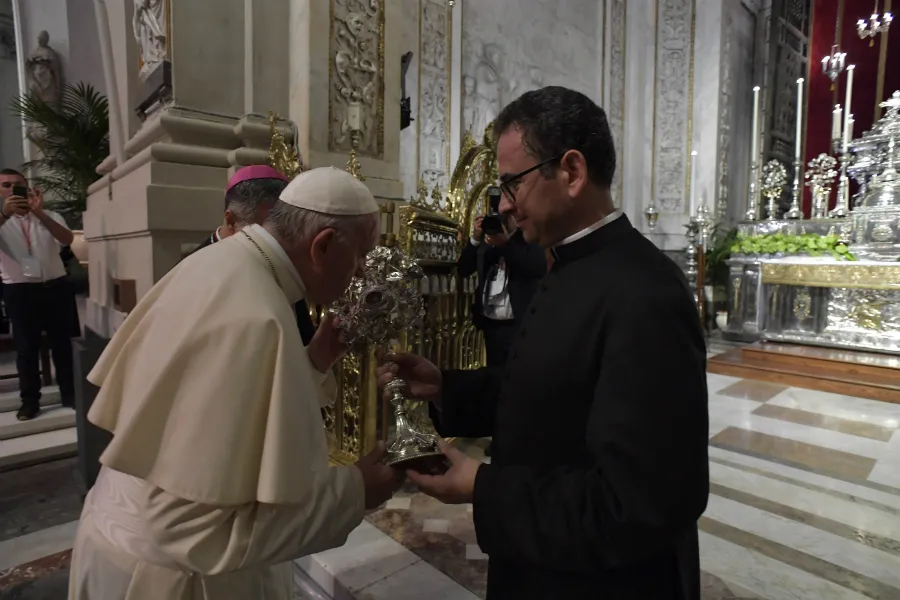
Palermo, Italy, Sep 15, 2018 / 04:03 pm (CNA/EWTN News).- During a day trip to Sicily Saturday, Pope Francis told priests and religious to fight their vices and strive to live a consistent witness of morality.

“One cannot live a double morality: one for the people of God and another in their own home,” the pope told a group of priests, religious and seminarians in Palermo, Italy, Sept. 15.

“No, the witness is only one. The testimony of Jesus always belongs to him. And for his love [the priest] undertakes a daily battle against his vices and against all alienating worldliness.”

He referred to the room of Bl. Pino Puglisi, who was assassinated by the Mafia 25 years ago, saying it stands “in genuine simplicity. It is the eloquent sign of a life consecrated to the Lord, who does not seek consolations and glory from the world.”

People look for simplicity in priests and in consecrated men and women. He said: “People are shocked not when they see that the priest ‘slips,’ is a sinner, repents and goes on… People’s scandal is when they see worldly priests, with the spirit of the world.”

People are scandalized, he continued, when they see a priest who is like “an executive,” rather than a pastor. “And this puts it right in your head and in your heart: shepherds yes, executives no!”

In the meeting, the pope also discussed clericalism, stating that clericalism is to think the Church is “above the world,” when the Church is in fact “inside the world, to make it ferment, like leaven in the dough.”

“For this reason, dear brothers and sisters, every form of clericalism must be banned. It is one of the most difficult perversions to remove today, clericalism.”

He also warned against careerism, which he said is about power, and emphasized that priests and religious are meant to be people of service. To be a good witness, therefore, he said, “means fleeing every duplicity, that hypocrisy which is so closely linked to clericalism; to escape every duplicity of life, in the seminary, in religious life, in the priesthood.”

Francis was also critical of “pastoral projects,” which he said are often “pharaonic,” or extravagant, not simple. “We go to meet people,” he said, “with the simplicity of those who want to love them with Jesus in the heart… without riding the fashions of the moment.”

What have pastoral projects done? “Nothing!” he said. “Pastoral plans are necessary, but as a means, a means to help [those near us], preaching the Gospel, but in themselves they are not useful. The way of the encounter, of listening, of sharing is the way of the Church.”

He listed ways to grow the Church within the parish, such as helping young people at school, accompanying people as they discern vocations, meeting families and the sick, creating meeting places to pray and to learn. This is the “pastoral care” that brings fruit, he said.

Condemning gossip and division, saying they “are not sins that everyone does,” Francis added that “always the error must be distinguished from the one who commits it,” and people should be loved and treated as brothers and sisters. He pointed to the example of Don Pino, who welcomed everyone with an open heart, even criminals.

He also told priests that they are a man of God 24 hours a day, not only when wearing vestments, and that the liturgy is life for them, not just a ritual. “This is why it is fundamental to pray to the One we talk about, to nourish ourselves with the Word that we preach, to adore the Bread we consecrate, and do it every day,” he said.

“It demonstrates that the Church is a sacrament of salvation,” he said, “that is, a sign that indicates and an instrument that offers salvation to the world.”

Following his encounter with priests and religious at the cathedral, Pope Francis met with the young people of Palermo and the surrounding areas.

Asked a question about how to know God’s will for one’s life, he said it cannot be found by looking in a mirror or staying locked in one’s room, but “in relationship.”

God speaks “in the journey and in relationship with others. Do not close yourselves, confide in Him, entrust everything to Him, seek Him in prayer, seek Him in dialogue with others, seek Him always on the move, look for Him on the way,” he said.

“This is important: Jesus believes in you more than you believe in yourselves. Jesus loves you more than you love yourself. Seek him out of yourself, on the way: He awaits you.”

Doing this, you will hear the Lord’s invitation, he said. “Pray with your words: with what comes from your heart. It is the most beautiful prayer.”

At the end of the meeting, noting the probable presence of non-Catholics in the crowd, the pope forwent giving his usual apostolic blessing, instead saying an off-the-cuff prayer for blessing on all those present. “May the Lord God accompany all these young people on the journey and bless everyone,” he prayed.

[…]