No Picture
News Briefs

Amid coronavirus, ‘food deserts’ thinly stretch aid groups

April 28, 2020 CNA Daily News 0

Denver Newsroom, Apr 28, 2020 / 03:01 am (CNA).- The coronavirus pandemic has heightened the problem of food insecurity in many areas of the US already classified as “food deserts”— swaths of the country where people lack access to affordable, nutritious food.

Dave Barringer, CEO for the National Council of the U.S. Society of St. Vincent de Paul, told CNA that across the country, the organization’s food banks have seen a fourfold increase in demand.

The Society of St. Vincent de Paul is an international lay Catholic organization whose members operate food pantries, provide housing assistance, and normally, make house visits to the needy.

“What we’re seeing, especially in urban areas where you don’t have as many grocery stores to begin with…African American and impoverished neighborhoods— that’s where the food crisis is the worst,” Barringer told CNA.

“The first people that got laid off were those in minimum wage jobs…jobs where they needed to be there every day to be paid. It wasn’t a salary. And so they’re out of work, they can’t go to the store, and they don’t have an income,” he said.

While the problem of food insecurity on the global scale is most acute in sub-Saharan Africa, people in many areas of the US such as inner cities and vast swaths of the west also live in food deserts.

Even before the pandemic, some 11% of US households were food insecure at least some time during 2018, including 4.3% with “very low food security,” according to the US Department of Agriculture.

St. Vincent DePaul has around 4,400 locations across the US, falling into two main categories— those associated with parishes, which are called conferences; and councils, which are organized roughly at the diocese-wide level and tend to be bigger operations with more partnerships.

The smaller, conference-level St. Vincent de Paul operations often depend on donations from parishioners.

“Because we’re in those neighborhoods…we’re often the first level of response for people to go to for help,” Barringer said.

With public Masses still suspended in almost every diocese, most conferences have experienced a large drop in donations.

The councils, because many of them have partnerships with local food banks or grocery stores, tend to have a better grasp on resources, but also are stretched.

Typically, a person coming in for help at a St. Vincent de Paul pantry is given a chance to “shop around” for the food that best suits their needs. With social distancing measures in place across the nation, the pantries have had to adapt. 

“What we tend to be doing is packing food boxes based on the number of people in a family, or taking orders and doing curbside deliveries,” Barringer said, adding that the pantries also have to ensure that people waiting in line stay six feet apart.

“A no-contact kind of situation— very labor intensive, but also safe,” he said.

An estimated 2.3 million US households, or 2.2%, live more than a mile from a grocery store and lack access to a vehicle, the USDA says, meaning many must rely on public transportation or walk.

Downtown St. Louis, where Barringer lives, is one such area that is in particular need of help, he said. It is a very diverse area, economically and demographically, with many underemployed people, immigrants, and large families.

The Vincentian food pantry for the area is struggling under a demand four to five times greater than usual, Barringer said, and without the regular parish collections the St. Louis council has had to divert funds it would normally use for at-home visits into the food pantry.

The best way to help the St. Vincent de Paul Society’s efforts, he said, is to donate to one’s local council or conference. Cash is always better than food, he said, because many local Vincentian groups are adept at purchasing the most affordable food in the community.

“They’ll put it directly toward the need where it’s greatest,” he said.

Barringer urged prayer for those suffering from food insecurity during the pandemic.

“The main mission of the Society is to get people closer to God,” he said.

“Maybe this is an opportunity to see fresh ways to get involved with the Church or get involved with organizations like ours, because the need is there all the time whether it’s a crisis or not.”

[…]

No Picture
News Briefs

What a prisoner-priest in the USSR learned about isolation: Diocese to livesteam Tuesday lecture on Fr. Walter Ciszek 

April 27, 2020 CNA Daily News 1

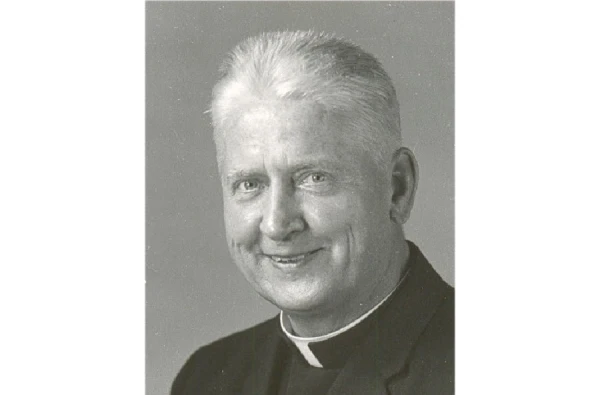
Denver Newsroom, Apr 27, 2020 / 05:15 pm (CNA).- Fr. Walter Ciszek, S.J. wanted to be a missionary in the Soviet Union. He didn’t know he’d spend most of the decades he lived inside the country within the walls of a prison, much of the time in complete isolation. But Ciszek found closeness to God in labor camps and prison cells, never knowing what might happen to him next.

The isolation Fr. Ciszek experienced as a prisoner of the Soviet Union brought out heroic virtues that can help those suffering from the isolation of the coronavirus pandemic today, says a priest who will discuss Ciszek’s life in an April 28 webcast.

“Father Ciszek lived many kinds of isolation,” Father Eugene Ritz told CNA. “He experienced physical isolation from his family, his Jesuit spiritual family, and friends. He often lived in isolation from the sacraments. He lived in isolation from a culture that permitted a notion of God and worship of Him. He lived in interior and spiritual isolation, especially when he could not present himself as a priest or exercise ministry.”

“Many lost faith during their time in the Gulag, including other priests,” said the Pennsylvania priest. However, Ciszek showed the virtue of fortitude in his isolation. Ritz praised Ciszek’s “firmness in difficulty, his constancy in pursuit of the good, and his resolve to resist temptation, conquer fear and face tremendous trials.”

Ritz’s presentation, “Living in Isolation: The Story of Fr. Walter Ciszek,” will be livestreamed Tuesday, April 28 at 8 p.m. Eastern Time. The event is presented by the diocese’s Commission for Young Adults.

Fr. Ciszek was born in 1904 in Shenandoah, Pennsylvania, in what is now the Allentown diocese.

He entered the Jesuit novitiate in 1928 and was ordained in 1937, after training to say Mass in the Russian rite. After two years in Poland, he used the chaos of World War II as cover to enter the Soviet Union so that he could minister to Christians who lived under communist persecution.

He was arrested by the Soviet authorities as a supposed spy in 1941. His imprisonment included torturous interrogation, solitary confinement and years of hard labor near the Arctic Circle. Despite the dangers, he said Mass in secret and heard the confessions of other prisoners.

When he was not imprisoned, he also ministered to several parishes. Ciszek was not released until a 1963 prisoner exchange, when he returned to the United States. He recounted his experiences and their spiritual meaning in his popular memoirs “He Leadeth Me” and “With God in Russia.”

Ritz, who serves as the Allentown diocese’s chancellor, is co-postulator of Ciszek’s canonization. In this role he helps advance the late priest’s case to become a saint through the processes of the Catholic Church.

For Ritz, there is much to learn from the priest’s example.

“One of my favorite lessons of Father Ciszek is that Christ alone guarantees success,” he said. “It was his message to the priests in the labor camp in Siberia that in their struggles of being isolated from their families, friends, parishioners, religious communities, and too frequently the celebration of the Sacraments, Father Ciszek called them to refocus on the person of Christ and his providence.”

The lecture is linked to the coronavirus pandemic, which has killed some 200,000 people worldwide.

The pandemic has left many people isolated. Those in the hospital are barred from receiving visits. In dozens of countries authorities have ordered millions more to stay at home, disrupting family life, social life and economic life around the world.

“To those not handling this very well I would tell them that they are in good company, and remind them that what we suffer helps us to grow in virtue, and that in all things trust the providence that God remains with us, and he alone guarantees our success,” Ritz said.

Bishop Alfred Schlert of Allentown will provide opening remarks for Ritz’s lecture. The bishop, too, reflected on Ciszek’s example in a world rocked by a new disease.

“The people of the Diocese of Allentown, especially those in the area where Father Ciszek was born and raised, pray always that this man who once walked among us, will someday be a saint,” Schlert told CNA April 27. “As a priest, he spent many years in captive isolation in the Russian gulag. Due to the pandemic, we now live in a form of isolation, and so we look to Father Ciszek to teach us what God would want us to learn about our spiritual lives in this time of hardship.”

Father Ritz said the lecture will give an overview of Ciszek’s life and his cause for canonization. His heroic virtue is particularly relevant due to his response to atheistic communism and contemporary Americans’ response to secular relativism. As a priest, Ciszek is a model of holiness and identity for priests today.

Ciszek also escaped his isolation, Ritz told CNA, telling the story of the long-suffering priest’s return home.

“One of my favorite pictures of Father Walter is at JFK Airport, being escorted by his sisters. They have expressions of sheer joy on their faces while Father Walter almost looks startled,” Ritz said. “He recounts being ‘taken back’ when the agent of the U.S. State Department addressed him as Father Ciszek in English. It was the first time he heard that in decades. To my knowledge, he did not know he was returning home until it happened.”

Father Ciszek, who died at Fordham University in 1984, is buried in the Allentown diocese on the grounds of the Jesuit Center in Wernersville, Pennsylvania. The Father Walter Ciszek Prayer League, the official organization to promote his cause for canonization, is located in his hometown of Shenandoah.

“His accounts of time in Russia speak of his desire to return to Shenandoah,” said Ritz, who reported that Ciszek is “very well remembered there.”

“His grave is a place of pilgrimage, as is the font at which he was baptized, still in use at Saint Casimir Church,” Ritz continued. “To say that he is the most favorite son of the town or a hometown hero would be an understatement. We seek his intercession in ways that are miraculous, and learn heroic virtue from studying his life.”

The Easter season is also a key time to reflect on the Gospel passages that inspired Ciszek.

“The life of Father Walter points us directly to Christ,” Ritz said.

“There are moments we cannot feel the presence of God, especially when absent from usual consolations and especially the sacraments,” the priest continued. “From Mary Magdalene weeping at the tomb we learn that at moments of grief Christ is calling to us by name.”

In the gospel account of the disciples on the road to Emmaus, when the distraught disciples only recognized Jesus in the breaking of the bread, “we understand that when we are downcast Jesus is there, even when we don’t recognize him,” said Ritz.

More inspiration can be found in the account of St. Thomas in the Upper Room, or the story of when Peter recognized Jesus on the shores of the Sea of Tiberias.

“In that locked room we become certain that in our deepest moments of fear Christ can reach us and offer us peace, even when we can only recognize him by the wounds of his suffering,” said Ritz. “At the Sea of Tiberias we recognize that Christ is still concerned for our earthly needs, and that at times it takes moving closer toward him or even the miraculous to know he is present.”

Ciszek’s canonization cause was opened in March 2012.


[…]

No Picture
News Briefs

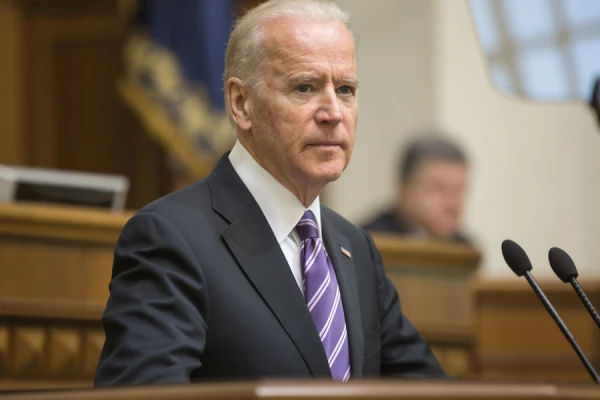
Analysis: Did NY Democrats just tank Biden’s nomination?

April 27, 2020 CNA Daily News 2

Washington, D.C. Newsroom, Apr 27, 2020 / 02:35 pm (CNA).- On Monday, officials in New York announced the cancellation of the state’s Democratic presidential primary, calling the event “essentially a beauty contest,” and an unnecessary risk to public health in the face of the coronavirus pandemic, which has hit New York especially hard.  

While New York Democrats cited the inevitability of a Joe Biden’s nomination for the party’s candidacy as justification for calling off the primary, it could actually make the former VP’s spot on the ticket anything but a forgone conclusion.

Biden is the prohibitive favorite for the nomination to face Donald Trump in November, but New York could become the first domino to fall in an unlikely set up for a contested Democratic convention between two Catholic politicians with national profiles.

Although Bernie Sanders is officially out of the race, Biden does not yet have an overall majority of convention delegates. As of April 27, the former vice president has 1,305 of the 1,991 delegates needed to clinch a first-round coronation at the party’s convention. New York offered 320 delegates up for grabs, 274 pledged to the primary winner; a prize that would have brought Biden closer to the nomination.

If New York’s decision triggers other states to cancel their own primaries, it is entirely possible that Biden could arrive at the Democratic convention without a guarantee of the nomination.  

Assuming the convention begins without a majority of delegates pledged to Biden, the nomination process, during which delegates conduct floor votes, would become a live-fire exercise, rather than a pro forma step in Biden’s coronation as nominee. 

If Biden does not secure a majority on the first ballot, delegates could offer another candidate from the floor.

Official Democratic operatives would likely dismiss talk of a contested convention as fanciful, but it will not stop some of them from quietly acknowledging the benefits of the possibility.

While Biden performs well in head-to-head polling with Trump, especially in key states like Michigan, Florida, and Pennsylvania, his recent media appearances have been inconsistent. In live interviews from his family home, the presumptive nominee has appeared flustered, even under friendly questioning, and during early state primaries Biden appeared to bristle on the stump at even modest criticism from voters. 

Questions have been asked about how the former vice president would fare in a live head-to-head debate with Trump, an aggressively provocative debater.

More recently, media coverage has begun to re-examine accusations of sexual harassment against Biden by former Hill staffer Tara Reade.

Even as Trump’s own approval numbers are dropping after his initial pandemic bump, Democratic party leaders might quietly welcome the reserve option to field another candidate against the president.

In that event, New York’s own Gov. Andrew Cuomo looks the most likely to benefit from a potentially contested nominating convention. Cuomo has been widely praised for his handling of the coronavirus in New York, so far the state hardest hit by the virus.

As the governor of the state at the pandemic’s frontline, Cuomo also has the campaigning advantage of a daily press platform, perhaps second only to the president’s, at a time when Biden has struggled to remain part of the news cycle.

Even before the coronavirus outbreak, Cuomo was a regular face on the cable news circuit and an aggressive debater in his own right. Many would see him as a more obvious match for Donald Trump in a televised head-to-head.

Cuomo is having a moment, as they say, but unless he gets the nomination in a convention surprise, he will likely be of little help to Democrats in the presidential election. Biden has pledged to nominate a woman to the ticket’s v.p. slot; Cuomo is not a woman. And if Cuomo has ambition to run in a future election cycle, he might decide there’s little benefit in campaigning for Biden this time around, especially if a Biden win would set up his vice presidential pick for a future election.

From the Catholic perspective, Cuomo represents another pro-choice Catholic politician who has tangled with bishops, not unlike Biden. If New York’s governor ends up with the nomination, it would put a spotlight back on the Archbishop of New York, Cardinal Timothy Dolan, who has faced calls in the past to formally sanction Cuomo for his aggressively pro-abortion action in the governor’s mansion. But whether Biden secures the nomination, or Cuomo becomes a convention spoiler, bishops this autumn will face the challenge of a candidate who flaunts his Catholicism while flouting Catholic teaching on abortion.

Of course, the New York Democrats’ decision to cancel may prove to be a lone outlier, and motivated mostly by the battle against coronavirus. 

But in whatever cost-benefit analysis was used to make the decision to cancel, it is worth asking if the chance, even a remote one, of leaving open the door for a contested convention was regarded as a potential cost, or as a benefit.

[…]

No Picture
News Briefs

Boston archdiocese assembles teams of priests to anoint coronavirus patients

April 26, 2020 CNA Daily News 0

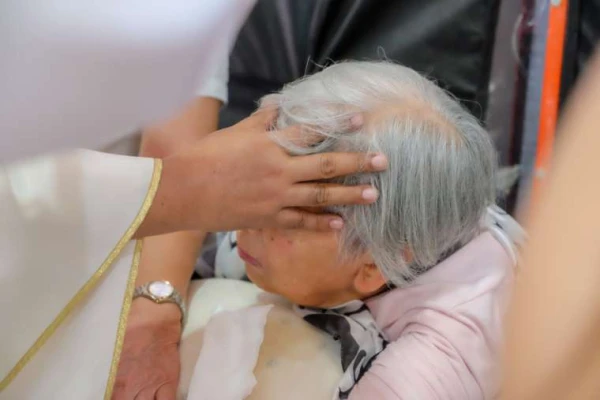
Denver Newsroom, Apr 26, 2020 / 02:01 pm (CNA).- The Archdiocese of Boston has assembled groups of priests — living together in strategic locations close to hospitals— to administer the anointing of the sick to COVID-19 patients. 

Father Tom Macdonald, vice-rector of St. John’s Seminary in Boston, is one of the priests to have volunteered for the assignment.

“It’s a wonderful experience of priestly fraternity to live in the house. It’s sort of like— I would imagine— living as a firefighter in a firehouse. We’re here, we get calls, we rush out, we come back,” he told CNA.

The volunteers live in dedicated houses with other priests whose sole assignment is to be available to administer anointing of the sick, the archdiocese said. The ministry began the weekend of April 18.

“This is what priests do…it’s an enormous privilege,” Macdonald said.

Suffolk County, where Boston is located, had about 9,000 confirmed COVID-19 cases as of April 24.

“We are grateful that our priests are able to visit with the seriously ill in hospitals who are suffering from the coronavirus and to be able to provide the Sacrament of the Sick,” Cardinal Sean O’Malley of Boston said in a statement to CNA.

“This is especially comforting to families who are not currently permitted to visit loved ones in the hospital and who are being treated for coronavirus. Our priests consider this to be a blessing in their ministry. In addition we have received feedback that these visits have had a positive impact on hospital staff.”

The archdiocese trained some 80 priests in total to carry out the ministry, with 30 priests actively doing the anointings and the rest serving as backup. 

The backup volunteers have been providing living space for the priests— such as empty rectories— as well as providing food and errands for the participating clergy.

Father Macdonald has been called to anoint several COVID-19 patients already, and each time the hospital staff has assisted him in donning and removing the necessary protective gear according to hospital’s protocols.

He said all the priests have been trained to minimize time spent in the patient’s room. The priest prays most of the ritual on the doorstep, he said.

The priest then enters the room to perform the actual anointing, which is done with a cotton swab, dipped in the holy oil, and administered on the patient’s foot.

Macdonald said he and his fellow priests are constantly “sharing notes” on their experiences at the hospitals, since each institution has slightly different protocols and equipment.

“It’s very hard being a priest and not being able to celebrate the sacraments for the people, so this opportunity is a great relief in a sense— to do what we were ordained to do,” he said.

“We teach the men at St. John’s [Seminary] that priests run into the burning building, not away from it.”

Father Michael Zimmerman, assistant vocation director for the seminary and another priest volunteer, told CNA that he hopes the word will spread throughout Boston about the availability of anointing for coronavirus patients.

Father Zimmerman started on the team last weekend, covering the Cambridge, Everett, and Mount Auburn hospitals in Boston. So far he has responded to one anointing call, and his fellow priest in the house where they are now living has responded to two.

“Once we’re there, the nurses and the medical staff are very appreciative to have us there,” he said.

He said he and his fellow priest— a religious— have developed a routine of prayer in their house, as well as eating meals together and celebrating Mass.

Father Zimmerman asked for prayers for the patients and the priests and medical staff ministering to them.

“We can’t save everyone— medicine can only do so much. To some degree we have to recognize that we’re not the masters of our own fate, and we have to put it in God’s hands,” he said.

“The medical staff is doing great work, but we also have to recognize that they can’t do everything, and that hopefully takes some pressure off of them, recognizing that this is in God’s hands.”

[…]