No Picture
News Briefs

US fertility rates fall again, and coronavirus could make it worse

May 21, 2020 CNA Daily News 1

CNA Staff, May 21, 2020 / 08:15 am (CNA).- The birth rate in the United States fell to a record low last year, with the fewest babies being born in 35 years. Experts are predicting the trend to continue, and warn the coronavirus could cause an even sharper decline in future years.

Statistics released May 19 by the Centers for Disease Control National Center for Health Statistics show that, in 2019, 3.75 million children were born – a drop of 1% from 2018. The figures also show a 2% drop in overall fertility, with only 58.2 births registered for every 1,000 women between the ages of 15-44. This is the lowest rate since records began in 1909.

The overall fertility rate now stands at 1.7, well below the 2.1 needed for population replacement.

Birthrates have been in steady decline for more than a decade following a peak before the 2008 financial crisis. The 2019 statistics show falling fertility across all age groups except one, women in their 40s.

Dr. Catherine Pakaluk, Assistant Professor of Social Research and Economic thought at the Catholic University of America, told CNA that the data confirms the ongoing trend seen over the last decade, and that the current coronavirus pandemic is likely to further depress fertility.

“The downward trend in birth rates observed in the last several years is not a flash in the pan,” she told CNA. “Unfortunately, the economic devastation ushered in by COVID-19 is likely to make late 2020 worse, and 2021 worse still.”

Many have speculated that months of lockdowns and stay-at-home orders could result in a mini “baby boom,” and that 2020 figures might show a spike in births towards the end of the year. But, Pakaluk warned, this optimism could prove to be unfounded.

“You’ll hear lots of people joke about couples on lockdown with nothing better to do than ‘make a baby’. But that’s just wishful thinking.”

“Plenty of evidence says that unemployment is one of the best predictors of negative fertility shocks. With new jobless claims approaching a staggering 40 million, there are many couples, sadly, who will choose not to have a baby that they already conceived -abortion- and certainly many more who will postpone a baby they were hoping to have this year or next,” she said.

“For some fraction of those, that postponement will end up being permanent. Expect 2020, but especially 2021, to be far worse than what we see here.”

Several trends continued in the data, suggesting that long term fertility rates will continue to drop. Teenage pregnancies have been in sharp decline for decades, with births among women under 20 dropping a further 5%, and declining by 73% overall since a peak in 1991.

Birthrates among Hispanic women also continued to drop, registering 20% fewer births than 2008 projections anticipated. Hispanic women account for nearly 25% of U.S. births.

Experts have long warned about the wider societal and economic problems associated with declining birth rates, especially below the population replacement rate. Programs like social welfare and subsidized medical care rely on growing populations which can contribute to the care of aging generations.

Commenting on these trends in an interview with CNA last year, Pakaluk said that the problems were obvious.

“We see immediately that it is not socially optimal from any rational social planning perspective because you know you cannot support the generous social programs that we like to think are good for society,” Pakaluk said.

“Things like a decent social security system, MediCare, MedicAid, you just cannot sustain them in the long run with a total fertility rate of 1.7.”

But, she warned, the problems caused by declining births was individual, not just societal.

“While the wider societal problems are well known,” Pakaluk said, “what is fascinating is that is seems that it isn’t individually optimal either.”

“What we do know, which is not often raised in media coverage, is that over the last several decades every survey in a Western country that asks women to describe their ideal family size – every single one everywhere – gives you a number about one child more than women end up having.”

Pakaluk said that the connection between parenthood and individual happiness is well known but rarely considered in relation to the fertility gap.

“We do know that children are a tremendous source of satisfaction for both men and women and if you take the net effect of [available data] on happiness and wellbeing – even in very controlled studies – we know that children contribute a tremendous amount of happiness.”

“I would certainly say that we need to look at [how] we have the lowest birthrates on record and the highest rates of addiction and depression on record. I’m not ready to say that is causal, but I think we need to think about it,” Pakaluk said.

“We are living in a fascinating paradox. In the post-feminist age of women’s right and control of reproduction they are not getting what it is that they say they want.”

[…]

No Picture
News Briefs

California can’t omit churches from re-opening plans, Justice Department says 

May 20, 2020 CNA Daily News 1

Washington D.C., May 21, 2020 / 12:50 am (CNA).- California Gov. Gavin Newsom’s efforts to lift some anti-coronavirus restrictions cannot single out churches for stricter treatment than other similar public activities, the U.S. Department of Justice has said.

“Simply put, there is no pandemic exception to the U.S. Constitution and its Bill of Rights,” Eric S. Dreiband, head of the U.S. Department of Justice’s Civil Rights Division, said in a May 19 letter to Newsom joined by four U.S. attorneys for California.

“Religion and religious worship continue to be central to the lives of millions of Americans. This is true now more than ever,” the letter continued. “Religious communities have rallied to protect their communities from the spread of this disease by making services available online, in parking lots, or outdoors, by indoor services with a majority of pews empty, and in numerous other creative ways that otherwise comply with social distancing and sanitation guidelines.”

California’s rules allow restaurants and other businesses to reopen under social distancing guidelines, the Associated Press reports. Churches, however, are still limited to online services and similar efforts.

The letter to Newsom objected that this is a double standard.

“California has not shown why interactions in offices and studios of the entertainment industry, and in-person operations to facilitate nonessential e-commerce, are included on the list as being allowed with social distancing where telework is not practical, while gatherings with social distancing for purposes of religious worship are forbidden, regardless of whether remote worship is practical or not.”

Dreiband’s letter said this is an “unfair burden” on religious groups and “unequal treatment” that violates their civil rights protections. The letter does not threaten immediate legal action. It recognizes the duty “to protect the health and safety of Californians in the face of a pandemic that is unprecedented in our lifetimes,” but said leaders must balance competing interests and evaluate the changing information about the coronavirus.

“Laws that are not both neutral toward religion and generally applicable are invalid unless the government can prove that they further a compelling interest and are pursued through the least restrictive means possible,” the letter said.

Newsom has indicated religious institutions could start in-person services in the near future, with improvements in measurements of testing, infection, and hospitalization.

“I want to just express my deep admiration to the faith community and the need and desire to know when their congregants can once again start coming back to the pews, coming back together,” Newsom said May 18, Politico reports.

Two Republican legislators have introduced a resolution to limit the governor’s emergency powers. Assemblymember Kevin Kiley said such powers are meant for “conditions of extreme peril” and are not intended to “give a single person the ability to remake all of California law indefinitely.”

In Sacramento County, health officials have received state approval for a more rapid lifting of limitations. The county will allow “drive-through” religious services. San Diego County supervisors have asked the state for permission for a more rapid reopening, including outdoor religious services with restrictions, the Associated Press said.

Some churches in the U.S. and South Korea are believed to be at the center of so-called “super-spreader” events, when numerous infections from the novel coronavirus result. On May 12, the Centers for Disease Control said 53 of 61 choir members who took part in a March 10 choir practice at a church in Skagit County, Washington contracted a confirmed or probable case of the coronavirus. Three singers were hospitalized and two died, E.W. Scripps News reports.

Dreiband’s letter to Newsom cites the Department of Justice’s promise to act on any abuses of religious freedom after some state and local governments sought to enforce tough restrictions on Easter services during the coronavirus pandemic.

Attorney General William Barr issued a statement in mid-April saying that governments cannot put special burdens on religious practice that they do not also impose upon other activities. While state and local governments may enact public emergency restrictions, these regulations cannot impede religious practice while allowing exemptions for similar public activities.

Archbishop Salvatore Cordileone of San Francisco spoke about epidemic restrictions on churches during a May 13 online briefing “The Church, the State and the Pandemic,” hosted by the San Francisco-based Benedict XVI Institute for Sacred Music and Divine Worship. Stanford Law School professor Michael McConnell, a former federal appellate court judge, was the main speaker at the briefing.

The archbishop, citing his interactions with government leaders, suggested public officials “don’t understand what we can do to keep people safe.” Church leaders need to reach out to officials and inform them what is possible, he said.

“When they think of a worship service they think of something like a megachurch, 1,000 to 2,000 people jammed in a crowded area,” he said. “They don’t think that we can have distance in our churches, or that we can have outdoor services.”

Cordileone cited suggestions from the Thomistic Institute of the Dominican House of Studies, which published guidance on coronavirus and churches composed by a working group of theologians, liturgists, and health care experts.

“It’s a very thorough and detailed document about what we can do to open up for Mass,” Cordileone said.

The California bishops sent a letter to Gov. Newsom with the Thomistic Institute document attached. A few days later the governor “spoke positively about worship and the necessity of faith” and appeared “more favorable to churches opening up for worship,” said the archbishop.


[…]

No Picture
News Briefs

‘A wildfire of death’: Policy, culture and coronavirus in nursing homes

May 20, 2020 CNA Daily News 0

Washington, D.C. Newsroom, May 20, 2020 / 02:45 pm (CNA).- Deaths from the new coronavirus (COVID-19) have soared in U.S. nursing homes, a trend that some advocates say reflects society’s disdain for the elderly.

“The nursing homes have been ground zero for the coronavirus pandemic” said Jim Towey, founder and CEO of the group Aging with Dignity.

Towey warned of a “disturbing undercurrent” in the conversation about the high occurrence of COVID deaths among the elderly, one which downplays the numbers because of the age of the patients and their supposed proximity to death.

“That is a function of a utilitarian view that Pope Francis has consistently criticized,” Towey said.

Overall, the New York Times reported more than 28,000 staff and patient deaths from the coronavirus at nursing homes and long-term care facilities in the U.S., as of May 11.

Nursing homes accounted for 11% of the overall COVID cases in the U.S., but have borne 35% of the COVID deaths, the Times reported.

As the coronavirus pandemic spread rapidly in the U.S. in March, nursing homes were at the epicenter. Early on, Life Care Center in Washington state drew national attention for its outbreak, and by mid-April there were more than 40 COVID-related deaths among the home’s patients.

With the virus fast spreading in the Northeast and on the West Coast, some state officials were concerned about a possible lack of hospital beds to treat COVID-19 patients. New York, New Jersey, California, and Pennsylvania began mandating that nursing homes could not reject patients discharged from hospitals, who had the virus and were stable.

On March 25, New York instructed nursing homes that they could not deny new patients even if they carried a confirmed or suspected case of COVID-19, the Wall Street Journal reported.

This, said Charles Camosy, a theology professor at Fordham University, helped “create an uncontrollable wildfire of infection and death” at nursing homes.

Camosy wrote a Sunday New York Times op-ed on the virus’ toll on nursing homes. He told CNA on Monday that the statistics were “awful,” but a sign of the times.

As nursing homes and long-term care facilities “were already pushed to the margins of our culture, it actually made sense that the dignity of these residents and workers was ignored and their lives discarded,” he said.

In some cases in New York, empty homes were transformed into COVID wards as with one former Catholic nursing home near Buffalo, which reopened as a recovery center for COVID patients.

Other nursing homes in the state were devastated by the virus.

At a single health care center in Queens, New York, there have been 82 reported COVID deaths. Confirmed COVID deaths at nursing homes number 432 in Queens and 489 in Suffolk County; there were 484 “COVID presumed deaths” at Queens, and 227 in Suffolk, according to the state health department.

The situation for some homes grew dire so quickly that, by the beginning of April, the CEO of the Archdiocese of New York’s health system ArchCare advised families of nursing home patients to take their loved ones home if possible.

A high-ranking ArchCare chaplain also told CNA there was a critical shortage of PPE in the nursing homes at the time, with staff being asked to use one face mask for a whole week and beyond rather than change the mask in between each patient, as normally advised.

Nursing home outbreaks in other states have also pushed up death tolls there. There were 45 deaths by mid-April at one Virginia nursing home. Carroll County in Maryland reported more than 50 COVID-related deaths at nursing homes by the end of April.

The Minneapolis Star Tribune reported on Tuesday that 81% of the state’s COVID-related deaths occurred at nursing homes and assisted-living facilities; state officials were still allowing infected COVID-19 patients to be discharged to nursing homes to free up more hospital beds.

In a one-week period in Connecticut, nearly 90% of the state’s COVID-related deaths were nursing home patients.

In Florida, according to a National Review report, Gov. Ron DeSantis defended his administration’s response to the pandemic. He said Florida focused attention from the start on vulnerable populations, especially the elderly, and barred symptomatic workers from entering nursing homes. Staff were required to wear PPE, and state inspectors visited homes to provide guidance.

Even with the precautions, however, 938 of the state’s 2,052 coronavirus deaths–46%–have been patients or staff at  long-term care facilities, according to statistics from the state’s health department.

New York reversed its mandate this week, allowing nursing homes to refuse patients who contracted the virus. However, the damage has already been done, Wesley J. Smith, a senior fellow at the Discovery Institute, told CNA last Friday.

“I have some sympathy that, in the midst of the explosion, people were dealing with a true emergency,” Smith said. Yet, he added, “one can’t imagine the thinking that would go behind” the state’s decision, “unless you thought that they didn’t matter as much as other people.”

If an investigation into state policies uncovers “any hint of that” mentality, Smith said, there should be sanctions for “egregious and invidious discrimination.”

One precaution that could have been taken before the pandemic—and must be considered in the future—is to help families plan for long-term care so they don’t have to make drastic decisions for their loved ones during a public emergency, said Towey.

Towey is also the former director of the White House Faith-Based and Community Initiatives during the Bush administration, and served as the legal counsel for Mother Teresa for 12 years.

“In many cases,” he said, there was “negligence” demonstrated by nursing home operators that led to the “premature death of many people.” Proper safeguards were not in place to protect patients from the virus.

Yet when considering future policies to protect the elderly, Towey emphasized that they cannot be isolated indefinitely and “can’t live in a world without hugs.” Any policy must “address this disease of loneliness that’s pervasive.”

“I’m worried more about where we’re headed with long-term care, and how we do this in a humane way, because the elderly need most of all to love and be loved,” Towey said.

“That was the lesson Mother Teresa taught. And you just can’t wrap them up in bubble wrap to protect them from illness.”

And even after the pandemic subsides, the cultural trend of families “warehousing” their elderly members will still need to be addressed.

In some cases, Camosy acknowledged, there is no other choice than for an elderly person to be admitted to a nursing home, due to their family’s financial situation or the lack of a family caregiver.

“But in a large number of cases the social expectation is that ‘the place for mom’ is somewhere outside the home,” he said.

Camosy has written about Pope Francis’ condemnation of the “throwaway culture.” He pointed to a cultural trend of families pushing elderly members into nursing homes and forgetting about them, helping to explain why states failed to protect nursing homes from the pandemic.

“We push those whose dignity is difficult to acknowledge and respect to the margins where we don’t have to think about it. We like the consumerist lifestyles and autonomy we’ve achieved and don’t want to mess it up,” Camosy said.

Smith said that the churches need to be at the forefront of fighting the epidemic of loneliness in nursing homes.

“I think that our churches need to step up,” he said.

“There are an awful lot of lonely and semi-abandoned people living in such facilities. And I think that the Christian community, based on their faith, should up its game in reaching out to helping people know they are not alone.”

[…]

No Picture
News Briefs

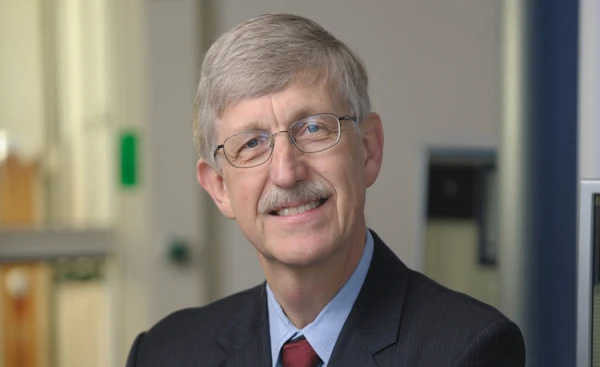
NIH head Francis Collins wins Templeton Prize for witness to faith and science

May 20, 2020 CNA Daily News 2

Denver Newsroom, May 20, 2020 / 11:10 am (CNA).- A scientist on the front lines of developing a vaccine for COVID-19 today was selected as the recipient of this year’s Templeton Prize, an award recognizing his contributions to insight about religion through his work as a scientist.

Dr. Francis Collins, director of the National Institutes of Health (NIH) and member of the Pontifical Academy of Sciences, told CNA that working to develop the coronavirus vaccine is one of the biggest challenges of his career, and that these days when he is not working, he is finding solace in prayer and reading the psalms.

“Like all crises, like all occasions of suffering, this is an opportunity where we can learn and grow. And I’m glad that I worship a God who knows about suffering,” Collins, an evangelical Christian, told CNA.

The Templeton Prize, established in 1972 by global investor and philanthropist Sir John Templeton, is an annual cash award of £1.1 million ($1.3 million) to a living person who has made “an exceptional contribution to affirming life’s spiritual dimension, whether through insight, discovery or practical works.”

St. Teresa of Calcutta was the inaugural recipient of the award in 1973.

Before joining the NIH in 2009, Dr. Collins had been professor of internal medicine and human genetics at the University of Michigan, leading research that had discovered the genes responsible for diseases such as cystic fibrosis; neurofibromatosis; Huntington’s disease; and Hutchinson-Gilford progeria syndrome, a rare form of premature aging.

In 1993, he was appointed director of the National Center for Human Genome Research, overseeing the Human Genome Project, an international collaboration that in 2003 succeeded in sequencing the three billion DNA “letters” in the human genome.

Now, Collins is overseeing the NIH’s collaboration with several pharmaceutical companies and government agencies to develop a vaccine for COVID-19. At least one potential vaccine will be ready to begin large-scale testing by July with others to follow soon, Collins told The Associated Press last week.

“I pray for wisdom, for guidance, I pray for forgiveness for making mistakes along the way,” Collins told CNA.

“I’ve been involved in so many large-scale science projects over the last 30 years, from finding the gene for cystic fibrosis, to the genome project, to cancer immunotherapy; and somehow the burden of responsibility here— we can’t afford to lose a day of progress in finding treatments and a vaccine and better tests— is just there every minute.”

“And here I am in my home office, but barely ever going outside, and probably working 110 hours a week just trying to do everything I can to marshal all of those resources and praying to God that they are used wisely to bring hope and healing,” he said.

A rational case for God’s existence

A Virginia native, Collins was homeschooled until age 10 and studied chemistry at the college and graduate level, earning a bachelor’s, Ph.D., and later his M.D., after which he was named a Fellow in Human Genetics at Yale Medical School.

Veering between agnositcism to atheism until age 27, Collins has said that he was “very happy with the idea that God did not exist and that he had no interest in me.” 

“That was where I was— if somebody tried to raise that topic [of religion], I would be quick to dismiss it and want to move on to something else, having perhaps had too many instances of feeling like a target for some person who was trying to sell me their faith,” Collins said.

Collins converted in part thanks to C.S. Lewis’ classic book Mere Christianity, which lays out a rational case for God’s existence.

Collins said one thing that caught his attention in the opening chapters of the book is Lewis’ examination of the basis of morality— in other words, why is there such a thing as good and evil, and why does it matter?

“This is where I think the most strict atheists find themselves in a real quandary,” Collins argued.

“Because if they try to argue that our ideas about good and evil are solely driven by evolutionary pressures that have helped us survive, the ultimate consequence of that are that those are fictional concepts— that we’ve all been hoodwinked into imagining that there is such a thing as good and evil, and that we should stop paying attention to that and do whatever we please. And even the most ardent atheist has trouble with that conclusion.”

“Understanding God’s works in nature”

Today, Collins is outspoken about his Christian faith. He wrote a book in 2006 entitled “The Language of God: A Scientist Presents Evidence for Belief,” in which he describes how religious faith can motivate and inspire rigorous scientific research.

He and his wife in 2007 founded the non-profit BioLogos Foundation, which aims to foster discussion about harmony between science and biblical faith through articles, podcasts, and other media.

Collins is also a member of the Pontifical Academy of Sciences, having been appointed by Pope Benedict XVI in 2009.

Though Collins said he has only been able to attend one meeting of the Academy at the Vatican since his appointment, he described the meeting as “a fascinating gathering of really world-class scientists of multiple different disciplines.”

“I’ve found such joy in the ability to bring together the spiritual and the scientific perspectives that I feel this urge to share,” he said.

“Not to turn it into too dry an intellectual, philosophical discourse, but to talk about the joy that I have experienced and by God’s grace, in being able to read God’s word in the Bible and understand God’s works in nature.”

Faith and bioethics

Amid the global race to develop a vaccine for COVID-19, some pro-life advocates and ethicists have expressed concern that in some cases, scientists may use human fetal tissue derived from aborted babies in their research.

One proposed line of research, led by immunologist Kim Hasenkrug at the NIH Rocky Mountain Laboratories in Montana, aimed to find treatments for COVID-19 by implanting mice with fetal lung tissue, infecting the mice with coronavirus strains similar to COVID-19, and testing for successful treatments.

The Department of Health and Human Services, NIH’s parent agency, last year imposed a moratorium on NIH fetal tissue research derived from elective abortions, meaning Hasenkrug’s research will not go forward barring any changes in NIH guideleines.

The new guidelines, which NIH released in July 2019, halt new NIH research with aborted fetal tissue and limited funding of “extramural” research— or tests conducted outside the NIH— on aborted fetal tissue. Grant applicants to the NIH must indicate why their research goals “cannot be accomplished using an alternative to HFT” and what methods they have used to determine that no alternatives can be used.

For his part, Collins says he considers the question of whether it is ethical to use human embryos and aborted fetuses for research is an “important issue to think through carefully.”

“I would be the first to say we should not be creating or destroying embryos— human embryos— for research, and we should not be terminating pregnancies for research,” Collins told CNA.

Collins differs from Catholic teaching on research involving frozen embryos.

“But if there are embryos that are left over after in vitro fertilization— and the hundreds of thousands that are never going to be used for anything, they’ll be discarded— I think it is ethical to consider ways in which research might make it possible to utilize that information to help somebody.”

“And likewise, if there are hundreds of thousands of fetuses that are otherwise being discarded through what is a legal process in this country, we ought to think about whether it is more ethical to throw them away, or in some rare instance to use them for research that might be life saving.”

The 2008 Vatican document Dignitatis personae states that “the obtaining of stem cells from a living human embryo…invariably causes the death of the embryo and is consequently gravely illicit.”

That document also strongly criticized aborted fetal tissue research, but regarding common vaccines—such as those for chicken pox and measles, mumps, and rubella (MMR)—that are derived from cell lines of aborted babies, the Vatican said they could be used by parents for “grave reasons” such as danger to their children’s health.

The document goes on to state that “everyone has the duty to make known their disagreement and to ask that their healthcare system make other types of vaccines available.”

A committee of four Catholic bishops wrote a letter to the Trump administration in April asking them to “help to ensure that Americans will have access to vaccines that are free from any connection to abortion.”

Collins says he has found it fascinating to observe how much the modern field of bioethics rests on a Judeo-Christian foundation.

“The fact that we do value such things as benevolence, non-maleficence— that is, don’t hurt somebody on purpose— as autonomy, as equity, as justice; all of those principles come directly out of the bible,” Collins said. 

“And so, a secular ethicist who adheres to those— and they will— may not have quite the same sense that I do about the foundation on which they rest, which for me is very much God-given.”

Sharing faith in the lab

Collins says when President Obama first nominated him as NIH director, there were some voices in the media— particularly, outspoken atheists— who objected to the idea of a Christian leading the nation’s biomedical research effort.

Although Collins said he certainly believes anyone working in the sciences wishing to share their faith with others ought to feel free to do so, he acknowledged that it was much easier for him to share his faith openly after he had already achieved the rank of full professor and led high-profile research projects.

He said even in a setting like the Pontifical Academy of Sciences, held at the Vatican, he sensed that some of his fellow scientists were reluctant to speak openly about their religious beliefs— perhaps because they so often felt they could not share their religious beliefs in the labs where they normally worked.

“I do think, particularly for trainees, or junior faculty, there’s a little bit more anxiety about ‘How will I be viewed’ if I talk about my belief in God. Which is really a terrible tragedy, because as I tried to argue in Language of God— these ought not to be seen as in any way conflicting,” Collins said.

Collins said if he could go back in time to talk to his 27-year-old atheist former self, he would encourage that young man to begin contemplating questions like: Why is there something instead of nothing? Is there a God, and how would you know if there were? What is love about? What is beauty about? Why are we here?

“Those are not questions where the scientific approach is going to give you much of an answer at all,” Collins said, adding that he would tell his past self: “Let’s think about whether it’s worth, before you die, giving a few minutes contemplation to that, and seeing if there’s any other direction from which answers might come, other than the science lab.”

Collins will accept the Templeton Prize in a virtual ceremony later this year.


[…]