No Picture
News Briefs

Catholic builds a shrine to St. Junipero Serra on the site of destroyed Sacramento statue
July 8, 2020 CNA Daily News 0

Denver Newsroom, Jul 8, 2020 / 03:00 am (CNA).-  

After rioters pulled down a statue of St. Junipero Serra in Sacramento on July 4, a local Catholic told CNA that she felt compelled, after prayer and reflection, to clean the spot where the statue once stood, to pray there, and to defend the 18th-century missionary’s legacy.

“I know enough about him to know that he was not a bad man, and that he doesn’t deserve the inaccurate histories that were being portrayed in our local media. I’m not going to be silent about that when given an opportunity.” Audrey Ortega told CNA.

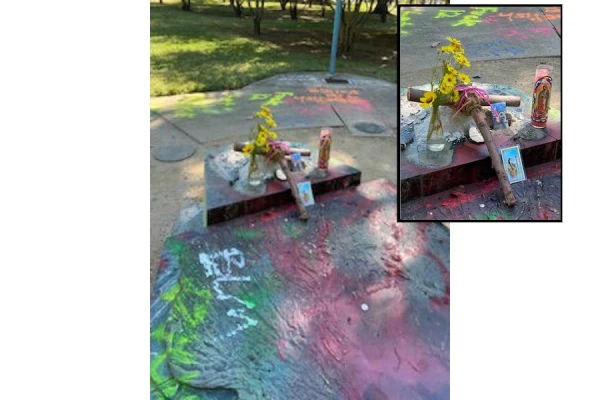
Ortega, a homemaker from Sacramento and a parishioner at the Cathedral of the Blessed Sacrament, set up a makeshift shrine to Serra on the statue’s empty plinth July 5, and led other Catholics in cleaning graffiti from the site.

On July 4, a rioter burned the face of the Serra statue with an ignited spray from an aerosol can, before a crowd pulled the statue from its base using tow straps. After the statue fell, members of the crowd struck it with a sledgehammer and other objects, dancing and jumping upon it.

Ortega said it hurt her especially that the rioters waited for the cover of darkness to destroy the statue, which according to an eyewitness took less than ten minutes to accomplish before the rioters scattered.

St. Serra’s detractors have accused him in recent years of perpetrating abuses against Native Americans. The statue, installed on the grounds of California’s state capitol in 1965, was the third figure of the missionary saint to be torn down by crowds in California in recent weeks.

Ortega was not present at the protest, but watched the coverage that evening on the local news. She resolved to go to the site to, in her words, put “something beautiful on this marred, awful place.”

Her 12-year-old son had made a simple wooden cross for their family’s door during Holy Week, she said. She decided it would be an appropriate item to use to honor Serra, along with holy water, an Our Lady of Guadalupe candle, and holy dirt from Chimayo, New Mexico.

Ortega said she was scared at first to approach the former statue site— which is now little more than a “stump” with rebar sticking up, she said— but soon had her “prayer spot” set up on the stump with a lit candle, and she began to pray the rosary and the stations of the cross.

“I was just praying for peace, and praying for the safety of everybody involved,” she said. “I’m standing on firm ground as a Catholic…I don’t want to live with anger or bitterness in my heart. That’s what caused the statue to be torn down in the first place.”

She said praying the stations of the cross at the site was particularly powerful for her.

“I felt so connected to the sufferings of Christ, and to the sufferings of St. Serra, because I do know his story of how he suffered, of the deprivation he went through and the sacrifices he made,” referring to Serra’s practices of self-mortification and the health issues he endured as a missionary in New Spain.

During the eighteenth century, Serra founded nine Catholic missions in the area that would later become California.

Serra helped to convert thousands of native Californians to Christianity and taught them new agricultural technologies.

Critics have lambasted Serra as a symbol of European colonialism and said the missions engaged in the forced labor of Native Americans, sometimes claiming Serra himself was abusive.

But Serra’s defenders say the priest actually was an advocate for native people and a champion of human rights.

While Ortega was praying at the stump July 5, a reporter from the Sacramento Bee approached Ortega and asked to interview her about why she was there. The reporter later posted the video, which shows Ortega passionately speaking in defense of Serra, online.

“Pope Francis canonized him in 2015. He’s not going to canonize a rapist. There were rapists, yes, but it was not St. Serra,” Ortega said in the Sacramento Bee video.

Serra specifically advocated for the rights of Native peoples, at one point drafting a 33 point “bill of rights” for the Native Americans living in the mission settlements and walking all the way from California to Mexico City to present it to the viceroy.

Serra often found himself at odds with Spanish authorities over treatment of native people, and point to the outpouring of grief from native communities at his death.

Ortega lamented the fact that the statue was removed with due process, or a rational discussion. She said the groundskeepers have told her that the statue has been recovered, but she does not know if there are plans to put it back up again.

“The city has to decide: are we going to pretend like this isn’t happening? Or are we going to do better than this?” she said, suggesting that the city could hold a community forum to talk about the issue.

“At least people are now learning [Serra’s] story, even if it’s a little late for this statue,” she laughed.

On July 6, Ortega said she decided to go and scrub graffiti from the plinth, which she and her children did for two hours straight. She said many passers-by, including some state employees, thanked them for what they were doing.

Today, she said, the plinth looks nearly back to normal thanks to the cleaning efforts. But she worries that, because of the apparent inaction of the city government, it may be vandalized again.

A statue of Serra was torn down by demonstrators in San Francisco’s Golden Gate Park on June 19, and one was torn down in Los Angeles on the same day. Other California cities have moved Serra statues to avoid their toppling, or plan to do so.

Ortega said she plans to pray at the statue site for a few minutes each day for as long as she can.

“Anybody can walk around the capitol grounds and pray the rosary and pray for peace. And anybody can go and pray at the Serra statue, or pray the stations of the cross like I did…you can do that without a permit and without drawing…counter protestors.”

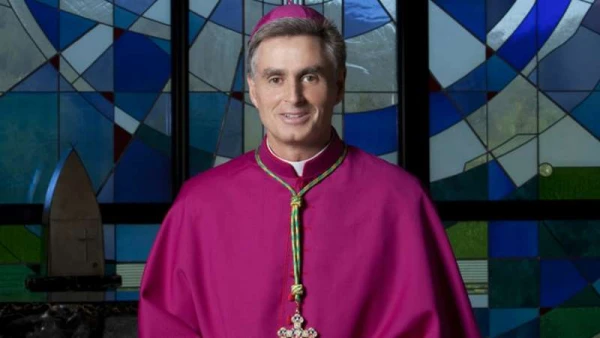
In a July 5 statement, Bishop Jaime Soto of Sacramento said that while “the group’s actions may have been meant to draw attention to the sorrowful, angry memories over California’s past,” their “act of vandalism does little to build the future.”

“All monuments are imperfect as are our efforts to live up to America’s founding ideals. The primary task is to build up our community, not tear it down,” the bishop added.

 

[…]

No Picture
News Briefs

‘Roe’ abortion decision could still be overturned at SCOTUS, law professor says

July 7, 2020 CNA Daily News 0

Denver Newsroom, Jul 7, 2020 / 05:00 pm (CNA).-  

Even after the U.S. Supreme Court’s overturned a Louisiana law regulating abortion clinics, one law professor says that longstanding abortion precedents could still be overturned, even if the makeup of the court does not change.

“Given the right case, a strong enough factual record developed by state legislatures and supported at trial, I believe that the current majority on the Supreme Court could overturn Roe and Casey, and return the question of abortion to the states to resolve through the usual political processes,” University of Notre Dame law professor O. Carter Snead told CNA July 7.

On June 29 the U.S. Supreme Court overturned a Louisiana law holding abortion clinics to the same standards as other surgical centers.

Its 5-4 decision in the case June Medical Services, LLC v. Russo ruled that the state’s law requiring abortion doctors to have admitting privileges at a local hospital posed substantial obstacles to a woman’s access to abortion, without significant benefits to the safety of women.

The decision was written by Justice Stephen Breyer, with Chief Justice Roberts filing a concurring opinion. In his concurrence, Roberts said that Louisiana’s law imposed restrictions “just as severe” as those of a Texas law struck down by the court in 2016. Thus, according to the “legal doctrine of stare decisis,” he said, Louisiana’s law “cannot stand” because of the court’s previous ruling in 2016.

The Supreme Court heard a similar case about Texas safety regulations for clinics in the 2016 ruling Whole Woman’s Health v. Hellerstedt.

Roberts, long considered a skeptic of pro-abortion rights jurisprudence, had dissented from that 2016 ruling against the Texas law. He joined the dissent of Justice Clarence Thomas which criticized “the Court’s troubling tendency ‘to bend the rules when any effort to limit abortion, or even to speak in opposition to abortion, is at issue.’”

For Snead, the latest decision was disappointing, but also a “road map” for continued efforts.

He lamented that Roberts failed to join four other justices in “affirming the constitutionality of a modest health and safety law for women seeking abortions, namely, the requirement that abortion providers have hospital admitting privileges within thirty miles of where the abortion is performed.”

“Nothing in the Constitution forbids Louisiana from enacting such a law. But Chief Justice Roberts felt bound to strike it down under the prudential doctrine of stare decisis because it was so factually similar to a Texas law invalidated four years ago in Whole Woman’s Health v. Hellerstedt (in which Chief Justice Roberts dissented).”

Snead thought the four justices who dissented in the Louisiana case were right that stare decisis did not require rejecting the law.

However, even with the Supreme Court’s apparent dedication to a recent precedent, Snead was hopeful that pro-abortion rights decisions like 1973’s Roe v. Wade and 1992’s Planned Parenthood v. Casey could be overturned.

“No one in June Medical Services asked for Roe or Casey to be overturned, and Chief Justice Roberts applied Planned Parenthood v. Casey without affirming or endorsing it,” said Snead.

“He made it explicitly clear that he does not believe the Court can or should balance a woman’s self-determination against a state’s interest in the life of an unborn child. But this is the very calculus from whence the right to abortion came in Roe and Casey. So it’s clear that Chief Justice Roberts believes that Roe and Casey are conceptually unsustainable.”

“That leaves the issue of stare decisis as the final obstacle to convincing him to undo the injustice of Roe and Casey. It is clear from his concurrence that pro life litigants need to explain why principles of stare decisis do not require Casey and Roe to be sustained,” he said.

In a July 4 essay for the First Things website, “The Way Forward After June Medical,” Snead argued that Roberts’ concurrence is “the controlling opinion for purposes of precedent” and “leaves pro-life litigants on a better jurisprudential footing than before.”

“Most important, June is a road map for tailoring arguments to the new swing vote on abortion, Chief Justice Roberts,” Snead said. “It is certainly tempting to give up because there is still so far to go. But in the face of setbacks in the struggle for the equal protection of the law for every member of the human family, born and unborn, we must remind ourselves that none of it matters. We must find a way to win.”

Roberts’ concurrence acknowledged that the 2016 law was wrongly decided. For Snead, a case can be “readily made” to address Roberts’ concerns about precedent because of the unstable place of abortion in constitutional law. He wrote “it is built on outdated and dubious factual predicates.”

Snead told CNA that American jurisprudence on abortion “has never offered a stable, coherent, or predictable legal framework; it has been re-theorized multiple times, thus reducing its precedential standing; and there is no evidence that women have structured their lives around access to abortion, nor evidence that their personal or social flourishing depends on it.”

He said Roberts’ concurrence puts forward a “new standard.” If a state’s abortion restrictions face legal challenge, the state needs only “to demonstrate that it is pursuing a legitimate purpose via rational means.”

“This is a very low standard that states can almost always meet,” said Snead, saying this standard allows states “far more latitude to restrict and regulate abortion than before.”

“Indeed, the Supreme Court just vacated and remanded for reconsideration two cases where lower courts had previously struck down a parental notice law and a law requiring an ultrasound 18 hours prior to an abortion,” Snead told CNA.

“States should continue to pass laws that respect and protect the intrinsic equal dignity of all human beings, born and unborn, and extend the basic protections of the law to unborn children and their mothers,” Snead said. He advised a combination of abortion restrictions and laws that strengthen “the social safety net” for pregnant mothers and families.

States should make it easier for men and women to care for their babies or, where not possible, to make an adoption plan, he suggested.

“And in our own lives, we all have the duty to extend to all our brothers and sisters, born and unborn, love, respect, and radical hospitality,” he said.


[…]

No Picture
News Briefs

Spokane bishop responds to Catholic Charities racism video

July 6, 2020 CNA Daily News 13

CNA Staff, Jul 6, 2020 / 04:58 pm (CNA).-  

Both the Bishop of Spokane and the leader of a Washington state Catholic Charities organization have spoken out about a controversial video in which the charity leader said that he, his organization, and the Catholic Church are racist, and that the Catholic Church is premised on the idea that Jesus Christ was white.

“I am a racist. That’s the hard truth. I am a racist. How could I not be? As a white person living in America, where every institution is geared to advantage people who look like me, it’s seemingly impossible for me to be anything other than a racist,” Rob McCann, CEO of Catholic Charities of Eastern Washington, said in a video posted to YouTube June 19.

“My Catholic Church, and my Catholic Charities organization, is racist. How could they not be? Our Catholic faith tradition is built on the premise that a baby, born in a manger, in the Middle East, was a white baby. So how can we be surprised to know that we must still fight against racism,” McCann added in the video.

Jesus Christ was a Jewish man, born to Jewish parents in the Middle East, centuries before contemporary categories of racial identification emerged amid European colonization in various parts of the world. The Catholic Church teaches that the Jewish and Israelite identity of Jesus are central aspects to his role in salvation.

McCann’s video also said that “the Catholic Church in America has its own long, terrible history of owning slaves, staying silent about others who did the same, and being part of the institutionalization of racism.”

The CEO said that Catholic Charities has been “unknowingly part of the institutionalization of racism,” because its board and staff is primarily composed of white people, while those it serves are “disproportionately people of color.”

The video garnered national attention after its release. McCann is also vice chair of Catholic Charities USA, the umbrella organization for Catholic Charities organizations in dioceses across the country.

On July 5, McCann posted a set of “clarifications” on the website of Catholic Charities of Eastern Washington.

In his clarifications, McCann wrote that in his video, “instead of engaging in a discussion about race, I spoke in a way that some heard as a critical rant against the Church. For that, I am deeply and truly sorry.”

He noted that by identifying himself as a racist, he meant: “I realize that due to my upbringing and my membership in the majority race in this country, I certainly have areas of both known and unknown bias in my heart that I need to work on, and that in my lifetime I have struggled with those biases in ways that are so subtle I may not have fully realized them.”

“As an individual with white privilege, I certainly have had moments where I could and should have done more to be actively anti-racist.  I am not saying that all white people are racists or that all Catholics are racist.  I am acknowledging that I need to deeply evaluate my own sin in this area every single day and that I hope others will do the same.”

On his charge that the Catholic Church and Catholic Charities of Eastern Washington are racist organizations, “what I intended to convey is that my experience of my own flawed faith life and my experience inside human organizations, lead me to know that there are areas of both known and unknown bias, as well as areas of historical mis-steps that should be acknowledged in order to be a positive force for change.”

McCann’s clarifications also addressed his charge that Catholicism is premised on the notion that Jesus Christ was white.

“My description of our Catholic faith tradition being built on the premise that a baby born in a manger in the Middle East was a white baby has also caused pain, and here I must admit I misspoke and was wrong to say it that way,” McCann wrote.

McCann said that after the video’s released, his pastor had reminded him “that in other parts of the world, and in some places in the U.S., artistic and pictorial representations of Jesus are in the images and likenesses of the local culture. Jesus, and the entire Holy Family, are consistently, artistically, beautifully represented as members of every race and culture around the globe where there are Catholic churches,” he wrote.

The letter came after a meeting between McCann and Spokane’s Bishop Thomas Daly.

In a July 5 statement, Daly said of that meeting that “our conversation was candid and frank – and hopefully productive.”

In response to the controversy, in the Diocese of Spokane “the Annual Catholic Charities Christmas Collection will either be replaced by or taken in conjunction with the Black and Indian Missions Collection,” Daly said, adding that Catholic Charities will be asked “to sponsor a series of speakers, approved by me, to address the subject of Church and Race.”

The organization will also “address the issue of abortion and its detrimental effects on the Black community. In places such as New York City, more Black babies are aborted each day than are born. As Catholics, we believe in the sanctity of life from conception to natural death,” the bishop added.

While McCann’s “letter answers some of my concerns, others remain. His support of the Black Lives Matter organization (BLM), albeit now modified, puzzles me. BLM is in conflict with Church teaching regarding marriage, family and the sanctity of life. Moreover, it is disturbing that BLM has not vocally condemned the recent violence that has torn apart so many cities. Its silence has not gone unheard. One need not stand with BLM to stand for Black lives. I will address this and other issues with Dr. McCann in future meetings,” Daly said.

The phrase “Black Lives Matter” has become the rallying cry for a broad social movement. But there are also specific organizations which take the slogan into their name, the largest and best-funded of which is the Black Lives Matter Global Network Foundation.

The Black Lives Matter Global Network Foundation aims to “foster a queer‐affirming network. When we gather, we do so with the intention of freeing ourselves from the tight grip of heteronormative thinking,” the group’s website says.

Some Black Catholic Leaders in recent weeks have told CNA they support the Black Lives Matter social movement, even while they do not support the Black Lives Matter Global Network Foundation or other particular groups.

In his statement of clarification, McCann wrote that “Our support of the important non-violent racial justice advocacy elements of Black Lives Matter is specifically support for human dignity, which has a clear connection with Catholic Social Teaching. To be clear, we support the concept of Black Lives Matter, but that does not mean we support any elements of that movement that promote violence or violate Church teachings.”

“We affirm the life and dignity of every human person from conception to natural death. We stand firmly against abortion, poverty, violence, and the death penalty. Racial justice and equality are values inherent to life and dignity, and Catholic Charities is not only dedicated to upholding those values, we stand willing to work in strength and in peace to see those values realized in our world.”

McCann was appointed executive director of Catholic Charities of Eastern Washington in 2005, after serving as the organization’s associate director, and as an employee of Catholic Relief Services. He has a doctorate in the field of “leadership studies” from Gonzaga University.

In 2006, he told The Fig Tree newspaper that his understaning of the “the core values of the Catholic tradition, values shared by most other traditions—Buddhist, Muslim, Jewish and other faiths, as well as other Christian,” namely “respect, compassion, collaboration and justice,” animate his approach to Catholic charity.

Catholic Charities of Eastern Washington is a distinct entity from the Diocese of Spokane. Bishop Daly sits on the board, but is not the chairperson. In 2018, the latest year for which date is available, the organization ran a budget deficit of $614,836.

Daly concluded his letter with prayer “that Jesus Christ, the Divine Physician, will heal any divisions that yet might persist among us.”


[…]

No Picture
News Briefs

Catholic parish rallies for young girl hit by truck

July 6, 2020 CNA Daily News 1

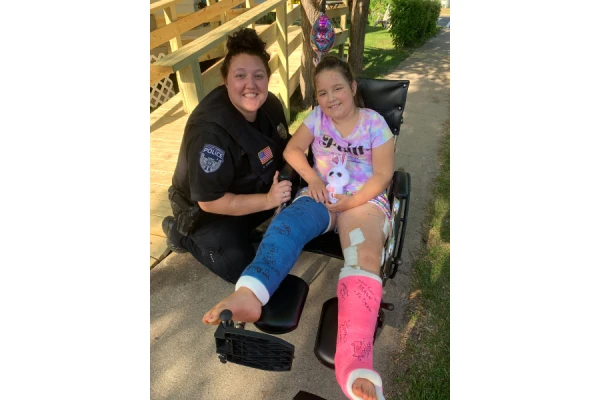
Minneapolis, Minn., Jul 6, 2020 / 03:01 pm (CNA).- Last week, 8 year old Rosie Sajevic was riding her bike a couple blocks from her house in Hibbing, Minnesota, when a FedEx truck hit her, severely damaging her legs.

“I was riding my bike and I saw the FedEx truck and then it went black out, and then I woke up on the ground,” Rosie told CNA.

Rosie’s mom, Teresa Sajevic, heard sirens and wondered what they were responding to. She soon received a call from the police, dropped the laundry she had been folding, and ran to the scene of the accident.

“Her legs were totally mangled,” Teresa told CNA. “Her femurs were totally broken. I couldn’t see her moving and I was just really afraid that she was dead.”

But when she got closer to her daughter, she realized that the girl was praying the Hail Mary.

The Catholic faith is very important to the Sajevics, and homeschooling allows the faith to be built into Rosie’s curriculum. Teresa said that Rosie recently did a consecration to the Virgin Mary, and now thinks of Mary as her heavenly mother.

“She likes to read stories of the saints in comic book style, she is your average kid. But she knows that this world has more,” said Teresa.

Rosie credits Christ, her guardian angel, and the intercession of her five deceased siblings with her life.

“Mom, they must have all come around me like a bubble with my guardian angel,” Theresa recalled Rosie telling her after the accident. Rosie told her mom that her guardian angel must be “really tired.”

Christ “has been with me so much. He could have let me get run over but He didn’t, which is really helpful to me, and I’m so thankful,” Rosie told CNA.

The Catholic community of Hibbing and the neighboring town of Virginia, Minnesota, immediately reached out to the Sajevics with help and prayers.

When Father Brandon Moravitz, pastor of Holy Spirit Parish in Virginia, heard about Rosie’s accident, he quickly rallied his parishioners to offer aid.

“It took a couple days but I realized they were going to need some kind of ramp to get into their house,” said Moravitz. 24-hours later, it was built, in part due to the contributions of local Catholic-owned small businesses such as Pohaki Lumber.

“I couldn’t believe it,” said Teresa. “We’re united in the Eucharist as brothers and sisters, but we’re not their parishioners. Just that they reached out like that, it’s so overwhelming.”

The ramp will allow Rosie, who just returned home from the hospital, to go outside during Minnesota’s summer months. The parish will also install a door that will allow her to go outside on her own.

“If we didn’t have that ramp, I don’t know how she would handle being home, you know, being locked up inside,” said Teresa. It was a financial burden that she and her husband would never have dreamed of making a reality.

Helping those in need is nothing new for Holy Spirit parish.

Last year, Holy Spirit rented and furnished an apartment for a single mother whose house burnt down. They also bought a car for a young woman with cancer.

“(The parishioners) are just big hearts and want to help people in need, and they really rise to the occasion every time that I tend to ask. And it has done some really life changing things for families in our area,” said Moravitz.

The Catholic small business owners in his parish have been especially generous.

“I think, like all economic situations in our country right now, people are struggling,” said Moravitz. “I think they witness Catholic small businesses in such a beautiful way. They’ve got a heart for the Lord, and they’re using their businesses to build up the kingdom of God.”

Moravitz said that although we often think that “we’re going to be the hands and feet of the Lord,” we rarely actually put our prayer into action.

“I hope this might be an example to other parishes, other priests, other lay people, not just to talk about doing it but actually stepping out and doing it. Because there are people in every community across this country that are in need of the light of Christ and the light of the faith and we can bring that to anybody through the gift of service,” said Moravitz.

Teresa is acutely aware of how much these parishioners sacrificed to build the ramp, in resources and time.

“They gave up a Saturday in Minnesota, and we don’t have a lot of nice summer (days). They could have been fishing, but they came together to work for my baby. And that means so much,” Teresa said.

Over the course of her accident and hospitalization, Rosie herself has thought of others first.

Teresa said that Rosie’s first concern was if the driver was okay.

“Mom, they have to feel so much worse than you did,” Teresa recalled Rosie saying after the incident. They have been keeping the driver in their prayers.

And although Rosie was excited to use the new ramp, her first thoughts were for her three brothers, who she said would have fun sledding and riding their bikes down the slope.

Rosie, who sometimes tells her mom to “trust more,” is confident in the future. She is excited to be able to walk on crutches in a few months, and is even more excited to meet her new baby brother or sister around Thanksgiving.

When asked what she would tell any kid who complains about his or her life, Rosie said, “I’d be like, you’re alive!”

Teresa also trusts that God has a plan for Rosie’s future. Rosie will turn 9 years old this month.

“Even though there are so many bad things that happened, and she has such a long road ahead, God is already there. He’s already in the future, he has already got it,” said Teresa.

[…]