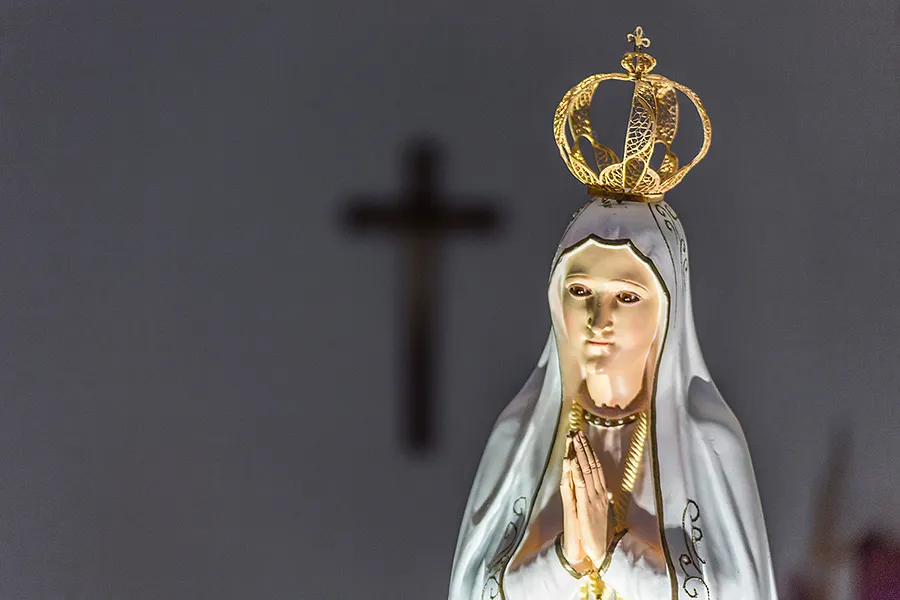
Fatima, Portugal, May 9, 2017 / 03:01 am (CNA/EWTN News).- This is part two of a two-part series. Part one covered the historical context, contents of the apparitions, and Miracle of the Sun.
The secrets of Fatima
While Mary revealed what came to be known as The Great Secret of Fatima during her third apparition to the shepherd children, it was kept from the public for quite some time, according to instructions from Mary. Sr. Lucia revealed the first two secrets in a memoir in 1941, which had been written at the request of the local bishop at the time. Lucia wrote six memoirs during her lifetime – the first four were written between 1935 and 1941; the English translation was published under the name Fatima in Lucia’s Own Words.
The first secret was the vision of hell that Mary had allowed the children to see.
As Sr. Lucia wrote in her memoir: “Our Lady showed us a great sea of fire which seemed to be under the earth. Plunged in this fire were demons and souls in human form, like transparent burning embers, all blackened or burnished bronze, floating about in the conflagration, now raised into the air by the flames that issued from within themselves together with great clouds of smoke, now falling back on every side like sparks in a huge fire, without weight or equilibrium, and amid shrieks and groans of pain and despair, which horrified us and made us tremble with fear. The demons could be distinguished by their terrifying and repulsive likeness to frightful and unknown animals, all black and transparent. This vision lasted but an instant. How can we ever be grateful enough to our kind heavenly Mother, who had already prepared us by promising, in the first Apparition, to take us to heaven. Otherwise, I think we would have died of fear and terror.”
The second secret was a statement that World War I would end, and a prediction of another war that would start during the reign of Pius XI, if people continued to offend God and if Russia were not consecrated to her Immaculate Heart.
As Sr. Lucia recalled in her memoirs, Our Lady said: “You have seen hell where the souls of poor sinners go. To save them, God wishes to establish in the world devotion to my Immaculate Heart. If what I say to you is done, many souls will be saved and there will be peace. The war is going to end: but if people do not cease offending God, a worse one will break out during the Pontificate of Pope Pius XI. When you see a night illumined by an unknown light, know that this is the great sign given you by God that he is about to punish the world for its crimes, by means of war, famine, and persecutions of the Church and of the Holy Father. To prevent this, I shall come to ask for the Consecration of Russia to my Immaculate Heart, and the Communion of reparation on the First Saturdays. If my requests are heeded, Russia will be converted, and there will be peace; if not, she will spread her errors throughout the world, causing wars and persecutions of the Church. The good will be martyred; the Holy Father will have much to suffer; various nations will be annihilated. In the end, my Immaculate Heart will triumph. The Holy Father will consecrate Russia to me, and she shall be converted, and a period of peace will be granted to the world.”
Sr. Lucia believed that an aurora borealis, which appeared in the sky on January 25, 1938, was the “unknown light” to which Mary had referred. The celestial phenomenon could be seen throughout Europe and as far south as Australia, and across the Atlantic to Bermuda and parts of the United States.
Shortly thereafter, Germany annexed Austria, and Japan had already invaded China in 1937. While the European portion of World War II is generally held by Western scholars to have officially started on September 1, 1939, under the reign of Venerable Pius XII, in many ways it was already begun under the reign of Pius XI, as Mary predicted.
Sr. Lucia did not record the third part of the secret in her 1941 memoirs, because she said that Mary had not yet permitted her to reveal it to the world.
However, Sr. Lucia fell seriously ill in 1943. Fearing her death before the third part of the secret was ever revealed, the local bishop asked that she write it down, which she did out of obedience. Sr. Lucia wrote the secret in January 1944, put it in an envelope and sealed it, asking that it not be opened until 1960, at which time she believed the meaning of the message would be clearer, or until she died, whichever came first.
The envelope remained at the bishop’s office until 1957, at which time it was delivered to the Vatican, despite Lucia’s requests that it remain with the bishop.
The secret was not revealed until the year 2000 – 40 years after Sr. Lucia thought it might be released – under the direction of the Holy See.
Cardinal Angelo Sodano, then the Vatican Secretary of State, announced that on May 13, 2000, 83 years after the first apparition, the Third Secret would finally be published. He said the secret referred to the 20th century persecution of Christians and the failed assassination attempt on St. John Paul II on May 13, 1981, the 64th anniversary of the first apparition.
The text of the third secret was published by the Vatican on June 26, 2000:
“After the two parts which I have already explained, at the left of Our Lady and a little above, we saw an Angel with a flaming sword in his left hand; flashing, it gave out flames that looked as though they would set the world on fire; but they died out in contact with the splendour that Our Lady radiated towards him from her right hand: pointing to the earth with his right hand, the Angel cried out in a loud voice: ‘Penance, Penance, Penance!’. And we saw in an immense light that is God: ‘something similar to how people appear in a mirror when they pass in front of it’ a Bishop dressed in White ‘we had the impression that it was the Holy Father’. Other Bishops, Priests, men and women Religious going up a steep mountain, at the top of which there was a big Cross of rough-hewn trunks as of a cork-tree with the bark; before reaching there the Holy Father passed through a big city half in ruins and half trembling with halting step, afflicted with pain and sorrow, he prayed for the souls of the corpses he met on his way; having reached the top of the mountain, on his knees at the foot of the big Cross he was killed by a group of soldiers who fired bullets and arrows at him, and in the same way there died one after another the other Bishops, Priests, men and women Religious, and various lay people of different ranks and positions. Beneath the two arms of the Cross there were two Angels each with a crystal aspersorium in his hand, in which they gathered up the blood of the Martyrs and with it sprinkled the souls that were making their way to God.”
The controversial third secret
A century after the Fatima apparitions, controversies remain. The two biggest involve whether or not the full and authentic text of the third secret has been revealed, and whether or not Russia has been adequately consecrated to Mary.
In 1960, the year Sr. Lucia intended the third secret to be published, the Vatican issued a press release stating that it was “most probable the Secret would remain, forever, under absolute seal.” Widespread speculation ensued about what this meant for the content of the secret, ranging from “worldwide nuclear annihilation to deep rifts in the Roman Catholic Church that lead to rival papacies,” according to the New York Times.
St. John XXIII and Bl. Paul VI both reportedly read the secret, but decided not to release it to the public.
During the papacy of St. John Paul II, the questions regarding the third Fatima secret intensified. In an interview with German magazine Stimme des Glaubens, published in October 1981, John Paul II was pressed explicitly about the third secret.
He said: “Because of the seriousness of its contents, in order not to encourage the world wide power of Communism to carry out certain coups, my predecessors in the chair of Peter have diplomatically preferred to withhold its publication.”
He added that it would be unhelpful to publish the secret if it led Christians to believe that there were a predicted catastrophe against which they were helpless.
Holding up his rosary, the Pope declared: “Here is the remedy against this evil. Pray, pray and ask for nothing else. Put everything in the hands of the Mother of God.”
On May 2, 1981, an Australian named Laurence James Downey, who claimed to be a defrocked French Trappist monk, hijacked an airplane and demanded that St. John Paul II reveal the Third Secret of Fatima. The man was believed to be armed with a bomb, but the incident was resolved without any injuries to passengers onboard.
In 1984, then-Cardinal Joseph Ratzinger, prefect of the Congregation for the Doctrine of the Faith, said that “if [the Third Secret] is not published … it is to avoid confusing religious prophecy with sensationalism. But the things contained in the Third Secret correspond to what has been announced in Scripture and are confirmed by many other Marian apparitions.”
Widespread speculation and concern led to the secret’s publishing in 2000 by the Vatican. The late release angered many who read the secret and didn’t understand what was so controversial about it that delayed publication by decades.
Conspirators questioned whether the authentic secret, or the secret in full, had actually been revealed. The Vatican version, which is claimed to be a photocopy of the original handwritten note from Sr. Lucia, took up four pages, while some allege that Sr. Lucia had actually written the third secret on just one page.
Some skeptics are also suspicious about the third secret because it does not contain any words directly from Mary, unlike the other secrets.
Some also question the content of the secret, because it does not directly speak of the apocalypse, as was expected from interviews of Sr. Lucia.
Others are also suspicious of Sr. Lucia’s transfer from the Dorothean Sisters, where she initially entered, to a cloistered Carmelite convent, the order she transferred to with permission in 1948. The move to the Carmelite order, which has strict rules about communication with the outside world, is seen by some as part of a larger conspiracy effort to censor her visions and the third secret.
On the other hand, Sr. Lucia herself confirmed several times that the third secret as published by the Vatican is in full and correct. Specifically in a November 17, 2001 statement to the secretary of the Congregation for the Doctrine of the Faith, Archbishop Tarcisio Bertone, she confirmed that the Fatima secret has been totally revealed by the Vatican, and Russia has already been consecrated as Mary requested.
Those who affirm that the secret has been fully revealed say that to question the secret’s authenticity is to question the original visionary’s credibility.
The authenticity of the third secret has also been confirmed by the Popes and other Vatican officials.
When the secret was published, then-Cardinal Joseph Ratzinger said that “The events to which the third part of the ‘secret’ of Fatima refers now seem part of the past. […] Those who expected exciting apocalyptic revelations about the end of the world or the future course of history are bound to be disappointed.”
In 2016, an article on Catholic blog One Peter Five included an interview with a German priest who claimed to recall a conversation in which Pope Benedict XVI told him that the third secret had not been fully revealed. In a response on May 21, 2016, the Vatican released a statement from Pope Benedict XVI declaring that any claims that the third secret had not been fully revealed were “pure inventions, absolutely untrue.”
The other controversy: The consecration of Russia
As Mary promised in the second secret, she came back to ask for the consecration of Russia to her Immaculate Heart. On June 13, 1929, Mary reappeared to Sr. Lucia, who was with the Sisters of St. Dorothy at the time, asking for the consecration of Russia, “promising its conversion through this means the hindering of the propagation of its errors.”
There were three “conditions” of the consecration, explained by Mary in the second part of the secret: The Pope must consecrate the world to the Immaculate Heart of Mary, with a special mention of Russia, in union with the bishops of the whole world.
At an unknown date after this apparition, Sr. Lucia made the request for consecration known to Pius XI. In 1938, the Portuguese bishops asked Pius XI to make the consecration, but no action was taken. Upon the election of Venerable Pius XII in 1939, several clergy repeated the request to the Pope.
In December 1940, with World War II well underway in Europe, Sr. Lucia wrote a letter to Pius XII, requesting the consecration of the world to the Immaculate Heart of Mary “with a special mention for Russia, and order that all the bishops of the world do the same in union with Your Holiness.”
More than a year later, on October 31, 1942, Venerable Pius XII consecrated the world to the Immaculate Heart of Mary, though without the involvement of the bishops of the world. War made communications difficult, and many bishops had been imprisoned or even killed. Sr. Lucia said that though this consecration was imperfect, Jesus revealed to her that it was enough to bring a quicker end to World War II, sparing many lives.
In July 1952, Venerable Pius XII consecrated the people of Russia to the Immaculate Heart of Mary, but again, because it was done privately and not in conjunction with the bishops of the world, the consecration was incomplete. At least once during his papacy, Blessed Paul VI renewed the Russia consecration, although it did not fulfill the requirements of being in union with the bishops of the world.
Ongoing, dedication political relations with Russia made a consecration that specifically called out the country difficult.
“It’s not that the Church forgot about what the Madonna said about Russia, it’s not that Russia was forgotten, absolutely no,” said Cardinal José Saraiva Martins, Prefect Emeritus of the Congregation for the Causes of Saints.
“For what regards the consecration of Russia to the heart of Mary, the Church did this, but with an extraordinarily unique diplomatic skill. But she did it.”
According to Sr. Lucia, the consecration was complete during the pontificate of St. John Paul II, who several times attempted to fulfill the requirements of the Russia consecration.
It was finally considered fully complete after the consecration he made on March 25, 1984, as confirmed by Sr. Lucia.
St. John Paul II, “united with all the pastors of the Church in a particular bond whereby we constitute a body and a college,” consecrates “the whole world, especially the peoples for which by reason of their situation you have particular love and solicitude,” he said in the consecration.
“Because the Church…if she would have consecrated Russia to the heart of Mary and nothing else, it would have provoked a terrible reaction on the part of Russia,” Cardinal Martins explained.
“The Pope realized this. It was something, from the standpoint of Russia, completely unacceptable…It certainly would have had extraordinary consequences…But the Church fulfilled what the Madonna asked by consecrating not Russia in particular, but the world; I underline the world, and Russia is part of the world. So was Russia also consecrated to Our Lady’s heart or not? Russia was consecrated. If I consecrate the world to Russia, I also consecrate Italy, the United States, to the heart of Mary. They are part of the world consecrated to the heart of Mary.”
Both St. John Paul II and Sr. Lucia initially seemed uncertain that the consecration has been fulfilled in 1984, but shortly thereafter Sr. Lucia told the papal nuncio to Portugal that the Consecration had been fulfilled. She also confirmed this in a letter to one of her sisters in 1989, and again in a letter to a priest in 1990, as well as in her statement to the Congregation of the Doctrine of the Faith in 2001.
A warning against “sensationalism”
Despite Vatican attempts to quell rumors and hearsay, the Fatima conspiracy theories still persist.
But Benedict XVI several times warned against this “sensationalism” that he says Mary would not have intended as the fruit of her apparitions.
Four years before the third secret’s release, in a 1996 interview with Portugal’s main Catholic radio station, Cardinal Ratzinger, who had already read the secret, issued this warning: “To all curious people, I would say I am certain that the Virgin does not engage in sensationalism; she does not act in order to instigate fear. She does not present apocalyptic visions, but guides people to her Son. And this is what is essential.”
Cardinal Ratzinger became Pope Benedict XVI in 2005, and visited the apparition site as Pope in 2010.
During a press conference for the visit, he reminded the faithful that the message of Fatima is not about conspiracy theories regarding the end of the world, but about the faithful’s response in “ongoing conversion, penance, prayer, and the three theological virtues: faith, hope and charity.”
“This is our response, we are realists in expecting that evil always attacks, attacks from within and without, yet that the forces of good are also ever present and that, in the end, the Lord is more powerful than evil and Our Lady is for us the visible, motherly guarantee of God’s goodness, which is always the last word in history,” he said.
Vatican recognition and papal trips to Fatima
In 1930, Bishop Dom Jose Aleves Correia da Silva of the Diocese of Leiria (now Leiria-Fatima) declared that, based on the results of the investigative commission, the apparitions at Fatima were “worthy of belief.”
Since then, the Fatima apparitions have received significant recognition on the part of the Vatican, and Pius XI granted a special indulgence to those who visited the newly-built Fatima shrine.
Venerable Pius XII encouraged devotion to Our Lady of Fatima so much so that he became known as “the Pope of Fatima.”
He is reported to have said: “The time for doubting Fatima has passed, the time for action is now.” He was the first Pope to consecrate the world, and then Russia, to the Immaculate Heart of Mary. Moreover, it was during his papacy, in 1944, that the feast of the Immaculate Heart of Mary was extended to the entire Roman rite, to be celebrated on Aug. 22, the octave day of the Assumption.
Bl. Paul VI visited the shrine of Fatima, on May 13, 1967, as did Cardinal Albino Luciani, Patriarch of Venice – who was elected Pope in 1978.
St. John Paul II visited the Fatima shrine three times – in 1982, 1991 and 2000. During his 2000 visit, he beatified the two deceased visionaries, Jacinta and Francisco. He also added the feast of Our Lady of Fatima to the General Roman Calendar, to be celebrated May 13.
The Polish Pope had a particularly strong devotion to Our Lady of Fatima. After a close shave with death during an assassination attempt on his life on the 64th anniversary of the first apparitions – May 13, 1981 – the Pope credited his survival to Our Lady of Fatima’s miraculous intervention. As a sign of his gratitude, he placed the bullet from the failed assassination in her crown.
As a cardinal, Benedict XVI had a devotion to Our Lady of Fatima which extended to his papacy, when he visited the Fatima shrine from May 11-14, 2010. In 2008, he waived the typical five-year waiting period in order to open Sr. Lucia’s cause for canonization. The local Church in February 2017 finished collecting documents to examine her heroic virtue.
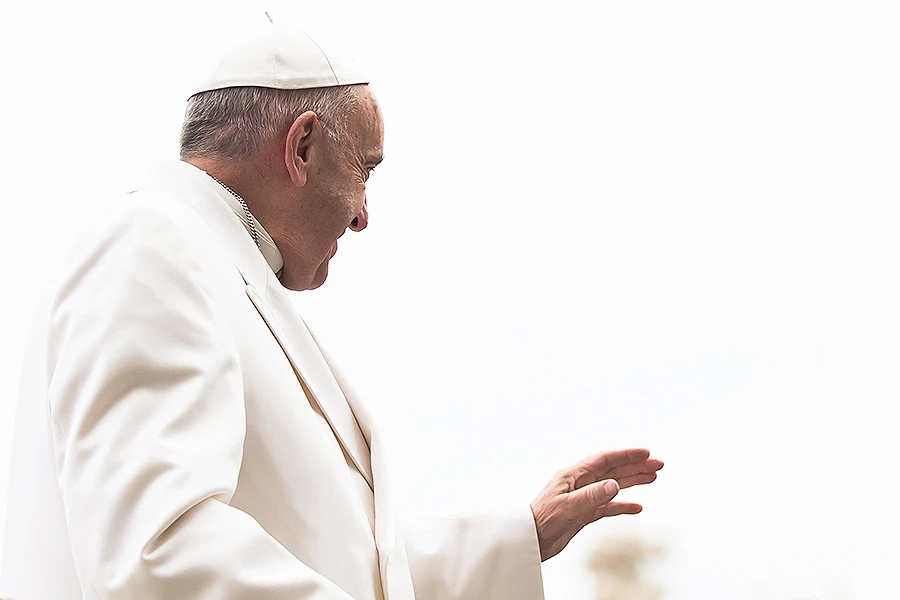
Pope Francis as well has a strong devotion to Our Lady of Fatima, and consecrated his papacy to her on May 13, 2013.
What happened to the visionaries after the apparitions?
As foretold in the apparitions, the sibling pair of Francisco and Jacinta would only live a short while after the apparitions were completed.
Convicted by Mary’s requests and the vision of hell, both children lived lives of prayer and penance after the apparitions, offering themselves for sinners as Mary had asked. Francisco was known for his devotion to the Eucharist and his strict physical mortifications, while Jacinta was especially known for having a heart for the poor and the suffering.
Both children fell victim to the influenza epidemic of 1918 that swept through Europe. In October 1918, Mary again appeared to the sick siblings and promised to take them to heaven soon. On April 3, 1919, Francisco declined hospital treatment for influenza and died the next day, at the age of 11.
Jacinta was given hospital treatment in hopes of prolonging her life, but she knew that she would soon join Francisco in heaven. On February 19, 1920, Jacinta asked the hospital chaplain who heard her confession to bring her Holy Communion and administer the last rites, because she was going to die “the next night.” But the priest said that her condition was not that serious and that he would return the next day. The next day Jacinta was found dead – she had died in her sleep at 10 years old.
As for Lucia, she outlived her cousins by many years, as Mary had predicted. Shortly after the deaths of her cousins, at 14 years old, she was sent to the Dorothean Sisters of Villar for school, and in 1928 became a sister of St. Dorothy. In 1946, she transferred to the convent of the Carmelite Sisters of Coimbra, Portugal and took the name Sister Maria Lucia of the Immaculate Heart.
She received visions and messages from Mary and Jesus on several more occasions throughout her life, including the visions in 1925 that led to the Five First Saturday devotions, which include saying the rosary, receiving communion and confession, and meditation during the first Saturday of five consecutive months.
Besides the four memoirs she wrote between 1935 and 1941, Sr. Lucia had an additional book published in 2001, known as Calls from the Message of Fatima or Appeals of the Fatima Message. She visited the Fatima shrine during Bl. Paul VI’s visit in 1967, and during all three of St. John Paul II’s visits.
Aside from her memoirs and letters to clergy regarding Fatima, she had limited communication with the outside world, per her Carmelite vows.
Sr. Lucia died in 2005 at the age of 97, at the Carmelite convent of Santa Teresa in Coimbra, where she had lived since 1948.
The canonization of Francisco and Jacinta
Popularity of the Fatima apparitions spread, and the cause for canonization of Francisco and Jacinta was opened in 1946. Much of what is known about their life and holiness is known through Lucia’s memoirs.
“People may ask: ‘These children died so young, what do we know about them and their lives of faith?’ But a lot was related by Sr. Lucia and the witnesses of the apparitions. Francisco had a devotion to the Eucharist, and Jacinta wanted to help those who were suffering, that was her charism or focus after the apparition. Those are details most of us don’t really know about,” O’Neill said.
Francisco and Jacinta became the youngest non-martyr children to be beatified, on May 13, 2000, the 83rd anniversary of the first apparition. St. John Paul II presided over the Mass.
Pope Francis will canonize Francisco and Jacinta during his trip to Fatima on May 13, 2017 during a Mass at the shrine.
 […]
[…]