Ahead of trip, Pope Francis sends message of joy to Egypt

April 25, 2017 CNA Daily News 0

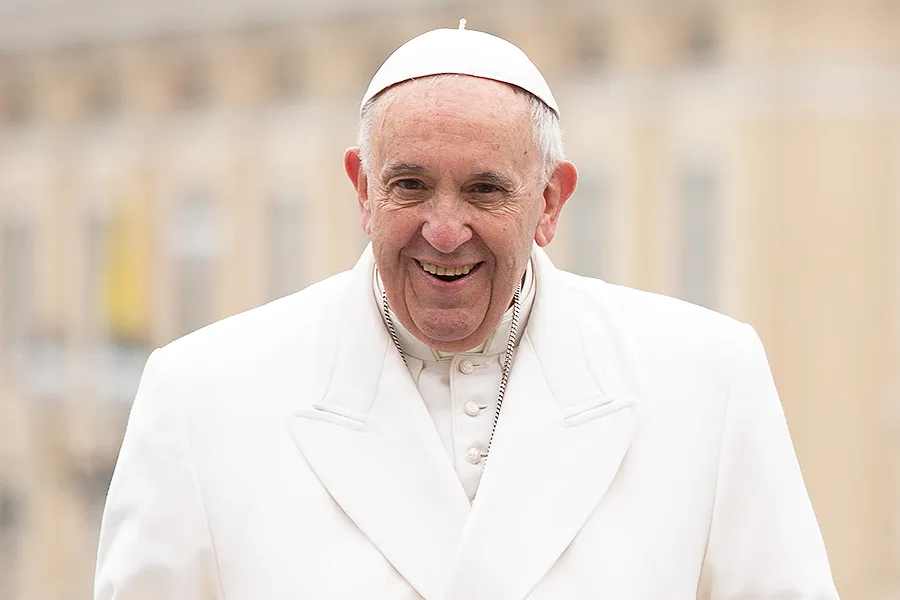
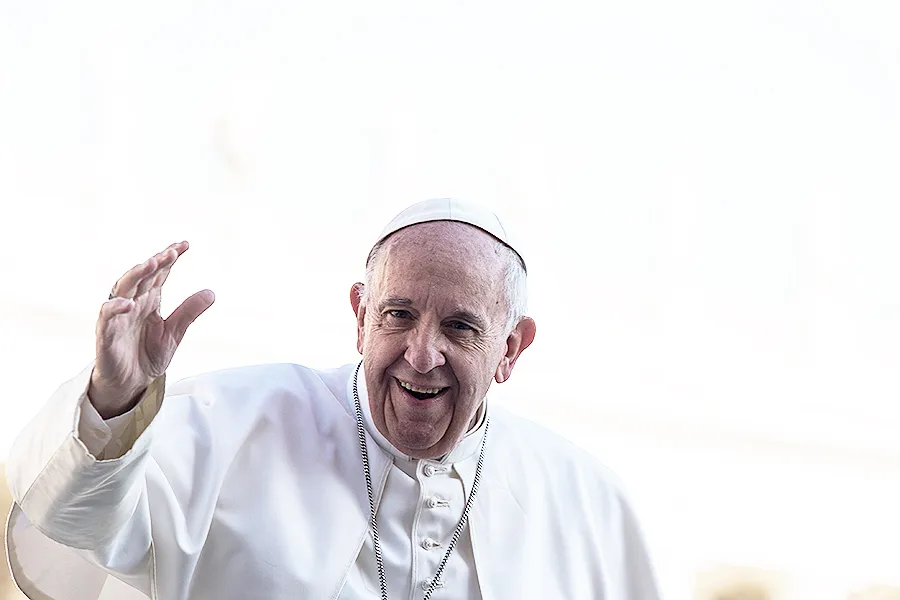
Vatican City, Apr 25, 2017 / 05:25 pm (CNA/EWTN News).- Pope Francis expressed his joy for his upcoming trip to Cairo in a video message, saying he hopes to bring peace and friendship to all Egyptian citizens.

“I am truly happy to come as a friend, as a messenger of peace and as a pilgrim to the Country that gave, more than two thousand years ago, refuge and hospitality to the Holy Family fleeing from the threats of King Herod,” the Pope said an April 25 video message.

The video shows Pope Francis expressing his excitement to visit the land “where Patriarchs and Prophets lived,” and wishes to bring strength and comfort to the Christian community.

“I hope that this visit will be an embrace of consolation and of encouragement to all Christians in the Middle East; a message of friendship and esteem to all inhabitants of Egypt and the region.”

On April 10, the Director of the Holy See Press Office confirmed the Pope’s trip to Egypt despite the recent violence from the Islamic State taking place within the country.  

Coptic Christians make up the majority of Egypt’s Christian community, but suicide bombings, kidnappings, and other violent attacks from the Islamic State have affected both Christians and Muslims.

General Minister of the Franciscan Community acknowledged the present dangers and said the Pope is “very informed” of the issues occurring in Egypt.

“Our world, torn by blind violence, which has also afflicted the heart of your dear land – needs peace, love and mercy; it needs workers for peace, free and liberating people, courageous people able to learn from the past to build a future without closing themselves up in prejudices,” Pope Francis said.

He added, “It needs builders of bridges of peace, dialogue, brotherhood, justice, and humanity.”

The Pope hopes he may bring “a message of fraternity and reconciliation to all children of Abraham, particularly in the Islamic world, in which Egypt occupies a primary position.”

Pope Francis will begin his trip by giving an address for an international conference of peace at Cairo’s Al-Azhar University, an esteemed Muslim institute. He will be speaking with the Grand Imam of Al-Azhar, Ahmed el-Tayyeb, who is considered by some to be head of the Sunni Muslim branch of thought.

Afterwards, the Pope will meet with the state officials and Patriarch Tawadros II of Alexandria, head of the Coptic Orthodox Church.  

Patriarch Tawadros II was nearly injured during one of the two attacks which killed 44 people and injured over 100 more. During Palm Sunday liturgy, one suicide bomber detonated at the entrance of St. Mark’s Cathedral in Alexandria.

The Pope will then celebrate mass on Saturday, and have a meeting with the Coptic Catholic Bishops over lunch. Pope Francis was invited by the Coptic Catholic Patriarchy during their ad limina visit to the Vatican on Feb. 6.

[…]

Pope Francis refuses bullet-proof vehicle for Egypt trip

April 25, 2017 CNA Daily News 0

Vatican City, Apr 25, 2017 / 10:32 am (CNA/EWTN News).- Pope Francis will not use a bulletproof vehicle during his trip to Egypt this weekend, despite recent terror attacks against Christians in the country, according to Reuters.  

“The Pope will use a closed car to move around, but not an armoured one,” Vatican spokesman Greg Burke confirmed yesterday. “That’s how he wanted it.”

This is not the first time Pope Francis has done so – he typically prefers to travel in more open vehicles, or ones that are not bulletproof, because he feels that allows him to better interact with the people on the streets.

Pope Francis will be traveling to Cairo, Egypt, April 28-29 for his first international trip of the year. Interfaith dialogue with Muslims and showing solidarity with persecuted Christians will be main priorities of the trip.

His trip comes after several recent attacks on Christian in the country.

In December, a bombing at Cairo’s main Coptic cathedral killed at least 25 people and wounded dozens of others, most of them women and children.

On Palm Sunday, the bombing of two Coptic churches killed 43 and injured more than 100 others.

Last week, gunmen attacked security forces near the famous St Catherine’s Monastery in the Sinai desert, killing a police officer and injuring three others. This attack and the church bombings were all claimed by ISIS.

Egypt’s president has declared a three-month state of emergency in the country following the Palm Sunday attacks. Despite the risk, the Vatican announced earlier this month that the Pope’s trip to Egypt would continue as planned.

Pope Francis was invited to visit Egypt by Coptic Catholic bishops during their visit at the Vatican Feb. 6. The Pope had also received an invitation to visit Egypt from the country’s president and from the Grand Imam of al Azhar, Ahmed el-Tayyeb, after his visit to the Vatican in the spring of 2016, marking a thaw in Vatican-Muslim relations in Egypt.  

During his trip, Pope Francis will meet with the Grand Imama state officials, leaders of Egypt’s Catholic Coptic and Orthodox Coptic churches, and Catholic priests and religious of the country.

[…]

They lost everything in Peru’s floods. Now they’re asking for Bibles.

April 25, 2017 CNA Daily News 0

Lima, Peru, Apr 25, 2017 / 06:04 am (CNA/EWTN News).- Archbishop José Antonio Eguren of Piura and Tumbes, Peru visited the inhabitants of one of the areas most affected by the recent floods in northern Peru, who asked him to help them get some Bibles.

According to the Archdiocese of Piura, a group of victims from the Pedregal Chico settlement in Baja Piura approached the archbishop last week and asked him for some Bibles because the ones they had were lost in the flood.

“They said that the Word of God is essential for them and for the continuity of their family catechetical programs and ongoing catechesis they have implemented in their village,” said a news brief from the archdiocese.

Archbishop Eguren promised to get the Bibles and assured the victims that “the love of God does not abandon them nor has he forgotten them.”

The archbishop, accompanied by volunteers and authorities from the charitable group Caritas, brought three tons of food supplies for the more than 300 families in this area, who were hard hit by the Piura River overflowing in recent weeks.

The river waters obliterated homes, workshops, plazas, ranches and farm fields, completely flooding the village and reaching a level of five feet.

To save their lives, the villagers had to leave everything behind and flee with nothing but the clothes on their backs.

Much of the village has been buried under a thick layer of much. Some 80 percent of the homes have been demolished, while rice and cotton fields have been destroyed.

Today, the almost 1800 inhabitants of this village, devoted mainly to farming and handicrafts, “spend the day in makeshift and uncomfortable tents, without basic services, living together with sickness and extreme poverty,” the Archdiocese of Piura reported.

“They just ask that we don’t forget about their situation and that we help them so they can recover.”

“They are people of deep faith and despite everything they have suffered they have not lost hope or the desire to go on, since they’re sure that with the help of the love of God, their desire to work and our aid they will be able to again see their people better off than before,” the news brief concludes.  


[…]

What your local parish and the new hipster bar have in common

April 25, 2017 CNA Daily News 0

Washington D.C., Apr 25, 2017 / 03:16 am (CNA).- It’s a story seen across the nation – a neighborhood formerly known for rundown houses, empty shops and limited resources now finds flocks of millennials coming to the area’s trellised cafes and bars for brunch and drinks on weekends.

What formerly made the neighborhood “sketchy” or caused outsiders to steer clear is now marketed as a selling point of its “character” to new investors and residents.  

It’s a change called “development” by many of the investors seeking to move in, and called “gentrification” by some who are skeptical of the impact that the rapid inflow of money has on longtime residents of a neighborhood.

Yet, many of these conversations about the challenges – and opportunities – of gentrification have left out the institutions at the heart of many of these neighborhoods: the churches.

“It’s been a mixed blessing,” said Fr. Michael Kelley of St. Martin’s Catholic Church in Washington, D.C.

Established in 1901, St. Martin’s is located in the middle of the Bloomingdale neighborhood of D.C. In recent years, the predominantly African-American neighborhood has experienced rapid economic change, as investors have started paying higher prices for land in the area, and new shops, bars and other amenities have sprung up in the middle of what used to be a major drug market.

In the midst of these changes, St. Martin’s has remained committed to its mission of hospitality and outreach to the larger community – both new residents and old residents. “We work hard to be a good neighbor,” Fr. Kelley said.

Their efforts to help their neighbors have actually been a factor in making the area enticing for the investors now moving into Bloomingdale. Local Christian pastors, working together and with the city, helped to diminish the drug trade and offer aid to those with addictions, the priest explained. In a way, the churches began a process that gentrification finished.

However, new residents don’t always give credit to the vital role the parishes have historically played in the communities – and still do to this day.  

“You all just really need to move your church, you’re getting in the way of what we’re doing here,” new residents have told Fr. Kelley and other Bloomingdale pastors. The priest recalled one interaction with a new homeowner who criticized the churches’ presence in the area. “I remember saying to someone, ‘How long have you been here?’”

“Oh I moved in about six months ago,” the man responded.

“I’ve been here for 24 years,” Fr. Kelley told the new resident. “I remember when people were shooting up heroin in my backyard, breaking into my house and stealing our TVs and computers. I remember when there were drive-by shootings every night and I almost got hit once. I lived here when it was a very dangerous place to be.”

“If it wasn’t for the churches being here as the anchors of the community, you wouldn’t have the community to move into that you have today.”

“Development” by any other name

Gentrification is a broad term for the movement of wealthier residents into an existing urban area, a demographic shift which changes a district’s character and culture, often affecting neighborhoods that have previously been home to ethnic minorities or immigrants.

The result: historically working-class neighborhoods are transformed into up-and-coming “hipster” or “arts” districts, and eventually, to high-demand – and usually high-rent – neighborhoods.  

The gentrification process can be characterized by an increase in median income and housing prices, as well as a decrease in the neighborhood’s proportion of racial minorities. Crime rates often drop, while investments in high-end businesses and infrastructure often soar.

Sociologists argue over the root causes of this phenomenon and the ways in which it is different, historically, from other kinds of demographic changes in cities. What is undeniable, however, is that the shift from primarily minority, lower-class neighborhoods to majority white, upper-class districts brings challenges for long-term residents as well as the benefits of increased resources and new businesses.

As an integral part of many developing neighborhoods, local parishes are also feeling the strain of these changes.

New Mission Territory

Fr. Mark Doherty is an associate pastor at St. Peter’s in the Mission District, San Francisco’s oldest neighborhood, and an area of the city that has been predominantly Hispanic for decades.

He told CNA about the changes the Mission District is facing as millennial tech moguls like Mark Zuckerberg and programmers for startups like Dropbox and Airbnb have bought up properties in the neighborhood.

“The young tech professionals, they want to live in the city, and a certain number of them – the more hipster type – want to live in the Mission District” because of its “grungier” feel, Fr. Doherty explained.

But the stark economic divide is making life, and parish ministry, more challenging for the Latin American immigrants who have called the neighborhood home for generations.  

Many members of St. Peter’s are facing housing issues due in part to the arrival of wealthy property-owners and tenants looking for luxury accommodations, Fr. Doherty explained.

“You have a fair number of first-generation arrivals who are having to move because property owners are either selling the buildings or redesigning them to make them more appealing to the younger set of professionals that are coming in.”

Parish ministry has also been impacted as the changing neighborhood demographics have, in a sense, turned St. Peter’s back into mission territory.

Most of the parishioners at St. Peter’s are Mexican-American and speak Spanish as their first language. “Our time is mostly dedicated to meeting the sacramental needs of theses first-generation immigrants who live in the neighborhood,” Fr. Doherty said, citing Masses, weddings, baptisms, quinceaneras and funerals as among the focuses of parish resources.

“That means that the other folks who are moving in – the young tech professionals who now make a substantial part of the neighborhood – it means we don’t have nearly the kind of time available or the resources at hand to try to engage that population.”

“These young professionals who have moved into the neighborhood generally have no connection to the Church whatsoever, and more generally seem to have none or very little religious experience or background to speak of,” Fr. Doherty continued.  “It means that engaging them is very, very challenging and it comes down to one-on-one encounters more than anything else.” 

While these personal encounters “have the opportunity to become significant and deep,” the priest said, they take a significant amount of time and effort – a difficulty in a large parish with an already-established community and many sacramental needs.

This place would be a very different community if it wasn’t for the churches. -Fr. Michael Kelley

One parish that has seen some degree of success at merging different communities is St. Dominic’s in the Highland neighborhood of Denver, Colorado.

The old Victorian houses in the area had long been home to a large Vietnamese and Hispanic population, many of whom were parishioners at St. Dominic’s. But as housing prices have risen with the influx of technology companies, startups and other incoming industries, some long-time residents have had to move to other neighborhoods while a new young adult population moves in.

“The families who have been pushed out – they come back,” said Fr. Luke Barder O.P., parochial vicar for St. Dominic’s. He told CNA that some parishioners will “drive 30-40 mins to come to Mass.”

Since many of the longtime parishioners have remained engaged in the parish despite moving to new neighborhoods, St. Dominic’s has refocused its efforts on integrating and welcoming new residents into its existing parish ministries.

To refocus on its changing role in community, the parish has updated its mission statement, Fr. Barder said, and started targeting some ministries to the young adults in the area, including an Octoberfest beer festival and the Frassati Society, a group for fellowship and prayer.

“Families and homes go together”

The limited availability of affordable housing is an issue that the U.S. bishops have aimed to address for decades, said Dr. Jonathan Reyes, executive director of the Department of Justice, Peace and Human Development for U.S. bishops’ conference.

Reyes told CNA that within the Catholic Church, “for the last 10 years, housing has actually been one of the top three issues for community concerns and engagement, from the neighborhoods themselves.”

“The way the Church has always framed it is that families have the right to decent housing,” he continued. This drive to protect families – and to defend parishes as spaces in a community – has led the bishops’ conference to be explicitly involved in affordable housing initiatives since 1975.

In the document “The Right to a Decent Home,” the U.S. bishops lay out guidelines for Catholics on how to think about the need to ensure affordable housing. This concept was reinforced this past year in Pope Francis’ letter, “Amoris Laetitia,” in which the Pope asserted that “Families and homes go together,” and warned that housing difficulties may lead couples to delay starting a family.

Reyes pointed to efforts by the U.S. bishops’ conference to help ensure fair rents, promote the building of good housing and prevent homelessness.

In particular, he highlighted several initiatives by the Catholic Campaign for Human Development, an anti-poverty program of the bishops’ conference which has set up land trusts enabling local communities to own and control land in their neighborhood to keep it affordable for future generations.

Helping people – old and new

In Washington, D.C., St. Martin’s parish is still working hard to meet the needs of the predominantly African American community and its “very clear Black Catholic identity,” while also reaching out to the influx of white young adults.

“Our philosophy is: everyone is welcome; all gifts are needed; everyone can help build up the Church,” Fr. Kelley explained.

All parishioners are welcomed and encouraged to serve in all areas of parish life, from the gospel choir to the parish council. St. Martin’s is also looking at expanding childcare services and other ministries to accommodate the increasing population of young families.

At the same time, the parish has been careful not to stall its current ministries, particularly its role as the D.C. meeting location for Alcoholics Anonymous and Narcotics Anonymous. In addition to hosting the meetings, St. Martin’s also subsidizes the cost of utilities and operations.

“Even though the neighborhood is changing, people are coming from all over to come to the meetings,” Fr. Kelley said, emphasizing their importance both as a ministry and as a catalyst for change in Bloomingdale.

The influx of new residents has brought some benefits to the community. With the help of new parishioners, the parish been able to help secure housing protections for current residents against rapidly skyrocketing rental and property prices. In the 1990s, Fr. Kelley recalled, a row house in Bloomingdale could be bought for less than 10,000 dollars. Today, the same house could go for nearly 1 million dollars.

New residents in the neighborhood have also helped to attract attention to Bloomingdale’s longstanding issue with sewage flooding during heavy rains.

“For a long time, no one responded to the problem and plight of poor black folks complaining that we’re getting sewage in our basement when it rains,” Fr. Kelley said. New residents, though, had the resources and know-how to place enough political pressure on the city to jump-start repairs on the aging sewer and waste system in the neighborhood.

Still, challenges do remain for the community, with some new residents failing to understand the history of the area, and some older residents feeling like they are not respected and do not have a voice in the neighborhood as it evolves.

In the midst of these continuing tensions, Fr. Kelley said the parish must resist the narrative of “us against them.”

“I want us as a Church to continue to be involved, to share the Good News of Jesus, to continue to welcome everyone who comes and to try to meet people’s needs as best we can with our resources,” he said. “Our basic principles are hospitality, generosity, using God’s abundance to make a difference in the neighborhood locally and in the larger community.”

“It’s not like I’m trying to keep anyone out,” Fr. Kelley said of St. Martin’s role among the neighborhood’s many changes. “If anything, I’m trying to connect people more.”

This article was originally published July 13, 2016.

[…]

Australian bishops: Assisted suicide is the opposite of health care

April 25, 2017 CNA Daily News 0

Melbourne, Australia, Apr 25, 2017 / 12:01 am (CNA/EWTN News).- Proposals to legalize euthanasia in the Australian state of Victoria are based on “misplaced compassion,” the local bishops said.

“Euthanasia and assisted suicide are the opposite of care and represent the abandonment of the sick and the suffering, of older and dying persons,” the bishops said April 18.

“We ask Victorians to continue to love and care for those who are sick and suffering rather than abandoning them to euthanasia or supporting them to suicide. Our ability to care says much about the strength of our society.”

Their pastoral letter was signed by the four bishops with dioceses in Victoria state, including Archbishop Denis Hart of Melbourne.

Lawmakers in Victoria aim to allow “assisted dying,” meaning both euthanasia and assisted suicide, in limited circumstances.

In 2016 a parliamentary committee recommended that Victoria advance towards legalizing assisted suicide and euthanasia. The Government endorsed the proposal and at present there is a consultation to determine how such laws can be made “safe.”

The bishops countered: “We should be clear – there is no safe way to kill people or to help them to their own suicide.” The commandment “You Shall Not Kill” is central to both biblical and civil law, they said, encouraging the Catholic faithful and others to pray and act against the bill.

“While it is never easy to face the end of life of a loved one, we cannot support this kind of legalization however it is described,” they continued.

“Assistance in our time of dying is something that we should all want for ourselves and for others – however, this should not involve a lethal injection or offering a lethal dose.”

Instead of legalizing assisted suicide, everyone should respond to the sick and the suffering with “truth and compassion,” the bishops said, affirming that everyone has the duty “to protect, nurture and sustain life to the best of our ability.”

The bishops cited Pope Francis’ Nov. 15, 2014 speech to Italian physicians, which contrasted the false compassion of assisted suicide with “the compassion of the Gospel” that accompanies us in times of need and the compassion of the Good Samaritan who “draws near and provides concrete help.”

According to the Victorian bishops, euthanasia and assisted suicide legislation has been “continually rejected” since a short experiment in Australia’s Northern Territory state.

“Why? Because when parliamentarians take the time to debate the issue fully and to consider all the consequences they realize that to legalize euthanasia and assisted suicide would threaten the lives of vulnerable people,” the bishops said.

The bishops warned that the legislation could create a lower threshold of care and protection for the sick, the suffering and the vulnerable.

“Such a law would serve to exploit the vulnerability of those people, exposing them to further risk,” they said.

Even limited legalization would be a first step towards further expansion, the pastoral letter continued. Where assisted suicide and euthanasia have been legalized, their legality has been broadened to apply to children or psychological illness.

“In Holland, there is pressure to allow assisted suicide for people over the age of 70 who have simply become ‘tired of life,’” said the bishops.

The bishop stressed the blessings the elderly provide for society. Care for them should be done in gratitude, as “part of a culture of love and care.”

The Victorian bishops thanked the government for its commitment to palliative care and encouraged more investment in this path instead of assisted suicide or euthanasia. They pointed to Catholic contributions in networks of hospice care, hospitals, aged care, and other services, encouraging further support for these.

[…]

University meets harsh criticism for Plan B in vending machine

April 24, 2017 CNA Daily News 0

Washington D.C., Apr 24, 2017 / 04:32 pm (CNA/EWTN News).- A California university came under fire for dispensing Plan B contraceptive pill in a vending machine, with one critic calling the move inadequate in meeting the real needs of women.

“Colleges and universities should be offering pregnant and parenting students options of housing, financial aid, diaper decks, and childcare instead of handing over abortion drugs,” said Kristan Hawkins, executive director of Students for Life.

“No woman should be forced to choose between the life of her child and her education,” she told CNA.

A study room at the University of California Davis recently installed a “Wellness To Go” vending machine that includes Plan B among other items such as condoms, tampons, pregnancy tests and Advil.

The move has been met with mixed reactions from students, with one calling it a “great thing for women,” according to CNN affiliate KTXL.

However, another student slammed the development as promoting recklessness and irresponsibility among UC Davis attendees.   

“It is promoting like ‘Oh hey, go and have unsafe sex because then you have a backup option and it’s gonna be cheaper than if you just wanna go to a drug store,’” Jordan Herrera told the affiliate.

Students for life coordinates a Pregnant on Campus Initiative, which provides resources for students who are pregnant and do not wish to undergo an abortion.   

Plan B has been the source of religious freedom troubles for pharmacists and drugstore owners who consciously object to dispensing the pills.

Greg Stormans and his family, who have been operating a small grocery store and pharmacy for the past four generations, had no idea they would be at the center of a firestorm in 2007, when the Washington Pharmacy Commission began to require pharmacies to dispense the abortion-inducing drugs Plan B and ella and make conscience-based referrals illegal.

In July 2007, the Stormans filed a lawsuit against Washington state to stop enforcement of the newly passed regulations. The legal battle continues to this day. In July 2015, the U.S. Court of Appeals for the 9th Circuit reversed a district court’s decision to suspend the regulations.

Previously, Stormans would have been allowed to refer customers elsewhere if they requested Plan B or ella. However, the new Washington law requires Stormans to offer the drugs himself, becoming the first state in the country to prohibit customer referrals for religious reasons.

Since the lawsuit began, Stormans said that his family has received numerous threats. In addition, their business saw a drop in sales by 30 percent, and as a result, they were forced to take a pay cut and reduce staff by 10 percent.

[…]

Pope Francis to visit graves of two 20th century Italian priests

April 24, 2017 CNA Daily News 0

Vatican City, Apr 24, 2017 / 11:28 am (CNA/EWTN News).- Pope Francis will make a pilgrimage June 20 to visit the graves of two 20th century Italian priests in the towns of Bozzolo and Bariana, the Vatican announced Monday.

Fr. Lorenzo Milani and Fr. Primo Mazzolari both have reputations for being anti-establishment, though they were obedient to the Church throughout their lives. The Pope’s visit to their graves will take place in a “private and unofficial manner,” the April 24 communique stated.

The pilgrimage takes place in commemoration of the 50th anniversary of the death of Fr. Milani, who lived from 1923-1967. Pope Francis spoke about Fr. Milani in a video message to the participants of a presentation on the priest’s complete works in Milan Sunday.

“I would love to remember him especially as a believer, in love with the Church even though he was wounded,” the Pope said in the message April 23, “and as a passionate educator with a vision of the school that seems to me to respond to the need of the hearts and the intelligence of our children and youth.”

Pope Francis’ brief visit – only half a day – will begin with an early morning helicopter flight to Bozzolo June 20, landing at 9:00 a.m. He will be welcomed by the Mayor of Bozzolo and the Bishop of Cremona, Antonio Napolioni.

From there the Pope will proceed to the parish of St. Peter to pray at the tomb of Fr. Primo Mazzolari, after which he will give a commemorative speech to the faithful present at the church.

At 10:30 a.m. he will leave for Barbiana, arriving at the Barbiana church at 11:15 a.m. He will be welcomed there by Cardinal Giuseppe Betori, Archbishop of Florence and the Mayor of Vicchio, a municipality of Florence.

He will then visit privately the cemetery of the church to pray at the grave of Fr. Lorenzo Milani. Afterwards, Pope Francis will meet in the church with still-living disciples of Fr. Milani.

After a short visit to the rectory in the adjacent garden he will give a speech in the presence of around 200 people, including the disciples, priests of the diocese and some children living in family homes in the area. The Pope will return to the Vatican by about 1:15 p.m.

Fr. Milani came from a wealthy but secular family, the son of an atheist father and a Jewish mother. He studied art, which had a profound influence on his conversion to Catholicism and eventual entrance into the priesthood in 1947.

His “frankness that sometimes seemed too rough when not marked by rebellion” carried over even into his priesthood, Pope Francis noted in his video message. This led to some friction and misunderstandings with ecclesiastical and civil structures “because of his educational proposal, his preference for the poor, and defense of conscientious objection.”

Despite this, however, he was always deeply obedient to the Church and to her directives. He once wrote: “I will never oppose the Church because I need (her) several times a week for the forgiveness of my sins, and I would not know to whom else to go to look for it if I had left the Church.”

Fr. Primo Mazzolari lived from 1890-1959. He grew up in a small neighborhood of the town of Cremona, Italy, entering the seminary in 1902. Some have called him a “priest of the embankment,” because he grew up on the banks of the Po River and also at the “embankment” of the Church.

Very politically active, he intervened in the First World War and after, and was so anti-fascist he refused to sing the “Te Deum” after a failed attack on Mussolini by Tito Zaniboni in 1925.

His greatness already recognized, he was invited to the Vatican by both Pope John XXIII and Pope Paul VI before his death. In 2015 permission was formally granted to open the diocesan phase of Fr. Mazzolari’s cause for beatification.
 
Andrea Gagliarducci contributed to this report.

[…]