Pope Francis & South Korean president pray for peace

October 18, 2018 CNA Daily News 1

Vatican City, Oct 18, 2018 / 09:45 am (CNA).- South Korea’s President Moon Jae-in met with Pope Francis today after praying for peace on the Korean peninsula in St. Peter’s Basilica. The visit marked the 55th anniversary of diplomatic relations between Seoul and the Vatican.


“I come to you as president of South Korea, but also as a Catholic. My baptismal name is Matthew,” Moon said as he greeted Pope Francis in the Vatican Apostolic Palace Oct. 18.


The Korean president and the pope discussed their common commitment to fostering initiatives to overcome the tensions that still exist in the Korean Peninsula, according to the Holy See Press Office.


After the papal meeting, Moon met with Archbishop Paul Gallagher, Secretary for the Relations with States, and Vatican Secretary of State Cardinal Pietro Parolin.


The evening before the visit, Moon also participated in a “Mass for Peace” on the Korean peninsula celebrated by Cardinal Parolin in St. Peter’s Basilica.


“Peace is built with the choices of every day, with a serious commitment to the service of justice and solidarity, with the promotion of the rights and dignity of the human person, and especially through the care of the weakest,” Cardinal Parolin said in his homily.


The chief Vatican diplomat prayed that “even in the Korean Peninsula, after so many years of tensions and division, the word peace can finally resound fully.”


President Moon said after the Mass that their prayers in St. Peter’s will “resound as echoes of hope in the hearts of the people of the two Koreas as well as the people of the whole world who desire peace.”


“Just as your holiness prayed before the U.S.-North Korea summit, we are paving a desirable way toward assuring a peaceful future for the Korean Peninsula and the world,” Moon said.


The pope and the Korean president exchanged gifts, including a medallion of olive branches as a message of peace and a Korean image of the Virgin Mary.


When Pope Francis saw Moon’s gift of a sculpture of the face of Jesus by a Korean artist, he remarked that he could see the suffering of the Korean people in Christ’s crown of thorns.


Last month, Moon traveled to Pyongyang for the third inter-Korean summit with North Korean leader Kim Jung Un. The leaders of the two Koreas pledged to make a joint bid for the 2023 Summer Olympics.


During their meeting, Kim Jung Un asked the South Korean leader to extended an invitation to Pope Francis for a papal visit to North Korea. Kim told Moon that he would “greatly welcome” the pope in Pyongyang, according to South Korea’s presidential office.


A South Korean bishop attending the 2018 Synod of Bishops said last week that a papal visit to Pyongyang would be “a giant step forward for peace on the Korean peninsula,” but cautioned that there must be “some sort of religious freedom” before such a visit takes place.


North Korea has consistently been ranked the worst country for persecution of Christians by Open Doors. Christians within the atheist state have faced arrest, re-education in labor camps, or, in some cases, execution for their faith.

A United Nations investigation in 2014 produced a 372-page report that documented crimes against humanity, including execution, enslavement, torture, imprisonment, forced abortions, and knowingly causing prolonged starvation.

The U.S. State Department estimates that there are currently an estimated 80,000 to 120,000 people in North Korea’s six political prison camps.


“Only those who have experienced the inscrutable mystery of the apparent absence of God in the face of suffering, oppression and hatred can fully understand what it means to hear the word peace resound again,” Cardinal Parolin said at the Mass for the Korean peninsula.


“I and all my people hold dearly the pope’s message that ‘dialogue is the only solution in every conflict.’ [We] will solemnly walk toward democracy, lasting peace on the Korean Peninsula and an inclusive nation,” Moon wrote in an article published by Vatican newspaper L’Osservatore Romano Oct. 17.


President Moon expressed hope that “exchange between the Vatican and North Korea will further increase.”

[…]

Get real: What young religious hope to hear from the youth synod

October 18, 2018 CNA Daily News 0

Denver, Colo., Oct 18, 2018 / 04:00 am (CNA).- Tonia Borsellino knows she’s a part of the “one percent” in the U.S. It doesn’t bother her. In fact, she seems proud.

She’s actually Sister Tonia Borsellino. And as a newly-veiled, 23 year-old novice with the Mercederian Sisters, she is among the one percent of religious sisters in the United States under the age of 40.

While her life, and the lives other young religious, may look different from those of their lay counterparts, Borsellino and other young religious say they are looking for similar things from the bishops participating in the Vatican’s synod of bishops on young people, taking part in Rome this month.

CNA spoke with several young consecrated religious sisters and brothers about their hopes for the synod.

Chief among their concerns is authenticity – they want leaders who are honest and holy; they want their bishops to be unafraid to speak the full truth of the Gospel to young people, even when it’s hard.

Brother Lawrence Johnson, 29, is a friar with the Franciscan Friars of the Renewal in Bronx, New York.

Johnson, who participated in a pre-synod meeting in Rome with other young people, told CNA that authenticity was one of the key concerns of the delegates at that meeting. The words “authentic” or “authenticity” appear seven times in the 14-page document from that meeting.

“We talked at the pre-synod meeting about the power of testimony and personal witness as something that really resonates with young people, and so I think to see Church leaders…give their own testimony to the power of their encounter with Christ is something youth need to hear,” he said.

It’s particularly important at this specific time in the Church, he said – the months just after the so-called  “summer of hell”, when sexual abuse scandals continued to break throughout the Church in the United States and other countries throughout the world.

Young people need an answer from their leaders as to why they are still Catholic even in difficult times, Johnson said, “because even religious and priests can have a temptation to discouragement.”

“So I think we need to talk about what’s happened, to speak credibly and authentically, but at the same time with joy and fervor…centered on the center of our faith, on the reality of God’s love manifested in Jesus Christ.”

Sister Benedicta Turner of the Daughters of St. Paul is another young sister – “yes, we exist!” – who hopes that the synod fathers recognize young people’s desire for clarity and truth, even when it is difficult.

“It is a generation that strongly values clarity and authenticity, perhaps to a fault. Slick, expensive presentations go ignored while raw, sincere testimony is held with reverence,” she said.

Turner said that Church leaders need to return to an authentic presentation of the totality of the Gospel, and to challenge rather than compromise with the current culture.

“I think we need leaders who are willing to answer the hard questions young people are asking, who are more inclined to engage the culture than to make excuses for it, and who are willing to admit mistakes and failure with honesty and humility,” she said.

“We need leaders who are unafraid to give us the Gospel in its most intense, undiluted form; the Gospel for which the martyrs offered their lives and whose beauty has inspired countless works of art over the centuries,” she added.

Only this kind of engagement with the Gospel and the hearts of young people will be effective in calling them out of complacency and into relationship with Christ, she said.

Br. Neil Conlisk, a 30 year-old Carmelite brother, told CNA that he feared the synod’s bishops would not listen to young people’s desire for authenticity and truth and that they would continue on with “business as usual” and talk past young people.  

“No one wants a worldly Church,” he said. “I fear that the Synod Fathers will try to change the Church in the name of the youth, but this ‘change-the-church’ fever is a symptom of the illness that has caused the long decline, and we simply cannot afford to destroy the Church any more.”

“We are hearing, from many bishops, moralistic therapeutic deism, but we want the fullness of the faith within the one, holy, catholic and apostolic Church,” he added.

In addition to speaking the truth, Johnson said that what he hopes arises from the synod is a greater recognition throughout the Church of the need to live lives of holiness, so that young people have examples to follow in the Christian life.

“Young people need to see examples of holiness so that they know that Christianity is true, it’s beautiful and its attainable,” he said.

When young people need to see that there are Christians who “weren’t born perfect, but there are people who admit their weaknesses and rely on the Lord’s strength and are able to lead lives of holiness,” whether that person is a bishop or a priest or a lay member of the Church, he said.

This need for examples of Christian holiness is not new, Borsellino told CNA, but it is a constant need throughout the history of the Church.

“Young people need radical, authentic witnesses of the Gospel in this world that are willing to speak to their hearts,” she said. “It has always been and will always be a need. Jesus knew that well when he formed those intimate relationships with his disciples.”  

Vocational discernment is another point of focus for the youth synod. As young people who have discerned at least the first few steps of a religious vocation, many of the young religious CNA spoke to said they hoped the synod bishops would emphasize the importance of a relationship with Jesus through prayer and the sacraments as key to discernment.

“Discernment is about listening to God’s voice and one cannot do that without having a relationship with Jesus,” said Sr. Kathryne of the Holy Trinity, a 26-year old with the Mercederian Sisters. “Then once that relationship is established, it cannot remain stagnant.”

Johnson said he was surprised by the strong desire for increased access to the sacraments and Eucharistic adoration expressed by the delegates at the pre-synod meeting – something that has been echoed in synod’s working document.

“When it comes to questions of discernment and being disposed to discern God’s will, I think focusing on silence and being in the presence of Christ (particularly) in the Eucharist” are important, he said.

Another desire of young people expressed in the pre-synod document was for more formation in the faith. Borsellino said she was surprised by how many basic things about the faith she did not know until she began religious life, and emphasized the need for ongoing formation even after young people are confirmed.

“…it is important for the Church to educate the faithful because the desire will then grow in them to continue pursuing that truth,” she said.

“Especially ministering to young people, post-confirmation, when the sense of ‘obligation’ to continue practicing the faith is lost if there is not an understanding of the faith or deep love for Christ in their hearts.”

Overall, Borsellino said she is encouraged that the bishops are trying to listen to the young people of the Church, and encouraged Catholics not to be too discouraged by the growing number of young people who are religiously unaffiliated.

“I think the messages from the youth synod so far are proof of a desire that young people have for Truth, who is Jesus Christ,” she said. “There might not be many young people filling the pews right away but souls are being transformed. Look at the attendance at World Youth Days or FOCUS conferences,” she said.

“Young people might just go for fun at first, but then something clicks because we encounter Christ’s real presence in our lives.”

She added that parishes and the whole Church community need to support each other in the journey to sainthood.

“We must all, young and old, pray for each other!” 

[…]

Hacking pastoral care: Youth synod bishops talk technology

October 17, 2018 CNA Daily News 0

Vatican City, Oct 17, 2018 / 06:00 pm (CNA).- Smartphone apps and Skype have transformed the way at least one synod bishop conducts his pastoral ministry with young people.

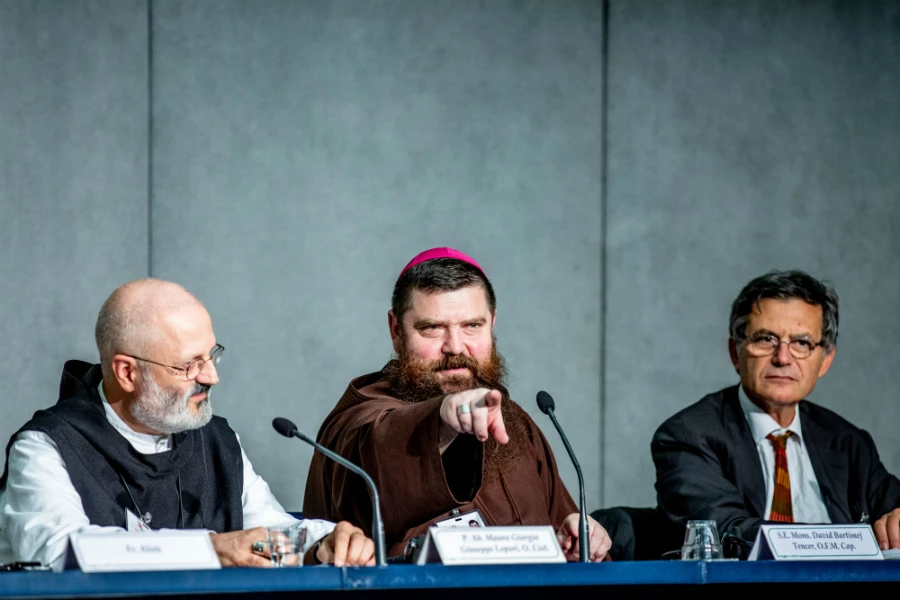
Bishop David Bartimej Tencer of Reykjavík said Wednesday that digital technologies help him to overcome the geographical challenges that come from shepherding a diocese spread over 40,000 square miles in Iceland.

“The church is moving forward thanks to the digital world,” Bishop Tencer said at a Vatican press conference Oct. 17.

Bishops have discussed how the Church can better extend missionary outreach and pastoral care to young people online during the 2018 Synod of Bishops, which is focused on young people, the faith, and vocational discernment.

“‘Digital pastoral care’ —  how the church can be active in the world of social media,” was an important conversation topic in the synod hall Wednesday, according to Paolo Ruffini, head of the Vatican Dicastery for Communications.

This included “being a missionary in the digital world,” he said.

Bishop Tencer, who has used Skype to catechise his diocese, said that in his experience, the “contact was very real with these kids.”

The Reykjavík bishop also said that the young people responded positively to his Android app Bible challenges.

“I said, ‘You know, guys, next week, you all have to download using your Android phone or whatever,” continued Bishop Tencer, “and they all downloaded it.”

“Then I asked the kids, ‘Find in the Bible where God is whistling to the bees,” the bishop went on. “My kids found this, no problem.”

Bishop Tencer said he was surprised to find that conversations surrounding technology in the synod hall have been very positive, despite the fact that the average age of the synod fathers is above 60.

The internet is “a neutral medium,” Tencer concluded.

Prior to the 2018 synod, youth around the globe submitted 150,000 online surveys answering questions regarding morality, faith and life. These responses were analyzed by an Italian university using an algorithm.

The discussion of technology in the youth synod’s Instrumentum Laboris included both enthusiasm for technology’s potential, as well as caution for its unintended consequences.

“Technology can be detrimental to human dignity if not used with conscience and caution and if human dignity is not at the center of its usage,” the document says, making particular reference to the fields of bioethics and artificial intelligence.

The pre-synod document also warns against the “isolation, laziness, desolation and boredom” that can come from young people’s obsessive consumption of media, in addition to the long-term risks of a “loss of creativity” and concentration.

“While technology has, for some, augmented our relationships, for many others it has taken the form of an addiction, becoming a replacement for human relationship and even God.”


[…]

A synod summary from the Polish synod fathers – Oct 17

October 17, 2018 CNA Daily News 0

Vatican City, Oct 17, 2018 / 05:00 pm (CNA).- The synod of bishops on young people, the faith, and vocational discernment is being held at the Vatican Oct. 3-28.

CNA plans to provide a brief daily summary of the sessions, provided by the synodal fathers from Poland.

Please find below the Polish fathers’ summary of the Oct. 17 session:

The social context of young Catholics living in multicultural and multi-denominational societies was at the center of the Synod assembly on October 17th. The Synod Fathers also stressed the importance of the World Youth Day, including the meeting in Cracow in 2016.

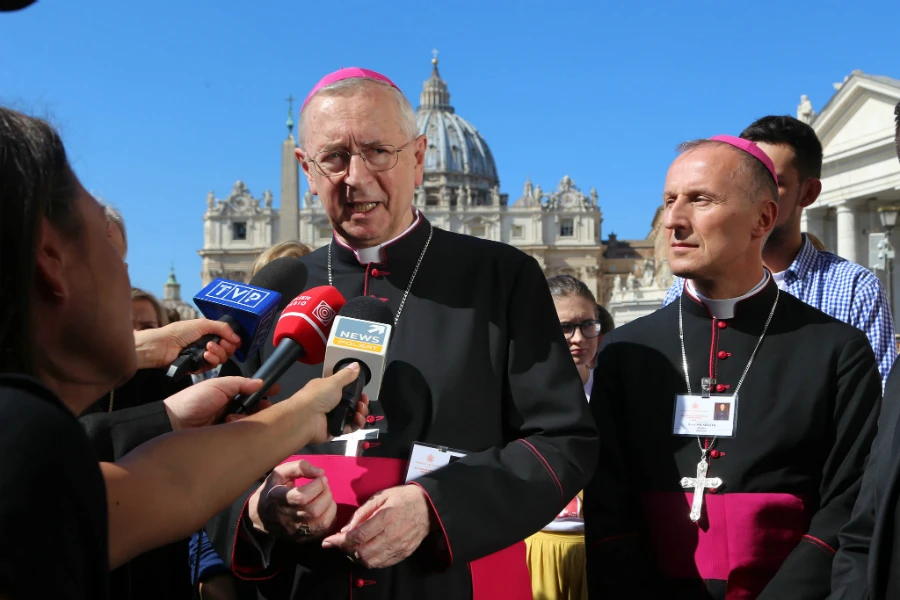
During the morning session, many voices from Africa and Asia were heard. “People from Africa emphasized the poverty there and the lack of educational opportunities. This has led to vast emigration either inside their own homeland, from the countryside to the cities, or outside their homelands. Every emigration of this kind is a challenge for young people because, lacking education, they do not have the possibility to shape their own identity. On the other hand, Asian voices stressed the need for interreligious dialogue, because many young people from Asia belong to minority churches. Therefore, the young must engage in interreligious dialogue against a variety of dangerous fundamentalisms,” said Msgr. Grzegorz Ryś, Metropolitan Archbishop of Lodz.

During the deliberations, various social contexts in which young people are living were evoked. “In today’s discussions, I was positively surprised by the voices that emphasized the importance of widening reflection on the social context in which young people live, that is, school, universities, politics. Representatives from different countries spoke about these contexts. Some young Catholics living in a context of multiculturalism and multi-denominationalism must face the fact that they are a minority and are sometimes persecuted for that reason,” said Bishop Marian Florczyk.

Attention was also paid to the value and the importance of the World Youth Days. “

“Evoking the origins of the World Youth Days and, so, John Paul II, the great good that flows from these meetings was emphasized. Cracow, which hosted the World Youth Day in 2016, was also put into the spotlight. This meeting has largely contributed to the integration of young people,” said Bishop Florczyk.


[…]

Florida Catholics rally after Hurricane Michael

October 17, 2018 CNA Daily News 0

Pensacola, Fla., Oct 17, 2018 / 02:30 pm (CNA).- Thousands of people lost their homes as Hurricane Michael wrought havoc throughout the United States and Mexico last week. Now, the Catholic community in the Florida Diocese of Pensacola-Tallahassee is w… […]

This London Catholic school uses its garden to feed homeless

October 17, 2018 CNA Daily News 0

London, England, Oct 17, 2018 / 12:34 pm (CNA).- A Catholic school in London has turned its horticulture lessons into meals for the homeless.

St Gregory’s Catholic Science College in northwest London educates nearly 1000 children, aged 11-18. Many of the students volunteer for social and environmental work.

This year, horticulture students grew pumpkins from seed in the summer term and harvested their fruit in early October. The pupils used the pumpkins, along with thyme from their garden, to make soup. They sent that soup to London’s Ealing Abbey Soup Kitchen, an ecumenical initiative of service for the city’s homeless population.

Ealing Abbey Soup Kitchen has been serving people in need since 1973. The pumpkin-thyme soup provided more than 150 portions.

“I’m really proud of our pupils for sharing the fruits of their labours with those in our community who will benefit the most,” the school’s headteacher, Andrew Prindiville told the UK’s Independent Catholic News website.

The students of St Gregory’s have also been recently involved with environmental projects, among them helping to clean nearby Woodcock Park. Wealdstone Brook, which runs through the park, has had a problem with misconnected water lines dumping waste into the water from some 140 nearby homes.

Thames Water and Friends of Woodcock Park, who worked alongside the students, have been flushing dirty water away from the brook for the past five years. Receiving $1,300 worth of donated flowers, shrubs, and bulbs, the students and other community volunteers were able to revitalize the landscape.

Earlier this year, St Gregory’s Catholic Science College won the Horticultural Society’s School Gardening Team of the year award. The school has also been awarded the Eco Schools Green Flag Award for its commitment to the environment as seen in its curriculum.

The school was nominated for the 2018 Sustainable Schools TES AWARD. Headteacher Andy Prindiville said consideration for that award was an incredible honor.

“This is a wonderful accolade for St Gregory’s as we are one of only eight schools to have been shortlisted and is the result of the hard work and dedication of the staff, governors, local community and pupils of St Gregory’s,” said Prindiville, the Harrow Times reported.


[…]