Radical feminists attack church and town hall in Argentina

October 16, 2018 CNA Daily News 0

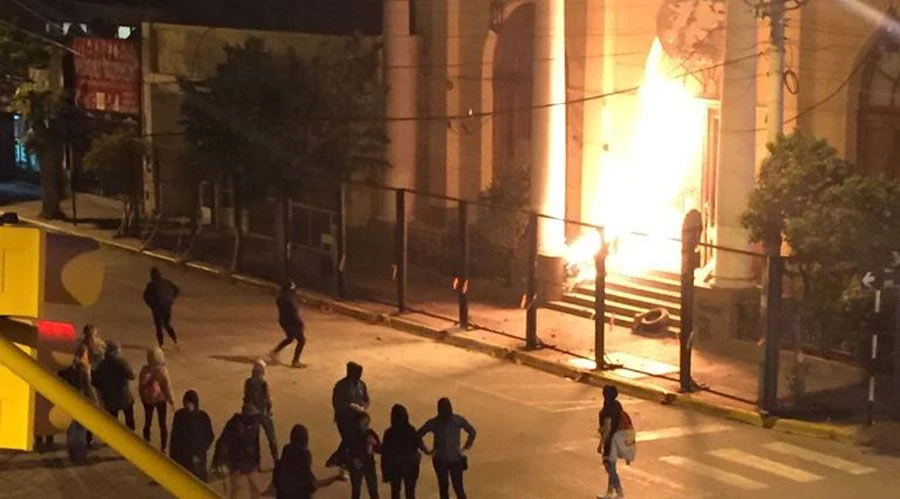
Buenos Aires, Argentina, Oct 16, 2018 / 03:30 pm (CNA/EWTN News).- Radical feminists firebombed a town hall and spray painted a Catholic Church in Argentina. The series of attacks came during a women’s conference held in the Patagonia region this past weekend.

The conference was the 33rd National Women’s Encounter held October 13-15 in the city of Trelew in Chubut province, and focused primarily on promoting abortion and so-called gender ideology.

On October 14, participants in the conference marched through the streets of Trelew with signs in favor of legalized abortion and the separation of church and state. During the demonstration, a group of bare-chested feminists stood in front of Mary Help of Christians parish and attacked Trelew town hall with Molotov cocktail firebombs.

The women also attacked other public buildings with bombs, stones, and graffiti. The police and locals eventually managed to control the mob and ten women were arrested.

Police also had to shut down two gas stations for selling gasoline to young women who were suspected to be collecting gasoline for the Molotov cocktails.

This incident is one of numerous attacks on Catholic churches since the Argentinian senate rejected a bill legalizing abortion in August of this year.

In September, a Catholic school in the town of San Justo had hate messages spray painted on it, and students at different universities have forcibly removed religious images from their campuses, saying that they demand legalized abortion and the separation of church and state.

[…]

Forty years later, Polish bishops revisit election of Pope John Paul II

October 16, 2018 CNA Daily News 0

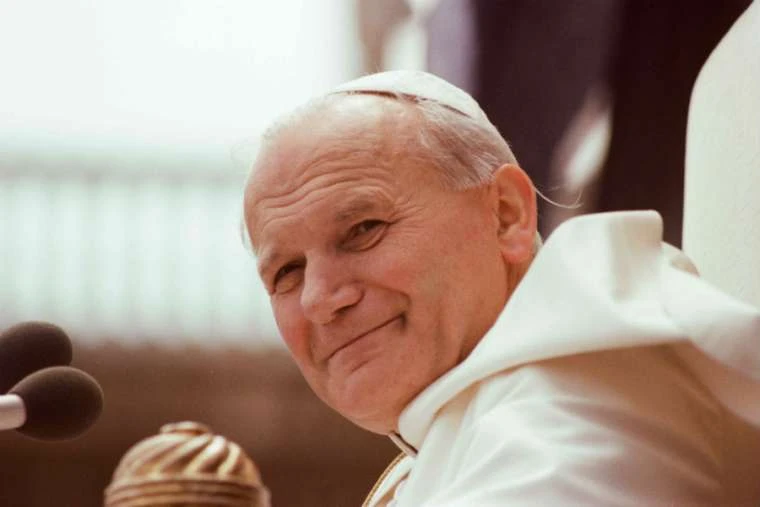
Warsaw, Poland, Oct 16, 2018 / 02:30 pm (CNA).- The Polish bishops’ conference is celebrating the anniversary of the election of St. John Paul II. October 16 marks 40 years since Cardinal Karol Wojtyla’s rise to the throne of St. Peter.


Archbishop Józef Michalik of Przemyśl, who was the rector of the Polish College in Rome at the time of the 1978 conclaves – the second of which elected Wojtyla, gave his personal insight into the days following up to the election of Pope John Paul II.


“We joked, commented on the press reports and, sometimes, spoke seriously,” said Archbishop Michalik in an account released by the Polish Bishops’ Conference to mark the anniversary.


Cardinal Wojtyla had joined the college often for meals and daily prayers before the conclave began.


“The Cardinal always took these jokes and conversations with a smile, and sometimes he responded with humor,” he said.


He addressed the days following the death of Pope John Paul I, who had passed away from a heart attack 33 days after his election to the papacy. He highlighted the apparent interest of the other cardinals toward Cardinal Wojtyla’s election.


Archbishop Michalik had welcomed Cardinal Wojtyla at the airport shortly before the conclave. On their way to the view the body of Pope John Paul I at St. Peter’s Basilica, he asked the soon-to-be pope how many cardinal’s he had not known.


“Cardinal [Wojtyla] thought about it and replied: seven. For me, it was an indirect answer, that there is actually no other Cardinal who would know personally only seven Cardinals. This indicated that our Cardinal’s chances were serious in the upcoming conclave,” said Archbishop Michalik.


The Polish bishops’ conference said Wojtyla was a major figure in the Church, who participated in synods, led retreats for the Roman Curia, and was a friend of Pope Paul VI.


Archbishop Michalik said, though Cardinal Wojtyla was a respected clergymen and scholar, the polish saint had remained humble.


The Polish bishops’ release included the anecdote that, on the day of the conclave, “one of the priests spontaneously prayed that Cardinal Karol Wojtyla would become pope.” Cardinal Wojtyla responded with prayer, invoking the words of Christ in the Gospel of Matthew: “Get out of my sight, Satan,” the future pope is quoted as responding.


“Finally, he added his own intention, asking that God’s servant, who would accept the choice with humility and accomplish God’s will, be chosen,” the statement added.


Immediately following the election of Pope John Paul II, the Polish College gathered in the chapel and sang the Te Deum, “giving thanks for this event and…recommending the new Pope to God,” said Archbishop Michalik.


The Polish bishops’ conference highlighted a conversation between John Paul II and Cardinal Stefan Wyszyński, who had suggested the name John Paul II to the new pope.


“Primate Stefan Wyszyński asked John Paul II how he felt here in the Vatican, and the Pope replied: ‘As if I have always been here.’ ‘This is the grace of God, the grace of the state,’ commented Cardinal Wyszyński,” according to the statement.

[…]

Archdiocese confirms apparent murder of Mexican priest

October 16, 2018 CNA Daily News 0

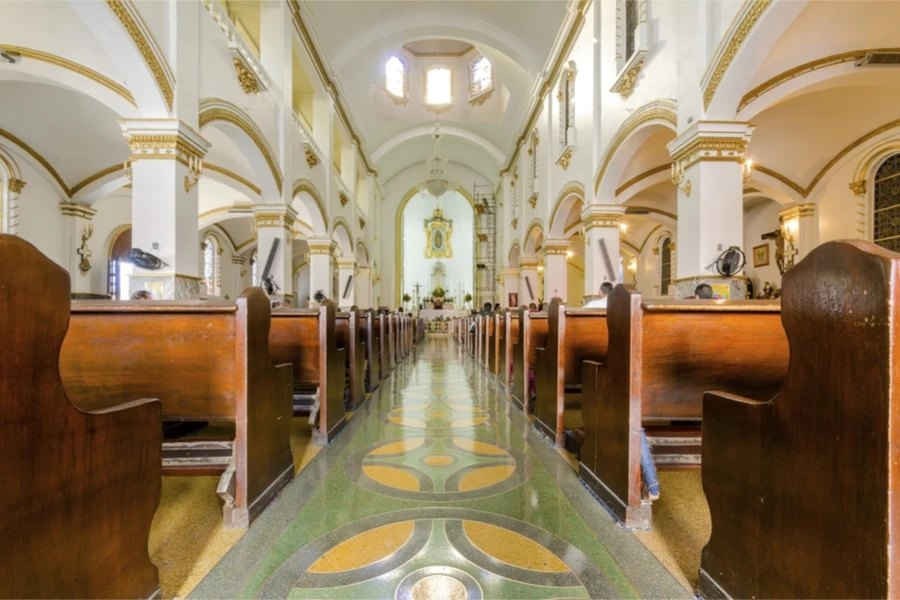
Tijuana, Mexico, Oct 16, 2018 / 01:30 pm (CNA).- The Archdiocese of Tijuana in northern Mexico has confirmed the death of Fr. Ímar Arturo Orta, who was allegedly murdered on Oct. 12.


According to local press, the priest had been missing for three days when his body was found by authorities in an abandoned car with several bullet wounds.


An anonymous official from the state prosecutor’s office who was not authorized to speak publicly about the incident has said that the priest’s death is being investigated as a homicide, according to the Associated Press.


Fr. Arturo is one of at least 26 priests who have been killed in Mexico since 2012, when President Enrique Pena Nieto first took office, and the seventh priest killed this year, according to reports from the Catholic Multimedia Center. Two priests in Mexico are also currently reported missing.


Father Ícmar Arturo Orta was pastor of St. Louis King of France parish in Tijuana, Baja California state.


In a statement published on October 14, Archbishop Francisco Moreno Barrón of Tijuana expressed his “deep sorrow” over the death of the priest. He told Catholics that as soon as he had reliable information regarding the circumstances of Fr. Arturo’s death he would make it public, and he would also inform the faithful of the funeral arrangements once they were made.


The archbishop told the members of St. Louis King of France parish that “the death of Father Arturo is a great loss for our archdiocese, but above all it is a very great affliction for you in the parish community.” He said that he knew the parish community will keep the memory of their priest alive.


“You will keep him alive in your mind and in your heart,” Moreno said.


“May the Blessed Virgin, Our Lady of Loreto, patron saint of our Archdiocese, accompany you in this painful moment, and may you also be assisted by the care and intercession of your patron, Saint Louis of France.”


In an Oct. 15 statement, the Mexican bishops expressed their sorrow at the loss of Fr. Arturo and assured Catholics of their prayers and support for the investigation of his death.

“We ask our Father God for the eternal rest of Fr. Ícmar, and that the Lord grants his family and his parish community the strength and consolation of faith and hope,” the bishops said.


“We trust that the competent authorities will clarify what happened to our brother priest, and act accordingly,” they said.


This article was originally published by our sister agency, ACI Prensa. It has been translated and adapted by CNA.

[…]

Saginaw bishop dies after battle with lung cancer

October 16, 2018 CNA Daily News 0

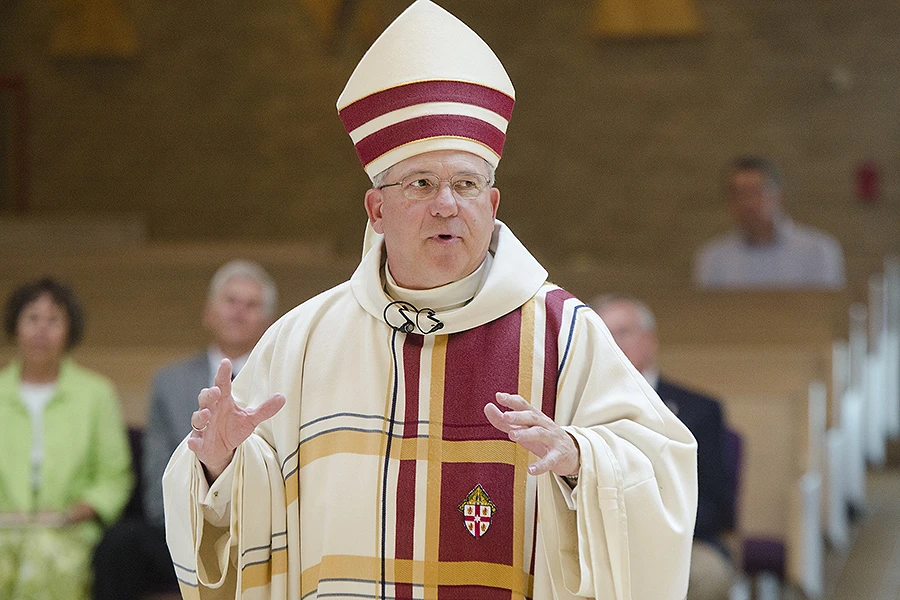
Saginaw, Mich., Oct 16, 2018 / 11:37 am (CNA).- Bishop Joseph Cistone died in his home Tuesday morning, the Diocese of Saginaw has reported.

Local officials told reporters they received a 911 call from the bishop’s home Tuesday morning, adding that first-responders found the bishop dead upon their arrival. The diocese said in a short statement that the bishop had died in his home during the night.

Cistone, 69, announced Feb. 1 that he had been diagnosed with lung cancer, after undergoing tests for a persistent cough he’d experienced for months.

“The good news is that, since I have never been a smoker, it is a form of lung cancer which is treatable and potentially curable,” Cistone wrote in a February letter to his priests.

He announced at that time that he would undergo a treatment plan involving both chemotherapy and radiation. On Oct. 1 the diocese announced that the cancer had spread to other parts of Cistone’s body, and that he had begun an aggressive course of chemotherapy.

Diocesan officials said that the bishop was scheduled to undergo a cancer-related medical procedure today.

Cistone was the sixth bishop of the Saginaw diocese, and was appointed there in 2009 by Pope Benedict XVI. Originally from Pennsylvania, Cistone was ordained a priest for the Archdiocese of Philadelphia in 1975, where he also served as auxiliary bishop from 2004-2009.

In March Cistone’s home was raided by police, along with the diocesan chancery and cathedral rectory. Saginaw County’s assistant prosecutor at the time criticized the diocese for failing to cooperate in police investigations.

Police said the raid was executing a search warrant believed to be related to allegations of sexual abuse made against two priests of the diocese. One of those priests, Fr. Robert DeLand, will face a criminal trial next year.

The diocese said Oct. 16 that information about Cistone’s funeral will be released as soon as is possible.


[…]

A synod summary from the Polish synod fathers – Oct 16

October 16, 2018 CNA Daily News 0

Vatican City, Oct 16, 2018 / 11:30 am (CNA).- The synod of bishops on young people, the faith, and vocational discernment is being held at the Vatican Oct. 3-28.

CNA plans to provide a brief daily summary of the sessions, provided by the synodal fathers from Poland.

Please find below the Polish fathers’ summary of the Oct. 16 session:

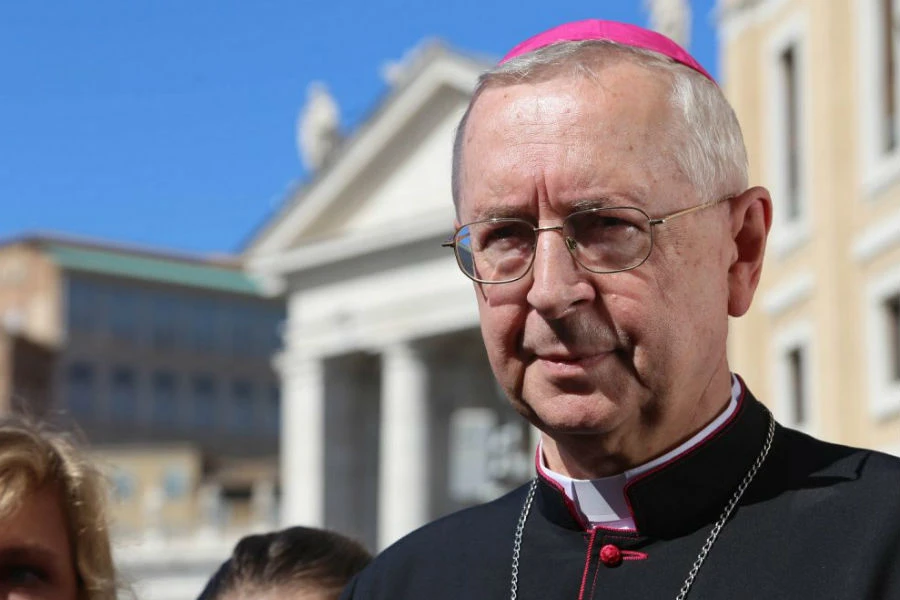
Education in values, the formation of young leaders, immigration, and the Christian ideal – these are some of the topics discussed during the morning session of the Synod of Bishops, on October 16th, and mentioned by Archbishop Stanisław Gądecki in his summary of the day.

During this morning’s session, the third part of the Instrumentum Laboris was discussed. After the introductory speech on the last part of the working document, the participants’ reports on the topics addressed in this part were presented. The interventions highlighted the need for young leaders, the necessary formation of young animators, and drew attention to young people’s’ political interests, which should also be taken into account.

Some interventions also addressed the issue of immigration. “Much has been said about being close to young people coming to our countries from Africa, so that the Church may welcome them with love, but also so that this may be an occasion to engage in dialogue with Muslims,” noted Archbishop Stanisław Gądecki, the President of the Polish Bishops’ Conference.

During the session, some also spoke about the education of young people. “Not only in terms of the transmission of information but in the sense of an education in values. Attention was also paid to the value of catechesis in connection with Lectio Divina, with retreats for young people in the parishes,” said Archbishop Gądecki.

It was pointed out that the young themselves are the most effective witnesses for other young people. The important role of popular piety, which helps to experience religiosity, was recalled too. The question of volunteering, especially on the international level, was also raised.

Attention was drawn to the need for clarity in the transmission of the faith. “It was said that the Church should present the Christian ideal, and not just be immersed in difficulties. She should not renounce to the idealism of the young, because that is what attracts young people the most,” Archbishop Gądecki summed up.

[…]

Jesuit superior says pope is not the ‘chief’ of the Church- What did he mean?

October 16, 2018 CNA Daily News 3

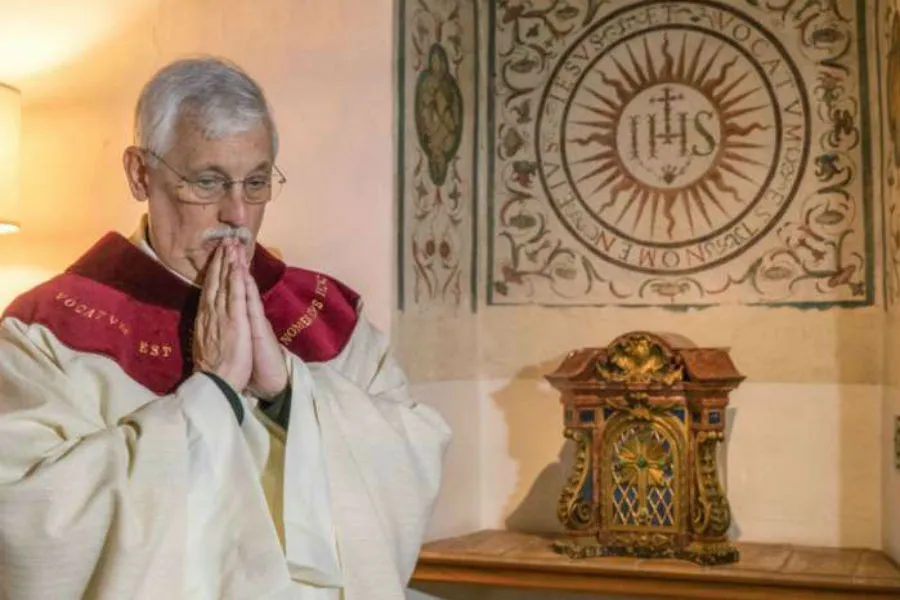
Vatican City, Oct 16, 2018 / 11:00 am (CNA).- Fr. Arturo Sosa Abascal, superior general of the Jesuits, said in an interview Monday that Pope Francis consciously calls himself the Bishop of Rome, instead of using grander titles.

“Very frequently we forget that the pope is not the chief of the Church, he’s the Bishop of Rome,” Fr. Sosa told EWTN in an interview Oct. 15.


“As the bishop of Rome, he has another service to do to the Church, that is, to try to [bring about] the communion of the whole Church.”


By convoking the youth synod, taking place in Rome Oct. 3-28, Francis is exercising his role as pope by bringing together a group “of his own peers” to make a “contribution to the communion of the whole Church,” Sosa said.


“Fr. Sosa is certainly correct to say that the pope is the Bishop of Rome, but it would be a mistake to infer from that title that the Holy Father is merely ‘first among equals,’” Chad Pecknold, Associate Professor of Theology at the Catholic University of America, told CNA.


Pecknold told CNA that popes often and correctly speak of their “brother bishops,” but that the Petrine office is unique.


The pope “holds an office of supreme authority over every bishop in communion with him, and of course over the faithful too. It isn’t a charism of dominance but of paternal care – the popes traditionally use the title ‘servant of the servants of God.’”


Sosa said that because Pope Francis feels each bishop is responsible for his local church, this synod, in which Church leaders come together to discuss and decide church affairs, is an expression of dialogue and communion between all of the bishops.


Pecknold agreed that the world’s bishops are each truly invested with the authority to govern, teach, and minister to their own dioceses. But a bishop’s ministry must always be done in union with the pope, who, he said, “is the visible center of communion for the universal Church.”


“The worldwide college of bishops exists in what the Church calls ‘hierarchical communion’ with each other and with the head, the pope. When the we talk about authority of the college of bishops to teach or lead, the Church is always careful to emphasize that this is only possible in union with the pope, who is the head of the college,” Pecknold explained.


In his interview, Sosa also explained that the collaborative work of the synod is a work of discernment, something he said was very important to Pope Francis.  The Jesuit superior said that although the concept of discernment is a key feature of Jesuit spirituality, the act of listening to the Spirit has been a part of the Church’s for a long time.


“Discernment is the way that this communion [of the universal Church] can be made and how the Church will find the structure to reflect a Church that is open to that synodality,” Sosa continued.


“Because the Church is supposed to be governed not by men but by the Spirit. So [the Synod of Bishops] is not a kind of parliament, where you have to have a majority or minority, but we all together try to listen to the Spirit. And that’s what discernment teaches us to do.”


In comments to journalists Oct. 16, Cardinal Louis Sako I, Chaldean Catholic Patriarch of Babylon, echoed this point: “The synod is not a political parliament, is a synod of fathers, teachers,” he said. “What can we give, what can we offer the young, the faithful?”  


The Synod of Bishops, which was established by Pope St. Paul VI following Vatican Council II, was created to continue the collaborative effects of the council fathers.


The Code of Canon Law defines it as a work of “collaborative assistance” to the pope’s ministry, and stresses that it exists to “foster unity” among the bishops, including with the pope. It also states that the synod is itself a creation of papal authority, deriving its legitimacy not from the bishops attending but from the pope who called them to the session. Whether a synod session’s conclusions are deliberative or consultative is explicitly up to the pope, who decides how much of his own authority to delegate to it.


In this sense, Pecknold told CNA, it functions nothing like a parliament.


“Parliaments are political, legislative bodies,” he said.


“The Synod of Bishops exists to foster unity and to give the pope the benefit of their counsel. In that sense, their job isn’t to pass this resolution or block that one – it is to work together to advise the pope as best they can, and that is a work of communion and service, not confrontation.”

[…]

In major break over Ukraine, Russian Orthodox Church splits from Constantinople

October 15, 2018 CNA Daily News 1

Kyiv, Ukraine, Oct 15, 2018 / 05:31 pm (CNA/EWTN News).- The Russian Orthodox Patriarchate of Moscow has cut ties with the Ecumenical Patriarch of Constantinople, Bartholomew I, claiming his recognition of an independent Orthodox Church in Ukraine departed from Orthodox Christian norms.
 
Metropolitan Hilarion, who heads foreign relations for the Russian Orthodox Church, said Russian Orthodox leaders decided to “break the Eucharistic communion” in response to actions it called “lawless and canonically void.”
 
“The Russian Orthodox Church doesn’t recognize those decisions and won’t fulfill them,” Hilarion said in Belarus after a meeting of the synod of the Russian Orthodox Church.

“The church that acknowledged the schismatics has excluded itself from the canonical field of Orthodoxy.”
 
“We are hoping common sense will prevail and that the Constantinople Patriarchate will change its relations to existing church reality,” Metropolitan Hilarion said.
 
The break comes in response to the decision of Bartholomew I, Ecumenical Patriarch of Constantinople and the “first among equals” leader of the global Orthodox Church, to issue a statement Oct. 11 confirming plans for an independent Ukrainian Orthodox Church and restoring ties with the previously schismatic Ukrainian Orthodox Church of the Kyivan Patriarchate.
 
The announcement also removed the traditional right of the Russian Patriarch to ordain the Metropolitan of Kyiv, a move which observers predicted would be perceived as a deliberate slight to Moscow. The right dated back to a canonical letter first issued in the year 1686.

Archbishop Yevstratiy, chief spokesman for the Ukrainian Orthodox Church of the Kyivan Patriarchate and whose rehabilitation by Constantinople contributed to the current break with Moscow, said the Russian synod’s decision was a move towards “self-isolation.”
 
Writing in a Facebook post, he said “Sooner or later this will be fixed and the Russian Orthodox Church will return to communion.”

According to the U.S. government-funded Radio Free Europe/Radio Liberty Press Service, Yevstratiy claimed that Orthodox Christians must choose whether to follow the Russian Orthodox “into schism” or “remain in unity with the Ecumenical Patriarch (Bartholomew I of Constantinople) through the Local Ukrainian Church.”
 
Among the backers of Constantinople’s move are Ukrainian President Petro Poroshenko, who is running for re-election in March 2019. He had previously asked the Patriarch of Constantinople to grant independence to the Orthodox Church in Ukraine, the Associated Press reports.
 
While the recent push for an independent, autocephalous Orthodox Church in Ukraine emerged as a serious movement in the 1990s following the collapse of the Soviet Union, it gained further momentum following the annexation of the Crimean Peninsula in 2014, and Russian backing of separatist rebels in eastern Ukraine in response to the unseating of Ukraine’s pro-Russia former president Viktor Yanukovych.

The Russian Orthodox Church, which claims traditional and canonical authority over the Orthodox community in Ukraine, has denied taking political sides in the conflict and said it has worked for peace in eastern Ukraine.

The Russian Church has also voiced concern that the Constantinople patriarchate’s actions could deepen religious divides in Ukraine and inspire breakaway branches to take over church buildings, Reuters reports.

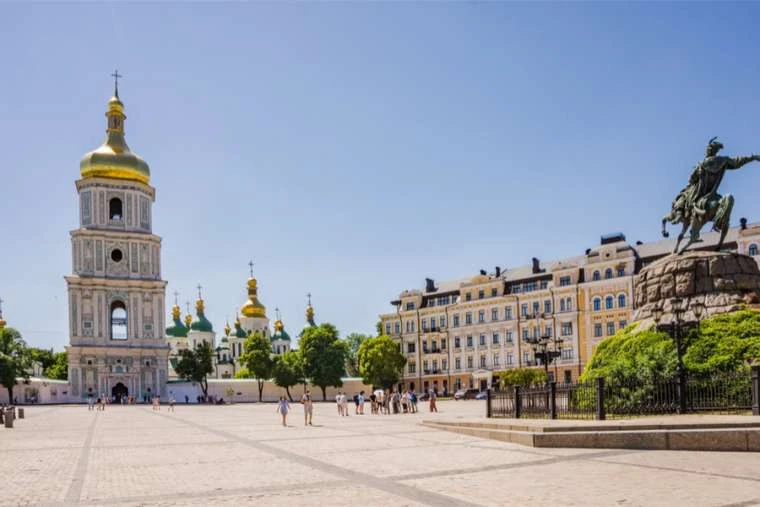
Kyiv, now the capital of Ukraine, is the site of the 988 baptism of Vladimir the Great, Grand Prince of Kiev, which resulted in the Christianization of Kyivan Rus’, a state whose heritage Ukraine, Russia, and Belarus all claim.
 
Orthodox Christians in Ukraine have recently been divided into three separate groups.
 
The Ukrainian Orthodox Church of the Kyivan Patriarchate effectively declared itself independent from Moscow in 1992, and is considered by the Russian Church to be a schismatic group. Until now, the other Orthodox Churches have recognized Ukraine as under Moscow’s jurisdiction and honored the excommunication.
 
The Ukrainian Autocephalous Orthodox Church, re-founded in 1990, is similarly seen as a breakaway group.
 
The Ukrainian Orthodox Church of the Moscow Patriarchate is under the authority of the Russian Church and has been the officially recognized Orthodox Church in the country.
 
Patriarch Bartholomew’s plan to create a single, self-governing Church in the Ukraine, led by its own patriarch, is motivated by a desire to unify the country’s 30 million Orthodox Christians. The Russian Church sees the move as an infringement of its jurisdiction and authority.
 
There are about 300 million Orthodox Christians worldwide. The Orthodox Church split from the Catholic Church in 1054.


[…]