Supreme Court stays Texas execution over chaplain dispute 

June 17, 2020 CNA Daily News 0

CNA Staff, Jun 17, 2020 / 10:04 am (CNA).- The Supreme Court stayed the execution of a man in Texas after the state’s Department of Corrections refused to allow a Catholic priest to be with him in the final moments of his life.

“The District Court should promptly determine, based on whatever evidence the parties provide, whether serious security problems would result if a prisoner facing execution is permitted to choose the spiritual adviser the prisoner wishes to have in his immediate presence during the execution,” said the Supreme Court in its statement issuing the stay of execution on June 16.

Ruben Gutierrez, a Catholic, had requested that the Catholic chaplain at the prison join him in the execution chamber at his death. This request was denied, due to a Texas policy instituted last year that prohibits chaplains in the execution chamber.

Gutierrez was scheduled to die on Tuesday evening, and his execution was stayed approximately one hour before it was set to begin. On June 9, the Federal District Court in Brownsville, Texas, had initially stayed the execution due to the chaplain issue.

The Texas Catholic Conference of Bishops was one of the many organizations who filed amicus briefs in support of staying or outright canceling Gutierrez’s execution. The Catechism of the Catholic Church is opposed to the use of capital punishment, and states that those who are dying should be given spiritual care.

“Denying a prisoner’s request for a chaplain at the hour of his death represents an egregious rejection of the possibility of forgiveness and redemption while the state commits the violence of an execution,” said Jennifer Carr Allmon, executive director of the Texas Catholic Conference of Bishops, in a statement published on the organization’s website.

“This assaults the dignity of the human person through the blatant removal of a corporal work of mercy that may give compassionate aid and comfort to an offender who, as a final act, is seeking God’s forgiveness,” said Allmon.

“To deny a prisoner facing imminent execution access to spiritual and religious guidance and accompaniment is cruel and inhuman. It is an affront to the moral and religious dimensions of human dignity, which are clearly protected by the First Amendment to the Constitution,” said Bishop Daniel Flores of Brownsville. Flores serves as the advisor to Catholic Mobilizing Network, an anti-death penalty organization.

Gutierrez was sentenced to death for the 1988 murder of Escolastica Harrison, an 85-year-old woman, during an attempted robbery. One of his accomplices was sentenced to life in prison; the other jumped bail and remains a fugitive at large.

He has never confessed to the crime and has maintained his innocence.

Last year, Texas banned all prison chaplains, of any creed or denomination, from being present in the execution chamber. This came after the Supreme Court stopped the execution of a Buddhist man named Patrick Murphy, who had requested a Buddhist chaplain to be with him during his execution. Previously, the Texas prison system only permitted state employees to be in the execution chamber, and the system did not employ any Buddhist chaplains. The state only employs Christian and Muslim chaplains.

In March 2019, Justice Brett Kavanaugh authored a concurring opinion on why the Texas Department of Criminal Justice had violated Murphy’s rights.

Kavanaugh said that that allowing only Christian and Muslim ministers to be present with death row inmates in the execution chamber was discriminatory, suggesting that a more just resolution would be that no chaplains be permitted in the execution chamber and instead they be allowed to sit in the viewing area.

To avoid discrimination, Kavanaugh said at the time, the Texas prison system should either allow chaplains of all faiths into the execution chamber or else not allow any chaplains at all.

Texas opted for the latter approach, and in April 2019 announced that all chaplains would have to observe the execution from a viewing area, rather than in the chamber.

Chris Pagliarella, an attorney at religious liberty law firm Becket, told CNA June 17 that Texas policy does not respect the First Amendment.

“As Mr. Gutierrez’s lawyers and the Texas Catholic Bishops told the Court, the First Amendment and civil rights law guarantee more than ‘equality’ that deprives all religions equally. They guarantee the rights of religious communities to minister to their members, especially when it comes to ancient practices like the comfort of clergy at death.”


[…]

Financial authority updates Vatican offices on policies to fight money laundering

June 17, 2020 CNA Daily News 0

Vatican City, Jun 17, 2020 / 06:00 am (CNA).- Members of the Vatican’s financial watchdog authority met this week to update offices on regulations to fight money laundering and the financing of terrorist organizations.

The June 15-16 seminar was held by the new leadership of the Financial Information Authority (AIF), including president Carmelo Barbagallo and vice director Federico Antellini Russo.

“The Vatican regulations are in line with the regulations of the rest of the world,” Barbagallo told Vatican News. “They have also recently been renewed, in particular the law on procurement is at the forefront.”

Barbagallo referred to a law promulgated by Pope Francis June 1 on the awarding of public contracts. The new norms are intended to prevent corruption, including nepotism, money laundering and other crimes in Vatican City State and Holy See financial transactions. 

Russo told Vatican News that the Holy See had taken “significant pioneering steps” in financial security legislation and wanted to extend “not only training but also a form of prevention, of awareness and in some ways of support also to the public authorities of the Holy See, of the Vatican City State.”

The public authorities of the Holy See and Vatican City State are the entities which carry out financial transactions with members of the general public, such as the Vatican post office, supermarket, and pharmacy.

Vatican public authorities also include the Institute for the Works of Religion (IOR) and the Administration of the Patrimony of the Apostolic See (APSA).

At least one official of the Secretariat of State also took part in the two-day meetings.

Anita Titomanlio of the legal office of the Secretariat of State told Vatican News “we wanted to propose tools to public authorities to evaluate themselves.”

“Then self-assessment questionnaires will be prepared, which will be filled in by the public authorities and sent to the financial information authorities to prepare an action plan, should there be any deficiencies in the fight against money laundering and terrorist financing.”

Barbagallo also noted the increased threat of crime which comes with the global economic crisis caused by the coronavirus emergency.

“And so this is a time when you absolutely have to have your eyes more open than usual,” he said. 

The AIF is expected to release its annual report soon. The report usually catalogs the Suspicious Activity Reports received over the previous year and which led the information authority to investigate cases of money laundering and financial fraud within Vatican financial entities.

This will be the first report of the Vatican’s Financial Information Authority since an abrupt change of leadership at the end of 2019. 

AIF’s then director, Tommaso Di Ruzza, was suspended at the end of September 2019 after a search of AIF offices by Vatican gendarmes. Five days later AIF president René Brüelhart resigned. His replacement, Carmelo Barbagallo, was named by Pope Francis at the end of November 2019.

Meanwhile, the Egmont Group, through which 164 financial authorities share information and coordinate their work, had suspended the AIF in mid-November. Barbagallo announced in January 2020 the suspension had been revoked and the authority could resume collaboration with foreign intelligence bodies.

[…]

American Solidarity Party candidate presses on to 2020 presidential election

June 17, 2020 CNA Daily News 1

Washington D.C., Jun 17, 2020 / 03:19 am (CNA).- Republicans and Democrats aren’t the only political parties finding their 2020 campaigning efforts hampered by the COVID-19 pandemic.

Brian Carroll, an evangelical Christian, is the 2020 presidential nominee for the American Solidarity Party, a small-but-growing political party whose platform is based largely on Catholic social teaching.

Carroll told CNA June 15 that he hopes to be recognized as a write-in candidate for president in several states come November.

In most states, smaller parties depend on volunteers to circulate petitions in order to get on the general election ballot.

With many states still imposing restrictions related to the pandemic, volunteers have been hard to come by, Carroll said.

“Some states have recognized the problem and reduced or eliminated their requirements. For example, Vermont. We expect to be on the ballot in Vermont simply because Vermont changed the rules,” he said.

Carroll’s in-person campaigning has been on hold for several months. He said before the pandemic hit, he had planned a lot of travel, making campaign stops throughout the country. California, New York, Ohio and Texas already have fairly active ASP chapters.

Despite being stuck at home in California, he’s been active on his campaign Facebook page, offering his thoughts on recent world events and dialoguing with people in the comment sections.

‘Subsidiarity is well designed for a problem like this’

For Carroll, a retired history teacher, the pandemic and the recent protests for racial justice following the death of George Floyd are best viewed through the lens of ASP’s pro-life ethic.

The party began in 2011 as the Christian Democracy Party USA, and Mike Maturen, a Catholic, ran for president on the party ticket in the 2016 election.

Though the American Solidarity Party of today is not explicitly religious, its platform rests on several principles which the Church has developed as part of Catholic social teaching.

Subsidiarity— the Catholic idea that local authorities are best suited to tackle local issues— is a tenet of the ASP’s platform.

Carroll said he supports more local solutions rather than one-size-fits-all pandemic restrictions, because what is needed in places like Florida, where many seniors live, will be different than in a college town. Similarly, a greater emphasis on subsidiarity would allow urban and rural areas to impose whatever restrictions are appropriate for them.

“Giving the local people the ability to make some of the decisions, that’s better than having one central decision. They could make the wrong decision, and then you’ve lost the chance to see what might work. So I think subsidiarity is a strength there,” Carroll said.

“By giving local authorities more power to make the decisions, you’re more likely to craft a policy that meets that particular local area. So, in that sense, subsidiarity is well designed for a problem like this.”

As the virus spread earlier this year, politicians, including President Trump, were in uncharted territory in many ways, Carroll said.

“Once it got started, you can’t fault [Trump] in a situation where even the doctors didn’t know how this was going to behave. It was new, and it was the first time they’d seen it. And so there’s going to be some errors expected. You have to give them a little bit of grace and mercy on that part of it.”

That being said, Carroll criticized what he sees as “inconsistencies” in how COVID-19 restrictions have been applied in some places, and emphasized that government leaders “need to try and minimize the inconsistencies and then, by all means, live by their own rules.”

Carroll also commented on the economic impact of the pandemic. Distributism, the favored economic theory for the party platform, is a model championed by notable Catholics such as G.K. Chesterton and Hillair Belloc. The model calls for a broader system of ownership to create a more “local, responsible, and sustainable” economy.

The ASP favors a rewrite of regulations and tax incentives to favor small businesses and family farms, rather than major corporations.

Carroll said the pandemic has exacerbated the divide between large corporations, such as Amazon, which have profited greatly since the start of the crisis, and small businesses which have struggled to stay afloat or have already had to close.

“If we had a Congress that was more sympathetic to distributism, the [relief] bills that they put together would have favored the little guy,” he said.

The ASP’s party platform is strongly anti-abortion and supports care for pregnant mothers, as well as a system of universal healthcare. It opposes capital punishment, euthanasia, assisted suicide, and embryonic stem cell research.

“We’re pro-life, but pro-life, obviously, is more than just abortion. It’s, ‘Are we taking care of our elderly who are threatened by a virus?’ That’s a pro-life question,” he said.

Advocating for greater racial equality also is a pro-life issue for the party, Carroll said. Victims of COVID-19 have been overwhelmingly poor, and disproportionately of minority races, such as African Americans and Native Americans.

Many minorities in the United States live in close quarters, do not have the freedom to work from home, rely on public transportation, and are more likely to have preexisting conditions, he said.

“All of those things make them more vulnerable, and that’s a life issue,” he said.

“The American Solidarity Party looks at so many different things as being intertwined, and they all feed back into the question of life and making our communities more friendly to quality of life, encouraging families. All of those kinds of things are where our party is.”

Carroll said he suspects that the pandemic will lead people to the understanding that tying healthcare to employment is a “basic flaw.”

“A lot of people had put faith in their healthcare through their employer, and suddenly realized that they had misplaced their faith, because it was very easy to lose their jobs,” he said.

“And so from that point of view, I think this is going to make the country much more open to the kind of healthcare that we’re looking for, where everybody gets covered.”

In addition, the principle of subsidiarity also applies to policing, he said. Police ought to come from the communities they serve, and not be seen as outside threats.

“We need to demilitarize the police and do everything we can to lower the tensions between police and the communities that they serve in,” Carroll said.

‘A specifically pro-life vote’

Even before the pandemic, turnout at ASP meetings across the country was low, but growing.

Though Carroll and his running mate, Amar Patel, are not sanguine about their chances of actually winning the presidency, their goals remain the same as when they first set out: to build up their party, and raise awareness that there is an alternative for people of faith who do not want to vote Republican or Democrat.

Carroll said he hopes the party will be able to field candidates for local offices across the country, and possibly even congressional candidates, in 2022.

Even if they don’t win offices, Carroll said, their party can affect policy by influencing the national conversation or drawing attention to specific issues.

Carroll pointed to Ross Perot, who ran for president as an independent in the 1990s, while pushing for a balanced federal budget. Though Perot did not come close to winning, the major parties discussed a balanced budget for years after that, Carroll contended.

In Carroll’s mind, if enough pro-life Democrats switch to the ASP, then the Democratic Party may consider softening its position on abortion.

Also, he said, if enough Republicans who “don’t like to see kids in cages at the border,” or who support a more universalized healthcare system, switch to ASP, the Republican Party might also begin to rethink their positions.

“My personal goal is for everyone, whether they love us, they hate us, or are completely indifferent and think we’re a joke, at least will have heard of us by November 3, and that the people who want to vote their conscience have at least that opportunity,” Patel, a Catholic who serves as ASP’s Chairman, told CNA in March.

He said he suspects that many Christians and Catholics end up voting for a candidate who they believe will defend one specific aspect of Christian morality, rather than looking for “ideal candidates who will actually defend the Christian message in total.”

“They can actually put in ‘Brian Carroll’ if they want a write-in vote that is significant, is meaningful, and counts specifically FOR something, as opposed to against something, which I think a lot of people are ending up doing.”

Patel said he hears a lot about “wasted votes” when it comes to third parties. But he has a different view.

In states where a Republican or Democratic victory is all but assured, such as California, even if millions of voters switched to a third party, it would be unlikely to change the outcome of the race, he said. However, the “entire face of American politics would have changed,” because people would be talking about the third-party candidate who garnered millions of votes.

“If you’re strongly pro-life and you vote for Trump in a state he’s going to lose, THAT’S a throwaway vote, because not everyone who votes for Trump is pro-life,” Patel argued.

“But if you change your pro-life vote to Brian Carroll, that will be a specifically pro-life vote that will be counted as such,” he added.


[…]

Supreme Court LGBT decision puts pressure on religious employers, employees

June 16, 2020 CNA Daily News 4

Denver Newsroom, Jun 16, 2020 / 05:56 pm (CNA).- The U.S. Supreme Court’s decision that a federal ban on sex discrimination also protects sexual orientation and gender-identity will have far-reaching consequences for religions, employers and employees because it enshrines a certain view of sexuality and gender into law, according to legal and religious liberty experts.
 
“We’re going to have future litigation, in many other cases, on whether the anti-discrimination principle or the religious liberty principle trumps the other at the end of the day,” John Bursch, director of legal advocacy and senior counsel at Alliance Defending Freedom legal group, told CNA.

The Supreme Court ruled on Monday that employers cannot fire workers because of their sexual orientation or self-determined gender identity, while dissenting justices argued the Court was legislating from the bench.

Justice Neil Gorsuch wrote the majority opinion for the Court in a 6-3 decision, joined by Chief Justice John Roberts and Justices Stephen Breyer, Ruth Bader Ginsburg, Elena Kagan, and Sonia Sotomayor. They ruled that protections against sex discrimination in Title VII of the Civil Rights Act also applied to discrimination on the basis of sexual orientation and gender identity.

The decision considered a trio of discrimination cases before the Court, two of which involved employees who said they were fired because of their sexual orientation in Bostock v. Clayton County and Altitude Express, Inc. v. Zarda.

A third case, Harris Funeral Homes, Inc. v. EEOC, involved a man who lost his job at a Michigan funeral home after he had gender-transition surgery and returned to work dressed as a woman. The funeral home had sex-specific dress code policies for employees.

According to Bursch, who argued Harris Funeral Homes’ case before the Supreme Court, the majority opinion “really embraces the modern cultural view of human sexuality and what it means to be male and female,” he said.

“It accepts the precept that human sexuality is really irrelevant. It’s really about how you feel, and what’s in your head, and what you subjectively proclaim yourself to be, your gender.”
 
“That kind of thinking is dangerous, not only because it maligns those who hold the opposite view, like the Catholic Church, but also because it does great harm to those who hold that view of themselves. Anytime we reject god’s will for ourselves, including the bodies that he gave us, bad things happen,” he added.
 
Bursch said the opinion holds that disapproving of choices made related to sexual orientation or gender identity is “wrong” or “discriminatory” or “hateful.”
 
“If people start to imbibe that and start to agree with that, and the law says ‘but there’s an exception for religious beliefs,’ they’re going to start to think that those religious beliefs themselves are hateful, that they are discriminatory, that they are bigoted,” he said.
 
“The arc of history shows that when you’ve got something that society deems to be bigotry and hateful, it doesn’t last very long. And most of the time that’s a good thing,” he said.

However, he predicted this view will continue to lead some to castigate the Catholic Church and Catholic views on sexuality as being “hateful and bigoted.”

Churches themselves are exempt from Title VII legislation, but religiously motivated employers do not have the same protection. Bursch expects that the Religious Freedom Restoration Act will “certainly help” such employers, but it is unclear how safe they will be.

The U.S. bishops were also critical. Archbishop Jose Gomez, president of the U.S. Conference of Catholic Bishops, said in a June 15 statement that the is “deeply concerned” that the court “effectively redefined the legal meaning of ‘sex’ in our nation’s civil rights law.”

“This is an injustice that will have implications in many areas of life,” he said, voicing concern that the court’s opinion erased “the beautiful differences and complementary relationship between man and woman.”

“Every human person is made in the image and likeness of God and, without exception, must be treated with dignity, compassion, and respect,” he added. “Protecting our neighbors from unjust discrimination does not require redefining human nature.”

Tom Venzor, executive director of the Nebraska Catholic Conference, echoed Archbishop Gomez.

“The Church’s teaching on sexuality and the human person is and always has been motivated by love,” he said. “Those who feel they have the wrong body, or are attracted to persons of the same sex, are not cast out by the Church. The Church embraces them, seeks to understand their pain and suffering, and offers them a way to self-understanding, healing, and peace.  This is not offered by the bodily autonomy movement that has gained so much purchase in the last several decades. Regardless of any Supreme Court decision, that will continue to be a mission of the Church—institutionally and individually, at Mass and in our conversations, in public and in private.”
 
The Supreme Court case could have consequences for Christian employees.

Employees with traditional Christian views on marriage and gender identity could “absolutely” be perceived by their employers as a liability risk for creating a hostile work environment that is sexually discriminatory, Bursch said.

“If you had a Catholic employee who in a lunchroom conversation was asked what their views on gender identity were, and they explained John Paul II’s beautiful theology of the body, and the Church’s understanding about what it means to be created male and female and embracing your identity in Christ, not any identity you want to express in yourself, they could be deemed to have created a hostile environment to an employee who feels threatened by that language and disagrees with it. Now all of a sudden that Catholic employee is now on the chopping block”.

“There too we are going to have conflict and religious liberty differences that will have to be litigated in the courts,” Bursch said. “Far from solving any problems, this opens up Pandora’s Box, the next 20 years of court cases.”
 
Burch cited the case of former Atlanta fire chief Kelvin Cochran, who, in a long firefighting career, was appointed US Fire Administrator by President Barack Obama before working as Atlanta’s fire chief. He was fired after writing a book in his personal capacity that defended Christian views on sex.
 
Bursch said the Cochran case was “particularly scary to me because it involves non-work conduct.”

According to Bursch, the city of Atlanta considered Cochran’s views bigoted and unwelcome in the workplace and fired him. Though Cochran’s lawsuit ended in a settlement, the city’s approach will likely be used by others, Bursch said.

Some companies circulate surveys asking employees whether they are LGBT “allies.” This can prompt an employee to wonder if this means endorsing same-sex marriage and gender ideology in ways that conflict with his or her religious belief, and to respond “no.”

“You’re being set up then because you could be punished in the future for not getting on board with the program and creating a hostile argument,” Bursch warned.

“This isn’t hypothetical, this isn’t the boogeyman, we’re going to see more of those cases moving forward,” Bursch said. “The goal of those who are pushing this agenda is nothing less than to destroy the church and stop everyone from talking publicly about those issues.

Venzor suggested that business owners will suffer from high uncertainty in the wake of the decision, given that jurisprudence is rapidly changing.

“Business owners must be able to expect predictability from the law and the courts, and not radical, overnight shifts in what the law expects of them as participants in the free market,” he said. 

“Bostock already has and will violate the religious freedom of business owners, despite Justice Gorsuch’s claims that the case was not addressing those particular issues. Justice Anthony Kennedy, in Obergefell v. Hodges, underscored the fact that ‘reasonable and sincere people’ have held for millennia and continue to hold onto traditional views of marriage and human sexuality.”
 
“Yesterday, in Bostock, Justice Gorsuch told those same religious business owners that their religious values have no place in a 21st century ‘woke’ marketplace,” Veznor told CNA.
 
Justice Neil Gorsuch, writing for the Court’s majority, acknowledged religious freedom concerns for employers in the Court’s decision. Religious organizations and employers do have certain protections from discrimination lawsuits under the First Amendment and the Religious Freedom Restoration Act, which the decision noted.

However, the religious freedom question would be a matter of future consideration since “none of the employers before us today represent in this Court that compliance with Title VII will infringe their own religious liberties in any way,” Gorsuch wrote.


[…]

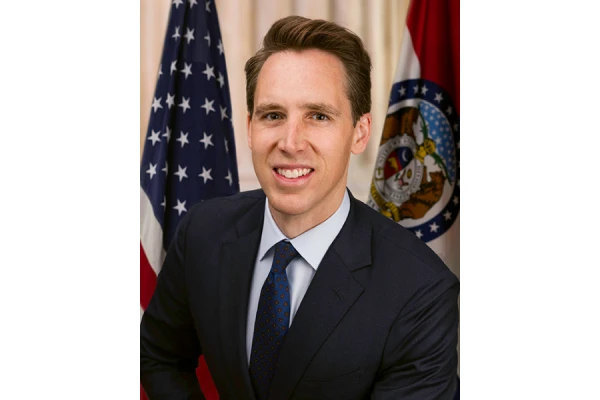
After Supreme Court decision, Sen. Josh Hawley says religious conservatives have a ‘bad’ deal

June 16, 2020 CNA Daily News 0

CNA Staff, Jun 16, 2020 / 04:28 pm (CNA).- Sen. Josh Hawley called Tuesday for religious conservatives to “stand up and speak out” for religious liberty in light of the recent Supreme Court decision in Bostock v. Clayton County.

The decision redefined discrimination in federal civil rights employment law to include gender identity and sexuality. 

In a June 16 floor speech, Hawley referred to the decision as “historic,” and “seismic,” adding that the decision marked the end of the “legal conservative project.”

The senator said religious conservatives have long voted for certain candidates under the presumption that they would appoint judges who would protect religious liberty. The Missouri senator classified himself as one of these “religious conservatives.”

“If this case makes anything clear, it is that the bargain that has been offered to religious conservatives for years now is a bad one,” said Hawley.

This unspoken bargain, he claimed, is that religious conservatives “go along with the (Republican) party establishment,” including supporting policies that, in his view, do not benefit lower- and middle-class workers, in exchange for “some judges on the bench who supposedly will protect your Constitutional rights to freedom of worship to freedom of exercise.”

Hawley was particularly critical of policies he said cut taxes on the rich and help out “multinational corporations,” while doing nothing to prevent jobs from going overseas.

“We are supposed to stay quiet about all of that and more because there would be pro-Constitution religious liberty judges. Except for they aren’t,” he said. “These judges don’t follow the Constitution.

“What (religious conservatives) sought together was protection for their right to worship, for their right to freely exercise their faith as the First Amendment guarantees, for the right to gather in their communities, for their right to pursue the way of life that their scriptures variously command and that the Constitution absolutely protects. That’s what they have asked for, that’s what they have sought all these years,” said Hawley.

The Supreme Court did not rule on the fate of churches and other religious institutions in its decision on Monday, writing that these topics were “questions for future cases.”

“No doubt they are,” said Hawley, saying these are “huge questions.” He added that he will “eagerly await” what the “super legislators across the street in the Supreme Court building” will have to say on this topic.

Hawley criticized his fellow legislators for failing to pass legislation on issues of critical importance.

“There’s only one problem with this piece of legislation,” Hawley said, referring to the Supreme Court’s decision.

“It was issued by a court, not by a legislature. It was written by judges, not by the elected representatives of the people. And it did what this Congress has pointededly declined to do for years now, which is to change the text and the meaning and the application and the scope of a historic piece of legislation.”

Hawley said that the other members of the legislature are “terrified” to put a vote on a potentially contentious issue on the record. He said that the legislature is now no longer accountable to the people who elected them, that in their refusal to pass legislation, “courts rush in.”

Now, said Hawley, is the time for religious conservatives “to bring forward the best of our ideas on every policy affecting this nation” and stop remaining silent on issues such as economics, trade, race, class, and “every subject that matters for what our founders called the general welfare.”

“The bargain which religious conservatives have been offered is not tenable,” said the Senator. “So I would just say it’s not time for religious conservatives to shut up. We’ve done that for too long. No, it’s time for religious conservatives to stand up and to speak out.”


[…]