After another major hurricane, Central America needs ‘a helping hand’

November 18, 2020 CNA Daily News 1

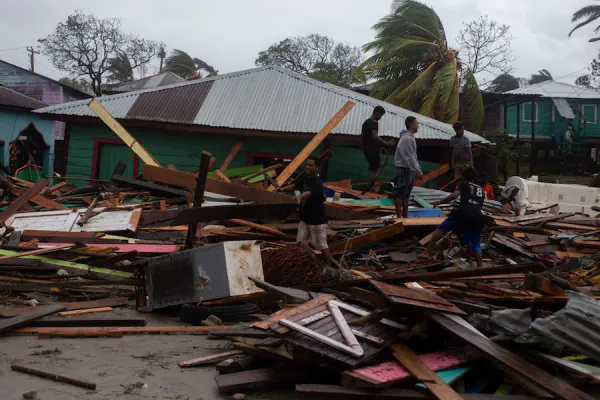
Tegucigalpa, Honduras, Nov 18, 2020 / 12:33 pm (CNA).- With Hurricane Iota becoming the second major hurricane to hit Central America this November, relief agencies have tried to prepare for even more destruction and have appealed for donations and support from around the world.

“Right now the world’s attention is focused elsewhere,” Conor Walsh, Catholic Relief Services’ manager in Honduras, told CNA’s Spanish-language sister agency ACI Prensa Nov. 16 before Iota made landfall.

“It’s been a little hard to get resources together to be able to respond effectively considering the scale of this emergency, but we’re doing what we can and we’re reaching out to all people of good will.”

“We are fully aware that there are other emergencies the world is dealing with right now. Let us not overlook Central America,” he said. “Let us not forget our brothers and sisters here in Honduras because they are suffering, and they are very very close to the United States. We should extend a helping hand.”

Hurricane Iota briefly reached Category 5 hurricane strength, then made landfall in Nicaragua Monday night with sustained winds of 155 mph, a Category 4 hurricane. It weakened to a Category 2 strength storm, with 105 mph winds, before becoming a tropical storm, National Public Radio reports.

The storm brought “catastrophic winds, life-threatening storm surge, and torrential rainfall,” the National Hurricane Center said. At least four adults and two minors were killed in Nicaragua, which lost electrical power along almost its entire coast. Tens of thousands of people took refuge in government shelters.

At least two people died on the Colombian island of Providencia, where 112 people were evacuated on Tuesday, CNN reports. The infrastructure on the island was completely wiped out. It is the first recorded Category 5 storm to hit the island and its neighbor San Andres.

Iota is the 30th named storm this season, and the strongest storm of the season. It follows soon after the Nov. 4 landfall of Hurricane Eta, which hit Nicaragua, Guatemala, and southern Belize.

“The situation in Honduras is already critical,” Walsh said before Iota’s landfall. “After Eta came through, thousands of people were displaced from their homes in the north. They’re living in shelters now. They’ve lost everything.”

“In more vulnerable rural communities, farmers lost their crops. This was just before they were going to harvest their bean crops and their corn, two basic staples,” said Walsh.

“Iota is expected to be worse. It is going right through the center of the country,” he said. “We’re bracing for the worst.”

Timothy Hansell, manager of Catholic Relief Services in Nicaragua, told National Public Radio that the relief agency aims to provide cleaning supplies and toilet paper to local residents, rebuild homes, and help farmers recover.

Caribbean coastal indigenous communities were among the hardest hit by Eta’s strong winds and floodwaters, he said. Many of their homes were destroyed. Nicaraguan farmers in the northern and central parts of the country lost as much as 50% of their bean crops, with heavy damage to rice, corn and vegetables.

Likewise, the immediate situation in Honduras is “a very, very critical situation,” Walsh said.

Catholic Relief Services is the U.S. bishops’ foreign relief agency. There are about 60 CRS staff based in Nicaragua’s national capital of Tegucigalpa, the city of San Pedro, and La Esperanza in the west of the country. They normally focus on improving agriculture, water supply and education. Aiding youth vulnerable to exploitation and unemployment is another area of their work.

“All of these programs are being interrupted now because of the emergency,” Walsh said. “We’re using whatever funding we can to provide immediate assistance for the families that have been so badly affected.”

There is great need for drinking water, food supplies, and biosafety equipment like masks, antiseptic gel and soap. There are fears that crowding at hurricane shelters will lead to the spread of coronavirus infections.

“People who are in shelters, for the most part, had to leave their homes without anything, much less a mask,” Walsh explained. “The conditions for propagation of COVID are rife in those shelters.”

According to Walsh, Honduras “is suffering the effects of climate change, and it is not responsible for this.”

“It is our duty as human beings to respond to that in a way that recognizes our common humanity,” he said.

Scientists say a changing climate and hotter oceans have contributed to stronger hurricanes. The water in the Caribbean and the Gulf of Mexico is consistently 2 degrees hotter than a century ago, according to National Public Radio.

“Honduras is starting from a very vulnerable point to begin with,” Walsh continued. “Even without the hurricanes, even without COVID, Honduras was teetering on the edge because it’s such a poor country and it’s been so hard hit by climate change.”

The country is suffering an “acute food insecurity situation” with low food supplies after several seasons of drought.

“And add to that COVID. COVID locked down the economy. It closed markets. It made it even harder for people to make a living or an income,” said Walsh. “Now, what little is left, Eta damaged, and hurricane Iota is going to finish off.”

“What is going to be the result? In all likelihood, people who have lost everything are going to feel they have no option but to migrate. It’s going to translate into stronger migration pressures once again,” he added.

Walsh encouraged better ways of thinking about Honduras and its people.

“We have to get past this notion that Honduras is a source of problems or a source of migrants that we don’t want. It’s a neighbor of ours. It’s a place of great suffering, where poverty and exclusion explain why so many choose to leave the country,” he said. “The more that we can help Hondurans in Honduras, the better.”

Catholic Relief Services is accepting donations for hurricane relief through its website, www.crs.org.


[…]

Catholic bishop urges UK officials to protect prisoners from coronavirus

November 18, 2020 CNA Daily News 0

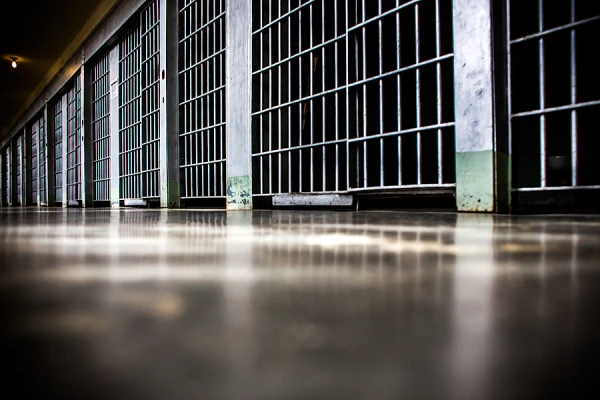
CNA Staff, Nov 18, 2020 / 11:10 am (CNA).- As Covid-19 cases have been on the rise among the incarcerated, Bishop Richard Moth of Arundel and Brighton has called on the British government to reinstate an early release program to help prevent the spread of the coronavirus.

Bishop Moth, the English and Welsh bishops’ representative on prisons, sent a letter last week to British Justice Secretary Robert Buckland. The statement was a follow-up to a letter earlier this year, which highlighted the release of vulnerable people in prison, such as pregnant women and new mothers.

“As we face a second wave, I hope that you will consider measures to counter the growing number of Covid-19 outbreaks among prisoners and staff by extending the Early Conditional Temporary Release Scheme,” he wrote.

“Through releasing some prisoners who pose a low risk of harm and who are nearing the end of their sentences, it may be possible to ease pressure on the prison estate. This can also help to protect vital family support networks, which have come under increasing strain throughout the pandemic.”

Bishop Moth expressed gratitude for the efforts of government officials and prison staff to minimize coronavirus-related deaths but said there are still threats to the inmates’ emotional and physical health.

“We also recognise the very significant cost that has been paid in terms of prisoners’ mental and physical health, restrictions to rehabilitation activity, and reduced family contact. I am sure you will agree that this situation needs further attention.”

The Early Conditional Temporary Release Scheme was begun in April during the first spike of coronavirus cases in the UK. The program sought to release low-risk prisoners nearing the end of their sentence to reduce the risk of COVID-19 outbreaks in prisons.

The scheme was first suspended after errors occurred in April when six men were released mistakenly by prisons in Sudbury and Leyhill as well as an Isis young offenders institution in south-east London. Once the mistake was recognized, the men were notified and they returned to prison willingly, the BBC reported.

A recent report from the British prisons office noted an increase in coronavirus cases, up to 620 in September compared to 550 in August.

Since the coronavirus outbreak, Pope Francis has encouraged authorities to be sensitive to vulnerable prisoners.

“The joint commitment against the pandemic can lead everyone to recognize our need to strengthen fraternal bonds as members of a single family,” Pope Francis said

“I read an official memo from the Human Rights Commission that talks about the problem of overcrowded prisons, which could become a tragedy.”


[…]

Bishop Daly: Catholic schools should embrace faith, never compromise

November 18, 2020 CNA Daily News 1

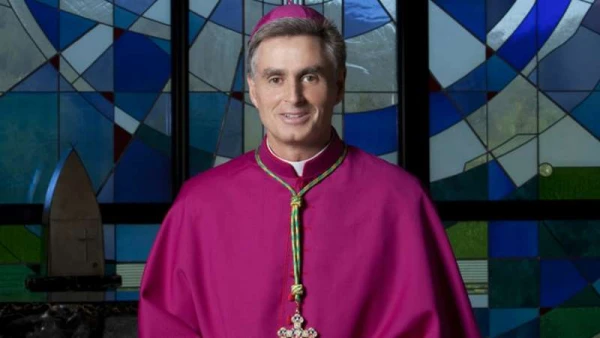
Denver Newsroom, Nov 18, 2020 / 03:07 am (CNA).- The U.S. bishops’ new chairman for Catholic education says he hopes to bring his experience as a Catholic school teacher and president, as well as pastor of two parishes, into his new position.

In an increasingly secular society, when people’s lives seem more and more to lack meaning, “our schools remind us of Christ’s love…a dignity of the human person that is beyond the mindset of the present moment, or the latest educational trend,” Bishop Thomas Daly of Spokane, Washington told CNA Nov. 17.

Daly’s fellow bishops on Nov. 16 elected him to serve as Chairman of the Committee on Catholic Education for the U.S. bishops’ conference, which provides guidance for the educational mission of the Church to Catholic elementary and secondary schools, Catholic colleges and universities, and college campus ministry.

The bishops’ conference has 18 standing committees that each focus on a specific topic related to the bishops’ mission. Each committee is made up of both bishops and lay consultants, with one bishop serving as chairman.

Daly worked in Catholic schools for 19 years before his appointment as bishop, including serving for a time as a teacher and later as president at Marin Catholic High School near San Francisco. He succeeds Bishop Michael Barber, SJ of Oakland as chairman.

The “first mission” of any Catholic school should be the salvation of souls, he noted, but too often Catholic schools focus almost exclusively on academics, to the detriment of their Catholic mission.

A Catholic school ought to be academically excellent, while always keeping in mind why Catholic schools exist— to strengthen the faith foundation, he said.

Instead of being merely a private prep school with “a little bit of religious flavoring,” a Catholic school should encourage and guide its students to “seek the Lord with a sincere heart,” Daly said.

“We don’t need more ‘private schools.’ We need schools that are Catholic, that teach and proclaim the Gospel with the realization of academic rigor,” he said.

The USCCB’s Catholic education committee exists to support Catholic schools in their mission, Daly said, and one of the ways this is done is by supporting the priest who serves the school. This may involve training or inspiration for the priest to help him better shepherd the school, he said, and to motivate the parish community to support the school.

One of the most important factors in a school’s character is the academic leadership, which for elementary schools is most often the principal, he said.

Daly said he saw the school he previously worked for turn from a more secular attitude to a direction of faithfulness thanks in large part to its principal, who “never forgot the example of his education growing up as a Catholic.”

The principal was at once a very good administrator, and also a humble man of faith, Daly noted. Thanks to his strong leadership, that school is now producing religious vocations, which Daly said is a strong indicator of a Catholic school fulfilling its mission.

One of the biggest current challenges to Catholic schools, to no one’s surprise, is the fallout from COVID-19 and ongoing lockdowns, Daly said.

At least 140 Catholic schools— mostly elementary schools— have closed in the U.S. since the start of the pandemic, he said, and elementary schools remain the most vulnerable to closure.

“I think we have to re-examine why we have our schools, and why they’re so important to families,” he said.

Making Catholic schools accessible for students with disabilities is also a priority, he said, and he hopes his committee will be able to assist and encourage schools to expand their special education programs.

Daly said historically, Catholic schools arose in the United States during a time when many public schools were de facto Protestant, and often presented a somewhat hostile environment to Catholic families.

“The need for Catholic education today is as important as it has been since the 1800s, when the Church and our mission were [often] attacked,” he said.

Part of the reason for this, Daly said, is that laws in many states make public school curricula nonconducive to an education in Catholic values.

For example, during the Nov. 2020 election, voters in Washington state approved a ballot measure that will require “comprehensive sex education” in public schools, which Daly noted “undermines core beliefs of our faith” by failing to address complex moral issues tied to human sexuality, and failing to discuss sex in the context of marriage.

He said serving as a priest and educator in San Francisco— today a very secular and liberal city overall— allowed him to observe indifference and later hostility to the Church’s message firsthand.

Daly said within Catholic education, there ought not be a dichotomy between “social justice” and “piety.” He pointed to the life of St. Teresa of Calcutta as an example of strong faith and morals manifesting in a life of service.

Catholic schools ought to be places of learning, he said, which involves allowing students to encounter differing viewpoints and ideas. Catholic schools should respect students’ freedom, not forcing them to accept the faith, but also not compromising on the Church’s beliefs.

While realizing that not every student who enters a school or university is or will be Catholic, there ought to be at least an exposure to Catholic theology, morals, and intellectual tradition at the university, he said.

Today, many students graduate from Catholic universities having never taken a Catholic theology class. Some Catholic universities may do this because they fear that students of other faiths will be less likely to attend, or because a more Catholic curriculum may be viewed as “narrow-minded.”

“Too many institutions of higher learning and Catholic education have compromised their mission, and that to me is not going to be effective,” Daly commented.

“Education with humility leads to wisdom; without humility, it leads to arrogance.”

During February 2020, Gonzaga University, a Jesuit school located in the Spokane diocese, announced the creation of a law clinic focused primarily on LGBT advocacy.

“While the Catholic tradition does uphold the dignity of every human being, the LGBT Rights law clinic’s scope of practice could bring the GU Law School into conflict with the religious freedom of Christian individuals and organizations,” Daly told CNA at the time.

“There is also a concern that Gonzaga Law School will be actively promoting, in the legal arena and on campus, values that are contrary to the Catholic faith and natural law.”

Daly said he wrote to the university president in February, requesting that the president speak to him about the clinic, but never received a reply— likely because the situation unfolded right before the start of the coronavirus pandemic.


[…]