No Picture
News Briefs

Vatican denies rumors that Benedict XVI has degenerative nerve disorder

February 15, 2018 CNA Daily News 0

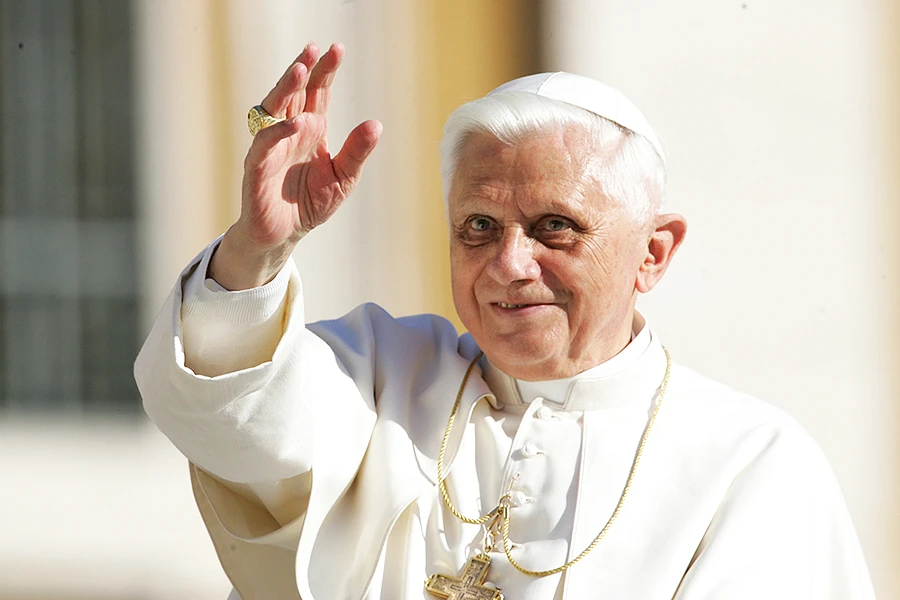
Vatican City, Feb 15, 2018 / 01:33 pm (CNA/EWTN News).- After rumors spread in German media that Benedict XVI has a paralyzing nerve disease, the Vatican debunked the story, saying the retired Pope is experiencing nothing more than the normal aches and pains of aging.

“The recent news of a paralyzing or degenerative illness are false,” the Vatican said Feb. 15.

The statement was in response to a story published in German tabloid Neue Post Feb. 14, which quoted Benedict’s older brother Georg Ratzinger as saying that the Pope Emeritus had a degenerative nerve disease which left him increasingly in need of a wheelchair.

Benedict XVI recently sent a letter to Italian daily Corriere della Sera saying he is in the last phase of his life, and that while his physical strength might be waning, he is surrounded by love and consolation.

“I can only say that at the end of a slow decline in physical strength, inwardly I am on pilgrimage home,” he said in the letter, published Feb. 7 on the front page of Corriere della Sera.

He said that “it’s a great grace for me to be to be surrounded in this last piece of the road, which is at times a bit tiring, by a love and goodness that I could never have imagined.”

Benedict addressed the letter to Italian journalist Massimo Franco of Corriere della Sera, who was charged with the task of presenting the retired pontiff with letters expressing concern and asking about his well-being five years after resigning from the papacy.

Despite the recent report on Benedict’s health in Neue Post, the Vatican in their statement said that “in two months Benedict will turn 91 years old and, as he himself recently said, he feels the weight of these years, as is normal at this age.”


[…]

No Picture
News Briefs

In Vancouver, Lunar New Year bumps Friday abstinence for Asian Catholics

February 15, 2018 CNA Daily News 0

Vancouver, Canada, Feb 15, 2018 / 01:02 pm (CNA/EWTN News).- The Archbishop of Vancouver has dispensed from the Friday Lenten abstinence Asian Catholics and their guests who are celebrating Lunar New Year Feb. 16.

“It is my pleasure to offer greetings and best wishes for a Happy New Year to all Asian Catholics in the Archdiocese of Vancouver, as well as to all who will join them in celebrating the Year of the Dog,” Archbishop John Miller wrote in his Lunar New Year Message.

“Although this year’s celebrations fall during the solemn season of Lent, it is certainly fitting that social celebrations among families and loved ones take place,” he said.

“As is customary in the Archdiocese of Vancouver, dispensation from the Lenten discipline of abstinence is granted to Asian Catholics and their guests celebrating the festival on Friday, February 16. Even so, I urge you to keep in mind the spirit of prayer and charity that we seek to practise during the Lenten season.”

Archbishop Miller concluded his message, saying: “May God’s abundant blessings be with you and your loved ones during this special time and through this entire year.”

He also asked for prayers regarding a rumored agreement in the works between the Chinese government and the Vatican on the appointment of bishops.

“I would also ask you to use this occasion to keep in your prayers current discussions between the Holy See and the People’s Republic of China as they work to better the relationship between them and improve the situation for Chinese Catholics.”

The communist government of China expelled foreign missionaries after 1949, and later established the “Chinese Patriotic Catholic Association,” a government-sanctioned Catholic Church. This has existed in opposition to the ‘underground’ Church, which is persecuted and whose episcopal appointments are frequently not acknowledged by Chinese authorities.

The archbishop’s message was written in both English and Chinese.

The Chinese, Korean, and Vietnamese people all observe a calendar in which the lunar new year falls this year on Feb. 16.

In the Vancouver archdiocese, five parishes offer Mass in Cantonese, three in Mandarin, four in Korean, and two in Vietnamese. In British Columbia (of which Vancouver is the largest city), more than 10 percent of respondents to the 2006 Canadian census identified as Chinese, and about one percent each as Korean and Vietnamese.

Dispensations like Archbishop Miller’s are common throughout East Asia.

In 2015, Chinese New Year coincided with Ash Wednesday, and dispensations from the day’s requirement of fasting and abstinence were granted by bishops across the Philippines and southeast Asia, or moved to a different day. Archbishop Miller also granted such a dispensation that year.

Lunar New Year, also called the Spring Festival, falls on the second new moon after the winter solstice; it will be celebrated until the Lantern Festival, observed this year March 2.

The event is celebrated culturally, and Catholics observe it with Masses of thanksgiving, blessings of cemeteries, agape meals, and sharing charitable gifts.

The festivities unite families in offering thanksgiving and in praying for their predecessors’ souls.

Abstinence from meat on Fridays of Lent is obligatory for Roman Catholics from the age of 14.

[…]

No Picture
News Briefs

Pope says he prays for those who call him a heretic

February 15, 2018 CNA Daily News 7

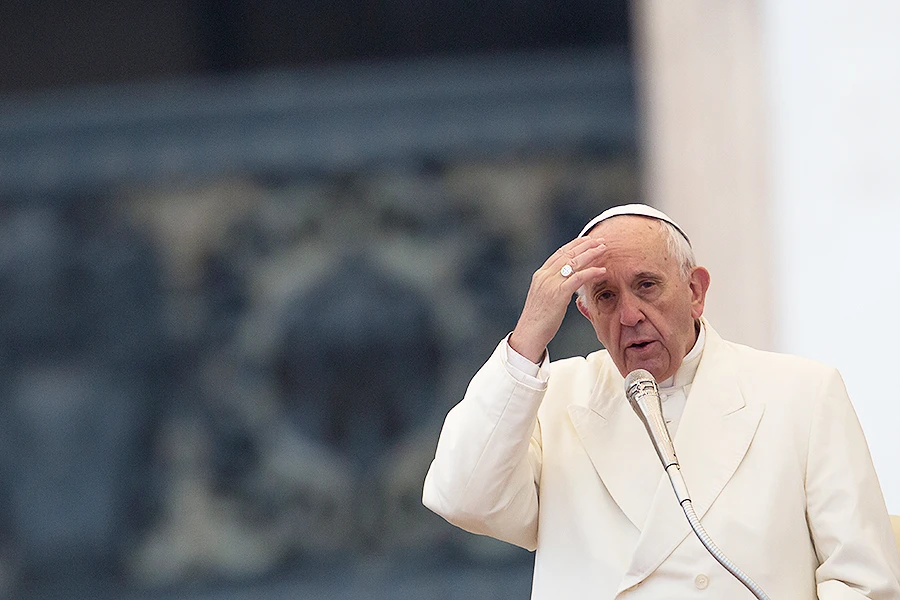
Vatican City, Feb 15, 2018 / 12:50 pm (CNA/EWTN News).- Pope Francis told Jesuits in Chile last month that he’s willing to have discussions with people who disagree with him, but that when people just shout ‘heretic’, he prays for them instead.

“When I perceive resistance, I try to dialogue, when dialogue is possible; but some resistance comes from people who believe they have the true doctrine and they accuse you of being a heretic.”

“When in these people, for what they say or write, I do not find spiritual goodness, I simply pray for them. I feel sorry, but I do not dwell on this feeling…” the Pope said in a conversation with Jesuits in Chile, published in the Jesuit journal La Civilta’ Cattolica Feb. 15.

Francis’ comment was part of a Jan. 16 conversation with around 90 Jesuits in Chile. The private encounter took place on the first full day of his apostolic visit to Chile and Peru Jan. 15-21.

In the meeting Francis answered a question about what resistance he’s encountered during his pontificate and how he’s responded to it.

“Faced with difficulty I never say that it is a ‘resistance,’ because it would mean giving up [the process of] discernment,” he said, pointing out that to do so is to dismiss the “shred of truth” that is often at the heart of conflict.

To help with this in discussions, he said he often asks a person, “What do you think?” This helps him to put into context things that at first seem “like resistance, but in reality, are a reaction that arises from a misunderstanding, from the fact that some things must be repeated, explained better…” he said.

The Pope also noted that misunderstandings or conflict are sometimes his own fault, as when he considers something to be obvious, or makes a logical leap without explaining the process well, thinking the other person has understood his reasoning.

“I realize that, if I go back and explain it better, then at that point the other says, ‘Ah, yes, all right…’ In short, it is very helpful to examine well the sense of the conflict,” he stated.

Francis acknowledged that when there is real resistance, he feels sorry, noting that the temptation to resist change is something we’ve all experienced at one point or another.

Nothing new, resistance to the Second Vatican Council is real, he said, trying to “relativize” or “water down the Council.”

He said he’s aware of the “campaigns” against Vatican II, but he does not read the websites “of this so-called ‘resistance.’”

“I know who I am, I know the groups, but I do not read them, simply for my mental health. If there’s something very serious, they inform me so that I know it,” he said. “It’s a disappointment but we have to move on.”

[…]

No Picture
News Briefs

Catholic institutions aim for mission fidelity, not discrimination, defenders say

February 15, 2018 CNA Daily News 0

Denver, Colo., Feb 15, 2018 / 12:13 pm (CNA/EWTN News).- Reports that Catholic institutions exercise unfair employment biases are undeserved, some defenders have said.

Benedict Nguyen, chancellor of the Diocese of Corpus Christi, Texas, told CNA that Catholic institutions are “really just institutions that seek to live out the Catholic faith in a concrete way, whether it be in charity work, education, or some other endeavor,” he said.

“As faith-based institutions, these have the duty, according to Catholic identity and mission, to live out our deeply-held beliefs and morals in everyday functioning,” he continued.

“When an employee publicly lives or advocate things contrary to Catholic faith and morals and makes no movements to correct the situation,” he said, “the institution should have the right to determine whether their continued employment is an inconsistency with the integrity of the mission of the institution.”

Some cases of Catholic church or school employees fired for conduct violations attract negative media coverage and even prompt protests and lawsuits, especially on charged subjects.

In recent years, legal cases and media controversies have involved a Montana Catholic school teacher who become pregnant out of wedlock; a Wisconsin coach who spent the night with a girlfriend, an Ohio schoolteacher fired after becoming pregnant via in-vitro fertilization; or couples who contract a same-sex union or live in a same-sex relationship.

One of the latest cases involves a school in the Archdiocese of Miami, Saints Peter and Paul Catholic School, which fired first-grade teacher Jocelyn Morffi on Feb. 8 after she contracted a same-sex marriage in the Florida Keys.

“As a teacher in a Catholic school their responsibility is partly for the spiritual growth of the children,” Archdiocese of Miami spokeswoman Mary Ross Agosta told the Associated Press. “One has to understand that in any corporation, institution or organization there are policies and procedures and teachings and traditions that are adhered to. If something along the way does not continue to stay within that contract, then we have no other choice.”

Morffi objected to her firing in a social media post, saying “in their eyes I’m not the right kind of Catholic for my choice in partner,” the Associated Press reports.

The firing drew protests from some parents, about 20 of whom attended a meeting at the school for an explanation. Morffi had been an employee for close to seven years, coaching basketball and running a volunteer organization that took students to downtown Miami to distribute meals to the homeless.

The action also drew criticism from New Ways Ministry, an LGBT activist group that the U.S. bishops have said confuses the faithful on Church teaching.

“With each new firing, the injustice of these actions becomes clearer and clearer to Catholic people in the pews,” New Ways’ director Francis DeBernardo told the Jesuit-run America Magazine.

DeBarnardo contended LGBT employees were being singled out as “the only group whose lives must be in full accordance with the hierarchy’s sexual ethics” and so they faced “blatant discrimination.”

“Differing enforcement of a religious policy based on the person who violates the policy has not been my experience,” Scott Browning, an attorney and partner with the law firm Lewis Roca Rothgerber Christie, told CNA.

Browning said that in his experience representing a significant number of bishops and religious superiors, Catholic administrators “act in good faith” to ensure their institutions are faithful to their mission.

“They apply their moral teaching and the policies that implement those teachings uniformly,” Browning said. “They are not focused on any particular circumstance or group; they are focused on being true to their beliefs.”

New Ways Ministry, which has charged that enforcement is unfairly focused on Church employees in same-sex partnerships, is part of the Equally Blessed Coalition, whose member Dignity USA is being funded by the Arcus Foundation. The foundation’s June 2016 grant announcement said the coalition’s work to “combat the firing of LGBT staff and allies, who support marriage equality, at Catholic institutions” is part of the foundations’ focus on limiting religious freedom exemptions it considers discriminatory.

Speaking generally, Nguyen said that in his experience conduct codes aren’t enforced “in an arbitrary or discriminatory manner.”

“If anything, I find that most Catholic institutions go out of their way to rectify the situation in a fair way,” he said.

While Browning said he could not speak to every circumstance around the country, he commented, “what I can say is that in the many situations and cases I have been involved with, charges of discriminatory application of the policy simply don’t hold up.“

He said Catholic bishops and administrators he has worked with have tried to make sure that such situations are handled fairly.

“They do this by having a policy so people know the rules, and then they apply those rules to any violation,” he said. “I’ve seen no animus towards any particular group.   I’ve seen no focus on homosexuality. To the contrary, the focus starts with the religious teachings and making sure people stay true to those teachings.”

“For instance, I’ve been charged with enforcing policies inside the civil legal system in circumstances where couples were living out of wedlock and making that fact publicly known, in circumstances where a teacher is teaching concepts that are contrary to the gospel and many other instances that don’t have anything to do with homosexuality,” he said.

“My experience is that the bishops and other administrators whom I’ve worked for are focused on applying the policies as they are written and as their faith requires.”

Browning said such policies are “clearly protected by the First Amendment to the U.S. Constitution.” He noted that one relevant U.S. Supreme Court case, Hosanna-Tabor Evangelical Lutheran Church and School v. EEOC, was issued unanimously in 2012.

“The First Amendment allows religious people to live their faith free from being controlled by the government. This freedom of religion is at the core of the American system,” he said.

Parents who do not like these policies in their schools have secular alternatives, he noted.

Nguyen said that not allowing Catholic institutions the right to such policies would allow the state, courts and judges to “determine arbitrarily who can serve as a representative of a Catholic institution.”

“This would be a serious blow to the heart of religious liberty,” he said.

According to Nguyen, codes of conduct should be “applied fairly to all employees,” with clear expectations for employees when they accept a position.

“If the person finds that in conscience this is not possible, he or she should have the integrity to seek employment elsewhere,” he said.

[…]

No Picture
News Briefs

Hundreds rally in support of Ireland’s pro-life amendment

February 15, 2018 CNA Daily News 0

Dublin, Ireland, Feb 15, 2018 / 10:36 am (CNA/EWTN News).- Hundreds of people rallied in the coastal suburb of Dun Laoghaire, Ireland, on Saturday to show support for the country’s 8th amendment, which protects the right to life of both mothers and their unborn children.

The Feb. 10 event was called “Loving the 8th” and was organized by Dún Laoghaire Life Canvas and Cherish All the Children Equally as an extension of the Save the 8th Campaign.

Ireland’s 8th constitutional amendment was added in 1983 with nearly 67 percent of voters in favor and 33 percent opposed. It recognizes the equal right to life of the unborn child and the mother, outlawing abortion except in medical emergencies.

A referendum in May will ask voters if they want to repeal the amendment.

Mairéad Hughes, spokesperson for the Save the 8th Campaign, expressed the movement’s gratitude for local pro-life groups, and said the theme “Loving the 8th” would continue through this week.

“We were so delighted to see such a great crowd come out for this event today, and it’s really indicative of how people are becoming energized at a local level to save the 8th amendment ahead of the referendum,” she said in a statement on the campaign’s website.

“It was such a positive event, pointing out that the pro-life 8th amendment protects both mother and baby, and is a provision [that] has saved so many lives.”

Those in attendance showed their support for the amendment with heart-shaped balloons, posters, and hats with the logo “Loving the 8th” in response to the upcoming referendum.

“I believe our laws currently show love to both mother and child, and we want people to understand that the 8th is life-saving, and that is why we’re Loving the 8th,” Hughes said.

“The 8th encourages us to support women in crisis and to love both them and their baby, and surely that’s the most progressive and compassionate way forward for Ireland,” she said. “[As] a mother whose baby was born very early because I had serious complications, I know the 8th protected us both. I know the value of the 8th.”


[…]

No Picture
News Briefs

Court likely to withdraw charge of key accuser in Cardinal Pell abuse case

February 15, 2018 CNA Daily News 0

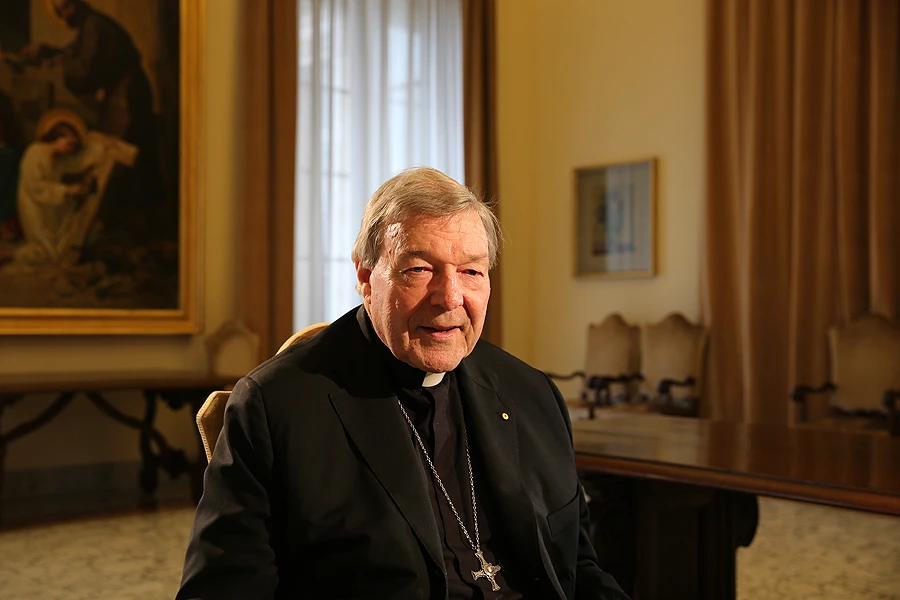
Melbourne, Australia, Feb 15, 2018 / 10:05 am (CNA/EWTN News).- The Melbourne Magistrates Court heard Wednesday that a charge related to a key witness in the case against Cardinal George Pell, accused of historical sexual abuse, is likely to be withdrawn.

In the Feb. 14 hearing, the director of prosecutions for the Melbourne Magistrates Court said that while they had not decided on the matter, the charge of a key complainant who died in January would likely be withdrawn.

Defense attorney Ruth Shann argued against the man’s credibility, saying Pell’s legal team would be examining the credibility of the “unreliable” witness when the formal four-week committal hearing begins March 5.

The witness, Damian Dignan, who died of leukemia in early January, and a fellow classmate at St. Alipius school in Ballarat accused Pell in 2016 of inappropriate sexual behavior when they were minors. The cardinal had previously been accused of acts of child sexual abuse dating as far back as 1961.

Shann said Dignan’s complaints – which he made to Australia’s Royal Commission in 2015, nearly 40 years after the alleged abuse, after reading about other cases in the commission in newspapers – had a “domino effect” in terms of other people contacting the police.

She said Pell’s lawyers had subpoenaed material from the Dignan’s lawyer and that they would pursue material connected to his complaint whether it was included as part of the case or not, since he was the “starting point,” and other accusers who spoke out after can’t be understood without first dealing with their knowledge of Dignan’s own complaint.

Pell’s legal team last week subpoenaed medical records for other complainants to build their argument, however, the magistrate overseeing Wednesday’s hearing, Belinda Wallington, denied the request due to a lack of what she believed was “substantial probative value” in the case.

She also questioned a request for a complainant’s medical records from Justice Health, which provides medical services for Victorian prisoners, saying she would delay her decision until a hearing next week, the Australian reports.

This week’s hearing took place Feb. 14 in Melbourne, and is the latest step in the ongoing case against the cardinal, who in June 2016 was charged by Victoria state police of multiple instances of historical sexual abuse.

After the charges were announced, Pell, Prefect of the Secretariat for the Economy and a member of the Pope’s council of nine cardinal advisers, was granted leave from his post by Pope Francis in order to return to Australia for the trial.

Cardinal Pell, who was ordained a priest of the Diocese of Ballarat in 1966, has pled not guilty to the multiple counts of sexual abuse, and has maintained his innocence from the beginning.

“I am innocent of these charges, they are false,” he told journalists June 29, 2017, after the charges were announced, adding that “the whole idea of sexual abuse is abhorrent to me.”

Pell has testified multiple times before Australia’s Royal Commission denying abuse charges and is known to have spoken out against sexual abuses in the past.

“It is important to recall that Card. Pell has openly and repeatedly condemned as immoral and intolerable the acts of abuse committed against minors,” stated Holy See spokesman Greg Burke last summer.

However, Burke also underscored the importance of respecting the proceedings of the Australian justice system, which will ultimately “decide the merits of the questions raised.”

[…]

No Picture
News Briefs

Respect freedom of speech, Kenyan bishops say after media restrictions

February 14, 2018 CNA Daily News 0

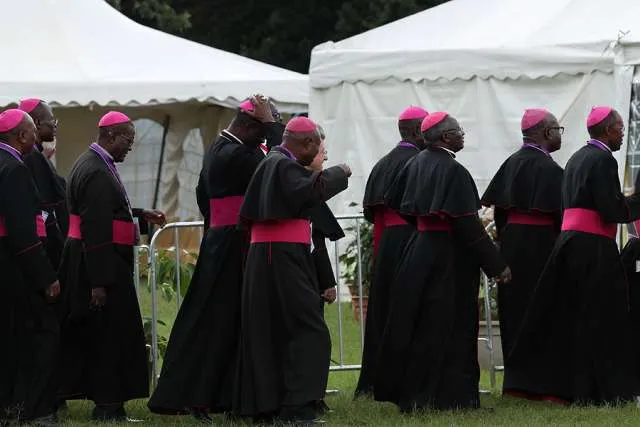
Nairobi, Kenya, Feb 14, 2018 / 05:09 pm (CNA/EWTN News).- Kenya’s government has shut down several TV stations after the leader of an opposition political party declared himself the “people’s president” in January. The country’s bishops condemned the actions of both parties and insisted on the importance of free speech and respect for law and order.  

“As a Church whose mandate is to promote justice and peace, we are categorically concerned with acts of both the government and the opposition that are unconstitutional and a bridge to law and order,” the bishops wrote in a Feb. 2 statement.

The situation follows a disputed August 2017 election. President Uhuru Kenyatta was re-elected Aug. 11, but it was nullified and a new election was ordered by the Supreme Court, which said the vote wasn’t transparent.

Raila Odinga, Kenyatta’s challenger, boycotted the October re-run, claiming it would also be neither free nor fair, and Kenyatta won overwhelmingly, with only 39 percent turnout.

Odinga then held an unofficial swearing-in ceremony in Nairobi Jan. 30 where he called himself the “people’s president.”

Kenyatta’s government then shut down several TV channels so as to prevent coverage of the swearing-in. The stations were still able to live-stream online, however. Only two stations have now been allowed to resume broadcasting to subscribers.

The Kenyan bishops responded saying that the restrictions on the TV stations did “not augur well for the freedom of expression and press in the country.”

“This is in itself is retrogressive and deliberate effort toward eroding the positive steps the Country and her people have laid down in the Constitution as a social contract.”

The bishops encouraged the government to resume the proper media functions, as Kenya’s constitution allows. The statement also emphasized the responsibility of journalists “to inform and educate the public.”

Additionally, the bishops insisted that “both opposition and the government should desist from any acts that can incite the public and cause deeper divisions among the people of Kenya and the Country at large.”

Citing the fact that “no state agency or individual is above the law,” they called on all state agencies and all duty bearers to respect and adhere to the tenets and spirit of the Constitution, respect human rights and the fundamental freedoms.”

As an organization committed to peaceful solutions, the bishops offered their support to help facilitate dialogue and encouraged Kenyans to join a 2018 Lenten campaign for peace.

About 50 people have reportedly been killed in violence related to protests following the August 2017 election.

Kenya’s 2007 elections resulted in nationwide ethnic violence that killed 1,300 people and displaced as many as 700,000.

[…]

No Picture
News Briefs

Archbishop Lori: MLK’s principles of nonviolence have ‘enduring power’

February 14, 2018 CNA Daily News 0

Baltimore, Md., Feb 14, 2018 / 01:00 pm (CNA/EWTN News).- In a new pastoral letter, Archbishop William E. Lori of Baltimore said that Dr. Martin Luther King Jr’s “principles of nonviolence” are the keys to “address and resist injustice” in the Baltimore area.

“The wisdom of Dr. King’s teaching is both timely and important for our family of faith, the Archdiocese of Baltimore, and indeed for our whole society,” wrote Archbishop Lori in his February letter.

“We urgently need to retrieve, understand, embrace and put into practice his teaching and legacy,” he continued.

Archbishop Lori’s letter comes ahead of the 50th anniversary of King’s assassination. The civil rights leader was fatally shot April 4, 1968, on a motel balcony in Memphis, Tenn.

“Now is the time for all of us to reconnect with Dr. King and his teaching,” Archbishop Lori said, noting that “Dr. King’s wisdom is more necessary than ever in our violent and fragmented society.”

“Violence, racism and a host of social problems exist in different forms and degrees…no family, no neighborhood, no community is immune from violent crime, domestic violence, drug abuse, racism and many other social problems,” the archbishop said.

Archbishop Lori pointed to a surge of gun violence in Baltimore in 2017, a year in which the Baltimore Police reported that 301 people in the city were killed with guns.

He also noted that “the sin of racism” has “has tarnished the soul of our society.”

Lori said that “lack of education, unemployment, a dearth of decent and affordable housing; a proliferation of illegal weapons; drug abuse and gangs; the disintegration of the family; homelessness” are among conditions which “create despair and spawn violence in our neighborhoods.”

“In this stark environment, Dr. King’s principles of nonviolence are more necessary than ever: they are prophetic words of hope that can light the path forward,” the archbishop said.

According to the archbishop, the principles of nonviolence advanced by Dr. King are “meant to change us” by addressing every person’s heart with a call to conversion.

Lori explained King’s six principles of nonviolence, which were the foundation of his pastoral letter.

First, he said that nonviolence was a way of life for “courageous people,” who bear “witness to the truth by living it and seeks not to coerce others into conformity, but rather to persuade them in love.” The archbishop said the sacraments of baptism and confirmation are crucial for this kind of courage.

Secondly, nonviolence seeks to “win friendship and understanding.” This means, according to Lori, that every person’s common humanity “is the basis for friendship that crosses the lines of race, ethnicity, politics and culture.”

Nonviolence also seeks to “defeat injustice, not people.” The archbishop said this principle seeks to deter “those who would harm the innocent and defenseless,” while also persuading individuals against the evils of racism.

Nonviolence also teaches that “suffering can educate and transform.” This means that suffering is a means to purification, out of which a “pure and peaceful heart flows.” The letter pointed to the witness of the early Christian martyrs who showed love in the face of violence.

The fifth principle of nonviolence rules that individuals should choose “love instead of hate.” Lori encouraged a “radical form of love that refuses to engage in any form of violence.” He noted that selfless love always seeks the good of the other in every relationship, which, he said, can powerfully transform society.

Nonviolence also believes that “justice will ultimately triumph.” This means that hope rules every action, despite suffering and injustice, Lori said.

“These principles took shape as Dr. King held up the experience of his people to the light of the Gospel and the Christian Tradition. Thus, they constitute not an abstract philosophy, but an applied theology of liberation,” he said.

“Dr. Martin Luther King Jr’s principles of nonviolence call for a change of heart. However, they also call for action,” said Archbishop Lori.

The archbishop said the archdiocese would use King’s principles to actively challenge the local community through information, education, personal commitment, negotiations, direct action, and reconciliation.

To that end, the archdiocese has created a website to springboard discussions.

“I cannot do this alone. This is something we must do together,” urged the archbishop.

The letter’s plan of action includes four efforts: building the local network of services to more effectively serve the community; forming cooperative relationships among the parishes within the archdiocese; reaching out to people on the peripheries to personally walk with them; and promoting stronger efforts towards ecumenical and interfaith partnerships that will build lasting community.

Lori also encouraged Catholics to work for the re-evangelization of each parish community in the archdiocese.

“For so many reasons, we do well to heed the prophetic teaching of the Rev. Dr. Martin Luther King, Jr. and to put it into practice,” Archbishop Lori said.

“Guided by his principles, we will take a further step in being ‘a light brightly visible,’ a Church that brilliantly reflects the light of Christ.”


[…]