No Picture
News Briefs

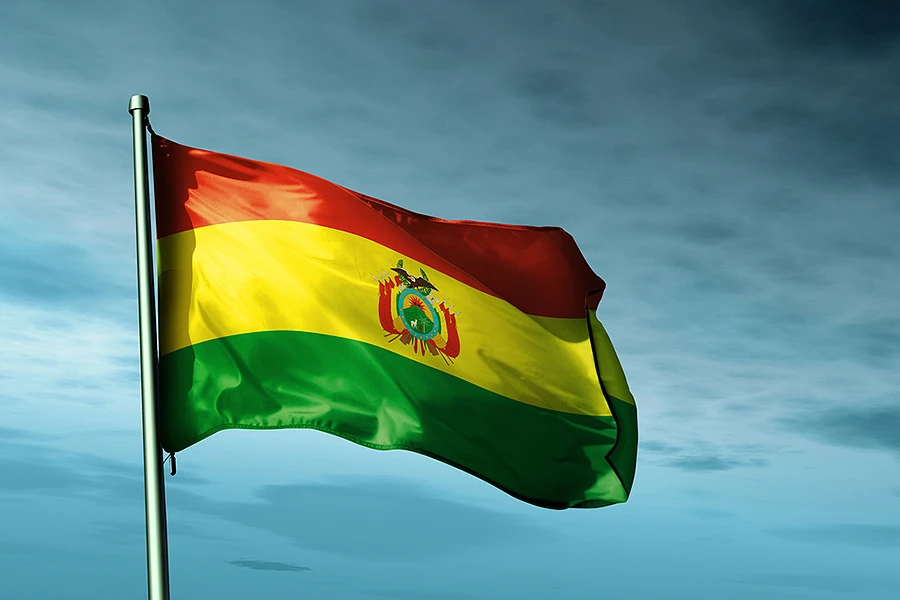
Bolivia: Bishops call for ‘thorough investigation’ of explosions in Oruro

February 16, 2018 CNA Daily News 0

La Paz, Bolivia, Feb 17, 2018 / 12:00 am (CNA/EWTN News).- The General Secretariat of the Bolivian Bishops’ Conference called on civil authorities to conduct a “thorough investigation” of recent explosions in the city of Oruro that have left 12 dead and at least 60 injured.

“We lift up our prayers for the victims and express our solidarity with relatives of those who have died in the two explosions in Oruro during the carnival festivities. We call on the authorities to conduct a thorough and transparent investigation and to take measures to prevent these lamentable incidents,” the bishop said in their  Feb. 14 statement.

The first explosion occurred Saturday Feb. 10 during a procession honoring the Blessed Virgin Mary. Eight people died and 40 were injured.

According to police reports, the cause was an exploding gasoline container.  Bolivian official Carlos Romero informed local media that there was no evidence that dynamite or some other explosive was the cause.

Another explosion took place Feb. 13, one block from the previous one.

This time the police ruled out a gasoline leak and reported that the explosion was caused by six pounds of dynamite and ANFO (ammonium nitrate-fuel oil), a highly volatile explosive.

The explosion left four dead.

The Archbishop of Sucre Jesús Juárez said it is the task of the civil authorities to discover the reasons  and the truth behind the incidents. “May truth ever triumph over the darkness of lies,” the prelate said, according to the Bolivian bishops’ communications office.

Bolivia’s Secretary of Defense, Javier Zavaleta, told Red Bolivisión reporters that three people have been arrested on “suspicion” in the last incident.

Zavaleta said that “the possibility that the two events may be coordinated” has not been ruled out, and although the police maintain that the first explosion was accidental, the secretary noted that there still remain “loose ends” in the investigation.

He pointed out that dissemination on social media of “edited audios, not spontaneous, with special effects in the background,” along with testimonies of supposed witnesses, creates suspicion of an organized “operation.”
The Secretary of Defense also called for calm, noting that a contingent of Bolivian police are deployed in the affected city.

Meanwhile, experts from the Institute for Forensic Investigations from Cochabamba and La Paz and from the Institute for Technical Scientific Investigations of the Police Academy, along with prosecutors, are working on gathering evidence to determine the facts.


This article was originally published by our sister agency, ACI Prensa. It has been translated and adapted by CNA.


[…]

No Picture
News Briefs

Catholic Studies founder Don Briel remembered for his fidelity to Christ

February 16, 2018 CNA Daily News 1

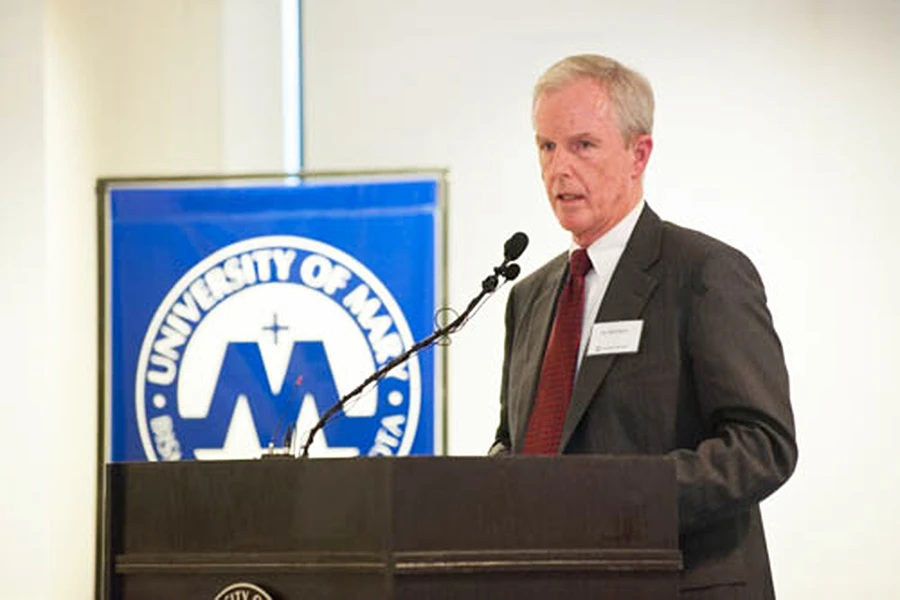
Bismarck, N.D., Feb 16, 2018 / 12:01 pm (CNA/EWTN News).- Dr. Don Briel, who held a chair in liberal arts at the University of Mary and who had founded the first Catholic Studies program, at the University of St. Thomas in Minnesota, died Thursday night.

The University of Mary has confirmed to CNA the news of Briel’s Feb. 15 death.

Briel was 71, and had been diagnosed with two untreatable acute leukemias Jan. 19. He had been in hospice care at his home.

In recent weeks he has been the subject of tributes for his contribution to the renewal of Catholic higher education in the US, most notably through this founding, in 1993, of the Catholic Studies Program at the University of St. Thomas in St. Paul-Minneapolis, Minn. That program was the inspiration for similar programs at both Catholic and public universities across the country.

Briel remained at the University of St. Thomas for 20 years, and in 2014 he was given the Blessed John Henry Newman Chair of Liberal Arts at the University of Mary in Bismarck, N.D.

At the University of Mary, he helped develop a Catholic Studies program, developed its Gregorian Scholars Honors Program, and taught at its Rome campus.

Briel’s doctoral work focused on Bl. John Henry Newman, “whose vision of university education had a profound impact on my vision of what was necessary in our own time, [through] his insistence that the purpose of university was to form the mind and habit of students, which enables them to see things in relation and make judgments about reality,” as he told The Catholic Spirit in the weeks preceding his death.

In a Jan. 24 homage to Briel at First Things, George Weigel included his founding the Catholic Studies program among the three seminal moments for Catholic higher education in the US since World War II.

Weigel described Briel’s work as, in part, an effort “to repair the damage that was done to institutions of Catholic higher learning in the aftermath of Land O’ Lakes.”

At the Land O’Lake conference in 1967, Catholic universities also began to distance themselves from the hierarchy of the Church, insisting on their “true autonomy and academic freedom in the face of authority of any kind, lay or clerical.”

“But there was, and is, far more to Don Briel’s vision, and achievement, than damage-repair,” Weigel wrote. “Nourished intellectually by John Henry Newman and Christopher Dawson, Briel has aimed at nothing less than creating, in twenty-first-century circumstances, the ‘idea of a university’ that animated his two English intellectual and spiritual heroes.”

Weigel characterized conversion “to the truth of Christ and the love of Christ as manifest in the Catholic Church,” and thereby the conversion of culture, as what “Don Briel’s life-project [is] all about.”

John and Madelyn Dinkel, who studied under Briel in Rome, wrote to him after his illness that “Your course taught us that following Christ through truth, beauty, and goodness is something always to strive for. You taught us that being a saint will not be easy, but that it truly is the only way worth living. Dr. Briel, your course did teach us this, but most importantly, your character, your virtue, and your Holy Christian example, taught us this during our time abroad.”

Briel is the subject of a recently published festschrift, Renewal of Catholic Higher Education: Essays on Catholic Studies in Honor of Don J. Briel. Edited by Matthew Gerlach, the book includes reflections from Catholic Studies professors, alumni, and scholars.

In the weeks preceding his death, Briel exhibited a profound peace and a sense of gratitude.

In an interview with Maria Weiring of The Catholic Spirit conducted Feb. 8, he said that when told he had a month to live, “I felt great peace about this. I had always prayed that I would have some advance knowledge of dying, and my ideal time frame was actually one month. It’s time enough to focus on the reality of death; it’s not too short, and it’s not too long.”

“The thing is, that if I hadn’t had this incidental appointment with this surgeon, I wouldn’t have known, and therefore I wouldn’t have had this knowledge, which I had always prayed for. So there seems to be providence in it, on every aspect of the diagnosis and my experience of it.”

He characterized his time as spent primarily in prayer and in greeting friends: “I do read, but it’s more [a] time of this combination of prayer – an intensification of prayer – and seeing so many former students and colleagues.”

“I have to say that I look forward to death, not with a sense a great success, but a sense of the privilege, again, of having been invited into the work that has had these remarkable results … This is not my work, it’s not our work, it’s God’s work, and to have been given this possibility to assist in realizing this great educational vision has been the great privilege of my life.”

[…]

No Picture
News Briefs

Youth look forward to sharing hopes, concerns in pre-synod meeting

February 16, 2018 CNA Daily News 1

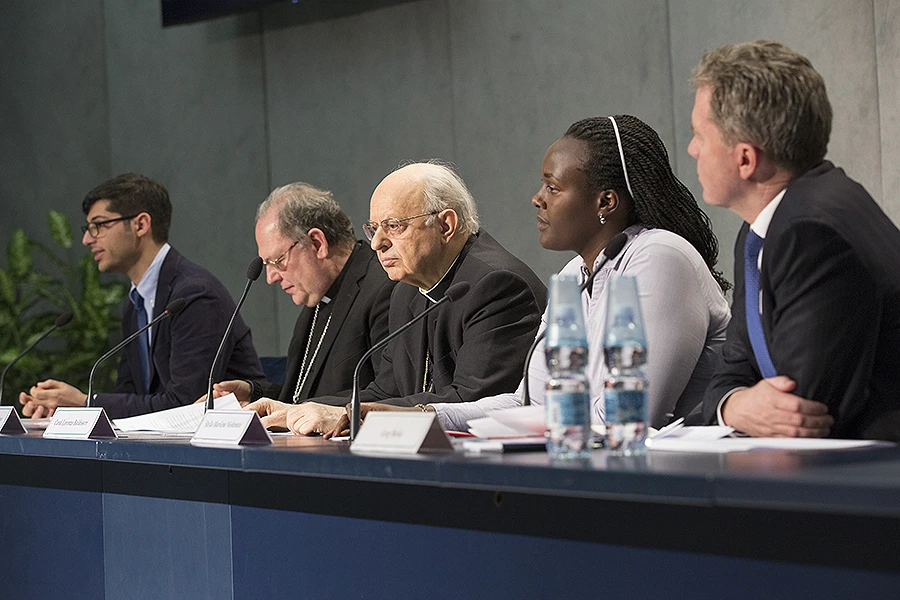
Vatican City, Feb 16, 2018 / 11:24 am (CNA/EWTN News).- Ahead of the pre-synod meeting set to take place next month, several young participants voiced excitement to meet with peers from all over the world to exchange ideas and talk about life’s major questions.

“This is a step the Church is making to listen to all youth,” said Stella Marilene Nishimwe, a participant in the pre-synod gathering. “It will give us an opportunity to say everything that we think. This is an opportunity that we must really take.”

A young Burundi woman living in Italy, Nishimwe told journalists that she believes the March gathering is “something that God wants from the Church, to do something new for all the youth of the world.”

“Because youth from all over the world, whether they are Catholics or from other religions, we have the same questions,” she said, adding that she thinks it is important that the Church wants to walk with youth “in this world with so much pain, with so many questions that don’t have answers.”

She said that what she mainly wants to share is the experience of “the life that we live.” Namely, “we want to find happiness, like everyone in the world, we want to live in unity, we want to feel at home in all parts of the world. We want to really find a path together…in this synod, I really want this.”

Nishimwe was one of four panelists at a Feb. 16 news conference on the upcoming pre-synod meeting, which will be held March 19-24 in Rome with some 300 youth from various backgrounds and countries throughout the world.

The event is a precursor to the October Synod of Bishops on “Faith, Young People and the Discernment of Vocation,” and will include youth in different states of life and from different vocations. Priests, seminarians and consecrated persons will also participate, as well as non-Catholics.

Special attention will also be given to youth from both global and existential “peripheries,” including people with disabilities, and some who have struggled with drug use or who have been in prison.

At the end of the gathering, notes of the various discussions will be gathered into one comprehensive concluding document, which will be presented to Pope Francis and used as part of the “Instrumentum Laboris,” or “working document,” of the October synod.

Alongside Nishimwe at the news conference were Cardinal Lorenzo Baldisseri, secretary general of the Synod of Bishops; Bishop Fabio Fabene, the synod dicastery’s undersecretary; and Italian youth Filippo Passantino.

In comments to journalists, Passantino said participants are expecting to hear “an echo of their requests, of their needs, of their proposals” in the meeting, not only in the synod hall, “but also on social media, so that social media can become [a] great and luminous reflection to shine on their problems.”

Social media will also play a key role in the pre-synod gathering, which is being promoted on various platforms such as Facebook and Twitter with 15 special hashtags.

Passantino, who has helped to promote the event on social media, said many young people have shared their experiences, and that so far, most of the testimonies and questions posted have been related to problems such as finding work and building meaningful relationships in an increasingly superficial world.

He stressed the importance of youth being able to listen to one another and share their experiences, saying that “we will be listened to, but we must and we want to listen to all those situations of difficulty.”

The pre-synod meeting will kick off Monday, March 19, with an audience with Pope Francis, marking the 5th anniversary of the start of his papal ministry. True to form, Francis during the audience will take questions from young people from all five continents.

In the afternoon, participants will be divided into language groups, which throughout the week will discuss different themes outlined in the preparatory document for the synod, which was released Jan. 13, 2017.

Each session will include five questions to help guide discussion. The questions will focus on various topics, such as the search for meaning, technology, vocational discernment, politics and volunteer work.

Entertainment and moments of prayer will also be included. On Friday, April 23, participants will pray the Way of the Cross while walking to the Roman catacombs of San Callisto. On Saturday, they will spend the morning at the Pontifical Villa in Castel Gandolfo and in the evening will have a celebration with youth from the Diocese of Albano.

The event will conclude with Palm Sunday Mass celebrated by Pope Francis in St. Peter’s Square, which also marks the diocesan celebration of World Youth Day, this year dedicated to the theme: “Do not be afraid Mary, for you have found favor with God.”

Participants in the gathering were selected by local bishops conferences for both the Roman and Eastern rites, and for those involved in movements, associations and ecclesial movements. Students at Catholic schools and universities will also attend.

In comments to journalists, Cardinal Baldisseri said the pre-synod gathering is not “an isolated event,” but is rather “a phase on the journey of preparation for the Synod of Bishops in October.”

The first step was the questionnaire that was sent out to bishops’ conferences worldwide, and which was also posted online in order to make it more accessible to young people. It was released in June 2017 for people ages 16 to 29, of all faiths and backgrounds, asking about lives, attitudes and concerns about the world.

According to Baldisseri, some 221,000 youth participated, with the majority being in the younger age bracket. Europe was the continent most highly represented, with Central and South America coming in second, and Africa in third.

The answers to the questionnaire will be one of four key ingredients in the October synod, he said, with the other three being the website for the questionnaire and social media accounts where youth can leave testimonies and answer questions; a September 2017 seminar on youth that took place in Rome; and the final document of the pre-synod meeting.

The pre-synod gathering will be “very, very important for the synod,” Baldisseri said. It aims to ensure that young people are heard and understood, so that the synod is not just an event “about” youth, but “with” them.

The meeting will seek to define specific pastoral projects and outreach plans. Parents, educators and priests will also be present to listen to what the youth are saying and be better equipped to address the problems and situations they encounter.

An exchange of cultural experiences and different religious backgrounds will also be encouraged.

In order to help young people unable to participate in the Rome gathering to have a voice in the discussion, special Facebook groups have been created based on language, which Bishop Baldisseri said will allow those not present to follow the discussion and interact with their peers from around the world.

Links to all social media pages, as well as the hashtags that will be used, can be found on the synod website: www.synod2018.va

[…]

No Picture
News Briefs

From North Korea to Catholicism: Mi Jin’s answered prayer

February 16, 2018 CNA Daily News 0

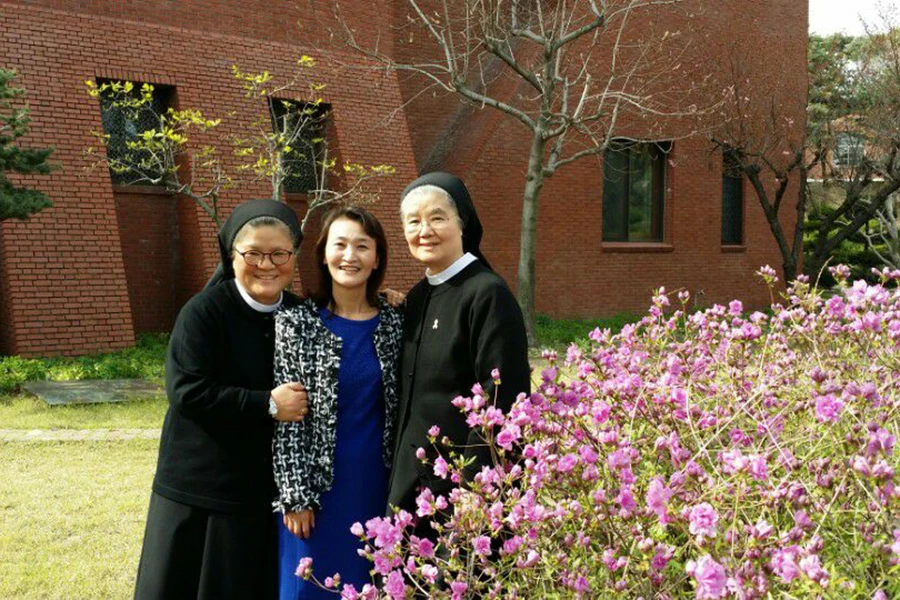
Seoul, South Korea, Feb 16, 2018 / 09:38 am (CNA/EWTN News).- During her childhood in North Korea, Mi Jin Kang never believed in the existence of God, until one person began to spark her curiosity.

“From school education, I learned that religion is a drug,” Mi Jin told CNA, “However, I heard the story of God from a girl that I met in North Korea before my escape. This was the first step to belief.”

“Before escaping North Korea, the story of God was a curiosity and miraculous,” said Mi Jin who decided to escape North Korea in 2009, at the age of 40.

“When I escaped from North Korea, I prayed with my two hands,” remembered Mi Jin, “When my prayer to God at the moment of escape was answered, I decided to be a child of God.”

“It was especially this prayer to God at the moment of escaping from North Korea that led me to be a believer during the process of settling in South Korea.”

Though she did not share details of her escape, many North Korean defectors are helped to South Korea by a network supported by Chinese Christians.

In South Korea, an order of Korean religious sisters taught Mi Jin and other North Korean defectors about the Catholic faith. Mi Jin learned about Saint Therese the Little Flower from the sisters.

At her baptism, Mi Jin took a new Christian name, as is the custom for Korean Catholics. She became Teresa.

“I wanted to be like Saint Teresa, who lived a faithful life,” Mi Jin said.

When Pope Francis visited South Korea in 2014, Mi Jin was invited by the Korean bishops to see  Pope Francis face-to-face, in the front row of the beatification Mass for 124 Korean martyrs. She also attended to Pope’s Mass in Seoul’s historic Myeongdong Cathedral.

“I got to experience the glory of a Mass close to the Pope,” said Mi Jin.

Mi Jin now works as a journalist in South Korea at the Daily NK, helping others to understand what life is like inside the world’s most opaque country.

Mi Jin told CNA that American Catholics can help North Koreans. “I think it is necessary to provide humanitarian assistance for people who are in need in North Korea. I also hope that support for organizations who are broadcasting to reach out to residents in North Korea, such as Daily NK, can help it go smoothly.”

Mi Jin especially encouraged prayer for North Korea. “I hope that Kim Jong Un’s regime in North Korea realizes economic democratization for North Korean’s true freedom and life by giving up nuclear weapons.”

She also “hopes to see the unification Korea as the relationship between North and South Korea has developed in a positive way like recently.”

Mi Jin told CNA that she has been watching the Pyeongchang Olympic Games everyday. Her favorite event to watch is skiing.

Hyo Jeong Kim assisted with translation for this story.

[…]

No Picture
News Briefs

Priesthood isn’t an assignment; it’s a mission, Pope tells seminarians

February 16, 2018 CNA Daily News 0

Vatican City, Feb 16, 2018 / 07:38 am (CNA/EWTN News).- On Friday Pope Francis met with the community of the Pontifical Maronite College, explaining how their seminary formation isn’t about them or even for them, but for the people they will eventually serve in their parishes and dioceses.

“The human, intellectual and spiritual enrichment you receive in these years is not a reward for you, much less a good to be earned for your career, but a treasure for the faithful who await you in your Eparchies and to whom your life looks forward to being donated,” the Pope said Feb. 16.

“You will not be called to exercise, even well, an assignment – it is not enough! – but to live a mission, without savings, without many calculations, without limits of availability.”

Pope Francis held an audience at the Vatican with around 45 seminarians and priests of the Pontifical Maronite College in Rome, which was founded in 1584 by Pope Gregory XIII as a place of study for Catholic seminarians of the Maronite rite.

The Maronite Catholic Church traces its roots to the early Christians of Antioch, the first believers to be called Christian. In its liturgy, the rite still uses the Syriac language, which is a dialect of Aramaic, the same language Jesus spoke.

The rite takes its name from the fourth century hermit St. Maron, whose way of life inspired many monks and laity to follow him, eventually resulting in the distinctive Maronite rite.

During the encounter, Pope Francis told the priests and seminarians that as pastors, they will need to listen to people a lot, and that God will “confirm you through their lives, through many encounters, through its unpredictable surprises.”

“And you, as pastors in close contact with the flock, will savor the most genuine joy when you bend over them, making yours their joys and their sufferings, and when, at the end of the day, you can tell the Lord the love you have received and given,” he said.

Pointing to the Maronite Church’s recent Feb. 9 celebration of St. Maron, the Pope praised the monastic life of the saint, saying it shows a proper discontent with living only a moderate or mediocre faith, but wants “to love with all its heart.”

“It is by drawing on these pure sources that your ministry will be good water for today’s thirsty people,” he explained.

Our heart is like a compass: It orients and directs itself toward what it loves, Francis said, quoting the words of Jesus in the Gospel of Matthew: “Where your treasure is, there will your heart be.”

He explained that these years of study, spiritual formation, and community life in Rome are a good time to “arrange the heart well.”

“All this you are called to live in a time not without suffering and dangers, but also pregnant with hope,” he said, pointing out how the people they will be called to serve will be unsettled by the instability which continues to plague the Middle East.

They “will search for, in you, pastors that console them: pastors with the word of Jesus on their lips, with their hands ready to wipe away their tears and caress suffering faces,” he continued.

“Pastors forgetful of themselves and their own interests; pastors who are never discouraged, because they draw every day, from the Eucharistic Bread, the sweet power of love that satisfies; pastors who are not afraid to ‘be eaten’ by the people, as good bread offered to brothers.”

[…]

No Picture
News Briefs

Priest in Idaho faces drug, child pornography charges

February 15, 2018 CNA Daily News 0

Boise, Idaho, Feb 15, 2018 / 03:07 pm (CNA/EWTN News).- A retired priest of the Diocese of Boise is facing multiple charges involving child pornography and drug possession, which has sparked a feeling of shock and betrayal in the local bishop.

“When I heard the news for the first time, certainly sadness entered my heart, followed by shock and a sense of betrayal,” said Bishop Peter Christensen in a Feb. 11 announcement from the Diocese of Boise.

“I wish I could take away the pain that follows such horrific stories, but I cannot,” Bishop Christensen continued, saying that “we live in troubled times.”

The allegations were brought against Fr. W. Thomas Faucher, a 72-year old retired priest, who spent 20 years as the spiritual head of St. Mary’s Catholic Church and School in Boise. Fr. Faucher retired three years ago, and is now facing charges for allegedly possessing or distributing child pornography, as well as being in possession of marijuana, LSD, and ecstasy.

According to the Idaho Statesman, there had been no previous complaints against Fr. Faucher, who was arrested after authorities had received a tip from the National Center for Missing and Exploited Children last week.

As Faucher faces court, Bishop Christensen said the Diocese of Boise will not be funding Faucher’s legal defense or financially contributing to a bond for the priest’s release, which is currently set at $250,000.

Christensen also said that the diocese will not be paying for Faucher’s housing, further noting that the church is working towards evicting Faucher from his church-owned home for the safety of the surrounding neighbors.

Faucher’s preliminary hearing will take place on Thursday at the Ada County Courthouse.

According to local reports, Christensen addressed the scandal at St. Mary’s parish last Sunday, where he thanked the current priest, principal of the school, law enforcement, and media. The bishop also called child pornography “the work of the devil,” and lamented the alleged crime.  

Christensen also noted how the alleged scandal affects the universal Church, saying that such crimes “breaks the morale for the priests.”

“I do not know what the eventual outcome of Fr. Faucher’s legal case will be. Regardless, damage has been done to so many who have put their trust in his past leadership and friendship,” Christensen said.

“I encourage our Catholic community to seek God’s healing presence in each of our lives, placing our dependence and trust in Him. Let us pray for all children who are victimized by all forms of abuse and exploitation. Let us also pray for each other, and for our Church.”

[…]