No Picture
News Briefs

Supreme Court declines to hear pro-life group’s undercover video appeal

April 4, 2018 CNA Daily News 1

Washington D.C., Apr 4, 2018 / 12:14 pm (CNA/EWTN News).- The Supreme Court on Monday declined to hear an appeal from a pro-life group seeking to release undercover footage detailing alleged misconduct in the abortion industry.

The cases – David Daleidan et al. v. National Abortion Federation et al. and Troy Newman v. National Abortion Federation et al. – were appealed this past August after a lower court sided with the National Abortion Federation in the lawsuits.

The Supreme Court’s decision not to take up the case means that the lower court decisions will stand, and additional footage may not be released.

David Daleidan is the project lead at the Center for Medical Progress, a pro-life group that released a series of undercover videos in 2015 allegedly demonstrating the illegal sales of body parts from aborted babies.

The released videos appeared to show various Planned Parenthood and StemExpress executives discussing, often callously, their practices for obtaining and selling fetal body parts. Daleidan alleged that Planned Parenthood was profiting from these sales, which is illegal under federal law.

Other videos appeared to show abortion doctors describing how they would perform illegal late-term abortions in violation of state laws, utilizing a series of loopholes, and one cracked a joke on camera about how her “biceps appreciate” when a drug kills the fetus before it is delivered.

At stake in the current lawsuits are several other unreleased videos that were shot at the 2014 and 2015 annual meetings of the National Abortion Federation. Daleidan attended the conference and filmed portions of it while using an alias.

The National Abortion Federation – a nonprofit that represents abortion clinics – filed suit in 2015 to prevent the videos from being released, claiming they were illegally recorded. Daleidan has defended himself against these allegations by saying he is a citizen journalist, and the videos were protected as part of his work as a reporter.

On Twitter, Daleidan said that the Department of Justice’s ongoing investigation of Planned Parenthood means that the unreleased footage will “only grow more and more relevant” until it will be eventually released.

<blockquote class=”twitter-tweet” data-lang=”en”><p lang=”en” dir=”ltr”>As <a href=”https://twitter.com/TheJusticeDept?ref_src=twsrc%5Etfw”>@TheJusticeDept</a> continues to investigate <a href=”https://twitter.com/PPact?ref_src=twsrc%5Etfw”>@PPact</a> for the criminal sale of baby body parts, the undercover footage that Judge Orrick continues to suppress will only grow more and more relevant until it can finally be revealed to the public.<a href=”https://twitter.com/hashtag/PPSellsBabyParts?src=hash&amp;ref_src=twsrc%5Etfw”>#PPSellsBabyParts</a> <a href=”https://twitter.com/hashtag/ShutThemDown?src=hash&amp;ref_src=twsrc%5Etfw”>#ShutThemDown</a> <a href=”https://t.co/NtWNfld1zb”>https://t.co/NtWNfld1zb</a></p>&mdash; David Daleiden (@daviddaleiden) <a href=”https://twitter.com/daviddaleiden/status/980971235268952064?ref_src=twsrc%5Etfw”>April 3, 2018</a></blockquote> <script async src=”https://platform.twitter.com/widgets.js” charset=”utf-8″></script>

The Center for Medical Progress claims to have many more hours of unreleased video of abortion providers.


[…]

No Picture
News Briefs

Pope Francis: We should leave every Mass better than when we went in

April 4, 2018 CNA Daily News 1

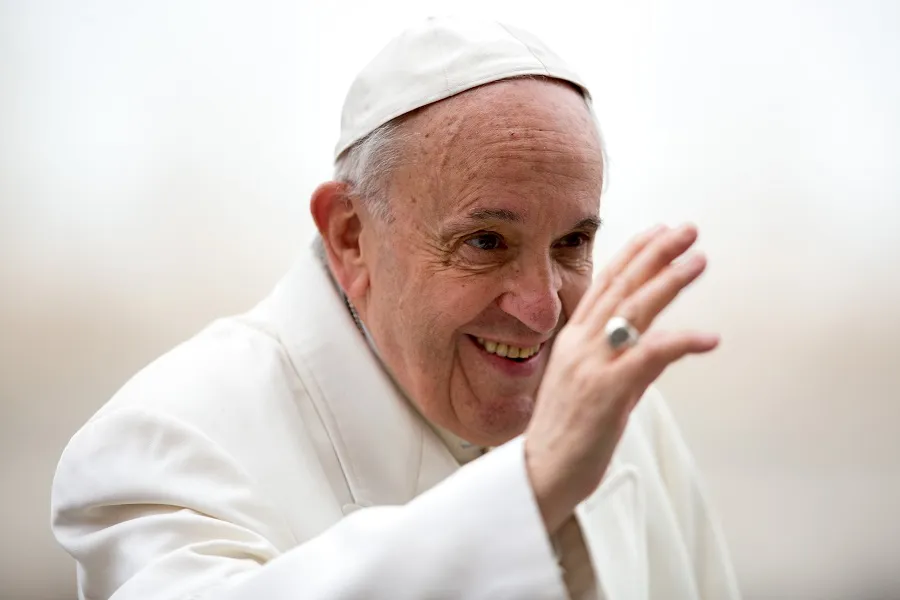
Vatican City, Apr 4, 2018 / 03:31 am (CNA/EWTN News).- On Wednesday Pope Francis said the Eucharist is key to living an authentic Christian witness, and that those who leave Mass unchanged, continuing to gossip or hold onto unholy habits, have missed the point.

“While the Mass ends, the commitment for Christian witness opens. We leave the church to go in peace to bring the blessing of God to our daily activities, to our homes, to our work, to the affairs of the earthly city, glorifying the Lord with our lives,” the pope said April 4.

The Mass, he said, is not just a weekly commitment that can be forgotten about once people go out the church doors.

“No. Christians go to Mass to participate in the passion, death and resurrection of the Lord, and to live as better Christians,” he said. “If we leave the church gossiping” or talking badly about other people, then “the Mass didn’t enter into my heart, because I am not capable of living Christian testimony.”

“Every time I leave Mass I must leave better than I went in,” he said, adding that the Eucharist should leave a person with a better heart, a better spirit and “a stronger desire to live as a Christian.”

Pope Francis spoke to pilgrims in a rainy St. Peter’s Square for his weekly general audience, which this week fell during the Octave of Easter and was dedicated to his last round of catechesis on the Mass.

Francis opened with an aside wishing pilgrims a happy Easter and saying the flowers adorning the facade of St. Peter’s Basilica are representative of the joy and happiness that blossom after Christ’s resurrection.

He asked pilgrims to join him in wishing retired Pope Benedict XVI — who he said was watching the audience on television — a happy Easter, and told them to give his predecessor a big round of applause.

In his speech, the pope focused on the concluding rite of Mass, in which believers are told to “go in peace to love and serve the Lord.”

The Mass, particularly with this commission, “finds fulfillment in the concrete choices one makes [and] involves us first-hand in the mysteries of Christ,” he said.

“We cannot forget that we celebrate the Eucharist to learn to become Eucharistic men and women,” he said, explaining that this means allowing Christ to act in and through the choices one makes, taking on his thoughts, feelings and actions.

St. Paul expresses this clearly when he speaks of his own assimilation to Jesus, saying he no longer lives, but Christ lives in him, Francis said, explaining that the apostle’s experience “also illuminates us.”

“In the measure in which we mortify our egoism, meaning we allow what opposes the Gospel and the love of Jesus to die, greater space is created in us for the power of his Spirit,” he said.

And while the liturgy is a prime way to gain great unity with Jesus, Francis noted that the presence of Christ in the consecrated bread and wine “does not end with the Mass.” Rather, the Eucharist is kept in the tabernacle in order to give communion to the sick who are unable to attend Mass, and it is also kept for moments of “silent adoration” through the exposition of the Blessed Sacrament.

“Eucharistic worship outside of the Mass, whether in private or in community, helps us to remain in Christ” and imitate his words and actions, Francis said, adding that Christians are men and women “who allow their soul to grow with the strength of God.”

“Not these small, tight, egoistic souls,” he said, but “great souls” who allow themselves to grow with the strength of the Holy Spirit and after being washed by the body and blood of Christ.

The Eucharist also separates us from sin, he said, because “the more we participate in the life of Christ and progress in his friendship, the more difficult it is to separate ourselves from him with mortal sin.”

Community is also an essential element of the Mass, he said, because the Eucharist “makes the Church,” and ought to lead to an increased commitment in service of the poor, who bear the flesh of Christ.

Pope Francis closed his audience asking pilgrims to give thanks to the Lord “for the path of rediscovering the holy Mass which he has given us to walk together,” and prayed that each person would allow themselves “to be attracted with a renewed faith to this real encounter with Jesus, died and risen for us.”

“May our lives always flourish like this, like Easter, with flowers of hope and good works, that we always find the strength for this in the Eucharist, in union with Jesus.”

[…]

No Picture
News Briefs

MLK’s example means no sitting on the sidelines, Catholic bishops say

April 4, 2018 CNA Daily News 3

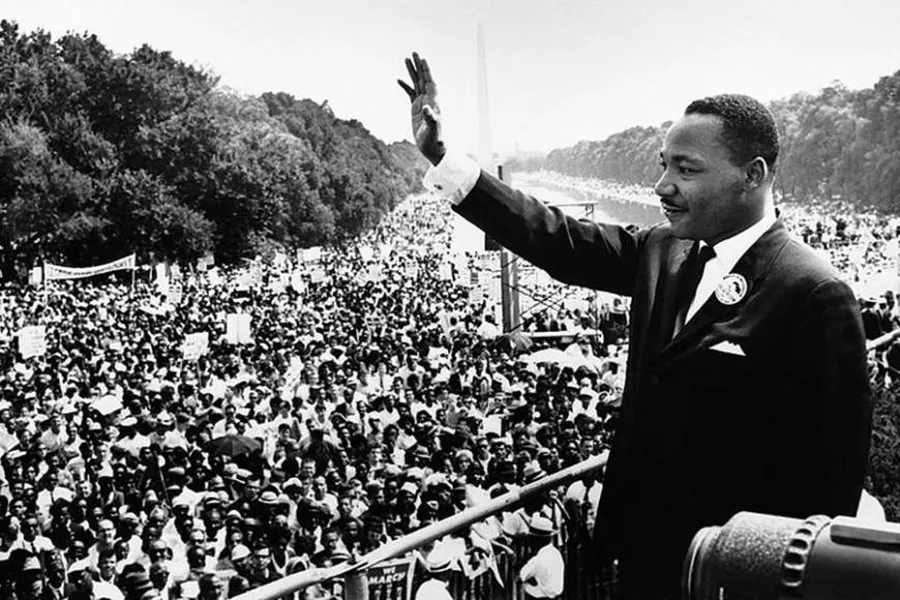
Washington D.C., Apr 4, 2018 / 03:16 am (CNA/EWTN News).- Bells will ring out in honor of civil rights leader Dr. Martin Luther King, Jr. on the 50th anniversary of his assassination April 4, and Catholic bishops say it is a time for Christians to ask God what they need to do to counter racism.

“The moment is also an opportunity for us to pause and reflect individually on what we are doing to build the culture of love, respect and peace to which the Gospel calls us and to also ask ourselves how we seek to help our brothers and sisters still suffering under the weight of racism,” the bishops said.

April 4 marks the 50th anniversary of the civil rights leader’s 1968 assassination in Memphis, Tenn. Commemorations will include a moment of silence and a worldwide bell-ringing campaign.

The National Civil Rights Museum in Memphis and The King Center in Atlanta will begin to ring bells at 6:01 p.m. Central Time. The City of Memphis bells will follow at 6:03 p.m. Nation-wide, bells will begin to ring at 6:05. Then international participants will begin two minutes later.

In Washington, D.C., the Basilica of the National Shrine of the Immaculate Conception will also take part. Its bells will peal 39 times, King’s age at his death, “in homage to Dr. King’s legacy and his many contributions including the principle of non-violent resistance,” the U.S. bishops said.

The tolling of the basilica’s bells will be broadcast live on the basilica’s Facebook page at https://www.facebook.com/nationalshrine/

In Memphis, local Catholics will participate in the commemoration.

Memphis Bishop Martin D. Holley, who is African-American, will celebrate 9 a.m. Mass at Immaculate Conception Cathedral with visiting bishops and Catholic clergy of Memphis. There will be a period of reflection after Mass, followed by a time of reflection and then a rosary at St. Peter’s Church.

Bishop Holley will say Mass at the National Shrine of St. Martin de Porres and help lead a “Walk of Faith” from St. Peter’s Church to the National Civil Rights Museum in time for the program and the moment of silence.

The U.S. bishops’ administrative committee offered Catholics questions for reflection.

“What are we being asked to do for the sake of our brother or sister who still suffers under the weight of racism? Where could God use our efforts to help change the hearts of those who harbor racist thoughts or engage in racist actions?” the bishops asked.

They said inspiration can be found in King’s steadfastness in non-violent resistance, “even in the face of years of ridicule, threats and violence for the cause of justice.”

“Dr. King came to Memphis to support underpaid and exploited African-American sanitation workers, and arrived on a plane that was under a bomb threat. He felt God had called him to solidarity with his brothers and sisters in need,” the bishops said.

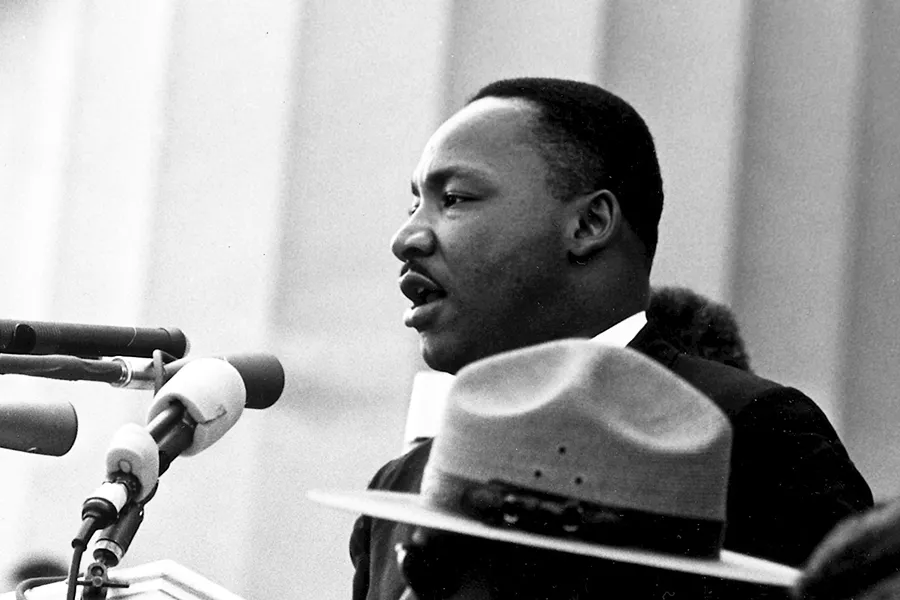
They cited King’s final speech the night before he was killed, in which he noted the threats against him and voiced his preference for a long life.

“But more important to him, he said, was his desire to simply do the will of God,” the bishops said.

Their statement cited the Gospel of John: “No one has greater love than this, to lay down one’s life for one’s friends.”

James Earl Ray, a small-time criminal with a prison record and a history of hatred for African Americans and King in particular, pleaded guilty to the 1968 assassination, then recanted and claimed he was a peripheral figure in a broader conspiracy. A Congressional committee concluded in 1978 that Ray was the killer, although others might have been involved, Ray’s 1998 New York Times obituary said.

“Our faith urges us to be courageous, to risk something of ourselves, in defending the dignity of our neighbor who is made in the image of God,” the bishops continued. “Pope Francis reminds us often that we must never sit on the sidelines in the face of great evil or extreme need, even when danger surrounds us.”

“We can best honor Dr. Martin Luther King and preserve his legacy by boldly asking God—today and always—to deepen our own commitment to follow His will wherever it leads in the cause of promoting justice.”

The bishops noted the many events put on by The King Center this year, listed at its website www.MLK50Forward.org.

[…]

No Picture
News Briefs

What the pope said when Martin Luther King was killed

April 3, 2018 CNA Daily News 0

Memphis, Tenn., Apr 3, 2018 / 06:00 pm (CNA/EWTN News).- On April 4, 1968, Martin Luther King, Jr., was fatally shot outside his room at the Lorraine Motel in Memphis, Tennessee.

King is remembered as the most visible leader of the civil rights movement, for which he was awarded the Nobel Peace Prize in 1964, and as the founding president of the Southern Christian Leadership Conference. But he was first a pastor at Dexter Avenue Baptist Church in Montgomery, Alabama, and remained active in pastoral leadership throughout his life.

On the day after King was killed, Pope Paul VI expressed remorse during his Angelus address, saying that the civil rights leader was “a Christian prophet for racial integration.”

Shortly after King’s death, the National Conference of Catholic Bishops, the National Council of Churches, the Synagogue Council of America, and the Standing Conference of Orthodox Bishops in the Americas released an interfaith statement, mourning their colleague in ministry.

We “bow together in grief before the shameful murder of Dr. Martin Luther King, Jr., a unique apostle of the non-violent drive for justice, [and] affirm that no service of remembrance or local memorial is equal to the greatness of his labor or the vastness of our national need.”

The faith leaders also applauded the efforts of Congress to pass the Civil Rights Act of 1968, encouraged Americans to support measures favoring integration, and pled with government officials to fund legislation aimed at fighting poverty.

We “affirm that only through massive contributions by the American people can this nation duly honor the life-offering of Martin Luther King, Jr. and responsibly lift up the burden of the poor and oppressed in our land.”

The statement also promised to implement coordinated efforts among religious communities to fight poverty.

We “declare our intention to take immediate steps to develop a coordinated sacrificial effort on the part of the American religious community to help the disadvantaged,” the statement read.
 
Faith leaders were not the only ones to pay tribute to King after his assassination.

On the night King was killed, Senator Robert Kennedy, a Catholic, spoke to the people of Indianapolis, urging them to greater compassion and a deterrence from violence. Kennedy spoke during a stop on his 1968 campaign for President, delivering the news to a multiracial crowd that King had been assassinated.

“What we need in the United States is not division; what we need in the United States is not hatred; what we need in the United States is not violence or lawlessness; but love and wisdom, and compassion toward one another, and a feeling of justice toward those who still suffer within our country, whether they be white or they be black,” he said on April 4, 1968.

Kennedy referenced the assassination of his own brother, President John F. Kennedy, which had taken place in 1963.

“For those of you who are black and are tempted to be filled with hatred and distrust at the injustice of such an act, against all white people, I can only say that I feel in my own heart the same kind of feeling. I had a member of my family killed, but he was killed by a white man. But we have to make an effort in the United States, we have to make an effort to understand, to go beyond these rather difficult times,” Kennedy said.

The senator urged Americans to take up King’s efforts, pray for King’s family and the nation, and join in solidarity those longing for peace.  

“The vast majority of white people and the vast majority of black people in this country want to live together, want to improve the quality of our life, and want justice for all human beings who abide in our land,” he added.

“I shall ask you tonight to return home, to say a prayer for the family of Martin Luther King, that’s true, but more importantly to say a prayer for our own country, which all of us love–a prayer for understanding and that compassion of which I spoke.”

[…]

No Picture
News Briefs

Priest murdered during Holy Week in El Salvador

April 3, 2018 CNA Daily News 1

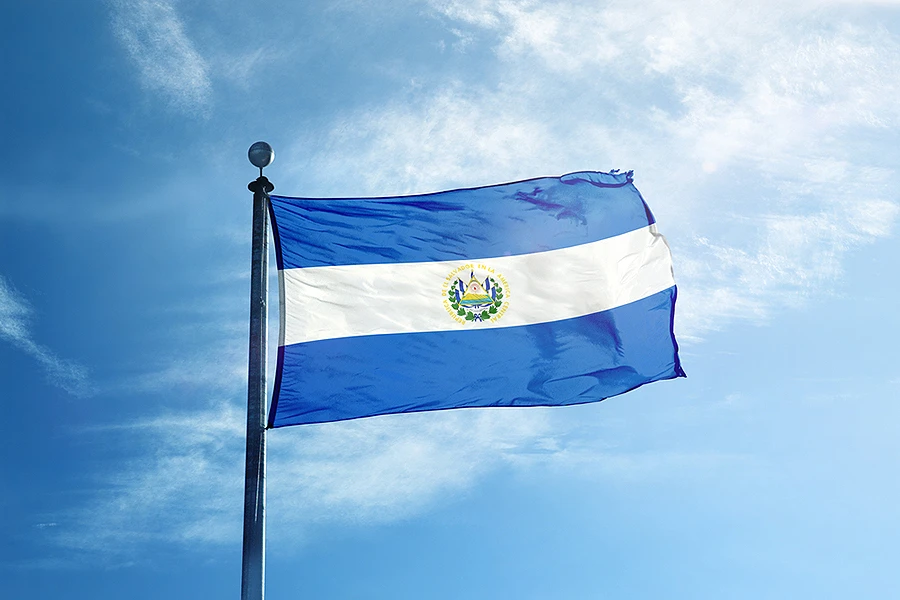
San Salvador, El Salvador, Apr 3, 2018 / 05:00 pm (CNA/EWTN News).- Fr. Walter Osmir Vásquez Jiménez was shot and killed the afternoon of March 29, Holy Thursday, on a dirt road outside of the town of Lolotique, El Salvador, as he was on his way to celebrate Mass.

The Archdiocese of San Salvador released a statement expressing “its sorrow over the murder of Fr.  Walter Vásquez. We express our solidarity with the Diocese of Santiago de María and his relatives.”

“We urge the appropriate authorities to determine the facts,” they added.

According to the National Civil Police of El Salvador, the priest, 36, was stopped and killed “when he was riding in a car to celebrate a Mass in a place known as La Casona.”

The local press attribute the crime to gangs active in the area.

According to the Italian publication l’Avvenire, three armed men wearing ski masks robbed the priest and other passengers in the vehicle, taking their wallets, watches and cell phones. They then ordered the priest to get out of the car and took him some 150 feet away and shot him. However, Fr. Vásquez Jiménez was only grazed by the bullet and attempted to flee, when he was then shot again and killed.

Witnesses claim it was “an execution.”

Although the motive for the killing is unknown, l’Avvenire reported that the victim exercised his ministry in a violent area of the country where the gangs extort businesses and the priests often try to provide protection for the inhabitants. They also support young men who do not want to join the gangs.

“We’re on the front lines, every day we wonder when they’re going to shoot us, and we’re surprised they still haven’t done it,” said a priest whose name was withheld for security reasons.

The president of El Salvador expressed his “condolences to the family of Fr. Vásquez Jiménez  and the country’s entire Catholic community.”

The Salvadoran government said that it has instructed the police “to ramp up security in Lolotique and at all the religious celebrations nationwide.”

In addition “a quick and thorough investigation of the case” was ordered  “to find those responsible to promptly bring them to justice.”

The Diocese of Santiago de María said that Fr. Vásquez Jiménez “was parochial vicar of Our Lady of Mercy parish in the town of Mercedes Umaña, and this week he had been assigned to work during Holy Week at Most Holy Trinity parish in the town of Lolotique.”

“We express our condolences and solidarity” with the family of the priest and to the faithful he cared for,” the Salvadoran diocese stated.

“We condemn violence of any kind,” they said in a statement while they thanked “ the authorities for their prompt response in face of such a sacrilegious act,” in order to “find those responsible for the crime and that justice be done.”

Hundreds of faithful attended the priest’s funeral Mass and burial in Lolotique on April 1. Cardinal Gregorio Rosa Chavez, the auxiliary bishop of San Salvador, presided at the Mass, which was concelebrated by the Archbishop of San Salvador, Luis Escobar Alas.

The archbishop stated that “unfortunately we must recognize and denounce sin, injustice, lies, corruption, arms trafficking, drugs and so many social evils, especially the violence which has caused and continues to cause so much pain.”

“It is incredible that on Holy Thursday, after having participated in the Chrism Mass, one of our priests, Fr. Walter Osmir Vásquez, would be violently murdered. It is not possible that this should happen in a Christian country,” he added.

Speaking to the media, the prelate stressed that “it is not only the person of the priest that moves us to sorrow  but all those who die because of these kinds of situations which end up in these grave, very grave incidents.”

Cardinal Gregorio Rosa Chávez, emphasized that “we are here along with Fr. Walter to say: Yes to life, yes to love, yes to forgiveness, yes to justice.”

This article is a CNA translation and adaption of stories originally published by our sister agency, ACI Prensa.

[…]

No Picture
News Briefs

The Syria visited by Pope John Paul II, and Syria today

April 3, 2018 CNA Daily News 1

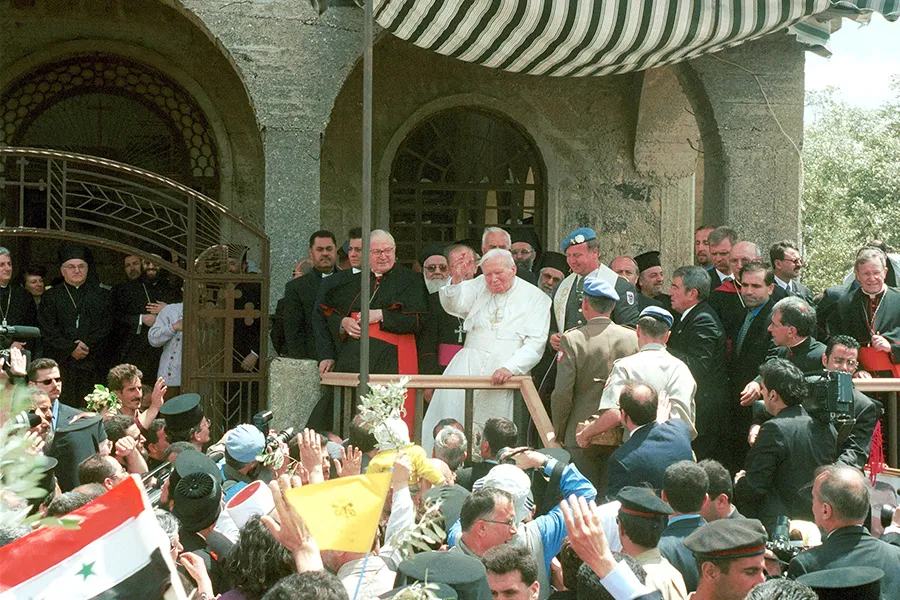
Damascus, Syria, Apr 3, 2018 / 02:00 pm (CNA).- When Pope Saint John Paul II visited Syria in 2001, he called on Christians to remember Syria’s “magnificent contribution” to the history of Christianity. As the country reels from seven years of civil war, Christian communities in Damascus continue to struggle to protect that heritage.

“We remember that it was in fact in Syria that the Church of Christ discovered her truly catholic character and took on her universal mission. The Apostles Peter and Paul, each according to the grace received, worked here to gather together the one family of Christ, welcoming believers coming from different cultures and nations,” said Pope John Paul II in Damascus on May 6, 2001.

Within the walls of the Damascus’ Old City is the tomb of St. John the Baptist, the house where St. Ananias took in a blinded Saul, and the Gate of St. Thomas, known as Bab Touma, through which the apostle traveled on his way to evangelize India.

For John Paul II, it was primarily a pilgrimage in the footsteps of Saint Paul that brought him to Damascus. The pontiff spent three days in Syria in 2001 as a part of a six-day journey following Saint Paul’s evangelizing missions in the Mediterranean, including stops in Greece and Malta.

“At the gates of Damascus, when he met the Risen Christ, Saint Paul learned this truth and made it the content of his preaching. The wonderful reality of the Cross of Christ, upon which the work of the world’s Redemption was wrought, became present before him … Brothers and sisters, let us lift our eyes to the Cross of Christ to find the source of our hope!” proclaimed the pope during his trip.

The Holy Father also praised the great contributions of Syria’s saints throughout history.
“From the very beginning of Christianity, flourishing communities were to be found here. In the Syrian desert Christian monasticism flourished; and the names of Syrians such as Saint Ephraem and Saint John Damascene are etched for ever in Christian memory. Some of my predecessors were born in this area.”

One of the historic monasteries built in the fifth-century has been destroyed. St. Elias Monastery was bulldozed by the Islamic State in April 2016, during the jihadist group’s genocide of Christians in Syria and Iraq.

Today, the reality of the cross is vivid for the remaining Christians in Syria, who have seen their communities drop by 75 percent in cities like Aleppo, once home to the country’s largest Christian population.

On Easter, Pope Francis prayed for an end to the “carnage” in “the beloved and long-suffering land of Syria, whose people are worn down by an apparently endless war.”

Catholics who remain in Damascus walked through the Old City’s narrow streets on Holy Thursday to pray at seven historic churches, some of which had been damaged by mortar coming from the Eastern Ghouta suburb, only 12 kilometers away.

One of the churches visited during the Holy Week procession is the Syrian Orthodox Cathedral of Saint George, the same church in which St. John Paul II reflected ten years before the start of the Syrian civil war, “these will be the marks of our fidelity to God: to pray, to carry the Cross, to obey God’s will and to honour everyone as a brother or sister.”

John Paul II made history during his short visit in May 2001 by being the first pope to enter a mosque. The Umayyad Mosque was decorated with Vatican and Syrian flags for the occasion. In 715 AD, the mosque was built on top of a fourth-century Christian cathedral containing the head of John the Baptist, according to tradition.

The pope lamented that his short trip to Syria did not allow him to visit “all the Churches dedicated to the Mother of God in this great and noble city of Damascus.”

“I would also have liked my pilgrimage in the footsteps of Saint Paul to have included a visit to some of the venerable Shrines of the Virgin Mother of God, such as those at nearby Seidnaya, or in Homs, Aleppo, Tartus and elsewhere. I have not forgotten that according to a pious tradition it was near Tartus that the Apostle Peter, on a journey from Jerusalem to Antioch along the Mediterranean coast, dedicated a chapel to the Virgin Mary, the first Marian shrine in Syria,” continued the pontiff.

Homs and Aleppo, mentioned by the late pope, are among the cities most devastated by the Syrian conflict.

Between 5,000 to 13,000 people have been executed in the city of Seidnaya by Syrian President Bashar al-Assad’s government during the conflict, according to Amnesty International. The 6th-century Seidnaya Monastery, containing a miraculous icon of the Theotokos, has also been damaged in the conflict.

The Syria encountered by Saint John Paul II in 2001, before the September 11th terrorist attacks, was vastly different from the war-torn Syria today, but Christians there still cling to words he spoke during his visit to the country:

“The joy of Easter flowered on the wood of the Cross … When God acts, the impossible becomes possible. It is our task to say ‘yes’ to God’s saving will and to accept his mysterious plan with our whole being.”

[…]