No Picture
News Briefs

Soon-to-be beatified nurse, laywoman lived for others
April 27, 2018 CNA Daily News 0

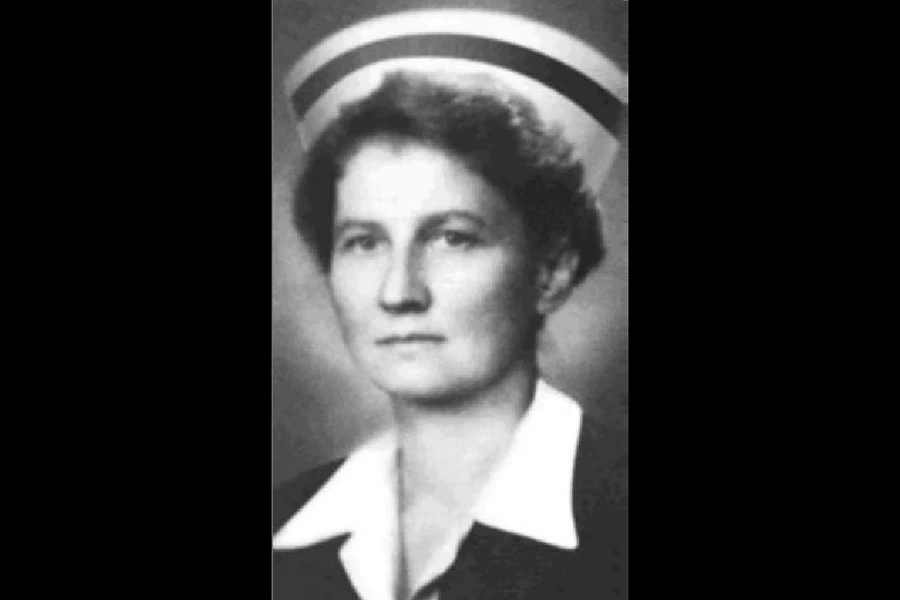
Krakow, Poland, Apr 27, 2018 / 01:32 pm (CNA/EWTN News).- Hanna Chrzanowska, a 20th-century Polish nurse and laywoman who will be beatified in Krakow Saturday, is a model of how to give of oneself for the good of others, said a priest involved with her canonization cause.

“The laity know well the reality of everyday life,” Fr. Pawel Galuszka said. “Hanna, as a nurse, knew in person and from experience the problems of the sick, alone, abandoned and disabled.”

A Polish priest responsible for the pastoral section of the beatification cause of Hanna Chrzanowska, Galuszka told CNA via email that “in today’s culture the logic of the market prevails… In every aspect of life we tend to calculate profit or utility.”

Chrzanowska, on the other hand, “teaches us how important it is to make a sincere gift of oneself, even sacrifice, for the good of the other. This is, and will be, the very legacy of Blessed Hanna Chrzanowska.”

Galuszka noted that St. John Paul II, then-Cardinal Karol Wojtyla, knew Chrzanowska during her life, and when he presided over her funeral said: “We thank you, Miss Hanna, for having been among us… a particular incarnation of Christ’s blessings from the Sermon on the Mount, above all that he said ‘blessed [are] the merciful.’”

“The bishop of Krakow [St. John Paul II] had no doubt that Hanna in a heroic way fulfilled the commandment of love of neighbor,” Galuszka noted.

Meeting Cardinal Wojtyla was one of the special moments in Chrzanowska’s life, the priest recounted, adding that the then-bishop of Krakow gave her “real moral and material help” during her organization of various parish infirmaries throughout the city and archdiocese.

“Equipped with a charismatic personality, she concentrated a significant group of collaborators and volunteers around her work, among them nurses, nuns, seminarians, priests, doctors, professors and students,” Galuszka said.

“With their help, she organized retreats for her patients that brought back the joy and the strength to face everyday life. Thanks to her efforts, the tradition of celebrating Holy Mass in the homes of the sick, and going to visit patients during pastoral visits, spread.”

Chrzanowska was born in Warsaw on October 7, 1902 to a family known for their charitable work. She finished high school at a school run by Ursuline sisters in Krakow and after graduating in 1922 attended nursing school in Warsaw.

She became an oblate with the Ursuline Sisters of St. Benedict.

From 1926-1929 she worked as an instructor at the University School of Nurses and Hygienists in Krakow. For 10 years she held the position of editor of the monthly “Nurse Poland” magazine, also publishing her own work in the field of nursing.

During this period, she also grew closer to God, joining in the work of the Catholic Association of Polish Nurses in 1937.

In 1939, Poland saw the outbreak of World War II. After the war and after the opening of a university school of maternity and nursing in Krakow, she worked as the head of the department dedicated to home nursing.

Chrzanowska was especially dedicated to the proper formation and preparation of her students, including offering advice and assistance while accompanying her students on visits to patients confined at home.

In 1966 she contracted cancer. Despite operations, the disease spread and eventually led to her death on April 29, 1973 in Krakow.

Her cause for canonization was opened Nov. 3, 1998, and her beatification Mass will take place at the Sanctuary of Divine Mercy in Krakow April 28.

Galuszka said that the miracle which paved the way for Chrzanowska’s beatification was the healing of a 66-year-old woman, who had suffered from a cerebral hemorrhage and mild heart attack.

The woman had become paralyzed in both legs and a hand and was considered to have no chance of surviving.

While in a coma, she had a dream that Hanna Chrzanowska appeared to her and said, “Everything will be fine.” Waking soon after, she surprised the doctors, because not only could she speak normally, but she could move her limbs, Galuszka said.

It was later discovered that on the same day she was miraculously healed, the woman’s friend, a nurse, had attended a Mass and prayed for her healing through the intercession of Venerable Hanna Chrzanowska.

 

[…]

No Picture
News Briefs

Colombia drug route battle leaves residents trapped in homes

April 26, 2018 CNA Daily News 0

Catamarca, Argentina, Apr 26, 2018 / 07:23 pm (ACI Prensa).- Residents of the Catatumbo region of Colombia, which borders Venezuela, are trapped in their own homes due to an ongoing conflict between two guerilla groups fighting over drug trafficking routes.

“People are trapped in their own homes and the people who dare to go out are intimidated by motorcycle riders who tell them, ‘You have to obey the order to strike.’ They simply cannot go out or open their businesses,” Bishop Gabriel Ángel Villa Vahos of Ocaña told RCN Radio April 23.

The National Liberation Army (ELN) and the People’s Liberation Army (EPL), two Marxist-Leninist guerilla insurgents, declared war some 40 days ago for control of the drug trafficking routes for about 62,000 acres of coca in Catatumbo, which is a sub-region in northeast North Santander.

The problem worsened with the “armed strike” decreed last week by the EPL which has restricted commerce and people’s free movement in the area.

The United Nations has estimated that the conflict has caused more than 4,000 people in the rural areas to leave the region since March 14, El Tiempo reports. It is estimated that there are more than 145,000 people affected in 11 townships.

Bishop Villa appealed to the armed groups to leave the civil population out of their confrontations, “because they are those most affected at this time.”

The bishop stressed that the government needs to make a major effort to address social problems. He said he hopes “there will be an immediate response to the emergency,” that respects the safety of civilians.  


This article was originally published by our sister agency, ACI Prensa. It has been translated and adapted by CNA.


[…]

No Picture
News Briefs

New report paints worrying picture of global religious freedom

April 26, 2018 CNA Daily News 0

Washington D.C., Apr 26, 2018 / 10:45 am (CNA/EWTN News).- Religious freedom conditions worsened across the globe in the past year, according to the U.S. Commission for International Religious Freedom’s 2018 report, released April 25.

Violations against religious freedom were particularly acute under authoritarian regimes in the Eastern Hemisphere. With the exception of Cuba, all of the 28 countries USCIRF designated as the worst perpetrators in 2017 lie east of the prime meridian.

The worst abuses against religious freedom included genocide, enslavement, rape, imprisonment, forced displacement, forced conversions, property destruction, and bans on religious education of children.

The commission recommended that 16 countries be recognized by the State Department as a Country of Particular Concern (CPC), a label that identifies foreign governments that engage in or tolerate “systemic, ongoing, and egregious” religious freedom violations. Receiving this designation from the State Department opens the door to consequences including trade and funding sanctions.

These 16 are the same countries that USCIRF recommended last year with the State Department going on to recognize 10 as CPCs in December 2017: Burma, China, Eritrea, Iran, North Korea, Saudi Arabia, Sudan, Tajikistan, Turkmenistan, and Uzbekistan.

However, the U.S. Commission for International Religious Freedom urges that religious freedom violations in Pakistan, Russia, Syria, Nigeria, Vietnam, and the Central African Republic were so severe that these countries also merit CPC designation.

Of these six unrecognized countries, USCIRF Chair Daniel Mark is particularly concerned about the state of religious freedom in Pakistan.

“What we have said for many years is that Pakistan is the worst country in the world that’s not designated for CPC. Pakistan is a world leader in imprisonment and convictions, prosecutions for blasphemy and apostasy, and those sorts of things,” Mark told CNA.

According to the report, approximately 40 people sentenced under blasphemy laws are awaiting the death penalty or serving life sentences, including Asia Bibi, a Christian mother and field laborer.

In December 2017, Islamic State affiliated suicide bombers attacked a church in Quetta, Pakistan killing nine people.
The upcoming national elections in July 2018 have exacerbated religious tensions in the country.

“Conditions in Pakistan are not just bad at the level of law, where for example, Amadis are out in the Constitution for second-class citizenship, but also at the level of civil society where a culture of impunity has grown,” continued Mark, who explained that vigante mobs have been attacking people on the basis of blasphemy accusations.

In lieu of CPC designation, Pakistan was placed on a “Special Watch List” by the State Department in December 2017. This list is a new category created by the 2016 amendments to the International Religious Freedom Act.

“Matters concerning Pakistan are very sensitive on account of the fact that they are a partner of ours in combating terrorism around the world in the war in Afghanistan and so on. But, given the rise of extremism in Pakistan…we really do think that pressure should be kept up, notwithstanding the cooperation that our two countries need,” said Mark.

The USCIRF chairman told CNA that he is concerned that both Russia and China intensified repression of religious freedom over the course of 2017.

“Russia, which we recommended for designation for the very first time last year, continued to deteriorate. The repression in some of the post-Soviet Central Asian states have followed Russia’s model, sadly,” said Mark.

The report notes that Russia is the only country to have expanded its repressive policies to a neighboring territory by means of military invasion. Crimean Tatar Muslims are being kidnapped, tortured, and imprisoned in Russian-occupied Ukraine.

“Russia is such a big player on the world stage. It is really important that the message be sent clearly,” said Mark referring to religious freedom.

The report also mentioned religious persecution in China, including persecution of Catholics, noting that 2017 marked 60 years since the creation of the state-run Chinese Catholic Patriotic Association.

In 2017, China increased government control over its recognized religions as a part of President Xi Jinping’s campaign to “manipulate all aspects of faith into a socialist mold infused with ‘Chinese characteristics.’”

Two regions of China with significant ethnic and religious minority populations, Xinjiang and Tibet, “increasingly resemble police states,” the report said.

“Monks and nuns who refuse to denounce the Dalai Lama or pledge loyalty to Beijing have been expelled from their monasteries, imprisoned, and tortured.”

The report also cites mounting revelations of the Chinese authorities torturing other prisoners of conscience and human rights defenders to force confessions and compel individuals to renounce their faith.

In its 2018 report, USCIRF also recognized 12 additional countries with a Tier 2 status of less severe or systemic religious freedom violations: Afghanistan, Azerbaijan, Bahrain, Cuba, Egypt, India, Indonesia, Iraq, Kazakhstan, Laos, Malaysia, and Turkey.

USCIRF recommends in the report that the U.S. government prioritize efforts to advocate for the release of prisoners of conscience. Chairman Daniel Mark pointed to the recent trip of Ambassador-at-large for International Religious Freedom Sam Brownback to Turkey on behalf of imprisoned Christian pastor Andrew Brunson as a good example.

Mark also highlighted that there have been some improvements in international religious freedom efforts during the past year.

“The pushback against ISIS in Iraq and recapturing all or almost all of the territory from them has been absolutely critical in saving lives. And another thing that gets much less noticed is international cooperation. It was great to see that on January 1st Denmark opened a new office with an ambassador representative covering this issue and we hope to see more countries follow,” he said.

The Islamic State was one of the non-state actors that USCIRF report recommended to be designated as an Entity of Particular Concern, along with the Taliban in Afghanistan, and al-Shabaab in Somalia. The Frank R. Wolf International Religious Freedom Act passed in December 2016 requires the U.S. government to also identify these non-state actors as Entities of Particular Concern or EPCs.


[…]

No Picture
News Briefs

Nigerian herdsmen kill 19 in Catholic church attack

April 26, 2018 CNA Daily News 0

Jos, Nigeria, Apr 26, 2018 / 03:16 am (CNA/EWTN News).- At least 19 people, including two priests, were killed on Tuesday when nomadic cattle farmers in central Nigeria opened fire at morning Mass in a Catholic parish.

Reports indicated that Fulani herdsmen attacked Saint Ignatius Church in Ayar-Mbalom, a town within Nigeria’s Benue State, on April 24. According to officials, the herdsmen killed 17 worshipers and two priests: Father Joseph Gor and Father Felix Tyolaha.

After the attack on the church, the herdsmen proceeded to shoot residents in the area and set fire to around 50 homes, according to survivor Peter Iorver, whose stepmother had been a victim.

“The herdsmen came and opened fire on the church while morning mass was going on,” Iorver told New Telegraph, a local newspaper. “After they attacked and killed those in the church, they left and started shooting sporadically, killing residents around the area.”

“They burnt over 50 houses and destroyed food and farm crops as they retreated to their base. My stepmother was one of the victims; she was at the mass when the attack happened.”

The attack took place near Nigeria’s middle belt, where the Muslim north meets the southern Christian area.

While none of the attackers have been arrested so far, Nigerian President Muhammadu Buhari pledged to find those responsible for the shooting.

“This latest assault on innocent persons is particularly despicable. Violating a place of worship, killing priests and worshippers is not only vile, evil and satanic, it is clearly calculated to stoke up religious conflict and plunge our communities into endless bloodletting,” he tweeted. 

<blockquote class=”twitter-tweet” data-lang=”en”><p lang=”en” dir=”ltr”>This latest assault on innocent persons is particularly despicable. Violating a place of worship, killing priests and worshippers is not only vile, evil and satanic, it is clearly calculated to stoke up religious conflict and plunge our communities into endless bloodletting.</p>&mdash; Muhammadu Buhari (@MBuhari) <a href=”https://twitter.com/MBuhari/status/988799479632596993?ref_src=twsrc%5Etfw”>April 24, 2018</a></blockquote>
<script async src=”https://platform.twitter.com/widgets.js” charset=”utf-8″></script>

U.S. Congressman Chris Smith (R-NJ), chair of the House Subcommittee on Africa, also decried the violence.

“Tuesday’s killing of priests and parishioners on the grounds of St Ignatius Catholic Church in the Makurdi Diocese signals that the religious violence in Nigeria is escalating,” he said. “It’s imperative that Nigerian authorities punish those who are culpable, lest violence worsen during the upcoming election cycle.”  

“Nigeria should explore justice system reforms that address grievances so that herdsman – the perpetrators of much of the recent violence – cease targeting farmers, exacerbating religious and ethnic tensions in the process,” Smith continued, adding that the creation of a religious equity commission would also be timely.

Violence between Fulani herdsmen and farmers has increased in recent years, as climate issues have pushed herders further south.

By mid-January this year, more than 100 deaths had been attributed to the herdsmen.

The Catholic Bishop’s Conference of Nigeria voiced grave concern about the violence in a January statement. They recognized the challenges faced by the herdsman, but expressed the need for better alternatives to open grazing.

“Government should rather encourage cattle owners to establish ranches in line with international best practice,” the bishops said.

“Farmers and herdsmen have a lot to contribute to the socio economic prosperity of our nation. A more enduring strategy must be worked out for their peaceful co-existence and mutual respect.”


[…]

No Picture
News Briefs

In Northern Ireland, anti-abortion graffiti hits Catholic churches

April 25, 2018 CNA Daily News 0

Armagh, Northern Ireland, Apr 25, 2018 / 05:09 pm (CNA/EWTN News).- Two Catholic churches in Northern Ireland have been targeted with graffiti bearing a message opposed to abortion, ahead of a key referendum in the Republic of Ireland.

Between the late hours of April 22 and the early morning of April 23, a vandal painted on St. Patrick’s Cathedral in Armagh a slogan “Save the 8th. Save Ireland.” The Eighth Amendment protects unborn children under the republic’s constitution and could be repealed in a May 25 vote.

Another slogan was tagged on St. Columcille’s Church in Carrickmore in County Tyrone sometime between April 23 and April 24. It appeared to say the traditionally Protestant Democratic Unionist Party’s stand against abortion would benefit the unborn who will play in the Gaelic Athletics Association and those who will speak the Irish language, the promotion of which is a subject of controversy among DUP members.

“Only DUP speaks for Irish unborn to speak Irish and play GAA vote DUP,” the slogan said, according to the Belfast Telegraph.

Police are investigating criminal damage at both churches.

Sinn Fein, a nationalist party with significant Catholic support, has endorsed the repeal effort in the Republic of Ireland, which would legalize abortion up to 12 weeks into pregnancy. Its party has endorsed legalized abortion in cases of rape, fetal abnormality, and where a woman’s mental or physical health faces serious threat, the Irish Times reports.

Garath Keating, a Sinn Fein counselor, said he was “absolutely horrified” at the graffiti in Armagh. He suggested that anyone who objected to Sinn Fein’s stance on the abortion referendum should “protest at our office or in a public forum, not write it on a church wall.”

“I can’t comprehend how anybody could think this is a useful way to convey their point of view,” Keating continued. “There is plenty of opportunity and forums for public discussion in respect of any of the matters, but to take to spreading your message by writing on a place of worship is horrifying and despicable.”

Thomas Buchanan, a DUP member of the Legislative Assembly, said, “there are strong feelings among members of the community about Sinn Fein’s policy on abortion, however that does not excuse anyone engaging in criminal damage.”

“It is totally wrong and inappropriate to smear a place of worship, or any public building, with graffiti to make any sort of political point,” he said, according to BBC News.

Another Sinn Fein candidate, Órfhlaith Begley, said the incident was “blatant sectarian vandalism” and a “sectarian hate crime.”

Pro-abortion rights campaigners have also acted at churches. In the grotto of the Mary Immaculate Church in Inchicore, Dublin, some activists placed upon the altar a sweater bearing the phrase “Repeal.” They took a photo and shared it on social media.

Abortion advocacy is also underway in Northern Ireland, which has its own laws. The Department of Health on April 25 released a new report advocating abortion in cases where the unborn child has physical abnormalities.

“Women and babies in Northern Ireland do not need abortion. What women really need is access to holistic, life-affirming and compassionate healthcare that cares for both lives when faced with a difficult prenatal diagnosis,” said Bernadette Smyth, spokesperson for Northern Ireland’s leading pro-life group, Precious Life.

[…]

No Picture
News Briefs

Franciscan University highlights sexual assault policies following criticism

April 25, 2018 CNA Daily News 1

Steubenville, Ohio, Apr 25, 2018 / 02:27 pm (CNA).- Franciscan University in Steubenville has said it is committed to reporting and investigating all allegations of abuse in alignment with Title IX requirements and the school’s Catholic identity, following claims that it has mishandled abuse cases in the past.

“While many schools provide Title IX training that meets requirements, here, we hold our students to a higher standard,” David Schmiesing, vice president of Student Life, told CNA in email comments.

“We frame our Title IX training within the context of a Catholic understanding of human sexuality and the dignity of the human person. For example, during Orientation Weekend for all new students and parents, we provide a talk on the truth and beauty of human sexuality that sets the stage for our online training on the specifics of our sexual misconduct policy,” Schmiesing said.

Schools that receive federal funding are obliged to comply with Title IX, a federal law that requires schools to have appropriate reporting procedures in place for allegations of sexual harassment and abuse.

Franciscan University came under fire in an April 16 article in the National Catholic Reporter, which included claims from some alumni of the University, who alleged that some instances of past sexual harassment or assault were mishandled by the school.

The article was produced through a grant from The Media Consortium, which has partnered with Bitch Media to produce the “DIShonor Roll,” a series of stories on the handling of sexual assault at college campuses following the #MeToo campaign.

The Media Consortium is a 501c3 non-profit “dedicated to values-driven journalism. Founded in 2006, the Media Consortium’s mission is to support and grow the impact of the independent and community news sector.”

Its leadership includes Julie Falk, Executive Director of Bitch Media, and Caitlin Hendel, CEO of the National Catholic Reporter. The Media Consortium has reportedly been the recipient of several grants from the Open Society Foundation, funded by progressive billionaire George Soros.

According to the description on Media Consortium’s website, the DIShonor Roll project, launched in February, seeks “to solve the problem of sexual violence on campus” with “consistent, powerful storytelling that puts a human face on campus sexual violence.”

“To that end, the Media Consortium, partnering with Bitch Media, is launching #DishonorRoll. Twice a month, a wide consortium of news outlets, working with project editors at Bitch Media, will publish stories on different aspects of campus sexual assault.”

Grants of $500 are available through Media Consortium to any media outlets or journalists who want to participate in the project. Other articles in the project include “Is Campus Rape Activism Accessible?”, “I Kissed Consent Goodbye: Purity Culture and Sexual Violence on Evangelical Christian Campuses” and “Everything Scold is New Again”, published on Bitch Media, and “Christendom College alumni call for Title IX response to sexual assaults” published by the National Catholic Reporter.

According to its 2016 tax filings, the mission of Bitch Media is “to provide and encourage an engaged, thoughtful feminist response to mainstream and popular culture.”

Author Jenn Morson, writing for the National Catholic Reporter, found several alleged stories of mishandled sexual assault or harassment incidents at Franciscan on an alumni Facebook page.

According to the Reporter, Annie, a Franciscan alumna whose name had been changed, shared in the Facebook group that when she was raped in the spring of 2007, she was encouraged by a priest at Franciscan to seek counseling, but not encouraged to contact the authorities.

Another student, Jennifer, claimed that in 2008, Franciscan’s then-Director of Student Life, Catherine Heck violated her privacy by forcing her to call her parents after an incident of sexual assault, and by sharing the story with other RAs at the time.

Another student, Margaret, claimed a mishandling of a 2005 sexual assault incident.

“I had to tell my story several times to different faculty members and a review board made up entirely of men,” Margaret said. “They asked me why I was drinking in the first place, what my dress looked like, and if I had any other encounters with [the male student] before this happened.”

According to Margaret, the review board took no action against the male student after they believed there was no proof that the incident was not consensual.

Franciscan officials told CNA that in order to protect the privacy of those involved, it could not speak about specific cases in the past or present involving sexual abuse.

“We can say that if a case involves criminal actions, we strictly follow our policy and encourage students to report alleged criminal sexual misconduct to law enforcement agencies,” Brenan Pergi, vice president of Human Resources and deputy Title IX/EEO coordinator, told CNA.

Since 2011, Franciscan has also reviewed and improved existing policies and procedures in reporting sexual misconduct, John Pizzuti, Franciscan’s Title IX/EEO coordinator and director of Campus Safety and Compliance, told Franciscan Magazine. The school has also established Memorandums of Understanding (MOU) with the Steubenville Police Department and sexual victims advocate group Alive Inc., outlining the terms and details of handling cases of sexual misconduct.

“In total, since 2011, almost two dozen new programs, designed to ensure the safety of all students, have gone into effect at Franciscan. Key staff members have received comprehensive training in helping victims of sexual misconduct. And the entire process of reviewing complaints – from reporting to adjudicating and appealing decisions—has been strengthened and clarified,” Emily Stimpson Chapman wrote in Franciscan Magazine.

Some sources in the Reporter article also claimed that the emphasis in Title IX training at Franciscan was Church teaching on sexuality and the prevention of being in situations that could lead to sexual assault, rather than on reporting incidents.

“Everything at (Franciscan University) is talked about with a religious lens. Even the way they discuss sexual assault and harassment focuses on what the church teaches on premarital sex, modesty and avoiding situations that lead to sexual assault, as opposed to taking the report for what it is,” said Marisa Bortz, who worked as a sexual assault advocate and prevention educator for ALIVE, Inc., in the same county as Franciscan.

Catherine Heck, assistant vice president of Student Life and deputy Title IX/EEO coordinator, noted that “FUS encourages both prevention and reporting. Like most colleges and universities we work hard to prevent the tragedy of sexual misconduct from occurring in the first place. Equally important is our immediate support and action if a complaint is made. If we receive a report of sexual misconduct, we investigate and resolve the complaint in a timely manner.”

“All University employees (with the exception of counselors and certain pastoral staff) are obligated to promptly report actual or suspected discrimination, harassment, or sexual misconduct to our Title IX coordinator or deputy,” Pergi added. “Franciscan University encourages students and staff members to immediately report any and all cases of sexual misconduct. When a report is made, the University seeks to provide ongoing support to the student or staff member making the report.”

Furthermore, Franciscan officials said that their policies reflect the Catholic culture and identity of the school, when it comes to such topics as the Title IX issue of “consent.”

“We carefully and thoroughly describe the concept of ‘consent’ for students and emphasize that non-consensual sexual activity is a violation of our policy and an attack on human dignity,” Heck said. “We also make it clear that all sexual contact outside of the covenant of marriage is inconsistent with Catholic teaching and the University’s expectations for our students – consent is certainly necessary, but it is not sufficient.”

The full list of policies and procedures can be found on the University’s website, and are “based on our respect for the dignity of the human person as expressed in Church teaching as well as being guided by federal, state, and local statutes,” Pergi noted.

“We seek to respect the rights of everyone involved, while creating a safe and positive learning environment for students, staff, and faculty members,” he said.

[…]