No Picture
News Briefs

Analysis: The fall of Cardinal Wuerl

January 14, 2019 CNA Daily News 1

Washington D.C., Jan 14, 2019 / 05:30 pm (CNA).- For the last six months, Cardinal Donald Wuerl has managed to keep his head above water amid dogged and persistent criticism of his leadership. The cardinal managed to draw praise from the pope even whil… […]

No Picture
News Briefs

Indulgence available for participants in National Prayer Vigil for Life

January 14, 2019 CNA Daily News 1

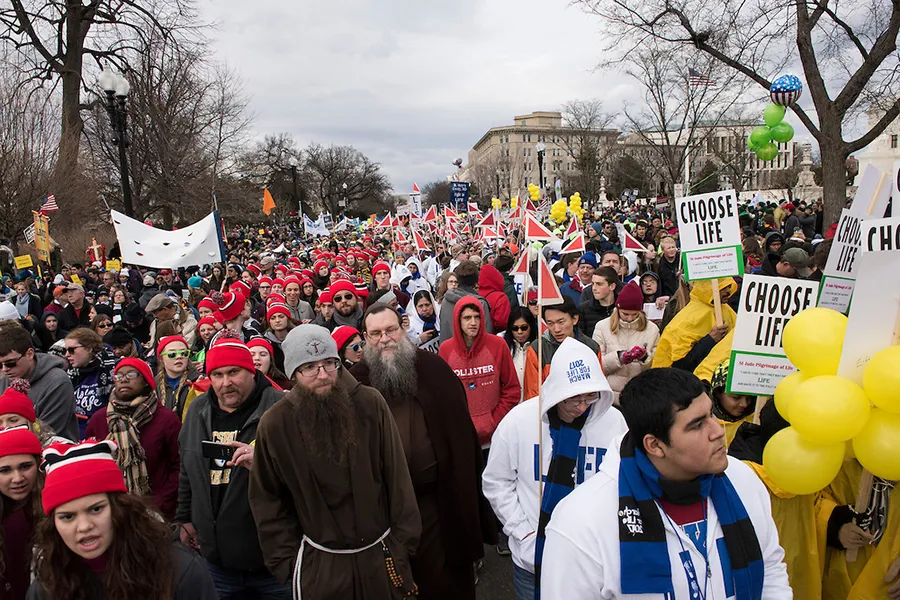
Washington D.C., Jan 14, 2019 / 02:47 pm (CNA/EWTN News).- The Holy See has granted that a plenary indulgence may be obtained by those who participate in the National Prayer Vigil for Life or other sacred celebrations surrounding the March for Life, being held Jan. 18 in Washington, D.C.

“The Apostolic Penitentiary of the Holy See has granted a plenary indulgence that may be obtained, under the usual conditions, by those who participate in the sacred celebrations carried out on January 17 and 18,” Bishop Michael Burbidge of Arlington said in a statement on the March for Life. “The elderly, sick and homebound may also gain a plenary indulgence if they spiritually unite themselves to these events and make their prayer and penance an offering to God.”

Kat Talalas, assistant director for pro-life communications at the US Conference of Catholic Bishops, said that “the Vatican has granted that a plenary indulgence may be obtained under the usual conditions by participating in the National Prayer Vigil for Life, as well as the other sacred celebrations surrounding the March for Life.”

An indulgence is the remission of the temporal punishment due to sins which have already been forgiven.

The usual conditions for a plenary indulgence which must be met are: that the individual be in the state of grace by the completion of the acts, have complete detachment from sin, and pray for the Pope’s intentions. The person must also sacramentally confess their sins and receive Communion, up to about twenty days before or after the indulgenced act.

The National Prayer Vigil for Life will be held Jan. 17-18 at the Basilica of the National Shrine of the Immaculate Conception. The vigil begins with a Mass said by Archbishop Joseph Naumann of Kansas City in Kansas, chairman of the US bishops’ pro-life committee. It continues through the night with confessions, rosary, Compline in the Byzantine rite, Holy Hours, Lauds, and Benediction. The vigil concludes with a Mass said by Bishop Barry Knestout of Richmond.

The March for Life, an annual peaceful protest against abortion, will take place at the National Mall Jan. 18. The 2019 march’s theme is “Unique From Day One: Pro-Life is Pro-Science”.

The march is held to oppose publicly the US Supreme Court’s Jan. 22, 1973 Roe v. Wade decision which legalized abortion across the country. It remains one of the largest political protests in the United States today.

In addition to the March for Life, Bishop Burbidge noted the Diocese of Arlington’s Life Is VERY Good Evening of Prayer, Rally, and Mass, being held Jan. 17-18 in Fairfax.

Along with the March for Life, the US bishops’ conference is promoting 9 Days for Life, a Jan. 14-22 novena.

“Even if you cannot attend the Prayer Vigil or the March, you can always remain united in the cause of life through prayer,” Talalas said.

Bishop Burbidge wrote that January “provides us with opportunities to express our belief in the dignity and value of all human life and to provide public witness that we will not be silent when injustices like abortion continue to have a place in our society. Each year, people from around the country gather in our nation’s capital for the March for Life. I take this opportunity to thank all who travel from great distances to take part in public action on behalf of those who cannot speak out for themselves.”

“I pray that one day we, united in prayer, and persistent in our advocacy for the unborn and the vulnerable, will root out any instance of injustice or violence again human life,” Bishop Burbidge wrote.

[…]

No Picture
News Briefs

Caritas Rome will continue receiving Trevi Fountain coins, mayor clarifies

January 14, 2019 CNA Daily News 0

Rome, Italy, Jan 14, 2019 / 01:42 pm (CNA/EWTN News).- After several weeks of confusion, the mayor of Rome has clarified that coins scooped from the famous Trevi Fountain will not be used to pay for city council maintenance projects, but instead will continue to go to Caritas, a Catholic charity that helps Rome’s poor and homeless.

“Caritas and all the thousands of people it helps can rest assured,” Mayor Virginia Raggi told L’Osservatore Romano Jan. 14.

“I personally guarantee that this administration will never take away its contribution. On the issue of the coins, I confirm that they will continue to go to the charity. No one ever considered taking them away.”

Caritas Rome has been the beneficiary of the coins since 2001. Visitors to Rome toss about €1.5 million ($1.7 million) worth of coins into the Trevi Fountain each year, which represents about 15 percent of Caritas’ charitable budget. The funds are mainly used for housing for the homeless, soup kitchens, and parish-based services for struggling families.  

Rome’s City Council approved a proposal at the end of Dec. 2018 to use the funds gathered from the fountain for “maintenance of cultural sites and social welfare projects” starting April 1, the Telegraph reports.

An article denouncing the city council’s decision appeared in Avvenire, the newspaper of the Italian Bishops Conference, on Jan. 12. Raggi now says the purpose of the December plan was merely to get an accurate count of the money in the fountains.

Raggi said the city’s utility company, ACEA, will be responsible for cleaning, sorting, and counting the coins under the new plan, a job previously done by Caritas volunteers.

In addition, Raggi announced that coins collected from other fountains in the city would also be given to the charity, to the tune of an extra €200,000.

Under the previous arrangement, ACEA periodically emptied the fountain and presented the coins to Caritas officials in the presence of the police. Caritas volunteers then dried, cleaned, separated by currency, counted and deposited the coins in the bank. Caritas provided a quarterly report to the city of how the funds were used, according to Avvenire.

The city council first proposed using the Trevi Fountain funds for its own purposes in Dec. 2017, but the plan was delayed for a year.

In 2016 the city of Rome had an estimated €14 billion in public debt, and the city council is facing mounting pressure to fix dangerous roads and pavements in the city.


[…]

No Picture
News Briefs

Church in DRC urges pressure on electoral commission over disputed vote

January 14, 2019 CNA Daily News 0

Kinshasa, Democratic Republic of the Congo, Jan 14, 2019 / 10:51 am (CNA/EWTN News).- After a disputed presidential election in the Democratic Republic of the Congo, the nation’s bishops have asked the UN Security Council to push the election commission to publish data from the vote.

Archbishop Marcel Utembi Tapa of Kisangani, president of the Congolese bishops’ conference, told the UN Jan. 11 that the commission’s announcement that opposition leader Felix Tshisekedi had won the Dec. 30 election did not correspond with the result of Catholic vote monitors.

The AP reported that Archbishop Utembi said publishing the data will enable the candidates to compare their numbers with the commission’s results.

“This might dispel doubts among the population as to the outcome and may therefore set minds at rest,” he added.

The Congolese bishops’ conference hopes that the UN Security Council will ask stakeholders to “prioritize the path of truth and peace while awaiting the outcome,” in case of a challenge.

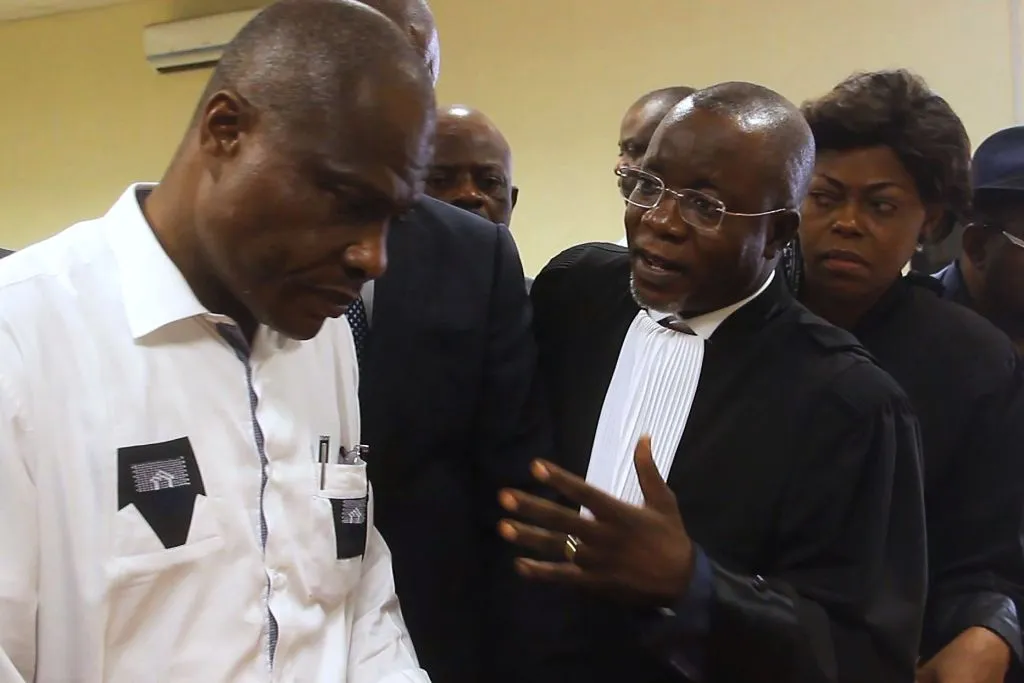
The National Election Commission has announced that Tshisekedi had won the presidential election with 38.6 percent of the vote, just surpassing another opposition leader, former oil executive Martin Fayulu, who had 34.8 percent.

The two major opposition candidates both finished well ahead of former interior minister Emmanuel Ramazani Shadary, who had been officially backed by outgoing President Joseph Kabila but had never gained traction during the campaign.

The Congolese bishops’ conference did not say which candidate their data showed winning the vote. However, Fayulu has claimed that he is the rightful winner and has suggested that Tshisekedi had made a power-sharing deal with Kabila to rig the election.

Fayulu appealed to the Constitutional Court Jan. 12 asking for a recount of the votes.

The South African Development Community has called for the formation of a unity government, and backed Fayulu’s call for a recount.

The electoral commission has also announced that a pro-Kabila coalition won a majority in the lower house of the legislature.

Kabila has spent the last 17 years in power. While the nation’s term limits required the president to leave office in 2016, he refused to step down.

The bishops of the country, who have played a key role in promoting democracy, had helped mediate the 2016 New Year’s Eve Agreement between the country’s ruling political coalition and opposition leaders. Under the agreement Kabila was allowed to remain in office past his mandate, but agreed to step down after an election in 2018.

The bishops’ conference had also commissioned 40,000 election observers, who were sent to polling stations across the country to report on the election process.

In a Dec. 31 statement, the bishops’ conference had voiced concern about voting irregularities, including registered voters who were turned away from polling stations because their names were not on voting lists and election observers being expelled from polling stations by police officers.

Other election observers also reported irregularities including voting machine malfunctions, polling stations opening late, locations being changed on short notice, and an inability to cast votes privately, according to the BBC.

The bishops’ conference had delayed the release of its preliminary observation after internet connections and text message services were shut down across the country on Dec. 30.

Reuters has reported that observers from France and Belgium have also voiced doubts that Tshisekedi won the election, and three diplomats who had reviewed the Church’s observer mission data said Fayulu had won.

In his first remarks after his victory was announced, Tshisekedi promised to work closely with Kabila, AFP reported.

Tshisekedi, 55, leads the Union for Democracy and Social Progress, the country’s oldest and largest opposition party.

The 2018 election was a major test for the volatile nation, which has been plagued by political corruption, instability, and violence, and has never seen a peaceful transition of power since it gained independence in 1960.

At least four people have been killed so far in scattered protests of the election results.

[…]

No Picture
News Briefs

Diabolical possession very rare, priest says

January 14, 2019 CNA Daily News 0

Charleston, S.C., Jan 14, 2019 / 09:01 am (CNA).- While an exorcist of the Diocese of Charleston has received many more requests relating to diabolical possession in recent years, the phenomenon is in fact exceedingly rare, he said.

Fr. Marreddy Allam… […]

No Picture
News Briefs

What pro-life Ireland can learn from pro-life America

January 13, 2019 CNA Daily News 1

Dublin, Ireland, Jan 13, 2019 / 04:18 pm (CNA/EWTN News).- With the dawn of legal abortion in Ireland, the pro-life movement in the country is beginning a fight that their U.S. counterparts have been engaged in since 1973.

For more than 40 years, pro-life Americans have staged marches, prayer vigils, sidewalk counseling, and political protests. Now, pro-life advocates in Ireland must determine how a robust pro-life movement should look in their country when abortion is legal.

Earlier this week, after hearing news of a group of pro-life protesters who gathered outside of a medical center in Ireland for several hours, holding signs with slogans such as “Say no to abortion in Galway,” Archbishop Diarmuid Martin of Dublin urged caution.

While everyone “has a right to make a protest,” he told The Irish Times, General Practitioners perform surgeries for “everybody…for all sorts of reasons.”

He added that he is “not a person personally for protest, what the Church should be doing is strengthening its resolve to help women in crisis and to educate people.”

The word “protest” is a touchy one in the pro-life world. It can conjure up images of angry mobs with torches and pitchforks, so some pro-life people prefer terms like “witness” or “sidewalk counselor,” or simply a faithful person at a prayer vigil.

But for many in the U.S. pro-life movement, it is dialogue and prayer – not protest – that are at the heart of what they do.

Mary Fisher is one of those people.

Fisher had an abortion herself, that caused her deep regret, anger and pain for years. After she found healing through a Bible study, Fisher now works as a regional coordinator for Silent No More, an organization that gives women who regret their abortions a platform from which to tell their stories, and connects women who have had abortions to healing ministries.

While Fisher participates in pro-life activism, she is opposed to the term “protest.”

“Protesting is kind of an anger thing. That’s the way it’s perceived,” Fisher told CNA. “This makes me mad, so I’m going to go out and protest, because it makes me so mad.”

But there is already so much anger from people who are pro-choice or who have had an abortion, that the only way to win them over is with love, Fisher said.

“Our world is so full of anger, and it’s like, ‘Oh my gosh, I’ve got this baby inside me that I don’t want, and everybody says it’s just a bunch of cells. So I’m just going to flush it down the toilet.’ And we do it in anger.”

Fisher herself experienced that anger after her own abortion.

“I lived as an angry woman for so many years, that one of my daughters actually moved from Colorado…to New York to get as far away from me as possible, because I was just so angry at everything.”

Fisher said the only thing that will win over those who are pro-abortion is to love them.

That doesn’t mean Fisher does not participate in the pro-life movement. She’s planning on attending her local March for Life, with a sign that says: “I regret my abortion. Ask me why.”

She also participates in 40 Days for Life prayer vigils, she shares her story through talks, and she helps connect women in need of healing from abortion to bible studies or retreats that can help them.

But ultimately, she says, abortion will never change through political protest, because abortion is not fundamentally a political issue.

“Abortion is not a political issue. Abortion is a heart issue. And until we get to the heart, nothing’s going to change,” she said.

“Protest is how we create friction. Just the word protest… just the thought of a protest is angry people, angry people with knives and swords and forks out to fight. This is a fight against principalities. It is not against flesh and blood.”

Shawn Carney is the president and CEO of 40 Days for Life, a popular form of pro-life activism that holds prayer vigils outside of local abortion clinics throughout the United States. The 40-day long campaigns of “prayer, fasting, and peaceful activism” have the goal of “repentance, to seek God’s favor to turn hearts and minds from a culture of death to a culture of life, thus bringing an end to abortion,” according to their mission statement.

It’s not a protest, it’s a prayer vigil, Carney told CNA.

“We take the approach of praying in front of the (clinics) because abortion is overwhelming. And it ends the life of a human being and it causes a woman to think she has no other option than to pay a physician to end the life of her child. And so in that great hopelessness, our Lord is the answer. And his joy is the answer, and his mercy is the answer,” Carney said.

The campaign has seen great success in turning the hearts of both abortion doctors and women considering abortions. Since its beginning in 2004, the organization knows of some 200 abortion facility workers who have had a change of heart and left their job, and over 15,000 women who have chosen life, during a 40 Days campaign.

It’s also often an entry point for people who have never participated in any kind of pro-life activism, Carney said.

“We’ve had 800,000 people participate in 40 Days for Life around the world in 50 different countries, and 30 percent of them said this is the first thing they ever did in the pro-life movement,” Carney said. “It has served as a great point of entry because it is peaceful and because it’s effective.”

But there is one word from Archbishop Martin’s comments that Carney does take issue with: caution. “I don’t agree with using the word caution with opposing abortion right now in Ireland,” he said.

“I think they need to do just the opposite…and I think that the Irish have been too timid and a little too cautious with their approach to abortion. Now they have it. And that happened to us here in the United States. Shamefully, we’re the example of this. We were cautious. We were timid. And now we have 61 million children that have been aborted.”

Instead, he said, the Irish should not lost hope, and should cling to God and to their lively Irish heritage, and use that in their advantage to continue to fight legalized abortion.

“The last thing the Irish should do is to throw their hands up in the air…I think they need to get out there. The Irish are a courageous people,” Carney said, adding that he is of Irish descent.

“The Irish aren’t cautious with anything, right? They’re the loudest and they’re the most fun and they like to sing and they have hot tempers. And they take their history and their country seriously,” he said.

“And this, more than any other time in their history, they need to do the same and they need to joyfully go out and witness the love and the hope and the mercy to those women who now think that Ireland is just a free for all to have an abortion.”

There are forms of activism that don’t belong in the pro-life movement, Carney added. Anything violent or with an intent to do harm “aren’t part of the pro-life movement,” he said. He’s seen people driven away from even peaceful forms of pro-life activism after bombings or murders of abortion doctors have taken place, he added.

“And so the archbishop doesn’t want that in their country. Who does?” he said.

“No bishop or no politician or no pro-life advocate in any other country is saying, ‘I want violence in my country to oppose abortion.’ No one’s ever said that, but they all should encourage the peaceful, public opposition to this because abortion is certainly a public issue.”

Even though abortion is a heavy issue, Carney said his message to pro-life Ireland is to hope.

“There’s practical things: there’s 40 Days for Life campaigns they need to do in Ireland. They need to have a March for Life. They need to get to work and we can help them do that,” he said.

“But the bigger picture is looking down, going to your knees in prayer and reflecting: ‘What is going to be my response? What am I going to tell my children and my grandchildren now that I, as an Irish person living in this country that I love, we have abortion now. And what’s going to be my response?’”

“And for that, we need to go to the Gospels.”


[…]