
No Picture
News Briefs

Some 2016 Trump critics say record on abortion, religious liberty changed their minds
October 28, 2020 CNA Daily News 3

Washington D.C., Oct 28, 2020 / 08:00 pm (CNA).-  

During the 2016 Republic primaries, some prominent conservative Catholics warned about Donald Trump’s presidential candidacy. Four years later, some say they now support his reelection, while one Catholic scholar told CNA his focus is on the future of American political discourse.

“I have never been more happy about being wrong,” Brian Burch, president of CatholicVote.org, told CNA about Trump.

In January 2016, Burch issued a warning that Trump, who was by then the Republican front-runner, would not uphold Catholic principles as president. Burch exhorted Catholics to support another candidate, saying that Trump would “sell out everyone and anyone when it benefits him.” In the general election, CatholicVote.org did not endorse Trump.

But four years later, Burch told CNA that Trump has delivered “far more than we ever thought possible” on pro-life issues and religious freedom.

In September, CatholicVote launched a nearly $10 million campaign to target Catholic voters, highlighting Democratic nominee Joe Biden’s record “on issues of fundamental importance to Catholics including the sanctity of life, religious liberty, judges, education, the dignity of work, and other core issues.”

Trump has been widely praised by pro-life advocates for his appointment of Justice Amy Coney Barrett, a Catholic, to the Supreme Court. The president said in 2016 that he would fully defund abortion providers, and sign laws to ban abortions after 20 weeks and make the Hyde Amendment permanent, actions which have not been completed during his term in office.

Burch noted those moves depend upon Congressional action.  “The president’s done what he can via executive order, but he had an unwilling Congress,” he told CNA.

Other Catholics also told CNA last week that Trump’s White House support for life and religious freedom causes has surprised them. They recalled that, early in the 2016 election, his record did not evince a deep grasp of social conservatism.

Trump was on the record in 1999 saying that he was “very pro-choice.” He had been criticized for making crude, sexually-explicit comments about women on host Howard Stern’s radio show and in other contexts.

Looking at those factors in 2016, some critics thought the president’s pledges on abortion would not have much follow through.

“I did not believe his promises on behalf of the unborn, or on judges, or on foreign policy. I thought he would start wars,” Chad Pecknold, a theology professor at the Catholic University of America, told CNA this month. “I was wrong.”

Pecknold added that he has not endorsed Trump, but he thinks a case can be made for supporting him in the 2020 election.

Dr. Grazie Pozo Christie did not believe that Trump would defend life and religious freedom causes, but voted for him reluctantly in 2016 because she thought his opponent Hillary Clinton would “expand” attacks on those causes.

When President Trump dramatically expanded a policy that prevents federal funding of foreign groups that provide or promote abortions—known as the “Mexico City Policy”— Christie said her doubts about him subsided.

As someone who grew up in Latin America, Christie saw Trump’s policy as a victory against “ideological colonization” of groups that promote abortions in developing countries.

“I know that he [Trump] has surrounded himself with really good people,” she said, “who really understand in a deeply philosophical way the issues of human dignity, marriage, and family.”

Nina Shea, an expert in religious freedom at the Hudson Institute, also warned about Trump’s candidacy in 2016. She recalled thinking that he did not have the foreign policy background required to promote religious freedom and defend persecuted religious minorities overseas.

A year later, Shea watched Vice President Mike Pence promise a summit on international Christian persecution that promoting religious freedom would be a priority for the administration.

The direct assurance was a departure from earlier administrations’ seeming reluctance to promote religious freedom in U.S. foreign policy, Shea said. Since then, she noted that Trump’s “speeches, initiatives, and directives” on religious freedom “have set the high water mark” for the issue.

Not all conservative Catholics who opposed Trump in 2016 support his re-election four years later.

Ramesh Ponnuru, a senior editor at National Review and a Catholic, wrote an Oct. 15 column he said was “a case for principled abstention.”

Ponnuru wrote that in his view, Trump’s “character flaws” are bad enough to “keep him from meeting the threshold conditions to be entrusted with the presidency.”

The president is “deficient” in “judgment, honesty, and self-control,” Ponnuru wrote, lamenting “a more degraded and less honest political culture, the cheapening of the president’s word, and a decline in trust.”

But in the same column, Ponnuru said he would also not be voting for Biden.

Biden “says he now favors taxpayer funding of abortion. He may seek to enlarge the Supreme Court to make room for more justices who won’t make room in American law for unborn children,” Ponnuru wrote.

“If there’s a persuasive case for recognizing abortion as a grave injustice and voting for Biden anyway, I haven’t seen it,” the columnist said, while explaining why he will abstain from voting for a presidential candidate.

George Weigel, a distinguished senior fellow at the Ethics and Public Policy Center, helped in March 2016 to initiate a petition urging Catholics to support alternative candidates to Trump during the Republican primary.

Weigel told CNA that he is grateful the Trump administration has defended religious freedom “at home and internationally” and has been “firmly pro-life.”

But the author lamented “continued coarsening of public debate, the deliberate polarization of opinion and sentiment, and the lack of any magnanimity toward opponents.”

Weigel said his focus is on the future. The author said that in his view both Trump and Biden are “seriously flawed in numerous ways.”

“My primary focus now is on building a political culture that doesn’t, in the future, produce two such distasteful options. America can and must do better than this,” Weigel told CNA.

In an Oct. 28 column, Weigel pointed to the U.S. Senate as a critical aspect of the 2020 election.

American cultural renewal “will be more difficult if the Democratic party wins the presidency, the U.S. Senate, and the U.S. House of Representatives—and is thus able to enforce the agenda of lifestyle libertinism and intolerant ‘tolerance’ to which its platform commits it, especially in matters of the sanctity of life and the conscience rights of believers,” Weigel wrote.

“As the House will certainly have a Democratic majority in 2021-2022, prudence dictates maintaining a Republican Senate, irrespective of who is elected president,” he added.

Supporters told CNA that after reviewing his record, they think Trump’s policies are a more important consideration than his personal behavior.

“I’m happy with his policies. I don’t plan to have him over for dinner,” Christie said.

Pecknold acknowledged the importance of character in a president, but cautioned that character should not be “reduced to table manners.”

Political leaders, he said, “should be judged by whether their laws help a society to live in greater accord with virtue.”


[…]

No Picture
News Briefs

The martyrs buried at the Valley of the Fallen

October 28, 2020 CNA Daily News 2

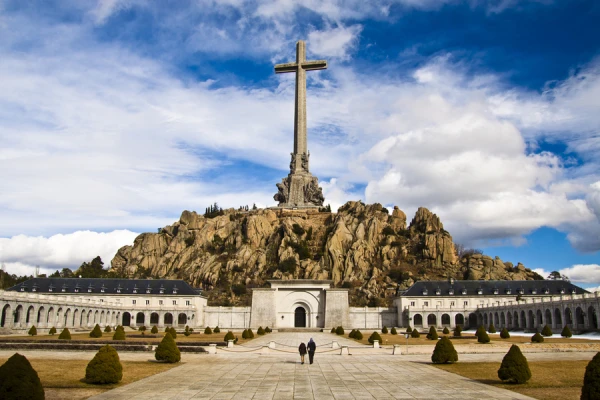
CNA Staff, Oct 28, 2020 / 03:01 am (CNA).- The Valley of the Fallen is a monumental complex near Madrid which includes an abbey and basilica, and which honors the fallen of both sides during the Spanish civil war. The bodies of more than 30,000 victims of the war are buried in the complex.

Among them lie 57 Blesseds and 15 Servants of God.

The Spanish Civil War of 1936-39 was fought between the Nationalist forces, led by Francisco Franco, and the Republican faction. During the war, Republicans martyred thousands of clerics, religious, and laity; of these, 11 have been canonized, and 1,915 beatified.

Fr. Santiago Cantera, prior of the Abbey of the Holy Cross, recently spoke at an event organized by the Diocese of Barbastro-Monzón to commemorate the martyrs who died during the religious persecution of the Civil War. The prior highlighted some of the common characteristics of the martyrs, who came from diverse backgrounds.

The martyrs who are buried in the Basilica of the Holy Cross “are the finest testimony of forgiveness and reconciliation” and belong to all states in life: “laity, diocesan and religious priests, consecrated men and women religious, people of all ages, but also a large group of young people, such as Rafael Lluch, a 19-year-old member of Vincentian Youth and Catholic Action,” Cantera explained.

Acceptance of martyrdom

One aspect the martyrs all share in common, Cantera highlighted, was their “acceptance of martyrdom,” giving “the finest testimony for peace, forgiveness and the reconciliation of the Spanish people, because they died forgiving their executioners without any hatred.”

Blessed Juan Pedro de San Antonio, a 46 year-old Passionist priest, was hiding in a boarding house along with four other brothers from the congregation. He told the owner of the boarding house that “if anyone takes us out to shoot us, I ask that no one bear hatred or resentment for the evil they are thinking of doing to us. The Lord allows it for our sanctification.”

Before dying, Fr. Antonio Martínez Lópe said he wanted to bless his executioners, but they struck his arm and broke it before killing him. “These are examples of the peace with which they died, in the absence of hatred, with the will to forgive and to reconcile,” the prior noted.

A supernatural outlook

Another common element is  “the supernatural outlook they had at the time of martyrdom,” Fr. Cantera said. These martyrs “looked to eternity, they lived out the love of God and this led them to imitate Christ even to the ultimate consequence, accepting death as having a redemptive meaning for all men.”

During the years of religious persecution in Spain it was common for the martyrs to say goodbye with the words “Until (we meet again in) Heaven.”

Rafael Lluch, the youngest of the martyrs buried in the Basilica of the Holy Cross, was arrested for carrying a holy card of the Virgin of the Forsaken in his pocket and belonging to the association of the Miraculous Medal. The young man said goodbye to his mother saying: “Don’t cry, I’m going to give my life for our God, I’ll wait for you in Heaven.”

“Long live Christ the King” were also the last words of many of the martyrs, such as Blessed Florencio López Egea, whose executioners stuck thorns in his eyes demanding he blaspheme, but he always replied “Long live Christ the King.”

Also sharing this supernatural outlook are the 23 sisters belonging to the Adorers of the Blessed Sacrament. Seven of them are buried in the Basilica of the Holy Cross.

When they were riding in a truck on the way to being shot, “they all knelt down to receive the Sacred Hosts that they had kept in a watch case,” Fr. Cantera related. “The driver of the truck carrying them after they had been arrested told his wife how much he admired them: ‘I saw them all die, most of them young, with smiles on their faces and blessing God. What women. They were Adorers.’”

Love for the priesthood

Another common aspect of the martyrs is “their love for the priesthood and the priestly ministry,” the prior said, citing Blessed Enrique López Ruiz. An altar boy described him as “a true apostle of Jesus Christ.” The militiamen wanted to stop him from offering Mass, but he refused to leave his parish and the faithful.

The “willingness to die and be martyred, offered in immolation for the salvation of Spain” is also a hallmark of the martyrs.

Blessed Josefa María, a Salesian sister, refused the offer to hide in the house of a relative whom she told: “If Spain has to be saved by the shedding of our blood, we ask God for it to be as soon as possible.” Or Blessed Florencio López, who on his way to be shot was singing a song he had composed himself asking the Virgin “to save quickly the Spanish people.”

Enduring torture and cruelty

Cantera also pointed to the cruelty suffered by the martyrs, to which they responded with their love for God and by offering their lives for Spain, as did Fr. Domingo Campoy, a curate of a parish in Almería who was tortured on one of the prison ships.

This priest served in the military as a chaplain and interceded for the release of a soldier who had been arrested who later became one of his executioners.

Serving the needy

The prior noted that almost all of them dedicated a large part of their lives to performing works of charity, such as the Adorers of the Blessed Sacrament, whose charism is helping young women at risk of falling into prostitution.

Fr. Cantera also wanted people “to know the great spiritual wealth and theological mark sealed upon his soul by the Valley of the Fallen as an authentic place of peace and reconciliation in the shadow of the redemptive Cross, a symbol that reminds us of the redemption of Christ, the reconciliation that God has accomplished to which he invites all men.”

The Valley of the Fallen

The complex was inaugurated in 1959 under Franco, who was Spain’s head of state from the end of the Spanish Civil War, when the Nationalist forces he led defeated the Republican faction, until his death in 1975.

The government of Pedro Sanchez, secretary-general of the Spanish Socialist Worker’s Party, in September introduced the Law on Democratic Memory.

The bill seeks to transform the Valley of the Fallen into a civil cemetery, and would expel the Benedictine community. It would also bar publicly funded groups from glorifying Franco, the BBC reported.

While removing the 150 meter cross that presides over the valley is not explicitly mentioned in the bill, it has been considered on other occasions.

Franco’s body was exhumed from the Basilica of the Holy Cross in October 2019 by the Sanchez government. Fr. Cantera said the exhumation failed to respect the inviolability of the abbey as a sacred place.


[…]

No Picture
News Briefs

New Orleans archdiocese seeks laicization for all clergy credibly accused of sex abuse

October 27, 2020 CNA Daily News 1

Denver Newsroom, Oct 27, 2020 / 02:45 pm (CNA).-  

While allegations against two New Orleans-area priests have again raised questions about the Church’s response to clergy misconduct, the Archdiocese of New Orleans has confirmed that for the past two years it has been seeking to laicize clergy who have been removed from ministry for credible reports of sexual abuse.

“In the Archdiocese of New Orleans, very soon after the publication of the 2018 Clergy Abuse Report, conversations began in an effort to seek the laicization of those living clergy that had been removed from ministry for abuse of a minor and this is in process,” Sarah McDonald, communications director at the New Orleans archdiocese, told CNA Oct. 26.

“This is a highly technical canonical process and clergy have canonical rights that must be respected.”

On Oct. 1. the archdiocese announced the removal from ministry of Father Pat Wattingy, who on that day self-reported sexually abusing a minor in 2013. The archdiocese said the priest admitted the abuse after undergoing psychological treatment and going on a spiritual retreat this summer, the New Orleans CBS affiliate WWL-TV reports.

The St. Tammany Parish Sheriff’s Office investigated and then issued a warrant for the priest’s arrest on four counts of molestation of a juvenile, alleged to have taken place between December 2013 and December 2015. He was arrested as a fugitive at his home in West Point, Georgia on Oct. 22 and extradited to Louisiana.

“Mr. Wattigny stated that he knew he had warrants in Louisiana but that he did not know that we would catch him,” said the West Point Police Department’s incident report on the arrest.

The priest faces additional controversy concerning allegations that he sent inappropriate text messages to a minor at a Catholic high school where he was recently chaplain.

In Pearl River on Sept. 30, 37-year-old priest Father Travis Clark, recently the pastor of Sts. Peter and Paul Parish, has been charged with obscenity after he was discovered filming himself in sex acts with two women on the altar of the parish church.

A local resident told police they noticed the lights were on in the church and looked through the windows, discovering the three people. One of the women is reported to be a self-avowed satanist. Archbishop Aymond has since performed a penitential rite required for continued use of the church for sacramental purposes.

Both Clark and Wattigny have been asked to “seek laicization immediately,” McDonald told CNA. If the priests do not request to be laicized by the Vatican, each could be laicized as the result of a formal canonical trial.

“The removal of Clark and Wattigny from priestly ministry marks the first time Archbishop Aymond as Archbishop of New Orleans has had to remove an active clergyman from ministry for abuse or scandal.” McDonald said. Aymond became New Orleans’ archbishop in August 2009.

While priests who are found by a canonical process to have committed an act of serious sexual abuse can be laicized, or removed from the clerical state, other priests who have been credibly accused of abuse but not found guilty in such a process remain clerics, even if they will not be returned to priestly ministry.

Under canon law, a priest or deacon has the right to housing and minimal financial support if he has not been formally laicized, even if he is not eligible for priestly ministry. Dioceses have sometimes been criticized for payments to priests accused of abuse but not laicized, even while the diocese is canonically obliged to make some provision for them.

In addition to those laicized after a canonical penal process, priests can also be laicized at the discretion of the Vatican if they request it, or if the diocesan bishop makes such a request under limited circumstances established by the Vatican’s Congregation for Clergy in 2009.

The Archdiocese of New Orleans did not offer specifics about its efforts to laicize priests accused of abuse.

At least seven diocesan priests on the archdiocese’s list of 72 credibly accused clergy are still living, according to the New Orleans Advocate. This list does not include accused religious clergy who are under their religious orders’ jurisdictions.

In the New Orleans archdiocese, benefits to accused priests had included retirement benefits, until a federal judge overseeing its Chapter 11 bankruptcy said that the archdiocese could only pay for health insurance.

Archbishop Aymond held a day of prayer, fasting and atonement on Friday, Oct. 23 and encouraged the Catholic faithful to participate, especially those feeling wounded.

“We know that it’s been a very challenging time in our archdiocese, for a number of reasons, especially because of the news we have received recently about two of our priests who have not fulfilled their vocation,” he said in an Oct. 19 video at the archdiocese’s YouTube channel.

“It is important that we come together as a community of faith and pray for the wounds of our Church: personal wounds and the wounds that so many are feeling at this time, with a sense of disappointment and betrayal,” he said.

“I’m asking you specifically to enter into fasting if you wish to, to enter into prayer, and we are providing for you a Litany of the Sacred Heart of Jesus, which helps us to get into the heart of Jesus, to give him our suffering, and to ask him for the healing and peace that he alone can give,” said the archbishop.

“Let us also pray for all the victims of abuse. They need our prayers and support as we reach out to them,” he said.

On Oct. 16, Aymond met with all the archdiocese’s priests regarding the scandal caused by the two priests.

The Council of Deans and the Presbyteral Council, both composed of leading priests in the archdiocese, wrote an Oct. 16 letter on behalf of the 335 priests of the archdiocese. While acknowledging that some have questioned his leadership, the letter voiced the clergy’s support for the archbishop.

The letter gave an account of the meeting, reporting an “open and honest dialogue” with the archbishop followed by time together in prayer before the Blessed Sacrament, then a collective renewal of their ordination promises by the archbishop and the clergy together.

“He exhorted all of us to pray regularly for victims of sexual abuse. At the end of his remarks, all of us present stood in unanimous support of Archbishop Aymond,” said the letter, which the archdiocese carried on its website.

“We emphatically support Archbishop Aymond and his leadership of our local church,” the priests’ letter continued. “Archbishop Aymond is a dedicated, faithful, and holy priest of Jesus Christ. He has always faithfully served the people of God throughout his priesthood.”

“While the archbishop did not create the problems of sexual abuse, he has always courageously addressed the issue,” said their letter. They characterized Aymond’s decision to publish a list of credibly accused clergy as a “bold step.” In their view, the archbishop has acted quickly to any new allegations

“While the last few years have been difficult, we believe that his leadership is helping to shed light on the darkness of the past, to heal past wounds, and to renew the Church in New Orleans,” said the letter.

“Although a small number of priests have betrayed us and you, we commit ourselves and our lives wholeheartedly to the mission of Jesus Christ made present in the Church,” said the priests. “Be assured that the Church cannot and will not tolerate any sexual abuse or misconduct on the part of any cleric.”

Before his arrest on an obscenity charge and removal from ministry, Father Clark had been named to fill Wattigny’s role as chaplain at John Paul II High School in Slidell, Louisiana. Wattigny had resigned from the faculty in July.

The details of Father Wattigny’s recent misconduct involving texting are still in dispute.

On Oct. 2, Aymond told the principal of John Paul II High School that Wattigny allegedly sent inappropriate texts to a male student.

Although the student’s parents and attorney first alerted the archdiocese in February, school administrators were allegedly not told, and Wattigny was allowed to remain in ministry at the school until the end of the academic year.

According to a letter written by Aymond to parents of the school, reported by the Advocate, the texts did not contain “sexual references or innuendo” but still violated the archdiocesan policies about communication with youth.

The priest was reportedly admonished by archdiocesan officials to stop sending texts but permitted to remain in ministry at the school. He remained chaplain until he sent additional texts to at least one student and was reportedly sent by the archdiocese for a psychological evaluation.

Bill Arata, an attorney for the student, has said the priest’s texts had the aim of grooming the teen. Among other things, the priest asked the student repeatedly when he would turn 18. The priest texted the boy late at night, the attorney said, and his texts contained suggestive remarks. The attorney said he was told in June that the priest was being sent for a psychological evaluation. He said sending the priest for an evaluation confirms that the archdiocese knew the texts were not appropriate.

In an Oct. 9 statement, Aymond said Wattigny would never again serve in public ministry, and defended an archdiocesan decision not to remove Wattigny from the school when reports that he was sending inappropriate text messages first arose in February.


[…]