No Picture
News Briefs

Legionaries of Christ elect new superior general

February 6, 2020 CNA Daily News 1

Vatican City, Feb 6, 2020 / 08:51 pm (CNA).- During its general chapter meeting in Rome, the Legionaries of Christ religious order has elected a new superior general to lead the embattled religious congregation.

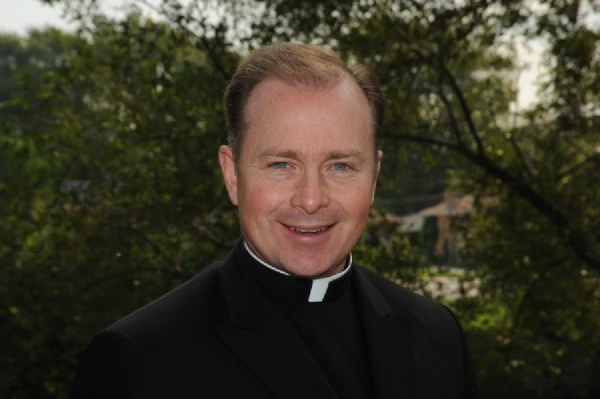
Fr. John Connor, LC,  has been the North American territorial director of the Legionaries of Christ since 2014. He will serve a six-year term as superior general of the religious order of priests.

Connor’s election comes during a time of widespread public criticism of the Legionaries of Christ, which reported in December 2019 that since its founding in 1941, 33 priests of the Legionaries of Christ have been found to have committed sexual abuse of minors, victimizing 175 children, according to the 2019 report.

The order was founded by Mexican-born Fr. Marcial Maciel, who himself abused at least 60 minors, according to the order, and is accused of using the religious congregation he founded to provide him access to abuse victims, and funding to support mistresses, children he fathered, and an alleged drug habit.

In 2006 the Congregation of the Doctrine of the Faith, with the approval of Pope Benedict XVI, removed Maciel from public ministry and ordered him to spend the rest of his life in prayer and penance. The Vatican congregation decided not to subject him to a canonical process because of his advanced age. Maciel died in 2008.

In 2009, Benedict ordered an apostolic visitation, or worldwide administrative review, of the religious institute, and then placed it under direct Vatican oversight. Benedict ordered the congregation to develop and implement new governing documents and policies, after Church officials found substantial problems in the Legion’s formation and governance structures.

Pope Francis has continued pushing for reforms to the religious order.

The general chapter now taking place in Rome, and consisting of representatives of the order from its nine territories, is tasked with electing new leadership, and discussing how to address the ongoing controversy surrounding the religious order.

While the chapter is taking place, some have called for the Vatican to suppress the group, but Pope Francis has given no indication he plans to do so.

In Mexico and elsewhere, some victims of abuse perpetrated by members of the order have said the reforming the group is impossible without a wholesale change in leadership.

Some critics have suggested that reforms are mostly a kind of window-dressing, and some have questioned whether the order has a legitimate charism – a term used to describe the spirituality at the heart of a religious order’s identity.

Connor was ordained a priest in 2001. He worked in fundraising for the order, oversaw its Regnum Christi lay apostolate in New York, and served in other leadership positions.

In 2014, Connor told reporter John Allen that within the religious order were “men who are very capable of governing who weren’t associated with the founder.”

“For me, nonassociation with the founder is a very important issue,” Connor added, while emphasizing his hope that the order would commit to greater transparency.

Connor has faced criticism for his handling of misconduct allegations against a priest in the Legion, Fr. Michael Sullivan. In 2017 Sullivan was accused of “showing affection and favoritism” toward two young women; in one case the behavior was alleged to have begun when the woman was a high-school student, according to a 2019 letter from Connor.

Sullivan, who said he had not crossed “emotional or physical boundaries with any minors,” was sent for a psychological assessment and then continued in ministry. In late 2019, “another person came forward indicating that Fr. Sullivan crossed over the emotional and physical boundaries of a pastoral relationship with her and others,” the Legion said.

Sullivan was subsequently removed from ministry and admitted to some forms of sexual misconduct with adults, which “mainly affected young women.”

Once Sullivan was removed from ministry, a spokesperson for the Legionaries of Christ said that the priest should have been subject to restrictions on his ministry.

In December 2019, the spokesperson told KBTX that while the order does not believe Sullivan broke any laws, “in hindsight, we now understand that additional restrictions should have been placed on Fr. Sullivan prior to returning to ministry” in 2017.

The spokesperson added that “Fr. Connor has been meeting with those most closely affected, including the women who have come forward with claims in 2017 and most recently.”

In a 2018 letter to Legionaries and Regnum Christi members, Connor reflected on the scandal that has plagued his religious community.

“Over these last years of our renewal, I have been moved often in prayer by the fact that the Risen Jesus kept his wounds. You would think that a glorified body would be perfect and unmarred. But Jesus kept his wounds. There is a lesson in this for all of us,” the priest wrote.

“In the Legion’s 2014 General Chapter we had conversations about whether or not to change our congregation’s name: to definitively put our past history behind us and get a fresh start with a new name. Many were shocked the Legion did not change its name and formally separate itself from her scarred and wounded history. At the time I kept thinking, I am proud to be a Legionary; we cannot forget our history. The wounds we suffered in the past – as well as those we inflicted – are part of us. They are part of our story.”
 
Connor added that “as your territorial director, I have a tremendous desire for this gift of merciful healing for our entire spiritual family, extending also to those who no longer participate in it. I desire this healing because I know that wounds exist. Most hurts were not intended, but resulted from human weakness combined with imbalances in our past ways of thinking and operating from which our Lord continues to purify us.”

“I want to express my own sorrow for hurts I may have caused. I know that in the past I have been convinced of my own opinions and the direction I wanted to go and have often not stopped to listen to others, take their opinions to heart, or communicate the reasons why I make certain decisions,” he added in that letter.

There are fewer than 1,000 priests in the Legionaries of Christ, and the religious order runs schools in South and North America, and in Europe.


[…]

No Picture
News Briefs

Francis fills two episcopal vacancies in Chile left by sex abuse scandal

February 6, 2020 CNA Daily News 0

Santiago, Chile, Feb 6, 2020 / 06:18 pm (CNA).- Pope Francis on Wednesday appointed bishops to the dioceses of Osorno and San Bartolomé de Chillán, both of which had been left vacant in 2018 amid the sex abuse scandal of the Church in Chile.

On Feb. 5 Bishop Jorge Enrique Concha Cayuqueo, O.F.M., was named Bishop of Osorno, and Father Sergio Hernán Pérez de Arce Arriagada, SS.CC., was named Bishop of San Bartolomé de Chillán. Both had been serving as apostolic administrators of their new respective sees.

The chanceries of both Osorno and  Chillán had been raided in September 2018 amid an investigation into sexual crimes against minors committed by members of the Church.

The Diocese of Osorno had been vacant since the June 2018 resignation of Bishop Juan de la Cruz Barros Madrid, who had been accused of covering up abuses of Father Fernando Karadima.

And the Diocese of San Bartolomé de Chillán fell vacant in September 2018 with the resignation of Bishop Carlos Eduardo Pellegrín Barrera, S.V.D., who had been accused of a sexual crime.

Six Chilean sees remain vacant.

Bishop Concha was born in 1958, and took solemn vows in the Order of Friars Minor in 1983, and was ordained a priest in 1986. He was appointed an auxiliary bishop of the Archdiocese of Santiago de Chile in 2015.

During Bishop Concha’s tenure as apostolic administrator of Osorno, he worked for reconciliation and renewal in the diocese and for improved relations with the faithful.

He said that he understood this job as “the search for peace, for unity, for rapprochement among all. I initiated dialogue, listened to a lot of people, visited all the communities, was always open for them to ask questions and made myself available to people. ”
Bishop Concha also reorganized pastoral and social ministries, optimizing economic and human resources.
Fr. Perez was born in 1963, and made perpetual vows with the Congregation of the Sacred Hearts of Jesus and Mary in 1989; he was ordained a priest the following year.

Beside working in formation and counseling at schools and in youth ministry in various assignments,  Fr. Pérez de Arce was the provincial superior of his congregation from 2005 to 2011. He served as president of the Conference of Religious Men and Women of Chile from 2011 to 2014. During the same period, he was a member of the National Council for the Prevention of Abuse and Accompaniment of Victims of the Chilean bishops’ conference.

The abuse committed by Karadima became the focus of attention in Chile after the 2015 appointment of Bishop Barros to Osorno. Barros had been accused of covering up Karadima’s abuses.

Pope Francis initially defended Barros, saying he had received no evidence of the bishop’s guilt, and called accusations against him “calumny” during a trip to Chile in January 2018. He later sent Archbishop Charles Scicluna of Malta to investigate the situation in Chile.

After receiving Scicluna’s report, the pope apologized, said that he had been seriously mistaken, and asked to meet the country’s bishops and some survivors in person.

In May 2018 he met with Chile’s bishops and asked all of them to offer their resignations, to be accepted or rejected later. He rebuked them for systemic cover-up of clerical abuse and called them to make deep changes.

Chilean officials have investigated 120 allegations of sexual abuse or cover-ups involving 167 Church officials or church workers, Reuters has reported.

[…]

No Picture
News Briefs

Hungarian government urges defense of persecuted Christians

February 6, 2020 CNA Daily News 1

Washington D.C., Feb 6, 2020 / 02:49 pm (CNA).- The world must raise their voices and stand up for persecuted Christians, Hungarian State Secretary for the Aid of Persecuted Christians Tristan Azbej said Thursday.

Azbej was one of eight speakers at a Feb. 6 side-event of the National Prayer Breakfast that was sponsored by the organization Save the Persecuted Christians.

“All of humanity should stand up and come to the aid of persecuted Christians,” said Azbej.

Christian lives have the same dignity as those who follow other religions, he said. He questioned why stories of Christian persecution, such as the recent murder of a Nigerian seminarian, do not make the news, but when people of other religions are discriminated against, the stories are broadcast worldwide.

“Why is (Christian persecution) not on the agenda of the United Nations, of the European Union, and so on,” he asked.

“And I know there is no such thing as competition of martyrdom, but we have to talk about the proportions,” he said, noting that nearly 300 million Christians in the world are persecuted for their faith. This, he said, represents 80% of the total number of people who face persecution for their religion, meaning Christians are “the most persecuted religious group in the world.”

“It doesn’t get even a passing mention at the major human rights forum,” he said.

As the State Secretary for the Aid of Persecuted Christians, Azbej said that he has a “two-fold” mission. His first priority, he said, is “saving lives,” which he does through the government-run nonprofit “Hungary Helps.”

The other part of his mission, he explained, is “to be the voice of those that are not heard. To be the voice of those who are suffering.”

Azbej is, in his words “the only one with a government title that has the term ‘persecuted Christians’ in it,” something that he hopes changes as more countries move to address the plight of persecuted religious groups.

He especially called on historically-Christian countries to move to protect their fellow Christians, and he accused these countries of attempting to shed their Christian identities, which Azbej said was indicative of an “identity crisis.”

Azbej explained that when he started in his position in 2016, his main focus was on the persecution of Christians in the Middle East. Now, he said, his priorities have shifted to the plight of the Christian community in west Africa.

“As we have learned more about the nature and extent of Christian persecution, now we are turning more and more focused on Africa,” he said. “In west Africa, there is a genocide going on, and the whole world is turning a blind eye.”

Part of the aid work Azbej’s organization does is the rebuilding of churches and communities that have been destroyed by the Islamic State. One Northern Iraqi town renamed itself Tel Askouf, meaning “Daughter of Hungary,” in appreciation for the approximately 2 million euros ($2.2m) donated by the Hungarian government to rebuild the town.

This, said Azbej, is something that can be replicated around the world.

“We wouldn’t only want to see ‘Sons and Daughters of Hungary,’” he said. “We would like to see daughters and sons of the United Nations, or of the United States or Germany or of the European Union.”

[…]

No Picture
News Briefs

Death of indigenous Argentine children prompts plea against indifference

February 6, 2020 CNA Daily News 0

Salta, Argentina, Feb 6, 2020 / 02:27 pm (CNA).- The head of an indigenous ministry team in Argentina has called on Catholics not to be indifferent to the plight of suffering indigenous people, but to make an effort at outreach, encounter, and prayer.

“The indigenous reality is alien and distant, especially for those who live in the big cities, due to the great diversity and expanse of the national territory,” said Deacon Eduardo Bertea, a member of the indigenous pastoral team for the Diocese of Orán in Salta, Argentina.

Bertea spoke to ACI Prensa, CNA’s Spanish language news partner, after local media outlet Infobae reported last week the deaths of six children from the Wichí ethnic community due to poverty and malnutrition. The Wichí are an indigenous group in the Salta province in the country’s north.

Responding to the news, Salta governor Gustavo Adolfo Ruberto Sáenz declared a “social and health emergency” for six months, to prioritize initiatives in the areas of comprehensive health, identifying emergency cases, and undertaking actions to reverse this situation, according to local reports.

One of the major challenges facing the Wichí people is a lack of access to clean drinking water.

Government minister Ricardo Villada told local media that the government is working to assemble food packages, establish a water purification plant, and arrange for the construction of rainwater collection cisterns.

Deacon Bertea, who has 30 years of experience ministering to indigenous peoples, explained that the rainy season threatens the Wichís annually.

“The infrastructure is very shaky: there are bad roads, unreliable communications, no access to safe drinking water and unreliable health services. But this is nothing new, it happens every year,” he said.

Wichí communities face threats from new genetically modified crops, as farmland encroaches on their territories, Bertea said.

“They live under the constant threat of being evicted from their homes because the still don’t hold the title to these lands,” he explained.

Many of these communities also face discrimination and cultural separation from much of society, he added.

The Diocese of Salta’s indigenous people ministry seeks to promote the dignity of the Wichís and similar communities, the deacon explained.

“It seeks their recognition as children of God, going beyond government welfare,” he said, adding that the ministry seeks to “promote the recognition of the fundamental rights of these communities, for example water, a vital element; access to land and its natural resources; and that the indigenous are not treated as the object of welfare benefits, but that they’re listened to, that it’s a two-way conversation.”

Bertea invited Catholics in Argentina to get to know indigenous communities and to “recognize them as brothers, in imitation of the Virgin of Guadalupe, as she did with the indigenous Juan Diego.”

“All Christians are called to listen to the [indigenous peoples], to have an attentive ear and an open heart…to listen to their cries, their claims, their wisdom,” he said.


[…]

No Picture
News Briefs

Syro-Malabar archdiocese opens sainthood cause of Vincentian founder

February 6, 2020 CNA Daily News 0

Kochi, India, Feb 6, 2020 / 01:59 pm (CNA).- The cause for beatification of Father Varkey Kattarath, founder of the Vincentian Congregation, was opened Wednesday at a ceremony in India.

Fr. Kattarath founded the congregation, modeled on St. Vincent de Paul’s Congregation of the Mission, in 1904. The community’s charism is evangelization, particularly of the poor.

He was declared a Servant of God Feb. 5 at the headquarters of the Vincentian Congregation in Kochi. The cause was requested by the congregation, which is based in the Syro-Malabar Archdiocese of Ernakulam-Angamaly.

Fr. Kattarath, born in 1851, was serving as a parish priest when he learned that his bishop wanted to start a community like the Congregation of the Mission. The bishop had visited the congregation’s mother house in Paris in 1895, and he returned to Ernakulam with a copy of its rule.

In 1904 the priest founded a residence for priests, and he was relieved of parish responsibilities. He lived with two fellow priests, but the community was dispersed with the bishop’s permission in 1913, according to the Vincentian Congregation’s website.

The community was revived in 1927 when three Ernakulam priests approached their bishop saying they wanted to live consecrated life. He directed them to Fr. Kattarath, and the congregation was re-formed.

The priest made his first profession in 1929, and perpetual profession in 1931. He died later that year.

Fr. Kattarath also served as a chaplain to convents, and cared for the ill.

The Vincentian Congregation says it has two bishops, 555 priets, and 184 professed seminarians.

[…]