No Picture
News Briefs

Hunger in ‘wine country’ – How one Napa Valley Catholic school is helping needy families
May 2, 2020 CNA Daily News 1

Denver Newsroom, May 2, 2020 / 07:00 am (CNA).- A small Catholic school in Napa, California is drawing on community support to run a weekly food pantry for its families and neighbors during the COVID-19 pandemic.

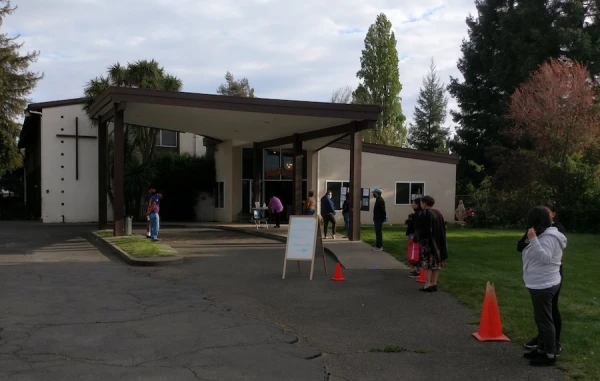
Volunteers, led by the school board, have adapted Kolbe Academy & Trinity Prep— a K-12 school with just 105 students— into a food pantry for distribution every Wednesday.

Anna Hickey and Eric Muth— both alumni and school board members— helped to develop what they call the Agape Program, aiming to assist the school community spiritually and materially during the pandemic.

The pantry was able to serve more than 50 families on the first day it was open, April 22, Hickey and Muth told CNA.

After the first week, word spread quickly through the community.

“We contacted several local parishes who are now directing people with needs to our school,” Hickey said.

Teachers and families from the school have volunteered to help with food distribution— including one family who lined up to receive food, realized more help was needed, and put their food aside in order to volunteer for the rest of the day.

“As people hear about Agape, the generosity is now starting to match the need,” Hickey said.

For the first day of distribution, school board members bought a large amount of frozen chicken from a distributor. When they told the distributor it was for a food pantry,he donated nearly 700 additional pounds of steak, turkey, and chicken.

Hickey said the school thought their supply of meat would keep them well-stocked for several weeks, but the number of families seeking help turned out to be “overwhelming.”

The extra meat lasted just two and a half hours.

Muth said by the time the school held its second day of distributing food, the number of patrons in line had doubled to more than 100.

In order to comply with California’s strict social distancing orders, the school asked that only one family member come to pick up the food. This means that each person in line was likely representing a family of, on average, five people, Muth said.

Despite the additional demand, they also had more volunteers, and more food to give away— including a truck of fresh produce that a parishioner donated.

The Napa Valley is often regarded as an affluent area, but beyond the vineyards and tasting rooms are working class and poor families who are hurt by the economic downturn.

Many of the breadwinners for the Catholic school families in Napa work in the service industry— and in many cases, both parents have found themselves out of work, Hickey said.

In addition, some of the Catholic school families are ineligible for unemployment benefits because of their immigration status, she said.

Hickey and Muth hope to provide tuition assistance to needy families through the Agape initiative, so that families in need don’t find themselves forced to pull their children out of the Catholic school.

“Our Catholic schools are in trouble, and we really need to start seeing them as a mission,” Hickey said.

“Catholic education in our world today is a critical necessity. It’s not something that we should consider a luxury…if we want to change society, if we want to make sure that we have future pro-lifers, then we’d better make darn sure that we keep Catholic education going.”

Another phase of the initiate will involve high school students reaching out to the elderly and lonely in the community.

“If we don’t help others first, there’s no way we can ever ask for help again,” she said.

“Our moral obligation is to extend help, even in the fear of us closing down— extend help first, and then ask for help.”

That approach has ultimately paid off— the school has received many donations since starting the food pantry, they said, even from non-Catholic members of the community who recognize the good work the school is doing.

“God will take care of us if we have some trust and faith in Him,” Muth said.
[…]

No Picture
News Briefs

Archdiocese of New Orleans files for bankruptcy

May 1, 2020 CNA Daily News 3

CNA Staff, May 1, 2020 / 02:54 pm (CNA).- Under financial pressure from clerical abuse litigation compounded by the coronavirus crisis, The Archdiocese of New Orleans announced May 1 that its administrative offices are filing for Chapter 11 bankruptcy…. […]

No Picture
News Briefs

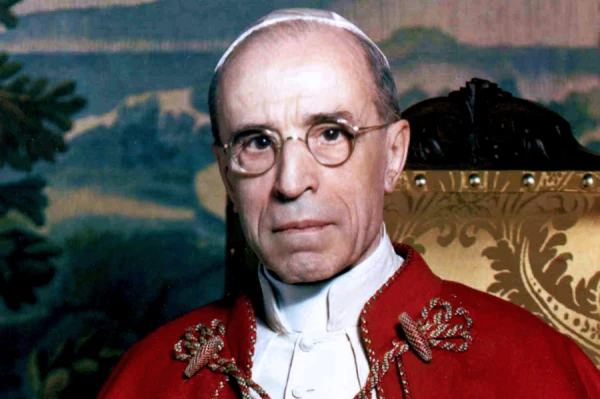
Scholars dispute charge of Pius XII Holocaust cover-up

May 1, 2020 CNA Daily News 3

Denver Newsroom, May 1, 2020 / 12:15 pm (CNA).- Scholars say charges that Pope Pius XII covered-up the Vatican’s knowledge of the Holocaust are based on exaggerated claims and do not represent the truth.

Fr. Hubert Wolf, a professor of history at the University of Munster, claimed last month that in the Vatican’s recently opened archives on Pope Pius XII, he had found an anti-Semitic memo which suggested that Pope Pius XII knew about the Holocaust in Europe before the U.S. government did, but made efforts to conceal his knowledge.

But Ronald Rychlak, a professor at the University of Mississippi’s law school and the author of “Hitler, the War, and the Pope” told CNA that Wolf’s argument doesn’t stand up to historical scrutiny.

What Pope Pius XII knew and did during World War II has been a source of controversy for years. That controversy was reignited in early March, when the Vatican opened to researchers its archives on Pius XII. Wolf was among the researchers. But a week after the archives were opened, the coronavirus lockdown in Italy forced researchers to pause their work.

Undeterred, Wolf told German and American media this month that he had found a key document which, he said, could prove that Pius XII lied to the U.S. government by claiming in 1942 that he could not verify intelligence reports, which came from the Jewish Agency for Palestine in Geneva, about death camps for the mass murder of Jews in Poland and Ukraine.

When the U.S. entered World War II in 1942, it did not yet have knowledge of the scale of atrocities committed against Jewish people across Europe, especially the mass murder of Jews in Eastern Europe. It had received reports of those atrocities, however, and was making efforts to verify them.

In 1942, the Vatican, too, had received reports, mostly from Church leaders, about the mass murder of Jews by Nazi forces.

Nevertheless, in September 1942, when a U.S. official asked the Vatican to verify a report from the Jewish Agency for Palestine, Vatican officials said they could not independently confirm the information it contained regarding the existence of death camps, but that the Vatican did know, and had received reports, about atrocities committed by Nazi forces, adding that “the Holy See is taking advantage of every opportunity offered in order to mitigate the suffering.”

Rychlak told CNA that the Holy See’s concern to be judicious about verifying any report “can logically be traced to WWI, when false stories of atrocities were often circulated,”

But after examining the Pius XII archives for a week in March, Wolf pointed journalists this month to a 1942 memo from a staffer in the Vatican’s Secretary of State, Msgr. Angelo Dell’Acqua, who later became a cardinal. The memo, which has not been released to the public, apparently cautioned against verifying the report from the Jewish Agency for Palestine.

Wolf told journalists that the memo warned against believing the report because Jews “easily exaggerate.”

“This is a key document that has been kept hidden from us because it is clearly anti-Semitic and provides background information on why Pius XII did not speak out against the Holocaust,” Wolf told a Munster Catholic newspaper.

German journalist Michael Hesemann was also among the researchers who examined Pius XII’s archives in March. In a statement sent to CNA, he said that Wolf has made his claim about Pius XII without understanding the meaning of the memo he found, or its significance.

He added that the memo “warns not to draw premature conclusions on the new information, [stating]: ‘It is necessary to assure that they are true, since exaggerations happen easily, also among Jews.’ With other words: Trust but verify!”

“For Wolf, this is evidence for the Vatican’s anti-Semitism during the pontificate of Pius XII. For him, it means, and this is how he paraphrases it in several interviews with German media: ‘All Jews are liars,” Hesemann said.

“But it means nothing like that, Hesemann said, explaining that the memo was intended to urge caution against any exaggeration.

“And indeed the Jewish Agency’s report contained several rumors which were not true at all, as we know today. It claimed that ‘in all Eastern Poland and the occupied Russian territories, not a single Jew is alive anymore.’ We know that thousands survived in the underground or became partisans.”

“No government in the world would act on a single report, but waits for an independent verification – that’s why President Roosevelt asked the Vatican, in the first place,” Hesemann added.

In either case, Hesemann said, the memo “did not influence papal policy, which remained the same before and after, nor does it contain any new information. It is one man’s reminder to trust and to verify and nothing more.”

The memo is not included in an 11-volume cache of Vatican documents from the Second World War. To Wolf, this is a reason to be skeptical about the volumes, according to the Washington Post.

But to Hesemann, the memo was not included “not because of a Vatican cover-up, but because it’s irrelevant.”

Hesemann cautioned that Wolf, who has “promoted conspiracy theories” about Pius XII in the past “draws premature conclusions, blames the Vatican of a cover-up and creates sensationalist headlines,” to further “his own agenda,” namely, “stop the ongoing beatification process of Pius XII – at least until he and his team have evaluated the last of the pages Pope Francis made available for historical research.”

Rylchak pointed out evidence, presented in his book, of Pius XII’s concern to oppose the Nazis, which he says was well-recognized by journalists and bishops during the Second World War. He also pointed out that Pius XII, through “ a long series of communications with the American bishops,” encouraged opposition to Nazi ideology.

“Despite all of this, Wolf would have us believe that Pius did not make his opinion known due to a cover note from a low-level assistant,” Rylchak said, calling the assertion “ridiculous.”


[…]

No Picture
News Briefs

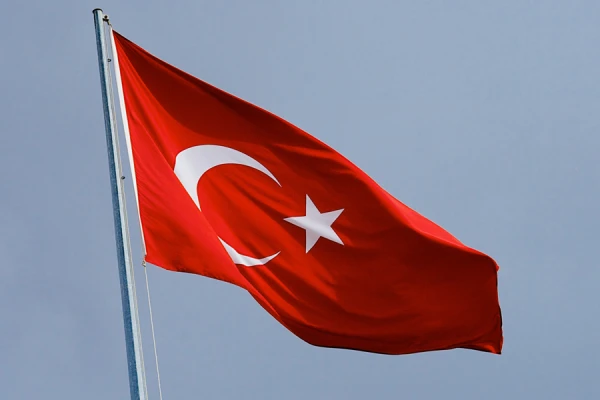
Turkey disputes US religious freedom commission’s assessment of Turkey

May 1, 2020 CNA Daily News 0

CNA Staff, May 1, 2020 / 12:09 pm (CNA).- The Turkish foreign ministry on Wednesday rejected Turkey’s inclusion in a report by the US Commission on International Religious Freedom, charging that the report comes from a “biased mindset”.

“The report contains baseless, unaccredited and vague allegations as in the past years while trying to portray isolated incidents as violations of religious freedoms through far-fetched accusations,” Hami Aksoy, a spokesperson for the Turkish Ministry of Foreign Affairs, said April 29.

“The importance attached by Turkey to protect religious freedoms, including those of religious minorities, is expressed at the highest level by our Government officials. Our authorities make it clear that any harm to the religious freedoms of our citizens will not be tolerated,” Aksoy added.

In its 2020 report, USCIRF recommended that the State Department add Turkey, as well as 10 other countries, to a “Special Watch List” of countries where abuses of religious minorities are taking place, but not at a level as severe as in those designated as “countries of particular concern.”

The commission wrote that “religious freedom conditions in Turkey remained worrisome” in 2019, “with the perpetuation of restrictive and intrusive governmental policies on religious practice and a marked increase in incidents of vandalism and societal violence against religious minorities.”

It cited the Turkish government’s prevention of the election of board members for non-Muslim religious groups and its limitations on the election of the Armenian Patriarch of Constantinople.

The report added that Alevis, a group related to Shia Islam and the country’s largest religious minority, “remained unable to gain official recognition for their gathering houses (cemevleri) as places of worship or to exempt their children from compulsory religious classes, despite European Court of Human Rights (ECtHR) rulings finding that these policies violated Alevis’ rights.”

According to the US commission, Turkish religious minorities “expressed concerns that governmental rhetoric and policies contributed to an increasingly hostile environment and implicitly encouraged acts of societal aggression and violence.”

The report also drew attention to the permission given for a museum, that was originally a Greek Orthodox church and later a mosque, to be reconverted into a mosque. It noted also that president Recep Tayyip Erdoğan has called for the same thing to happen to the Hagia Sophia, which has the same history.

USCIRF also said the Turkish government has “continued to dismiss, detain, and arrest individuals affiliated with, or accused of affiliation with, the U.S.-based cleric Fethullah Gülen, for alleged complicity in a July 2016 coup attempt or involvement in terrorist activity.”

Gülen has lived in the US since 1999, and is considered a terrorist by the Turkish government.

The Turkish foreign ministry charged that Gülen’s mention in the report “amounts to deliberately turning a blind eye” to the coup attempt, and added: “We invite the US authorities to earnestly examine the evidence we have provided” about the Gülen movement “and to engage in effective cooperation in line with the spirit of alliance in order to reveal the true nature of this terrorist organization.”

Aksoy added that the recommendation of adding Turkey to a “special watch list” for religious freedom “is a clear indication of the biased mindset behind it and the circles under whose influence it was drawn up.”

“In the report that is supposed to include global trends that threaten religious freedoms, the Commission does not mention a single word about xenophobia, Islamophobia and discrimination on religious grounds that is on the rise in the West and the US,” Aksoy stated.

“This clearly reveals that the purpose of the report is not to protect religious rights and freedoms. It is clear that the Commission, which has been accused of being anti-Muslim in the past, has drawn up this report based on its unwarranted agenda and priorities under the influence of circles that are hostile to Turkey, rather than objective criteria. We recommend the authors of this report to look in the mirror and engage in self-criticism.”

Earlier this year, Turkish authorities arrested a Syriac Orthodox priest on terrorism charges after he provided bread and water to members of a Kurdish separatist group that has been deemed illegal.

[…]

No Picture
News Briefs

Pope Francis raises Cardinal Tagle to new rank

May 1, 2020 CNA Daily News 3

Vatican City, May 1, 2020 / 10:30 am (CNA).- Pope Francis has raised Cardinal Luis Antonio Tagle to the rank of cardinal bishop in a new sign of his esteem for the former Archbishop of Manila.

The Holy See press office said May 1 that the pope had des… […]