No Picture
News Briefs

Bishop rejects South Sudan president’s day of prayer as a political move

March 8, 2017 CNA Daily News 0

Juba, South Sudan, Mar 8, 2017 / 12:04 am (CNA/EWTN News).- The call by South Sudan’s president for a national day of prayer was met with derision by one of the country’s bishops, who called it a “political prayer” and a mockery.

President Salva Kiir addressed South Sudan via state-owned media last week to announce a day of prayer on March 10. The country has been embroiled in civil war since December 2013, when Kiir accused his former deputy, Riek Machar, of attempting a coup. The war has been fought between their supporters, largely along ethnic lines, and peace agreements have been short-lived.

“I have been praying for South Sudan every day. This morning, I prayed for South Sudan. That prayer called by Salva Kiir; I will never and never understand. Unless they carry me as a corpse but I will never attend that prayer. It is a political prayer. It is a mockery,” Bishop Santo Loku Pio Doggale, Auxiliary Bishop of Juba, told Voice of America, according to the Sudan Tribune.

“Why should I go [to] pray where there is no holiness, where there is no forgiveness? It is a joke to hear the president of the country calling prayers while at the moment, the soldiers are hunting people across South Sudan.”

He cited the government’s army’s displacement of numerous people from their homes. “People are being thrown away from their ancestral land. There have been a lot of robbery of the resources of the people.”

Bishop Doggale also charged that Kiir, who is Catholic, “does not even come to church these days.”

Kiir’s proposed national day of prayer precedes the March 15 launch of a three-day national dialogue.

“Our time … is now ripe to turn to God and ask him for forgiveness and blessings. We have not been that perfect and we need to submit ourselves to the Almighty through prayers,” Kiir said. “It should be the day we all pray to God and ask Him for forgiveness so that we start a new chapter in our relations as citizens of this nation.”

The national dialogue is being directed by Kiir. One of his spokesmen has said that Machar, the former vice-president, may attend once he has denounced violence. Kiir’s direction of the dialogue has been criticized, given his role in the country’s civil war.

In January 2016, Bishop Doggale told CNA that the government of South Sudan, as well as that of Sudan, puts political agendas over its people’s interests.

“We have crossroads of displaced people in both countries suffering from the political elite who don’t take their people in heart,” he said.

The bishops of South Sudan recently called for dialogue between the country’s warring factions, and charged that the forces of both sides are targeting civilians.

“Those who have the ability to make changes for the good of our people have not taken heed of our previous pastoral messages,” the said in their Feb. 23 message. “We need to see action, not just dialogue for the sake of dialogue.”

The bishops said the war has “no moral justification whatsoever,” and expressed concern that some government officials seem to be suspicious of the Church.

[…]

No Picture
News Briefs

This priest says Adoration has made Juarez a safer city

March 7, 2017 CNA Daily News 0

Juarez, Mexico, Mar 7, 2017 / 04:39 pm (CNA/EWTN News).- Juarez, located in the state of Chihuahua in northern Mexico, was considered from 2008 to 2010 to be one of the the most dangerous cities in the world, due to drug trafficking violence and the constant struggles for power and territory between the cartels.

However, the city of 1.3 million inhabitants dropped off this list thanks to a significant decrease in the number of homicides: from 3,766 in 2010 to 256 in 2015.

Although this drop can be credited to an improvement in the work of local authorities, for Fr. Patrico Hileman – a priest responsible for establishing Perpetual Adoration chapels in Latin America – there is a much deeper reason: Jesus in the Blessed Sacrament.

“When a parish adores God day and night, the city is transformed,” Fr. Hileman said.

The priest told Radio María Argentina that in 2013 the missionaries opened the first Perpetual Adoration Chapel in Juarez. At that time “40 people a day were dying because two drug gangs were fighting over the city to move drugs into the United States.”

It was the Juarez and Sinaloa cartels, whose former leader Joaquín “el Chapo” Guzmán Loera was recently extradited from Mexico to the United States.

Fr. Hileman recalled that “the parishes were saying that the war wasn’t ending because a group of soldiers were with one gang and the police were with the other one. They were killing people, burning houses down so they would leave, fighting over the city.”

One of the parishes that was “desperate” asked the missionaries to open a Perpetual Adoration chapel because they assured that “only Jesus is going to save us from this, only Jesus can give us security.”

The missionaries only took three days to establish the first Perpetual Adoration chapel in Juarez.

Fr. Hileman told how one day, when the city was under a state of siege, a lady was on her way to the chapel to do her Holy Hour at 3:00 in the morning, when she was intercepted by six soldiers who asked her where she was heading.

When the woman told them that she was going to “the little chapel” the uniformed men asked her what place, because everything was closed at that hour. Then the woman proposed  they accompany her to see for themselves.

When they got to the chapel, the soldiers found “six women making the Holy Hour at the 3:00 in the morning,” Fr. Hileman said.

At that moment the lady said to the soldiers: “Do you think you’re protecting us? We’re praying for you 24 hours a day.”

One of the uniformed men fell down holding his weapon,“crying in front of the Blessed Sacrament. The next day at 3:00 in the morning they saw him in civilian clothes doing a Holy Hour, crying oceans of tears,” he said.

Two months after the chapel was opened, the pastor “calls us and says to us: Father, since the chapel was opened there has not been one death in Juarez, it’s been two months since anyone has died.”

“We put up ten little chapels in a year,” Fr. Hileman said.

As if that were not enough, “at that time they were going to close the seminary because there were only eight seminarians and now there are 88. The bishop told me me that these seminarians had participated in the Holy Hours.”

Fr. Hileman pointed out that “that is what Jesus does in a parish” when people understand that “we find security in Christ.”

He also noted that “the greatest miracles occur in the early hours of the morning. “

The early morning “is when you’re most at peace, when you hear God better, your mind, your heart  is more tranquil, you’re there alone for God. If you are generous with Jesus, he is a thousand times more generous with you,” Fr. Hileman said.


This article was originally published on CNA Jan. 26, 2017.

[…]

No Picture
News Briefs

Peruvian marches against gender ideology attract 1.5 million

March 7, 2017 CNA Daily News 0

Lima, Peru, Mar 7, 2017 / 04:02 pm (CNA/EWTN News).- Under the theme “Don’t Mess With My Children,” more than 1.5 million Peruvians demonstrated on Saturday against gender ideology in the nation’s schools.

Organizers said that total attendance surpassed 1.5 million, at demonstrations throughout the country.

Among those present were Congress members Julio Rosas, Carlos Tubino, Nelly Cuadros, Juan Carlos Gonzales, Marco Miyashiro, Roberto Vieira, Federico Pariona and Edwin Donayre.

<blockquote class=”twitter-tweet” data-lang=”en”><p lang=”es” dir=”ltr”>Los organizadores de <a href=”https://twitter.com/hashtag/conmishijosnotemetas?src=hash”>#conmishijosnotemetas</a> anuncian que más de 1.5 millones marcharon en todo el Perú <a href=”https://twitter.com/hashtag/4M?src=hash”>#4M</a> ????<a href=”https://twitter.com/Calderon_Martha”>@Calderon_Martha</a> / <a href=”https://twitter.com/acamasca”>@acamasca</a> <a href=”https://t.co/351NDByffr”>pic.twitter.com/351NDByffr</a></p>&mdash; ACI Prensa (@aciprensa) <a href=”https://twitter.com/aciprensa/status/838175199686164480″>March 4, 2017</a></blockquote>
<script async src=”//platform.twitter.com/widgets.js” charset=”utf-8″></script>

“Don’t Mess With My Children” is a campaign against recent attempts to promote a national curriculum of gender ideology, which teaches that one’s ‘gender’  is chosen and has no connection with one’s biological sex.

In January of this year, the Peruvian Bishop’s Conference told the government that it “urges the removal from the new National Curriculum those notions coming from gender ideology.”

At 2 p.m. on March 4, massive crowds gathered to march toward San Martín Plaza in the center of Lima.

The demonstrators, bearing various signs and slogans, marched down the main districts of the Peruvian capital.

Other cities throughout the country, including Arequipa, Trujillo, Iquitos and Cusco, also saw heavily attended demonstrations.

Fr. Luis Gaspar, episcopal vicar of the Family and Life Commission for the Archdiocese of Lima, stressed that “education as the first right of parents concerning their children is not negotiable.”

“We are in a war over morals, a spiritual war, and the battlefield is the minds of their children, and we are going to defend it till the day we die.”

Fr. Gaspar also invited the demonstrators to participate in the March for Life which will be held March 25 in Lima.


[…]

No Picture
News Briefs

Croatia will soon hold one of the largest Marian statues in the world

March 7, 2017 CNA Daily News 0

Šibenik, Croatia, Mar 7, 2017 / 06:02 am (CNA/EWTN News).- A giant 55-foot statue of Our Lady of Loreto is in the works in the coastal city of Primošten, Croatia, which will be known as one of the largest Marian sites in the world when it is completed.

“This project is unique in Croatia and beyond,” stated the Municipality of Primošten, according to Total Croatia News.

“It has been an object of considerable interest and acclaim, and a blessing has been given by the Holy See and Pope Francis,” they continued.

The larger-than-life statue of Our Lady of Loreto is being constructed along the coastline of Primošten, a hill-city about 20 miles south of Šibenik. Primošten is known for its vineyards and beaches, and will now also be marked as the site of one of the biggest Marian statues in the world.

The citizens of Primošten are known to have a particular devotion to Our Lady of Loreto, and the townspeople hold a traditional feast in honor of Our Lady every May 9-10, with a festive procession around the boats and coastline.

On a clear day, the facing coast of Italy will be able to see the Marian monument after its completion.

The construction of the statue has been in collaboration with Cammini Lauretani, which works to connect the dots among Marian shrines across Europe, in a joint effort with the European Cultural Itinerary of the European Council Initiative.

Mayor Stipe Petrina of Primošten has been meeting with leaders from Cammini Laurentani in an effort to link Marian shrines in Italy and Croatia, with the overarching goal of creating sustainable religious tourism and development.

Their most recent meeting took place in Gaj hill, where the organizations were able to see the progress of the statue.

The Croatian municipality has yet to declare when the Marian site will be complete, although they did note that the statue is in the final stages of construction.

[…]

No Picture
News Briefs

This fleet of food trucks serves up respect for Austin’s homeless

March 7, 2017 CNA Daily News 0

Austin, Texas, Mar 7, 2017 / 02:50 am (CNA/EWTN News).- Austin, Texas, like any hipster city worth its organic, non-GMO salt, is known for its food trucks.

There are about 1,000 food trucks that roam the streets of the Texas capital, offering barbecue, breakfast tacos, and gourmet grilled cheese to the masses of Pabst Blue Ribbon-swilling millennials who have recently flocked to the city.

But among them, and before them, there was Alan Graham and Mobile Loaves and Fishes.

Mobile Loaves and Fishes is a Christian non-profit founded by Graham and five other men that delivers about 1,200 meals and essentials from 12 food trucks to homeless people on the streets of Austin every night.

The ministry also recently started a village called Community First!, a place where the formerly homeless, volunteers and those desiring a simpler life live together in a village of tiny homes and recreational vehicles in what Graham calls “an RV park on steroids.”

In his newly released book Welcome Homeless, Graham recalls the story and the people behind his ministries, in his raw, straight-shooting, and often humorous voice.    

In October 1996, Graham, a convert to Catholicism, had gone tentatively on a men’s retreat. At first, he was counting down the hours until the “hugs and hand-holding” were over. The retreat was too emotional for his then-very intellectual faith.

But by the end, he experienced a profound change of heart and adopted a philosophy of “just say yes.”

Several yesses and a couple of years later, Graham and his wife, Tricia, found themselves having coffee with a friend who was telling them about an initiative in Corpus Christi, Texas, where multiple churches would pool their resources to provide food for the homeless on cold winter nights.

An entrepreneur at heart, Graham immediately envisioned a catering truck that could deliver meals to the homeless (this was before the food truck boom; at the time ,Graham called them “roach coaches”).

“I woke up the next morning knowing we could franchise it, and bring it to every church, every city, and every state to feed the homeless,” he recalls in his book. “This is how entrepreneurs think: one truck becomes a thousand.”

Through his church group, he recruited six more men to join him and invest in a food truck for the homeless (they started calling themselves “The Six Pack”). One of these men turned out to be an especially key player: Houston Flake.  

Socks and popsicles

Houston, who met Graham through the men’s group at St. John Neumann Catholic Church, was poorly educated and illiterate, but understood the Gospel like no one Graham had ever met.

Houston had experienced chronic homelessness throughout his life, and became a key tour guide for Graham and his crew, who were “clueless” about life on the streets as they began their ministry.

During one meeting, the group had discussed how great it would be if they could get phone cards (pre-cellphone times) to hand out to the homeless whom they would meet.

“Houston looked at us and said, ‘That is the dumbest idea on the face of the planet. They don’t need phone cards. No one wants to talk to them. They don’t want to talk to anybody. You need to put socks on that truck,’” Graham recalled.

To this day, socks are the most desired item on the trucks.

Houston also took Graham out to his “conference room” – to meet some of the homeless who were his friends. It changed Graham’s whole perspective on the population he was about to serve.

Not long after Mobile Loaves and Fishes began, Houston was diagnosed with bladder cancer and given mere weeks to live.

For his dying wish, Houston didn’t want to travel or eat a fancy steak dinner – he wanted to deliver 400 popsicles to homeless children on a hot summer day, a treat those kids rarely experienced.

“He wanted them to choose: Pink? Red? Blue? Purple? Green? He wanted to give that which they did not need but might want. He wanted to give them abundance in fruity, tasty, frozen form,” Graham wrote.  

That philosophy carried over to the food trucks. The people they serve are given options – PB&J, ham and cheese, tacos? Milk, coffee, orange juice? Oranges or apples? It’s a shift from the scarcity mentality found in soup kitchens founded in the Great Depression, to an abundance mentality that is possible in the most abundant country in the world, Graham explained. They are “the little bitty choices that people who live a life in extreme poverty don’t get to make often.”

The solution to homelessness is not just housing

Since the first truck run, the ministry quickly grew. Hungry people would chase down the food trucks as they saw them making their way through the streets of Austin.

The ministry has now expanded to the cities of San Antonio, Texas; Providence, Rhode Island; New Bedford, Massachusetts; and Minneapolis, Minnesota. To date, Mobile Loaves & Fishes has served over 4 million meals, and with more than 18,000 volunteers, it is the largest prepared feeding program to the homeless and working poor in Austin.

But it didn’t stop there. A little over 5 years into the ministry, Graham envisioned an “RV park on steroids”, with the philosophy of “housing first”, which holds that the homeless need housing before they can solve any of their other problems.

However, Graham knew that mere houses were not enough. What these people need and desire, like everyone, is to be known and loved – they needed community. He envisioned a place where people lived life together, knew and cared for each other, sharing kitchens and gardens and conversation.

“It developed from this idea back in 2004, where we went out and bought a gently used RV and lifted one guy off the streets into a privately owned RV park,” he said.

Because of zoning laws and other issues, it took awhile to get the idea off the ground, but the Community First! Village project was finally able to break ground in 2014.

Today, 110 people, most of them formerly homeless, call the village home. Soon, there will be enough housing for 250 people. There are brightly colored tiny homes that would give HG-TV a run for their money, as well as recreational vehicles and “canvas-sided” homes (sturdy tents with concrete foundations).

The homes provide the basics – they are essentially bedrooms – while everything else is communal. There is a communal kitchen and garden and bonfire, and places everywhere to sit and have a conversation.


Our @mobileloaves_genesisgardens chicken coop was definitely a top destination for everyone visiting #CommunityFirstVillage today. We loved having y’all out here, and the chickens definitely loved all the attention! ???? #divas

A post shared by Mobile Loaves & Fishes (@mobileloaves) on Apr 2, 2016 at 2:21pm PDT


“It’s all centered on Genesis 2:15,” Graham said. “Just after God created the Garden of Eden, he took the man, and centered him in the garden to cultivate and care for it. And so the foundation for our entire philosophy of the community is centered on God’s original plan for us, to be settled, to be at peace with each other, to live in community, to be cultivating with the gifts that he has given us, and to serve him by caring for each other.”

What needs to change

The solution to homelessness, Graham said, is not going to be found in new government policies or agencies, but rather in Christians and other people who choose to take care of each other.

“I believe it’s like the old African adage ‘it takes a village to raise a child,’” Graham said. “We have to step in, the village should step in and care for its own. What we’re doing right now is abdicating that responsibility to our government, which … tries to resolve this issue transactionally, but I believe it’s a relationship issue. Our Kingdom desire is to be wanted by each other, not ‘if you buy me a house I’m going to be happy.’ That’s not where our happiness comes from.”

One of the foundational goals of the ministry is to change the stereotypes that people have about the homeless, so that they are seen as brothers and sisters rather than as other, Graham added.

He recommended that anyone who wants to help the homeless start building relationships with them –  say hello, ask their name, shake their hand, give them a sandwich or a gift card to Chick-fil-A. And then find an organization to volunteer with in your city.

“There’s a giant stereotype around the homeless, and we’re very good as Americans at stereotyping, and so the homeless population (is projected) to be drug addicts, mentally ill, criminals; they’re usually depicted as unkempt or that they don’t pay attention to hygiene, so we develop these preconceived notions that won’t even allow us to roll down our windows anymore to say ‘Hello’ or ‘God Bless,’” he said.

“Those things just aren’t true,” Graham said.

“We have five major corporate goals, and goal number one is to transform the paradigm of how people view the stereotype of the homeless. When we change that paradigm, it changes our culture so as to be able to go and love on our brothers and sisters.”

That’s one of his hopes for the book, and the reason he made sure to tell the stories of so many homeless men and women who have directly touched his life.

“What we want to do is spread the kingdom message of a better way to love on our neighbors, so I’m hoping the book will go broad and deep, and people will be inspired to go out there and begin doing what it is that we’re doing, that’s what I hope.”

Because “what’s happening here in Austin, Texas is nothing short of a miracle.”

[…]

No Picture
News Briefs

Vatican event to highlight key role of women in peace-building

March 7, 2017 CNA Daily News 0

Vatican City, Mar 6, 2017 / 05:05 pm (CNA).- To mark International Women’s Day, the Vatican invited women from across the globe to discuss not only their work as peacemakers in a conflict-filled world, but their contributions to the Church as well.

“Women understand, intuitively and by experience, that other people need their attention,” Dr. Scilla Elworthy, co-founder of the organization “Rising Women, Rising World,” told CNA March 6.

This intuition is seen concretely in how women interact with their children, their families and the communities they are a part of, she said. This ability “is what makes them such incredible peacemakers and peacebuilders: that ability to step into the shoes of the other in compassion, and to actually listen.”

“You’ll notice that some women have this lovely presence that makes them very alive and very engaged and engaging,” which isn’t just the result of their intuition, but also of the five characteristics of what she called “feminine intelligence.”

A term coined by Elworthy and her organization, feminine intelligence, or, as she calls it, “FQ,” is something that represents the specific qualities that stand out in women, but that men can learn through observation and practice.

Defined by Elworthy, “feminine intelligence” first of all consists of compassion, as well as inclusivity, referring to the sense that “no one is left out.”

Another quality is nurturing, which means “looking after (and) caring for” people, she said. Finally, the characteristic that stands out for Elworthy as the most important is the ability to really listen to others.

“We all think we’re good listeners, but most of us are not,” she said, adding that “that’s the greatest gift we can give to another person, is to hear them, and it’s the fastest, most effective way to resolve conflicts.”

“To listen to the person we’re in conflict with, feed back to them what they’ve said, check if they’ve got it right, and then ask them to do the same with us” is one of the most secure ways to end misunderstandings and confrontations, she said.

Elworthy was one of four panelists at a March 6 press conference on the Vatican’s annual Voices of Faith (VoF) women’s conference, held every year on March 8 to coincide with International Women’s Day.

First held in 2014, the VoF conference was established in response to Pope Francis’ call to “broaden the space within the Church for a more incisive feminine presence.”

Gathering women from around the world, this year’s VoF will take place at the Vatican’s Casina Pio IV and will gather women from around the world, including Syria and Burundi, to highlight the role women play in building a culture of peace within a world at conflict.

In her comments to CNA, Elsworthy, who is not Catholic but will be a panelist for a discussion on the topic of “Building Effective Leadership for Peace,” said the unique qualities women have at times risk of being lost in a society which, at various levels, often pushes them to be more like men.

“In corporate life, women are definitely expected to adopt a male, aggressive, competitive (attitude) and it doesn’t suit them, they get very stressed,” Elsworthy said, noting that “a lot of them are packing it in, they don’t like it.”

Politics is another field that can be “very harsh” for women, she said, explaining that women need to look for what she called a “deep inner power of the feminine,” but which is “not feminism.”

Instead, for Elsworthy this “feminine power” involves the five characteristics of her notion of feminine intelligence as well as “also the ability to self-inspect.”

This, she said, is where religion comes in, “because all the great religious traditions…demand that we spend time every day in silence.”

Also present at the news conference was Marguerite Barankitse, founder of the Maison Shalom foundation, which she established in response to the aftermath of the 1972 and 1993 genocides of both the Hutu and Tutsi tribes in Burundi as a means of ending the country’s cycle of violence.

In comments to journalists, Barankitse said that for her, even while the mass killings of Tutsis were taking place in 1993, being a Christian and going to Church “was more important than being Tutsi.”

She recounted that at one point during the genocide she had gone to the archbishop’s house in her village to seek refuge, thinking that because of Christianity’s emphasis on forgiveness, members of her parish community would be more balanced, but instead found that the people were filled with hatred.

After this experience and seeing the prejudice coursing through the country at the time, Barankitse said she decided to become teacher after genocide, because in doing so “I can teach children love and compassion.”

Barankitse said that some 60 percent of her family were killed by Hutus during the genocide, but that instead of retaliating, she wanted to establish the Shalom foundation in order to “create a new generation.”

Chantal Gotz, founder and organizer of VoF, also spoke at the news conference, telling journalists that part of the reason for establishing the organization, in addition to giving women a platform in the Church to highlight their contributions, was to break a somewhat negative image of the Church when it comes to women.

When VoF was founded, she said, a journalist had mentioned to her that while more space needed to be created for women in the Church, particularly when it comes to leadership roles, “we have no idea what Catholic women are doing in the Church.”

“The fact was also that four years ago, the image of the Catholic Church was always viewed in a quite negative way, nothing was highlighted on what is the Church doing in a positive way,” she said, adding that they are hoping to “bring new stories” to light showing what women already do.

Media is key in sharing these stories, she said, explaining that they hope to “highlight the positive, not just in Catholic press, but we also need secular press to spread the message of what women are doing and the great work that they’re already doing.”

Kerry Robinson, founding executive director and global ambassador of the Leadership Roundtable, was also present at the news conference. Founded in 2005 after the sex abuse crisis broke, the roundtable is made up of professionals from various fields and is dedicated to promoting best practices in the fields of management, finances and human resources in the Church.

In her comments to journalists, Robinson said she sees Pope Francis as “a reason to be hopeful” given his emphasis on mercy, the poor and his general closeness to people.

When it comes to women, she said one of the “signature motivations” for work of the roundtable is to ensure that their daughters and other young women have more of a voice and a stronger place in the future.

However, she said the push for women’s priestly ordination (which continues to be advocated for despite the fact that Pope Francis has already definitively closed the door) can be distracting from other initiatives that actually help women.

“The ordination question stops every other creative idea that could be implemented right away and nothing happens,” she said, explaining that “unless we bracket it,” none of the ideas for how to enhance the role of women in the present will be possible.

In her comments, Gotz said that finding ways to highlight the role of women and build them up within the Church is something that everyone should be responsible for, not just Pope Francis.

“We expect a lot from just from one person, from Pope Francis, and he was calling to all of us to bring in ideas of new initiatives,” she said, and pointed to VoF as an example.

The organization has not only enjoyed strong success, but also has the support of the Pope, she said, stressing that “we have to trust and we can support him in bringing in new ideas and not expecting that he has to change all of it by himself.”

Similarly, Barankitse said many wait for Pope Francis to act, “but what are the women doing?”

If we constantly wait for something to come “on a silver platter, we will never get it,” she said, adding that “it’s up to us women to support this extraordinary Pope, who is a blessing for our century, and we stand tall.”

But for Robinson, the discussion limited to just women, but involves the laity as a whole, including lay men, whose presence is also frequently missing from within the Vatican ranks.

She told journalists that as far as the Roundtable goes, it’s primarily a movement “to help the Church leaders, ordained and religious, avail themselves of the talent of laity, and that is very intentionally women and men.”

“That’s really our signature: to recognize that the talent and expertise of lay Catholics is an under-utilized resource that the Church can benefit from.”

In comments to CNA, Robinson said the “diversity” of having men and women work together “is a gift, and often we tend not to ensure that there’s true diversity at the tables of deliberation and decision-making.”

“Leadership Roundtable is about helping Church leaders avail themselves of the talent of laity, whether it’s laity who are CEO’s or captains of industry, or its emerging leaders like the talented young adults who are in colleges all over the world who love the Church and want to continue in a meaningful leadership way,” she said.

She stressed that “in no way would I want just women to be running things,” but instead it ought to be “our collective wisdom and experience that matters. It informs a better discussion and a better outcome.”

However, Robinson said she’s happy to see women “claiming their own” and stepping up in leadership roles in various sectors and professions, but noted that there’s still “a long way to go.”

Particularly in the Catholic Church, she said, opportunities need to be sought which ensure that “women and men together are seen as leaders, contributing to the discussion, being models of faith and excellence for younger generations.”

[…]

No Picture
News Briefs

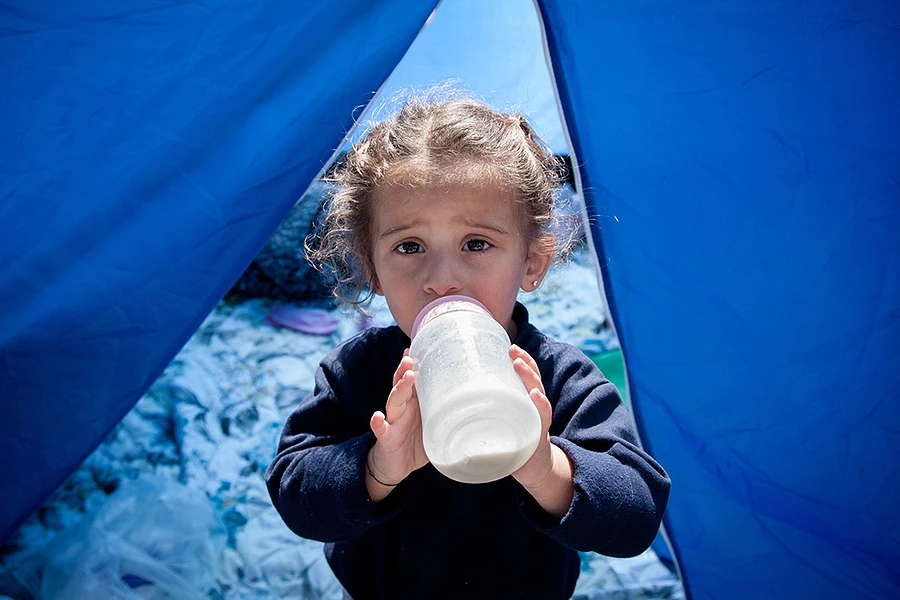
Don’t shut US doors to refugees, bishops plead

March 6, 2017 CNA Daily News 0

Washington D.C., Mar 6, 2017 / 03:50 pm (CNA/EWTN News).- With people fleeing humanitarian crises around the world, President Donald Trump’s new executive order halting refugee admissions is wrong, Catholic bishop and aid groups maintain.

“We remain deeply troubled by the human consequences of the revised executive order on refugee admissions and the travel ban. While we note the Administration’s efforts to modify the Executive Order in light of various legal concerns, the revised Order still leaves many innocent lives at risk,” Bishop Joe Vasquez of Austin stated March 6. Bishop Vasquez chairs the U.S. bishops’ committee on migration.

“The U.S. Catholic Bishops have long recognized the importance of ensuring public safety and would welcome reasonable and necessary steps to accomplish that goal,” he said.

“However, based on the knowledge that refugees are already subjected to the most vigorous vetting process of anyone who enters the United States, there is no merit to pausing the refugee resettlement program while considering further improvement to that vetting process.”

Bill O’Keefe, vice president for advocacy and government relations at Catholic Relief Services, said that “with the most refugees in the world since World War II, now is not the time for the world’s leader in refugee resettlement to back down.”

Trump issued a revised executive order on immigration and refugee admissions on Monday, revoking his old order that was blocked by the Ninth U.S. Circuit Court of Appeals.

A 120-day ban on all refugee admissions remains in the revised executive order, and Trump capped the total number of refugee admissions at 50,000 for fiscal year 2017. In contrast, the Obama administration accepted 85,000 refugees in FY 2016, including more than 12,000 from Syria.

35,000 refugees have already been accepted this fiscal year, O’Keefe noted, which means that under the new policy very few refugees will be accepted from March through September.

“Resettling only 50,000 refugees a year, down from 110,000, does not reflect the need, our compassion, and our capacity as a nation,” Bishop Vasquez stated. “We have the ability to continue to assist the most vulnerable among us without sacrificing our values as Americans or the safety and security of our nation.”

There are several humanitarian crises around the world, O’Keefe said. The Syrian civil war, raging since 2011, has already displaced over 11 million and created almost 5 million refugees, but there are also large conflicts in Iraq, Nigeria, and Ukraine. Four famines in Africa and the Middle East are also worsening, he said.

With all this, “the U.S. needs to be increasing our humanitarian assistance and helping people where they are, as well as taking more of the most vulnerable people who are fleeing violence as refugees, and we can safely take.”

Although the order says that the 120-day ban on refugee resettlement gives the administration time to review the security of the program, the process is already secure, O’Keefe insisted.

“Refugees, though, are already subjected to extreme vetting to get here,” he said, adding that the process often takes at least two years and involves the work of 13 federal agencies.

The indefinite ban on Syrian refugees, featured in the first executive order, is not in the new one. Neither is the prioritization for refugee admissions for those of minority religions who suffer religious persecution.

O’Keefe praised the omission of both policies.

“Being a Syrian doesn’t predispose one to any of the things that our vetting system would look out for,” he said of there being no indefinite ban on Syrian refugee resettlement.

Also, religious-based persecution is already one of five criteria of vulnerability for those refugees who are being vetted for admission to the U.S., he noted, adding that some “local church leaders” have said that a special designation “wouldn’t be helpful” and “actually exposes them to greater danger.”

However, some have been pushing for a special refugee status for persecuted religious minorities, especially those in Syria.

Persecuted Christian minorities, including genocide victims, must have a “fair outcome” when looking to resettle elsewhere, Andrew Walther, vice president of communications and strategic planning at the Knights of Columbus, explained to CNA.

“As part of the review of the refugee admissions procedure, the UNHCR referral process for refugees should be closely scrutinized, and the serious inequities in the number of Syrian refugees admitted from communities targeted for genocide should be rectified,” he said. Refugees must first register with the UNHCR to be eligible for resettlement.

Yet although Christians make up only a small percentage of the Syrian population, the percentage of Christian refugees from Syria who are resettled in the U.S. is even smaller, Walther noted.

“The Obama administration policy was to prioritize these groups, but despite this they remain severely underrepresented in U.S. refugee admissions, so it’s clear that a fair outcome is even more important than a stated priority,” he said.

Syriac Patriarch Ignatius Joseph III Younan of Antioch has warned that Christians hoping to be resettled in the U.S. or Canada have never even had the chance.

“I personally heard on several occasions  from  many of our Christian refugees in Lebanon and Jordan, that their applications for refugee visas, either to the USA or Canada,  are without any response, if not refused by the consulates of the USA and Canada,” he stated.

Elsewhere in the executive order, a ban on entry by most foreign nationals into the U.S. from six countries is still in effect. The countries are Iran, Syria, Yemen, Libya, Somalia, and Sudan, while Iraq, which was formerly on the list, is now omitted.

Exceptions to the visa ban include refugees already admitted to the U.S., lawful permanent residents, those who received visas before 5 p.m. ET on Jan. 27 – the date of the original executive order – and those travelling on diplomatic visas.

Yemen and Somalia have “developing famines” and their own conflicts, so “it strikes us as cruel, actually, to restrict the number of people who can come,” O’Keefe said.

Catholic Charities, USA, whose affiliates partner with the government to help resettle refugees in the U.S., spoke out strongly against the temporary refugee ban.

“At the heart of the work of Catholic Charities is the Gospel mandate to welcome the stranger and care for the most vulnerable among us,” Sister Donna Markham O.P., president of Catholic Charities, USA, stated on Monday.

“Today’s executive order not only hinders that work, but also effectively abandons, for four months, the thousands of endangered refugees fleeing violence, starvation and persecution,” she said.

The group “is leading an ambitious $8 million campaign to support the work of local Catholic Charities agencies in caring for refugees.”

[…]