No Picture
News Briefs

As alumni claim sexual assault is mishandled, Christendom College vows to improve

February 5, 2018 CNA Daily News 2

Front Royal, Va., Feb 5, 2018 / 03:45 pm (CNA/EWTN News).- Following allegations that Christendom College mishandled student sexual assault reports, the college’s administration has said it is committed to doing better.
 
Donna Bethell, chair of the college’s board, told CNA that Christendom takes recent reports seriously, and has hired an outside firm to conduct a review of the college’s policies regarding sexual assault prevention and reporting.
 
“We have brought in a professional group that is expert in sexual assault policies and procedures, and they are reviewing our entire program and will give us a report on whether we are meeting best practices – not just Title IX, those are regulatory minimum requirements – but best practices in providing our students with the protection and services they need.”
 
In mid-January, the small Catholic college in Front Royal, Virginia was rocked by allegations that the administration had mishandled several cases of sexual assault in the Christendom community. The initial allegations were published in a series of blog posts by Catholic writer Simcha Fisher.
 
Among those who came forward with their stories is Adele Smith, who says that she was raped by her then-boyfriend during a date in Shenandoah National Park in 2009. Smith was a sophomore at Christendom, where her boyfriend was also a student.
 
Smith told CNA it took her a while to process what had happened to her. She eventually filed a report with both local police and the park service, but was told that there was very little chance of a conviction.
 
Meanwhile, she said, her alleged rapist was continuing to verbally harass her on campus, and her physical and mental health were suffering.
 
“I developed major depressive disorder and rape-related PTSD,” she told CNA. “I’ve been on medication ever since. I’ve struggled a lot with self-harm and suicidal ideations. Medication and therapy is the only thing that’s been helpful in coping with that.”
 
Smith told CNA she approached the administration during her junior year. She said she was told that because there was no policy against sexual assault in the student handbook, and because the alleged rape took place off-campus, the school could only investigate the harassment charges.  
 
Christendom notified the male student that he was being charged with harassment following what was described as “a prior incident” between the students, according to a July 19, 2011 letter obtained by CNA. The letter said that he was not allowed to talk to Smith or transmit messages to her through other people, during the ensuing investigation.
 
Christendom found the male student guilty of harassment, according to an Aug. 8, 2011 letter also obtained by CNA.

According to the letter, the college sanctioned the student with a year’s housing suspension, two semesters of disciplinary probation, a prohibition from contact with Adele Smith, and restricted access to campus for one semester.  

Initial reports said the student was restricted from on-campus housing for only a semester, though the letter sanctioning the student explicitly stated that he would be subject to “Housing Suspension for 1 year.” A representative from Christendom College told CNA she was unable to clarify the term of the student’s suspension from on-campus housing.

Initial reports also said that the student lived with a founding professor of the college during his housing suspension, though CNA was unable to verify this

Smith acknowledged the complexity of her situation. “I don’t have any proof, because I have no witnesses,” she told CNA.

She said it was several points in the investigative process that made her feel her concerns were being dismissed.

“[T]he sense that reputation was more important was just pretty damaging to my faith and to my confidence and to my self-esteem, because you’ve already been victimized by one person, and then a whole institution just kind of tells you that you don’t really matter.”

She noted that documents charging and sanctioning the male student, which were reviewed by CNA, did not mention the rape allegations. Smith said that omission was “shattering.”
 
When she reached out to the administration for updates on the investigation, “it was always really slow getting a response.”
 
She also believes the school should have been proactive in ensuring that she did not have to attend classes with the male student while the investigation was ongoing.
 
“The burden of me not encountering my rapist was entirely on me. They handed me his class schedule and the time that he would be allowed in the library.”
 
It was up to her to avoid him, she said, and on a small campus, this was often difficult.
 
There were usually two different sessions of a class, Smith said. “I would go to the 9:30 for example, and if he was there, I would leave and I would go back to the 10:30 class.”
 
Smith also said that when her father wrote a letter to college president Dr. Timothy O’Donnell, the president responded with a letter, obtained by CNA, which mentioned Smith by her first name, but referred to her alleged rapist with the formal title “Mr.”  
 
“I thought it was incredibly insulting,” Smith said. “It was just kind of another subtle message to us that we didn’t matter, that I didn’t matter to the school, that I wasn’t even deserving of that small indicator of respect.”
 
She also said that she raised the question of why a policy against sexual assault was not part of student handbook.
 
“I was told that these sort of things take time, and that there were a lot of other factors involved in terms of changing the code of student conduct,” she said. A policy against sexual assault was added to the handbook for the 2013-2014 school year.

Donna Provencher is vice president of communications & victim outreach for the Christendom Advocacy and Support Coalition (CASC), a group not affiliated with the college. She told CNA that Smith’s story is not unique.
 
CASC has “spoken to 12 victims whom the [Christendom] administration personally failed,” Provencher said. She says the group is also aware of six more potential victims via friends or family members.
 
In total, the group alleges there occurred “18 known rapes and sexual assaults between the 1980s and 2016, 16 of those between 1998 and 2016 under [current Christendom president Timothy] O’Donnell.”
 
In a Jan. 24 statement, O’Donnell acknowledged failings, and announced that a thorough review process was being undertaken.
 
“We have failed some of our students,” he said. “I am grateful to each woman who has come forward with her story… To those students who have been harmed, I am deeply sorry. We will do better.”

CASC has called for additional steps to both prevent sexual assault on campus and improve how reports of assault are addressed.
 
Although the college does not accept federal funding and is therefore not bound by Title IX regulations, the advocacy group believes the school should voluntarily adhere to reporting regulations so that prospective students and families can see the statistics regarding sexual assault cases.
 
The group has called for faculty and staff training to help them recognize signs of abuse, and for a full-time nurse to be made available to students.
 
In addition, it says, an independent panel should be used to assess rape cases, because the president and dean of the college could have conflicts of interest between protecting students and protecting the reputation of the school.
 
Amanda Graf, director of student affairs at Christendom, said that many of these recommendations have been implemented by the college in recent years, or are currently being considered.
 
A presentation is given to students during freshman orientation outlining the college’s expectations regarding student behavior, policy on assault – including definitions – and instructions on how to file reports, she said.
 
Faculty members, student life staff, and resident assistants are trained in how to receive reports of assault, and to recognize signs of it.
 
“Obviously, it’s not just, ‘Do you have a process in place? Do you have the right paperwork?’ But it’s ‘Do the students trust the people that they’re reporting to? Do they actually believe that when a report is made, something will happen?’” Graf said.
 
She said efforts in the last several years have included adding more female staff members on campus, creating more formation events, and spending more time getting to know the students “so they are really confident and comfortable bringing us any reports they might have.”
 
Questions of whether to increase the nurse practitioner’s office hours and who should adjudicate cases of sexual assault will be discussed with the firm conducting the review of Christendom’s practices, Graf said. She noted that adjudicating cases of sexual assault currently falls under the Student Affairs Department at Christendom, which she said is in line with practices as most colleges.

“We’re really interested in doing an in-depth study of how effective our education has been and how we can improve it,” she said. “Going forward, we have this great firm that is going to make sure we’re doing everything in the best way to serve our students and to serve our mission.”
 
Graf stressed the importance of discussing challenging topics in order to move forward and improve.
 
“We always need to be having these conversations,” she said.
 
Members of CASC have called for President O’Donnell’s resignation, pointing to numerous reports of poorly handled assault cases during his tenure.
 
Bethell told CNA that from what she has seen, the Christendom community “very strongly” supports the president.
 
“While nobody for a minute says bad things could not have happened, they also want to say that this is an excellent institution that has played a very important and positive role in their lives, and you don’t want to lose sight of that,” she said.
 
In recent days, Bethell said, the college has issued an open invitation to alumni who want to discuss anything that happened to them while they were students, and meetings have begun being held.
 
“We’re hoping to help to heal, and also to learn how we can improve our practices and policies, and recognize what happened,” she said. “The truth is what’s most important to us, and the welfare of our students and alumni. That’s an ongoing process, and it’s already begun to bear fruit.”


[…]

No Picture
News Briefs

Pope, Turkish president, discuss Middle East in first Vatican meeting

February 5, 2018 CNA Daily News 0

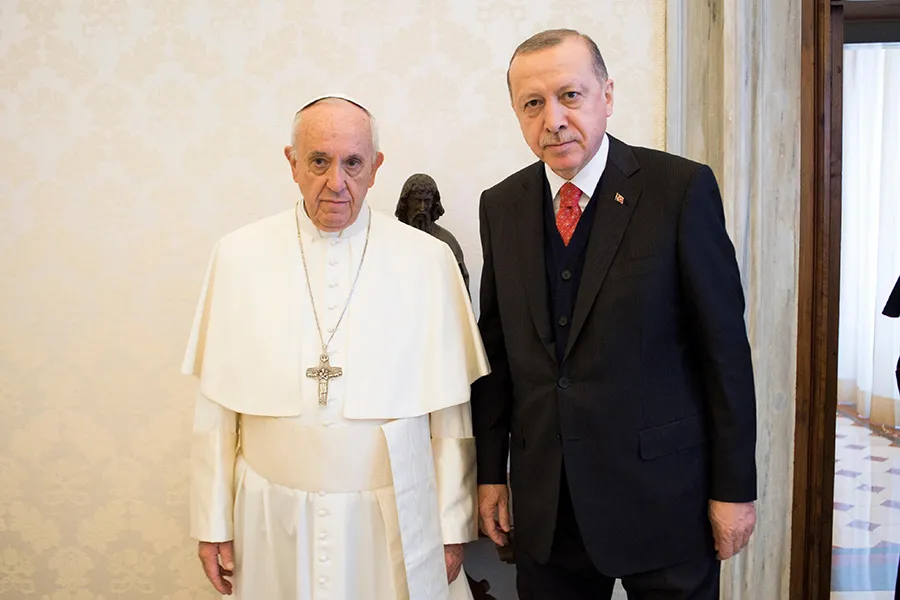
Vatican City, Feb 5, 2018 / 01:00 pm (CNA/EWTN News).- On Monday, Pope Francis and the president of Turkey, Recep Tayyip Erdo?an, met at the Vatican, discussing the situation in the Middle East, in particular the status of Jerusalem, and the need for peace and stability in the region.

According to a Feb. 5 Vatican communique, the “cordial discussions,” which lasted around 50 minutes, highlighted “the need to promote peace and stability in the [Middle East] through dialogue and negotiation, with respect for human rights and international law.”

The two also discussed the bilateral relations between Turkey and the Holy See and the condition of the Catholic community in the country, as well as the challenges of receiving refugees and the efforts being made in this regard, the communique stated.

This was the second meeting between the two leaders and the first time a Turkish president has visited a pope in 59 years. The first meeting between Francis and Erdo?an occurred Nov. 28, 2014, during the Pope’s three-day visit to Ankara and Istanbul, Turkey.

Near the end of their meeting, the Pope gifted Erdo?an a small medallion, depicting an angel of peace choking a demon of war, and told Erdo?an that it is the symbol of a world based on peace and justice.

He also gave the president an etching of St. Peter’s Basilica, depicting the basilica as it looked in the 1600s, as well as the customary gift of copies of his environmental encyclical Laudato Si and his message for the World Day of Peace 2018.

Erdo?an gave the Pope a large image made of hand-painted tiles, depicting a panoramic view of Istanbul, including the Hagia Sophia and the historic Sultan Ahmet Mosque, also known as the “Blue Mosque.” Seeing the painting, Francis said, “beautiful, beautiful.”

He also gave the Pope four books by Rumi Mevlana, an Iranian theologian who lived with dervishes in Turkey for many years, along with a copy of the Masnavi, which is a poem written by the Persian Sufi poet Rumi, and as two books about the poet’s life.

There were around 20 people in Erdo?an’s delegation, including his wife and son, and his son-in-law, Turkey’s Minister of Energy. At the end of the meeting, Pope Francis accompanied the first lady to the door. Francis asked her to “pray for me,” to which Erdo?an said, “we too expect a prayer from you.”

Afterward, Erdo?an met with Secretary of State Cardinal Pietro Parolin and Secretary for Relations with States Archbishop Paul Richard Gallagher.

Kurdish demonstrators in Rome protested the meeting, because of Turkey’s military offensive on Kurdish areas in northern Syria, which began last month.

When Erdo?an left the Vatican, protesters tried to make their way into St. Peter’s Square, but were stopped by riot police, and at least one person was injured in the altercation.

Demonstrators had also tried to enter St. Peter’s Square on Sunday, but were blocked by police. 150 protesters also set up on Monday near Rome’s Castel Sant’Angelo, a monument close to the Vatican, holding Turkish Workers’ Party (PKK) flags.


[…]

No Picture
News Briefs

Holy habits: what school sisters bring to the classroom

February 2, 2018 CNA Daily News 0

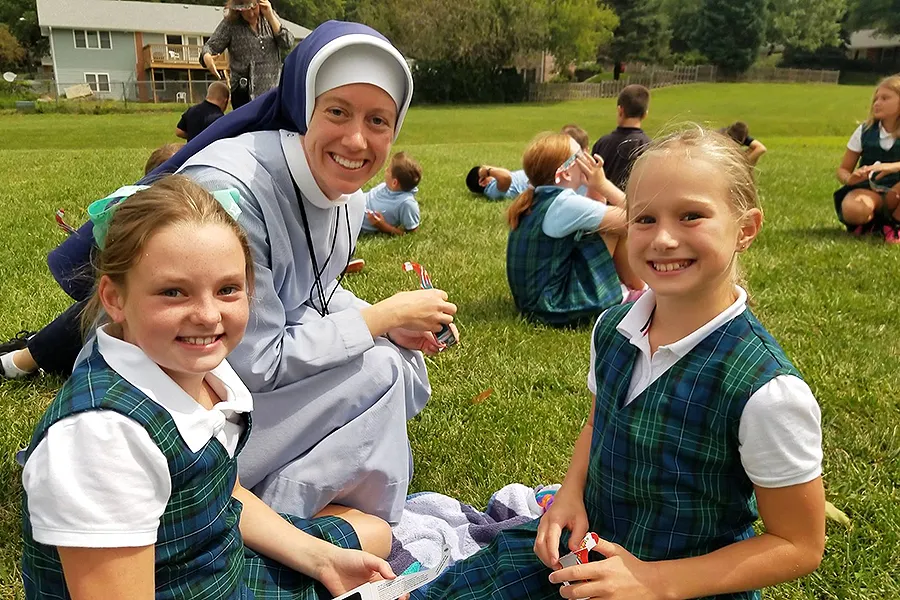
Denver, Colo., Feb 2, 2018 / 05:00 am (CNA/EWTN News).- In Lincoln, Nebraska, you can tell the seasons by the habits of the School Sisters of Christ the King.

It’s not really summer until you spot a “CK Sister”, as they are affectionately known, walking around in her lighter blue summer habit.

But when a CK sister is donning her dark blue habit, that means the months are turning colder. And when the dark blue habits come out, you can find almost every CK sister in a classroom, teaching in one of the 27 Catholic elementary schools in the diocese.

Religious school sisters are a fairly common sight in the Diocese of Lincoln, which has two diocesan orders of women religious – the Christ the King Sisters as well as the grey-habited Marian sisters, many of whom can also be found teaching in the local Catholic schools.

In much of the rest of the country, however, religious sisters are something of a rare novelty – though they used to be a much more common sight in the United States.

In 1965, there were nearly 180,000 women religious in the United States, many of them school teachers, according to data from the Center for Applied Research in the Apostolate out of Georgetown University.

By 2014, there were less than 50,000 religious sisters, the numbers having steadily declined over the past half-century in the post-Vatican II upheaval that was felt in many parts of the Church around the world.

It was in the midst of this upheaval and decline that Bishop Glennon Patrick Flavin, then of Lincoln, decided to found the Christ the King Sisters as a religious order dedicated specifically to teaching children.

“He noticed that there were a good number of sisters in our schools in the 50’s and 60’s, but by the 70’s the sisters were starting to pull out of our classrooms,” Sr. Mary Cecilia, a Christ the King Sister, told CNA.

Bishop Flavin had difficulty finding already-established religious orders that were able to come to the Diocese of Lincoln, and eventually felt called to found a diocesan order dedicated specifically to teaching, Sr. Mary Cecilia said.

“He knew that our seminaries were growing and increasing in number, and he thought if the Lord was calling this many young men to serve as priests then he was probably calling young women to serve as sisters also,” she said.

Sr. Mary Cecilia, who now serves as principal of St. Joseph’s Catholic School in Lincoln, said that Bishop Flavin founded the order with the idea that a good religious education would strengthen the faith of much of the laity in the diocese.

“He wanted to extend Christ’s reign in whatever place possible…and he realized what was so important to make that happen was Catholic education. Because if we can reach the young people in the diocese, we not only reach the young people but we also reach their parents and families,” she said.

“He realized that one of the best ways to really nurture their faith in the lives of these children is through the consecrated life, through having sisters present in the schools, the value of the witness of a religious – their life totally dedicated to God, their gift of self-sacrifice, being a spiritual mother to every single student in the school,” she added.

For herself, Sr. Mary Cecilia said she knew from a young age she wanted to teach.

“I have a brother who’s a priest – he often talks about how I used to play school so everything he knows about teaching came from me when he was little,” she joked.

In college in the early 1990s, she studied high school math education and dreamed of teaching calculus and algebra to older students. But that’s also when she met the Christ the King Sisters, who only teach at the elementary level.

“I realized oh they’re joyful, they’re young, vibrant, I like that,” Sr. Mary Cecilia said.

Even though she was drawn to religious life as a CK Sister, she was still hesitant about teaching at the younger level – “that was something that I had to take to the Lord,” she said.

Ultimately, though, the spirit of the CK Sisters, their depth of prayer, their warmth, and their dedication to education were what drew Sr. Mary Cecilia to them.

“We are extending the kingdom of God in Catholic schools, and Catholic schools are so important to me primarily because of my own education in Catholic schools,” she said.

Sr. Mary Agnes belongs to another religious order, the Sisters of the Immaculate Heart of Mary in Wichita, Kansas, that is also primarily dedicated to the education and formation of young people.

A veteran teacher of 10 years, Sr. Mary Agnes said she believes that religious sisters bring something unique to the classroom that other teachers cannot, even though at a basic level, they perform the same functions.

“Our vocation is to be a more radical, vivid sign of the presence of Christ in the world, and then hopefully through that witness draw people to an encounter with Christ,” she told CNA.

“We do really similar things that other people do who are not sisters,” she said. “So (the value of) religious life is not about doing, it’s about witness and the being of the person. Our vocation is to be a more radical, vivid sign of the presence of Christ in the world, and then hopefully through that witness draw people to an encounter with Christ.”

Perhaps some of the most well-recognized teaching sisters in the Catholic Church in the U.S. today are the Dominican Sisters of St. Cecilia based in Nashville, Tennessee and the Dominican Sisters of Mary, Mother of the Eucharist, based in Ann Arbor, Michigan.

Both orders, primarily dedicated to education, have sisters teaching on Catholic campuses throughout the country.

“We belong to the Dominican Order and our charism is preaching and teaching.
Women religious have been an integral part of the history of Catholic education in the United States,” Sr. John Dominic with the Dominican Sisters of Mary Mother of the Eucharist told CNA.

“As Dominican Sisters of Mary, Mother of the Eucharist, we seek to continue the tradition of educating generations of young people in their faith and most of all, to bring youth into a deeper relationship with Christ,” she said.

Despite the general decline in religious life that has been happening over the past few decades, both Dominican orders have seen a boom in young vocations in recent years. The Dominican Sisters of Mary recently opened a new priory in Texas in order to accommodate all of the young women discerning religious life in their order.

When asked what is drawing so many young women to their order, Sr. John Dominic responded: “The young people are responding to God’s invitation to ‘come and follow Him’.”

Sr. John Dominic said the depth of the prayer life of the sisters and the close relationship with the Lord that their way of life allows lets them bring the fruits of their spiritual life to their students.

“Pope Saint John Paul II once described women religious as being a ‘sign of tenderness’ in the world. From my experience in working with Sisters in schools, this is precisely what many of them bring – tenderness and an intuitive heart,” she said.

Sr. Mary Agnes said she is always humbled when parents and students recognize the unique gifts and witness that religious sisters bring to the classroom.

“…that to me is the most striking, when the students come back after they graduate and they’re so excited to express: ‘Thank you what you’ve done for me.’ Many times they don’t recognize it at the time but then they do say thank you I’m glad that you taught me, I’m glad you were there for me, and it’s so humbling,” she said.

Sr. Mary Cecilia said that she would encourage young women considering religious life not to be afraid, and to encounter sisters up-close before believing some of the misconceptions about religious sisters that exist.  

“When I was younger I thought that all sisters instantly became like 70 once they put that habit on, and that’s not true!” she said. “None of our sisters are 70 yet.”

On a more serious note, she added, “I think one of the misconceptions out there is that you have to give up everything that you hold dear, that you have dreams of, in order to do this. And in reality you do but it’s not the giving up that you focus on,” she said.

“It’s what takes its place – your relationship with the Lord, and being able to be filled with an intense and immense love for him, and therefore an immense love for the people you’re asked to serve.”


[…]

No Picture
News Briefs

Slain Maltese journalist fought for her convictions, priest says

February 1, 2018 CNA Daily News 1

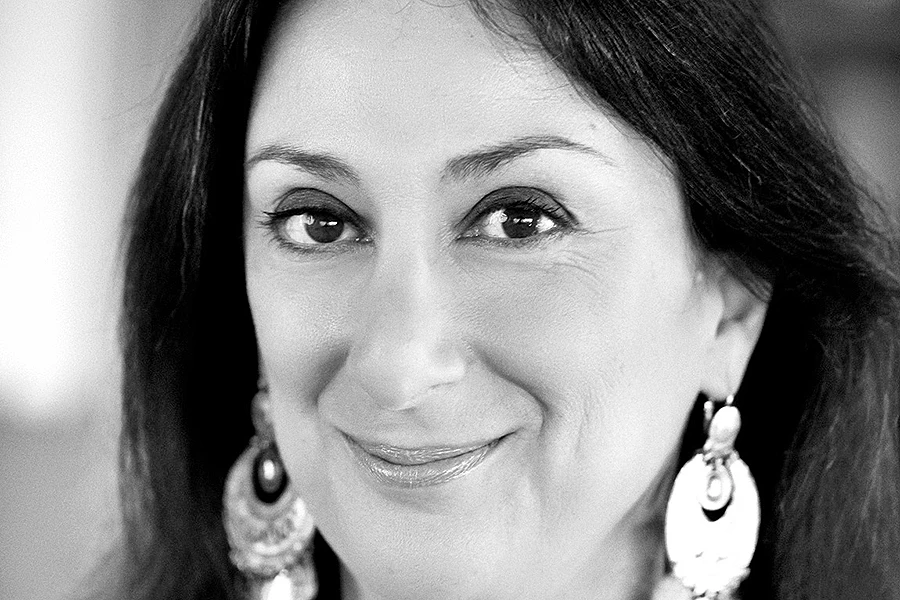
Valletta, Malta, Feb 2, 2018 / 12:00 am (CNA/EWTN News).- A close friend of slain Maltese journalist Daphne Caruana Galizia says the reporter’s life and death is a reminder that “one should have the courage to stand for one’s convictions.”

Maltese priest Fr. Joseph Borg spoke with CNA about Galizia’s legacy.

A well-known Maltese journalist famous for her shocking, in-depth stories exposing government corruption, Galizia was assassinated in October 2017 when a rental car she was driving exploded as she left her home in Bidnija. Three people have been arrested in connection with the bombing.

She was frequently threatened because of her work, and was best known for her investigations into corruption among the Mediterranean nation’s politicians.

Shortly before her death, Galizia had suggested on her blog that Prime Minister Joseph Muscat and his wife had used offshore bank accounts to hide payments from the Azerbaijani ruling family.

Galizia’s claims about the Maltese minister triggered early elections in the country, from which Muscat’s Labour Party managed to come out victorious.

Fr. Borg, Director of the Maltese Catholic radio RTK, was familiar with Galizia and wrote an obituary for her in The Guardian after her death. The two had a friendly relationship and were familiar with each others’ work. He had defended her work publicly, and at one point gave evidence in her defense during a court case against her.

In an interview with CNA, Borg said Galizia, who investigated Maltese connections in the 2015 Panama Papers leak on her blog “Running Commentary,” was aware that her work was unlikely to make an impact, but she was nonetheless committed to telling the truth.

When it came time for the elections after the leak, he said Galizia told him “I know that what I’m writing will not make a difference for the election result, people don’t care, but I have to write it because someone has to write it. We have to document what’s happening.”

Journalists have a responsibility to pursue stories like this, Borg said, stressing that “we can’t be consequentialists. We can’t say, ‘what will be the effect if it’s true?’”

“If it’s public interest we have to write it,” he said, explaining that while it is unethical to publish false information, “you can also be unethical by not writing something that you should write, not writing something that is of public interest…(this) is unethical.”

He said Galizia first got involved with investigative stories on corruption scandals during Malta’s election in 1981, two years after Britain pulled troops off the island in 1979. A constitutional crisis emerged when the Labour Party, despite taking in less votes that the opposing Nationalist Party, managed to end up with more seats in parliament.

Protests erupted, rapidly turning violent. Galizia became active in covering the story, writing for both the The Sunday Times of Malta and the Malta Independent, where she had a regular column, until her death.

In 2008 she launched her blog, which quickly became one of the most popular websites in Malta, as she could publish stories and commentary that weren’t able to be printed in the papers.

In this sense, Borg said one of Galizia’s greatest contributions to journalism is that “she gave hope to people. You go to her with a story and it gets published. She takes risks if she believes in people.”

Despite her high readership and Galizia’s efforts to unveil the shadowy misdeeds of those in power – including a Maltese politician who reportedly visited a brothel during a trip to Germany – Borg said the public was largely indifferent.

“The irony is that the economy was good and it became better, so people didn’t care,” he said.

“Even if you look at the demonstrations that were done after her funeral, one was very great, but then people dwindled. This is the situation. Most people reason out and say ‘I’m okay, what’s the big fuss? All of them are corrupt, so who cares?’”

Borg said if reporters stop covering difficult stories because of indifference, “what use is journalism?”

Using a colloquial Maltese phrase, he said it would be like “’a sun that does not heat’ – is it better that it’s cold?”

Galizia was able to raise the bar for journalism in Malta, Borg said, explaining that many Maltese journalists were in some sense “offended” that people went to her with the good stories, instead of them.  

Because of this, “now we have many people in mainstream journalism who have been trained to compete with her to get better stories,” Borg said, so “that was another contribution.”

He also pointed to Galizia’s “total disregard of a consequentialist approach to journalism,” and her attitude that “you have to do what you have to do” for the sake of public interest.

“She was not perfect, sometimes she got stories wrong, sometimes she also had gossipy parts, [but] most of the time she was incredible,” he said. “The main stories, what she wrote about corruption in Malta, incredible.”

“Her courage has inspired other journalists to go after more stories and we are getting more stories,” he said. And while some of this can be attributed to the fact that people simply need to find someone else to run their story, “journalists feel a bit ashamed if they don’t sort-of take risks like her.”

This is one of Galizia’s “best contributions to journalism in Malta,” Borg said, adding that other people and organizations should have the same courage to stand up for the truth, because “if someone who is alone does it, if you are part of an organization or institution, why shouldn’t you?”


[…]

No Picture
News Briefs

‘God had his hand on us’- An interview with the real-life heroes of ‘15:17 to Paris’

February 1, 2018 CNA Daily News 0

Denver, Colo., Feb 1, 2018 / 12:04 pm (CNA).- On August 21, 2015, childhood friends Anthony Sadler, Alek Skarlatos and Spencer Stone were just three Americans enjoying a European adventure.

They had planned to stay in Amsterdam an extra day, but changed their minds last minute and boarded the express train to Paris. They didn’t expect to come face-to-face with an armed man who would open-fire in their cabin, which was carrying 554 passengers. But they did.

They didn’t have much time. Stone tackled the gunman first, and worked together with Sadler and Skarlatos to overpower the man and effectively thwart the attack.

The gunman, who was identified as Ayoub El-Khazzani, was a Moroccan national who had been on the radar of several European counterterrorism agencies. He was carrying several weapons, including a Kalashnikov, automatic pistol and razor blades.

However, the three American men – plus one British man named Chris Norman – were able to successfully stop El-Khazzani before the attack turned fatal. Stone sustained serious injuries which required surgery. But they prevented something far worse.

At the time, Sadler was just a senior in college at Sacramento State University, while Skarlatos and Stone were in the military. The three had been friends since middle-school.

Now, the heroic trio are starring in the latest Clint Eastwood film, “15:17 to Paris.” They play themselves and recount the entire event on the big screen.

The film’s will be released in theaters nationwide on Feb. 9.

CNA recently interviewed Sadler, Skarlatos and Stone. Below is the full interview, edited for clarity.

Can you share a little about your faith and the impact it has had on your lives?

STONE:    I was raised in a Christian home, my entire life. Went to church every Sunday with my mom and brother and sister and Wednesday night church, too. I believed [in God] my entire life. God for me is someone that is always there and always will have my back, whether it’s a good or bad situation. And it’s in the Bible, He’s not going to put you through anything that you can’t handle.  And, I think that’s what I fell back on in the moment on the train. I didn’t necessarily at that second think ‘God’s got my back,’ but I knew it. There was an opportunity to do something good. I believe those are the times where we’re vessels to be used by Him, to do His work. And it was an honor to do something that good. 

SADLER:  I’ve been going to church all my life. My dad is a pastor. He became a pastor when I was older. We were a strong Baptist household. We went to church every Sunday, all the services. My family is Christian, faith-believing and I’ve grown up that way. And as far as on the train that day, God had His hand on us, because so many things could’ve went the other way for us.  And the fact that they went the way they did, it’s divine intervention. It’s that by definition. We knew He had His hand on us, because of the calm that we had as we were falling into our different roles that day – looking back on it in hindsight. That calm, I know where that comes from now that I’ve had a chance to evaluate that day. And I’m thankful that He had His hand on us that day. 

SKARLATOS: I grew up next to Spencer’s family. We went to the same church for the longest time. We all met in a Christian school. I’ve been to church pretty much ever since I can remember.  If you look at the statistics of everything that happened, the odds of being in a terrorist attack are astronomical, the odds of surviving it, the odds of surviving it and being the ones that stopped it. There’s so many little circumstances. The odds of our exact situation happening to us are too astronomical to believe that it was purely chance, especially when you look at the fact that we were thinking about staying in Amsterdam another day and we didn’t. The fact that we moved seats from coach to first class. So many different little things that are hard for even us to remember – all the different circumstances that put us there in that exact time and place. But to me it’s too coincidental to be chance. God had a hand in it, because we shouldn’t be here today to be honest.

How did your faith influence your actions on the train? What prompted you to act so heroically in the face of eminent danger?

SADLER:    We were vessels being used. I don’t even know how I got the first aid kit, but somehow it was in my hands. Alek was doing his thing clearing the car. Spencer saw somebody was bleeding and crawled over there. When did we think of that? We didn’t think. We were just being used. 

STONE:    How well everything fell into place, you would think we rehearsed it. It was pretty much like we took over the train. I never felt more calm in my entire life. I knew exactly what we should do in that moment. It almost felt like someone pushed me towards it. I knew in my mind I had to go, and something greater stood me up. I think that’s why they’re still confused about how I got up so fast. I don’t know how I got up so fast either. I’m pretty slow!  

What was your experience like filming “15:17 to Paris,” and reliving those tense moments on the train?

STONE:   It was pretty crazy when we did the scene of Mark bleeding out. That was the only time I really felt like I had a true flashback, because everything was the same. It was the same amount of blood, same clothes. That was probably the most memorable part on the train for me. 

SKARLATOS: It definitely made it easier to get back into character. You have to remember how it was on the actual day. And, I don’t know about the other guys, but it would trigger an adrenaline rush in me and it make it easier to feel the same emotions that we actually felt the day on the train. 

SADLER:  It shows how much the details matter, like same clothes, same people, train attendants, everything. That made it all feel authentic. 

What do you hope viewers will take away from the film?

SADLER:   I want them to take exactly what it is. The fact that we’re three ordinary guys that were faced with an extraordinary, crazy situation. And the reason why we acted the way we did that day is because of our friendship – the back-story matters. And then take away that they can, as people, a regular person, do something great, too. To feel like things are possible that they previously didn’t think were possible. 

STONE:  I want them to take away that in our story, we thought we had no chance at all. I thought I was going to die. We’re all regular people. We’re very regular guys.

How has your experience on the train/filming the movie impacted your lives moving forward? Has it changed the way you live, or taught you any particular lessons?

SKARLATOS: I think making the film taught us a lot about ourselves. Then working through the process ourselves, we discovered a lot of things about ourselves, about our friendship, how we interact. And, for me I learned from the movie not to be afraid to try new things in life.

It cured a lot of my fears, even of public speaking. You know, if I can survive a terrorist attack, when the next challenge in life comes, it’s nothing in comparison.

STONE:    We definitely learned a lot about each other throughout the last two years in general. We’ve known each other our entire lives, but, we’ve spent most our lives apart, going off on our own paths and different avenues. We, in a sense, got to learn more about each other as adults and through this experience. We knew each other, but now we really know each other. And we’re bonded forever through all of our experiences.

SADLER:    For me it was the first time in my life I finally felt like I was on track. I was going to go into my senior year at college and I didn’t know after that year was over what I was going to do next.

And then once the attack happened and everything else that’s happened in the last two years, and the fact that the movie happened, the way it’s all lined up, I feel like I’m finally on the track that I’m supposed to be on. So, I don’t know what comes next, but I’m on the plan that’s been set for me. That’s a good feeling, I have confidence in knowing I’m going in the right direction.


[…]

No Picture
News Briefs

In February prayer video, Pope urges global leaders to resist corruption

February 1, 2018 CNA Daily News 0

Vatican City, Feb 1, 2018 / 10:26 am (CNA).- Pope Francis in his latest prayer video places a spotlight on the problem of corruption, saying that it is the root of most societal evils and praying that those in power would be able to resist its allure.

The video, released Feb. 1, opens with the dramatic image of a young girl with a dirty face and clothes holding an infant, and who appears to be part of a group of migrants or refugees.

This image is followed by a series of others showing child laborers and buildings destroyed by bombs as the Pope speaks in his native Spanish, asking, “What is at the root of slavery, unemployment and disregard for nature and goods held in common?”

As the music transitions to the sound of shattering glass, the Pope says the answer is “corruption,” which he describes as “a process of death that feeds the culture of death.” This, he says, is “because the thirst for power and possessions knows no limits.”

The screen, showing an image of a prostitute soliciting customers, is dissolved and replaced by an image of a beach filled with waste, which in turn is followed by an image of an Italian monument commemorating the 1992 “Strage di Capaci,” referring to a massacre in which Sicilian mafia branch Cosa Nostra killed anti-mafia judge Giovanni Falconi, his wife and their three bodyguards.

This image is then replaced by someone opening a briefcase of money and passing a handful to another person behind his back.

“Corruption,” Francis says, “is not countered with silence. We must speak about it, denounce its evils and try to understand it so as to show our resolve to make mercy reign over meanness, beauty over nothingness.”

As he speaks, images of nature, the Pieta and the Sistine Chapel are shown. Francis then closes his video asking viewers to join him in praying “that those who have material, political or spiritual power may resist any lure of corruption.”

Corruption is one of the topics Pope Francis has been most outspoken about since the beginning of his papacy almost five years ago, saying in one 2016 general audience that to be corrupt “is to become a follower of the devil, the father of lies.”

He recently returned to the topic during his Jan. 18-21 visit to Peru, which is one of several Latin American countries to be hit with a wide-scale corruption scandal involving several of their former presidents, and accusations against sitting President, Pedro Pablo Kuczynski Godard.

In his address to diplomats and civil authorities, the Pope said Peru is a country that has a lot of hope, but warned that “a shadow is growing” through corruption that could smother the potential to do good.

Corruption “increasingly contaminates the whole system of life,” he said.

In a forward for “Corrosion,” a book-length interview of Cardinal Peter Turkson published in June 2017, Pope Francis said corruption is a “cancer that (burdens) our lives.”

He said phenomena such as exploitation, human trafficking, weapon and drug trafficking, social injustices, slavery, unemployment, and carelessness for nature can all be traced back to corruption, which is “a profound cultural question that needs to be addressed.”

And the Church, he said, “must listen, raise herself and bend herself on the sorrows and hopes of people according to mercy, and must do so without fear of purifying herself, assiduously seeking a way to improve.”

An initiative of the Jesuit-run global prayer network Apostleship of Prayer, the Pope’s prayer videos are filmed in collaboration with Vatican Media and Argentinian marketing association La Machi.

The Apostleship of Prayer, which produces the monthly videos on the Pope’s intentions, was founded by Jesuit seminarians in France in 1884 to encourage Christians to serve God and others through prayer, particularly for the needs of the Church.

Since the late 1800s, the organization has received a monthly, universal intention from the Pope. In 1929, an additional missionary intention was added by the Holy Father, aimed at the faithful in particular.

However, as of last year, rather than including a missionary intention, Pope Francis opted to have only one prepared prayer intention – the universal intention featured in the prayer video – and will add a second intention for an urgent or immediate need should one arise.

In a press release for the new video, Cardinal Turkson, prefect of the Dicastery for Promoting Integral Human Development, said “we shouldn’t speak about resolving the issue of corruption in theory.” Rather, “we should confront corruption in every sector. It is the poor who pay for the parties of the corrupt.”

According to the release, the video is the latest in a series of initiatives from the dicastery aimed at drawing attention to the worldwide problem of corruption.

Among these initiatives was a June 15, 2017 conference on corruption that coincided with the release of Turkson’s book. The dicastery will also be hosting a conference on corruption in Naples Feb. 3, where the Pope’s prayer video will be shown.

[…]

No Picture
News Briefs

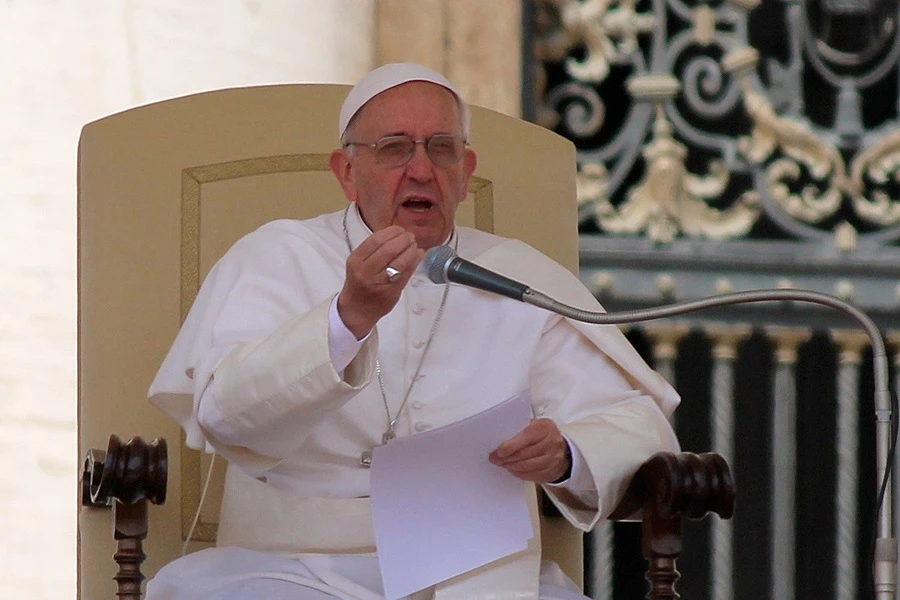
Find good readers for Mass, Pope Francis says

January 31, 2018 CNA Daily News 2

Vatican City, Jan 31, 2018 / 05:36 am (CNA/EWTN News).- On Wednesday Pope Francis spoke about the importance of the Liturgy of the Word, and therefore, also the importance of having lectors who can proclaim the readings and the Responsorial Psalm well…. […]

No Picture
News Briefs

Why more Catholic schools are looking to minimize screen time

January 31, 2018 CNA Daily News 0

Denver, Colo., Jan 31, 2018 / 05:00 am (CNA/EWTN News).- Not long ago, introducing more technology into the classroom meant allowing third graders to play 15 minutes of Oregon Trail during recess time.

In recent years, particularly after the emergence of smartphones and other mobile devices circa 2012, for many schools it has meant an iPad for every student, laptops in every classroom.

However, new research has begun highlighting the detrimental impacts of excessive screen time, particularly on developing brains and on education, sparking concerns among educators and parents. Even tech industry giants are starting to speak openly about the dangers of internet addiction and the need to monitor children’s screen time.

For Catholic schools, the issue is especially pressing, some school leaders say, because Catholic schools are concerned with the human and spiritual formation of their students.

Michael Edghill, principal of Notre Dame Catholic School in Wichita Falls, Texas, told CNA that his biggest concern is a tendency to let technology become the main driving force of education, rather than a tool of support for teachers and students.  

“For a Catholic school, that is a bad paradigm to fall into because it takes a rightly formed person to undertake the task of human formation, which is the mission of Catholic education,” he said. “No machine or technological tool can appropriately engage in the formation of the soul.”

Jean Twenge is a psychologist and the author of “iGen: Why Today’s Super-Connected Kids Are Growing Up Less Rebellious, More Tolerant, Less Happy–and Completely Unprepared for Adulthood.”

Twenge told CNA that her research found the “sweet spot” for screen time for teenagers should be about 2 hours per day “for mental health, happiness, and adequate sleep. Beyond that, the risks increase, topping out at the highest levels of use.”

Notably, but perhaps not unsurprisingly, most US teens report average daily screen times well over the recommended two hours.

In 2015, research group Common Sense Media reported that more half of US teenagers spend at least four hours a day on a screen, while 25 percent of teens reported even higher uses – more than eight hours daily – with the potential of detrimental effects.  

“For example, teens who use electronic devices 5 or more hours a day are 71% more likely to have a risk factor for suicide than those using devices less than an hour a day,” Twenge said. “They are also 51% more likely to not sleep enough. Teens who are online 5 or more hours a day are twice as likely to be unhappy as those online less than an hour a day.”

As for educational impacts, research has also found that smartphones can impact a person’s ability to think simply by being within reach – even if they are turned off. Another study found that students taught in computer-less classrooms performed significantly better on tests than their counterparts taught in classrooms with iPads and computers

The human, relational and educational concerns are why some Catholics schools are taking steps to limit, if not completely ban, the use of smartphones and iPads in the classroom.

St. Benedict Elementary in Natick, Mass. is one Catholic school that has taken the approach of not using electronic technology in the classroom at all, except for very limited ways in the higher grades.

Jay Boren, headmaster of St. Benedict, told CNA that this is because the classical academy was founded by parents who had a desire for their school to be different.

“There are studies that show that (student) memory retention is better when they have written the information as opposed to having typed it. There are also benefits to learning cursive,” Boren said.

“In addition, an environment that is not inundated with fast-paced technology…allows students to cultivate the ability to sustain attention, develop concentration, and appreciate silence, which are the necessary dispositions to ponder truth, beauty, and goodness,  We feel that those skills, are more important at this age level than mastering a screen that they will certainly be exposed to throughout their life at other times.”

On the other hand, Fr. Nicholas Rokitka, OFM Conv., teaches at Archbishop Curley High School in Buffalo, New York, which implemented a 1-to-1 iPad to student program four years ago.

“My major concern about technology in the classroom is the inability of the students to focus on the topic at hand and listen to the teacher,” Rokitka told CNA. “It certainly has changed the way teachers and students interact.”

Rokitka said that games and entertainment are always a potential distraction with the iPads in the classroom. While he has his room set up in a way that allows him to monitor his students’ iPad use closely, such monitoring “takes up a lot of my energy.”

There have been some positive impacts, Rokitka noted – the school has saved a lot of paper using digital homework and tests, and performance trends can be more quickly and easily recognized and addressed.

However, he added that without intentionality behind its use, technology negatively change the way students relate to one another and the world.

“On a very fundamental level, technology changes how people interact with each other. If technology is accepted wholesale without and intention, it will do more harm than good. When digital communication and social media replace face-to-face interaction, the students lose their ability to communicate,” he said. “This problem is way larger than just schools, but ultimately teachers and schools can have a dramatic input on how children learn how to use technology.”

Twenge said that she recommends schools ban the use of cellphones not only in the classroom, but during lunch as well, in order to give students a chance to interact with each other without a screen.

In interviews with students for her research, Twenge discovered students who would feel depressed and left out while their fellow students ignored them at lunch, favoring their phones instead, she wrote in the New York Daily News. “A no-phones-at-school rule would also help teens develop invaluable social skills. More and more managers tell me that young job applicants don’t look them in the eye and seem to be uncomfortable talking to people face-to-face. If our students are going to succeed in the workplace, they need more practice interacting with people in person,” she wrote. “They can get that right there at school – if they aren’t constantly on their phones.”

Edghill said that his biggest guiding principle in the use of technology in school has been intentionality – which is exactly why the school banned cell phone use in school during the school day.

“It was an intentional decision based on the fact that there was little to no educational benefit and a whole slew of potential and real problems,” he said.

“The unplanned side effect is that the students actually talk to one another before school in the mornings now instead of just staring at their individual screens.”

A father to four children between 14 and 3, Edghill noted that he and his wife try to implement the same intentionality with technology use at home, by enforcing limits and being consistent with them, though he admitted there has been a learning curve.

“I do think that the more time that they watch screens, the less creative and the less curious they are. But it is a constant battle. It may be one of the most counter-cultural things that we can do for our kids,” he said. “And that is saying something as a Catholic.”

It’s also important to note that technology is simply a tool, and “not an evil,” he said.

“The pope is active on social media. My bishop is active on Twitter. But it is for the greater good of reaching out to people in order to create the opportunity for an authentic encounter with Christ,” he said.  

“If the technology is replacing humanity as opposed to being used as a tool to advance humanity, that is the problem…If we miss the human element of the teacher, of person-to-person dialogue and debate, of human experience, then we can’t fully do our part to cooperate in the formation of the human person.”


[…]