No Picture
News Briefs

Black Catholic leader calls for ‘a new era of authentic love and justice’
September 21, 2020 CNA Daily News 0

CNA Staff, Sep 22, 2020 / 12:00 am (CNA).-  

A Black Catholic leader said Friday that the Black Lives Matter Global Network Foundation is the wrong organization to lead an important movement against racism in the U.S., because, he said, it asserts a relativistic agenda that will cause harm to Black families.
 
“While it is important to affirm the truth that black lives matter, unfortunately, the Black Lives Matter organization (BLM) itself is ill-equipped to lead,” Louis Brown wrote in an essay published Friday in First Things.

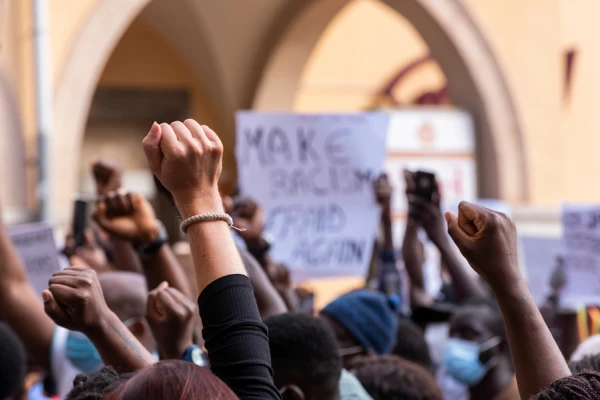
“Black lives do matter—the phrase is correct that all God’s people deserve love, dignity, truth, and freedom. Our brothers and sisters who peacefully protest for justice with signs of ‘black lives matter’ march justly. However, there is a difference between asserting ‘black lives matter’ and the BLM organization itself, which is seriously flawed.”

Brown, executive director of the Christ Medicus Foundation, is an attorney who worked for the Democratic National Committee, before his pro-life views led him to leave the position. Brown has worked for both Democratic and Republican lawmakers, and in a senior position in the civil rights office of the federal department of Health and Human Services.

The phrase “#BlackLivesMatter” began to trend online following the death of Trayvon Martin in 2012, and a movement grew amid protests and riots in Ferguson, Missouri in 2014 after a young black man, Michael Brown, was shot in an altercation with a police officer.

“Black Lives Matter” has become the rallying cry for a broad social movement. But there are also specific organizations which take the name “Black Lives Matter.” The largest and best-funded of those groups is the Black Lives Matter Global Network Foundation, which has a network of local chapters around the U.S. and in other countries.

Brown said that organization “asserts a worldview of moral relativism that recognizes no objective truth, ‘disrupts’ the natural family, and undermines the natural law foundation of civil rights. Its agenda divides people in an arbitrary manner that will, ironically, lead to greater strife especially for black families.”

“By advocating for gender ideology, BLM rejects the basic truths of human dignity in the natural law. Gender ideology replaces the scientific and biological reality of maleness and femaleness with the false belief that one’s sex can be changed. However, as both Pope Francis and the African Cardinal Robert Sarah have asserted, gender ideology is a false construct with no basis in scientific reality. Gender ideology is destructive because it rejects the truths of male and female existence. There can be no dignity or freedom without truth,” he added.

The website of the Black Lives Matter Global Network Foundation recently altered a page outlining controversial beliefs of the organization on the family and sexuality.

As recently as Sept. 17, the organization’s “about” page said the group was a “a queer‐affirming network” that works toward “freeing ourselves from the tight grip of heteronormative thinking, or rather, the belief that all in the world are heterosexual,” to “dismantle cisgender privilege,” and to ‘disrupt’ the ‘nuclear family.’

New text on the group’s website reaffirms its positions on gender ideology, saying that “Black liberation movements in this country have created room, space, and leadership mostly for Black heterosexual, cisgender men — leaving women, queer and transgender people, and others either out of the movement or in the background to move the work forward with little or no recognition.”

Brown is not the only Black Catholic leader to criticize the Black Lives Matter Global Network Foundation, and distinguish it from important calls for racial justice.

“It’s time to state honestly what BLM really stands for – destroying the traditional Family AND what it actually does – destroying property including religious building and objects!” tweeted Cardinal Wilfred Napier of Durban, South Africa, who himself is Black, on Aug. 28, in reference to the organization. Napier was a part of the Church in South Africa’s struggle against apartheid.

Deacon Harold Burke-Sivers, a Black Catholic deacon of the Diocese of Portland, Oregon, author, and co-host of EWTN’s Morning Glory radio show told Catholic World Report in August that, like Brown, he draws a distinction between a movement and an organization.

“When you put those three words together—black lives matter—as a social movement, it’s a statement of truth, which is a good thing.”

“But the term ‘black lives matter’ has been conflated with the national organization, Black Lives Matter. In a lot of people’s minds, when you say ‘black lives matter,’ people automatically think of the national organization,” he lamented.

Noting that the organization’s values “raise some red flags” for him, he mentioned especially that the Black Lives Matter Global Network Foundation does not address the importance of fatherhood.

“Look at all that, plus the violence that is being perpetrated, the rioting, the looting, the tearing down statues, all of these things,” the deacon said. “No Catholic in good conscience can have anything to do with a group like that. Period.”

Brown’s essay said that the U.S. needs to address “racial discrimination and unjust inequality,” but called for a Christian approach to those issues.

He pointed to “police misconduct and racial discrimination in our criminal justice system, and to the disproportionate suffering that COVID-19 has wrought in many communities of color.”

“As a black man, I am pained to learn of police officers killing unarmed black people.”

“As an attorney who has also worked as a staffer in Congress and the executive branch, I have seen that the majority of law enforcement officials are good people seeking to protect and serve,” Brown wrote, but “racial discrimination in the criminal justice system continues in the form of racial profiling, police misconduct, and discriminatory criminal sentencing.”

Pointing to healthcare inequality, exacerbated by the coronavirus pandemic, Brown noted that “Even once this health crisis ends, many African American communities will still not have the medical care they deserve. Historical patterns of racial exclusion have exacerbated negative health care outcomes. Ensuring that the vulnerable have access to proper medical care is necessary to restoring a culture of life.”

Brown’s essay came as polling shows declining support for the Black Lives Matter movement, and after the destruction of police stations and other public buildings amid protests in some cities, and the shooting of two Los Angeles sheriff’s deputies Sept. 12.

On that date, a gunman approached a parked police car near the light rail station in Compton, California, opening fire with a pistol at the two police officers inside. Both survived despite multiple gunshot wounds, and the shooter fled on foot.

The officers, a 31-year-old mother and a 24-year-old male, had been on the job less than a year, Sheriff Alex Villanueva said after the shooting.

The incident garnered additional attention because of a protest that took place later that evening outside St. Francis Medical Center, where the officers had been transported for surgery.

A video posted by a local journalist on the scene shows several men shouting at a group of police officers outside the hospital, and one can be heard shouting “I hope they [expletive] die.”

Police arrested two people in connection to the protest, including the journalist who filmed the scene; the journalist was released later that night with a citation for obstructing a police officer.

Protestors blocked the path of the ambulance carrying officers to the hospital, and the LA County Sheriff’s office said via Twitter: “DO NOT BLOCK EMERGENCY ENTRIES & EXITS TO THE HOSPITAL. People’s lives are at stake when ambulances can’t get through,”

News reports have not confirmed whether the protest at the hospital was an officially organized event convened by Black Lives Matter.

Protestors identifying themselves as being affiliated with Black Lives Matter have staged protests at police precincts across the country in recent months, with mobs destroying police precincts in Minneapolis and Portland in the wake of the police killing of George Floyd in May. 

Black Lives Matter Los Angeles, a local affiliate of the Black Lives Matter Global Network Foundation, did not respond to CNA’s request for comment.

Pentecostal minister Eugene Rivers, director of the Seymour Institute for Black Church and Policy Studies, told CNA he considers it “a moral disgrace that the BLM organization did not condemn the shooting of the police officers in Compton, California. Under no circumstances could the moral and political failure to speak up be justified.”

Rivers, who is Black, called the Black Lives Matter Global Network Foundation “a scam that exploits the suffering of Black people to promote gender ideology.”

The minister said the organization “is peddling morally, tactically, and intrinsically stupid ideas,” reminiscent of “the Black Panther Party, the Student Non-Violent Coordinating Committee, and Revolutionary Action Movement and others who laid out an assortment of dystopian visions for the Black community and the country in general.”

Rivers said the group has “repudiate[d] Dr. Martin Luther King’s legacy,” replacing it with “irrational ideas that have so quickly led to violence in its name rather than maintaining the non-violent high ground MLK staked out from his Christian perspective.”

Leaders of Black Lives Matter Los Angeles have said their efforts are more than a movement for racial justice, but are a “spiritual movement,” which have incorporated spiritual rituals into protests, drawing from animistic religions by calling forth deceased ancestors and pouring out libations for them.

Brown wrote last week that an authentic movement for racial justice needs to be rooted in love, and, ultimately, in Christ.

“Racial injustice is part of the culture of death. To build a culture of life in America, we need a revival of God’s love and a new era of civil rights,” he wrote.

“True justice is based on the foundational principle of civil rights: each person’s God-given natural rights as embodied in the natural law. Thanks to the natural law, abolitionists knew slavery was wrong even though civil law said it was right, and Rev. Dr. Martin Luther King, Jr. knew segregation was wrong even though the voting majority in many states likely supported it.”

“A new era of authentic love and justice is needed and will begin with a Christian revival of love for God and neighbor. This love is the only force powerful enough to bring lasting healing.”

“The Christian faithful must rededicate themselves to love through spiritual and corporal works of mercy that serve communities of color and the vulnerable. We must give the best of the Church, the Sacred Heart of Jesus, to those on the peripheries.”
 
“God calls us to do justice in bringing about the Kingdom of God and building up the culture of life,” Brown concluded.
 
“Agendas opposed to human dignity strengthen the culture of death, and can never lead us toward justice. As Christians, we must charge ahead in the love of Christ to lead a revival of God’s love and bring about a new era of Christian humanism in America.”


[…]

No Picture
News Briefs

Recalling the unlikely Ginsburg-Scalia friendship

September 21, 2020 CNA Daily News 0

Denver Newsroom, Sep 21, 2020 / 05:15 pm (CNA).- Supreme Court Justice Ruth Bader Ginsburg, who died last week at age 87, is remembered as a hero of the political left— a self-described feminist who made a name for herself by advocating for women’s equality, and for socially liberal positions such as legalized abortion and same-sex marriage.

She was, in some ways, the last person you might expect to be close friends with a conservative, committed Catholic.

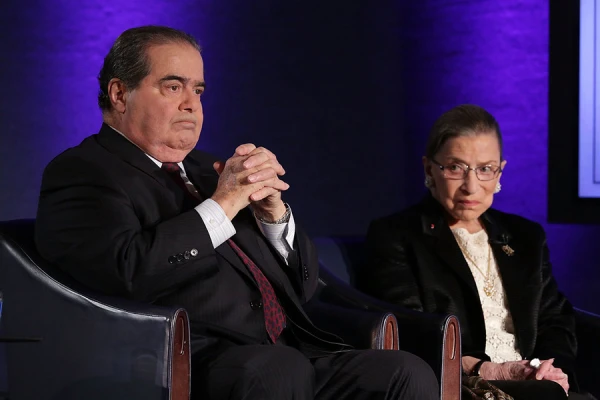
But in fact, Ginsburg had a warm friendship with the late Supreme Court Justice Antonin Scalia— a conservative icon and devout Catholic, who died in 2016.

“Their friendship can offer Americans an important lesson in these tense times. They remind us that we share a lot more than politics,” Scalia’s son, Chris, told CNA late last year.

“There’s a lot more to life than political opinion. It is possible to disagree with somebody, to have different outlooks on life and politics and the law and your profession, but focus instead on what you have in common, and the things in life that you both enjoy, and focus on those things, and develop a real friendship out of those things.”

Scalia was born in Trenton, New Jersey, the son of an Italian immigrant, and grew up in New York City. He was appointed to the Supreme Court in 1986, and served until his death at age 79 in 2016.

Ginsburg also grew up in New York; she was born in 1933 and raised in a Jewish home. President Bill Clinton appointed her to the Supreme Court in 1993.

Famously, Scalia and his wife would spend every New Years Eve throughout the 1980s with the Ginsburgs, Chris said, sometimes staying at their house talking, laughing, and debating until four in the morning.

Some years, Ginsburg’s husband would cook for dinner the venison that Scalia had gathered on his post-Christmas hunting trip.

In the minds of Scalia’s children, “the Ginsburgs were just this couple my parents got to know and really just enjoyed spending time with,” Chris said.

Another of Scalia’s sons, Fr. Paul, a priest of the diocese of Arlington, described his father as a strong personality, a strong intellect, and an unabashed contrarian who loved to debate.

“He was very much a ‘man in full’ as the saying goes, and had a broad variety of interests, from hunting and fishing to the opera,” Fr. Paul told CNA.

His father also was a proud Catholic, who loved the Mass, the liturgy, and the Church’s intellectual tradition, the priest said.

Scalia’s love of debate was one of the things that drew him to Ginsburg— a woman with whom he disagreed on many things, including many aspects of the law. But Scalia admired Ginsburg’s determination, especially in an era when it was harder for women to achieve the career success that Ginsburg attained.

“She was a sparring partner with him…My father liked people who would match him, and who would push back,” Father Paul noted.

“He would hire clerks who would challenge him on things. He wanted that. He wanted that intellectual engagement, because he knew that it was good for him. It would test his line of thought and his principles.”

As the longest serving justice on the bench at the time of his death, Justice Scalia is remembered for his strong emphasis on interpreting the law as it was originally written and intended. Ginsburg, in contrast, believed in a “living Constitution” that could be adapted to the times. The two frequently criticized each other’s legal reasoning and opinions.

In their nearly 23 years together on the bench, they heard and debated hugely consequential cases having to do with such issues as abortion, same-sex marriage, and the 2000 presidential election.

When asked about their friendship in a 2014 interview, Justice Scalia seemed to brush off suggestions that it was somehow extraordinary.

“I have never gotten angry at Ruth or at any of my colleagues because of the way they voted in an opinion. I mean, if you cannot disagree with your colleagues on the law without taking it personally, you ought to get another day job,” Scalia said.

“It’s just not the kind of a job that will allow you to behave that way. Ruth and I disagree on the law all the time. It’s never had anything to do with our friendship.”

Another facet of the Scalia-Ginsburg friendship was a mutual sense of humor, Scalia’s sons said. Scalia possessed a rich sense of humor, and loved to sing and tell jokes.

“I think one of the reasons Justice Ginsburg liked my father is that he cracked her up…She said that very few people could make her laugh out loud; basically it was her husband, and my father,” Chris said.

Scalia and Ginsburg first struck up a friendship in the 1980s, when they served together on the D.C. Circuit Court of Appeals. Chris said Scalia used to whisper jokes to Ginsburg during arguments, and she would have to pinch herself to keep from laughing out loud.

When they again sat together on the bench, this time on the Supreme Court, Scalia would pass notes to Ginsburg with jokes or funny comments on them.

“I think it strikes us as weird in part because we live in such polarized times, and because they are themselves kind of heroes of very different sides— [Ginsburg] is a legend for the left, and my father is kind of the equivalent for the conservative legal movement. So I think that makes it even stranger to people,” Chris said.

“Obviously they had big differences as far as their jurisprudence went. But it’s really not that strange when you consider the many things they had in common.”

These similarities included growing up in New York around the same time, enjoying good food and wine, and a love of opera.

There even exists a comedic opera about the two justices, called Scalia/Ginsburg, written by a graduate of the Yale School of Music-turned-law school student. The opera includes many jokes and gags that riff on the two’s intellectual and philosophical differences, but also includes moments of unity between the two characters, including a heartwarming duet.

Obviously, there were elements of their worldviews— very significant elements— that Ginsburg and Scalia did not share. Scalia was a devout Catholic, and Ginsburg and her husband Marty were secular Jews.

Still, Father Paul noted that since Scalia was so committed to living out his faith, their friendship doubtless gave Ginsburg a chance to encounter a truly lived Catholicism— and it is clear that she respected that.

“I think my father was aware of giving good witness to the Catholic faith. That was part of who he was. So in his friendship with her, that was going to be part of it…And I think this is the beginning of evangelization: simply demonstrating the ability to be a serious Catholic, but also capable of friendship, and friendship with somebody who is different and who disagrees,” Father Paul said.


[…]

No Picture
News Briefs

Catholic judge Barbara Lagoa on the shortlist of Supreme Court nominees

September 21, 2020 CNA Daily News 0

CNA Staff, Sep 21, 2020 / 03:05 pm (CNA).-  

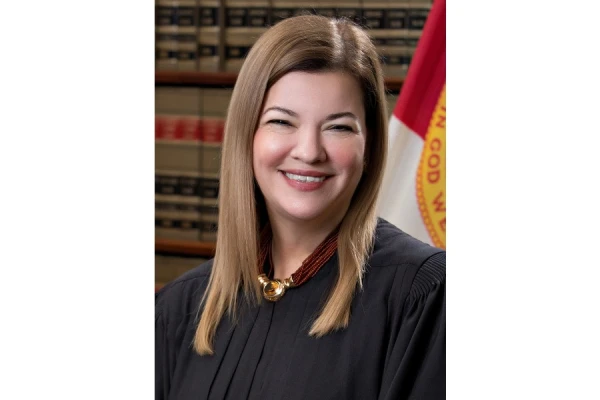
President Donald Trump’s shortlist of potential nominees to the Supreme Court includes Judge Barbara Lagoa, a Catholic who has spoken about how her faith has shaped her legal career.

Lagoa, 52, was born in Miami and is the daughter of Cuban immigrants. Trump appointed Lagoa to the U.S. Court of Appeals for the 11th Circuit in Atlanta in late 2019. She had previously served as a Justice on the Florida Supreme Court, the first Hispanic woman to do so.

President Donald Trump announced Monday that he would announce a nominee by Sept. 26 to replace the late Supreme Court Justice Ruth Bader Ginsburg, who died Friday evening at 87.

In addition to an existing White House list of two dozen potential Supreme Court nominees, Trump added 20 more names Sept. 9, including three sitting U.S. senators.

Trump said that he was “looking at five, probably four, but I’m looking at five very seriously” options to replace Ginsburg. Trump had also said he will nominate a woman for the position.

Judge Amy Coney Barrett, a Catholic, is widely reported to be the front-runner in the president’s deliberations regarding a nominee, but Lagoa is also on Trump’s shortlist, and Florida lawmakers are said to be advocating for her appointment.

Lagoa, who has three children, has spoken about the importance of the Catholic faith in her own life.

Speaking at an October 2019 dinner for the Thomas More Society, a Catholic lawyers’ organization, Lagoa praised the group’s namesake saint as a model for Catholic law professionals, who she said should not compartmentalize their professional lives from their spiritual lives.

“I suggest that in order to be a good Catholic advocate, one should start with St. Thomas More,” Lagoa told the attorneys. More, the patron saint of attorneys, is hailed for his commitment to his conscience and to Catholic doctrine, which lead eventually to martyrdom.

“It is more than going to Mass every Sunday, and to me at least, it means having a personal relationship with God that in turn informs how we treat others,” she said of her Catholic faith.

Following More’s humility in legal practice “starts with reminding ourselves, even when it is hardest, of the dignity of each human being — even the most difficult opposing counsel — and it also starts with reminding ourselves that none of us are perfect and that we ourselves can contribute to or exacerbate a difficult situation,” she said.

Lagoa also urged lawyers to ask for the guidance of the Holy Spirit, and the gifts of wisdom, counsel and fortitude, in daily life, according to the Florida Catholic.

Lagoa has also been outspoken about the importance of her own Catholic education, having attended Catholic elementary and high school in Miami.

As a Florida Supreme Court Justice, she took part in a major ruling reversing a judge’s decision striking down a Florida law that requires that people with past serious criminal convictions pay all fines, restitution and legal fees before regaining the right to vote, NBC News reported.

Lagoa is married and a mother of three.

“I think the most important thing I can tell women about their leadership roles is the thing I tell my three daughters, which is: do not be afraid of failure, do not be afraid to make mistakes, be bold, and take risks,” she said in an April 2019 interview.

“That’s the one thing I can tell you about all women who are in positions of leadership; they all have taken risks…Nothing is ever perfect. Just do it, and you will be happy that you did. Maybe you will fail initially, but failure also leads to learning.”

Since Justice Ginsburg’s death last week, pro-life and pro-abortion voices have made it clear that any nominee’s stance on abortion will be a key issue. Florida Rep. Matt Gaetz has described Lagoa as “very pro-life, reliably pro-life.”

Lagoa said in written answers to the Senate upon her nomination to the appeals court that she believes Roe v. Wade is “settled law” and that as an appellate court judge, she “would faithfully follow it as I would follow all precedent of the Supreme Court.”

“I am particularly mindful of the fact that under our constitutional system, it is for the legislature, and not the courts, to make the law. It is the role of judges to apply, not to alter, the work of the people’s representatives. And it is the role of judges to interpret our constitution and our statutes as they are written,” Lagoa said in a speech after being appointed to the Florida Supreme Court.

If the Supreme Court reverses Roe v. Wade and removes the inferred constitutional protection for abortion, the legality of abortion would be subject to state-by-state regulation.

As many as a dozen states, including New York and California, have enshrined a right to abortion in their own constitutions. Other states, such as Arkansas, have “trigger laws” on the books that would automatically ban abortion entirely if the case were overturned.

On Saturday, Americans United for Life, a major pro-life organization, endorsed Judge Barrett and urged President Trump to nominate her.

Trump’s likely nomination of a Supreme Court Justice to replace Ginsburg has become a matter of political controversy, in an already fractious U.S. political and social context.

Republican Senate Majority Leader Mitch McConnell pledged Friday that a Trump Supreme Court nominee will be voted on for confirmation by the United States Senate, even while there are fewer than seven weeks until the Nov. 3 presidential election.

Democratic leaders have pushed back, and pointed to McConnell’s refusal to consider Obama Supreme Court nominee Merrick Garland in March 2016, seven months before that year’s presidential contest. At the time, Republicans said that it would be more appropriate to wait until after the November election to fill the Court vacancy.

McConnell defended his decision Friday night, saying that “in the last midterm election before Justice Scalia’s death in 2016, Americans elected a Republican Senate majority because we pledged to check and balance the last days of a lame-duck president’s second term. We kept our promise. Since the 1880s, no Senate has confirmed an opposite-party president’s Supreme Court nominee in a presidential election year.”


[…]

No Picture
News Briefs

Cardinal Zen: Church is losing ‘credibility’ to evangelize China

September 21, 2020 CNA Daily News 1

Washington, D.C. Newsroom, Sep 21, 2020 / 01:30 pm (CNA).- The former Bishop of Hong Kong, Cardinal Joseph Zen Ze-kiun, has warned that the Church’s efforts to negotiate an extension to the 2018 provisional agreement with China are harming the evangelization of that country.

In an interview with CNA, Cardinal Zen said that the Church’s silence on Communist human rights abuses, including the detention of more than 1 million Uyghurs in a network of concentration camps in Xinjiang Province, was damaging the ability of the Church to play a role in shaping the future of the country.

“The resounding silence will damage the work of evangelization,” the cardinal said. “Tomorrow when people will gather to plan the new China, the Catholic Church may not be welcome.”

While Cardinals Zen, Charles Muang Bo of Burma and Ignatius Suharyo of Indonesia have repeatedly denounced China’s human rights violations, the Vatican, including Pope Francis, have remained silent on what human rights groups have called a “genocide” and campaign of “ethnic cleansing” against the Uyghurs as diplomatic talks continue on the future of the Vatican-China agreement.

In recent weeks, both the Holy See and the Chinese government have signaled their intention to extend the 2018 deal, which was meant to unify the country’s 12 million Catholics, divided between the underground Church and the Communist-administered Chinese Patriotic Catholic Association, and clear a path for the appointment of bishops for Chinese dioceses.

While Zen says there is a lack of visible progress on either Communist tolerance of underground Catholics or on the nomination of bishops, Cardinal Pietro Parolin, the Vatican Secretary of State, said last week that negotiations continued to “normalize” the life of the Church in China.

“With China, our current interest is to normalize the life of the Church as much as possible, to ensure that the Church can live a normal life, which for the Catholic Church is also to have relations with the Holy See and with the Pope,” Parolin said Sept. 14.

Zhao Lijian, spokesman for China’s Ministry of Foreign Affairs, said at a press conference Sept. 10 that “With the concerted efforts from both sides, the interim agreement on the appointment of bishops between China and the Vatican has been implemented successfully since it was signed around two years ago.”

Zen is not the only expert to criticize the Vatican’s agreement with Beijing. On Friday, U.S. Secretary of State Mike Pompeo called on the Holy See to take a more prominent role in opposing and denouncing human rights abuses by the Chinese government.

“What the Church teaches the world about religious freedom and solidarity should now be forcefully and persistently conveyed by the Vatican in the face of the Chinese Communist Party’s relentless efforts to bend all religious communities to the will of the Party and its totalitarian program,” Pompeo wrote Friday in First Things

“Two years on, it’s clear that the Sino-Vatican agreement has not shielded Catholics from the Party’s depredations, to say nothing of the Party’s horrific treatment of Christians, Tibetan Buddhists, Falun Gong devotees, and other religious believers,” Pompeo observed.

Pompeo noted that “as part of the 2018 agreement, the Vatican legitimized Chinese priests and bishops whose loyalties remain unclear. Meanwhile, Pompeo wrote, “communist authorities continue to shutter churches, spy on and harass the faithful, and insist that the Party is the ultimate authority in religious affairs.”

Cardinal Zen told CNA that, in his view, there is little reason to expect an extension will yield progress toward Parolin’s stated aims. The cardinal said that he had little hope a renewed Vatican-China deal would secure the future of Chinese Catholics “unless the regime collapses.”

Zen especially criticized Vatican acceptance of the CPCA, which operates under the direct control of the Chinese Communist Party. Many bishops and priests have refused to cooperate with the state-sponsored CPCA, and have said that they are expected by Beijing to sign documents acknowledging Communist teaching and the supremacy of the party over Church affairs – attestations that run counter to Catholic doctrine regarding the primacy of the pope.  

Expressing his opposition to the Communist Party’s requirements for Catholic clerics, Zen offered his assessment of the situation bluntly: “Parolin is calling a united schismatic Church, which he has produced, ‘Catholic.’”

Clergy who refuse to submit to Communist oversight continue to be arrested and imprisoned, church buildings are regularly demolished, and government officials have offered bounties of thousands of dollars for people to report underground Christian worshippers.

In Hong Kong, the diocese Zen led until 2009, the mainland government has imposed a sweeping new National Security Law, which criminalizes previously protected civil liberties under the headings of “sedition” and “foreign collusion.” Before the law’s implementation, many Catholics, including Zen, warned that it could be used to silence the Church in Hong Kong, though the law was defended by Cardinal John Tong Hon, Zen’s successor in the diocese, who is currently serving as apostolic administrator.

Since the law came into effect on 1 July, several prominent pro-democracy activists and journalists – many of them Catholics – have been arrested.

Cardinal Zen told CNA that Catholics arrested under the new law’s provisions, like Jimmy Lai, Agnes Chow, and Martin Lee, were “simply putting into practice the social teaching of the Church.”

“In this moment, democracy means freedom and human rights, human dignity,” Zen said.

The cardinal has previously warned that a crackdown on religious liberty in Hong Kong by the mainland government could see the diocese, which has enjoyed relative freedom compared to mainland dioceses since the 1997 handover from the U.K., subject to the same restrictions as Catholics on the mainland.

“We are already in that situation,” said Zen.

Recently, Cardinal Tong instructed Catholic schools and clergy to refrain for addressing contentious political issues in classrooms and homilies and instead “foster the correct values on national identity.”

Tong also intervened to stop a Catholic group affiliated with the diocese from running a prayer for democratic freedoms in Hong Kong in local newspapers.

Zen told CNA that, while he understood the sensitivity of the situation, “this servile attitude saddens me a lot.”

“We are losing dignity and credibility,” he said.

“I admit that in this moment it is very difficult to run a school. The way the government school authority is dealing with teachers is utterly disgraceful, humiliating. But we are no more in the position to defend the teachers.”

The cardinal lamented division in the Church, saying that unity among all Hong Kongers is necessary if there is to be hope of resistance to creeping Communist repression.

“The society is lacerated,” the cardinal said. “The division and contrast is everywhere: in families, in work place, obviously also among teachers and parents of the students. Are we bound to accept the position of the Government, when they impose an unjust law on the community?”

“How to teach the duty of discerning between right and wrong? Surely not by imposition but by free open discussion. But even if we dare to do this against the will of the Government, without a unanimous, or even only a strong majority [in favor], how can we proceed further?

“When the day comes that our teachers must only teach what the Government commands them to teach, against truth and justice, we may have no choice than declare publicly that the school can no more be called Catholic, because we are no more responsible for it,” Zen said.

Asked if he saw any prospect of an improvement for the local Church coming out of Vatican negotiations with the current Communist government, Zen said simply “No.”

“Is there any choice between helping the Government to destroy the Church or resisting the Government to keep our Faith?”


[…]

No Picture
News Briefs

Judge killed by mafia 30 years ago is a candidate for sainthood

September 21, 2020 CNA Daily News 0

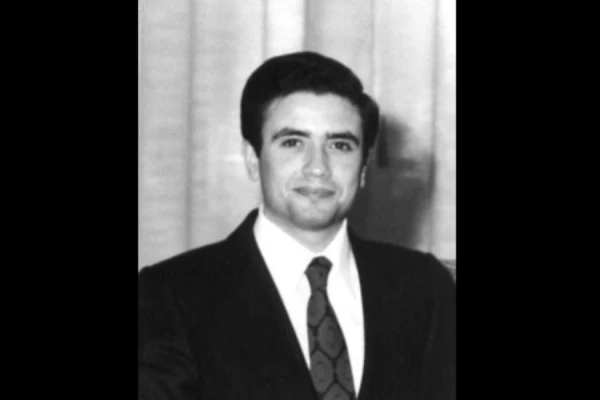
Rome Newsroom, Sep 21, 2020 / 12:00 pm (CNA).- Thirty years ago Judge Rosario Livatino was brutally killed by the mafia on his commute to work at a courthouse in Sicily. Today he is recognized in the Catholic Church as a Servant of God and a candidate for sainthood. 

Before his murder at the age of 37 on Sept. 21, 1990, Livatino spoke as a young lawyer about the intersection between the law and faith. 

“The duty of the magistrate is to decide; however, to decide is also to choose… And it is precisely in this choosing in order to decide, in deciding so as to put things in order, that the judge who believes may find a relationship with God. It is a direct relationship, because to administer justice is to realize oneself, to pray, to dedicate oneself to God. It is an indirect relationship, mediated by love for the person under judgment,” Livatino said at a conference in 1986.

“However, believers and non-believers must, in the moment of judging, dismiss all vanity and above all pride; they must feel the full weight of power entrusted to their hands, a weight all the greater because power is exercised in freedom and autonomy. And this task will be the lighter the more the judge humbly senses his own weaknesses,” he said. 

Livatino’s convictions about his vocation within the legal profession and commitment to justice were tested at a time when the mafia demanded a weak judiciary in Sicily. 

For a decade he worked as a prosecutor dealing with the criminal activity of the mafia throughout the 1980s and confronted what Italians later called the “Tangentopoli,” or the corrupt system of mafia bribes and kickbacks given for public works contracts. 

Livatino went on to serve as a judge at the Court of Agrigento in 1989. He was driving unescorted toward the Agrigento courthouse when another car hit him, sending him off the road. He ran from the crashed vehicle into a field, but was shot in the back and then killed with more gunshots.

After his death, a Bible full of notations was found in his desk, where he always kept a crucifix. 

On a pastoral visit to Sicily in 1993, Pope John Paul II called Livatino a “martyr of justice and indirectly of faith.” 

Cardinal Francesco Montenegro, the current archbishop of Agrigento, told Italian media on the 30th anniversary of Livatino’s death that the judge was dedicated “not only to the cause of human justice, but to the Christian faith.”

“The strength of this faith was the cornerstone of his life as an operator of justice,” the cardinal told the Italian SIR news agency Sept. 21.

“Livatino was killed because he was prosecuting the mafia gangs by preventing their criminal activity, where they would have demanded weak judicial management. A service that he carried out with a strong sense of justice that came from his faith,” he said. 

The courthouse where Livatino used to work in Agrigento also organized a conference over the weekend marking the anniversary of his death.

“Remembering Rosario Livatino … means urging the whole community to join forces and lay the foundations for a future no longer burdened by mafia loans,” Roberto Fico, president of the chamber, said at the event Sept. 19, according to La Repubblica. 

“And it means strengthening the determination — which continues to animate so many judges and members of the police on the front line against organized crime — to want to do their duty at all costs.” 

Pope Francis expressed his support this year for an initiative aimed at countering mafia organizations’ use of the figure of the Blessed Virgin Mary to promote submission to the will of the mafia boss.

A working group organized by the Pontifical International Marian Academy will bring together about 40 Church and civil leaders to address the abuse of Marian devotions by mafia organizations, who use her figure to wield power and exert control.

The pope previously met with the Anti-Mafia Parliamentary Commission on the anniversary of Livatino’s death in 2017. On that occasion, he said that dismantling the mafia begins with a political commitment to social justice and economic reform.

The pope said that corrupt organizations can serve as an alternative social structure which roots itself in areas where justice and human rights are lacking. Corruption, he noted, “always finds a way to justify itself, presenting itself as the ‘normal’ condition, the solution for those who are ‘shrewd,’ the way to reach one’s goals.”

The diocesan phase of Livatino’s cause closed in September 2018. There are two alleged miracles attributed to his intercession that need to be verified by the Vatican.

“Justice is necessary, but not sufficient, and can and must be overcome by the law of charity which is the law of love, love of neighbor and God,” Livatino said. 

“And once more it will be the law of love, the vivifying strength of faith, that will solve the problem at its roots. Let’s remember Jesus’ words to the adulterous woman: ‘Let him who is without sin cast the first stone.’ By these words, he indicated the deep reason of our difficulty: sin is shadow; in order to judge there is need of light, and no man is absolute light himself.” 


[…]