

 By
By The certificate program seeks to provide formation for people who can spread knowledge about the Guadalupe event.
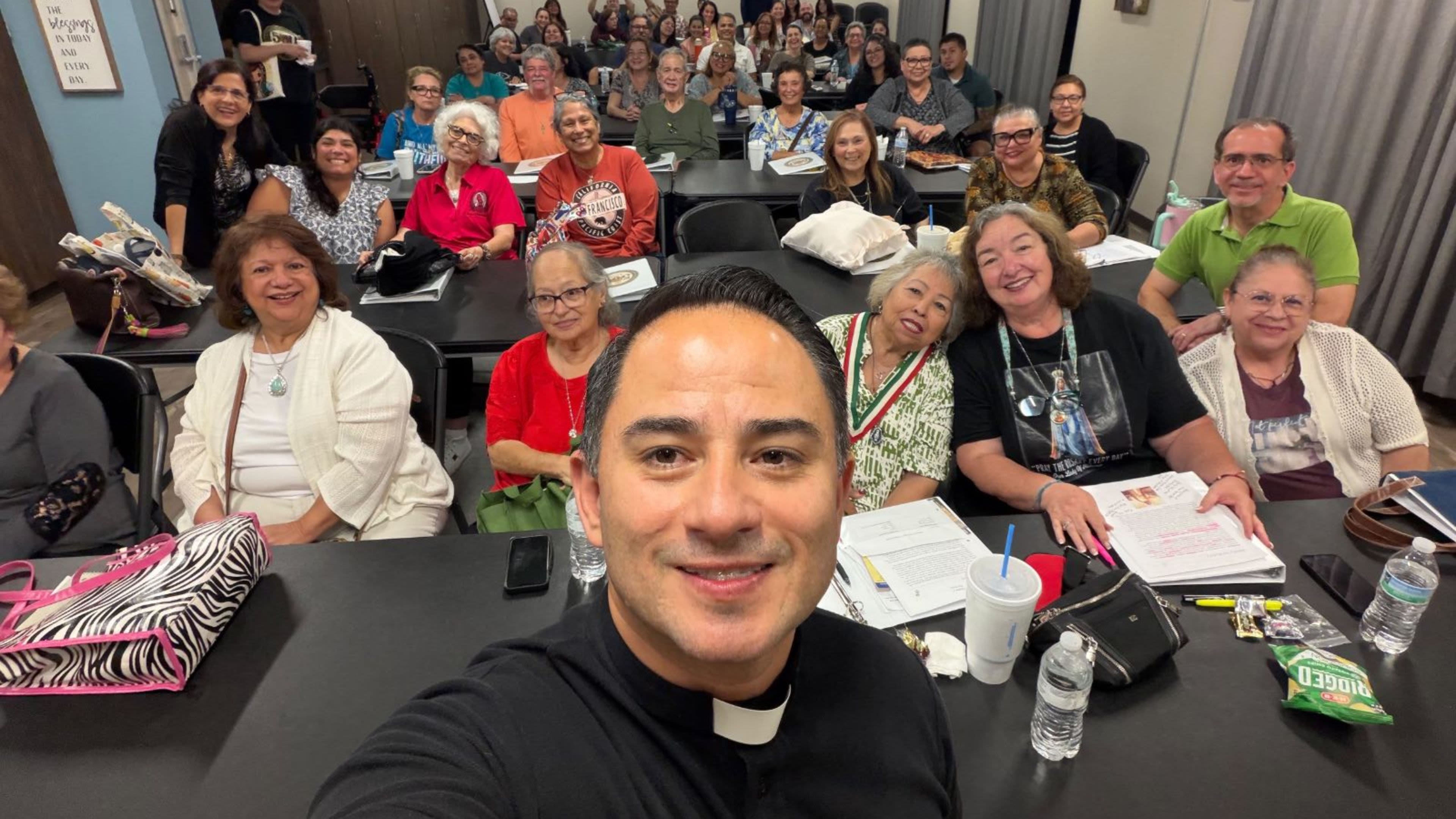
A new Guadalupan Institute has taken its first steps in San Antonio with the aim of researching, providing education on, and disseminating the Guadalupe event, as well as becoming a model for replication throughout the United States.
Father Rafael Becerra, pastor of Our Lady of Guadalupe Parish in the San Antonio suburb of Helotes, Texas, explained to EWTN News Español, the Spanish-language sister service of EWTN News: “We want to research, provide formation on, and raise awareness about the entire Guadalupan event.”
A retreat and a Guadalupan certificate program have been the first steps, Becerra said, confident that the project can grow and become “a Guadalupan center for the United States.”
Becerra, a priest of the Archdiocese of San Antonio, noted that the “Truth about Guadalupe” certificate program began on Oct. 5 as an effort to “prepare ourselves for the 500th anniversary of the apparitions of Our Lady of Guadalupe,” which will be celebrated in 2031.
Assisting him in this project is Monsignor Eduardo Chávez, director of the Higher Institute of Guadalupan Studies in Mexico City and who is considered the leading expert on Our Lady of Guadalupe.
Chávez “is the one who teaches and gives this course via video,” he said, noting that the diploma program will conclude in April 2027.
The course is taught in English to around 60 students and in Spanish to nearly 90.
Alongside Chávez, Alberto Mata and Javier Fernández, both experienced in the study and dissemination of the Guadalupe event, are also participating as facilitators for the program.
The initial sessions “have been extraordinary,” noted Becerra, as the participants “are excited, want to keep learning, and above all are impressed by the greatness of the Virgin of Guadalupe and all the graces she has brought not only to Mexico but to humanity.”
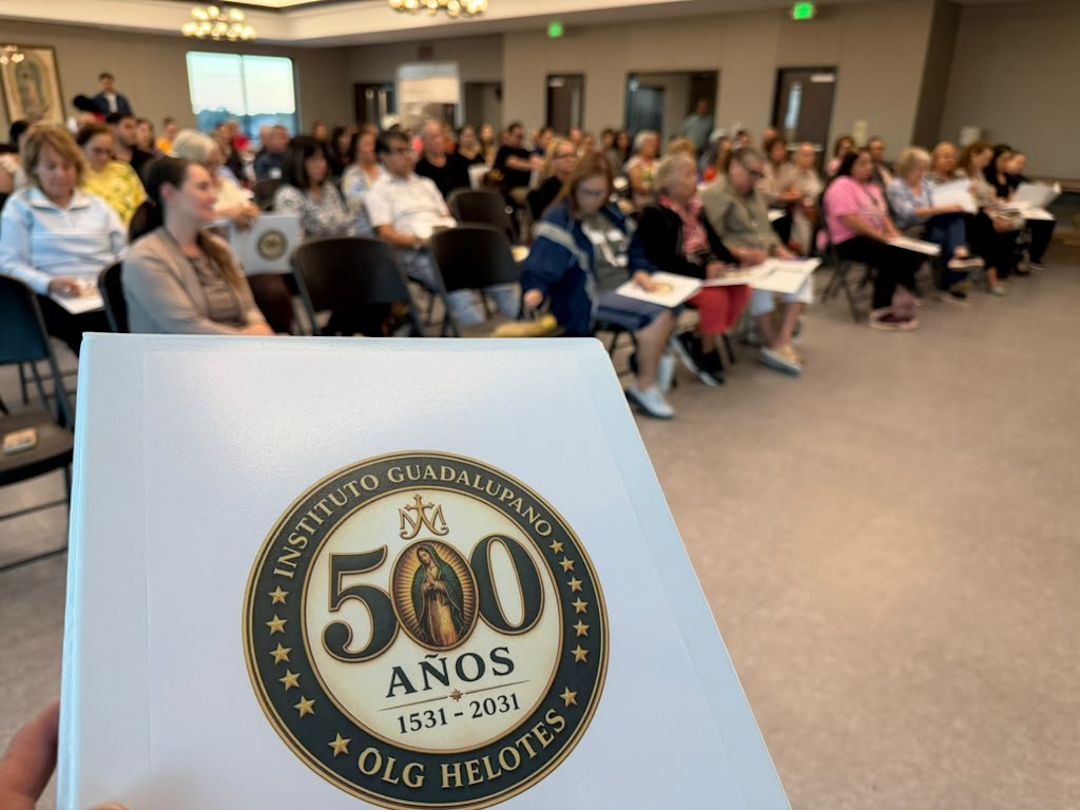
Through the course, he said, they aim to “collaborate in this great process of preparation for the 500th anniversary of the apparitions of Our Lady of Guadalupe” and to foster the development of “equipped persons who can then return to their parishes and replicate this diploma course in various parishes across San Antonio.”
Interested persons from Houston and Austin, Texas, have already contacted Becerra about the program, he said, so he hopes this will also serve as a “spearhead” that can be “replicated in the future in different places across the United States.”
This story was first published by EWTN News Español, the Spanish-language sister service of EWTN News. It has been translated and adapted by EWTN News English.
If you value the news and views Catholic World Report provides, please consider donating to support our efforts. Your contribution will help us continue to make CWR available to all readers worldwide for free, without a subscription. Thank you for your generosity!
Click here for more information on donating to CWR. Click here to sign up for our newsletter.



Guadalupan Institute: Will You Have the Courage to Confront the Historical Evidence?
If the Guadalupan Institute in San Antonio genuinely seeks to be a center of research, education, and formation—and a model for replication throughout the United States—then I invite its organizers, faculty, certificate-program participants, and all readers to engage seriously with the scholarship of the late Vincentian historian Father Stafford Poole, CM.
In his landmark 1995 book, “Our Lady of Guadalupe: The Origins and Development of a Mexican National Symbol,” Poole subjected the traditional apparition narrative to rigorous historical scrutiny, drawing on documentary evidence and his knowledge of Nahuatl. His findings deserve serious engagement, not dismissal.
Poole’s central arguments challenge the conventional timeline. The earliest surviving accounts do not establish the apparition story as a documented event in 1531. Bishop Juan de Zumárraga, traditionally associated with story, left no known contemporary account confirming it. The apparition narrative first emerged in surviving documentation more than a hundred years later, with the “Nican Mopohua,” a Nahuatl account traditionally attributed to Antonio Valeriano and published in 1649 under Luis Laso de la Vega, playing a pivotal role in the tradition’s development. Poole argued that the Guadalupe narrative and its significance developed over time within the religious, cultural, and political circumstances of colonial Mexico.
This is precisely why the Institute’s stated mission matters. If it seeks to prepare people to disseminate knowledge about Guadalupe, will it equip them to examine competing interpretations critically? Will students encounter Poole’s findings alongside the arguments of Monsignor Eduardo Chávez and other defenders of the traditional account? Will they learn to distinguish documented historical evidence, theological interpretation, devotional tradition, and claims of supernatural intervention?
Academic integrity is demonstrated not by protecting a cherished narrative from scrutiny, but by allowing evidence to be examined without fear.
As the Church approaches the 500th anniversary of the traditional apparition date in 2031, the Guadalupan Institute has an opportunity to model intellectually honest Catholic scholarship. Genuine faith need not fear historical investigation, and genuine scholarship must not be reduced to apologetics.
I wish and hope the Institute and its members to read Poole, assess his evidence, scrutinize his conclusions, and publish a substantive response where they disagree.
If the Institute truly seeks truth about Guadalupe, it must welcome the questions as well as the answers. Otherwise, is it cultivating scholars, or merely training advocates?