

 By
By Pilgrims traced the Georgia Martyrs’ path on Day 3 of the National Eucharistic Pilgrimage winding its way up the northeast corridor of the United States.

Day 3 of the National Eucharistic Pilgrimage began in Georgia on Tuesday — the second day of a 142-mile pilgrimage through the Diocese of Savannah, a day devoted to walking in the footsteps of the Georgia Martyrs, scheduled for beatification in Savannah on Oct. 31, the first beatification in the southern U.S.
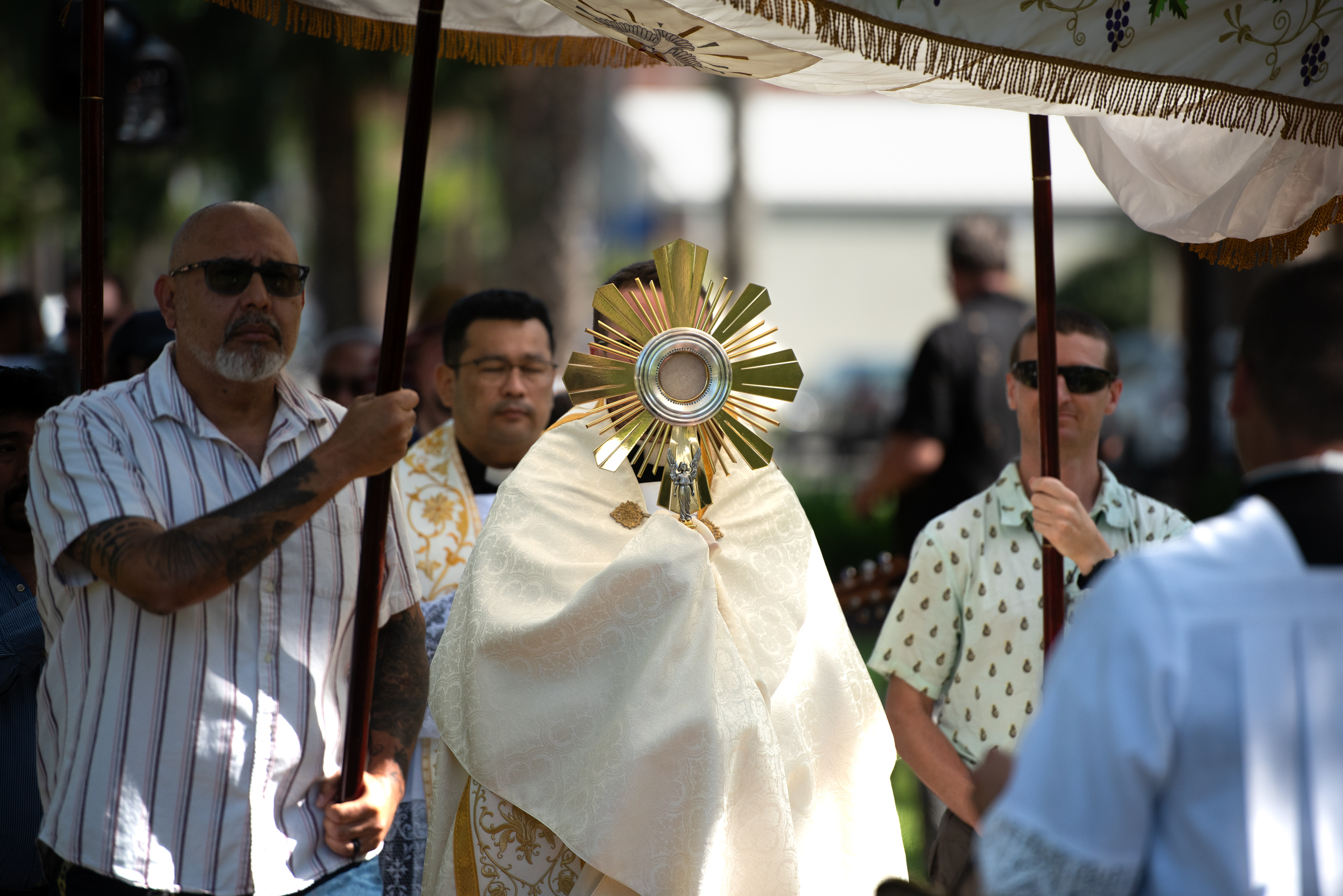
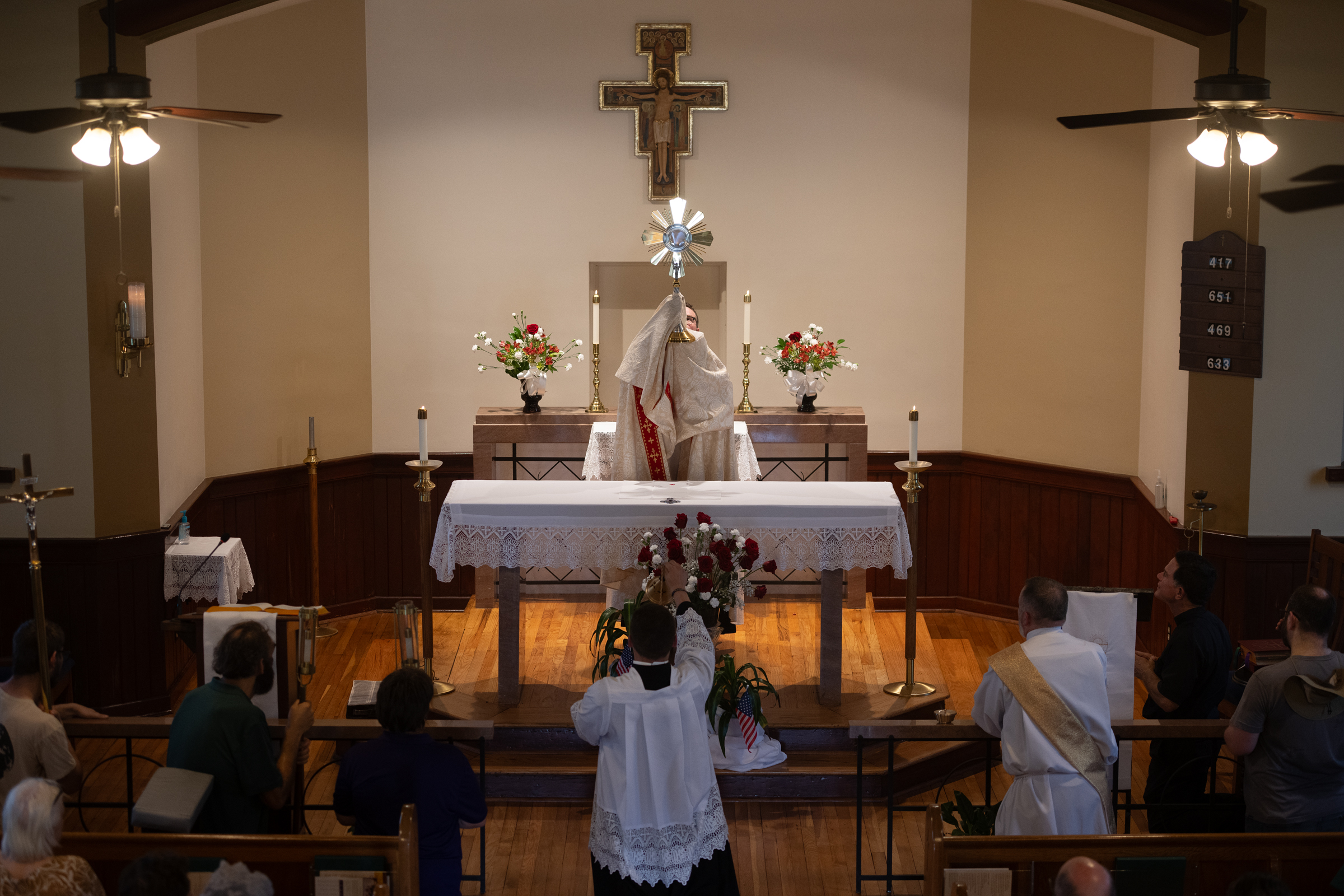
Local Georgians and visitors from as far away as California knelt in prayer before the Blessed Sacrament as the day began in adoration in Brunswick in south Georgia. An hour later, the doors to St. Francis Xavier Catholic Church flew open and Parochial Vicar Father Juan Carlos Castillo-Mayorga emerged. Holding the monstrance high, he led a Eucharistic procession around Brunswick’s historic Hanover Square.
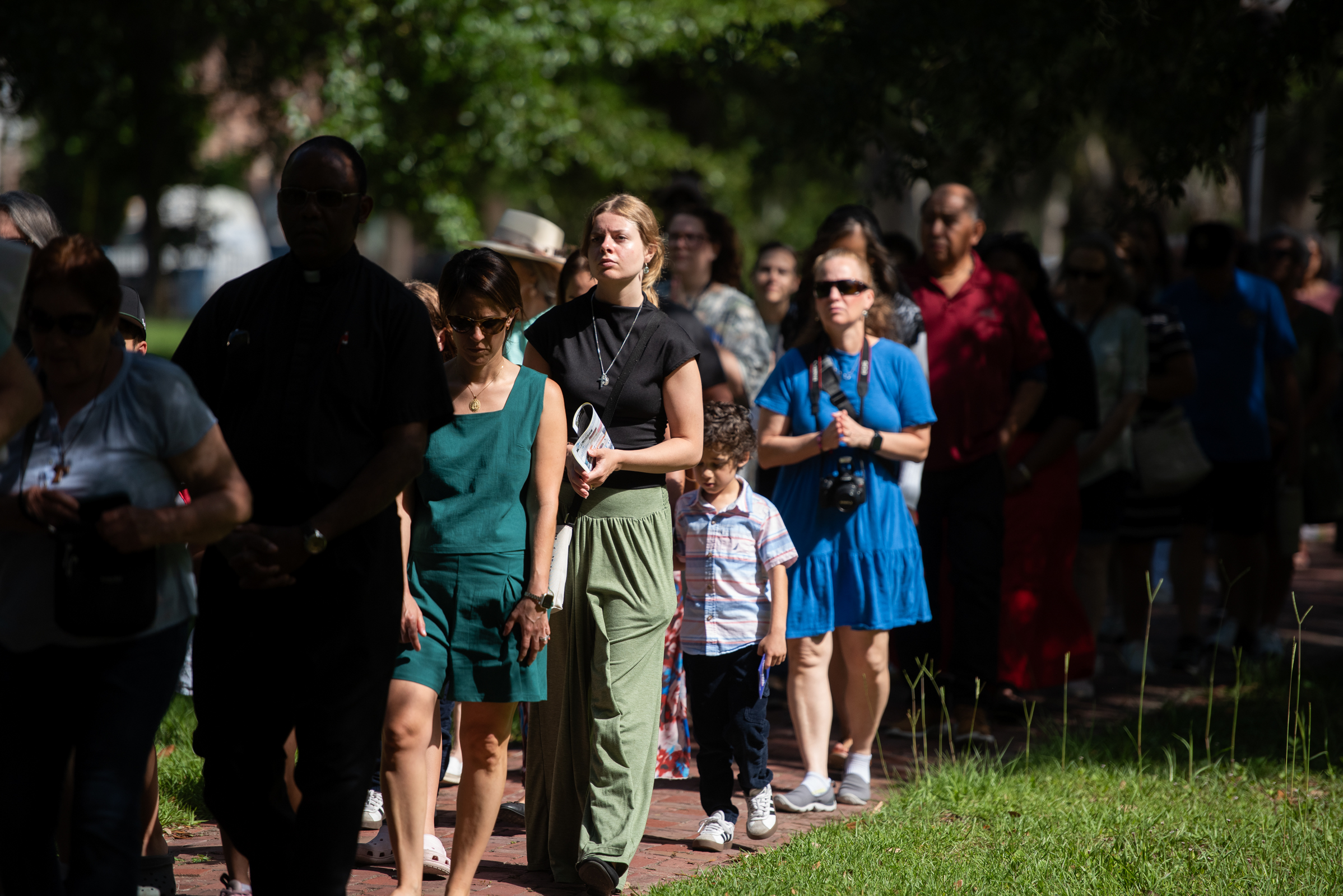
Undeterred by pounding heat, faithful of all ages followed. One in a wheelchair, another aided by a walker, a skipping child, Black, white, Spanish — a microcosm of God’s universal Church.
The pilgrimage, whose 2026 theme is “One Nation Under God,” kicked off in St. Augustine, Florida, on Sunday and is traveling the St. Frances Xavier Cabrini Route up the Eastern Seaboard before concluding July 5 in Philadelphia.
Despite the core principles upon which the nation was founded, 250 years ago Catholic religious observances were against the law in Georgia. From the founding of the colony in 1733 until adoption of the U.S. Constitution in 1789, Catholicism was banned.
John Paul Flynn, one of nine Perpetual Pilgrims, didn’t know that. But he saw the golden lining. Looking at those knelt in prayer, he said: “That’s beautiful to see how far we have come.”
In the late 16th century, Catholic missionaries sailed from Spain to St. Augustine, establishing missions along the coasts of present-day Georgia, Florida, and South Carolina. Six Franciscan friars served thousands of Indigenous Guale Indians living in the marshlands and barrier islands of south Georgia. Friars and natives lived harmoniously, learning each other’s language and blending respective cultures. Juanillo, heir apparent to the Guale chief, was among the many baptized converts.
But in 1597, when Friar Pedro de Corpa refused him permission to take a second wife, Juanilloʼs recruits decapitated and clubbed five of the friars to death.
They not only gave their lives defending the faith but are the first American martyrs for marriage.
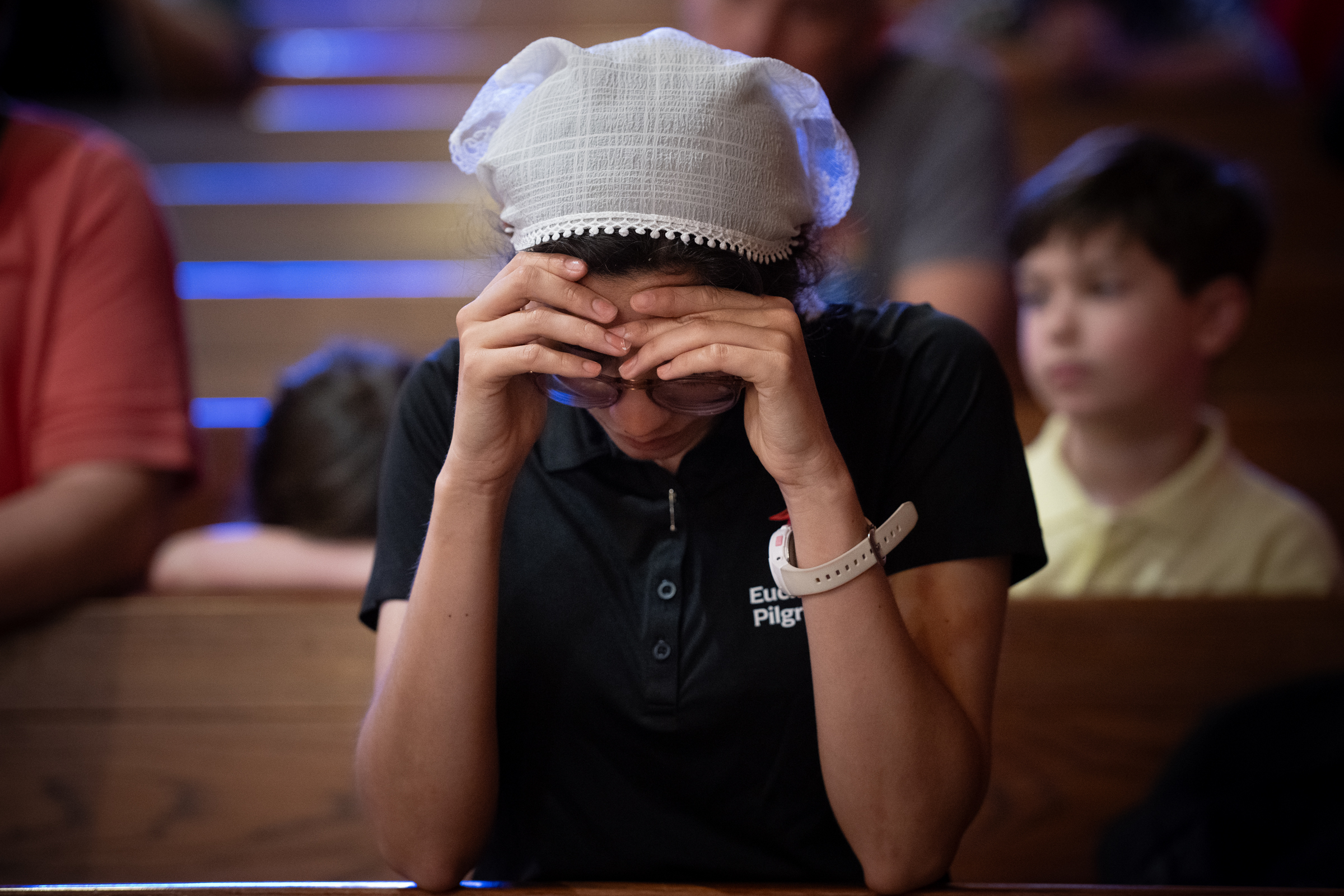
Raymond Martinez II, a Texas seminarian and one of the perpetual pilgrims, first learned about the Georgia Martyrs in fourth grade during home schooling.
“As a priest, I want to be able to defend marriage as they did,” he said. “Live my life defending holy marriage for the way Our Lord planned from the beginning.” By walking in their footsteps, he said he feels his life has “come full circle,” arriving at “one of the places I’ve always wanted to go.”
After a mass of thanksgiving, worshippers gathered for a fellowship luncheon. More than a dozen educational posters about the martyrs spanned the width of the school gym, which also served as the forum for two bilingual presentations about the Georgia Martyrs. The first, given by local ranger Michael Putnam, focused on the Guale people, territory, and the area’s archeological discoveries.
Father Pablo Migone, a Savannah diocesan priest and vicar for mission advancement, shared the story of the friars’ martyrdom and steps to beatification. He first heard about the martyrs in college and later became involved in their cause for beatification, which officially opened in 1950.
Later in the afternoon, those in the procession reconvened 20 miles north at Fort King George, where historians believe Talaje, a principal Gaule town, was located. Friar Francisco de Veráscola, the last to die, had served the area before being killed in the uprising.
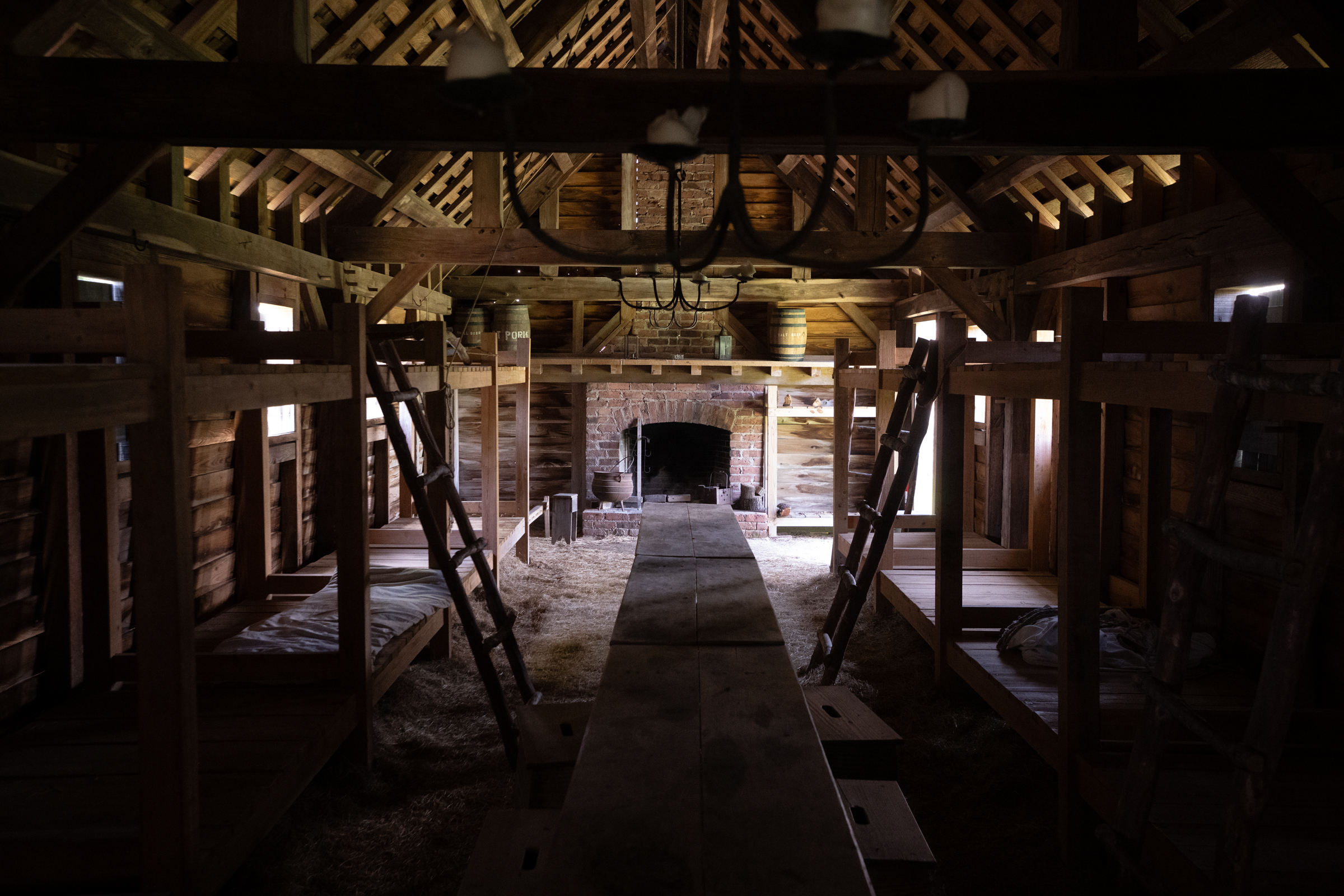
Father Liam Hosty, a chaplain en route with the perpetual pilgrims, led a second, 1.4-mile procession, accompanied by three sheriff escorts, winding their way through a community of modest, mostly one-story homes, shaded in places by Georgia’s hallmark live oaks with their Spanish moss. Pilgrims sang, but so did the birds, identified by the Merlin app as northern cardinal, blue jay, mourning dove, Carolina wren, red-winged blackbird, summer tanager, and northern mockingbird.
The journey ended at Nativity of Our Lady Church in Darien where, in 2021, a life-size bronze sculpture of the martyrs by renowned sculptor Timothy Schmalz was permanently installed. Father Pedro, the first friar to die, had been stationed nearby at Tolomato Mission.
Katie Burchfield, a retired schoolteacher who lives on the Georgia/Alabama border, is following the procession by wheelchair at least through Savannah. She described her conversion to Catholicism from the Baptist faith as being “hit by lightning,” a sentiment echoed by others in attendance — the Eucharist changes you.
Angelina Marconi, another perpetual pilgrim who shared her testimony earlier in the day, said that meeting Our Lord in the Eucharist had given her “peace I haven’t felt in a long time.”
The celebration continues in downtown Savannah on May 27, where pilgrims will walk in the footsteps of British general James Oglethorpe, who once banned Catholicism in the city. The procession will end at the steps of the Cathedral Basilica of St. John the Baptist, mother church of the Savannah Diocese. Decreed a minor basilica by Pope Francis in 2020, the French Gothic cathedral is colloquially known as the “Sistine of the South.”
Father Mark Van Alstine, pastor of both St. Francis Xavier and Nativity of Our Lady Church, emphasized the importance of the procession through the path of the Georgia Martyrs, “reinforcing they gave their lives for the dignity and defense of marriage.”
If you value the news and views Catholic World Report provides, please consider donating to support our efforts. Your contribution will help us continue to make CWR available to all readers worldwide for free, without a subscription. Thank you for your generosity!
Click here for more information on donating to CWR. Click here to sign up for our newsletter.

Leave a Reply