


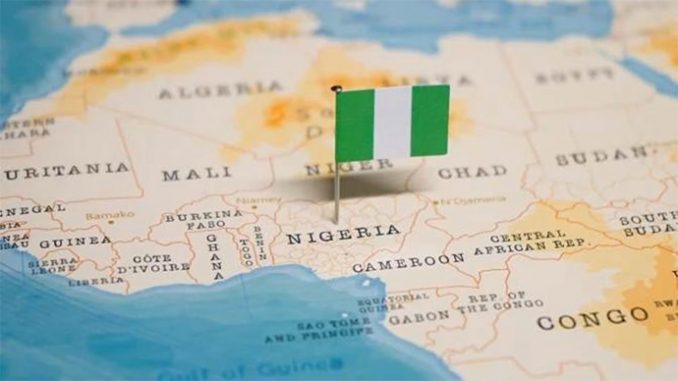
A Nigerian Catholic priest who was kidnapped three months ago has been freed. Father Nathaniel Asuwaye, a parish priest of Holy Trinity Parish of Nigeria’s Kafanchan Catholic Diocese, was kidnapped on February 7th and freed on May 12th.
The Chancellor of the Nigerian Diocese, Rev. Jacob Shanet, confirmed the release in a statement released on May 12.
“With profound gratitude to God and all who supported us, we are pleased to inform you that Father Nathaniel is now safe and receiving the necessary medical care,” the statement read.
“His condition is stable, he is in good spirits, and he thanks you for your prayers and support.”
On Saturday, February 7, gunmen stormed the Holy Trinity Parish in Karku, Kaduna State. They killed three people, and the priest was taken, along with ten other people.
Four days earlier, on February 3rd, 162 people were killed in Woro, Kwara State, in Nigeria’s Middle Belt. Most of them were Muslims who had refused to embrace the extremist version of Islam.
Fr. Shanet said the Diocese had engaged in sustained prayers beseeching God’s intervention for the release of the priest.
“At the end of April,” he wrote, “we dedicated May to God through fervent prayers during our annual May Devotions and other prayers, especially the Holy Mass.
“God, who does not abandon those who bear his name and call on him, heard our prayers and granted the safe return of Fr. Nathaniel.”
Bishop Julius Yakub Kundi, together with the priests and laity of Kafanchan Diocese, has expressed “heartfelt gratitude for the immense support received,” according to Fr. Shanet.
“We especially acknowledge your dedication to prayer, the steadfast care of Fr Nathaniel’s family and the relentless show of love of all the Faithful and the entire people of goodwill who offered prayers and support during this challenging period,” the Chancellor said.
“May the Lord continue to unite and sustain us. As we rejoice in this moment of answered prayers, let us remain steadfast in faith, united as one family, and supportive of one another.”
“May we continue to watch over each other with vigilance and compassion, trusting in God’s unfailing love to guide and protect us always.”
Nigeria continues to grapple with widespread insecurity, marked by a harrowing wave of kidnappings, armed attacks, and killings perpetrated by criminal gangs and insurgent groups.
According to Fides News Agency, at least two Catholic priests remain in captivity: Fr. Joseph Igweagu of the Diocese of Aguleri in Anambra State, kidnapped on October 12, 2022, and Fr. Emmanuel Ezema of the Diocese of Zaria in Kaduna State, abducted on December 2, 2025.
The security landscape has been particularly dire since the Boko Haram insurgency began in 2009, while violence linked to armed Fulani herdsmen, often referred to as the Fulani Militia, has further destabilized various regions.
Catholic priests and Christians in general have been paying a disproportionate price. While exact figures are difficult to come by because of underreporting, figures from human rights organizations, the media, and Catholic NGOs point to the scale of the violence.
A report by the International Society for Civil Liberties and the Rule of Law, Intersociety, which was released in May 2022, stated that at least 107 priests had been killed between 2009 and May 2022. Those figures have obviously risen considerably as the violence continues to rise.
Besides the killings, priests are also prized targets for kidnapping, driven by the need of terrorists and bandits to collect ransoms.
Between 2015 and 2025, at least 212 Catholic priests were kidnapped in Nigeria, according to the Catholic Bishops’ Conference of Nigeria. The said priests were kidnapped in 41 out of the country’s 59 Catholic Dioceses and archdioceses.
The research documents kidnappings in at least 41 of the country’s 59 Catholic dioceses and archdioceses.
According to a report by the International Society for Civil Liberties and the Rule of Law (Intersociety), a devastating 15-year campaign of violence has claimed 185,000 lives in Nigeria. The study traces the bloodshed back to 2009, when Boko Haram launched its insurgency to establish a caliphate across the Sahel, noting that 60,000 of the victims were moderate Muslims killed for refusing to accept the group’s extremist interpretation of Islam.
The violence escalated dramatically in 2025, with 7,087 Christians murdered and 7,800 more abducted in just over seven months.
Intersociety Director Emeka Umeagbalasi stated that the conflict is systematically erasing the physical landscape of faith, citing the destruction of 19,100 churches and the conquest of 1,100 Christian communities by jihadist forces who allegedly operate with total government impunity. Warning of a “humanitarian catastrophe,” Umeagbalasi pointed out that 15 million people—predominantly Christians—have been driven from their homes.
If you value the news and views Catholic World Report provides, please consider donating to support our efforts. Your contribution will help us continue to make CWR available to all readers worldwide for free, without a subscription. Thank you for your generosity!
Click here for more information on donating to CWR. Click here to sign up for our newsletter.

?terrorist
Oh, you must have meant Islamist. Let’s stop playing with words. That’s Satan’s modus operandi.
Shhh. We modern and progressive Christians follow the example of enlightened Popes like Francis and Leo and respect all other religions, especially the religion of peace, which is a sister religion that is Abrahamic and considers Jesus a respected prophet…and it respects the Virgin Mary who can serve as a bridge between religions (so much so that some canonical hadiths say the Prophet will marry and deflower the Virgin Mary in Paradise: See historian R. Ibrahim, “Is Mary a Bridge between Islam and Christianity?”
https://www.raymondibrahim.com/09/23/2024/is-mary-a-bridge-between-islam-and-christianity
Oscar: how impolitic of me!