


Chad’s typically reserved Catholic leaders has issued a rare and strong denunciation of the country’s worsening security situation, as well as the government’s drift toward totalitarianism.
On May 12, 2026, the Union of Christian Executives of Chad (UCCT) condemned recent Boko Haram attacks, stating that they “have caused the deaths of many sons and daughters of Chad and plunged several families into mourning.”
Islamist violence continues
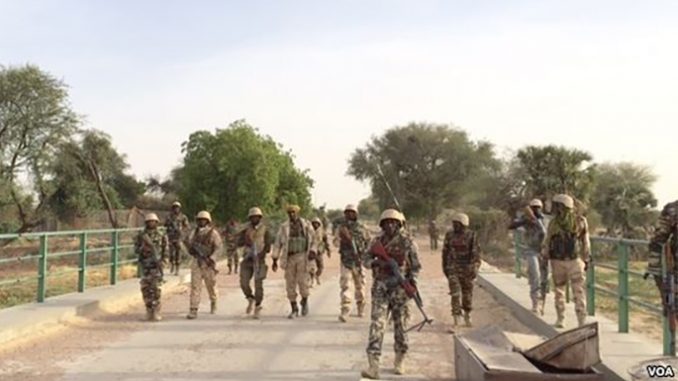
On Monday, May 10, the violent Islamist militant and terrorist group attacked a Chadian military post in Chad’s Lake Chad region, killing at least 23 soldiers, including two generals.
The Chadian military confirmed the attack in a statement on Tuesday, saying the militants struck on Monday night on the island of Barka Tolorom.
The army claimed that “a significant number” of the attackers were killed in reprisal attacks, and that the group had been repelled.
“Once again, the nebulous Boko Haram terrorist group carried out a cowardly attack last night on our military base at Barka Tolorom,” Chadian President Mahamat Idriss Deby Itno said on Tuesday in a Facebook post.
“We will continue the fight with renewed determination until this threat is completely eradicated,” he added.
In October, at least 40 Chadian soldiers were killed in a similar attack by the same terrorist group. And on November 9, 2024, Boko Haram carried out an ambush on Chadian forces that left at least 15 soldiers dead, with 32others wounded.
“In this sad circumstance, UCCT presents its sincere condolences to the bereaved families, and offers its moral support to the defense and security forces engaged in the protection of the population, and the territorial integrity of the state,” the lay Christians said in their May 12 statement.
Boko Haram began its murderous campaign in Nigeria in 2009, but has since spread to neighboring Cameroon, Chad, and Niger. According to the Institute for Security Studies, ISS, the violence has left at least 40,000 people dead. More than two million have been displaced. In addition, over eleven million people are considered in need of humanitarian assistance as a result of the violence, according to the United Nations.
Remadji Hoinathy, a Senior Researcher on the Central Africa and Lake Chad Basin for the Institute for Security Studies (ISS), says Boko Haram remains a very elusive terrorist group to apprehend, because its members master the geography of the area better than anyone else.
He told CWR that the terrorists have “deep knowledge of the context that some of the armies don’t have.”
“Since most Boko Haram members come from these areas, they grew up knowing the physical and cultural context well. They know how to get around the islands and swamps, which means they can survive there better than the armies can,” he said.
“This is why they have a slight advantage in terms of being able to come in, hit and run. And this is something very complicated,” added Hoinathy.
The influx of Sudanese refugees
Besides terrorism that is plaguing the country, Chad’s security problems also stem from the influx of refugees from Sudan-an issue the Union of Christian Executives of Chad in their May 12 statement said was a matter of grave concern.
“UCCT follows with concern the massive influx of Sudanese refugees to the national territory and calls on the authorities to reinforce security and humanitarian measures in order to preserve stability and social cohesion.”
Chad currently shelters at least 1.3 million Sudanese refugees who have fled the ongoing conflict in their homeland. The United Nations warns that these refugees face immediate, life-threatening cuts to essential services, including food, water, shelter, healthcare, and protection.
The UN Refugee Agency (UNHCR) and the World Food Programme (WFP) caution that vital aid will be drastically scaled back in the coming months unless a $428 million funding gap—comprising $289 million for UNHCR and $139 million for WFP—is filled.
Despite the immense strain on resources, the Chadian government has maintained open borders throughout the conflict, and local host communities continue to welcome new arrivals, including nearly 15,000 since January 2026.
A shrinking civic space
Chad’s lay Christians also voiced their frustration with the shrinking civic space in the country. They condemned the arbitrary arrest of opposition figures, trade union leaders, and critical voices, and warned that such actions have created “a climate of fear, mistrust, and deep despair among the Chadian population.”
On May 8, eight figures from AGAP, the opposition consultation platform, were condemned to eight years in prison.
“What happened with the leaders of the GCAP is neither justice nor a fair trial,” said Alifa Younous Mahamat, coordinator in Europe of the Socialist Party Without Borders (PSF).
Similar acts of repression had taken place in the past, including the conviction of opposition leader, Succès Masra, the forfeiture of nationality against activists in exile, the 2024 killing of opposition leader, Yaya Dillo, and the exiling of Robert Gamm, the general secretary of the PSF.
“This crisis, unfortunately, demonstrates that Chad is sinking further into a pure and hard dictatorship, where a single thought is imposed by fear and repression,” said PSF coordinator, François Mazet.
“It should be noted that any dissenting voice […] is crushed by the Chadian authoritarian regime,” he explained.
These concerns had earlier been voiced by the country’s Catholic Bishops. In a May 6 statement, the Bishops deplored what they called a “sudden deterioration” of the political situation following the arrest of opposition figures and critical voices.
“These arrests call into question the democratic principles in our country, the importance of freedom of expression, and respect for human rights,” they said.
They urged the authorities and citizens to reject exclusion, injustice, and violence, explaining that evil can only be overcome “by good, that is, respect for our differences, dialogue, and justice for all.”
If you value the news and views Catholic World Report provides, please consider donating to support our efforts. Your contribution will help us continue to make CWR available to all readers worldwide for free, without a subscription. Thank you for your generosity!
Click here for more information on donating to CWR. Click here to sign up for our newsletter.

AKA Islamic terrorists