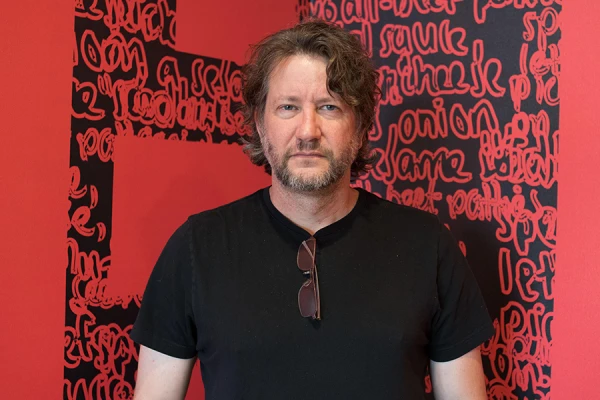
Denver Newsroom, Apr 20, 2020 / 06:05 pm (CNA).- Chris Arnade is the author and photographer of “Dignity: Seeking Respect in Back Row America.”
His book is a look at how many Americans – in rural and urban communities across the country- live. Chris got to know people who often lack a voice in American public life, and his work aims to give them a voice, and a face. He talked with CNA about his book, his faith, and “Back Row America.”
Below is an excerpt, edited and condensed, from CNA’s interview with Arnade. The entire conversation can be heard here.
Chris, what is “Back Row America?”
“Back Row America” describes, in my simple framework, American communities that don’t necessarily define themselves by their resumes or their education.
It’s the part of America that has traditionally gone from high school to, to a job, a lifelong job that gave them the stability to build a family and then attend church regularly and stay in their community. That isn’t a red state or blue state thing. That’s true all across the country.
It’s African-American communities in northern cities, it’s working class rural communities in places like Iowa and Nebraska.
It’s in contrast to what I think is the much more powerful group of people, which I would call, using the classroom analogy, “the front row.”
The elites, if you will, who have spent their career or chasing building a resume, going to all the right institutions and ultimately ending up probably in a few handful of neighborhoods across the United States.
They generally have very large influences in academics, the media and politics and the business world. And I think so much of how we think about America is defined by the front row, when in fact the bulk of Americans would probably find themselves to be more familiar with the back row.
How did you get to know “Back Row America?”
While working on Wall Street in finance, I spent time walking in neighborhoods across New York City. Those walks became a way to meet people I might otherwise never meet. Eventually, I quit my job and spent three and a half or four years in one neighborhood in particular, the poorest neighborhood in New York called Hunts Point in the Bronx.
It was a wonderful neighborhood, I was immediately drawn in by the strong sense of community. At an artistic level as a photographer and it was just simply a great place to photograph because it faces the south, it has good light.
And then it just drew me in.
I spent time with a group of, to use a derogatory term because there’s no other terms, of homeless addicts, who lived in cars or lived in abandoned buildings, under bridges and spent their time making their money by either being a prostitute or stealing things or begging. And many used that money to buy heroin.
And they became the community that taught me for three and a half years.
And then from there I went in my car across the United States, I’ve put roughly about 400 000 miles over four years, just driving all the, around the United States, visiting places that people would tell me not to go to.
Visiting as much of the United States as I could, the parts that I call “back row America” that are not in the news in any other way other than negative. Towns that have lost their industry, inner cities that have never had industry, all sorts of places.
What I try to do in my book is both show what is common in this condition, but that there are variations, so to speak, on the theme and how people reflect their frustration and attempt to find dignity in different ways.
What were the things that you had found in Hunts Point and wanted to look for in other places?
One theme of my book is that the most salient and the biggest division in America right now is the educational divide. We all talk about class divide. We all talk about the racial divide. But I think the education divide is as important, if not stronger currently.
And that division is not just about how we vote, but it’s about how we view the world, and how we think about what is valuable in this world, and how we think about what gives us meaning. So, at a very deep level, what’s our philosophy? And what is our worldview?
And then that, if you are in the back, and that the front row controls things now. They generally are the “in” group. They define stuff. And it’s the back row who is the one who is suffering from the decisions made by the front row, who have a very narrow worldview that they can’t seem to think beyond.
If they do think beyond it, it usually means they either want to study the back row as sort of a scientific specimen or they want to pity them and save them without questioning their worldview.
And people know when they’re being laughed at. The front row isn’t directly laughing at people. But there is this sense of, again, when they view the back row, it’s often viewed as people who are wounded, to be pitied and helped, as opposed to people to be listened to as equals.
Your book talks about some values that exist more clearly in the back row, a sense of place, a sense of obligation to the family, and people, and connectedness. Even a different sense of what matters in life; what it’s for.
Yeah. I mean, I always use the example of the young woman I met in a McDonald’s in East L.A. And, if you read the book, you’ll know that I spent a lot of time in McDonald’s.
Because a lot of people who don’t have a lot of money spend a lot of time in McDonald’s because it has free wifi, and inexpensive food, and cheap.
So, I would see this young woman at McDonald’ss. I would be there each night to type up my notes and she was there because… I had seen her all over the country, variations of her, she was there to use the free wifi because she didn’t have wifi at home. She or her family was too poor.
So, she would come in every night with her Game Boy and her computer, and charge both of them, and play on the internet, or do homework, or mostly just play her Game Boy, or her Switch, or whatever she had.
And so, eventually she got curious about me and asked and said, “You’re from New York City.” I told her I was from New York City.
She said she would love to go there. And I said, “Well, you’re college age.”
She said, “Well, I’m going to college here at East L.A. Community College. And I need to stay here because I’m my mother’s translator.”
Her mother was a Mexican-American immigrant. And, like a lot of immigrants, the oldest child is the one who speaks both languages and is necessary to fill out forms, navigate the country.
So, she was making a decision that I think we as a broader culture should applaud. She was staying there for her family.
But I think we look at people’s decisions in what I would call a “resume arms race.” Everybody has to be building a resume. And, in that process, which is a very narrow way of thinking about success, it’s all about getting credentialed so you can make more money.
It’s a very, very material definition of success.
For people who don’t value that, who don’t want the value of that very narrow framework, you have to give up the non-material forms of meaning like place, family, and faith, because those are considered to be in opposition to this arms race of building the best resume. And so, I think it’s particularly an elitist view.
Being materialistic is very much an elitist view of the world because one of the things we’re all gifted at birth is these values and these meanings that don’t require a resume to have, like family, like place, and like faith. You don’t need a resume into the church. You don’t need a resume to find beauty in your local community or to be a member of your family.
Chris, could you talk about faith in the back row?
I came into this project an atheist. I certainly wasn’t a nasty atheist. I was very always respectful of other people’s faiths and views. But, in the back of my mind, I would have laughed at somebody who was religious, or at least thought maybe they should learn a little. And then, certainly by the end of the project, I wouldn’t call myself religious, but I do go to church.
In the project I spent a lot of time in McDonald’s because that’s where the people I was learning from spent time. And likewise with churches, I spent a lot of time in churches because that’s where the people I spent time with went.
I went to every denomination. I tried to try to go to the denominations that were most reflective of the community I was in. I tried to go to the churches that I guess, I think, theologically would probably be considered in the back row.
Places that had improvised spaces. So, there was one that was a former… I think it was a former Kentucky Fried Chicken, had been turned into a church. Another was an old gas station that had been turned into a church. Another was an old furniture store in a strip mall. Another was someone’s house.
I came away personally moved by the experience… this was a very important part of people’s lives. It was just wrong of me at many levels to dismiss it as nothing more than just a silly way of living, but also, at a personal level, I came away realizing that there was a lot there that I didn’t appreciate.
What is important when churches minister to back row America?
I mean, I think from a purely pragmatic standpoint, I think the most important thing about the church is that they get people they’re preaching to.
You go into a nonprofit in these communities or you go into these secular institutions, and they’re not made up of people from the community. They’re often outsiders who are well-intentioned. There’s nothing wrong with that, being an outsider who’s well-intentioned, but with a few exceptions, most of them haven’t gone through a rough life, haven’t experienced a lot.
You go in the churches, and it’s their people. It’s their community. They get them, at not just at an intellectual level but a lived reality level.
Also, that faith is a way to live that gives people guidance. Answers that give people a structure.
The first level of academica getting religion is pragmatic. They’ll simply view it as something that’s useful. I think the second level, which is much deeper and much more real, is to see it as something that isn’t just useful but also so powerful and true. My own intellectual journey was getting beyond the first level of, “Oh, it’s just a useful thing,” a scientific solution, like, “Oh, these poor people have religion. That’s good for them because it’s useful,” and moving on to the next, which is to see a religious worldview as equally valid to how I think about things.
—
I think to a large degree that the Catholic Church has done a pretty good job of understanding the people it serves.
I often went to Catholic churches as well, because I consider myself Catholic, and when traveling, I would like to go to different churches, and I think one of the things that did frustrate me is I can walk into a church and within half a minute tell you how wealthy the neighborhood around me is. You can just see by the amount of donations given. I mean, the donation differences are just staggering. You get some churches that collect $7,000 a week and others that collect $35 a week.
I think some outreach between [rich and poor Catholics] would be helpful. I think… and certainly, the people in the wealthier congregations and parishes having a little more understanding of their privilege and how the experience of being a Catholic might be different if you’re in El Paso, for instance.
Do you have expectations for how things might change for the back row as a result of where we are right now, in terms of the pandemic and the resulting economic collapse? I’ve hoped it will lead to a greater sense of solidarity among people.
I’m probably about as cynical as I’ve ever been about it right now. I hate to try to throw water on your fire, but I mean, I’m looking at how the pandemic’s playing out, and it’s becoming a disease of the poor. All the solutions we proposed, as much as I agree with them, are pretty comfortable for the wealthy and pretty uncomfortable for the poor.
Sheltering in place, I think the word “place” covers a lot of ground there that we tend not to think about, but I certainly hope at a philosophical level that we come out of this, that people who can shelter in a nice place maybe understand that that’s a privilege and that it’s much easier for them to do that — come out of this with a greater awareness of how hard this is for a lot of people.
What can people do?
I mean, that’s the problem is, with a pandemic, there’s not much we can do right now other than recognize privilege and hopes going forward that we take that into account when we think about judging other people for not doing what we’re doing, or scolding them for taking walks outside, or wanting to go to church in some capacity when the pandemic eases going to some sort of limited service.
I think we need to get back to being social again, probably before the credentialed experts tell us is a good time. I respect people enough to believe that they can make their own choices and see what’s right.
I think, in the longer term though, one of my biggest frustrations with my book, and I think a lot of readers’ frustrations is I don’t offer solutions, because I’m not sure I know them.
I don’t know how you get people en masse to start saying, okay we need to value things differently. I think, one person at a time. If somebody in a comfortable suburb recognizes that their parish or their congregation is well off and others aren’t, I mean that’s the first step. Make a personal decision about how you think you can best address that.
I think it’s important to treat people, everybody you meet, with respect, and again not pity them. I think many people look at those who are in the back row as people who need to be saved or changed, and maybe the best thing to do is just listen to them and give them the dignity of actually treating them like an equal.
That means sometimes not liking them. You don’t have to like everybody. When people ask “What can I do with the homeless person?” And I say like, “Have a conversation with them. Treat them like a normal person. If you don’t like them, you don’t like them.”
Chris, if you don’t mind my asking, having gone through this experience, what do you pray for and what do you encourage other people to pray for?
What I pray for changes. I still hear from a lot of people who I wrote about in the book, who have my phone number and text me all the time. I pray for them, and for my family.
I guess, my greatest hope from this whole thing is that the reader comes away with an understanding that, in very rare instances, almost everybody who reads this book is going to have more privilege than the people in the book. And so, a little perspective. When it comes down to it, it’s the old phrase, “Before you judge somebody, walk a mile in their shoes.” I pray that message gets into people, that they can see that they themselves probably have a lot better than they realize.
And before you judge somebody, again, know what they’ve gone through.
This was an edited excerpt from a longer conversation between Chris Arnade and CNA. The entire conversation can be heard here.
 […]
[…]




I don’t understand how the bishops can oppose such a correct, logical, and necessary ruling: the law was correctly applied by the judge. It doesn’t matter what anyone feels about the ruling, a judge is obligated to adhere to the written law. The bishops look stupid for opposing this ruling. I also don’t understand why they go to such lengths to excuse or disregard illegal residency in the United States, as if there should be no consequences for the crime of crossing the border illegally or overstaying a visa. Any bishop who is unwilling to use the terms “illegal immigration” or “illegal immigrant” — which is just about all of them — has no credibility on the issue in my mind.
“Federal law requires that no residency-based higher education benefits can be provided to noncitizens that are not also offered to all U.S. citizens, according to the Illegal Immigration Reform and Immigrant Responsibility Act of 1996.”
How exactly does providing special benefits to noncitizens that are not offered to U.S. Citizens “propel our society further away from just and reasonable immigration reform that would foster human flourishing based in the tranquility of order and human dignity”, when, in fact, it encourages illegal immigration , by providing special benefits that are not provided to U.S. Citizens.
The bishops should be supporting and even demanding improvement to the immigration system so that more persons can be vetted quickly, and become citizens of this Country legally, while holding those Countries that do not serve for human flourishing of their own citizens, responsible for the suffering of their own citizens. The poor we will always have with us, so we must always be willing to help the poor, but “ Man does not live by bread alone, but by every Word that Comes Forth From The Word Of God”.
And while we are calling for the Bishops to act responsibly, when will they answer God’s Universal Call to Holiness by charitably anathema the rogue counterfeit church with its counterfeit magisterium, that , for sometime now, has been attempted to subsist within The One Body Of Christ while denying The Word Of Perfect Divine Eternal Love Incarnate , those who claim they are citizens of Holy Mother Church, while denying that The Most Holy Blessed Trinity, Is The Author Of Love, Of Life, And Of Marriage? How exactly does accommodating those who have been Baptized Catholic, but deny The Lord And Giver Of Life, The Spirit Of Perfect Divine Eternal Love Between The Father And His Only Begotten Son, Jesus The Christ, Who Proceeds From Both The Father And His Only Begotten Son , serve for human flourishing, when the Faithful affirm that Christ Founded His One, Holy, Catholic, And Apostolic Church for The Salvation of Souls? How can anyone claim to be following, The Christ if they refuse to abide by His Charitable Anathema which exists for The Salvation of Souls.
“You cannot be My Disciples if you do not abide in My Word.”
The Faithful Bishops can visibly demonstrate their concern for human flourishing by their anathema of the counterfeit magisterium, the one that is visibly making it appear as if there is division in The One Body of Christ because they have been permitted to remain physically within, causing chaos and confusion, which is not of The Holy Ghost, to the detriment of so many souls.
“They went out from us, but they were not of us; for if they had been of us, they would have no doubt remained with us, but that they might be manifested, that they are not all of us.”- 1John2:19
Of course the “bishops” were “disappointed”. They make money off of the “social justice” that most of them support, so since their cash cow is being slowly dismantled, where are they going to get their next mansion, complete with “undocumented” housekeepers and gardeners? Isn’t that what they want?