


Washington, D.C. Newsroom, May 17, 2024 / 18:04 pm (CNA).
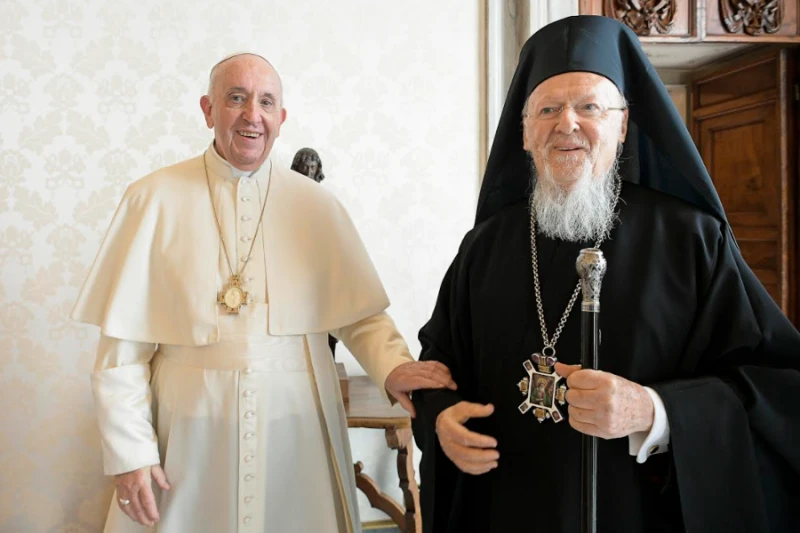
Pope Francis might be traveling to Turkey next year for the 1,700th anniversary of the First Council of Nicea, according to Eastern Orthodox Patriarch of Constantinople Bartholomew in comments he made on Thursday.
Although the Holy See has not confirmed any travel plans, the ecumenical patriarch told a group of reporters that a committee is being established to organize a visit, according to the Orthodox Times. The referenced council took place in the ancient city of Nicea in 325 A.D. in the former Roman Empire, which is now the present-day city of İznik in Turkey.
“His Holiness Pope Francis wishes for us to jointly celebrate this important anniversary,” Bartholomew said.
The Council of Nicea was the first ecumenical council in the Church. It is accepted by the Catholic Church, the Eastern Orthodox Church, the Oriental Orthodox Church, and other Christian communities that accept the validity of early church councils. It predates the Chalcedonian Schism — which separated the Oriental Orthodox communion from Rome — by more than 100 years and predates the Great Schism — which separated the Eastern Orthodox Church from Rome — by more than 700 years.
During the council, the bishops condemned the heresy of Arianism, which asserted that the Son was created by the Father. Arius, a priest who faced excommunication for propagating the heresy, did not accept that the Son was coeternal with the Father.
According to the council, Jesus Christ is “begotten; not made” and is “of the same substance with the Father.” It affirms that the Son is coeternal with the Father and condemns any heresies that assert “the Son of God is created, or mutable, or subject to change” and heresies that assert “there was a time when [Christ] was not [in existence].”
The council was convened by Emperor Constantine the Great, who is venerated as a saint in some Eastern Catholic, Eastern Orthodox, and Oriental Orthodox traditions.
If you value the news and views Catholic World Report provides, please consider donating to support our efforts. Your contribution will help us continue to make CWR available to all readers worldwide for free, without a subscription. Thank you for your generosity!
Click here for more information on donating to CWR. Click here to sign up for our newsletter.


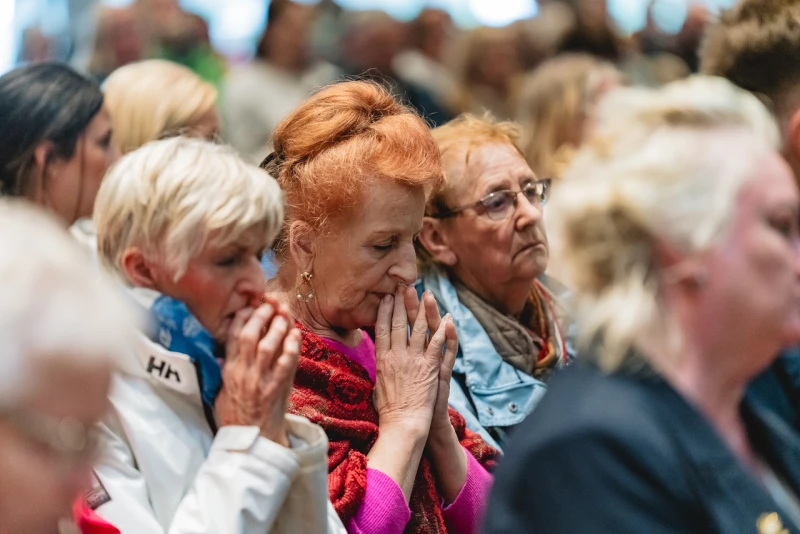


Visits and councils create opportunities for prayer, discussions, sharing of viewpoints, discovering common paths, enhancing camaraderie, togetherness, and on-going-ness among fellow pilgrims engaged in a common journey on God’s Holy Ground.
During the council, the bishops condemned the heresy of Arianism, which asserted that the Son was created by the Father. Arius, a priest who faced excommunication for propagating the heresy, did not accept that the Son was coeternal with the Father (Tyler Arnold CNA).
The historical plot thickens with the heretical residue of distancing the flesh and blood Christ from the divine Word, addressed by St Cyril Patriarch of Alexandria’s anathema’s against Nestorius, Patriarch of Constantinople at Ephesus 431 AD. Controversy continued until Chalcedon 451 AD and Cyril’s formulation of the doctrine of two natures in Christ. Unfortunately the heresy continued to have purchase in the East. Earlier possibility of a Filioque clause, referring to the divinity of the Holy Spirit was discussed in context of its absence in the original 325 AD Nicene Credo during the Council of Constantinople 381. That Council was called by emperor Theodosius to settle the identity of Christ.
“The term ‘Filioque’ was first employed, referencing the divinity of the Holy Spirit in the Niceno-Constantinopolitan Creed in 589 AD at the Third Council of Toledo, but it may have been inserted later. The Church of Rome added the phrase ‘and the Son’ to the creed in the 11th century, giving it papal authority and making it definitive. Most scholars agree that the term was introduced during Benedict VIII’s reign 1014-15” (Google AI).
Filioque Clause perhaps for the Greek Orthodox the most controversial doctrine of the Latin Church has long been contested. Catholicism for example insists on a dogmatic doctrine of a complete human nature in the person Christ in context of two wills, one human one divine, which the Orthodox reject settling exclusively for a divine will [and as such refuse to accept the doctrine of the Holy Spirit proceeding from Christ].
A divine will is compatible with the Holy Spirit ‘poured out’ by Christ upon Mankind. As well as from the Father. Our solemnity of Pentecost celebrated by the Latin Church throughout the world makes that truth clear, that the Pouring out of the Holy Spirit upon Church and world is the gift of both Son and Father.
Addendum: The Filioque clause was indeed added to the Credo during the 381 AD Council of Constantinople [as I note in my book Assent to Truth]; however, not to the Nicene Credo, rather to the Credo of Constantinople.
A divine will and a human will in one person is compatible with the one Person Christ pouring the Holy Spirit upon Mankind. Whereas a person with simply one will that is divine, is compatible with the Holy Spirit poured out exclusively by the Father, the Son relegated to an inferior human person, which is the theological error of the Orthodox position.
Such an exclusivity of divine nature identified in the Word, or Father, also brings into question the validity of the Real Presence of Our Lord in the Holy Eucharist. Which was Cyril of Alexandria’s 11th Anathema against Nestorius, who denied communion with the divine presence when we consume the flesh of Jesus, flesh he assumed from the Blessed Virgin. As such Nestorius repudiated the belief that Mary was Mother of God.
Additionally it needs be said that the omission of a human will in Christ as held by the Orthodox diminishes the integrity of the hypostatic union itself, and with that the unity of the Trinity. For example, what is Man without a will? An ox, an antelope? Even they have an instinctive will. Furthermore, it contradicts Christ’s freely given assent to the Father in the Garden of Gethsemane regarding the crucifixion. All this impinges on the controversial Filioque Clause.
The Son of Man as Christ frequently refers to himself is not the divinity wrapped in a cloak of human flesh, rather the perfectly obedient son who ‘freely’ does the Father’s will and achieves our salvation. Who can promise us he will send us the advocate, the fire of the Holy Spirit on Pentecost.