null / Credit: Ivon19 / Wikipedia (public domain) (CC-BY-SA-4.0)
ACI Prensa Staff, Oct 28, 2022 / 17:00 pm (CNA).
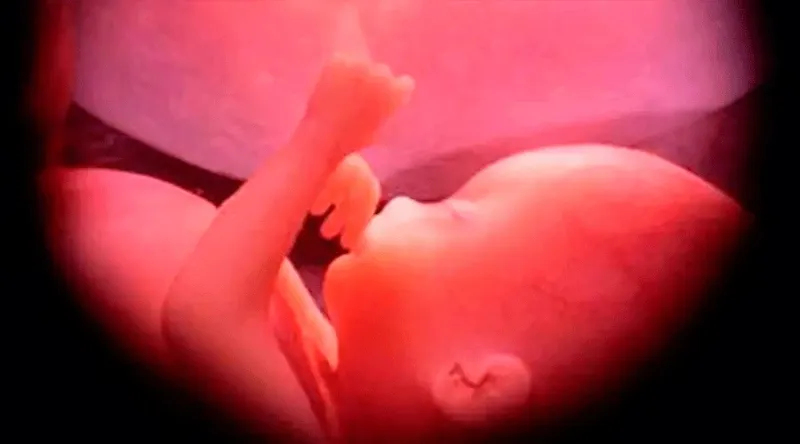
On Nov. 1, the feast of All Saints, the Archdiocese of Guayaquil will offer a Mass for children lost in miscarriage or as newborns. The Ecuadorian archdiocese announced that those who will attend will be able to preregister online “their intentions for the soul of their baby.” The registration link also includes intentions for the health of a baby in utero.
The Mass will be at 11 a.m. in the Metropolitan Pantheon in coordination with the Guayaquil Benevolent Board. Concelebrating will be auxiliary bishops of Guayaquil Gerardo Nieves and Gustavo Rosales as well as the bishop emeritus of Daule, Giovanni Battista Piccioli.
A note sent to ACI Prensa, CNA’s Spanish-language sister news agency, stated that as part of the celebration, the remains of children who recently died “for various reasons in the prenatal and neonatal stages will also be buried, giving their families the place for the mourning, recollection, and consolation they need,” honoring the “human dignity of the little one.”
On this occasion “the grotto of the Virgin of the unborn and to be born will be dedicated, donated by Guayaquil artists Jorge Velarde and Paola Cesa.” The grotto is located “next to the mausoleum donated by the Metropolitan Pantheon of the Benevolence Board for the burial of the unborn.”
The Mass for unborn children has been held since 2019 thanks to the Yes to Life Movement, which has made it possible during these years to “honor the memory and give a dignified burial to more than 100 deceased unborn and newborn children in the Metropolitan Pantheon of the Benevolence Board.”
This story was first published by ACI Prensa, CNA’s Spanish-language news partner. It has been translated and adapted by CNA.
If you value the news and views Catholic World Report provides, please consider donating to support our efforts. Your contribution will help us continue to make CWR available to all readers worldwide for free, without a subscription. Thank you for your generosity!
Click here for more information on donating to CWR. Click here to sign up for our newsletter.
Pope Francis washes the feet of migrants and refugees during Holy Thursday Mass March 24, 2016. / L’Osservatore Romano.
CNA Staff, May 6, 2021 / 06:10 am (CNA).
Pope Francis said Thursday that “aggressive forms of nationalism and radical individualism,” exposed during the pandemic, are having a severe impact on migrants worldwide.
In his message for the World Day of Migrants and Refugees, issued May 6, he said that the coronavirus crisis had highlighted the deep divisions between human beings.
“Our ‘we,’ both in the wider world and within the Church, is crumbling and cracking due to myopic and aggressive forms of nationalism and radical individualism,” he said.
“And the highest price is being paid by those who most easily become viewed as others: foreigners, migrants, the marginalized, those living on the existential peripheries.”
The World Day of Migrants and Refugees, instituted in 1914 by Pope Pius X, is celebrated annually on the last Sunday in September. This year it falls on Sept. 26.
In his message for the day’s 107th commemoration, entitled “Towards an ever wider ‘we’,” Pope Francis addressed what he called a “twofold appeal,” to Catholics and the wider world, to embrace those on the margins.
He urged Catholics “to make the Church become ever more inclusive.”
“In our day,” he wrote, “the Church is called to go out into the streets of every existential periphery in order to heal wounds and to seek out the straying, without prejudice or fear, without proselytizing, but ready to widen her tent to embrace everyone.”
“Among those dwelling in those existential peripheries, we find many migrants and refugees, displaced persons and victims of trafficking, to whom the Lord wants his love to be manifested and his salvation preached.”
He appealed to those outside the Church to work with Catholics to build “a future of justice and peace.”
“Our societies will have a ‘colorful’ future, enriched by diversity and by cultural exchanges. Consequently, we must even now learn to live together in harmony and peace,” he commented.
He continued: “Today’s migration movements offer an opportunity for us to overcome our fears and let ourselves be enriched by the diversity of each person’s gifts. Then, if we so desire, we can transform borders into privileged places of encounter, where the miracle of an ever wider ‘we’ can come about.”
The pope argued that greater solidarity was also necessary “to ensure the proper care of our common home.”
He said: “Ours must be a personal and collective commitment that cares for all our brothers and sisters who continue to suffer, even as we work towards a more sustainable, balanced and inclusive development.”
“A commitment that makes no distinction between natives and foreigners, between residents and guests, since it is a matter of a treasure we hold in common, from whose care and benefits no one should be excluded.”
In an intervention prepared for a Vatican press conference launching the pope’s message, Cardinal Michael Czerny noted that the text developed themes in the pope’s latest encyclical, Fratelli tutti.
Referring to the pandemic, he said: “We are all suffering in different ways. What happens when the survivors in a lifeboat must all help to row to shore? What if some take more than their share of the rations, leaving others too weak to row? The risk is that everyone will perish, the well-fed and the starving alike.”
Czerny, the under-secretary of the Migrants and Refugees Section of the Vatican’s Dicastery for Promoting Integral Human Development, added: “Widening the Good Samaritan attitude — overcoming selfishness and caring for all — is essential to survival.”
During the press conference, a video campaign for the World Day of Migrants and Refugees was presented, featuring Bishop Mark Seitz of El Paso describing the situation on the border between Mexico and the United States.
He said: “I’ve found the most rewarding opportunities of my life serving here at the border. I’ve learned that borders can be vibrant places of encounter and welcome — encounters that enrich us. I’ve learned that we are all interconnected as one human family. We stand or fall together. We build walls and fences which divide us. Today people of faith need to be bridge builders.”
Speaking via video link, Bishop Paul McAleenan, an auxiliary bishop of the English diocese of Westminster, said that the pope’s message offered encouragement to Catholics in the U.K.
He said: “Pope Francis draws our attention to the interconnectedness of humanity: my decisions and actions here affect others who are far away.”
“Three areas in particular directly affect the human family today. The decision of the United Kingdom to reduce its aid budget compounds the suffering of the world’s poorest. Nations engaging in the arms trade bring endless misery to those in places of conflict. Our contribution to the climate emergency results in droughts, disasters and displacement thousands of miles away. Understanding the reasons for migration must include the acknowledgement that we are not blameless.”
Also speaking via video link, Sarah Teather, director of the Jesuit Refugee Service UK, said that in her work she witnessed the lack of solidarity that Pope Francis described in his message.
“Faced with those who fled their homes and sought sanctuary, the asylum system builds walls of suspicion to stop them receiving the protection they need,” she explained.
“It detains them and enforces destitution. Destitution makes many vulnerable to abuse and exploitation, and they speak of the sense of losing themselves through years struggling at the margins.”
She highlighted the success of a project in which religious congregations and families welcome homeless asylum seekers into their homes.
She said: “Together, they create a counter-culture to the hostile public policies that render people homeless and marginalized.”
“In small, concrete ways, we can all participate in this shared project to recompose a common human family. For there are treasures to be found when we strive together to break down walls that divide us. The dream of one human family is a dream worth realizing.”
Pope Francis closed his World Day of Migrants and Refugees message with an appeal to people to “dream together” of a better future for all humanity.
He concluded with a prayer:
Holy, beloved Father, your Son Jesus taught us that there is great rejoicing in heaven whenever someone lost is found, whenever someone excluded, rejected or discarded is gathered into our “we”, which thus becomes ever wider.
We ask you to grant the followers of Jesus, and all people of good will, the grace to do your will on earth. Bless each act of welcome and outreach that draws those in exile into the “we” of community and of the Church, so that our earth may truly become what you yourself created it to be: the common home of all our brothers and sisters. Amen.
Leon is a baby boy cared for and loved at Mary’s Shelter, a pro-life maternity home in Fredericksburg, Virginia. / Courtesy of Mary’s Shelter
Washington, D.C. Newsroom, May 24, 2022 / 13:15 pm (CNA).
Amid a shortage of baby formula in the U.S., experts recommend parents scour smaller drug stores, check online, and join social media groups sharing information.
But here’s another, perhaps lesser-known, option they can also turn to for help: pregnancy resource centers.
Nearly 3,000 pro-life pregnancy centers serve millions of people each year in the United States. They offer women and parents in need everything from health care and material assistance to educational classes and job support — at little to no cost. Right now, for many of these centers, their work also includes connecting struggling families to baby formula.
One center in Michigan, an affiliate of Heartbeat International, a pro-life pregnancy resource center network, revealed to CNA that it has a surplus of formula.
“At this time, we haven’t heard of formula shortages at the pregnancy centers,” Andrea Trudden, vice president of communications and marketing at Heartbeat International, told CNA. “Quite the contrary, actually!”
Trudden recommended families turn to their local pregnancy help organizations for assistance and use OptionLine.org as a tool to find the center closest to them.
“Since pregnancy centers are equipped to help pregnant women and new families with practical resources such as diapers and formula,” Trudden said, “they have been able to step into that gap during this time.”
Some pro-life maternity homes in states such as Virginia and North Carolina said mothers are in desperate need and exploring all of their options, including feeding their babies with formula samples. But, these homes tell CNA, they are walking with mothers in their search, every step of the way.
What is this shortage about?
The nationwide baby formula shortage was caused, and then exacerbated, by a series of factors: supply-chain issues, recalls, the closure of a major production plant in February, and even U.S. trade policy. The result, data-firm company Datasembly found, is that more than 40 percent of baby formulas were out of stock in early May.
Babies with special needs and allergies rely on formula, along with babies in general. According to data from the Centers for Disease Control and Prevention (CDC), 63.3% of infants were exclusively breastfeeding seven days after birth in 2018. Three months after birth, only 46.3% of infants exclusively breastfed. Six months after birth, that percentage changed to 25.8%
The trouble with formula began partially with the Covid-19 pandemic. Parents stockpiled baby formula at the beginning, which increased production, only to later discover that they had a surplus to use up, which decreased production.
After consuming formula from an Abbott plant in Sturgis, Michigan, four babies became sick, including two who died, from bacterial infections. This led to a recall and the plant shutting down in February.
These incidents exposed the formula market as one not structurally prepared for emergencies, with just four companies largely in control of supply in the United States. U.S. and regulatory trade policy only added to the problem, restricting the exchange of formula internationally, The Atlantic reported.
Months into the shortage, the Food and Drug Administration (FDA) has reached an agreement with Abbott, one of the largest U.S. baby formula manufacturers, to reopen its Sturgis plant in the coming weeks. President Joe Biden invoked the Defense Production Act to prioritize the production of formula. And, in the meantime, the U.S. military has begun importing formula from Europe.
Members of Congress on both sides of the aisle have called for action. Senate Democrats are pushing a bill that would send $28 million in emergency funding to the FDA. Congress passed, and Biden signed into law, a bill to expand access to formula for lower-income families during emergencies.
In the meantime, before the shelves are fully stocked once more, pregnancy centers and maternity homes around the country are helping parents in need.
“I have never seen this much formula. We have an overflow!” Lois Stoll, a volunteer who manages the formula supply at the center, said in a press release. The center, one of Heartbeat International’s 1,857 affiliate locations, accumulated its surplus over the last two years, during the pandemic.
“It really is the result of an unexpected set of circumstances,” Bryce Asberg, the executive director, added in the release. “During the COVID-19 pandemic, the number of clients fell but donations continued to come in.”
Baby formula is stored on shelves at Helping Hands Pregnancy Resource Center in Hillsdale, Michigan. Courtesy of Helping Hands
Asberg told CNA that the center has been running a material assistance program for several years where it provides mothers and families with baby clothes, diapers, wipes, and baby food or formula.
“We still offer all those items to clients who come in, but recently we have noticed a surge of interest in formula,” he said. “God has been building our supply of formula for many months, and we didn’t know why we had so much. Now we do!”
Washington, D.C.
In Washington, D.C., Janet Durig, the executive director of Capitol Hill Pregnancy Center, said that her center also has baby formula on hand.
“We’ve had some phone calls seeking help and we’ve had formula to give them,” she told CNA. But, she emphasized, the supply is limited because they rely on donations.
“We have it to help people on a limited basis and are helping people on a limited basis,” she said, adding that the center welcomes donations of unopened bottles or cans of formula as long as they have not expired.
Connecticut
Leticia Velasquez, executive director and co-founder of Pathways Pregnancy in Norwich, Connecticut, encouraged moms and families to reach out if they need formula.
She told CNA that the three-year-old center is there for any woman or mom in need.
“We just say, ‘How can we fill the need? That’s what we’re here for,’” she said. “We definitely stand with them in any crisis, whether it be a formula shortage or an unplanned pregnancy.”
Parents in eastern Connecticut looking for baby formula can text the center at (860) 222-4505.
North Carolina
Debbie Capen, the executive director of MiraVia, said that the baby formula shortage is affecting her group’s work in supporting and providing resources to new moms in need. The Catholic nonprofit runs an outreach center in Charlotte and a free college residence at nearby Belmont Abbey College where a pregnant student — from any university or college — can stay until her child turns two years old.
“Yes, the mothers we serve are very concerned about the baby formula shortage,” Capen told CNA. “We always encourage breastfeeding for our expectant mothers, but for those who cannot breastfeed, they usually rely on vouchers for baby formula through the USDA’s WIC program.”
The U.S. Department of Agriculture’s WIC program, also known as the “Special Supplementation Nutrition Program for Women, Infants and Children,” offers federal grants to states for supplemental foods, health care referrals, and nutrition education for low-income pregnant and postpartum women, and young children at nutritional risk.
Capen highlighted that WIC only covers one specific brand of formula, which means that moms must pay full price for any other label. Formula is at a premium price right now, she added, which only puts more stress on their limited resources.
In each state, baby formula manufacturers bid for exclusive rights to provide formula to WIC participants in that state. In return, they offer the state discounts, or rebates. For those who rely on WIC, this means that they face limited options.
In response to the scarcity, the mothers at MiraVia are turning to alternatives: food pantries and the MiraVia community.
“They communicate with our staff and each other when they find formula at a certain location, as well as contact stores to find out when shipments are expected,” Capen said. “They substitute with generic brands when possible and reach out to their pediatricians for recommendations and even free samples.”
Capen listed some ways that people can help during this shortage, beginning with communication and the sharing of resources.
“For example, you can help by searching posts on social media and community apps like NextDoor or OfferUp to find those with formula and suggest where it can be donated,” she said. “Remind friends and family not to stockpile so that the supply of formula can flow to those in most urgent need. If you are pregnant and have received free samples of formula, donate what you won’t use to food pantries or programs for new mothers.”
Virginia
Kathleen Wilson, the executive director of Mary’s Shelter, a faith-centered maternity home in Fredericksburg, Virginia, agreed that “our moms have had many difficulties.”
She told CNA about one of their mothers who gave birth to her fourth baby three months ago. At first, she used a formula brand called Enfamil Reguline. After it became unavailable, she began switching between brands and using whatever she can find, Wilson said. The mother has also tried ordering on Amazon and turned to her pediatrician for samples.
Yaretzi is a baby girl cared for and loved at Mary’s Shelter, a pro-life maternity home in Fredericksburg, Virginia. Courtesy of Mary’s Shelter
“This is a mom who is trying to hold down a job, with an infant and other children to tend to,” Wilson stressed the “very difficult” situation.
Wilson said that two of the other mothers spent days driving around at one point to try to find formula for their babies. When necessary, they are also turning to sample packets of baby formula.
“Our staff and volunteers have been assisting with this and picking up and delivering formula when they can get their hands on it,” Wilson said, adding that donors have also pitched in.
“We are blessed with wonderful donors,” she said. “A friend just stopped in this morning with two cans of formula that he was able to find.”
“If donors are willing and can find formula, we would be thrilled to take their donation,” she said, concluding that she is “praying this comes to an end soon.”
Leave a Reply
