Pope Francis waves during his Angelus address at the Vatican July 25, 2021. / Vatican Media.
Vatican City, Jul 30, 2021 / 12:00 pm (CNA).
Pope Francis sent a letter to South Korea’s bishops thanking them for a donation of $1 million to be used to purchase COVID-19 vaccines for the poor.
“I would like to thank you for your gesture of Christian charity, which really touched me,” Pope Francis said in a July 21 letter published on the bishops’ conference website on Friday.
At their spring general meeting in March, the Korean bishops agreed to join a Vaccine Sharing Campaign which had been launched by the Archdiocese of Seoul, the Dioceses of Suwon, Daejeon, and Chuncheon, and the Korean Catholic Lay Apostolic Organizations Association.
The bishops launched the nationwide campaign on Easter Sunday. It will run until Nov. 27.
According to the bishops, the collection of funds to help pay for COVID-19 vaccines in poor countries is part of the Church in South Korea’s activities for the 2021 jubilee year, which is being held to mark the 200th anniversary of the births of St. Andrew Kim Taegon and Venerable Choe Yang-Eop Thomas.
Cardinal Andrew Yeom Soo-jung of Seoul noted in his Easter Sunday homily that Pope Francis had called for universal access to the COVID-19 vaccine more than once in his public speeches and prayers.
“We are living through difficult times caused by the COVID-19 pandemic,” Cardinal Yeom said, according to Vatican News.
Yeom said that “the social and economic crisis remains severe, especially for those who live in poverty,” adding that the Catholic Church in South Korea would like to “turn this crisis into an opportunity.”
The campaign encouraged both Catholics and non-Catholics in South Korea to consider donating around 60,000 South Korean won, about $52, which would cover two doses of the coronavirus vaccine.
“Your generosity and fraternity will allow the people suffering the most from the pandemic COVID-19 to receive the necessary aid,” Pope Francis said in his letter thanking the bishops for the donation of $1 million.
He added that the Office of Papal Charities would be responsible for using the money to help poor countries.
“I embrace you all and I kindly ask you to thank the priests, religious and faithful of your local Churches, granting them my sincere affection and my spiritual closeness,” the pope wrote.
Francis closed his letter by invoking the intercession of the Virgin Mary, St. Joseph, and St. Andrew Kim. He also imparted his apostolic blessing on the bishops and those entrusted to their pastoral care.
“Please, continue to pray for me,” he said.
If you value the news and views Catholic World Report provides, please consider donating to support our efforts. Your contribution will help us continue to make CWR available to all readers worldwide for free, without a subscription. Thank you for your generosity!
Click here for more information on donating to CWR. Click here to sign up for our newsletter.
A large crowd gathered for the ceremony welcoming Patriarch Gregory Peter XV Agagianian’s remains to Beirut’s Martyrs’ Square on Thursday, Sept 12, 2024. / Credit: Romy Haber/ACI Mena
ACI MENA, Sep 15, 2024 / 07:00 am (CNA).
On Thursday, Sept. 12, the Armenian Catholic Patriarchate held a grand ceremony in Beirut’s Martyrs’ Square to welcome the remains of cardinal and patriarch Gregory Peter XV Agagianian from Rome. His body will be laid to rest in the Armenian Catholic Cathedral of St. Elias and St. Gregory the Illuminator in downtown Beirut.
Agagianian, known for his strong opposition to communist rule during the Cold War era, became a prominent figure in Catholic Church history. He was a leading candidate for the papacy on two occasions. The process of his beatification, a step toward sainthood in the Catholic Church, began in Rome on Oct. 28, 2022.
The late Armenian Catholic patriarch’s remains arrived in Lebanon in a glass casket carried by 12 young Lebanese men from various religious denominations, symbolizing interfaith unity.
As the Armenian scouts’ band played, attendees reached out to touch the casket for blessings. Some threw rice and rose petals on the casket — a Middle Eastern tradition symbolizing a joyful welcome.
The ceremony, attended by various political and religious figures, began with a documentary about the late patriarch’s life.
In a heartfelt speech, the current Armenian Catholic Patriarch, Raphaël Bedros XXI Minassian, said: “We brought him to Lebanon to show the world our unity, solidarity, and mutual love among denominations and all parties. Young men from various denominations carried the casket, representing a true reflection of what a Lebanese family looks like.”
Maronite Patriarch Cardinal Bechara Boutros al-Rahi, leader of Lebanon’s largest Christian community, confirmed that Aghajanian’s tomb would be in the Armenian Catholic Cathedral of St. Elias and St. Gregory the Illuminator in Dabbas Square, Beirut.
“He is among the incorruptibles of the Church,” he added. “We hope that this miracle will facilitate the plea for his beatification. In any case, he will be a blessed and great saint. We congratulate the Armenian Catholic Church, all churches, and all of Lebanon. God’s wonders are great in his saints.”
Bishop Krikor Badishah, auxiliary bishop of the patriarchal Diocese of Beirut, stated: “Thanks to the magnificent presence of numerous participants, Martyrs’ Square is once again not a mere location but a national symbol that unites all Lebanese, regardless of their affiliations. It is a beacon of hope shining over our beloved homeland, constantly reminding us of our shared values and our unbreakable unity.”
During the ceremony, singer Layal Nehmé Matar performed, accompanied by the Lebanese army’s band, adding an atmosphere of reverence and solemnity.
The beatification process
The initiative to beatify Agagianian began with former Armenian Catholic Patriarch Krikor Bedros XX Ghabroyan. It gained momentum when the current patriarch, Minassian, requested the opening of Agagianian’s tomb about two years ago, revealing his apparently incorrupt body.
While there is no official protocol in the Church for determining whether a body is incorrupt and incorruptibility is not considered an indication of sainthood, many saints are considered to be incorrupt. The formal process for his possible canonization was launched in Rome on Oct. 28, 2022.
This stage involved a thorough investigation, examining all aspects of Agagianian’s life and virtues. Information was gathered from written documents and contemporary witnesses, as well as accounts of miracles attributed to his intercession. The process is now progressing rapidly.
A large crowd gathered for the ceremony welcoming Patriarch Gregory Peter XV Agagianian’s remains to Beirut’s Martyrs’ Square on Thursday, Sept 12, 2024. Credit: Romy Haber/ACI MENA
The legacy of Patriarch Agagianian
Agagianian was renowned for his virtue. The Virgin Mary held a special place in his spirituality, and he was devoted to the Sacred Heart of Jesus and the Eucharist. He was an advocate for justice and served the marginalized, including the elderly, orphans, and people with disabilities. Even after becoming a bishop, he continued to visit the Armenian diaspora worldwide.
Agagianian held several significant positions in the Church. Named a cardinal by Pope Pius XII in 1946, he was head of the Sacred Congregation for the Propagation of the Faith (Propaganda Fide), the future Congregation for the Evangelization of Peoples, from 1958 to 1970 and presided over the papal commission responsible for drafting laws for Eastern Catholic Churches. He was also appointed by Pope Paul VI to serve as one of the four moderators of the last years of the Second Vatican Council (1962–1965), a landmark event in modern Catholic history. At a time when the pope rarely left Rome, Agagianian served as an envoy of the Holy See, visiting many countries across multiple continents. He was twice considered “papabile,” a serious candidate for the papacy, in 1958 and 1963.
Agagianian’s connection to Lebanon
Agagianian was of Georgian-Armenian descent but acquired Lebanese citizenship after coming to the country as an apostolic visitor in 1935. A year later, at the age of 42, he became patriarch of the Armenian Catholic Church.
He developed close relationships with various segments of Lebanese society and worked to bring politicians together. He would often gather them at the Armenian Catholic monastery in Jounieh (Mount Lebanon) for private meetings. Agagianian played a role in reconciling Maronite Patriarch Paul Meouchi with then-Lebanese President Camille Chamoun. He also helped appoint Charles Helou (who later became president of Lebanon) as the first Lebanese ambassador to the Vatican.
Agagianian was known as the “builder patriarch” due to his numerous architectural projects, including a school and an orphanage in Anjar, Lebanon. His remains were laid to rest in the Armenian Catholic Cathedral of St. Elias and St. Gregory the Illuminator, which he built in the heart of Beirut.
This article was first published by ACI Mena, CNA’s Arabic-language news partner, and has been translated and adapted by CNA.
Votes are counted in Dublin, Ireland, on March 9, 2024, after voters in the country went to the polls March 8 to decide on a pair of referendums proposing wording changes to the Irish constitution aimed at reflecting secular values. / Credit: Ch… […]
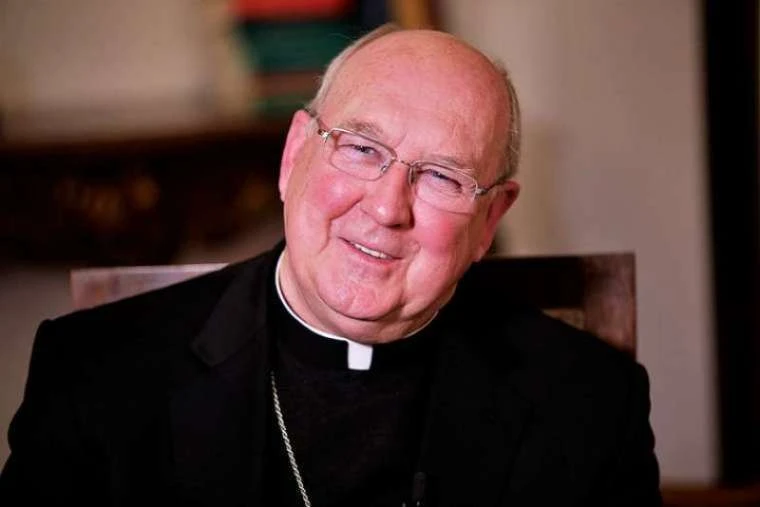
Vatican City, Jan 29, 2019 / 07:00 pm (CNA).- In a recent interview, Cardinal Kevin Farrell offered his view of criticisms of the apostolic exhortation on love in the family, Amoris laetitia.
“There is nothing in ‘Amoris Laetitia’ that is contrary to the Gospel. What does Francis do? He goes to the gospel. Look at every chapter, its straight out of one of the gospels or the letters of St Paul,” Farrell asserted in an interview with Christopher Lamb of The Tablet, a weekly British magazine, published Jan. 23.
Excerpts of the interview were published Jan. 25.
Farrell, prefect of the Dicastery for Laity, Family and Life, also touched on his association with Archbishop Theodore McCarrick while the two were in the Archdiocese of Washington; opposition to Pope Francis; and the sexual abuse crisis.
Lamb wrote that Farrell’s tasks as prefect include “the implementation of Amoris Laetitia.”
“From what I see from information that is coming to us from the conferences of bishops and lay groups involved in marriage and family life in different parts of the world, [Amoris laetitia] is very well received, overwhelmingly well received,” Farrell stated.
He did acknowledge that “there are some elements in the United States, on the continent of Africa, and some here in Europe – but not very strong” who have not received Amoris laetitia warmly.
“Cardinal Farrell said the teaching is clear: the Pope is opening a way for divorced and remarried Catholics to return to communion following a process of discernment and on a case-by-case basis,” Lamb wrote.
According to Farrell “It’s not just a question of going up to a priest and saying ‘can I receive communion?’ It is a process, a process that could take one year could take two years, could take three years. It depends on the people. Fundamentally, this is about encountering people where they are.”
Farrell told Lamb that those opposed to admitting the divorced-and-remarried to Communion say those people are “outside the Church for ever.”
“There’s no redemption whatsoever? None? You mean to tell me that Christ and Christ’s redemption didn’t work for those people? No.”
The cardinal called opposition to the pope’s policy “an ideological conflict … deep down.”
He discussed “theological courses” offered at the World Meeting of Families, which is organized by his dicastery.
He contrasted a “practical” viewpoint with those of theology and canon law.
“We wanted to ensure that ‘Amoris Laetitia’ was dealt with from a practical point of view, not from a theological-canonical point of view,” Farrell stated. “And, therefore, I didn’t include any courses on Canon Law. None.”
The cardinal characterized opposition to Pope Francis as “unprecedented” and “vicious”, and claimed that the pope “has put the Church on an evangelical road” based on the Gospel.
He also said that “it’s so important that lay people take responsibility for the Church, and for the future of the Church.”
Discussing the sexual abuse crisis, he focused on the meeting being held at the Vatican next month among presidents of bishops’ conferences, saying, “My hope is that there would be a clear vision of where we are going in the future,” while managing expectations for the summit: “expectations for the meeting are being created that can’t humanly be met”.
“Instead of passing the problem to Rome, I think bishops need to take responsibility for the situation in their own nation,” he added.
Farrell also faced questions about his time living with now-disgraced Archbishop Theodore McCarrick.
“I lived in the episcopal residence, where there were six other priests, two bishops. Did I ever know? No. Did I ever suspect? No. Did he ever abuse any seminarian in Washington? No. I never went anywhere with him. I was the Vicar-General, I was the one stuck in the offices all the time, dealing with all the problems. The archbishop of the diocese is out and about. He’s in Rome, he’s in Latin America, all over the world.”


 By
By 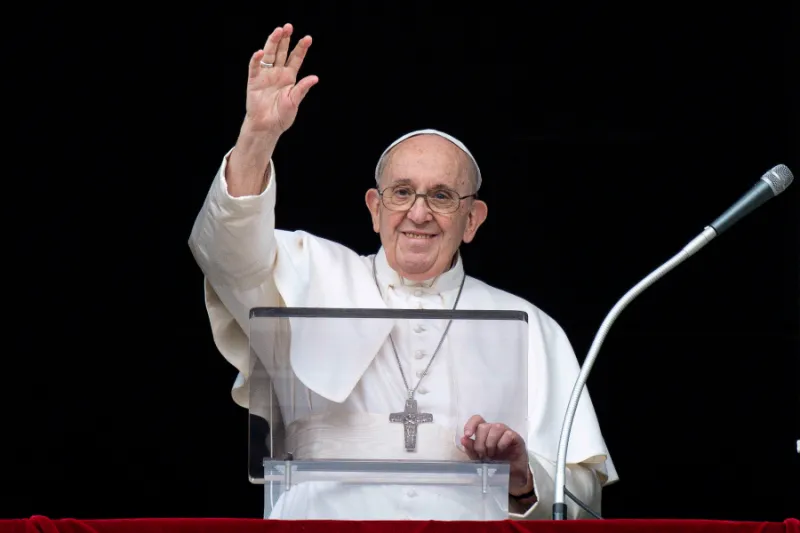




Leave a Reply