

Denver Newsroom, Jul 21, 2021 / 21:56 pm (CNA).
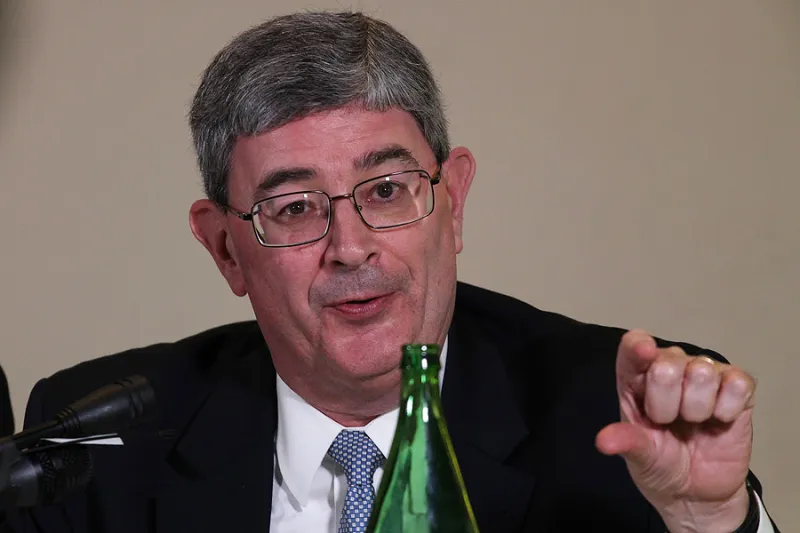
In an essay published on First Things on Wednesday, July 21st, George Weigel described Pope Francis Motu Proprio Traditionis Custodes as “theologically incoherent, pastorally divisive, unnecessary” and “cruel.”
Weigel, Pope John Paul II biographer and a Distinguished Senior Fellow of the Ethics and Public Policy Center, starts his essay by establishing his Novus Ordo creds. “I don’t agree that the Roman Missal promulgated by Pope Pius V in 1570 entombed the Roman Rite in ecclesiastical amber.”
Moreover, “I think the suggestion from some liturgical traditionalists that the survival of Catholicism demands the restoration of the old Prayers at the Foot of the Altar, the old Offertory prayers, and the old Last Gospel is ridiculous: which is also how I view the claims that the Council’s liturgical constitution and its immediate implementation were the result of a cabal of Freemasons, communists, and homosexual clerics,” Weigel explains.
He then proceeds to describe Traditionis Custodes as “theologically incoherent, pastorally divisive, unnecessary, cruel—and a sorry example of the liberal bullying that has become all too familiar in Rome recently.”
Weigel argues that “in many American parishes where the Extraordinary Form has been offered as well as the more common Ordinary Form, the unity of the Church has not been impaired. That some proponents of the Extraordinary Form think themselves the sole faithful remnant of a decaying Church is certainly true, and their presence online is depressingly familiar. But it is an empirically unsustainable slander to suggest, as Traditionis Custodes does, that that divisive superiority complex… is the new normal for those who wish to worship at Masses celebrated with the Missal of 1962. Roman judgments should not be based on the hysteria and antics of the Catholic blogosphere.”
Complaining of what he regards as the “authoritarian streak” of progressive Catholicism, Weigel finds that “in the present pontificate, that has led to an extreme notion of papal authority that might make Pope Pius IX blush.”
“This has not gone over well throughout the world Church, and that fact will have a marked effect on the next papal election.”
If you value the news and views Catholic World Report provides, please consider donating to support our efforts. Your contribution will help us continue to make CWR available to all readers worldwide for free, without a subscription. Thank you for your generosity!
Click here for more information on donating to CWR. Click here to sign up for our newsletter.



Although Traditionis custodes, the defense of tradition that eliminates tradition will have some effect on the next papal election, it may not be as George Weigel purports, that “This has not gone over well throughout the world Church, and that fact will have a marked effect on the next papal election.” Yes it has not gone over well with many. But not all. Presently according to Vaticanista Sandro Magister the papabile candidates are distancing themselves from His Holiness. And many of the top candidates are appointees made cardinals by Francis. And as logic follows most are of the same mindset. Why the distance? Because it’s a matter of self image and positioning oneself for the prize, rather than loyalty. Sure, it may seem cynical, however it is really a matter of realism. I haven’t looked at Edward Pentin’s list of candidates and likely will not unless an article appears that feature’s Pentin’s book. Needless to say but I’ll say it, I hope this time the electors desist from illegal canvassing [an allegation perhaps proved by admission of Austen Ivereigh in his 1st edition of the Great Reformer that he immediately discontinued and redacted in his 2nd edition when he realized his gaff], that the election is impeccably honest, canonical, and, not to imply the last election wasn’t that the electors follow the inspiration of the Holy Spirit. That the best man may win.
As you surely recall, here so far, at least, is CWR commentary from Ross Douthat on Pentin’s (editor, with prudently anonymous contributors) then-forthcoming “The Next Pope” (2020, a thorough 691 pages). A side-by-side and very detailed and unusually attractive work. Well worth the read, especially by all of the members of the next conclave. https://www.catholicworldreport.com/?s=the+next+pope+pentin
In alphabetical order, the nineteen profiles are on: Bagnasco, Burke, Duka, Eijk, Erdo, Muller, Napier, O’Malley, Ouellet, Parolin, Piadcenza, Rahjith, Ravasi, Sarah, Schonborn, Scola, Tagle, Turkson, and Zuppi.