CNA Staff, Jan 7, 2021 / 07:19 pm (CNA).- Archbishop Francisco Moreno Barrón of Tijuana, on the border of Mexico and the United States, reported January 6 that he “remarkably improved” from COVID-19, which he had contracted after undergoing a prostate surgery and put him in danger of death.
In his statement, Archbishop Moreno Barrón said he will continue, “with some care for my operation to stay at home, waiting for a negative COVID-19 test result.”
He said he will also continue to “take care of my immune system and the lung fields that were affected.”
The Mexican archbishop thanked everyone “for their valuable prayers, which strengthened me, and for all their messages, which I could not answer in my isolation also from social networks.”
“As your archbishop, I want to be in the best physical condition to continue walking together, proclaiming that Christ lives risen in our midst and giving a new face of the Church in the midst of our society,” he said.
“I express to all my love as a father and pastor and I bless you always,” he concluded.
Four bishops and more than 120 priests have died in Mexico from COVID-19. Nine other Mexican bishops have tested positive, and most have recovered or are making favorable progress.
According to the Government of Mexico, as of January 5, 2021, more than 1.6 million cases of coronavirus have been confirmed in the country, and more than 146,000 deaths have been registered.
In the state of Baja California, more than 35,000 cases and more than 5,000 deaths have been recorded.
If you value the news and views Catholic World Report provides, please consider donating to support our efforts. Your contribution will help us continue to make CWR available to all readers worldwide for free, without a subscription. Thank you for your generosity!
Click here for more information on donating to CWR. Click here to sign up for our newsletter.
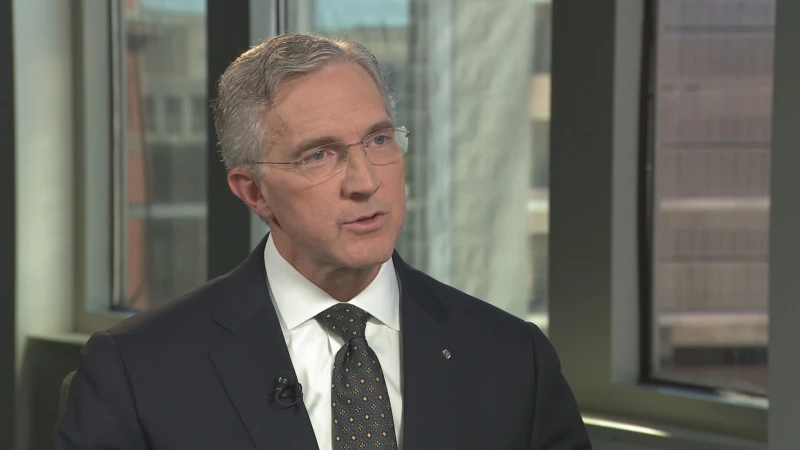
Knights of Columbus Supreme Knight Patrick Kelly speaks with EWTN News President and COO Montse Alvarado on Thursday, July 11, 2024, regarding the organization’s decision to cover mosaics by the accused abuser Father Marko Rupnik in chapels in Washington, D.C., and Connecticut. / Credit: EWTN News
Rome Newsroom, Jul 11, 2024 / 12:00 pm (CNA).
The Knights of Columbus announced Thursday they will cover mosaics by the accused abuser Father Marko Rupnik in Washington, D.C., and Connecticut, a dramatic move that represents the strongest public stand yet by a major Catholic organization regarding the former Jesuit’s embattled art.
The 2.1-million-member lay Catholic fraternal order said July 11 it would use fabric to cover the floor-to-ceiling mosaics in the two chapels of the St. John Paul II National Shrine in Washington and in the chapel at the Knights’ headquarters in New Haven, Connecticut — at least until the completion of a formal Vatican investigation into the Slovenian priest’s alleged abuse.
Patrick Kelly, Supreme Knight of the Knights of Columbus, told EWTN News Thursday the opaque material would be installed “very soon” but gave no firm timetable. The Knights said in a statement released Thursday afternoon that the artwork may later be more permanently hidden with a plaster covering after the Dicastery for the Doctrine of the Faith issues its ruling on Rupnik.
The decision by the Knights to cover the sprawling works, which envelop both spaces, was made at the end of a comprehensive, confidential review process that included consultations with sexual abuse victims and those who minister to them, art historians, pilgrims to the shrine, bishops, and moral theologians.
“The Knights of Columbus have decided to cover these mosaics because our first concern must be for victims of sexual abuse, who have already suffered immensely in the Church, and who may be further injured by the ongoing display of the mosaics at the shrine,” Kelly said in the statement.
“While opinions varied among those consulted,” he said, “there was a strong consensus to prioritize the needs of victims, especially because the allegations are current, unresolved, and horrific.”
Kelly reiterated that point in his interview with EWTN News.
“Our decision process really came down to multiple factors. But the No. 1 factor was compassion for victims,” Kelly said. “We needed to prioritize victims over anything, any material thing. So that was our primary consideration.”
The first segment of Kelly’s interview with EWTN News will air on “EWTN News Nightly” Thursday at 6 p.m. and 9 p.m. ET. Additional comments will air on “EWTN News In Depth” on Friday at 8 p.m. ET.
Knights of Columbus Supreme Knight Patrick Kelly speaks with EWTN News President and COO Montse Alvarado on Thursday, July 11, 2024, regarding the organization’s decision to cover mosaics by the accused abuser Father Marko Rupnik in chapels in Washington, D.C., and Connecticut. Credit: EWTN News
Once a renowned artist Rupnik, whose mosaics are featured in hundreds of Catholic shrines, churches, and chapels around the world, was expelled from the Jesuits in June 2023.
His expulsion followed a long review of what the society called “highly credible” accusations of serial spiritual, psychological, and sexual abuse of as many as 30 religious sisters by the priest spanning decades. Some women allege Rupnik’s abuse sometimes happened as part of the process of creating his art at the Centro Aletti, an art school he founded in Rome.
The Vatican announced in late October 2023 that Pope Francis had waived the statute of limitations in the Rupnik case, allowing the Dicastery for the Doctrine of the Faith to do a canonical investigation into the abuse allegations.
There has been no further communication from the Vatican about the inquiry, and it is unclear whether Rupnik may still be living in Rome despite having been given priestly faculties in a diocese of his home country of Slovenia last year.
Growing public outcry
What to do with Rupnik’s once widely-praised works, colorful mosaics characterized by grand, flowing figures and large eyes, has proven to be a divisive question in the wake of the numerous allegations against him, which first came to public attention in December 2022.
While some want to await Vatican judgment before dismantling and replacing Rupnik’s works, much of it made in collaboration with other artists of the Centro Aletti — a Rupnik-founded art school and theological center in Rome — the public outcry for the removal of his art has intensified.
The Knights also announced several immediate changes that would be enacted at the shrine in solidarity with abuse victims, including providing educational materials about the mosaics, making clear that their display during the consultation process “was not intended to ignore, deny, or diminish the allegations of abuse.”
Every Mass at the St. John Paul II National Shrine will now also include a prayer of the faithful for victims of sexual abuse, and saints with connections to abuse victims, such as St. Josephine Bakhita, will be specially commemorated.
The group said it became aware of the allegations against Rupnik in December 2022 — and noted that the artist, while under investigation, remains a priest in good standing in the Diocese of Koper, Slovenia.
“This decision is rooted in a foundational purpose of the Knights of Columbus, which is to protect families, especially women and children, and those who are vulnerable and voiceless,” Kelly said in the July 11 statement.
The “Redemptor Hominis” chapel of the National Shrine of St John Paul II in Washington, DC, is decorated with mosaics by Fatherr Marko Rupnik. Credit: Lawrence OP|Flickr|CC BY-NC-ND 2.0
The St. John Paul II National Shrine is a pastoral initiative of the Knights of Columbus, established in 2011, and designated a national shrine by the U.S. Catholic bishops in 2014.
Rupnik’s mosaics were installed at the shrine in 2015. The Holy Family Chapel at the Knights’ headquarters has featured Rupnik’s art since 2005.
Highlighting the John Paul II shrine’s mission of evangelization, the supreme knight said, “the art we sponsor must therefore serve as a stepping stone — not a stumbling block — to faith in Jesus Christ and his Church.”
Rupnik has not made any statements since the allegations came to light.
An eye on Lourdes
The Knights’ move to conceal the mosaics follows just a week after the bishop of Lourdes, France, said that despite his personal feelings that Rupnik’s artwork at the renowned Marian shrine there should be removed, he has decided to wait to make a final decision due to “strong opposition on the part of some.”
After forming a special commission in May 2023, Bishop Jean-Marc Micas of Tarbes announced July 2 that more time was needed “to discern what should be done” about Rupnik’s mosaics at the Marian apparition site, because his belief that they should be torn down “would not be sufficiently understood” and “would add even more division and violence” at this time.
As a “first step,” the French bishop said he had decided the mosaics will no longer be lit up at night during the shrine’s nightly candlelight rosary processions.
In his interview with EWTN News, Kelly said the Lourdes bishop’s intent to make a decision of some kind this spring galvanized the Knights to act at this time.
In his July 11 statement, Kelly thanked the Lourdes bishop for his “thoughtful decision” and said it “both informed and confirmed us in our own decision-making. Shrines are places of healing, prayer, and reconciliation. They should not cause victims further suffering.”
Emphasizing the importance of discernment based on mission and context, the supreme knight said: “Every situation is different. In the United States, Catholics continue to suffer in a unique way from the revelations of sexual abuse and, at times, from the response of the Church. It is clear to us that, as a national shrine, our decision must respect this country’s special need for healing.”
The Knights of Columbus was founded in New Haven, Connecticut, in 1882 by Blessed Michael McGivney, a parish priest. Dedicated to the advancement of the group’s key principles — charity, unity, fraternity, and patriotism — its members in 2022 provided 50 million service hours and nearly $185 million to charitable causes in their communities.
National Catholic Register Editor-in-Chief Shannon Mullen contributed to this story.
Lent is supposed to be a time of penance in the Catholic Church. This year, it’s a time when priests in the confessional will use a revised translation of the sacrament of penance and reconciliation to forgive the sins of Catholic penitents.
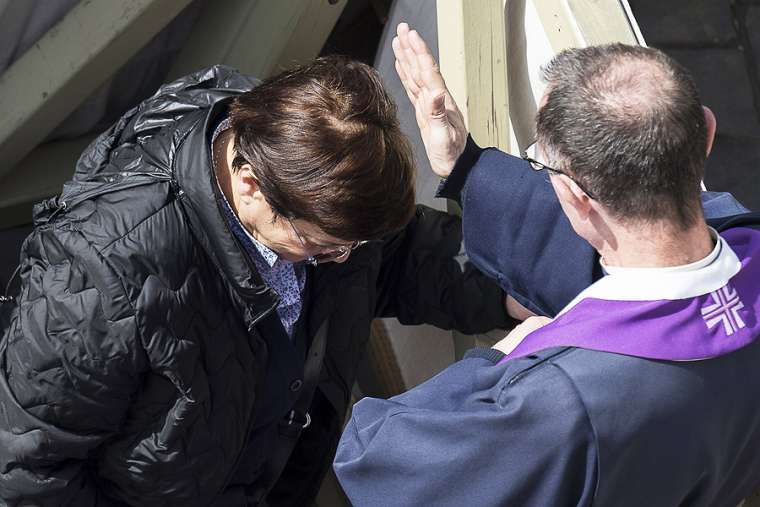
The changes are noticeable in the formula of absolution, when the priest speaks in the person of Jesus Christ to absolve a Catholic from his or her sins. The “essential words” of the priest’s absolution formula have not been changed, but there are “two minor modifications to the preliminary part of the prayer,” according to the April 2022 newsletter of the Committee on Divine Worship of the U.S. Conference of Catholic Bishops (USCCB).
Here’s the new approved text, with changes in bold:
God, the Father of mercies,
through the Death and Resurrection of his Son
has reconciled the world to himself
and poured outthe Holy Spirit for the forgiveness of sins;
through the ministry of the Church may God grant you pardon and peace,
and I absolve you from your sins
in the name of the Father, and of the Son, [sign of the cross]
and of the Holy Spirit. Amen.
The line “poured out the Holy Spirit” previously read “sent the Holy Spirit among us.” The phrase “may God grant you pardon and peace” is only a one-word change: It previously read “may God give you pardon and peace.”
The changes add “a little bit more richness to the language,” according to Monsignor Richard Hilgartner, a former executive director of the USCCB’s Secretariat of Divine Worship who is now pastor of St. Joseph Parish in Cockeysville, Maryland.
“God’s granting something that we don’t deserve, and that’s what forgiveness is. It’s something that we don’t earn or deserve,” Hilgartner told the Archdiocese of Baltimore newspaper The Catholic Review.
The sacrament of penance, also called reconciliation or confession, is the means through which God grants pardon for sins through the priest’s ministry. In the sacrament, the contrite penitent discloses his or her sins to a Catholic priest who grants sacramental absolution. The penitent makes an act of contrition in which he or she resolves to not sin again. The priest generally instructs the penitent to perform an act of satisfaction, usually called a penance. This can take the form of prayer, such as praying three Hail Marys, for example.
The U.S. Conference of Catholic Bishops’ 2021 fall general assembly voted in favor of the new translation of the prayer, with 182 votes in favor, 6 against, and 2 abstentions. The Vatican’s Dicastery for Divine Worship and the Discipline of the Sacraments approved the translation in April 2022.
The new language for the priest’s absolution is allowed as of Ash Wednesday, the start of Lent. Priests must use the new language starting on Divine Mercy Sunday, April 16, the first Sunday after Easter 2023.
Hilgartner noted that the liturgical season of Lent is a penitential time when many Catholics especially seek out the sacrament of reconciliation. He told the Catholic Review that many Catholics feel peace and relief after going to confession, especially if they have been away from the sacrament for a long time.
“Inevitably, people say, ‘I feel so much better. I feel like a burden has been lifted,’ because that’s what’s happening. God is casting behind his back all our sins, taking them away from us in a way that we don’t know how to do for ourselves,” he said. “I hear often about how people feel literally unburdened by this happening. And it’s the great gift — that the Lord’s taking this upon himself. For us, this is what the cross is all about, that he takes all of our sins to the cross so that we don’t have to.”
Under Church law, every Catholic has the right to an anonymous sacramental confession. In practice, priests often do not even know the identity of a penitent. In the Catholic understanding of the “seal of confession,” the contents are “inviolable.” Any priest who discloses the contents of a confession faces among the harshest penalties of the Church, an automatic excommunication.
Pope Francis has frequently encouraged Catholics to receive God’s forgiveness in the sacrament of penance.







Leave a Reply