Washington D.C., Sep 17, 2018 / 10:45 am (CNA).- Supreme Court nominee Brett Kavanaugh has denied allegations made against him by Christine Blasey Ford. Ford authored a letter accusing Kavanaugh of sexual misconduct when the two were high school students.
The accusations first surfaced last week, when Sen. Dianne Feinstein (D-CA) announced she was in possession of the letter but would not release the name of the accuser due to privacy concerns. Ford came forward in a Sept. 16 interview with the Washington Post.
Feinstein had been in possession of the letter since July, but did not question Kavanaugh about its contents before or during his appearances before the Senate Judiciary Committee. Instead, the senator forwarded the letter to the FBI late last week. The FBI have said they will not be investigating the matter.
Ford alleges that when she was in high school, a “stumbling drunk” Kavanaugh pinned her down in a bedroom at a house party, groped her over her clothing, and attempted to remove her clothes. She says that Kavanaugh covered her mouth when she attempted to cry out. The encounter ended when another man, named as Mike Judge, jumped on the two of them and she was able to leave the bedroom.
Ford says she was afraid Kavanaugh could have accidentally killed her.
Mr. Judge has said the incident never happened.
Kavanaugh has also denied the allegations, both before and after Ford came forward publicly. On Sept. 17, Kavanaugh released a statement in which he called it a “completely false allegation” and that he had “never done anything like what the accuser describes — to her or to anyone.”
“Because this never happened, I had no idea who was making this accusation until she identified herself yesterday,” he said.
Kavanaugh also said that he is willing to defend himself in front of the Senate Judiciary Committee “in any way the Committee deems appropriate.”
On Monday afternoon, Sen. Susan Collins (R-ME) tweeted that she believed both Kavanaugh and Ford should testify under oath before the Senate Judiciary Committee. Sen. Collins is considered to be a potential swing vote in the Senate and has not yet said if she intends to support Kavanaugh’s nomination.
The Senate Judiciary Committee is currently scheduled to vote Sept. 20 on whether to recommend Kavanaugh for confirmation to the Supreme Court. If the majority-Republican committee votes in Kavanaugh’s favor, his nomination will then be put to a vote of the whole Senate.
If either President Trump or Kavanaugh himself were to withdraw his nomination, it is unlikely that a new nominee would be confirmed prior to this November’s midterm elections.
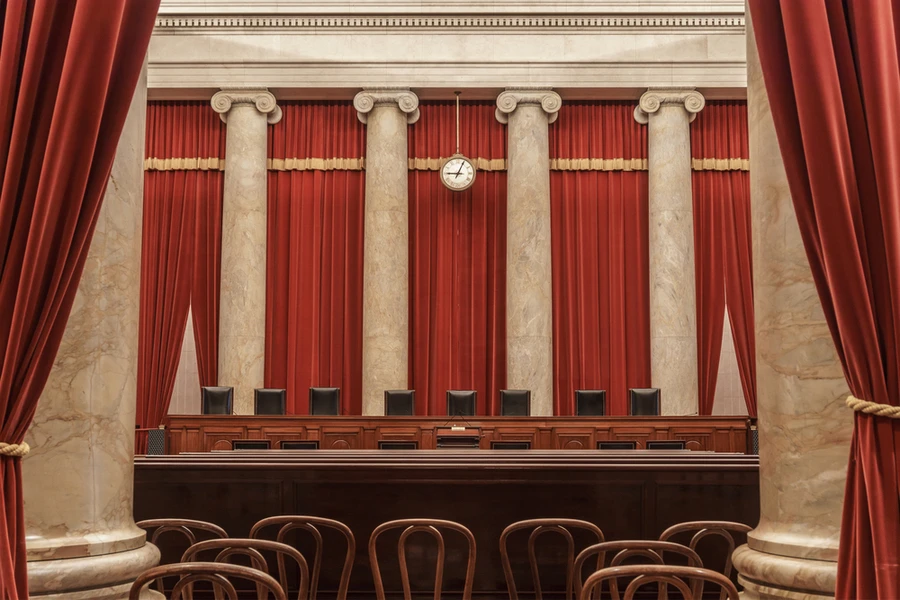
The next session of the Supreme Court opens on October 1.
If you value the news and views Catholic World Report provides, please consider donating to support our efforts. Your contribution will help us continue to make CWR available to all readers worldwide for free, without a subscription. Thank you for your generosity!
Click here for more information on donating to CWR. Click here to sign up for our newsletter.
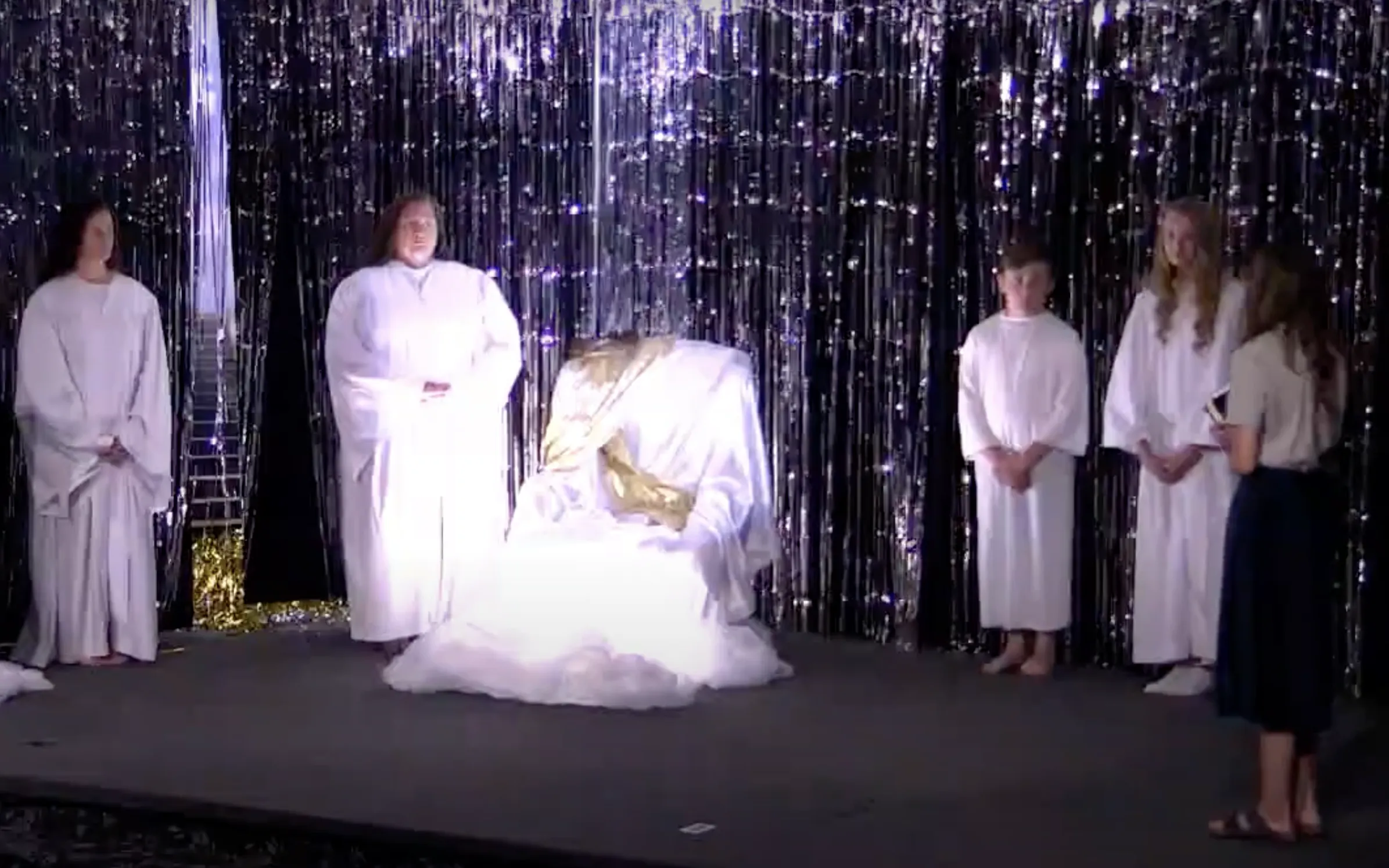
A scene from the trailer promoting Liberty University’s campus ministry production of “Scaremare.” / Scaremare on YouTube
Washington, D.C. Newsroom, Oct 29, 2022 / 10:55 am (CNA).
This October some churches and ministries in the United States are once again hosting Christian versions of haunted houses, and nonbelievers and believers alike are lining up for some rather existential spine-tingling for the first time since the pandemic.
Popular among evangelical Protestant churches in the South, these “judgment houses” typically stage dramatic representations depicting what happens after people die, leaving visitors to ponder whether they themselves are headed for heaven or hell, and presumably, to act accordingly.
Is this a good way to save souls? Some Catholics experts in evangelization who spoke to CNA have reservations.
A different way to evangelize
The late Jerry Falwell, the Baptist televangelist, and founder of Liberty University, in Lynchburg, Virginia, is credited with hosting the first judgment house in 1972, “Scaremare.”
Scaremare is still going strong in Lynchburg, where the university’s campus ministry stages a production every year around Halloween that draws people from all over the region attracted by the lure of “fun-house rooms and scenes of death in order to confront people with the question ‘What happens after I die?’”
The performance does not disappoint those looking for the sort of adrenaline surge a horror movie produces. As many as 4,000 visitors a night witness gruesome death scenes including a massacre at a movie theater and a camper who is mauled by a wild animal.
According to Josh Coldren, the director of the 2022 production of Scaremare, the scenes are intended to make people think about their fears and their mortality.
“We talk about how everyone faces death, but how there is hope beyond our fears and hope beyond death, and that hope is in Jesus Christ,” Coldren told CNA.
According to Scaremare’s website, over 26,000 people who visited over the years “have made decisions for Christ over the past two decades. Ironically, this House of Death points to the Way of Life!”
While judgment houses can function as memento mori, efficacious reminders of the inevitability of death, some judgment houses, also known as “Hell Houses,” have become controversial for taking the idea to an extreme. Graphic scenes such as abortions, extramarital sex, and drug use are sometimes depicted along with the consequence of these actions as the sinners are shown condemned to spend eternity in hell.
Scaremare doesn’t get into these issues or talk about hell at all, Coldren told CNA.
“We don’t have a scene of hell, and we stay away from demons. We believe those things are real, we just make sure we stay away from them,” Coldren said.
Tom Hudgins, is the owner of Judgement House, a company based in Seminole, Florida, that provides scripts to churches to stage dramas. Before COVID, he told CNA, they helped as many as 350 churches at a time hold Judgement Houses. They are slowly getting back to business, he said, and about 50 participating churches are listed on their website.
Hudgins explained to CNA that, unlike more extreme Hell House productions, his scripts never talk about social issues. Small groups of visitors walk through scenes meant to encourage self-reflection. Each production begins with death, by a car crash or cancer, for example, and then the audience sees what happens after death.
“They see what hell would be like, but they also see what heaven will be like, and everyone can make their own decisions,” Hudgins said.
A scene from a production of a Judgement House script. Decaturville Pentecostal Church YouTube
Bonnie Gilliland, the dramatic director at Morningside Baptist Church in Tallahassee, Florida, is staging a play with the help of Judgement House this October. She told CNA that the productions are a way of sharing the Gospel.
“We include a lot of scripture, it’s very biblically based,” she said.
Gilliland explained that this year’s production isn’t just for nonbelievers – it’s meant to give the regular churchgoer a wake-up call.
“The current drama gives people an opportunity to understand and examine whether they have a relationship with Jesus Christ because it’s more than just going to church, it’s about accepting Jesus as your savior and receiving the gift of eternal life,” Gilliland said.
Kelly Armstrong, the director of the judgment house at New Harmony Baptist Church in Albertville, Alabama, told CNA that past productions have depicted scenes of car wrecks, overdoses, and abuse.
Visitors see “how people make decisions that affect their eternity,” he said. “It brings our church together, and makes people think.”
Catholic criticism of “hell houses”
Judgment houses have not found favor among Catholic churches in the United States, and two experts in evangelization and pastoral care told CNA that they don’t think talking about hell attracts people to the Church.
Sherry Weddell is the founder of the Catherine of Siena Institute, an apostolate that helps evangelize Catholic parishes to turn pew-sitters into “intentional missionary disciples.” She told CNA that she advises any Catholics considering introducing hell-related themes to their Halloween decorations or celebrations, to rethink that idea.
“If you live in an area that has a significant number of young adults, especially parents of young children, or in an area that is highly secularized like urban areas of the East or West coasts, many will find it offensive or off-putting. And there is a real chance that sensitive and young children could be upset by it which would fuel their parents’ unhappiness with the sponsoring Catholic community,” Weddell explained.
“You could upset people who might otherwise have been open to attending an Advent or Christmas event at your parish or just open to a friendship with a Catholic like you.
“Instead of building or strengthening bridges of trust, you could be shattering or weakening whatever trust may already exist. There are creative, positive, child and parent-friendly alternatives such as “trunk-or-treating,” costume parties, and community of light events that foster both long-standing relationships and fun,” Weddell said.
Monsignor Stephen Rossetti, the chief exorcist for the Archdiocese of Washington, and a psychologist and researcher at the Catholic University of America, told CNA that the threat of hell isn’t effective in this day and age.
“People today are not convinced or influenced by threats of hell. The Church just really stopped doing that because it just doesn’t work. You know, you can do all the hellfire and damnation sermons you want, but people just kind of yawn, “ Rossetti said.
“We’re trying to emphasize God’s love and God’s mercy, which I think is much more to the point, frankly. And also more of a message that’s needed in our day. And I think that started with Pope John XXIII at Vatican II. He said, today what the message needs to be is of God’s mercy and compassion and God’s love.
“This is what attracts people, and this is sort of the core of our message. God loves us and God has saved us out of his love and compassion in Jesus,” he said.
Washington D.C., Mar 20, 2020 / 12:00 pm (CNA).- Efforts to combat the spread of coronavirus should not be used to override ethical restrictions on the use of aborted fetal tissue in medical research, Catholic bioethicists warned on Thursday. The … […]
Washington D.C., Oct 23, 2018 / 09:47 am (CNA).- The District of Columbia’s attorney general has opened an investigation into clerical sexual abuse in the Archdiocese of Washington. The announcement was made during a Mayor-Council breakfast meeting on Oct. 23.
A statement released by DC attorney general Karl Racinev said that “while we generally don’t talk publicly about our confidential enforcement activity, I can report that our office has launched a civil investigation into whether the Archdiocese – which is a nonprofit institution – violated the District’s Nonprofit Act by potentially covering up allegations of sexual abuse of minors.”
Racine told the breakfast meeting that “according to the law, nonprofits are required to work for a public purpose; if they are in fact covering up child sex abuse, that is clearly not in the public interest.”
CNA contacted the attorney general’s office and asked if the investigation was in response to allegations it had received, or if it was a proactive step being taken on the AG’s own initiative. A spokesperson for the attorney general’s office declined to comment and said they were not prepared to answer “detailed questions” about the announcement.
Racine previously stated in a radio interview in August that he had received considerable pressure from the public to open such an investigation.
The Archdiocese of Washington is currently led by Cardinal Donald Wuerl as interim-administrator pending the appointment of a successor by Pope Francis.
A spokesman for the archdiocese told CNA that archdiocesan officials met with the attorney general last month and stressed their eagerness to engage in a collaborative and cooperative process.
The spokesman also said that the archdiocese encouraged the attorney general to consider a wider investigation into all bodies with a child protection mandate, including other charities and public schools, in the interests of the public good. “Clearly the attorney general has decided to go another way,” the spokesman said.
On Oct. 15, the Archdiocese of Washington released a list of clergy who had been credibly accused of sexual abuse. At the time of that release, the archdiocese stressed that no priest currently in ministry had been accused of sexual abuse, and that no credible allegations had been received concerning the abuse of minors in nearly twenty years.
News of the attorney general’s investigation comes only one day after the opening of a special hotline for residents of the district to report allegations of clerical sexual abuse. That line was announced Monday, Oct. 22 by federal prosecutors at the Superior Court Division of the U.S. Attorney’s Office for the District of Columbia.
Following the publication of the Pennsylvania grand jury report in July, attorneys general in several states have announced similar inquiries, including in Michigan, Missouri, Maryland, New York, and New Jersey. Last week, federal prosecutors served subpoenas to the dioceses of Pennsylvania, opening a new investigation into clerical sexual abuse in that state.
The Washington attorney general specifically emphasised the trend, saying in his remarks Tuesday that “our investigation brings the count of states with open investigations to 14.”
The Archdiocese of Washington is home to nearly 700,000 Catholics, six Catholic colleges and universities, and 93 Catholic schools.
As the last archdiocese to be led by former cardinal Theodore McCarrick, Washington has been the subject of considerable attention and scrutiny during a summer in which several different sexual abuse scandals have unfolded at once.
Despite accusations of sexual abuse or harassment against McCarrick concerning his time in several dioceses in New York and New Jersey, no public accusations have been made concerning his time in Washington, either while archbishop or in retirement.
1) Feinstein waits until the last moment, when it is obvious that nothing else will work, to “release” this letter, which she has had since JULY. (When is the last time the democrats ever showed true respect for anyone’s privacy?)
2) Kavanaugh – “Because this never happened, I had no idea who was making this accusation until she identified herself yesterday.”
Could it be any more obvious that this is a last desperate attempt by the democrats to block Kavanaugh?
An oddity is that the woman’s parents years later were going through a bankruptcy hearing before Kavanaugh’s mother, a judge also. And the woman has had much therapy. I wonder if she is conflating families and events subconsciously.




1) Feinstein waits until the last moment, when it is obvious that nothing else will work, to “release” this letter, which she has had since JULY. (When is the last time the democrats ever showed true respect for anyone’s privacy?)
2) Kavanaugh – “Because this never happened, I had no idea who was making this accusation until she identified herself yesterday.”
Could it be any more obvious that this is a last desperate attempt by the democrats to block Kavanaugh?
An oddity is that the woman’s parents years later were going through a bankruptcy hearing before Kavanaugh’s mother, a judge also. And the woman has had much therapy. I wonder if she is conflating families and events subconsciously.