Orange, Calif., Apr 11, 2018 / 03:57 pm (CNA/EWTN News).- The Algerian government has approved the holding of a beatification Mass in Oran for seven French Trappist monks who were martyred in the country in 1996, AFP reports.
“The beatification will take place in a few months, in the coming weeks, in Oran,” Algeria’s Foreign Minister, Abdelkader Messahel, told France 24 television April 10.
In January Pope Francis had authorized the Congregation for the Causes of Saints to recognize the martyrdom of Pierre Claverie and his 18 companions, men and women religious, who were killed in hatred of the faith in Algeria between 1994 and 1996.
Claverie was a French Algerian and the Bishop of Oran from 1981 until his Aug. 1, 1996 martyrdom. He and his companions were killed during the Algerian Civil War by Islamists.
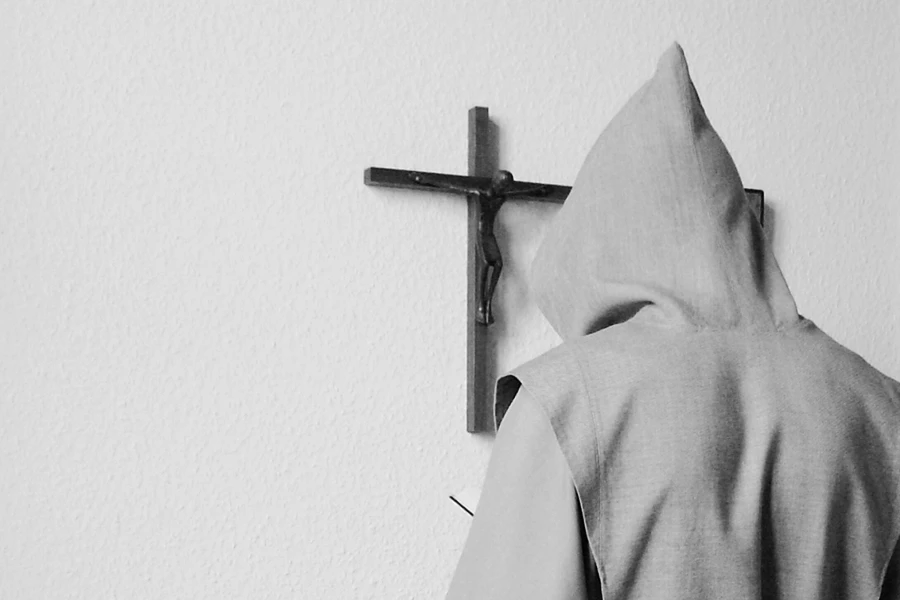
The best known of Claverie’s companions are the seven monks of Tibhirine, who were kidnapped from their Trappist priory in March 1996. They were kept as a bartering chip to procure the release of several imprisoned members of the Armed Islamic Group of Algeria, and were killed in May. Their story was dramatized in the 2010 French film Of Gods and Men, which won the Grand Prix at the Cannes Film Festival.
The prior, Christian de Chergé, sought peaceful dialogue with the Muslim population of the area and provided employment, medical attention, and education to the locals.
Dom Christian accepted that the current political tensions and violent militias were a threat to his life. According to the Trappist order, he wrote a letter to his community and family, citing the peace felt giving his life to God.
“If it should happen one day – and it could be today – that I become a victim of the terrorism which now seems ready to engulf all the foreigners living in Algeria, I would like my community, my Church and my family to remember that my life was given to God and to this country,” he said.
If you value the news and views Catholic World Report provides, please consider donating to support our efforts. Your contribution will help us continue to make CWR available to all readers worldwide for free, without a subscription. Thank you for your generosity!
Click here for more information on donating to CWR. Click here to sign up for our newsletter.
A pride flag hangs from the Peterborough Cathedral in England in 2019. / Shutterstock
Denver, Colo., Apr 24, 2023 / 12:05 pm (CNA).
The Church of England’s decision to bless same-sex couples continues to reverberate throughout the global Anglic… […]
Juba, South Sudan, Mar 16, 2017 / 03:34 pm (CNA/EWTN News).- Amid war, displacement and hunger, South Sudan’s day of prayer must lead to true repentance, a leading Catholic bishop has said.
“Our call to prayer must be sincere and honest!” Bishop Barani Eduardo Hiiboro of Tombura-Yambio emphasized. “For this prayer to become historical and meaningful for us today we must repent and sin no more!”
Bishop Hiiboro, president of the Sudan Catholic Bishops’ Conference, spoke in Yamibo on the March 10 day of prayer.
The country has been embroiled in civil war since December 2013, when South Sudan’s President Salva Kiir accused his former deputy, Riek Machar, of attempting a coup. The war has been fought between their supporters, largely along ethnic lines, and peace agreements have been short-lived.
The conflict has created 2.5 million refugees. At present an estimated 4.5 million people face severe food insecurity, a number expected to rise one million by July.
President Kiir had called for the day of prayer. A three-day national dialogue on the country’s future began March 15.
Bishop Hiiboro said the whole country will be watching the president closely to see whether his attitude will trend towards peace.
The country’s people should also watch themselves, the bishop said: “All of us who have prayed today will also be watched whether we renounce our sinfulness of hate, violence, tribal difference, for love of South Sudan and peace.”
Bishop Hiiboro said South Sudan must commit itself to God every year as a way to unite the country.
“Continual prayers help us in stepping forward to embrace the su ffering of our country, through unified, concrete action animated by the love of Christ, to nurture peace and build bridges of communication and mutual aid in our own communities throughout South Sudan,” he said.
He encouraged efforts to explore other ways to nurture open dialogue on issues of ethnic relations, justice, forgiveness, poverty, cultural power, mental health, economic opportunity and a “pervasive culture of violence.”
“The suffering is not somewhere else, or someone else’s. It is our own, in our very homes,” the bishop said.
After the day of prayer, people should walk like penitent sinners. They should stop their hateful and vengeful attitudes and free prisoners. They should reach out to refugees and the South Sudan diaspora in other countries and create a ground for all South Sudanese to dialogue, he said.
The president’s call for a day of prayer had drawn some criticism.
Bishop Santo Loku Pio Doggale, Auxiliary Bishop of the national capital Juba, characterized it as “a political prayer” and “a mockery.”
“It is a joke to hear the president of the country calling prayers while at the moment, the soldiers are hunting people across South Sudan,” he told Voice of America, according to the Sudan Tribune.
He charged that the government army has displaced many people from their ancestral homes. The bishop said that President Kiir, who is Catholic, does not even go to church anymore.
The “Holy Fire” is passed from inside Christ’s tomb to pilgrims gathered inside the Basilica of the Holy Sepulcher in Jersusalem on May 4, 2024, for the annual Orthodox Christian ceremony, held on the day before Easter, according to the Julian calendar. / Credit: Marinella Bandini/CNA
Jerusalem, May 5, 2024 / 09:00 am (CNA).
Pilgrims gathered in Jerusalem Saturday for the annual “Holy Fire” ceremony at the revered site of Jesus’ burial and resurrection, an ancient custom considered by many believers to be a miraculous event that takes place the day before the Orthodox Christian celebration of Easter.
For safety reasons, attendance at the May 4 event was capped at 4,200 people inside the Basilica of the Holy Sepulcher, though the crowds were more manageable and somewhat subdued this year because of a lack of pilgrims from the Palestinian territories and abroad due to the ongoing Israel-Hamas war.
Israeli police man a checkpoint inside the Old City of Jerusalem during the “Holy Fire” ceremony held at the Basilica of the Holy Sepulcher on May 4. 2024. Credit: Marinella Bandini/CNA
Access to the Old City where the basilica is located was restricted beginning on Friday night amid a heavy police presence. Numerous medical personnel and firefighters were present inside the basilica.
Though its authenticity is disputed by some, the “Holy Fire” or “Holy Light” refers to a fire of purported divine origin that ignites inside Jesus’ tomb while only the Greek Orthodox patriarch is present. Pilgrims then light their candles by extending them through a small opening in the tomb, producing a dramatic scene of flickering flames and joyous celebration.
The Orthodox Christian ceremony, which is attended by Catholics and other Christians, as well, has been held continuously since at least 1106, though accounts dating to the fourth century relate that the apostle Peter saw the holy light himself inside the tomb.
Pilgrims carry candles lit from the “Holy Fire” inside the Basilica of the Holy Sepulcher in Jerusalem on May 4, 2024. Credit: Marinella Bandini/CNA
The doors of the Holy Sepulcher were opened at 9 a.m. by Greek Orthodox representatives and again at 9.30 a.m. by representatives of the Armenian Apostolic Church — the two Orthodox communities that serve with Catholic Franciscans as the custodians of the site. Only then did the faithful begin to enter the basilica.
Around 11 a.m., those present began to sing traditional hymns in the loudest voice possible. These chants date back to the Turkish occupation of Jerusalem in the 13th century when Christians were not allowed to chant anywhere but in the churches.
The heart of the ceremony was between 1 and 2 in the afternoon. After the solemn entrances of the other Orthodox patriarchs of Jerusalem, the Greek Orthodox patriarch, Theophilos III, entered the basilica.
Previously, the doors of the Aedicule (the small shrine that houses the tomb of Jesus Christ) had been sealed with a large wax seal — signifying that the tomb had been inspected and that nothing was present that could be used to start a fire. Shortly before the arrival of the Greek patriarch, the seal was removed, and a large oil lamp was carried into the tomb.
After completing three rounds around the Aedicule, leading a procession of monks and priests, Patriarch Theophilos III entered the Aedicule, followed by a delegate of the Armenian patriarch (who could not attend due to an internal dispute) and several bishops from various denominations.
The Greek Orthodox Patriarch Theophilos III exits the Aedicule of the Holy Sepulcher on May 4, 2024, in Jerusalem, showing the faithful the two candles just lit from the oil lamp that is believed to have been miraculously ignited inside Jesus’ tomb. Credit: Studio Sami Jerusalem
Only the Greek Orthodox patriarch is allowed to enter the chamber that houses the tomb of Jesus, while all the others remain in the Chapel of the Angel, a sort of antechamber that commemorates the appearance of a heavenly messenger to the women at the tomb announcing Jesus’ resurrection.
Before entering the tomb, the Greek patriarch was inspected by Israeli authorities to prove that he didn’t carry any technical means to light the fire.
All the lights and lamps in the basilica were extinguished, especially those inside the Aedicule, which was left in darkness.
What believers attest to be a miracle takes place after a brief time of prayer: A holy fire is said to descend from heaven and ignite an oil lamp inside the tomb.
Pilgrims inside the Basilica of the Holy Sepulcher hold their candles aloft after the “Holy Fire” was ignited inside Jesus’ tomb on May 4, 2024, the day before the Orthodox Christian celebration of Easter. Credit: Marinella Bandini/CNA
On Saturday, after the lamp was lit the Greek Orthodox patriarch emerged from the tomb and lit bundles of 33 candles (a number representing the age of Christ at the time of his crucifixion and resurrection.) Meanwhile, pilgrims lit their candles also from the small round windows on the sides of the Aedicule, creating a dramatic scene outside the tomb. It is said that the fire does not burn anything (or anyone) for the first 33 minutes after being lit.
For Orthodox believers, the lighting of the fire is a genuine miraculous event, although voices within the Orthodox world itself have repeatedly questioned the authenticity of the miracle, attributing the spontaneous lighting of the lamp to tricks or chemical methods.
A lamp used to transport the “Holy Fire” from the Basilica of the Holy Sepulcher in Jerusalem to Bethlehem is carried at the lighting ceremony on May 4, 2024. By longstanding tradition, the flames from the purported miraculous fire are brought to the main Orthodox churches in the Holy Land and sent to the main Orthodox churches around the world via specially arranged flights. Credit: Marinella Bandini/CNA
In solidarity with the Palestinian people in Gaza and the victims of the war, the Orthodox Christians have chosen a more subdued celebration this year. To that end, the Holy Fire was not passed hand to hand through the streets of the Old City of Jerusalem, as is the custom, but was brought directly into the homes of the faithful.
Special lanterns transport flames from the tomb to the main Orthodox churches in the Holy Land and around the world (via specially arranged flights). The arrival of the flames from Jerusalem will mark the beginning of the Easter celebrations.





Leave a Reply