

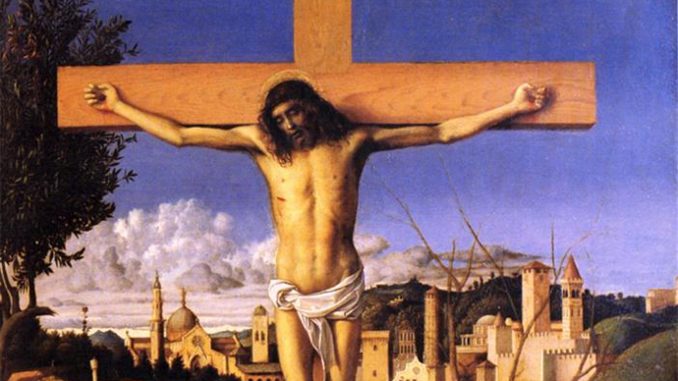
There is something profoundly unsettling about the way Jesus Christ reveals himself as King. Throughout human history, kings have been associated with power, privilege, and authority. They sit upon thrones, command armies, and exercise dominion over their subjects. Their greatness is often measured by the extent of their influence and the strength of their rule.
Yet when we turn to the Gospels, we encounter a King who overturns nearly everything we associate with earthly royalty.
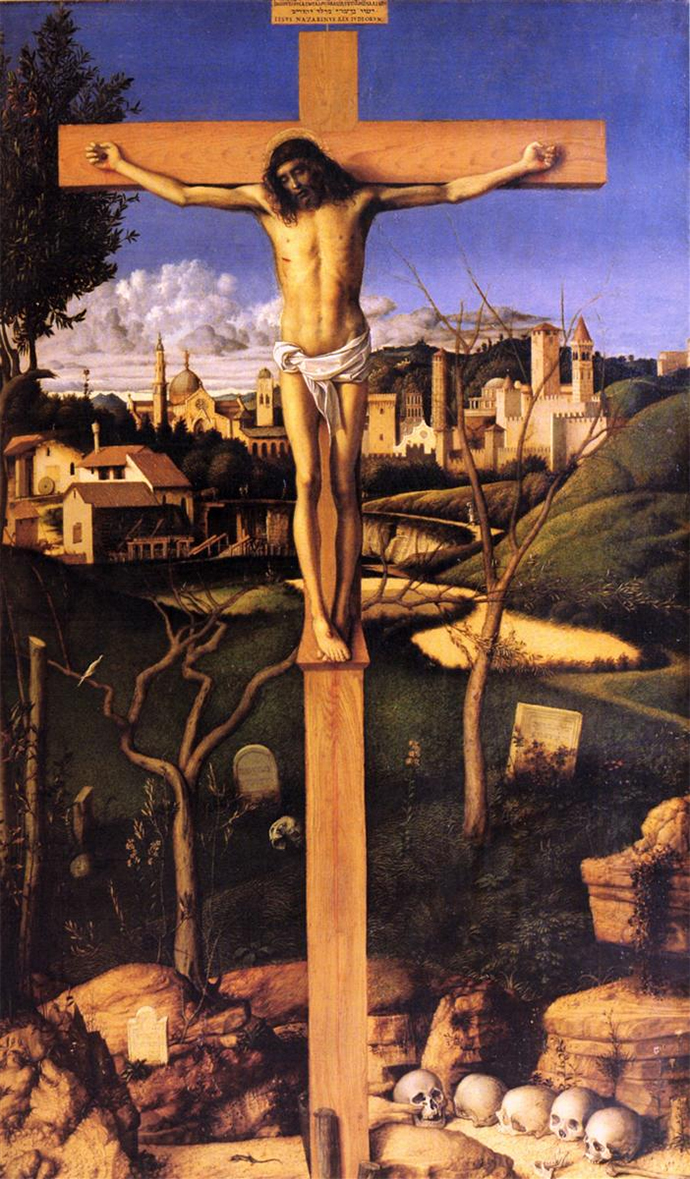
His throne is a cross. His crown is woven from thorns. His royal garments are stripped away. His subjects mock him, and his closest followers abandon him. Above his head hangs an inscription intended as an accusation: “This is the King of the Jews” (Lk 23:38).
And yet, precisely here, in the apparent defeat of Calvary, the kingship of Jesus Christ is revealed in its deepest meaning.
The Solemnity of Our Lord Jesus Christ, King of the Universe, invites us to contemplate this extraordinary mystery. Christ does not reign by imposing himself upon humanity but by offering himself for humanity. His authority is not diminished by his willingness to serve. Rather, his service reveals the very nature of his authority. In Jesus, kingship and servanthood are not opposites; rather, they are inseparably united in the mystery of divine love.
The Heart of the Servant King
To understand Christ’s kingship, we must first recognize that his service flows from who he is. Jesus does not become a servant merely because humanity needs assistance. His service expresses the eternal love of the Son for the Father, a love that overflows into his mission of salvation.
St. Paul captures this mystery in his Letter to the Philippians:
Who, though he was in the form of God, did not regard equality with God something to be grasped. Rather, he emptied himself, taking the form of a slave, coming in human likeness; and found human in appearance, he humbled himself, becoming obedient to death, even death on a cross. (cf. Phil 2:6–8)
This self-emptying, traditionally called kenosis, does not mean that Jesus ceased to be divine. Rather, the eternal Son freely embraced our humanity and the condition of a servant without surrendering his divinity. His humility reveals, rather than conceals, the astonishing depth of God’s love.
We often imagine power as the ability to make others do what we want. Divine power, however, is revealed in God’s freedom to give himself completely. Christ’s greatness is not measured by what he takes for himself but by what he offers for others.
Consider the Last Supper. St. John tells us that Jesus, fully aware that the Father had placed everything into his hands, rose from the table, removed his outer garments, and began washing his disciples’ feet (cf. Jn 13:3–5).
The significance of this moment is extraordinary. Jesus does not wash their feet because he has forgotten his dignity. He does so precisely because he knows who he is and where he comes from. His divine authority finds expression in an act normally associated with the lowliest servant. Here we encounter a fundamental truth of Christian life: authentic service does not diminish human dignity; it reveals the dignity of love.
When Jesus tells his disciples, “I have given you a model to follow” (Jn 13:15), he establishes a pattern for everyone who belongs to his kingdom. To follow Christ is to allow his self-giving love to shape our relationships, our responsibilities, and our understanding of greatness.
The Cross: The Throne of Divine Love
Everything in the earthly life of Jesus moves toward the cross. His teaching, healing, forgiveness, and compassion find their fullest expression in the supreme gift of himself. The cross is not an unfortunate interruption of his kingship. It is the place where his kingship is manifested most completely.
This does not mean that suffering or humiliation is good in itself. Crucifixion was an instrument of cruelty and injustice. Its horror must never be romanticized. What transforms the cross into the sign of salvation is the love with which Jesus freely embraces his sacrifice.
On Calvary, human sin unleashes its violence against the innocent Son of God. Yet Christ responds not with hatred or retaliation but with forgiveness: “Father, forgive them, they know not what they do” (Lk 23:34). Even in his agony, the King remains the Servant.
St. Luke’s account of the crucifixion, proclaimed on this solemnity in 2026, places two criminals beside Jesus. One joins the mockery, demanding that Jesus save himself. The other recognizes his innocence and makes a remarkable request: “Jesus, remember me when you come into your kingdom” (Lk 23:42).
The response is immediate: “Amen, I say to you, today you will be with me in Paradise” (Lk 23:43). At the very moment when Jesus appears most powerless, he exercises his royal authority by opening the gates of eternal life to a repentant sinner. What earthly king could offer such a gift?
The repentant criminal has nothing to present as evidence of his worthiness. His life is ending, and there is no opportunity to repair the damage he has caused. He can only turn toward Jesus in faith and entrust himself to his mercy. And that is enough for him to receive the promise of Paradise.
This encounter reveals the heart of Christ’s kingdom. It is a kingdom in which mercy triumphs over sin, forgiveness overcomes estrangement, and love proves stronger than death. Christ reigns not by escaping the suffering of humanity but by entering it and transforming it from within.
His resurrection confirms the victory accomplished through his obedient self-offering. The crucified King is the risen Lord, whose kingdom will reach its fullness when all things are brought under his sovereign authority.
The Kingdom Begins Within
If Christ’s kingship is revealed through self-giving love, then belonging to his kingdom must involve more than acknowledging his authority with our lips. It requires allowing him to reign within our hearts.
This is perhaps the most challenging dimension of the solemnity. We can readily proclaim Christ as King of the universe while resisting his authority over the smaller universe of our own lives. We may honor him in worship yet struggle to surrender our pride, resentments, ambitions, and desire for control.
Christ does not force his way into the human heart. He invites us into communion with himself, respecting our freedom while calling us to conversion. This transformation begins in the interior life, where we learn to receive the love we are called to share.
Before we can serve as Christ serves, we must allow ourselves to be served by Christ. Like Peter at the Last Supper, we must first accept the humility of a Lord who kneels before us and washes our feet. Only then can we understand what it means to kneel before others.
Prayer, the sacraments, meditation on Scripture, and acts of repentance are not simply religious obligations. They are privileged encounters with the living Christ, through whom his love gradually reshapes our desires and strengthens our freedom.
As we grow in communion with Christ, we begin to see others differently. The difficult coworker, the struggling family member, the lonely neighbor, and the person whose opinions offend us cease to be merely obstacles or interruptions. They become persons whom Christ loves and whom he calls us to love. His kingship begins to take flesh in the ordinary circumstances of our lives.
Living as Citizens of the Kingdom
Through Baptism, every Christian shares in Christ’s priestly, prophetic, and kingly mission. The Catechism of the Catholic Church teaches that the faithful exercise this royal dignity particularly by overcoming the reign of sin within themselves and by serving Christ in others, especially the poor and suffering (cf. CCC 786, 908).
This is a remarkable understanding of royalty. Our participation in Christ’s kingship is not a license to dominate but a summons to serve.
For parents, it may mean exercising authority with patience, sacrificing personal comfort for the good of their children, and teaching by example rather than command alone. For married couples, it means recognizing that love is not primarily about receiving what one desires but about seeking the genuine good of one’s spouse, especially when doing so requires forgiveness, perseverance, and sacrifice.
For those entrusted with leadership in the Church, it means remembering that ecclesial authority is never a personal possession. It is a responsibility exercised in fidelity to Christ and for the salvation of those entrusted to their care. For every Christian, it means recognizing that service is not confined to organized ministries or extraordinary acts of generosity.
The kingdom becomes visible whenever we choose reconciliation over resentment, truth over convenience, generosity over selfishness, and compassion over indifference.
When the King Comes in Glory
The Solemnity of Christ the King also directs our attention toward the fulfillment of history. The One who reigns from the cross will come again in glory to judge the living and the dead.
In Matthew’s account of the final judgment, the King identifies himself with the hungry, the thirsty, the stranger, the sick, and the imprisoned (cf. Mt 25:31–46). Those who served the least of his brothers and sisters discover that they were serving Christ himself. This is not a sentimental addition to the Gospel. It reveals the enduring character of Christ’s kingship and the seriousness of our response to his grace. The King who gave himself for us now asks us to recognize him in those who need our love.
As we celebrate this solemnity, we are invited to look again at the crucifix and reconsider what true greatness means. There hangs the King of the universe, crowned with thorns, his arms extended in an embrace wide enough to encompass all humanity. His apparent weakness reveals a love stronger than every earthly power. His sacrifice opens the way to eternal life. And from that throne of mercy, he continues to call us to follow him.
To acknowledge Christ as King is to allow his love to govern our hearts, his truth to guide our choices, and his service to shape our lives. For in the kingdom of Christ, we do not become great by placing ourselves above others. We become great by allowing the Servant King to love others.
If you value the news and views Catholic World Report provides, please consider donating to support our efforts. Your contribution will help us continue to make CWR available to all readers worldwide for free, without a subscription. Thank you for your generosity!
Click here for more information on donating to CWR. Click here to sign up for our newsletter.


Leave a Reply