

 By
By The pontiff, five days after undergoing surgery for cancer, said he would “gradually resume my activities.”
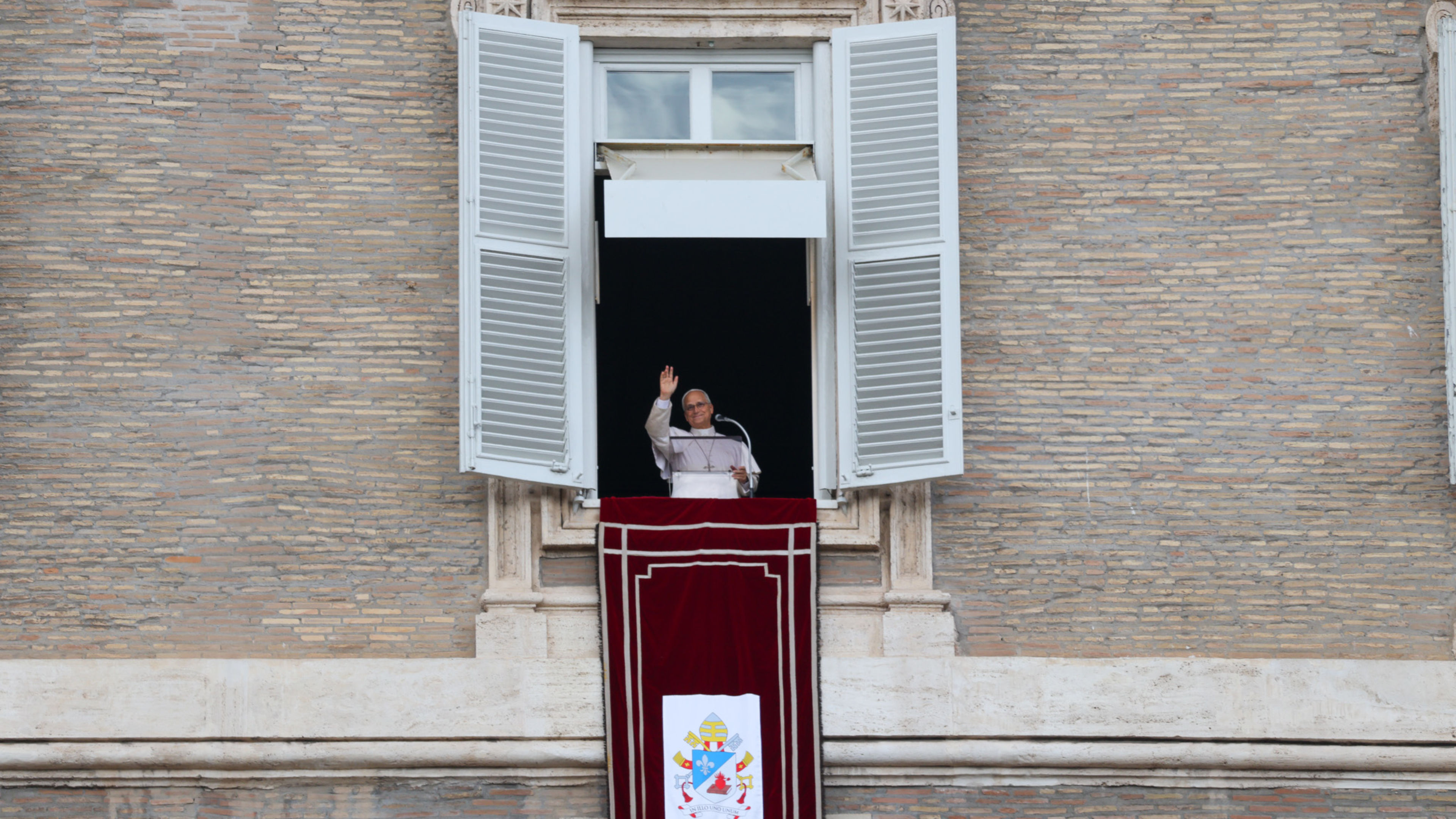
Pope Leo XIV appeared at the window of his private study in the Vatican’s Apostolic Palace on Sunday, just one day after being discharged early from the hospital following surgery last Tuesday.
The pontiff thanked “all those who have prayed for me in recent days” and expressed “particular gratitude to the doctors, nurses, and all the staff of the Gemelli University Hospital,” where he was treated.
“This experience has made me feel a special closeness to all those who are going through illness and experiencing poor health,” Leo said.
“Having overcome this delicate phase, as you know, I will now gradually resume my activities, always with Godʼs help and your prayers.”
The pope did not mention his planned trip to three countries in South America, scheduled for next month. The Vatican has announced no changes in that plan. The Vatican said last week that Leo had canceled all private audiences through Tuesday Oct. 20.
Sunday was the first time the Holy Father had spoken publicly since the operation. The appearance was eagerly awaited by Catholics around the world, who had anxiously followed each new official Vatican bulletin on his medical condition in recent days.
According to the official Vatican News outlet, 15,000 people gathered in St. Peter’s Square despite a morning of cloudy skies and intermittent rain in Rome. They were eager to see the pope recovering from surgery and to express their affection for him the day after his release from the hospital.
At 3:30 p.m. Saturday, the pontiff left Rome’s Gemelli Hospital following his first hospitalization since the beginning of his pontificate, during which surgeons removed a malignant tumor from his right lung. Leo XIV appeared to be in good condition and walked with a steady gait, greeting several patients without showing signs of fatigue.
Smiling, the pope stopped to shake hands and speak with patients in the hospital corridors. About 15 minutes after leaving the hospital, the car carrying him entered Vatican City through the Perugino Gate.
For now, the pontiff will remain in Rome rather than travel to Castel Gandolfo, where he usually spends periods of rest.
A response that exposes hypocrisy
During his reflection before the Angelus prayer, the pontiff discussed one of Jesus’ best-known teachings: “Give therefore to the emperor the things that are the emperor’s, and to God the things that are God’s.” Leo explained the context in which Jesus originally spoke the words, amid what the evangelist Matthew describes as “a situation of hostility towards Jesus.”
“The Pharisees gather together to see how they might catch him in his words,” the pope said, quoting the Gospel account. “They decide to send some people to question him on a controversial matter: ‘Is it lawful to pay taxes to the emperor, or not?’”
According to Leo XIV, “The Teacher’s response is astute, for it allows him to avoid the trap and exposes the hypocrisy of those who seek to put him to the test.”
The Gospel recounts how Jesus asks to see the coin used to pay the tax, a denarius. After receiving it, he delivers the familiar teaching: “Give therefore to the emperor the things that are the emperor’s, and to God the things that are God’s.”
“In Jesus, we contemplate a God who is not afraid of history but comes instead to dwell within it. His Kingdom does not abolish human roles and responsibilities,” the pontiff explained.
He emphasized, however, that Godʼs Kingdom “does, however, call us to live without compromise, free from selfish ambitions and unjust motives, seeking above all the Kingdom of God and his righteousness.”
Being truthful and free to do good
In this context, Leo XIV drew attention to the fact that Jesus’ questioners praised him despite their hostile intentions.
“In this regard, it is striking that those same people praise Jesus, even though their intentions are far from good,” he observed.
The pope recalled the words with which they addressed Jesus: “Teacher, we know that you are sincere, and teach the way of God in accordance with truth, and show deference to no one; for you do not regard people with partiality.”
Drawing on this passage, Leo XIV invited the faithful to reflect on what it means to live an authentic Christian life.
“Dear friends, this is precisely what it means to ‘give to the emperor the things that are the emperor’s, and to God the things that are God’s’: to be truthful, free from servile fear or hypocrisy, free to do good,” he said.
“Let us pray to the Lord to help us live in this way. And let us entrust ourselves to the intercession of the Virgin Mary.”
This story was first published by ACI Prensa, the Spanish-language sister service of EWTN News. It has been translated and adapted by EWTN News English. It has been updated at 6:20 am ET to include the pope’s remarks following the Angelus.
If you value the news and views Catholic World Report provides, please consider donating to support our efforts. Your contribution will help us continue to make CWR available to all readers worldwide for free, without a subscription. Thank you for your generosity!
Click here for more information on donating to CWR. Click here to sign up for our newsletter.

Leave a Reply