


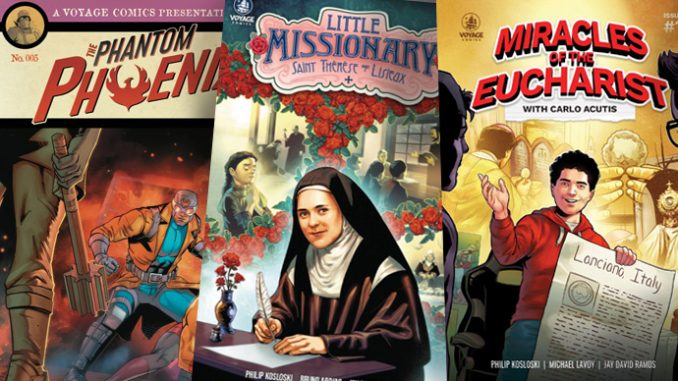
Back in the late 80s and into the 90s, even as an unphilosophical teenager and avid consumer of comic books, I was well aware of flaws in the fantasy worlds of Marvel and DC.
I can, for instance, recall seeing through the thinly veiled propaganda of an “X-Men” graphic novel entitled God’s Country, the villain of which was a small-minded religious bigot who refused to tolerate super-powered mutants. One storyline of The Legion of Super-Heroes depicted a xenophobic dictator taking over the Earth, resulting in a terrible regime whereby hapless space aliens were persecuted.
Quite aside from the obvious virtue-signaling, I was also put off by the superficial and trite conflation of issues such as trans-humanism and extra-terrestrial life with the “gay rights” movement. Do slogans like Coexist! and Can’t we all get along? really represent the only response to the presence among us of alien beings endowed with godlike powers?
In any event, an issue of The Incredible Hulk would finally cut to the chase by featuring S.H.I.E.L.D. director Nick Fury bragging about his organization’s acceptance of homosexuals.
To be sure, even in the mainstream comic book industry, there have been exceptions that veer from the reservation of liberal ideology. I still have an old issue of Batman, wherein the hero tracks down an insane criminal who would solve the homelessness problem … by killing off all the homeless. Unfortunately, some of the most interesting comics that part ways with leftist ideology are excessively dark. For example, Frank Miller’s iconic The Dark Knight Returns is laced with gratuitous obscenity and over-the-top violence, making it impossible to recommend this otherwise fascinating account of an indomitable, haunted man resuming his obligation to protect his home city from chaos.
Happily, Voyage Comics avoids political correctness on the one hand and runaway sex and violence on the other, instead opting to celebrate heroes both more down-to-earth and more wholesome than what we typically find in Marvel and DC. Also, intriguingly, heroes are placed not in the immediate “now” but are situated within historical fiction; the “Lionette” and “Phantom Phoenix” titles are set in America in the period between the World Wars.
The former protagonist is a young circus acrobat with a knack for getting along with animals, while the latter is a former combat pilot who now fights crime in disguise, the loss of part of his leg in the Great War notwithstanding. Neither character has what we would properly term “super-powers,” which is frankly refreshing. The impression sometimes given by mainstream comics is that nobody can effect any good in the world without having unearthly forces at his beck and call. To the contrary, even when outnumbered by sadistic gang members, Lionette triumphs, while the Phantom Phoenix uses his tools and knowledge of the city to stop Chicago crime in its tracks. Instead of superpowers, both characters are shown as relying upon skill, wits, and resolute faith.
All this calls to mind the original “superheroes”—the Saints. From Therese of Lisieux to Carlo Acutis, Voyage has also made a number of hagiographies more accessible to young readers. “Little Missionary” is a colorful, artistically rendered depiction of the life of Saint Therese, with special detail accorded compelling episodes and themes of her life. These include her role in the salvation of the condemned murderer Henry Pranzini, her purely epistolary relationship with missionary priest Father Roulland, and above all her conviction that her suffering represented a road to Heaven.
As he is a distinctly 21st-century figure, it should come as no surprise that Carlo Acutis’ experience is especially amenable to rendering as a comic book. He is perhaps just the kind of saint needed in the digital age. As depicted in Carlo Acutis: Digital Disciple, he is excited by the amazing capabilities of the Internet, and seeks innovative ways to use such capabilities on behalf of the Church; he sets the example for his friends by putting clear bounds and limits upon the recreational use of electronics.
As for Voyage’s Mission of Joan of Arc, it must be conceded that it would have been stronger had it simply rebooted the text of Mark Twain’s wonderful novel, or at least consulted classic film versions of the story for inspiration. As is, even if there are no glaring inaccuracies, Joan is presented rather anachronistically, too much like a stereotypical and petulant 21st-century teenager. Moreover, the dialogue is too simplistic, and King Charles VII is so selfish and stupid as to be cartoonish. (I must also admit that I was not thrilled by the essay at the end of Mission, which attempted to identify the Maid of Orleans with the heroine of woke Hollywood mogul J.J. Abrams’ Star Wars trilogy.)
Nonetheless, it is clear that the Voyage Comics team is on to something, what might be thought of as the insight of Carlo Acutis. A sick popular culture very much needs a Catholic presence, and one way to maintain such a presence is by imprinting artifacts of that popular culture with a Catholic vision. Certainly, our history and culture are replete with real-life heroism, protagonists, and images, which warrant our children’s attention more than do Spider-Man or Green Lantern.
How about a graphic novel based on The Man Who Was Thursday? Or a collection about the careers of Catholic astronauts? Or what about a series devoted to the Christian Century of Japan, wherein missionaries debate Buddhist monks and Catholic samurai fight for the shogun?
Powerful stories are already there to be told, and groups such as Voyage demonstrate that there are still new ways to tell them.
If you value the news and views Catholic World Report provides, please consider donating to support our efforts. Your contribution will help us continue to make CWR available to all readers worldwide for free, without a subscription. Thank you for your generosity!
Click here for more information on donating to CWR. Click here to sign up for our newsletter.

Leave a Reply