Mullally’s installation as archbishop of Canterbury took place on March 25.
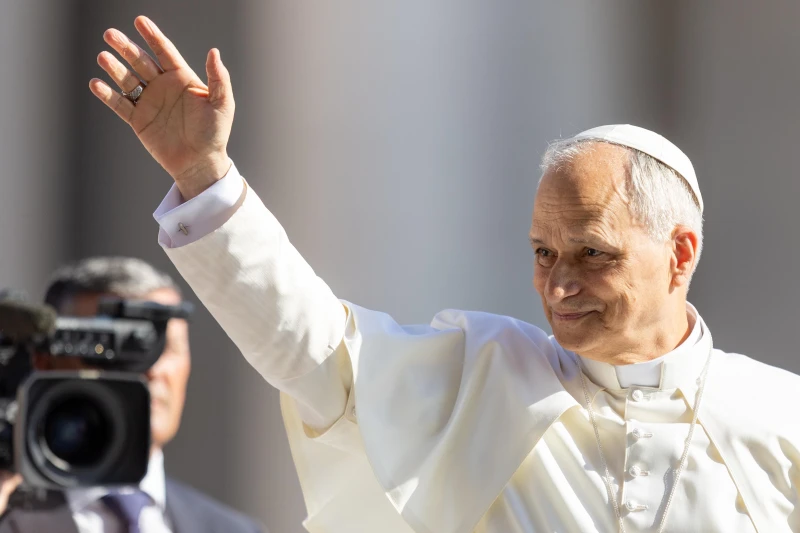
Pope Leo XIV waves to pilgrims gathered in St. Peter’s Square during his general audience on March 25, 2026. | Credit: Daniel Ibanez/EWTN News
Pope Leo XIV expressed the desire to continue dialogue with the Church of England in a message to Sarah Mullally on the occasion of her installation as archbishop of Canterbury.
Mullally, formerly the bishop of London, was appointed archbishop of Canterbury in October 2025 with the approval of the King of England. She was installed March 25 in Canterbury Cathedral in east London. She the first woman to occupy the highest-ranking position in the Church of England.
In his message, dated March 20 from the Vatican, Leo expressed his spiritual closeness and sent Mullally “prayerful greetings” on the occasion of her installation.
The pope emphasized the responsibility of the office, noting that it is a mission “with responsibilities not only in the Diocese of Canterbury but throughout the Church of England as well as the Anglican Communion as a whole,” especially at “a challenging moment in the history of the Anglican family.”
“In asking the Lord to strengthen you with the gift of wisdom, I pray that you may be guided by the Holy Spirit in serving your communities and draw inspiration from the example of Mary, the mother of God,” he wrote.
A call to unity and dialogue
In his message, Pope Leo recalled the progress of ecumenical dialogue between Catholics and Anglicans since the historic meeting between St. Paul VI and Archbishop Michael Ramsey in 1966, which began “a new stage in the development of fraternal relations, based on Christian charity.”
He praised the fruits of the theological dialogue promoted by the Anglican-Roman Catholic International Commission (ARCIC), which has made it possible to “to witness together more effectively” in the face of current challenges.
He also acknowledged the difficulties along the ecumenical journey, quoting his and Mullally’s immediate predecessors, Pope Francis and Archbishop Justin Welby, who wrote in a 2016 Joint Declaration that “new circumstances have presented new disagreements among us.”
Leo insisted on the need to continue moving forward: “We need to continue to dialogue in truth and love, for it is only in truth and love that we come to know together the grace, mercy, and peace of God.”
Unity in service of proclaiming the Gospel
The pope emphasized that the unity of Christians is not an end in itself but is oriented toward the mission of evangelization: “The unity which Christians seek is never an end in itself but is directed towards the proclamation of Christ, in order that … ‘the world may believe.’”
In this context, he recalled the words of Pope Francis, who warned that “it would be a scandal if, due to our divisions, we did not fulfill our common vocation to make Christ known.”
A historic and controversial election
Mullally’s election has had significant repercussions within Anglicanism. The Global Anglican Future Conference announced after her appointment that it was breaking with Canterbury and the Church of England, and stated it would not participate in meetings convened by the new archbishop nor contribute financially to Anglican bodies.
The churches belonging to GAFCON represent about 80% of Anglicans worldwide, reflecting the magnitude of the division opened by this historic appointment.
This story was first published by ACI Prensa, the Spanish-language sister service of EWTN News. It was translated and adapted by EWTN News English.
If you value the news and views Catholic World Report provides, please consider donating to support our efforts. Your contribution will help us continue to make CWR available to all readers worldwide for free, without a subscription. Thank you for your generosity!
Click here for more information on donating to CWR. Click here to sign up for our newsletter.
Pope Leo XIV greets pilgrims at the Wednesday general audience in St. Peter’s Square, Wednesday, June 25, 2025 / Credit: Daniel Ibáñez/CNA
Rome Newsroom, Aug 16, 2025 / 04:00 am (CNA).
Saturday, Aug. 16, marks Pope Leo XIV’s 100th day as pope. Since his May 8 election as the first pope born and raised in the United States, the 69-year-old Chicago native has already left his mark on a jubilee year filled with papal liturgies and a surge in pilgrim enthusiasm.
Here are some of the highlights of the first 100 days of the new Holy Father:
Papal jubilee: Pope Leo offers 16 public Masses in 14 weeks
Pope Leo XIV began his papacy in the heart of the Church’s 2025 Jubilee Year of Hope, and he made the most of this opportunity to interact with Catholic pilgrims from across the globe by offering many Masses with the public.
Pope Leo XIV celebrates Mass for the Jubilee of Sport on June 15, 2025, in St. Peter’s Basilica at the Vatican. Credit: Vatican Media
Leo XIV offered 16 large public Masses in just 14 weeks — an average of more than one per week — including seven Masses in June alone. The pace marks a significant shift from the final years of Pope Francis’ pontificate when the aging pope was unable to offer Mass himself at the altar. Francis was present at only four Masses with the public in the same time period last year.
The papal Masses have drawn large crowds and significant attention, beginning with his first inaugural Mass, which brought 200 foreign delegations — including heads of state and royalty — to the Vatican. Since then, Leo has celebrated liturgies for the jubilees of Families, Priests, and Youth as well as on major solemnities and feasts including Pentecost, Corpus Christi, the Most Sacred Heart of Jesus, the Holy Trinity, Sts. Peter and Paul, and Mary, Mother of the Church.
Leo XIV is the first pope elected during a jubilee year since 1700.
Pope Leo XIV on the solemnity of Sts. Peter and Paul in Rome, June 29, 2025. Credit: Vatican Media
A singing pope
One of Pope Leo’s most unexpected moments came during his first Regina Caeli address, when he stunned a crowd of 200,000 in St. Peter’s Square by singing the Marian hymn rather than reciting it in Latin like his recent predecessors. Since then, he has continued chanting during liturgies and leading crowds in sung versions of the Our Father in Latin.
The move inspired the Pontifical Institute of Sacred Music to launch “Let’s Sing with the Pope,” an online series aimed at making Gregorian chant more accessible.
null
First American pope on White Sox stadium jumbotron
In June, the first pope born and raised in the United States appeared on the jumbotron at a gathering of American Catholics at Chicago’s Rate Field — home of his beloved White Sox. In a video message delivered entirely in English, Pope Leo urged young people to be “beacons of hope” and invited all to see that “God is reaching out to you, calling you, inviting you to know his son, Jesus Christ.”
It was the pope’s first direct address to his hometown since his election and one of the earliest papal speeches given entirely in English.
Pope Leo XIV addresses Catholic faithful on the scoreboard at Rate Field, home to the Chicago White Sox, during a celebration and Mass to honor his election as pope on June 14, 2025, in Chicago. Credit: Scott Olson/Getty Images
The new pope’s love of sports has led to some memorable moments. He blessed 159 cyclists as they passed through Vatican City in the final leg of the Giro d’Italia.
A self-described “amateur tennis player,” Pope Leo XIV joked with tennis star Jannik Sinner, ranked the world’s No. 1, whether his white cassock would meet Wimbledon’s requirement for all white attire.
Pope Leo XIV meets with Italian tennis star Jannik Sinner on May 14, 2025, at the Vatican. Credit: Vatican Media
The pope has also been gifted White Sox and Bears jerseys and has signed baseballs for enthusiastic pilgrims.
A voice for peace in Gaza and Ukraine
Pope Leo XIV’s first words were “Peace be with you all,” recalling the first greeting of the risen Christ recorded in Scripture. As wars continued and at times intensified during Pope Leo’s first months, the pope has continued to be a voice for peace.
In June, after U.S. airstrikes on Iranian nuclear facilities, Pope Leo urged world leaders “to stop the tragedy of war before it becomes an irreparable abyss.” Following an Israeli strike that killed three people at Gaza’s only Catholic church in July, he appealed for “a ceasefire, the release of hostages, and full respect for humanitarian law.”
“Today more than ever, humanity cries out and pleads for peace,” the pope said during an Angelus from the window of the Apostolic Palace.
Leo also met with bishops and pilgrims from the Ukrainian Greek Catholic Church and welcomed Ukrainian President Volodymyr Zelenskyy to Castel Gandolfo in July, where the two discussed the urgency of “just and lasting paths of peace,” according to the Vatican.
Pope Leo XIV greets Ukraine President Volodymyr Zelenskyy at Castel Gandolfo on July 9, 2025. Credit: Vatican Media
Leo carries the Eucharist through the streets of Rome
Pope Leo personally carried the Blessed Sacrament through the streets of Rome during a Corpus Christi procession from the Archbasilica of St. John Lateran to the Basilica of St. Mary Major.
“Together, as shepherds and flock, we will feed on the Blessed Sacrament, adore him, and carry him through the streets,” he said. “In doing so, we will present him before the eyes, the consciences, and the hearts of the people.”
More than 20,000 people turned out for Leo XIV’s first Eucharistic procession as pope.
Pope Leo XIV leads a Eucharistic procession in Rome on June 22, 2025, for the feast of Corpus Christi. Credit: Daniel Ibañez/EWTN
Return to Castel Gandolfo
Pope Leo revived the papal tradition of spending summer days at the papal residence in Castel Gandolfo. During his two-week stay in July, he led public Masses in local parishes, greeted pilgrims as he led the Angelus prayer in Liberty Square, and received visiting dignitaries. His stay marks the first papal summer retreat in the lakeside town since the pontificate of Pope Benedict XVI.
The sun burst through raindrops right as Pope Leo XIV appeared in front of the apostolic palace of Castel Gandolfo to give the Angelus address on July 13, 2025. Credit: Hannah Brockhaus/CNA
Pope Leo introduces the world to great quotes by St. Augustine
A member of the Augustinian order, Pope Leo has quoted St. Augustine in nearly every one of his homilies as pope. In his first public words on May 8, he said: “I am an Augustinian, a son of St. Augustine, who once said, ‘With you I am a Christian, and for you I am a bishop.’”
Addressing 1 million young people at the Jubilee of Youth in August, he quoted Augustine’s “Confessions”: “You called, you shouted, and you broke through my deafness… I have tasted you, now I hunger and thirst for more.”
Pope Leo XIV greets crowds at the Jubilee of Youth on Aug. 3, 2025, at Tor Vergata in Rome. Credit: Vatican Media
A focus on artificial intelligence
Pope Leo has frequently spoken about artificial intelligence (AI), which is already shaping up to be a topic of interest in his pontificate with many hoping that he will address it in an encyclical.
Early on in his pontificate, Leo drew parallels between his namesake Pope Leo XIII, who responded to the industrial revolution with Rerum Novarum, and today’s digital revolution, explaining that the rise of AI poses “new challenges for the defense of human dignity, justice, and labor.”
“Humanity is at a crossroads, facing the immense potential generated by the digital revolution driven by artificial intelligence,” he warned in a message to the Geneva-based AI for Good Summit. “The impact of this revolution is far-reaching, transforming areas such as education, work, art, health care, governance, the military, and communication.”
Pope Leo XIV smiles during his Wednesday general audience on Aug. 13, 2025, in the Paul VI Audience Hall at the Vatican. Credit: Vatican Media
The Vatican website received a revamp shortly after Leo’s election, and insiders noted Leo’s relatively tech-savvy background, including a personal Twitter account prior to his papacy.
The pope also expressed concern in a speech to another AI conference about the negative effects that AI can have on the “intellectual and neurological development” of rising generations and the “loss of the sense of the human” that societies are experiencing.
Leo declares a new doctor of the Church
In one of his most significant theological gestures, Pope Leo named St. John Henry Newman, a 19th-century English convert from Anglicanism, a doctor of the Church — a rare title given to just 37 other saints. The title is granted in recognition of an already canonized saint’s significant contribution to advancing the Church’s knowledge of doctrine, theology, or spirituality.
Pope Leo XIV greets hundreds of thousands of youth and pilgrims ahead of a vigil at Tor Vergata, Rome, Saturday, Aug. 2, 2025. Credit: Mateusz Opila
Leo also approved the upcoming canonization of Blessed Carlo Acutis and Blessed Pier Giorgio Frassati in September as the first saints of his pontificate. He greenlit seven additional causes for canonization, including that of Blessed Bartolo Longo, a former satanist turned founder of the Marian shrine in Pompeii.
Carrying the cross before a million young people at the Jubilee of Youth
Pope Leo addressed the largest crowd of his papacy to date at the Jubilee of Youth, where an estimated 1 million young adults camped out in fields in Tor Vergata, southeast of Rome.
He surprised them by walking through the crowd to the stage, personally carrying the jubilee cross. During the evening vigil, he answered youth questions in English, Italian, and Spanish, offering reflections on loneliness, discernment, and friendship with Christ.
Pope Leo XIV leads young people from around the world in a procession, carrying the Jubilee Year Cross during the Jubilee of Youth this evening in Tor Vergata, on the outskirts of Rome. pic.twitter.com/XPjOnQg9p9
After Eucharistic adoration, chants of “Papa Leone!” echoed long into the night. Leo stayed past 10 p.m. — well beyond the scheduled end.
Earlier in the week, he made a surprise appearance at the opening Mass, joyfully proclaiming in English: “Jesus tells us: You are the salt of the earth. You are the light of the world!” and the crowd erupted in cheers.
Vatican City, Feb 15, 2019 / 06:13 am (CNA/EWTN News).- Pope Francis spoke out about inequality, the environment, sustainable development and the elimination of poverty during his visit to the United Nations’ agricultural development agency in Ro… […]
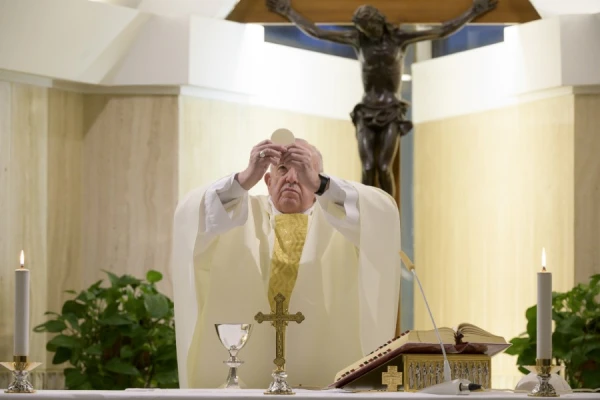
Vatican City, Apr 14, 2020 / 04:00 am (CNA).- In uncertain times, our ultimate goal should be to remain faithful to the Lord rather than to seek our own security, Pope Francis said at his morning Mass Tuesday.
Speaking from the chapel of his Vatican residence, the Casa Santa Marta, April 14, the pope said: “Many times when we feel secure we begin to make our plans and slowly move away from the Lord; we do not remain faithful. And my security is not what the Lord gives me. It is an idol.”
To Christians who object that they do not bow before idols, he said: “No, perhaps you do not kneel, but that you seek them and so many times in your heart you worship idols, it is true. Many times. Your own safety opens the door to idols.”
Pope Francis reflected on the Second Book of Chronicles, which describes how King Rehoboam, the first leader of the Kingdom of Judah, became complacent and departed from the law of the Lord, taking his people with him.
“But is your own safety bad?” the pope asked. “No, it’s a grace. Be secure, but also be sure that the Lord is with me. But when there is safety and I am at the center, I turn away from the Lord, like King Rehoboam, I become unfaithful.”
“It is so difficult to remain faithful. The whole history of Israel, and then the whole history of the Church, is full of infidelity. Full. Full of selfishness, full of its own certainties that make the people of God move away from the Lord, lose that fidelity, the grace of fidelity.”
Focusing on the day’s second reading (Acts 2:36-41), in which Peter calls people to repentance on the day of Pentecost, the pope said: “To convert is this: to return to being faithful. Fidelity, that human attitude which is not so common in people’s lives, in our lives. There are always illusions that attract attention, and many times we want to hide behind these illusions. Fidelity: in good times and bad times.”
The pope said that the day’s Gospel reading (John 20:11-18) offered an “icon of fidelity”: the image of a weeping Mary Magdalene keeping vigil beside Jesus’ tomb.
“She was there,” he said, “faithful, faced with the impossible, faced with tragedy … A weak but faithful woman. The icon of fidelity of this Mary of Magdala, apostle to the apostles.”
Inspired by Mary Magdalene, we should pray for the gift of faithfulness, the pope said.
“Let us ask the Lord today for the grace of fidelity: to give thanks when He gives us certainties, but never think that they are ‘my’ certainties and always, look beyond one’s own certainties; the grace of being faithful even before the tombs, before the collapse of so many illusions.”
After Mass, the pope presided at adoration and Benediction of the Blessed Sacrament, before leading those watching via livestream in a prayer of spiritual communion.
Finally, the congregation sang the Easter Marian antiphon “Regina caeli”.
At the start of Mass, the pope prayed that the challenges of the coronavirus crisis would help people to overcome their differences.
“Let us pray that the Lord will give us the grace of unity among us,” he said. “May the difficulties of this time make us discover the communion among us, the unity that is always superior to any division.”
We read: “a challenging moment in the history of the Anglican family.”
Indeed. Challenging for Anglicanism not as a Church, but still as an “ecclesial communion.” since lacking valid Holy Orders within the Apostolic Succession (Leo XIII, Apostolicae Curae, 1896; and then, regarding invalid female ordination within the Catholic Church, St. John Paul II’s Ordinatio Sacerdotalis, 1994).
And, a “family” which is so divided that Canterbury now speaks for only 20 percent of Anglicans, and now that practicing Muslims in England now outnumber practicing Anglicans.
So, yes, very much with Pope Leo XIV and especially with regard to shared Christian evangelization—unity in prayer and charity. And, too, “draw inspiration from the example of Mary, the mother of God,” who is inseparable from the Church, as we see in Vatican II’s prescient incorporation of Mary directly into “Lumen Gentium.”
Why would you even acknowledge this woman? The Catholic Church doesn’t recognize the validity of any of her “ordinations.” She’s a lay-woman dressed up to look like a cleric.
One cannot be a Faithful follower of Jesus The Christ while denying Christ’s teaching on the Sanctity and Dignity of the marital act within The Sacrament of Holy Matrimony which affirms God’s desire that we respect the Sanctity and Dignity of Human Life from the moment of conception.
“His honour rooted in dishonour stood, / And faith unfaithful kept him falsely true”.
It has always been about The Marriage In Heaven And On Earth.


 By
By 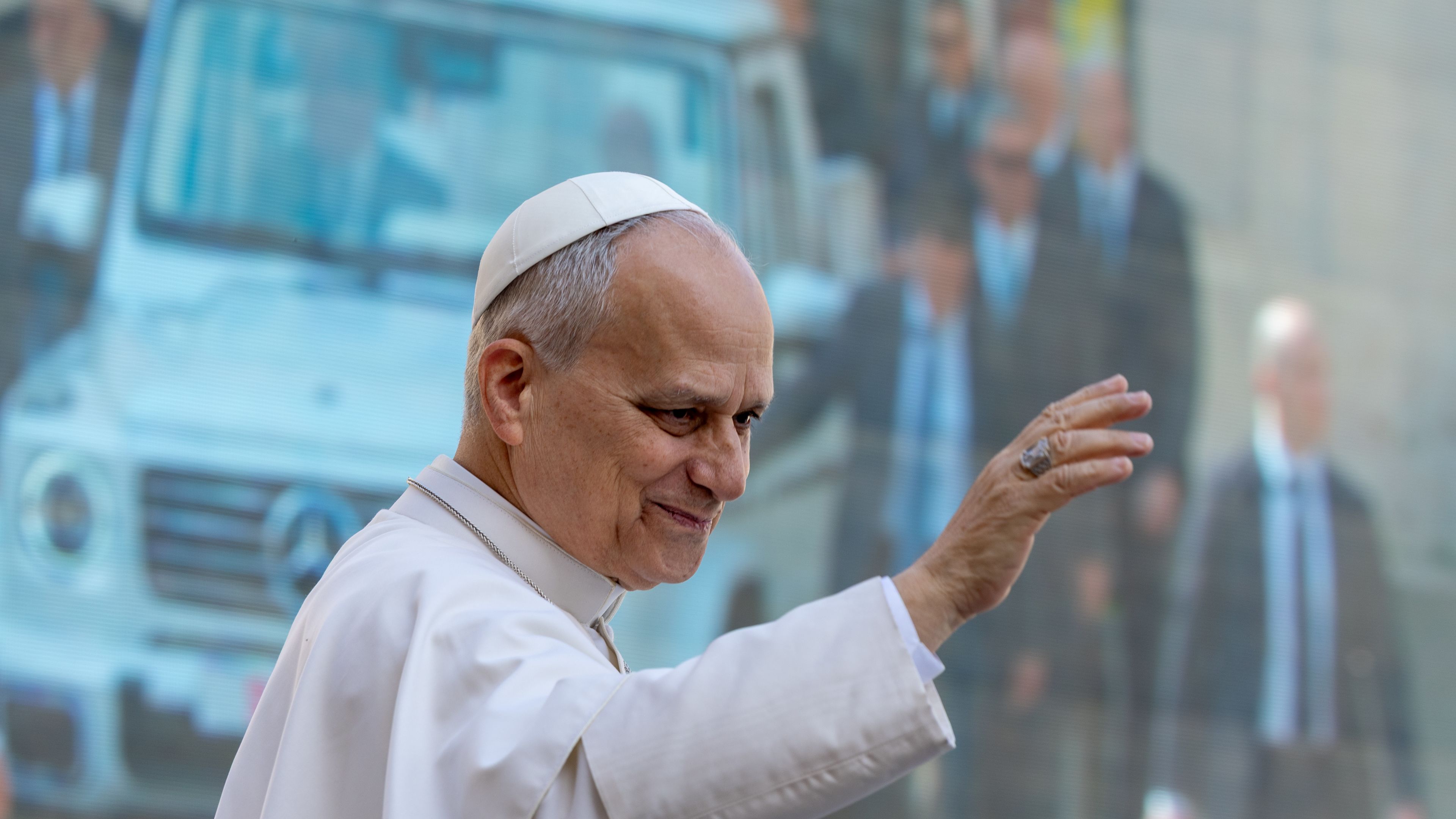



Is today’s Anglicanism relevant other than as a platform to promote today’s social agendas? If so, how so?
What’s the point, really? Talk which is unlikely to lead anywhere kept up for its own sake as a kind of perpetual motion machine?
Was Leo showering approbation on Mullally, or simply being diplomatically kind?
The letter should be on the Vatican website, or Lifesitenews has large portions of it.
Leo XIV continues to exhibit his predecessor’s vision of inclusiveness that excludes the preeminence of Christ’s revelation and its Apostolic witness.
We read: “a challenging moment in the history of the Anglican family.”
Indeed. Challenging for Anglicanism not as a Church, but still as an “ecclesial communion.” since lacking valid Holy Orders within the Apostolic Succession (Leo XIII, Apostolicae Curae, 1896; and then, regarding invalid female ordination within the Catholic Church, St. John Paul II’s Ordinatio Sacerdotalis, 1994).
And, a “family” which is so divided that Canterbury now speaks for only 20 percent of Anglicans, and now that practicing Muslims in England now outnumber practicing Anglicans.
So, yes, very much with Pope Leo XIV and especially with regard to shared Christian evangelization—unity in prayer and charity. And, too, “draw inspiration from the example of Mary, the mother of God,” who is inseparable from the Church, as we see in Vatican II’s prescient incorporation of Mary directly into “Lumen Gentium.”
Why would you even acknowledge this woman? The Catholic Church doesn’t recognize the validity of any of her “ordinations.” She’s a lay-woman dressed up to look like a cleric.
Cardinal Hollerich offer any thoughts?
He is reaching out to the heretics and enemies of the Church while calling the SSPX schismatics.
True, Agnieszka,
One cannot be a Faithful follower of Jesus The Christ while denying Christ’s teaching on the Sanctity and Dignity of the marital act within The Sacrament of Holy Matrimony which affirms God’s desire that we respect the Sanctity and Dignity of Human Life from the moment of conception.
“His honour rooted in dishonour stood, / And faith unfaithful kept him falsely true”.
It has always been about The Marriage In Heaven And On Earth.
And dialogue with the other 80%?
This should be interesting.