

 By
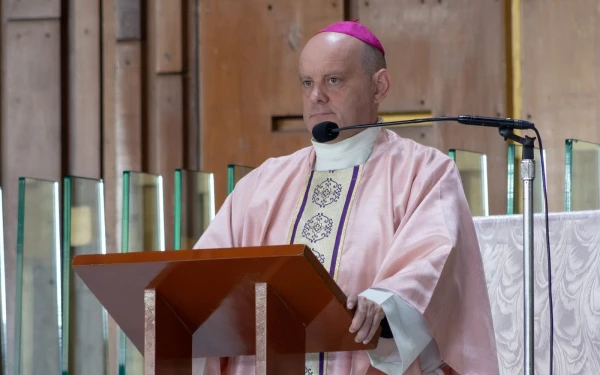
By Auxiliary Bishop Francisco Javier Acero emphasized the need to truly listen to abuse victims and not let other interests, like careerism or clericalism, stand in the way of victims’ proper care.

In light of the ongoing struggle to prevent and combat sexual abuse within the Catholic Church in Mexico, a bishop addressed the primary challenges currently being faced including “clericalism,” “careerism,” and the need to listen to those who are suffering.
In an interview with ACI Prensa, the Spanish-language sister service of EWTN News, Francisco Javier Acero, OAR, auxiliary bishop of the Primatial Archdiocese of Mexico and a member of the Latin American council of the Center for the Protection of Minors, emphasized the importance of the Church returning “to the essentials, to Jesus,” to ensure that “as members of the Church, we stand with the weakest and most vulnerable … the victims.”
“We must create spaces for them so we can listen to them. We cannot engage in prevention if we are not capable of listening with empathy and without prejudice,” he stated.
The prelate said that “when we listen, we are directing all our faculties toward grasping, attending to, and interpreting the verbal messages and other expressions such as body language and tone of voice of that victim who has been scarred for life.” It means finding the meaning behind the sound of their voice “within the deep wound they carry, and putting ourselves in their shoes.”
Resistance to recognizing and confronting abuse
According to Acero, who prior to his episcopal ordination in 2022 served as major superior of the Augustinian Recollects for Mexico and Costa Rica, the resistance within the Church to recognizing and confronting abuse “lies in clericalism as well as in its structures.”
“There is a hidden clericalism among the laity that does great harm preventing our people of God from being holy and faithful,” he said — a phenomenon that also affects “bishops, priests, and those in consecrated life.”
“There is also an exacerbated clericalism caused by formation systems outwardly embellished with a profound spirituality that at their core revert to a nostalgia for the past; a nostalgia that prefers a Church that’s a museum to a Church that embodies the Gospel alongside faces that suffer and weep over injustices,” he noted.
“Pope Francis spoke of a ‘spiritual worldliness’ that manifests itself in self-satisfaction, a desire for applause, and careerism aimed at personal advancement,” he recalled, warning against a “worldly mentality centered on money, pride, and selfishness rather than living in accordance with the cross of Christ.”
Acero pointed out that “the structures of the Church, if they do not lead to processes of personal conversion and healthy relationships with others, become ossified; and we become more like bureaucrats of the altar than servants of charity.”
The challenge of discernment
For Acero, “the pain of a victim is to be believed from the very first moment. It is a wound that is sensed and doesn’t require verification, because the wound itself seeps forth when you listen to the victim.”
“Systematic suspicion persists and takes root when there is a false sense of fatherhood and a flawed understanding of what the Church is,” he continued.
He noted that “in this change of epochs with the new digital culture that has become integrated into our lives, we have access to such a vast amount of information such that we have never been as vulnerable to deception as we are today.”
“We are enamored of the superfluous, and we are increasingly incapable of delving deeper to reach the underlying essence of people and issues. We remain at the level of headlines, rumors, and superficial comments about others which shape our judgments.”
The prelate emphasized that “suspicion and careerism go hand in hand; negative influences along with a type of Church that is scarcely missionary and highly self-referential cause one to fall into a world of complicity and covering up cases.”
Unfortunately, the proclamation of the good news becomes corrupted when allegations arise and we turn a blind eye to them because they are inconvenient, he said.
The key: Staying centered on Jesus
When asked how a bishop can make sure victims are cared for in a warm, loving manner, Acero emphasized that it helps for the victim to feel “supported by God in prayer, by a person who assists him in spiritual direction, and by a group of brothers who look out for and protect him.”
“Valor and courage don’t come from human gifts; the momentum comes from within the Spirit. Only the Spirit restores harmony to the heart, for he is the one who creates that ‘intimacy with God’ of which St. Basil spoke.”
According to the auxiliary bishop, “when we are centered on Jesus,” we go through life “without getting caught up in dynamics that seek to polarize, or to deny the harm we have caused through our misconduct and our inability to empathize with those who suffer all manner of abuse.”
This story was first published by ACI Prensa, the Spanish-language sister service of EWTN News. It has been translated and adapted by EWTN News English.
If you value the news and views Catholic World Report provides, please consider donating to support our efforts. Your contribution will help us continue to make CWR available to all readers worldwide for free, without a subscription. Thank you for your generosity!
Click here for more information on donating to CWR. Click here to sign up for our newsletter.

Leave a Reply