

 By
By In spite of opposition from Catholic bishops and patient advocate groups, Gov. Kathy Hochul signed into law physician-assisted suicide in New York.
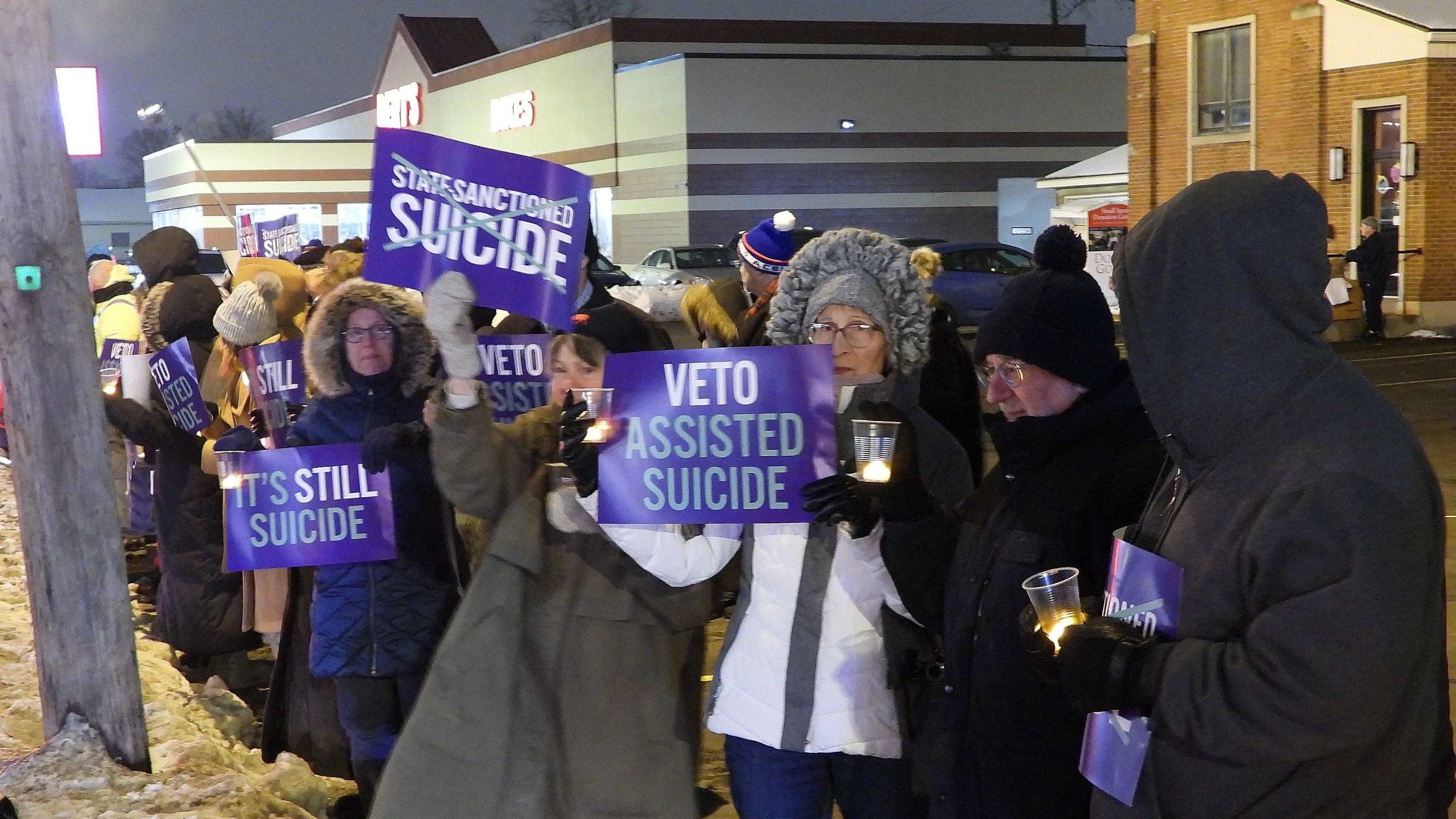
In spite of opposition from Catholic bishops and patient advocate groups, New York Gov. Kathy Hochul on Feb. 6 signed a bill to legalize physician-assisted suicide in the Empire State.
Assisted suicide is already legal in California, Colorado, Delaware, Hawaii, Illinois, Maine, New Jersey, New Mexico, Oregon, Vermont, Washington, and Washington, D.C.
Hochul, a Catholic, had already announced she would sign the bill once “guardrails” were added — specifically, laws to allow faith-based hospice providers to opt out of offering assisted suicide.
The Catholic bishops had urged Hochul not to pass the bill, saying that it undermined her own work on anti-suicide programs.
“How can any society have credibility to tell young people or people with depression that suicide is never the answer, while at the same time telling elderly and sick people that it is a compassionate choice to be celebrated?” the bishops said in a recent statement.
The Catholic Church is outspokenly opposed to euthanasia and assisted suicide. In the Catechism of the Catholic Church, the Church condemns assisted suicide and euthanasia, instead encouraging palliative care, which means supporting patients with pain management and care as the end of their lives approaches. Additionally, the Church advocates for a “special respect” for anyone with a disability or serious health condition (CCC, 2276).
Any action or lack of action that intentionally “causes death in order to eliminate suffering constitutes a murder gravely contrary to the dignity of the human person and to the respect due to the living God, his Creator” (CCC, 2277).
“We call on Catholics and all New Yorkers to reject physician-assisted suicide for themselves, their loved ones, and those in their care,” the bishops continued. “And we pray that our state turn away from its promotion of a culture of death and invest instead in life-affirming, compassionate hospice and palliative care, which is seriously underutilized.”
“While physician-assisted suicide will soon be legal here in New York, we must clearly reiterate that it is in direct conflict with Catholic teaching on the sacredness and dignity of all human life from conception until natural death and is a grave moral evil on par with other direct attacks on human life,” the New York bishops said.
Hochul said the law, which goes into effect 180 days after its signing, gives New Yorkers “the choice to endure less suffering.”
“Our state will always stand firm in safeguarding New Yorkers’ freedoms and right to bodily autonomy, which includes the right for the terminally ill to peacefully and comfortably end their lives with dignity and compassion,” Hochul said in the Feb. 6 statement.
“I firmly believe we made the right decision,” she concluded.
A national disability rights group, the Patients’ Rights Action Fund, along with the New York Alliance Against Assisted Suicide, advocated against the law.
Jessica Rodgers, a spokeswoman for the Patients Rights Action Fund, urged those behind the new law “to reexamine your consciences.”
“New York’s assisted suicide law will turn some doctors and pharmacists into executioners,” Rodgers said in a statement shared with EWTN News. “It will turn coroners into liars by requiring them to provide false information about the cause of death for each person who chooses assisted suicide.”
Rodgers noted that the bill “will do nothing to address New York’s low rates of hospice care use.”
“Instead of doing the difficult work of making hospice care more accessible and helping to ease the pain of terminal illnesses, the governor has chosen to enact a law that will, likely, result in some New Yorkers’ premature deaths,” she said.
“It will stigmatize and endanger the terminally ill, whose lives are deemed of so little worth by our governor that other New Yorkers will now be allowed to help them expedite their own deaths,” Rodgers continued.
“It will encourage vulnerable people to view suicide as a legitimate response to suffering of all kinds; it could even raise the overall suicide rate,” she said. “It opens the door to future expansions of doctor-assisted death, like those we have seen in Canada in recent years.”
“Finally, it willfully ignores the fact that physicians’ estimates of their patients’ life expectancies can be mistaken, and that such mistakes could lead people to choose assisted suicide when they could otherwise have gone on living for years,” Rodgers concluded.
If you value the news and views Catholic World Report provides, please consider donating to support our efforts. Your contribution will help us continue to make CWR available to all readers worldwide for free, without a subscription. Thank you for your generosity!
Click here for more information on donating to CWR. Click here to sign up for our newsletter.


Leave a Reply